55 Beautiful Variety Of Flowers That Start With L You Didn’t Know About
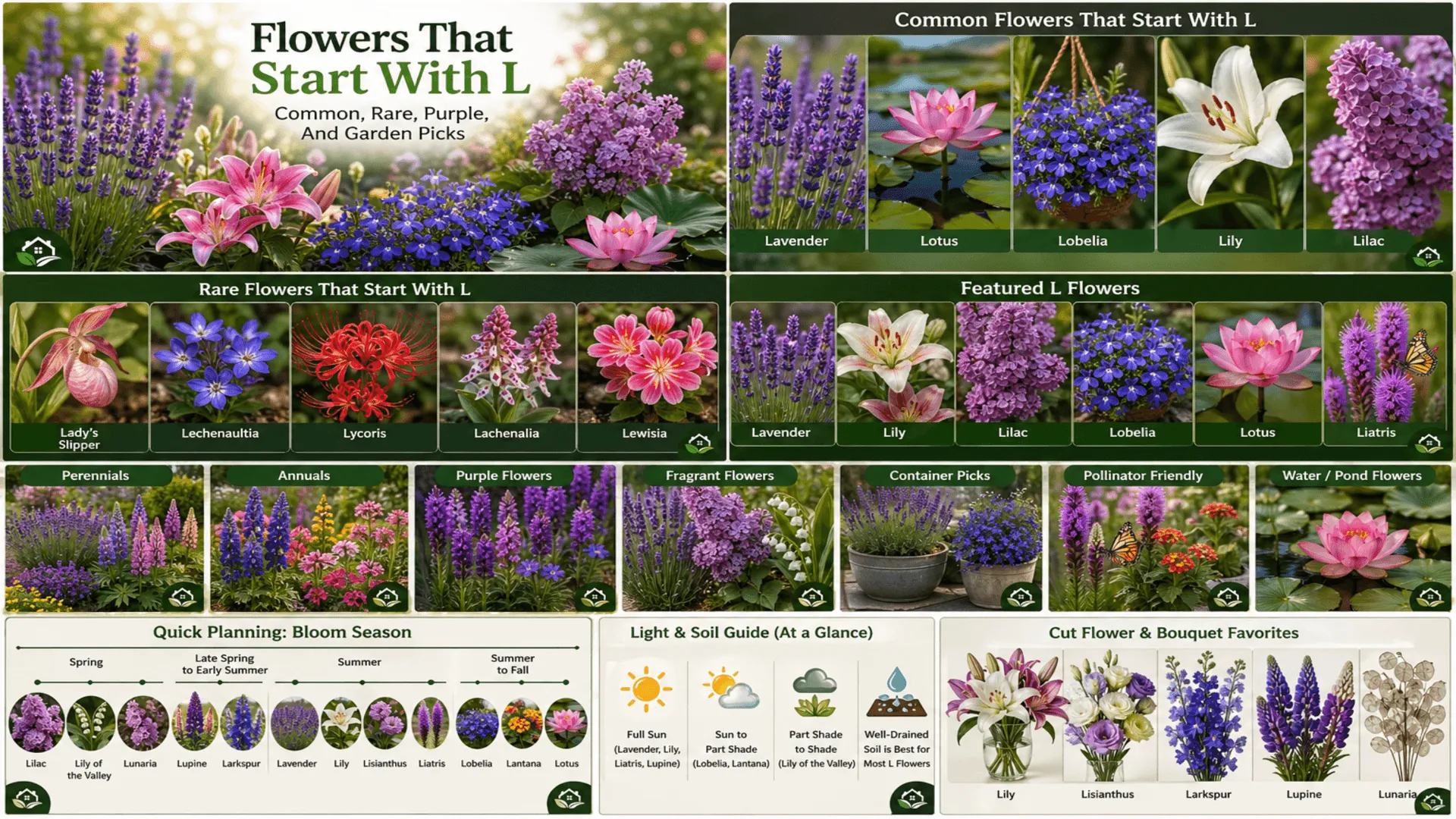
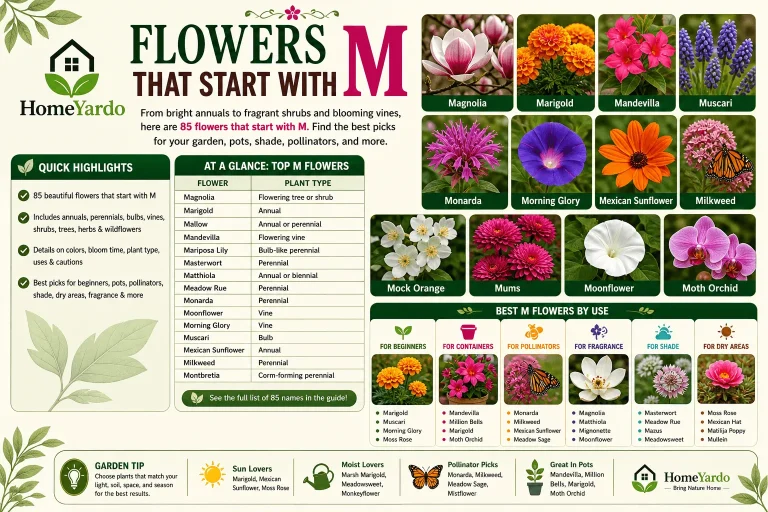
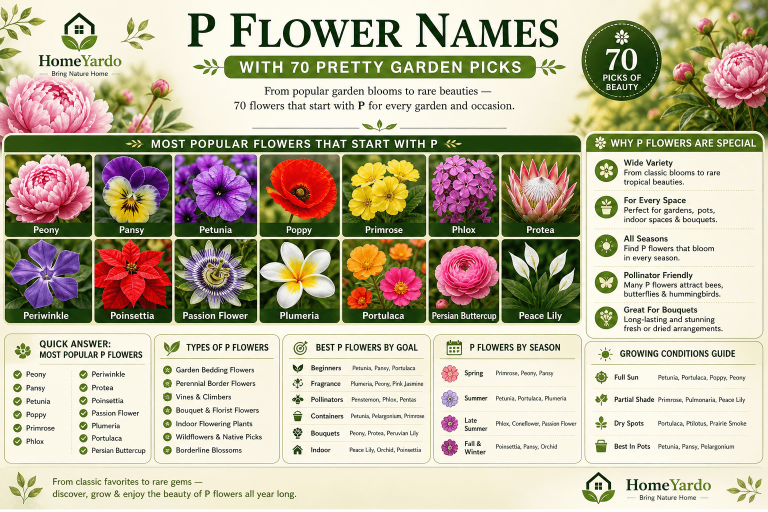
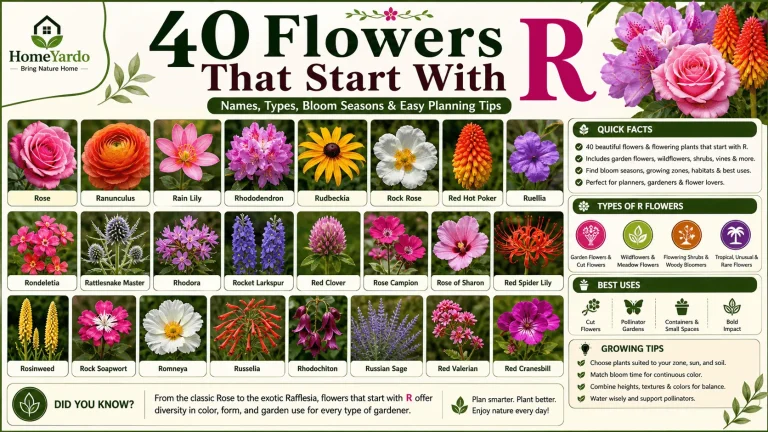
Flowers that start with L include some of the most familiar names in gardens, bouquets, and ornamental planting. Lavender, lily, lilac, lotus, lobelia, larkspur, lantana, lisianthus, liatris, and lupine are among the strongest examples.
The letter L also includes less common flowers such as Lechenaultia, Lewisia, Lycoris, Lady’s Slipper, Lachenalia, and Lobster Claw. That gives the topic more range than a simple alphabet list.
This guide keeps the list useful rather than inflated. It includes 55 flower names that start with L, along with botanical names, main colors, plant type, bloom style, and practical garden use.
Quick Answer: What Are Flowers That Start With L?
Flowers starting with L include lavender, lilac, lily, lily of the valley, lobelia, lotus, larkspur, lantana, lisianthus, liatris, lunaria, lupine, Linaria, Lewisia, and Lobster Claw.
These flowers cover many garden and floral uses. Some are fragrant spring bloomers, some are summer border flowers, some work well in containers, and a few belong to specialty categories such as orchids, aquatic flowers, rock garden plants, and tropical flowers.
Best L Flowers By Use
Some L flowers are better for scent, while others are stronger for containers, bouquets, pollinators, shade, or water gardens. The table below gives a fast way to choose the right flower before reading the full list.
| Use | Best Flower Choices |
|---|---|
| Best for fragrance | Lavender, lilac, lily of the valley, some lilies |
| Best purple flowers | Lavender, lilac, liatris, lobelia, lupine, lisianthus |
| Best for beginners | Lavender, lantana, lobelia, liatris, Linaria |
| Best for containers | Lobelia, lavender, lisianthus, Linaria, Lobularia |
| Best for bouquets | Lily, lisianthus, larkspur, limonium, lunaria |
| Best for pollinators | Liatris, lantana, lupine, lobelia, Linaria |
| Best rare choices | Lady’s Slipper, Lewisia, Lechenaultia, Lycoris, Lachenalia |
| Best pond flower | Lotus |
| Best tropical pick | Lobster Claw |
| Best shade choice | Lily of the valley, lungwort, Lenten rose |
If the goal is to compare more popular garden letters by use, flowers that start with H also include many strong bouquet, border, and color choices.
55 Flower Names With L
The table below keeps the full list of flowers that start with l in one place. It includes common names, botanical names, main colors, plant type, and the best use for each flower, so the article does not repeat the same names in separate list sections.
| # | Common Name | Botanical Name | Main Color | Plant Type | Best Use |
|---|---|---|---|---|---|
| 1 | Laburnum | Laburnum | Yellow | Flowering tree | Spring flower chains, ornamental gardens |
| 2 | Lace Flower | Orlaya grandiflora | White | Annual | Cottage gardens, soft filler |
| 3 | Laceleaf | Anthurium andraeanum | Red, pink, white | Tropical flowering plant | Indoor display, warm, protected spaces |
| 4 | Lachenalia | Lachenalia | Yellow, red, orange | Bulb | Pots, mild-climate displays |
| 5 | Lady Banks’ Rose | Rosa banksiae | Yellow, white | Climbing rose | Walls, arches, spring display |
| 6 | Ladybells | Adenophora | Blue, violet | Perennial | Woodland borders, cottage planting |
| 7 | Lady’s Bedstraw | Galium verum | Yellow | Perennial wildflower | Meadow planting, naturalistic gardens |
| 8 | Lady’s Eardrop | Fuchsia | Pink, purple, red | Tender perennial | Hanging baskets, shaded containers |
| 9 | Lady’s Mantle | Alchemilla mollis | Yellow-green | Perennial | Edging, soft garden texture |
| 10 | Lady’s Slipper | Cypripedium | Pink, yellow, white | Orchid | Woodland gardens, specialty collections |
| 11 | Lady Tulip | Tulipa clusiana | Pink, white, yellow | Bulb | Spring beds, rock gardens |
| 12 | Lamb’s Ear | Stachys byzantina | Purple, pink | Perennial | Edging, dry gardens, texture |
| 13 | Lanceleaf Coreopsis | Coreopsis lanceolata | Yellow | Perennial | Pollinator beds, summer color |
| 14 | Lantana | Lantana camara | Yellow, orange, pink, red | Tender perennial or shrub | Heat-tolerant color, butterflies |
| 15 | Larkspur | Delphinium ajacis | Blue, pink, purple, white | Annual | Cottage gardens, cut flowers |
| 16 | Lavatera | Lavatera trimestris | Pink, white | Annual | Summer borders, quick color |
| 17 | Lavender | Lavandula | Purple, blue, white | Perennial herb | Fragrance, borders, dry gardens |
| 18 | Leadwort | Plumbago auriculata | Blue, white | Shrub or perennial | Warm-climate borders |
| 19 | Leather Flower | Clematis viorna | Pink, purple | Perennial vine | Trellises, native-style gardens |
| 20 | Lechenaultia | Lechenaultia | Blue, red, yellow | Shrub or groundcover | Rock gardens, specialty planting |
| 21 | Lenten Rose | Helleborus | White, pink, purple | Perennial | Shade gardens, winter interest |
| 22 | Leontopodium | Leontopodium nivale | White | Alpine perennial | Rock gardens, alpine collections |
| 23 | Leopard Lily | Iris domestica or Lilium pardalinum | Orange, spotted | Perennial | Specialty borders, bold summer color |
| 24 | Leopard’s Bane | Doronicum orientale | Yellow | Perennial | Early spring color |
| 25 | Lesser Celandine | Ficaria verna | Yellow | Perennial | Damp woodland areas |
| 26 | Leucadendron | Leucadendron | Yellow, red, cream | Shrub | Cut stems, warm dry gardens |
| 27 | Leucanthemum | Leucanthemum vulgare | White, yellow | Perennial | Daisy-style borders |
| 28 | Leucojum | Leucojum aestivum | White | Bulb | Spring gardens, moist borders |
| 29 | Lewisia | Lewisia cotyledon | Pink, orange, white | Perennial | Rock gardens, containers |
| 30 | Liatris | Liatris spicata | Purple, pink, white | Perennial | Pollinator gardens, vertical color |
| 31 | Lilac | Syringa vulgaris | Purple, pink, white | Flowering shrub | Fragrance, hedges, spring focal points |
| 32 | Lily | Lilium | White, pink, orange, yellow | Bulb perennial | Cut flowers, summer beds |
| 33 | Lily Of The Nile | Agapanthus | Blue, white | Perennial | Patio containers, warm borders |
| 34 | Lily Of The Valley | Convallaria majalis | White | Perennial | Shade gardens, fragrant spring flowers |
| 35 | Limonium | Limonium | Purple, blue, white | Perennial or annual | Cut flowers, dried arrangements |
| 36 | Lindheimer’s Beeblossom | Gaura lindheimeri | White, pink | Perennial | Airy borders, pollinator beds |
| 37 | Linaria | Linaria maroccana | Mixed colors | Annual | Borders, filler flowers |
| 38 | Linnaea | Linnaea borealis | Pink | Creeping perennial | Woodland groundcover |
| 39 | Liriope | Liriope muscari | Purple, lavender | Perennial | Edging, groundcover, late-season flowers |
| 40 | Lisianthus | Eustoma grandiflorum | Purple, pink, white, blue | Annual or tender perennial | Bouquets, beds |
| 41 | Lithodora | Lithodora diffusa | Blue | Perennial groundcover | Rock gardens, sunny edges |
| 42 | Livingstone Daisy | Dorotheanthus bellidiformis | Pink, yellow, orange | Annual | Sunny beds, low color |
| 43 | Lobelia | Lobelia erinus | Blue, purple, white | Annual or tender perennial | Containers, edging |
| 44 | Lobster Claw | Heliconia rostrata | Red, yellow, green | Tropical perennial | Tropical gardens, greenhouse displays |
| 45 | Lobularia | Lobularia maritima | White, pink, purple | Annual or short-lived perennial | Edging, containers, fragrance |
| 46 | Lonicera | Lonicera | White, yellow, pink | Flowering vine or shrub | Climbers, fragrance, wildlife gardens |
| 47 | Loosestrife | Lythrum or Lysimachia | Purple, yellow | Perennial | Moist beds, meadow-style planting |
| 48 | Lotus | Nelumbo nucifera | Pink, white | Aquatic perennial | Ponds, water gardens |
| 49 | Love In A Mist | Nigella damascena | Blue, white, pink | Annual | Cottage gardens, seed pods |
| 50 | Love Lies Bleeding | Amaranthus caudatus | Red, burgundy | Annual | Dramatic borders, hanging flower tassels |
| 51 | Lungwort | Pulmonaria officinalis | Pink, blue, purple | Perennial | Shade gardens, early pollinators |
| 52 | Lunaria | Lunaria annua | Purple, white | Biennial | Cottage gardens, dried seed pods |
| 53 | Lupine | Lupinus | Blue, purple, pink, white | Perennial or annual | Vertical color, naturalistic beds |
| 54 | Lychnis | Lychnis coronaria | Pink, red, white | Perennial or biennial | Cottage gardens, bright borders |
| 55 | Lycoris | Lycoris radiata | Red, pink, white | Bulb perennial | Late-season color, specialty beds |
Common Flowers That Start With L
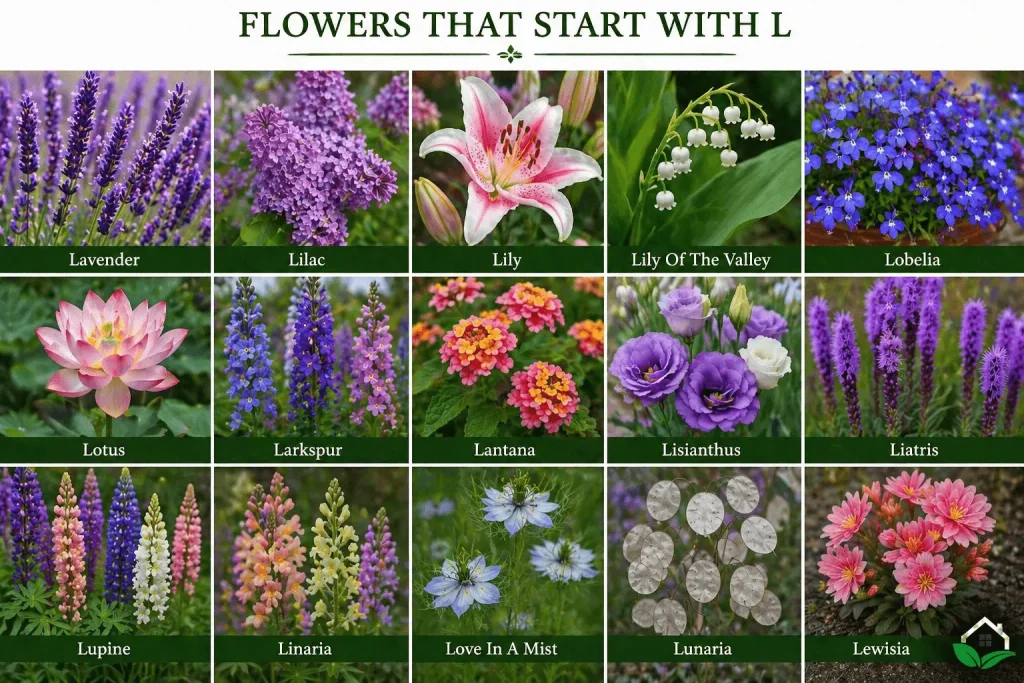
The most common flowers starting with L are the names most people recognize from gardens, bouquets, containers, and seasonal displays. Lavender, lily, lilac, lily of the valley, lobelia, lotus, larkspur, lantana, lisianthus, liatris, lupine, and lunaria are the strongest examples.
These flowers are common for different reasons. Lavender, lilac, and lily of the valley are known for their fragrance. Lily, lisianthus, and larkspur are strong bouquet flowers. Lobelia and lantana are common in containers and warm-season planting. Lotus stands out in water gardens, while liatris and lupine are useful for height, color, and pollinator-friendly beds. Many common L flowers are easy to recognize, and the same browsing style can also help when comparing flowers that start with E.
Featured L Flowers With Quick Facts
Some flowers with L deserve extra attention because they are common in gardens, bouquets, containers, or symbolic planting. These are the names most likely to be recognized quickly, even by someone who does not know many botanical terms.
Lavender
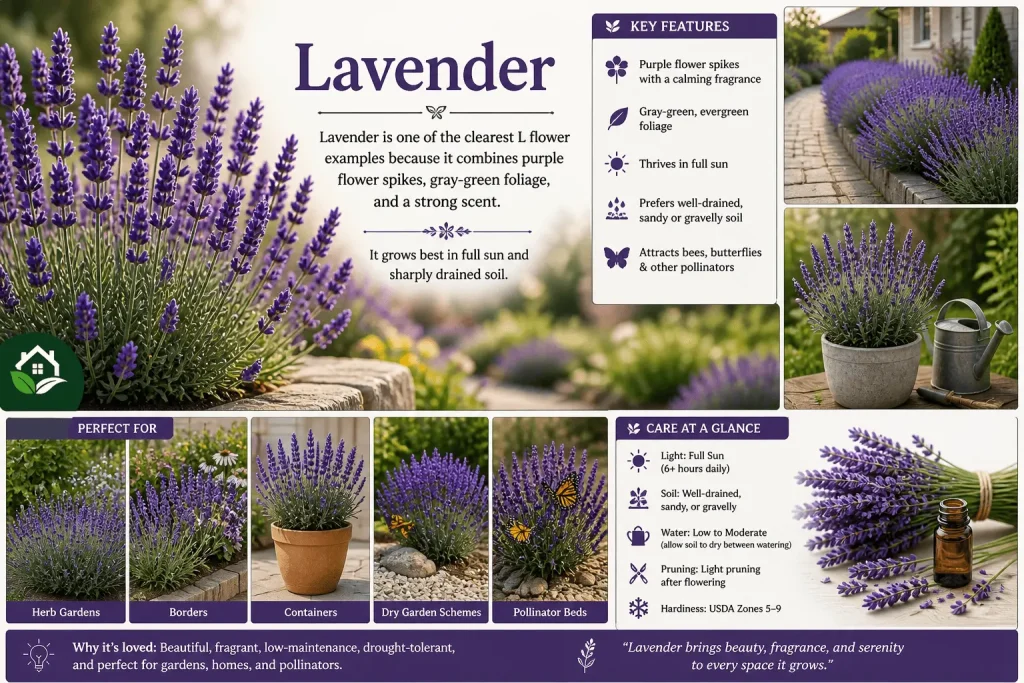
Lavender is one of the clearest L flower examples because it combines purple flower spikes, gray-green foliage, and a strong scent. It grows best in full sun and sharply drained soil.
It works well in herb gardens, borders, containers, dry planting schemes, and pollinator beds. Its fragrance also makes it one of the strongest choices for paths, patios, and entry areas.
Lily
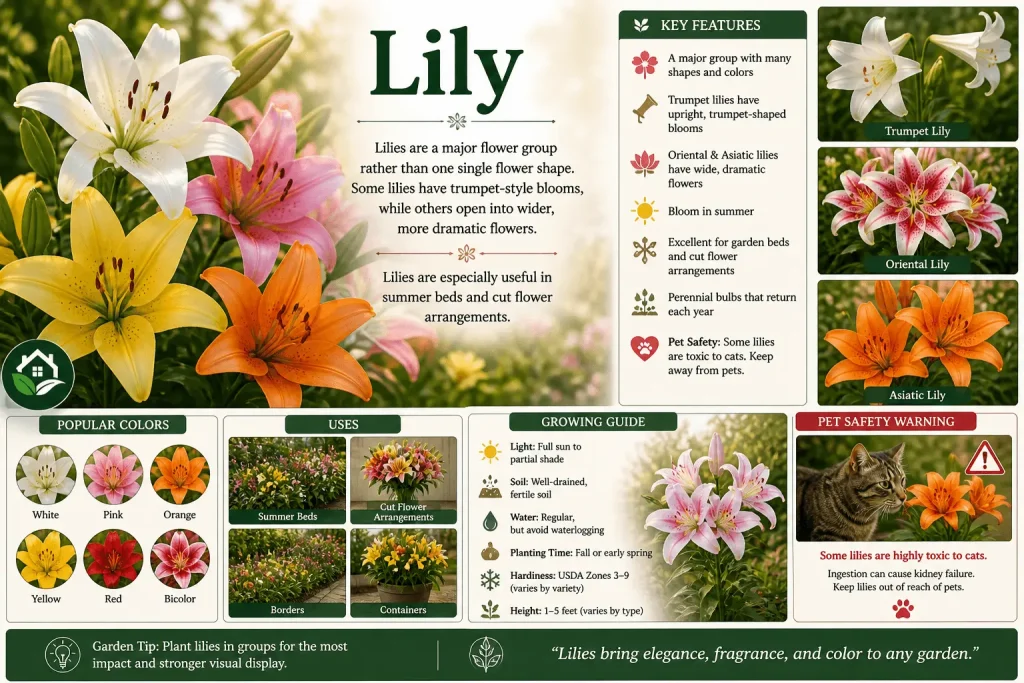
Lilies are a major flower group rather than one single flower shape. Some lilies have trumpet-style blooms, while others open into wider, more dramatic flowers.
Lilies are especially useful in summer beds and cut flower arrangements. They also need care around pets, since some lilies can be dangerous in homes or gardens with animals.
Lilac
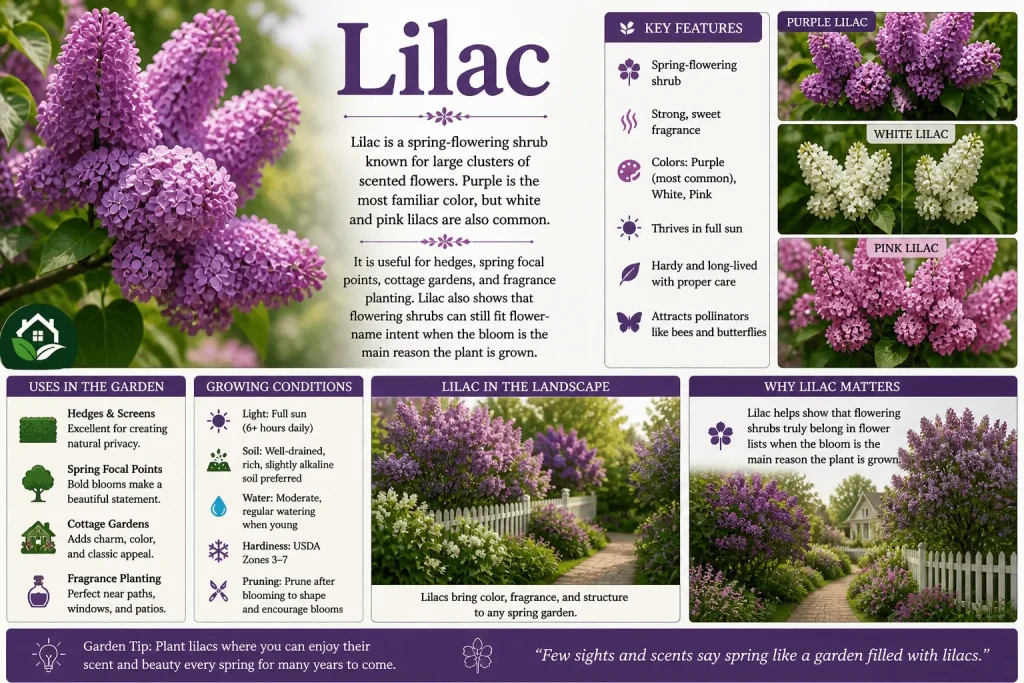
Lilac is a spring-flowering shrub known for large clusters of scented flowers. Purple is the most familiar color, but white and pink lilacs are also common.
It is useful for hedges, spring focal points, cottage gardens, and fragrance planting. Lilac also helps the article show that flowering shrubs can still fit flower-name intent when the bloom is the main reason the plant is grown.
Lobelia
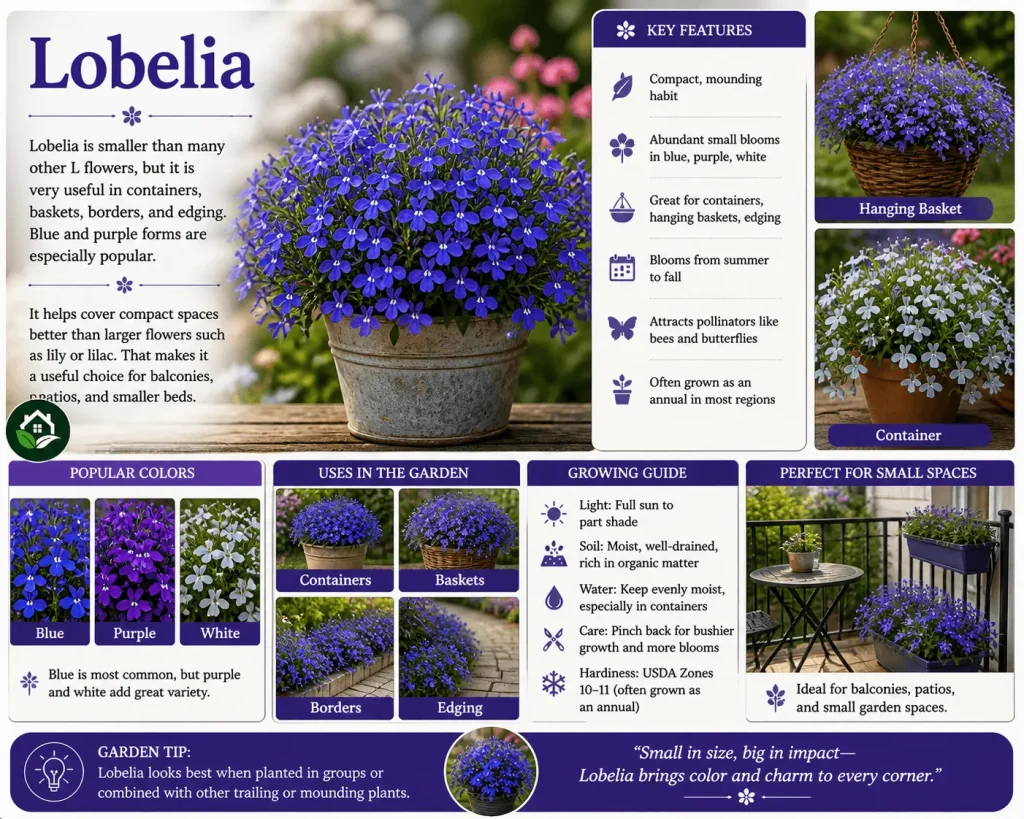
Lobelia is smaller than many other L flowers, but it is very useful in containers, baskets, borders, and edging. Blue and purple forms are especially popular.
It helps cover compact spaces better than larger flowers such as lily or lilac. That makes it a useful choice for balconies, patios, and smaller beds.
Lotus
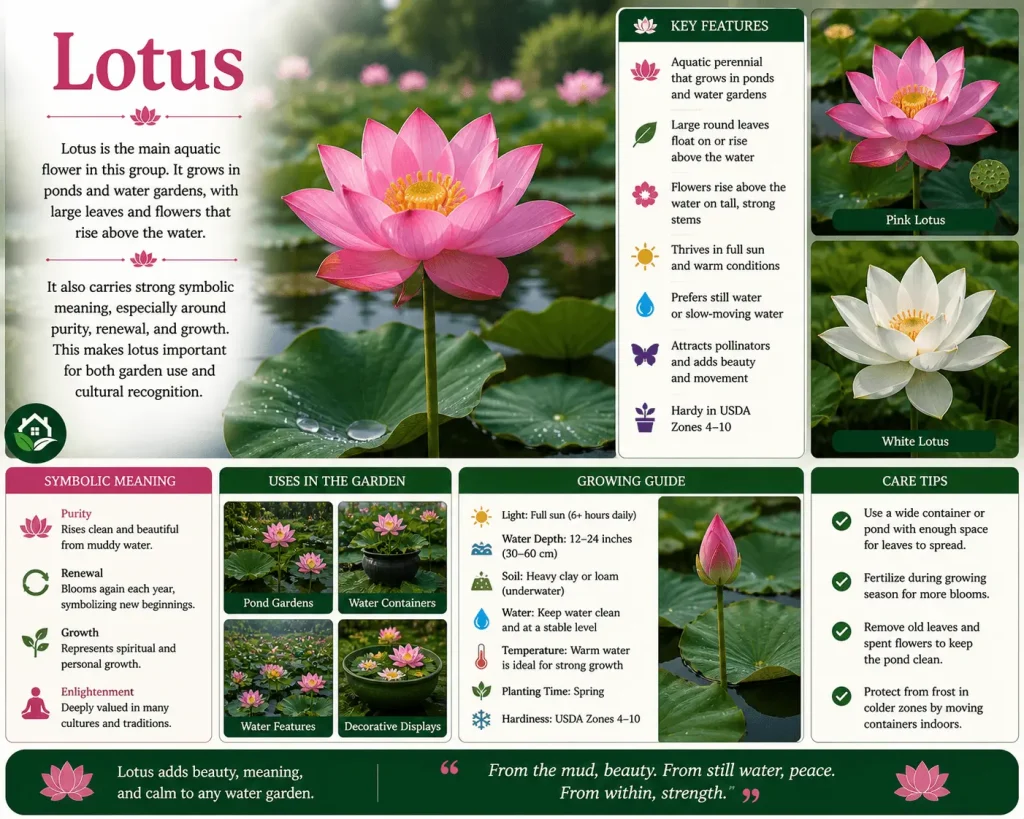
Lotus is the main aquatic flower in this group. It grows in ponds and water gardens, with large leaves and flowers that rise above the water.
It also carries strong symbolic meaning, especially around purity, renewal, and growth. This makes lotus important for both garden use and cultural recognition.
Liatris
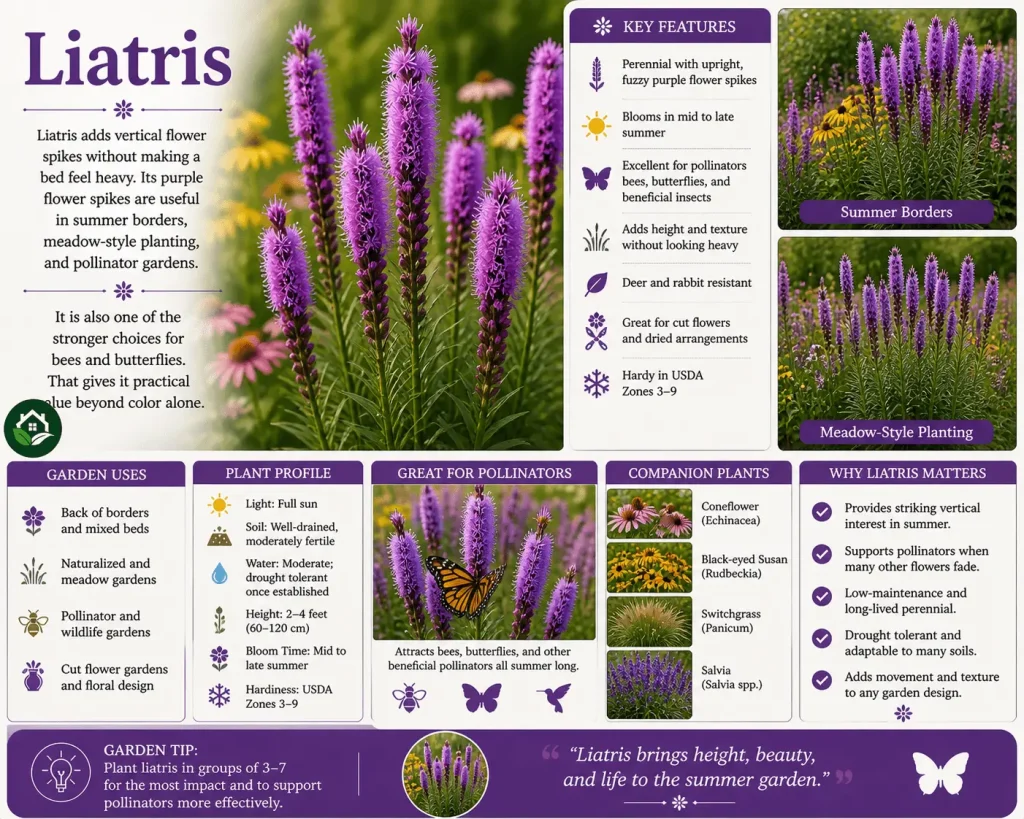
Liatris adds vertical flower spikes without making a bed feel heavy. Its purple flower spikes are useful in summer borders, meadow-style planting, and pollinator gardens.
It is also one of the stronger choices for bees and butterflies. That gives it practical value beyond color alone.
Lantana
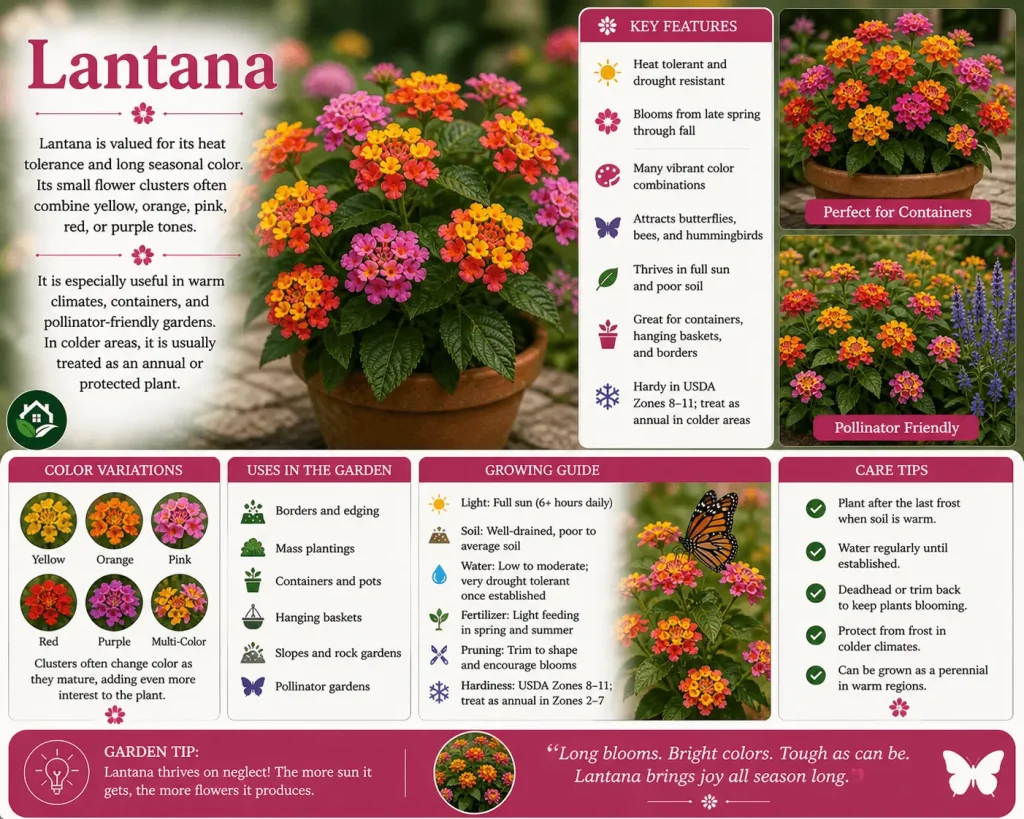
Lantana is valued for its heat tolerance and long seasonal color. Its small flower clusters often combine yellow, orange, pink, red, or purple tones.
It is especially useful in warm climates, containers, and pollinator-friendly gardens. In colder areas, it is usually treated as an annual or protected plant.
Lisianthus
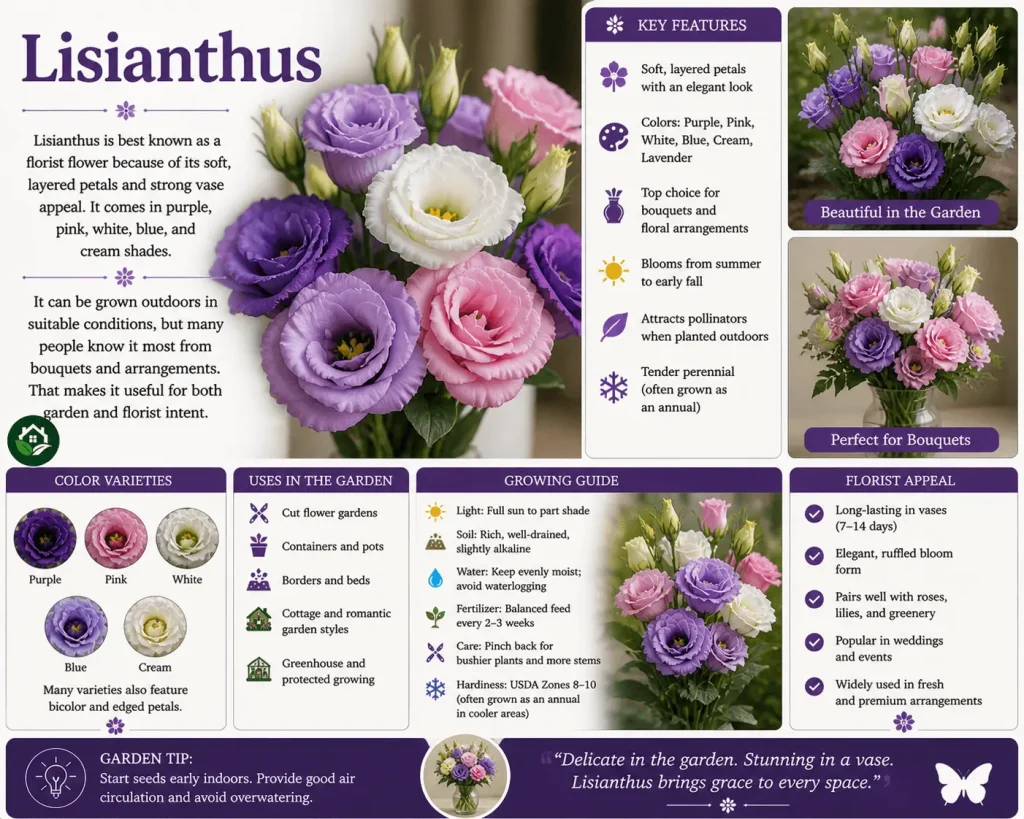
Lisianthus is best known as a florist flower because of its soft, layered petals and strong vase appeal. It comes in purple, pink, white, blue, and cream shades.
It can be grown outdoors in suitable conditions, but many people know it most from bouquets and arrangements. That makes it useful for both garden and florist intent.
Lupine
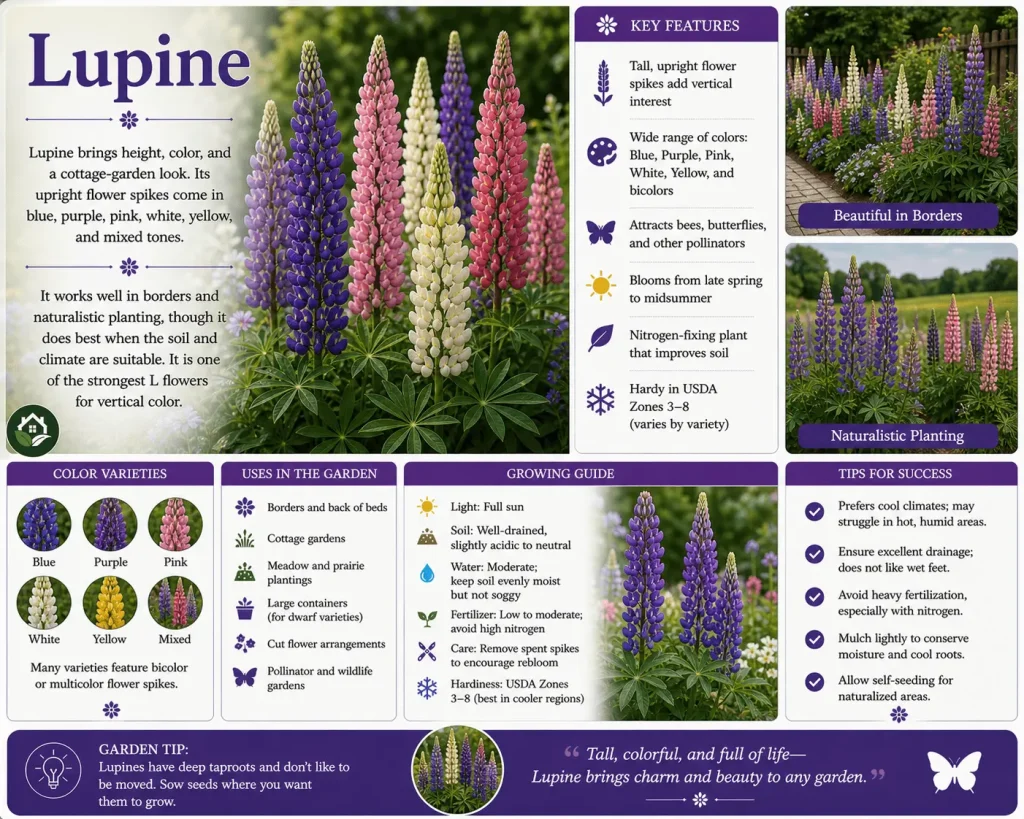
Lupine brings height, color, and a cottage-garden look. Its upright flower spikes come in blue, purple, pink, white, yellow, and mixed tones.
It works well in borders and naturalistic planting, though it does best when the soil and climate are suitable. It is one of the strongest L flowers for vertical color.
Lobster Claw
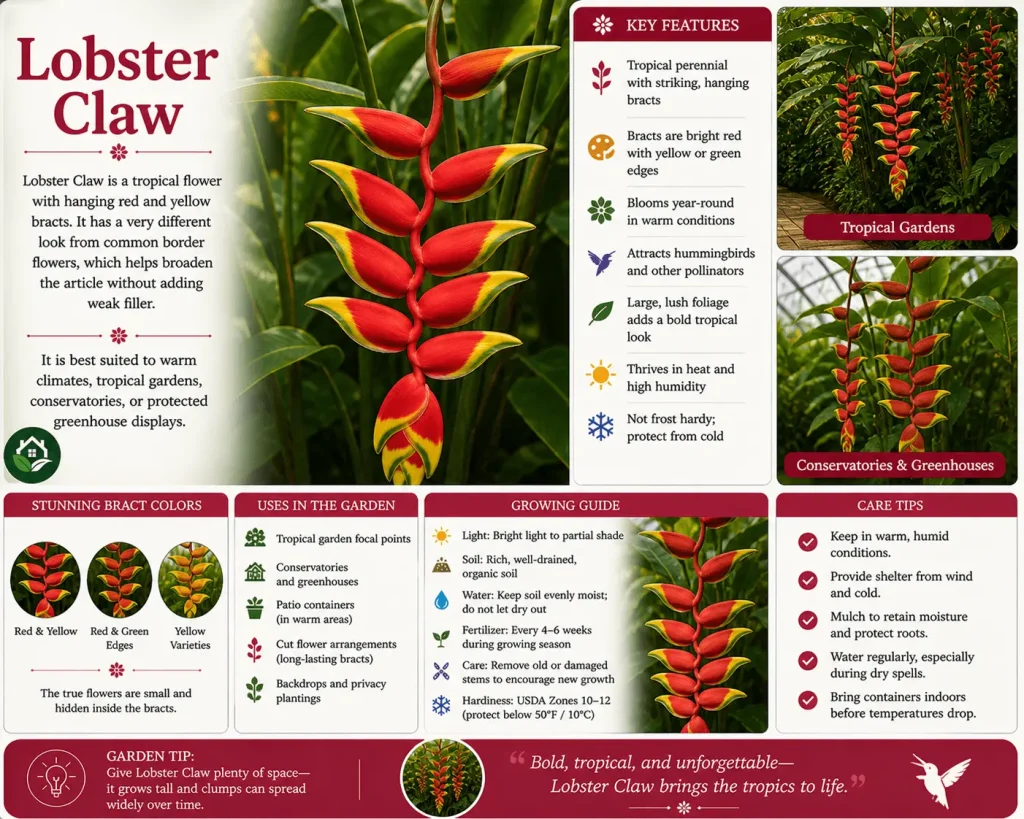
Lobster Claw is a tropical flower with hanging red and yellow bracts. It has a very different look from common border flowers, which helps broaden the article without adding weak filler.
It is best suited to warm climates, tropical gardens, conservatories, or protected greenhouse displays.
Rare Flowers That Start With L
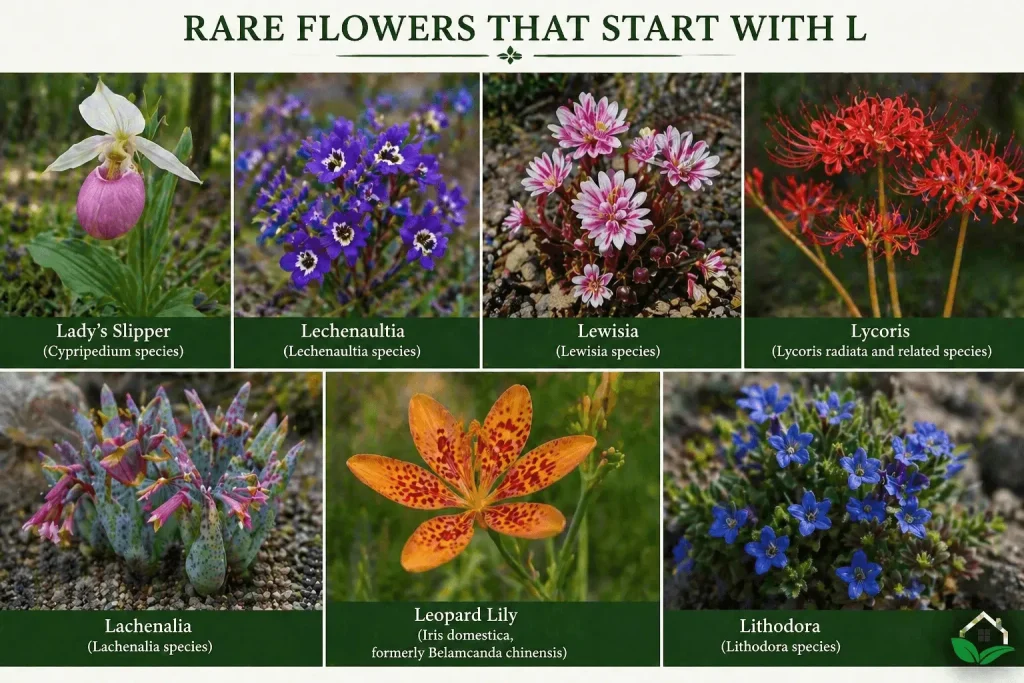
Some L flowers are less familiar because they belong to specialty habitats, native plant collections, alpine planting, tropical gardens, or bulb collections.
Lady’s Slipper is a rare orchid with pouch-shaped blooms. It is more often linked with woodland habitats, native plant interest, and conservation-minded growing than with ordinary bedding displays.
Lechenaultia is a specialty flower group often associated with Australian growing conditions. It needs sharp drainage and is more familiar to collectors and rock-garden growers than casual gardeners.
Lewisia is a compact flowering plant often used in rock gardens and containers. It performs best in sharply drained soil and gives strong color in a small space.
Lycoris, often called surprise lily or spider lily, stands out because its flowers appear on bare stems before the foliage follows. This unusual bloom habit makes it more memorable than many standard bulb flowers.
Lachenalia is a bulb flower with colorful tubular blooms. It is more common in mild climates, containers, and specialty bulb collections than in ordinary garden beds.
Leopard Lily is valued for its spotted orange flowers and a bold summer look. It works best as a specialty perennial rather than a basic bedding plant.
Lithodora is a low-growing plant with clear blue flowers. It is often used in sunny edges, rock gardens, and well-drained sites.
Lobster Claw also belongs in the rare group for many home gardeners because it needs tropical or protected growing conditions.
How This 55 Flower List Was Curated
A strong flower list should be complete without becoming random. This guide includes 55 flowers and flowering plants that start with L, but it avoids adding weak entries only to make the count look larger.
The list includes true flowers, flowering shrubs, flowering vines, aquatic flowers, bulb flowers, and well-known ornamental plants where the bloom is central to the way the plant is recognized.
Inclusion Rules
A flower name was included when it met at least one of these rules:
- The common name starts with L
- The plant is widely recognized for its flowers
- The flower is useful in gardens, bouquets, containers, water gardens, or specialty planting
- The name appears often enough in flower or gardening references to help with identification
- The entry adds real value rather than only increasing the count
What Was Not Counted As A Main Flower
Some L names appear in broader plant lists, but they do not always belong in a clean flower-focused guide. Foliage-first plants, ferns, lichens, cactus entries, and general tree names should not be added unless the article clearly explains why they belong.
That is why the article keeps the count at 55 with valid flower-focused entries rather than adding every plant or botanical term that begins with L.
Symbolism And Cultural Recognition
- Lotus is one of the strongest symbolic flowers in this group and is widely linked with purity, rebirth, and spiritual elevation because the bloom rises cleanly above muddy water.
- Lily has long been associated with purity, especially through the Madonna lily in Christian art and historical symbolism.
- Lilac is often tied to spring, renewal, and older floral-language themes of first love, which helps explain why it carries both garden appeal and sentimental recognition.
- Lavender is commonly linked with calm, devotion, and serenity, a meaning that fits both its fragrance and its long use in floral traditions.
Plants Vs Flowers That Start With L
Not every plant that starts with L should be treated as a flower. Some plants are known mainly for leaves, stems, tree form, or general ornamental value. Others are strongly recognized because of their blooms.
Lavender, lilac, lily, lotus, lobelia, lantana, lupine, lisianthus, and lily of the valley fit naturally because the flower is the main reason they are known or grown. Flowering shrubs such as lilac and Lady Banks’ rose also fit because their blooms match the search intent.
Some names need more care. Lamb’s ear and Liriope are often grown for foliage or groundcover effect, but both produce flowers and can be included when labeled clearly. Laceleaf is often grown as a tropical display plant, but its colorful spathe is commonly treated as part of its ornamental flower display.
Common And Botanical Name
Common names and botanical names should stay connected so the list does not confuse one flower with another.
- Lavender links to Lavandula
- Lily links to Lilium
- Lilac links to Syringa vulgaris
- Liatris links to Liatris spicata
- Lobelia links to Lobelia erinus
- Lotus links to Nelumbo nucifera
- Lily of the valley links to Convallaria majalis
- Lisianthus links to Eustoma grandiflorum
- Love in a mist links to Nigella damascena
- Love lies bleeding links to Amaranthus caudatus
Types Of Flowers That Start With L
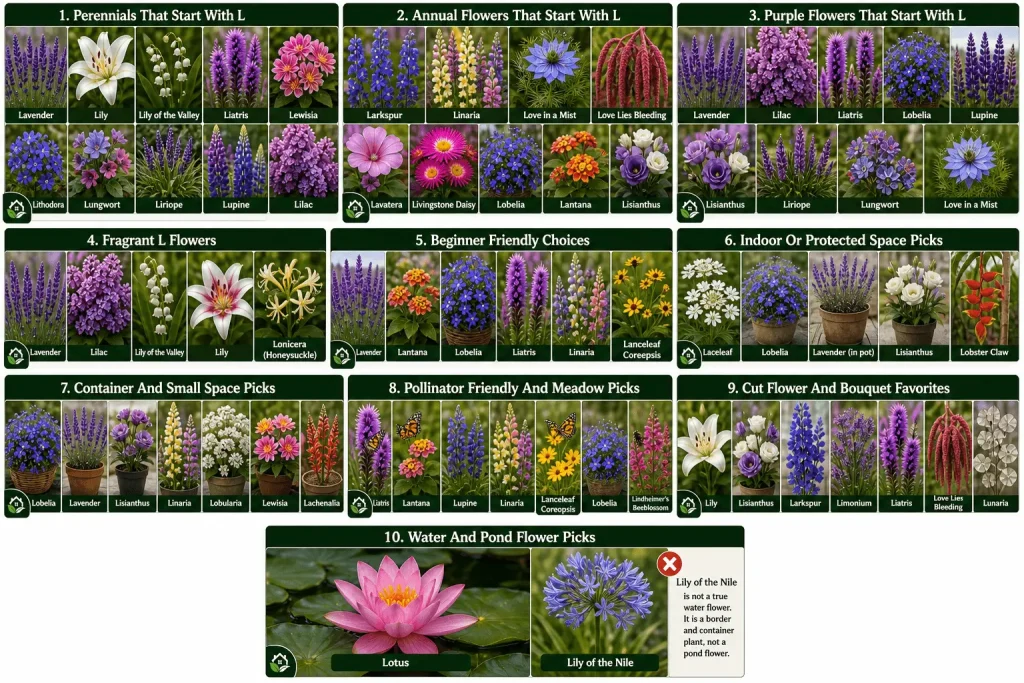
Different L flowers suit different garden goals. Some return every year, some give quick seasonal color, some are best in bouquets, and some are better for shade, containers, or water gardens.
Grouping them by type makes the list more useful than a simple set of names.
Perennials That Start With L
Perennial flowers that start with L include lavender, lily, lily of the valley, liatris, Lewisia, Lithodora, lungwort, Liriope, and many lupines.
Lilac also returns each year, although it is a flowering shrub rather than a standard herbaceous perennial. Lenten rose is another useful perennial for shade and early-season interest.
Annual Flowers That Start With L
Annual L flowers are useful for fast color and seasonal flexibility. Larkspur, Linaria, love in a mist, love lies bleeding, Lavatera, and Livingstone daisy all fit this group.
Some flowers shift between annual and perennial use depending on the climate. Lobelia, lantana, and lisianthus may act differently in warm areas than in colder regions.
Purple Flowers That Start With L
Purple flowers with L include lavender, lilac, liatris, lobelia, lupine, lisianthus, Liriope, lungwort, and love in a mist.
These flowers can help build a cool-toned border with lavender, violet, blue-purple, and soft lilac shades. They also work well with white flowers such as lily, Leucojum, and lace flower.
Fragrant L Flowers
Lavender is one of the strongest fragrance choices because both its flowers and foliage carry scent. Lilac gives a fuller spring perfume, while lily of the valley offers a sweet scent in shaded spaces.
Some lilies are also fragrant, though scent depends on the type. Lonicera, often known as honeysuckle, can also add fragrance when grown as a flowering vine or shrub.
Beginner Friendly Choices
Good beginner-friendly L flowers include lavender, lantana, lobelia, liatris, Linaria, and lanceleaf coreopsis.
The best choice depends on the growing site. Lavender needs sun and drainage, lobelia prefers more moisture, lantana handles heat, and liatris works well in sunny pollinator beds.
Indoor Or Protected Space Picks
Most L flowers are better outdoors than indoors. A few can still work in bright protected spaces, especially when treated as temporary display plants rather than permanent houseplants.
Laceleaf, lobelia, lavender in a sunny container, and florist-grown lisianthus are the strongest protected-space options. Lobster Claw may also work in a greenhouse or conservatory where warmth and humidity are high.
Container And Small Space Picks
Lobelia is one of the best L flowers for containers because it suits edges, baskets, and compact spaces. Lavender also works in pots when drainage is sharp, and light is strong.
Lisianthus, Linaria, Lobularia, Lewisia, and Lachenalia can also fit containers when their light and moisture needs are met. For more compact garden ideas, flowers that start with A include several container-friendly and small-space options.
Pollinator Friendly And Meadow Picks
Liatris, lantana, lupine, Linaria, lanceleaf coreopsis, lobelia, and Lindheimer’s beeblossom are useful for pollinator-minded planting.
These flowers add movement to a bed by attracting bees, butterflies, and other garden visitors. They work best when planted in layered groups rather than isolated single plants.
Cut Flower And Bouquet Favorites
Lily, lisianthus, larkspur, limonium, liatris, love lies bleeding, and lunaria are useful for cut flowers or dried arrangements.
Lily and lisianthus bring strong florist value. Larkspur adds height, limonium is useful as filler, and lunaria is valued for its silver seed pods after flowering.
Water And Pond Flower Picks
Lotus is the main water flower in this list. It grows in ponds and water gardens, with large leaves and flowers that rise above the water.
Lily of the Nile should not be grouped with true water flowers despite its name. It is a border and container plant, not a pond flower.
Quick Planning: Growing And Garden Planning
Bloom season, light, soil, and planting style all shape how these flowers perform. Looking at those details together makes it easier to see which L flowers suit shade, sun, containers, borders, or longer seasonal color.
This part of the guide gives a practical overview of timing, site conditions, and a few useful cautions to keep flower selection more straightforward.
Bloom Season And Color Planning
Flowers with L can cover a broad stretch of the growing season. Spring often begins with lilac, lily of the valley, and lunaria, which bring fragrance and softer color early.
Late spring into early summer moves toward lupine and larkspur, which add stronger vertical form. Summer carries lavender, lily, lisianthus, liatris, and lotus, while warm-season plantings can keep lobelia and lantana going later. This spread makes L flowers useful for sequence planning instead of one short color burst. For more seasonal planning ideas, flowers that start with S can help compare spring, summer, and long-blooming garden choices.
Light, Soil, And Zone Notes
Different L flowers prefer different conditions, so a simple planning table is more useful than a long wall of care text.
| Flower | Light | Soil | Moisture | General Zone Fit | Best Setting |
|---|---|---|---|---|---|
| Lavender | Full sun | Well drained | Low to moderate | 5 to 9 | Herb beds, borders, containers |
| Lilac | Full sun | Fertile, well-drained | Moderate | 3 to 7 | Shrub borders, spring focal points |
| Lily | Full sun to part shade | Rich, well-drained | Moderate | 4 to 9 | Beds, cut flower gardens |
| Lily Of The Valley | Part shade to shade | Humus rich | Moderate to moist | 3 to 8 | Shade gardens |
| Lobelia | Sun to part shade | Moist, fertile | Moderate to high | Often grown as an annual | Containers, edging |
| Lotus | Full sun | Aquatic soil | High | 4 to 10 | Ponds, water gardens |
| Liatris | Full sun | Well drained | Low to moderate | 3 to 9 | Pollinator beds, meadow planting |
| Lupine | Full sun | Well-drained, not overly rich | Moderate | 4 to 8 | Cottage gardens, naturalistic beds |
A pond flower, a shade flower, and a dry border flower should not be treated as if they all want the same setting.
Pollinator, Pet, And Safety Points
Pollinator value is one of the strongest practical reasons to grow many L flowers. Liatris, lantana, lupine, lobelia, Linaria, lanceleaf coreopsis, and Lindheimer’s beeblossom can help make a garden more active during the growing season.
Pet safety needs more care. Lilies and lily of the valley should be treated with caution around animals. Lantana and some other ornamentals can also cause problems if eaten. Any garden with pets should be planned with plant safety in mind, not only flower color.
Local behavior also matters. Some plants spread more aggressively in certain regions, especially in moist soil or mild climates. Before planting widely, check whether the flower is considered invasive or difficult to manage in the local area.
Conclusion
Flower names that start with L cover far more variety than a simple alphabet list might suggest. This group includes fragrant spring bloomers, upright summer flowers, compact container plants, meadow-friendly picks, bouquet favorites, and even true pond flowers.
The strongest way to cover the topic is not to chase the biggest number. It is to build a clean, well-curated guide that gives readers names, quick facts, useful groupings, and practical selection help in one place. That is what turns a basic keyword into a page with real value.
FAQ’s
There is no single official number because flower lists are curated in different ways. Some pages count only common names, while others add botanical names, flowering shrubs, or broader plant entries that do not always match flower intent.
Lavender is one of the most popular flowers with L because it combines fragrance, color, and broad garden use in one plant. Lily and lilac are also very strong contenders because they are widely recognized and closely tied to classic floral imagery. The answer can shift depending on whether the focus is on gardens, bouquets, or scent.
Lavender is often the best overall answer because its scent is familiar, clear, and widely liked. Lilac offers a fuller spring perfume, while lily of the valley feels sweeter and more delicate in smaller spaces. Some lilies can also be strongly scented, though that varies by type.
Several flowers with L are perennial, including lavender, lily, lily of the valley, liatris, Lewisia, and many lupines. Lilac also returns every year as a flowering shrub. Hardiness still depends on species and climate, so local fit matters more than a broad label alone.
Most flowers with L are better suited to outdoor beds, borders, or containers than to classic indoor growing. A few can still do well in pots or bright protected spaces, especially lobelia, lavender in sunny containers, and florist-grown lisianthus. The better approach is to treat them as site-specific choices rather than universal houseplants.
Good beginner choices include lavender, lantana, lobelia, liatris, and Linaria, depending on climate and growing space. These flowers offer visible results without demanding highly specialized care in most settings. The easiest option still depends on sun, soil, moisture, and whether the flower is being grown in a bed or a container.
Rare flowers with L include Lewisia, Lechenaultia, Lycoris, and Lady’s Slipper. These names are less familiar because they are more specialized, less widely stocked, or strongly tied to certain climates or habitats. A quality article should include some of them, but they should not crowd out the more useful core names.
Lobelia is one of the best container flowers with L because it works well in baskets, edging, window boxes, and small pots. Lavender can also work in containers when the pot drains well, and the site gets strong sun. Lisianthus, Linaria, Lobularia, Lewisia, and Lachenalia can also suit container planting.
Lily, lisianthus, larkspur, limonium, liatris, love lies bleeding, and lunaria are useful for bouquets or arrangements. Lily and lisianthus give a polished florist look. Larkspur adds height, limonium works as filler, and lunaria is often valued for dried seed pods.
Lotus is the main true water flower in this list. It grows in ponds and water gardens, with flowers and leaves rising above the water. Lily of the Nile should not be treated as a water flower, even though the name sounds aquatic. It is better placed in borders, patio containers, and warm-climate gardens.
No. Some plants that start with L are grown mainly for foliage, tree form, or general ornamental value rather than flowers. A clean flower list should include true flowers and flowering plants where the bloom is important. It should avoid adding weak filler entries only to increase the count.
Purple flowers with L include lavender, lilac, liatris, lobelia, lupine, and some forms of lisianthus and love-in-a-mist. The shades can range from pale lavender tones to stronger blue-purple and deep violet. That makes this cluster especially useful for readers planning a tighter color palette.
A common flower name is the everyday name most people search for, such as lavender or lily. A Latin name is the botanical label used for more exact plant identification, such as Lavandula or Lilium. Good flower content uses both when useful, but keeps them clearly linked so the page stays accurate and easy to follow.
References
- How to grow lavender | RHS
- Lilium | lily | RHS
- Syringa vulgaris | common lilac | RHS
- Convallaria majalis | lily of the valley | RHS
- Lobelia erinus | trailing lobelia | RHS
- How to grow lupins | RHS
- Nelumbo nucifera | Plant Finder | Missouri Botanical Garden
- Liatris spicata | Plant Finder | Missouri Botanical Garden
- Lantana camara | Plant Finder | Missouri Botanical Garden
- Eustoma grandiflorum | Plant Finder | Missouri Botanical Garden
- Toxic and Non-toxic Plants: Lily of the Valley | ASPCA
- Which Lilies Are Toxic to Pets? | ASPCA