High Altitude Outdoor-Indoor Living Design for Colorado Homes
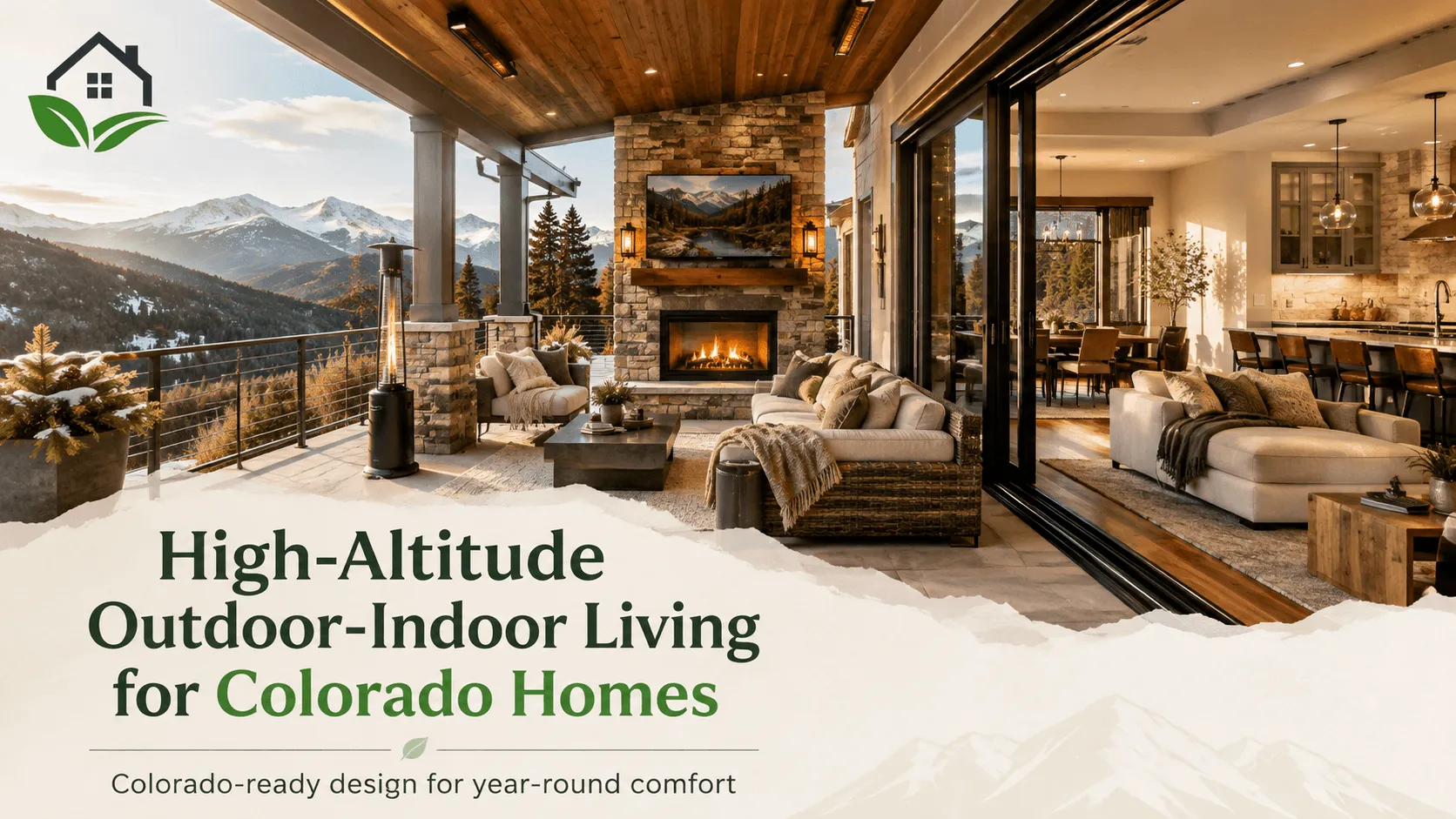
The Colorado Front Range features homes with beautiful mountain views and lots of sunshine, and an outdoor lifestyle that they naturally want to bring indoors. This allows for a smooth flow between inside comfort and expansive external patio space, adding to your usable square footage and enjoying the natural beauty of the location. However, creating transitional dwelling zones in high altitude environments presents its own environmental obstacles, such as fast temperature changes, high UV radiation and significant winter snowfall.
If you are opening up your main floor to a beautiful garden, working with home renovation Castle Rock experts will make sure the structural framework and insulation will withstand the temperature at altitude. Properly designed with durable weather-resistant materials and efficient heating technologies, an indoor-outdoor living space becomes a luxury year-round getaway.
Engineering for Elevation: Colorado’s Climate Challenges
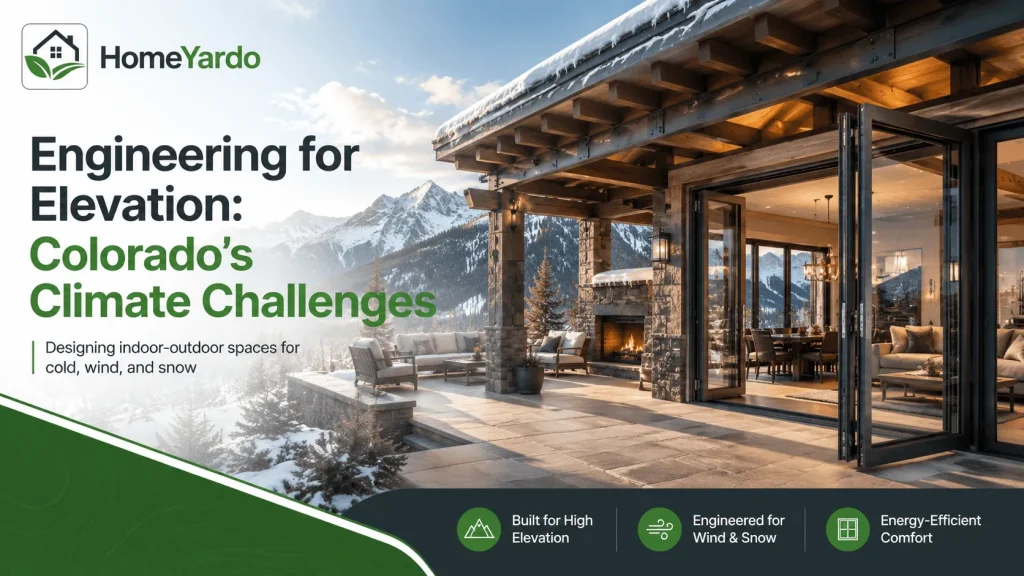
The architectural approach required in high-altitude situations is completely different from that required in coastal or low-elevation areas. Above 5,000 feet, the thin mountain air causes tremendous diurnal temperature swings, with warm afternoon light fast giving place to frigid nite temps. Designing a functioning outdoor-indoor living environment calls for heavy-duty structural engineering to bear the brunt of extreme climate conditions without losing style.
Thermal Break Technology and Sub-Zero Insulation
Transitioning from the conditioned air inside to the outdoor patio areas causes large thermal bridges if not done correctly. Aluminum or steel frames of multi-slide and bi-fold glass door systems must contain high-performance thermal breaks. During frigid winters you want to trap in the heat of a furnace. During mid-summer afternoons you want to reflect intense solar radiation. This requires double or triple pane low-emissivity (Low-E) glass panels. Proper flashing and sub-floor sealing around the door tracks also prevents wind-driven snow and rainwater from getting into your home’s foundation.
Structural Framing for High Wind and Snow Loads
Colorado weather is infamous for sudden blizzards and high mountain blasts of wind. Overhead structures, such as covered pergolas, extended roof lines and timber-frame pavilions, must be constructed to support heavy snow-load weights without sagging. Heavy Douglas fir pillars, reinforced steel brackets and deep concrete footings secured below the frost level ensure that your outdoor addition will stand up to the worst winter storms.
Choosing Materials that are Highly Durable, UV and Weather Resistant
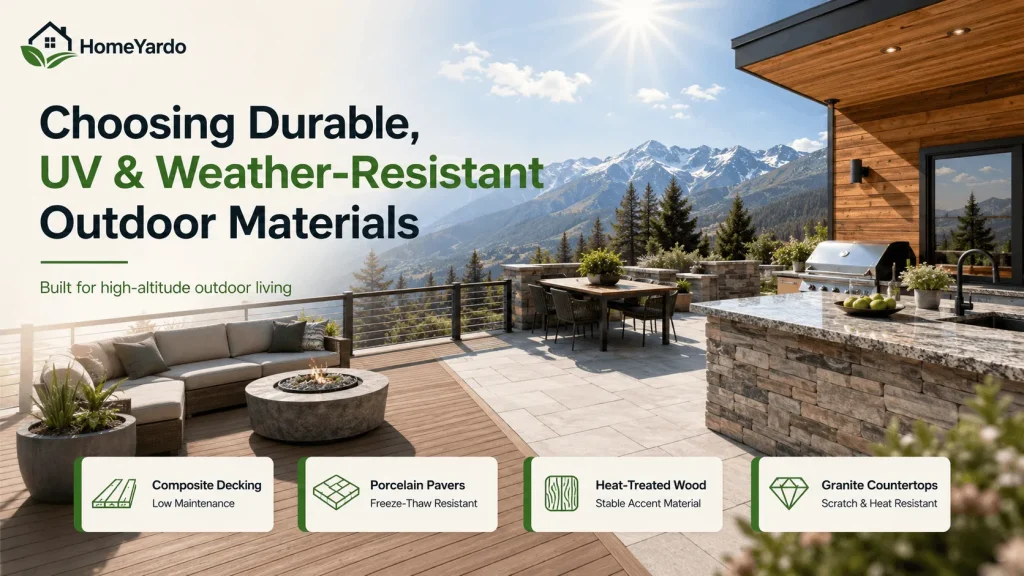
Cheap building materials are quickly destroyed by the extreme UV flux at high altitudes. Common problems are sun bleaching, warping of timber, and cracking of masonry if materials are not selected with robustness to high elevations in mind.
Composite Decking vs. Real Hardwoods
Natural wood decks add a rustic mountain charm, but they require rigorous sealing and staining each year to survive Colorado’s dry air and UV radiation. High-performance composite decking is designed with capped polymer shells for greater UV protection to help prevent fading, splintering and moisture absorption. If natural wood is your choice, thick hardwoods such as Ipe or thermally modified timber are more dimensionally stable to humidity changes than typical pressure treated pine.
Weatherproof Masonry & Non-Porous Stone
Stone patios and outdoor cooking islands are subject to freeze-thaw cycles. Soft limestone or unsealed sandstone (porous natural stones) will absorb melting snow and expansion upon refreezing will produce surface flaking or cracking. Non-porous materials such as granite, quartzite or high-density porcelain pavers do not allow water to penetrate, and they hold their shape and polished appearance even when exposed to freeze-thaw cycles.
| Outdoor Material | Resistance Level | Care Requirements | Great For High Altitude Use |
|---|---|---|---|
| Capped Composite Decking | High UV & Humidity | Low (Periodic wash) | Platforms & walkways open deck |
| Porcelain Tile Pavers | Thaw Proof | Sweep/vacuum: minimal | Flooring for covered patios and kitchen bases |
| Heat Treated Wood | Medium UV / High Moisture | Medium (Occasional Oil) | Decorative accent walls and ceiling soffits |
| Countertops Granite | Scratch & Thermal Proof | Low (Annual Seal) | Food preparation tables for outdoor kitchens |
Heating and Enclosures for Year-Round Use
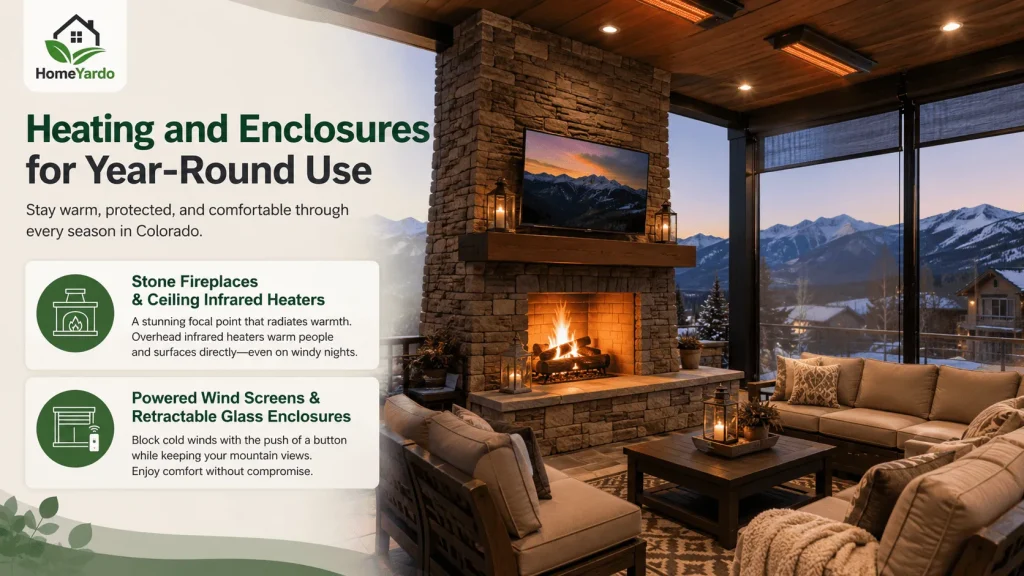
For an outdoor-indoor space in Colorado to be genuinely enjoyable, it needs to be comfortable beyond the short summer months. With good heating systems and wind protection, you can extend your outdoor season for fall football games and cool winter nights.
Stone Fireplaces Floor-to-Ceiling Infrared Heaters
A dramatic centerpiece and an important heat source is a brick wood-burning or gas fireplace. On chilly nites a stone fireplace radiates heat and is the center of a comfortable meeting spot. Adding flush-mounted overhead electric infrared heaters (such as those made by Infratech or Sunlight) to the fireplace adds targeted heat that heats items and people directly rather than blowing it away in mountain gusts.
Powered Wind Screens & Retractable Glass Enclosures
A rush of frigid wind might put an end to a warm evening. Block chilly gusts with the stroke of a button by installing heavy-duty motorized solar and wind screens around the perimeter of open patios. Clear vinyl or reinforced mesh screens keep heat in from overhead radiators but yet offer stunning mountain vistas.
Designing for a Consistent Interior and Exterior Continuity
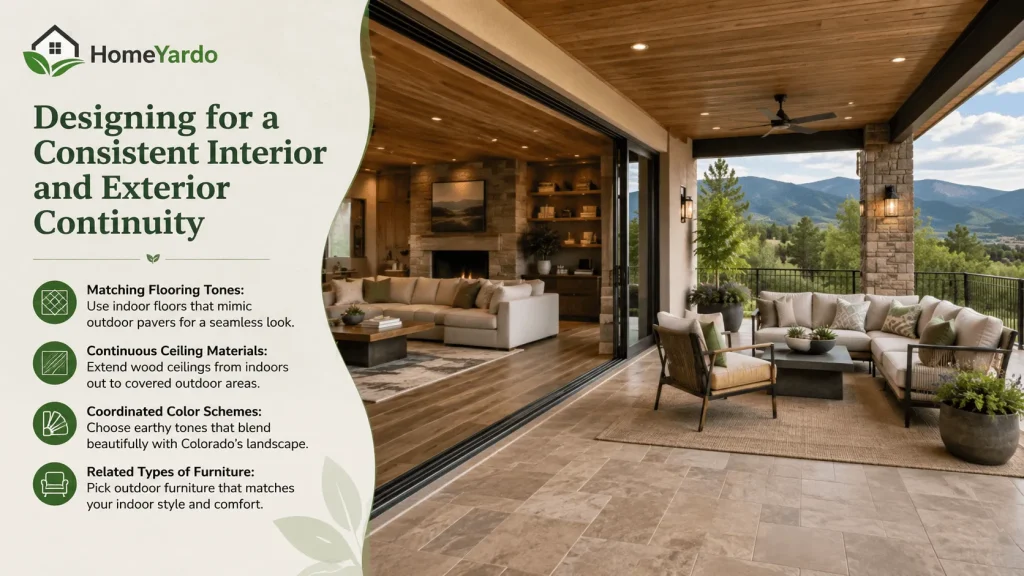
Visual harmony is essential to a successful indoor-outdoor integration. When the interior finishes are in total harmony with the exterior hardscaping, the line between inside and outside vanishes altogether:
- Matching Flooring Tones: Select indoor hardwood or tile that mimics the color and texture of your outside patio pavers to create an uninterrupted sightline.
- Continuous Ceiling Materials: Tongue-and-groove wooden ceiling planks go from the inside great room right out under the covered patio roof.
- Coordinated Color Schemes: Employ interior colors that are earthy, such as warm slate, charcoal, sage green and natural lumber that compliment the Colorado scenery around them.
- Related Types of Furniture: Select weatherproof outdoor furniture with clean lines and comfortable performance textiles that complement the design of your inside living room sofa.
Investing in Your Colorado Mountain Lifestyle
One of the most enjoyable home upgrades a Colorado homeowner can undertake is designing an outdoor-indoor living room at high altitude. You combat the specific environmental elements such as freeze-thaw cycles, high wind loads and intense UV radiation with smart engineering and resilient materials to build an adaptable oasis. From summer picnics in the sun to hot cocoa by a blazing outdoor fireplace with snow falling around you, a seamless indoor-outdoor environment enriches your everyday lifestyle and adds lasting market value to your house.
FAQ’s
Outdoor-indoor living spaces are places that are designed to connect the inside of a home to an outdoor patio, deck or covered living space. Big glass doors, matching finishes, heating, weather protection can all help to provide for a more seamless connection.
Homeowners in Colorado need to think about temperature variations, snow loads, high winds, UV exposure, freeze-thaw cycles, insulation, drainage and the right materials that can endure the weather.
Good choices are capped composite decking, porcelain outdoor pavers, granite, quartzite and thermally modified wood. The best material depends on the application, exposure, maintenance requirements and local conditions.
Infrared heaters, outdoor fireplaces, wind screens, covered structures and retractable glass or other appropriate enclosures can make outdoor locations more comfortable during the colder months.
Big multi-slide or bi-fold doors can be good for indoor-outdoor designs but their thermal performance, glazing, framing, weather sealing and installation need to be suitable for the local climate.
You may be exposed to more UV at higher elevations, as well as fast weather changes, snow, freezing conditions and wind. These considerations can alter materials, insulation, structural requirements and the long-term performance of outdoor areas.
If the flooring tones, ceiling materials, colors, textures and furniture types are compatible, it can create a visual consistency between indoor and outside spaces.
A well-designed outdoor-indoor living room can enhance use and appeal, especially when it is well integrated with the layout of the home and built to withstand local weather conditions. The real impact on property value will depend on the location, design and demand from buyers.