Smart Ways to Troubleshoot and Improve Your Sprinkler System Before Small Problems Get Expensive
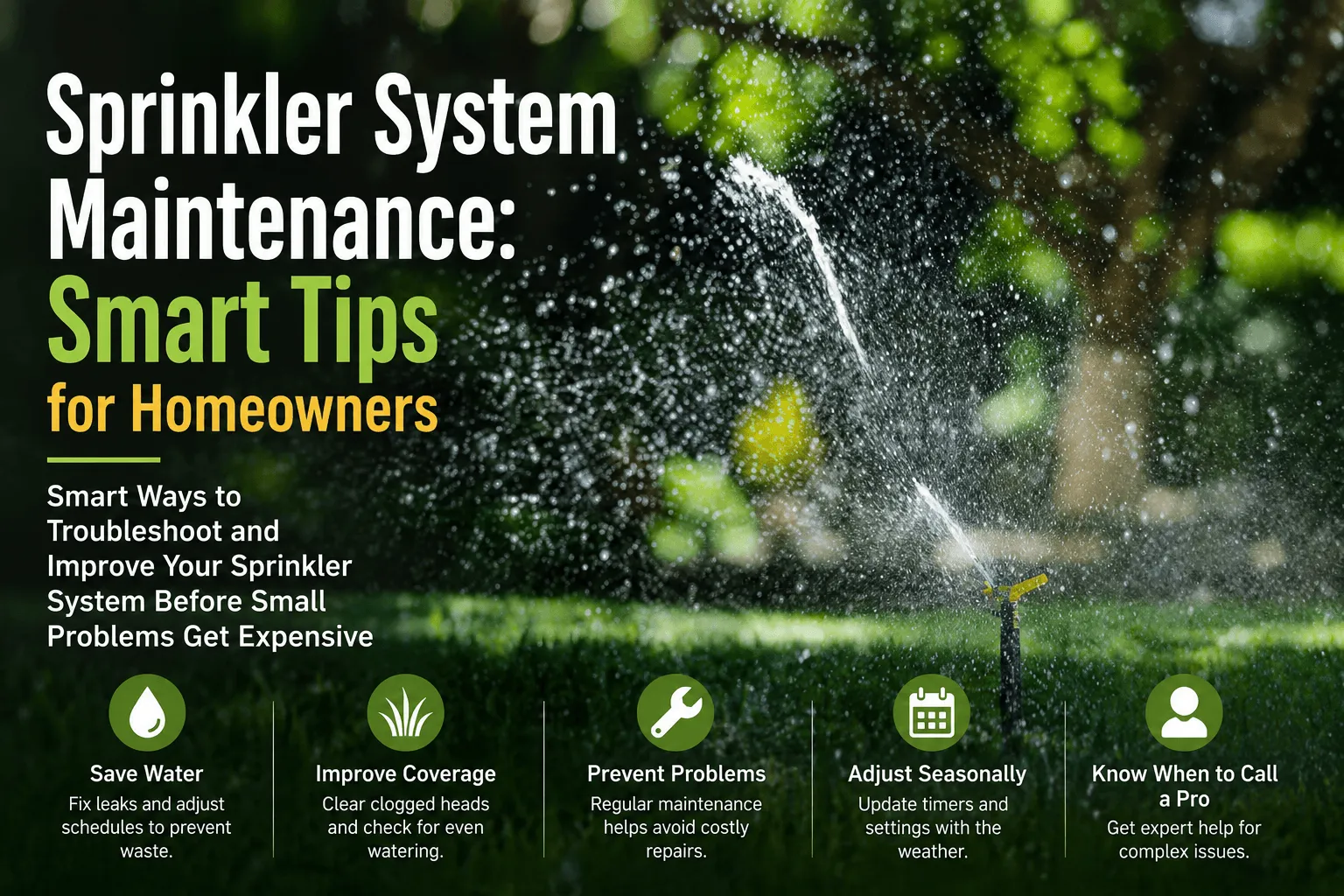
If your yard depends on a sprinkler system, a few overlooked issues can quietly waste water, raise your bill, and leave patches of grass looking rough. In Plantation, where heat, rain, and fast-growing landscapes all compete for attention, irrigation problems tend to show up quickly. You don’t need to be a contractor to spot early warning signs, though. With a little know-how, you can catch common issues before your lawn starts sending distress signals.
Know When a Repair Is Beyond a Quick DIY Fix
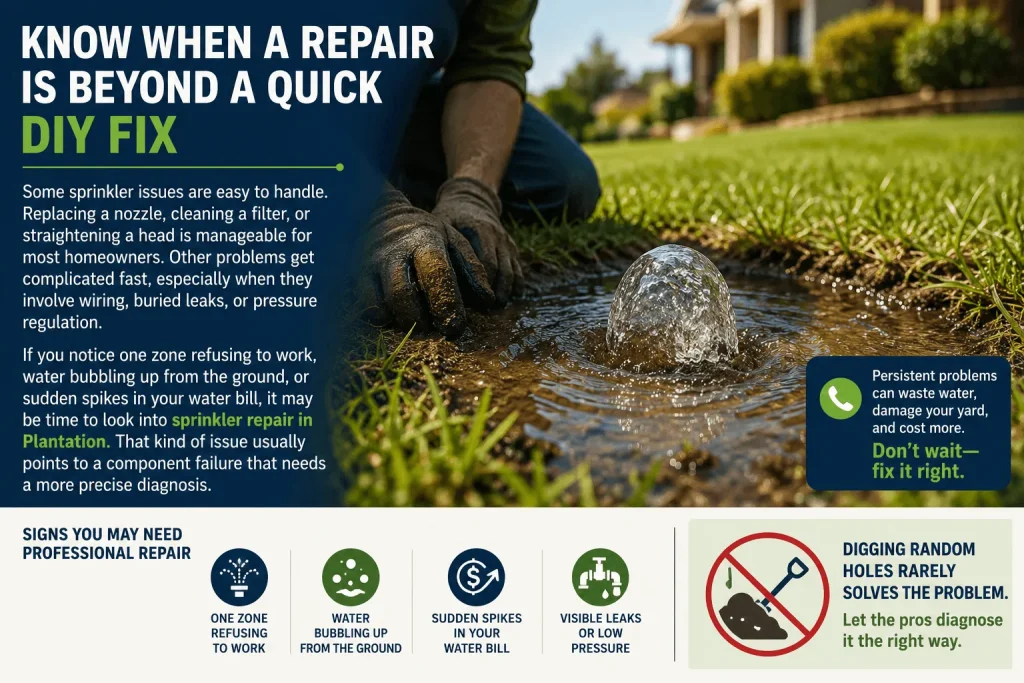
Some sprinkler issues are easy to handle. Replacing a nozzle, cleaning a filter, or straightening a head is manageable for most homeowners. Other problems get complicated fast, especially when they involve wiring, buried leaks, or pressure regulation.
If you notice one zone refusing to work, water bubbling up from the ground, or sudden spikes in your water bill, it may be time to look into sprinkler repair in Plantation. That kind of issue usually points to a component failure that needs a more precise diagnosis.
The goal isn’t to avoid professional help at all costs. It’s to avoid turning a targeted repair into a weekend-long excavation project. Digging random holes in your yard with optimism alone rarely ends well.
Start by Reading What Your Lawn Is Telling You
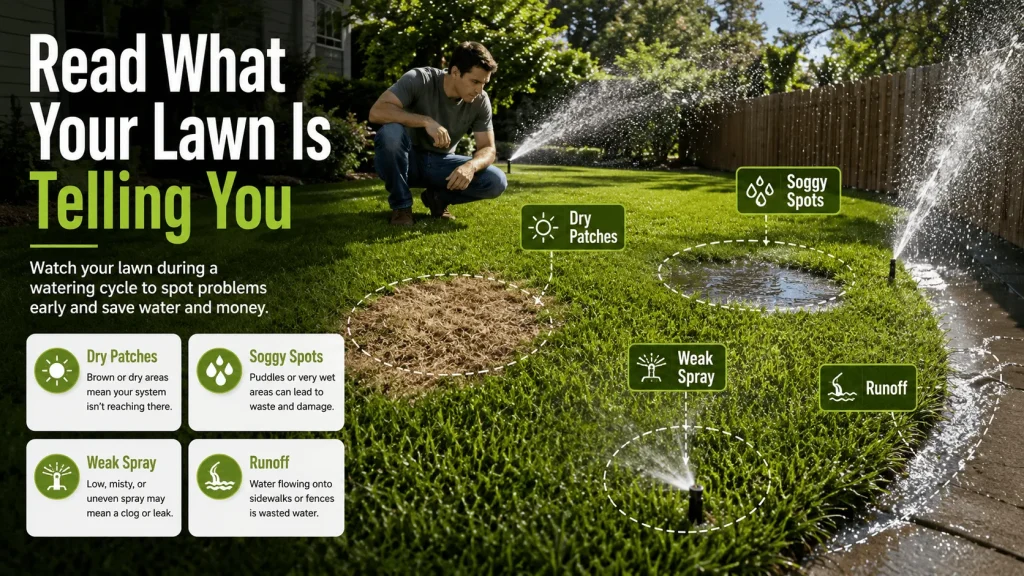
Your sprinkler system usually gives you clues before it fails outright. You just need to notice them. Dry circles, soggy strips, weak spray, and water running into the sidewalk all point to different problems.
A brown patch doesn’t always mean your grass needs more water. It may mean one head is clogged or tilted away from the area. A swampy corner can signal a broken valve or poor drainage. If one zone turns on with low pressure, there may be a leak underground.
Watch one full watering cycle in daylight. Yes, it’s not thrilling entertainment, but it reveals a lot. Look for heads that don’t pop up, streams spraying the fence, or misting so fine that wind carries it off before it hits the soil.
Check the Most Common Trouble Spots First
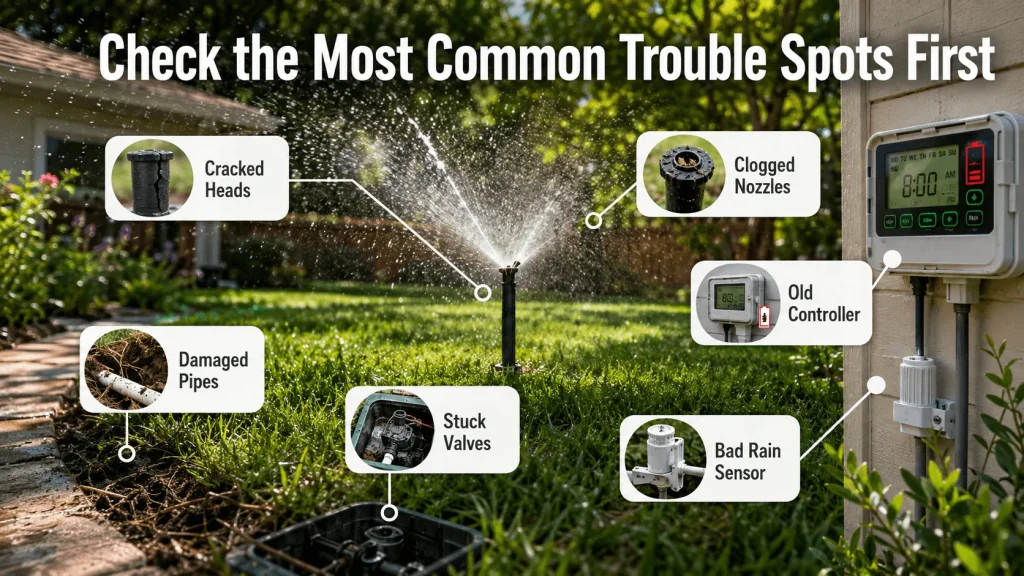
You can save yourself a lot of time by inspecting the parts that fail most often. Sprinkler systems are simple in theory, but they deal with dirt, roots, pressure changes, weather, and lawn equipment. That’s a rough job description.
Start with these areas:
- Sprinkler heads cracked by mowers or foot traffic
- Nozzles clogged with sand or debris
- Pipes damaged by roots or shifting soil
- Valves stuck open or closed
- Controllers with outdated schedules or dead backup batteries
- Rain sensors that no longer respond properly
If a zone won’t turn on, the issue may be electrical rather than hydraulic. If it won’t turn off, suspect a valve. If the water pressure seems uneven, compare each head in the same zone. One bad component can throw off the entire pattern.
Adjust Watering Schedules to Match Real Conditions
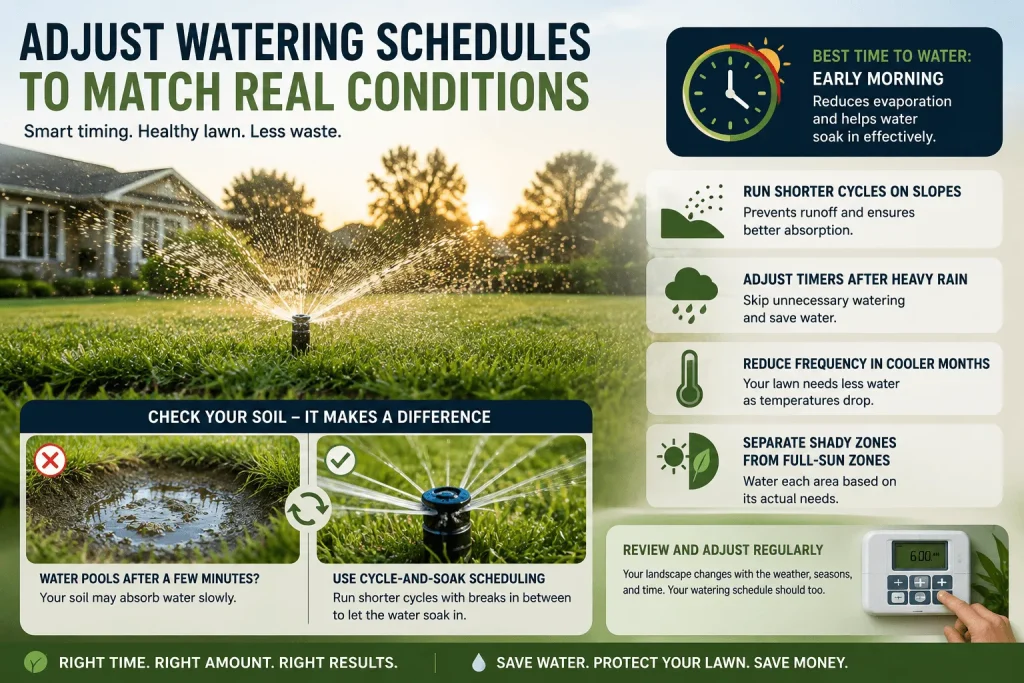
A lot of sprinkler problems aren’t hardware problems at all. They’re scheduling mistakes. You can have a perfectly working system that still wastes water because it’s set to run too often, too long, or at the wrong time.
In warm climates, many homeowners water by habit instead of by need. That’s where things get messy. Grass type, sun exposure, soil, slope, and season all affect how much irrigation makes sense.
Use these habits to tighten your schedule:
- Water early in the morning to limit evaporation
- Run shorter cycles on slopes to reduce runoff
- Adjust timers after heavy rain
- Reduce frequency during cooler months
- Separate shady zones from full-sun zones when possible
If water pools after a few minutes, your soil may absorb water slowly. In that case, cycle-and-soak scheduling works better than one long session.
Pay Attention to Drainage and Soil Behavior
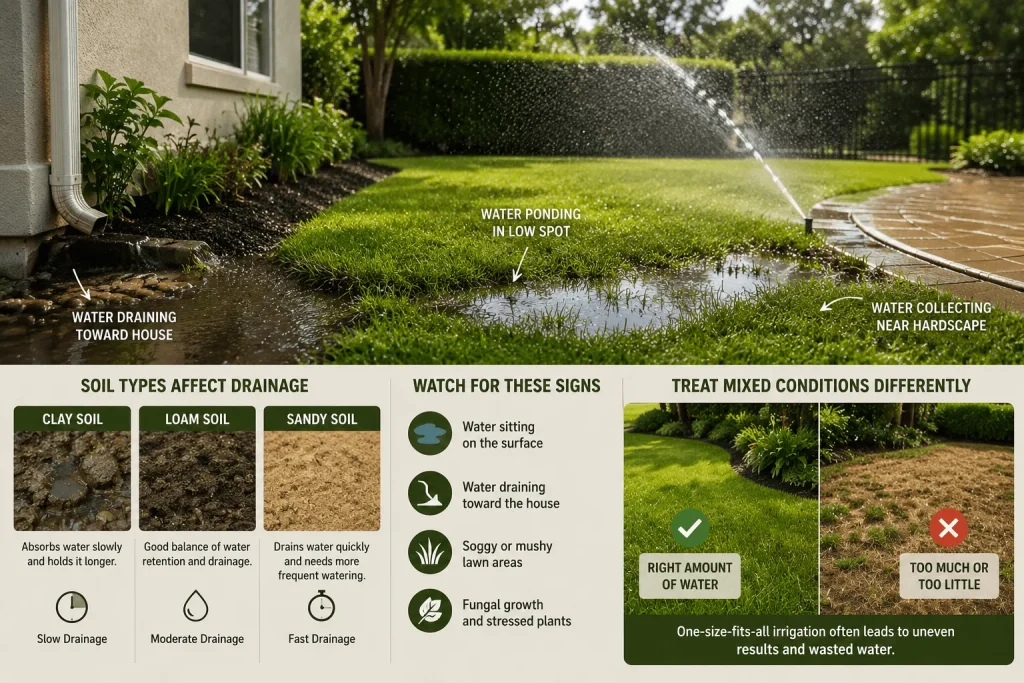
Your sprinkler system doesn’t work in isolation. It interacts with the soil under your lawn, the grade of your yard, and whatever landscaping changes you’ve made over time. A new patio, planting bed, or retaining edge can alter how water moves.
Clay-heavy soil absorbs water slowly and tends to hold it longer. Sandy soil drains fast and often needs shorter, more frequent watering. Compacted areas can create runoff even when your timing looks reasonable on paper.
Watch what happens after irrigation stops. If water sits on the surface, drains toward the house, or collects near hardscaping, don’t ignore it. Persistent oversaturation can affect plant health and encourage fungal issues.
If your lawn has mixed conditions, treat it that way. One-size-fits-all irrigation sounds efficient, but in practice it often leaves you with one thriving section and one section plotting its revenge.
Use Seasonal Checkups to Prevent Expensive Surprises
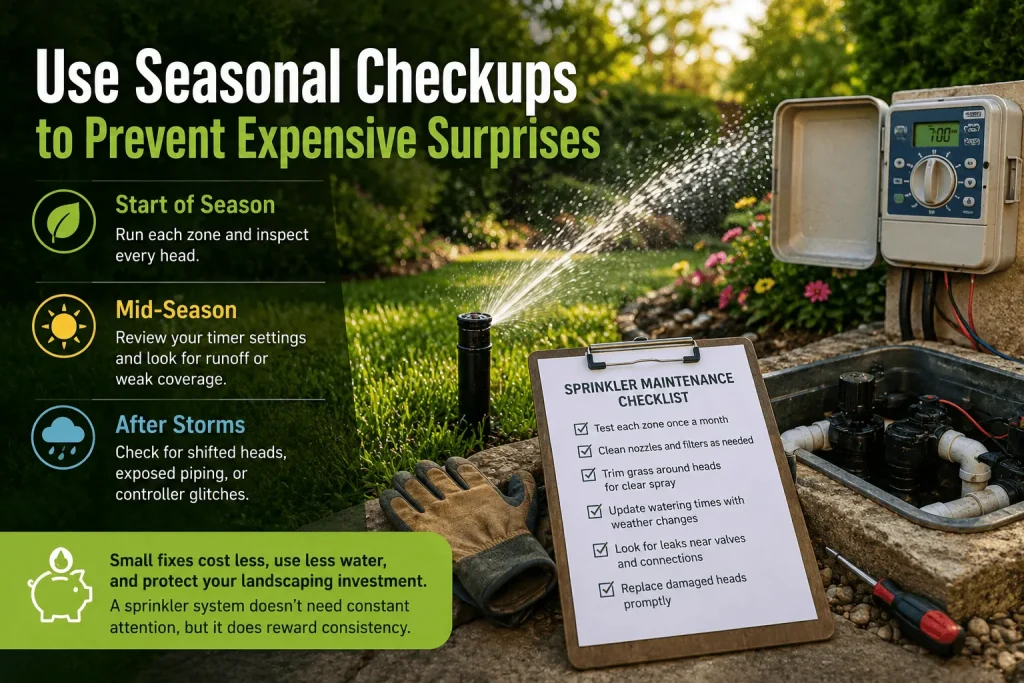
The best sprinkler maintenance is boring in the most useful way. A few routine checks each season can prevent the kind of failure that shows up only after your yard dries out or your bill jumps.
At the start of the season, run each zone and inspect every head. Mid-season, review your timer settings and look for runoff or weak coverage. After storms, check for shifted heads, exposed piping, or controller glitches caused by power interruptions.
Keep a simple maintenance checklist:
- Test each zone once a month
- Clean nozzles and filters as needed
- Trim grass around heads for clear spray
- Update watering times with weather changes
- Look for leaks near valves and connections
- Replace damaged heads promptly
Small fixes cost less, use less water, and protect your landscaping investment. A sprinkler system doesn’t need constant attention, but it does reward consistency.
Build a Healthier Yard by Thinking Beyond the Sprinklers
A better lawn isn’t only about irrigation. If your grass struggles even when watering seems correct, the issue may involve mowing height, soil health, shade, or plant selection. Sprinklers can support a landscape, but they can’t compensate for every mismatch.
Mowing too short increases stress and water demand. Poor soil limits root growth. Plants placed in the wrong conditions often need more irrigation than the space can realistically support. Native or climate-appropriate choices usually perform better with less intervention.
When you treat irrigation as one part of a broader yard strategy, your system becomes easier to manage. You use less water, spot problems faster, and get better results without constant tweaking.
That’s the real upgrade: not just a greener lawn, but a yard that works with your environment instead of fighting it every week.
FAQ’s
Walk each sprinkler zone at least monthly during watering season. Check for plugged heads, leaks, weak spray, uneven coverage, and damaged parts.
Common difficulties include clogged or broken sprinkler heads, damaged pipes, malfunctioning valves, controller problems, insufficient water pressure, and improper watering schedules.
If a zone doesn’t come on, it could be a controller problem, bad valve, damaged wire, or electrical problem. The reason can be checked from controller and valve.
Low pressure can be caused by leaks, blocked sprinkler heads, damaged pipes or problems with the water supply. If only one zone is low pressure, investigate the individual components first.
The best time to water is early in the morning when it is cooler and less water is lost to evaporation. You also have to change your watering schedule dependent on rain, season, soil, and plant needs.
Keep sprinkler heads clean and in the right position, replace leaks immediately, alter watering schedules after rain, use shorter cycles on slopes and don’t water more than your landscape needs.
Call for professional aid if the problem involves hidden leaks, electrical wiring, pressure regulation, a zone that will not operate or recurring failures you cannot properly analyze.