Best Time for Seasonal Tune-Ups for Residential HVAC Systems

A pleasant home needs an HVAC system that can adapt to fluctuating weather conditions. Routine maintenance lets professionals check heating and cooling systems before demand rises with the season. Scheduling a tune-up at the correct time can also help homeowners uncover maintenance issues before a tiny problem becomes a bigger repair worry.
The best time for seasonal tune-ups and residential HVAC repair is usually around the shoulder seasons, with springtime being a good time for AC maintenance and fall a good time for heating inspections. These opportunities allow HVAC technicians to evaluate system performance before the most demanding working season for the equipment begins.
This article outlines when to schedule seasonal HVAC tune-ups, what professionals may inspect, and why pre-season treatment can be more practical than waiting until the weather gets extreme.
When Should I Schedule a Seasonal HVAC Tune-Ups?
The optimum time to do HVAC maintenance depends on if you’re preparing the cooling or heating system for its most busy season.
- Spring: Schedule your AC tune-up before you need cooling in the summer.
- Fall: Book a heating tune-up before the winter weather sets in.
- Demand before peak: Getting in earlier may give you more options.
- When issues occur: If the system is already exhibiting indicators of a problem don’t wait for the next seasonal tune-up.
Seasonal maintenance is intended to get equipment ready for heavy use. A specialist may look at the system, see how it’s doing and find parts that may require some care.
Spring AC Tune-Up: March & April
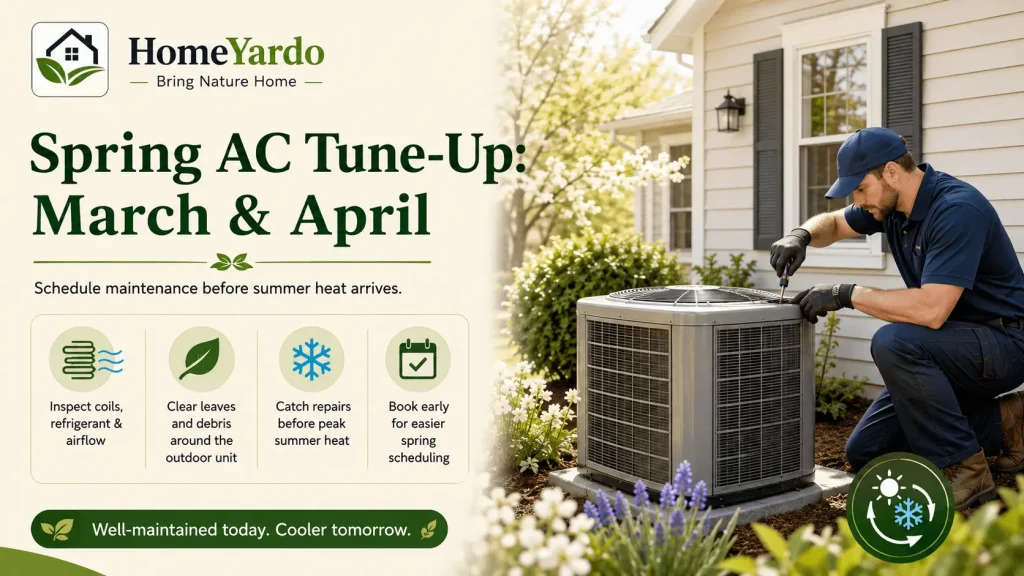
Spring is a good time to arrange air conditioning maintenance before the heat hits. Scheduling a tune-up in March or April provides HVAC pros the opportunity to check out cooling equipment before the system begins running frequently during summer.
Prepare Cooling Parts For Summer
A spring tune-up gives technicians a chance to check components that impact air conditioner performance. Depending on the system, a professional may inspect the evaporator and condenser coils, refrigerant levels, electrical connections, airflow and more.
This examination is intended to evaluate the status of the system before higher cooling demand. Homeowners who detect essential maintenance or repairs in the spring have time to get them fixed before the warmest period of the year.
Check the AC Unit Outdoors After Winter
When the system is less frequently used, outdoor HVAC equipment might collect leaves, dirt, trash, and other things.
A technician can look for issues that might influence airflow or functioning in and around the outside unit during a seasonal check-up. Also keeping the area around the equipment sufficiently clear can help the system run without needless impediment.
Get Your AC Serviced Before Summer Demand
Waiting for the first big hot to get your AC tuned up can make scheduling a bit tougher. This is because when there’s an increase in temperature, HVAC service providers get more calls and cooling systems run longer.
By scheduling maintenance in March or April, homeowners will be able to schedule a convenient time and fix any faults detected during the inspection.
Heating Tune-Up: Fall (September-October)
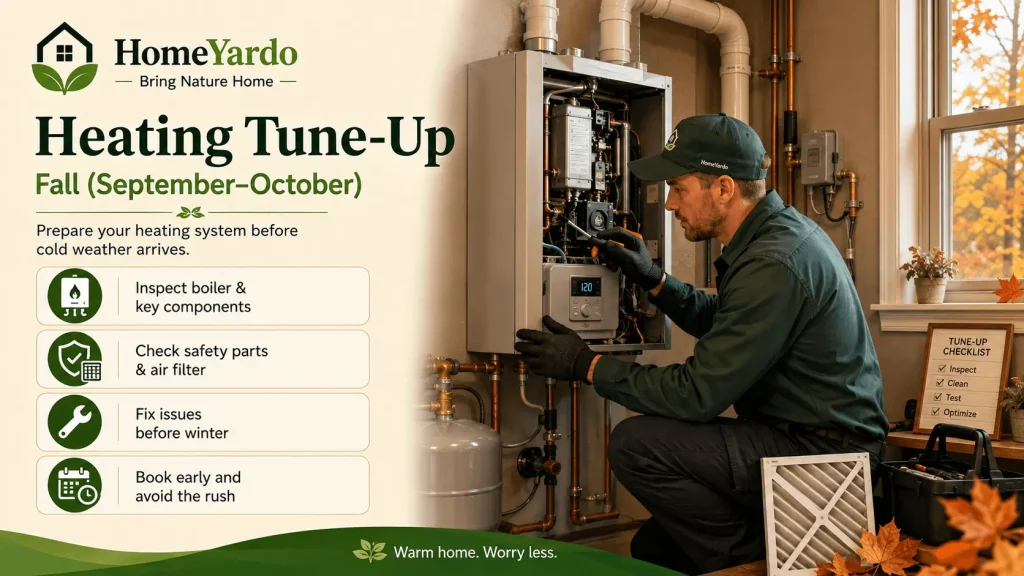
Fall is also a good time to prepare heating equipment for the cold weather. Having a tune-up done in September or October gives the professionals a chance to check out your heating system before it has to work harder and more often.
Check out the boiler Before Cold Weather Comes
A tune-up on your heating may involve checking key components including heat exchangers, burners, ignition systems, electrical connections and other items unique to the system.
The exact inspection process depends on the type of HVAC equipment in the home. A competent specialist can inspect the system and determine any parts that need to be cleaned, adjusted, repaired or otherwise serviced.
Completing this maintenance before winter also gives homeowners a better idea of the state of their heating system before the cold weather arrives.
Check Safety Elements and Air Filters
Heating maintenance may also entail examining safety-related components and reviewing the quality of the air filter.
A dirty or clogged filter could impact airflow and create extra stress on the HVAC system. Checking the filter and other factors relating to airflow can be part of the service.
Regular maintenance also provides homeowners a chance to ask questions regarding filter replacement, system operation and other routine care advised for their particular equipment.
Beat the HVAC Booking Rush This Winter
Winter is coming, and when temperatures fall and put your HVAC system to the test, the demand for heating repairs can surge.
Homeowners who schedule a heating tune-up in September or October can address routine maintenance before cold weather causes a higher demand for HVAC services. It also gives you a chance to spot any potential problems before you have to use your heating system every day.
Why You Should Perform Pre-Season HVAC Maintenance

Spring and autumn are good times for HVAC maintenance since they come before the busy cooling and heating seasons.
Pre-season inspections allow professionals to assess equipment before it is subjected to greater operating strain. Homeowners also have more time to set up repairs or maintenance if a problem is detected.
HVAC Systems Have to Work Harder During Peak Seasons
Air conditioners are more in demand on hot days, while heating systems have to work more in the winter.
Extreme temperatures mean more homeowners will require HVAC servicing at the same time. This can make it more difficult to get appointments, especially when a system is already down.
Homeowners who schedule routine repair before peak demand can avoid waiting for equipment to be under significant seasonal stress.
Seasonal Tune-Ups Don’t Replace Needed Repairs
A tune-up does not replace a repair for an HVAC system that is already broken.
“If an air conditioner is making strange noises, not cooling evenly, leaking, hard to start or not able to cool to the desired temperature, homeowners should schedule a proper inspection and review these common AC warning signs.
Heating systems are no different. Issues such as odd functioning, uneven heating, short-cycling, or inability to operate should be evaluated by a trained HVAC technician.
What is Included in a Seasonal HVAC Tune-Up?

The specific maintenance procedure will depend on the HVAC system, type of equipment, manufacturer recommendations and the service provider.
A professional seasonal inspection can include:
- Checks of Electrical Connections
- Air Filters
- Spools
- Components associated with refrigerant on eligible systems
- Airflow
- Operation of thermostat
- Heating and air conditioning parts
- Safety controls
- System performance 22.
- The environment and equipment for outdoor use
Different maintenance steps for each system. The condition of the specific system placed in the home should be evaluated by a certified technician, in accordance with the equipment manufacturer’s instructions.
How Often Should You Service Residential HVAC Systems?

Many homes arrange HVAC maintenance twice a year. They have one visit before the cooling season and one before the heating season when both systems are in operation.
The right schedule can depend on the HVAC system, its age, use, operating circumstances, manufacturer recommendations and local environment.
If you have separate heating and cooling systems, seasonal checks might be a practical method to get each system ready for its busiest season.
Homeowners should also watch for changes in system performance, rather than just depending on a calendar. Strange noises, no airflow, fluctuating temperatures or other changes may signify a need for service outside the regular maintenance cycle.
When Do You Need HVAC Maintenance?
Here is a simple seasonal timetable to help homes stay organized:
| Season | Recommended HVAC Focus |
|---|---|
| March–April | AC inspection and spring cooling tune-up |
| May–August | Monitor cooling performance and arrange repairs when needed |
| September–October | Heating inspection and fall tune-up |
| November–February | Monitor heating performance and address problems promptly |
These months are general planning periods, not mandatory needs. The best time varies from one place to another according to local weather conditions.
What Happens If You Wait To Book During Peak Season?
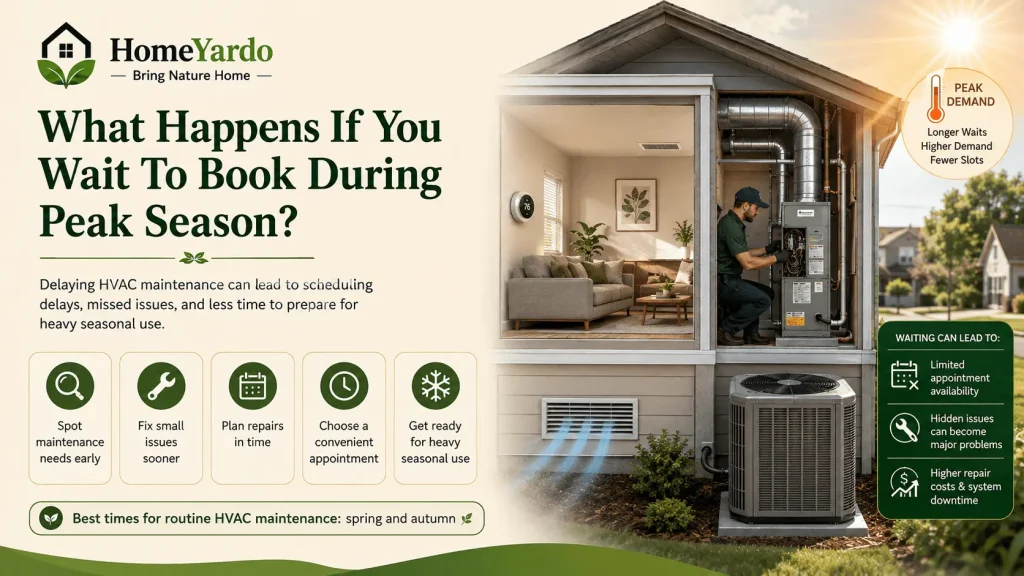
Just because you are waiting for high temperatures doesn’t mean your HVAC system will fail, but it can create some practical issues.
An uninspected system may have a problem which is not discovered until it is subjected to a larger demand. At the same time, HVAC providers may experience additional service requests during periods of extreme heat or cold.
Homeowners that arrange seasonal maintenance early have more time to:
- Determine maintenance requirements
- Minor issues Address
- Make repairs
- Select a convenient appointment
- Ready equipment for high seasonal use
That’s why spring and autumn are the most typical times for routine HVAC maintenance.
Seasonal HVAC Maintenance Tips

Here’s a basic checklist that homeowners can use to prepare for a seasonal HVAC appointment:
Before the Summer
Spring AC Maintenance Schedule.
- Inspect the air filter for condition.
- Keep space around the outdoor unit free of debris.
- Look out for weird noises or cooling issues.
- Inquire about any recommended repairs with the technician.
Before the Winter
- Get a heating inspection in the autumn.
- Check air filter.
- Ensure that supply and return vents are not obstructed.
- Look for strange heating behavior.
- Ask the technician to go over any concerns before the heavy winter use.
These DIY checkups are not a replacement for professional HVAC maintenance. But they can help to detect changes in the system’s functioning that should be noted during a service call.
When to Call an HVAC Technician
You can plan routine maintenance on a seasonal basis, but sometimes it needs to be done sooner than that.
When to Call an HVAC Specialist
You might want to call an HVAC specialist if:
- No longer heating or cooling correctly
- Makes strange noises
- Varying temperature from room to room
- Difficulty starting
- Unusually frequent cycles
- Shows indicators of a refrigerant or water problem
- Emits strange smells
- Severely restricted air flow
How you should respond depends on the nature and severity of the problem. A trained HVAC technician may look at the equipment and decide what service is required.
Conclusion
The optimal time to book seasonal tune-ups and home HVAC repair depends on what kind of HVAC equipment you have and what the weather is about to throw at it. Spring is a good time to service your air conditioner and autumn is a good time to inspect your heating system.
By scheduling service ahead of the increased demands of summer or winter, HVAC specialists have a chance to evaluate equipment and identify what maintenance needs to be done before systems are run any harder.
A skilled HVAC technician may inspect the system, explain recommended maintenance, and identify necessary repairs. Home owners also should follow the maintenance recommendations of their particular system’s manufacturer.
Scheduling HVAC service with the seasons makes maintenance easier to plan and helps homeowners prepare their heating and cooling equipment before changing weather puts higher stress on the system.
FAQ’s
Scheduling cooling-system maintenance in March or April can be a favorable time, before demand rises with the summer heat. In September or October, before the colder weather hits, heating systems might be installed. Timing may depend on local weather and type of equipment.
Yes. Scheduling AC repair in advance of normal summer use allows a technician to evaluate the system and detect maintenance requirements prior to increased cooling demand.
Schedule a furnace tune-up for early fall, usually September or October, before the heating system starts running consistently in cold weather.
Both seasons are useful since they happen before a big HVAC season. Spring is usually a good time to get your cooling equipment ready and autumn is a good time to get your heating equipment ready.
The right schedule relies on the HVAC system, manufacturer recommendations, use, age and operating circumstances. For homes that have both heating and cooling equipment, it may be beneficial to have seasonal checks before the respective peak seasons.
The type of servicing depends on equipment and provider, but a professional inspection may include inspecting electrical connections, filters, airflow, coils, system controls, safety components, and other equipment-specific parts.
Better not to use a breakdown as an excuse for arranging repair. Seasonal inspections can catch some maintenance issues before the system is placed under increased heating or cooling demand. If there’s a problem already, schedule an inspection rather than wait for a planned tune-up.