
Ways of Handling a Flooded Home
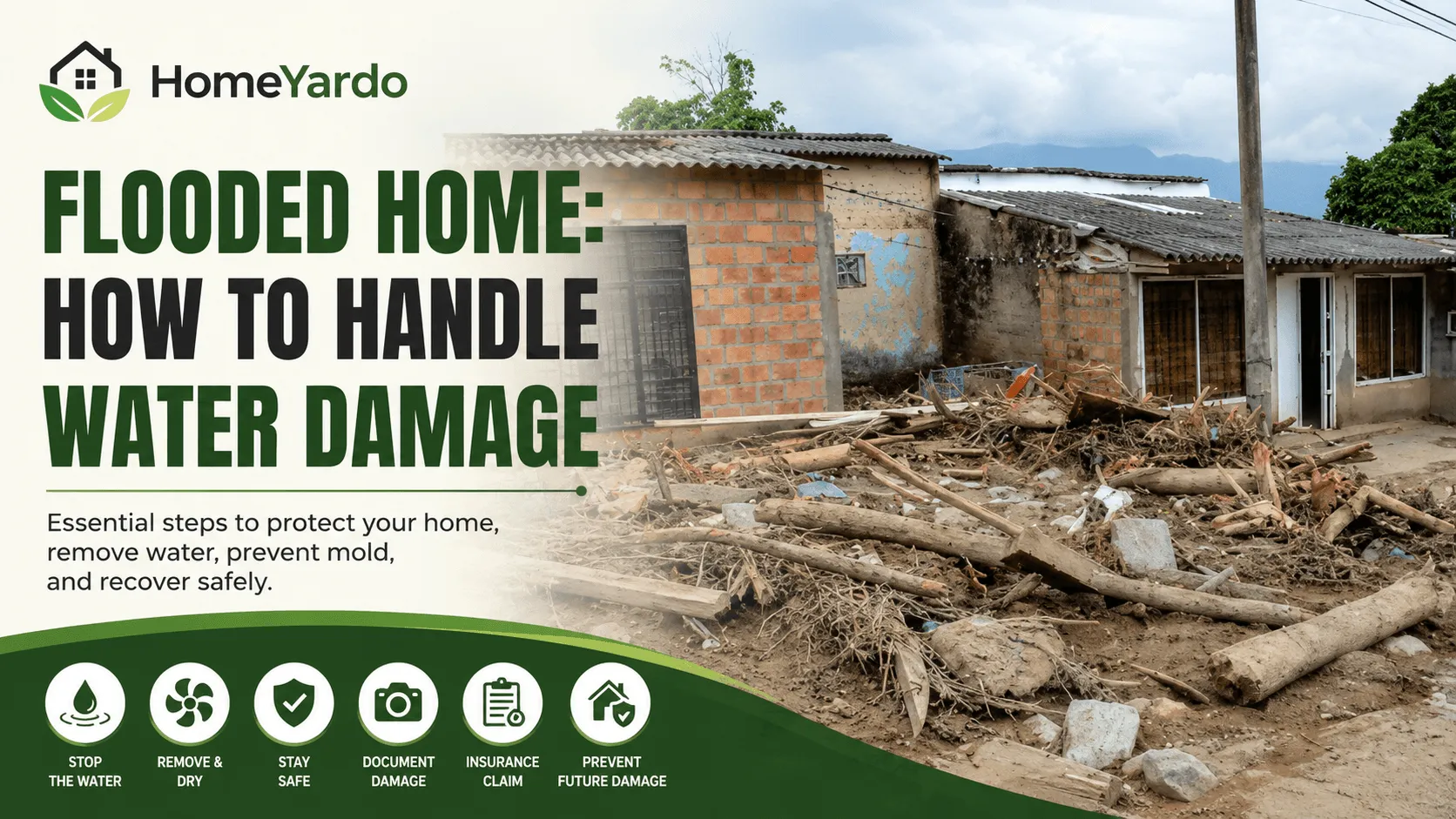
Water finds its way in eventually. A supply line lets go behind a washing machine, a storm pushes past a foundation wall, a water heater gives out after years of quiet service, or a sewer line backs up into a finished basement. However it starts, the clock begins immediately. Materials absorb moisture within minutes, drywall wicks it upward, subfloors swell, and by the second day the problem has usually spread well beyond the room where it began. What happens in those first hours determines whether a household is looking at a manageable cleanup or a gutted floor and weeks of reconstruction.
Getting the Drying Done Properly
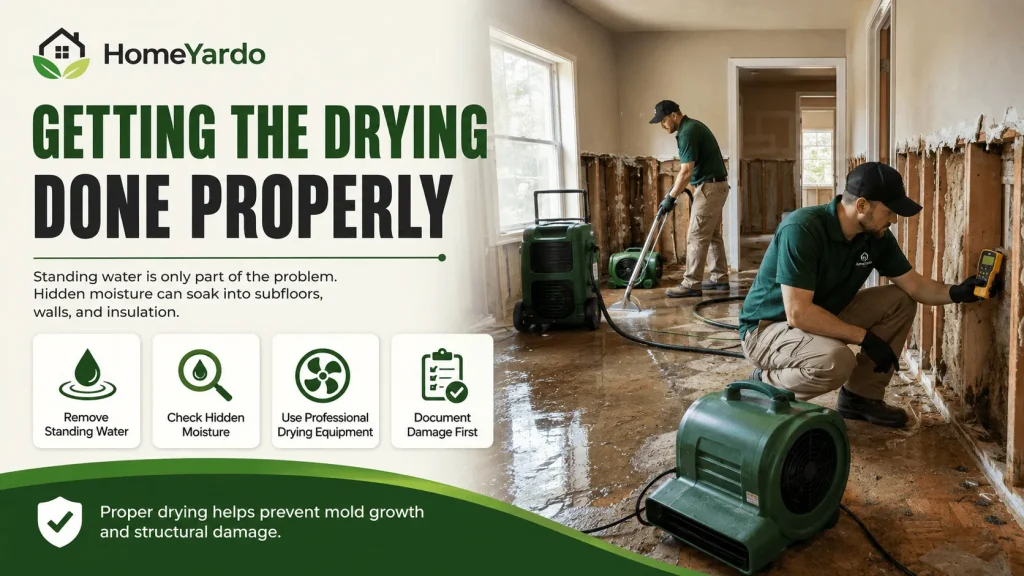
Standing water is only the visible portion of the problem. Moisture soaks into subfloors, wall cavities, and insulation where nobody can see it, and left alone, it turns into mold growth and structural rot that surfaces weeks after everything looked dry. In this scenario, hiring a company that offers professional water damage restoration services can help handle the extraction, the drying, and the removal of moisture the hidden saturation requires. Certified technicians will conduct a detailed inspection first, so the full extent of the damage can be documented before any work begins.
Shutting Off the Source
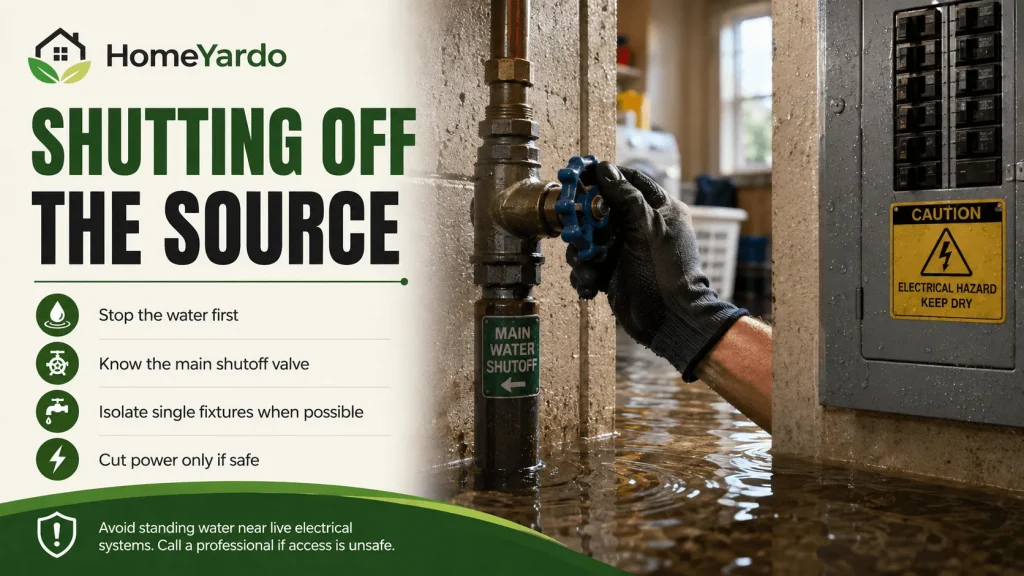
Nothing else matters while water is still arriving. Every household should know where the main shutoff valve sits before an emergency makes finding it urgent, because hunting for it in a dark basement with water rising is a poor use of the only minutes that count. Individual fixtures usually have their own shutoffs as well, which allows a single failing toilet or dishwasher to be isolated without cutting service to the whole house.
Electricity deserves the same caution. Water and live circuits share space in ways that turn a wet floor into a serious hazard. If the breaker panel can be reached without stepping into standing water, cut power to the affected area. If it cannot be reached safely, leave it alone and call an electrician or the utility. No amount of saved carpet is worth the alternative.
Documenting Everything Before Cleanup Starts
Photographs taken before anything gets moved carry weight that later reconstructions never do. Capture the water level against walls and furniture legs, the affected rooms from several angles, and the visible source of the failure. Video walking through the space adds context that individual photos miss.
Damaged belongings should be photographed individually before being discarded. Furniture, electronics, flooring, stored boxes, appliances, and anything else the water reached becomes part of the claim, and a written inventory with approximate purchase dates and values makes that claim far easier to process. Insurers reimburse what can be substantiated, and memory is not substantiation.
Understanding How Water Is Categorized
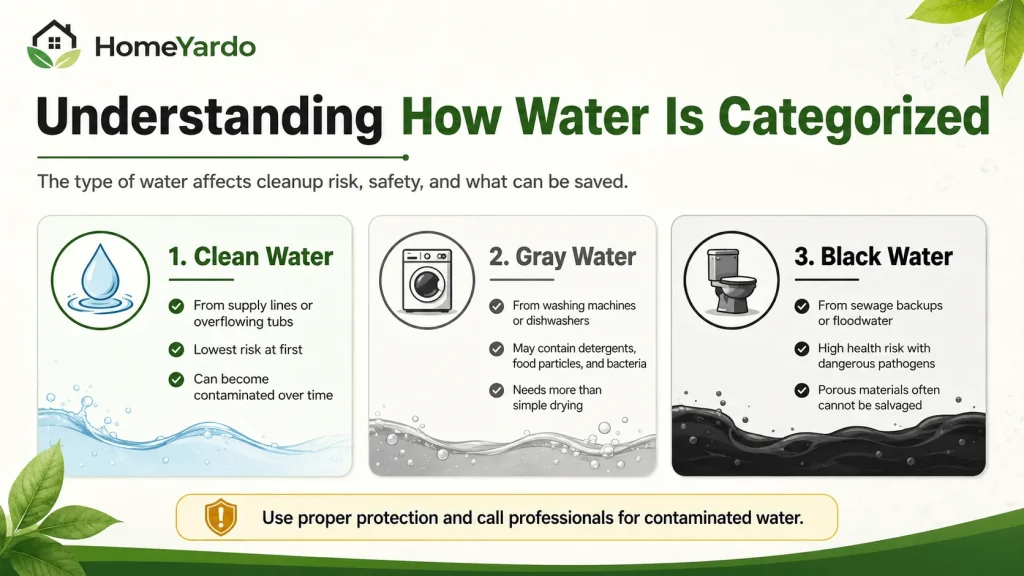
Not all water carries the same risk, and the difference dictates how a cleanup gets handled. Clean water from a supply line or an overflowing tub poses the least concern in the first hours, though it degrades over time as it sits and picks up contaminants from whatever it touches.
Gray water comes from appliances such as washing machines and dishwashers. It carries detergents, food particles, and bacteria, and it needs more than a wet vacuum and an open window.
Black water is the serious category. Sewage backups, rising floodwater, and anything that has traveled through contaminated ground fall here. This water carries pathogens that make direct contact genuinely dangerous, and porous materials it has soaked, such as carpet, padding, and drywall, generally cannot be salvaged no matter how thoroughly they appear to dry. Handling this without protective equipment and proper containment is a health risk rather than a cost-saving.
Moving Quickly on What Can Still Be Saved
Some things can be rescued if action comes fast enough. Lift furniture off wet flooring or slide foil or wood blocks under the legs to stop stain transfer and prevent finishes from lifting. Move rugs, books, papers, and anything absorbent out of the affected area and into a dry space with moving air.
Open windows only when the outside air is drier than the inside air. On a humid day, opening up adds moisture rather than removing it. Fans help circulate air but do not remove water from the environment on their own, which is why dehumidification matters more than people expect. Wet carpet padding almost never recovers. The carpet above it sometimes does, but only when it is lifted, cleaned, and dried properly rather than left flat against a wet subfloor.
Working With Your Insurance Provider
Report the loss as soon as the immediate danger has passed. Most policies require prompt notice, and delays give an adjuster a reason to question the claim later. Take reasonable steps to prevent further damage in the meantime, since policies generally expect that of a policyholder and will not cover deterioration that better decisions would have avoided.
Keep receipts for everything: emergency supplies, temporary lodging if the home becomes unlivable, equipment rentals, and any work performed. A restoration team that documents damage for the insurance provider and helps file the claim removes much of that burden, which matters when a household is already dealing with displacement and disruption.
Preventing the Next One
Once the crisis passes, the useful question is what allowed it. Supply lines to washing machines, dishwashers, and toilets are common failure points, and braided stainless steel replacements cost little and last far longer than the rubber originals. Water heaters have a finite life, and one past its expected service window is a leak waiting for a schedule.
Gutters and downspouts that discharge too close to the foundation send water exactly where it should not go. Extending them and grading soil away from the house addresses a large share of basement moisture problems. Sump pumps need testing before the season that will demand them, not during it, and a battery backup covers the outage that so often accompanies the storm.
For areas where rainwater can enter through the garage door, proper garage door weather stripping can also help limit water intrusion.
Water detection sensors near appliances and in basements cost very little and send an alert while a small leak is still small. That early warning is often the entire difference between wiping up a puddle and replacing a floor.
FAQ’s
If safe to do so, turn off the water source. Do not enter the area if electrical systems are exposed to standing water. Have the power safely disconnected by a competent technician.
Begin drying when it is safe to enter the area. Moisture can easily get into flooring, plasterboard, insulation and wall cavities and create a greater risk for mold and subsequent damage.
Some furniture can be salvaged if it is removed from the water soon and properly cleaned and dried. Items exposed to sewage or significantly contaminated water may need to be thrown away.
Water is often divided into clean water, gray water and black water. Black water may contain toxic toxins and should be treated with proper safety equipment and professional procedures.
Fans circulate air, but they don’t remove moisture on their own. If needed, dehumidifiers and professional drying equipment can be used to remove moisture from the air and from afflicted objects.
Yes. Contact your insurance as soon as it is safe to do so. Photograph and record damage, if feasible, before removing impacted goods, and retain receipts for emergency expenses.
Sometimes, in the case of some types of clean-water damage, carpet can be recovered if it is removed, cleaned and dried rapidly. Replacement of wet padding is typically necessary especially when water is polluted.
Clean gutters and downspouts, check plumbing and water heaters, inspect sump pumps, move drainage away from the foundation and put water-leak sensors near appliances and other vulnerable places.