Bathtub Replacement: When Repair No Longer Makes Sense
Your bathtub puts in years of quiet work, then one day it starts showing its age in ways you can’t ignore. Stains stop lifting, chips multiply, and standing in it feels less relaxing and more like stepping into a dated time capsule. If you’re weighing repair against a full replacement, the decision usually comes down to cost, safety, appearance, and how long you want the fix to last. A smart choice can improve your bathroom without turning your life upside down.
Signs Your Tub Is Past the Point of a Quick Fix
A few surface scratches or minor discoloration don’t automatically mean your tub is done. Some issues are cosmetic and can be refinished. Others are a warning that patch jobs will only buy you a little time.
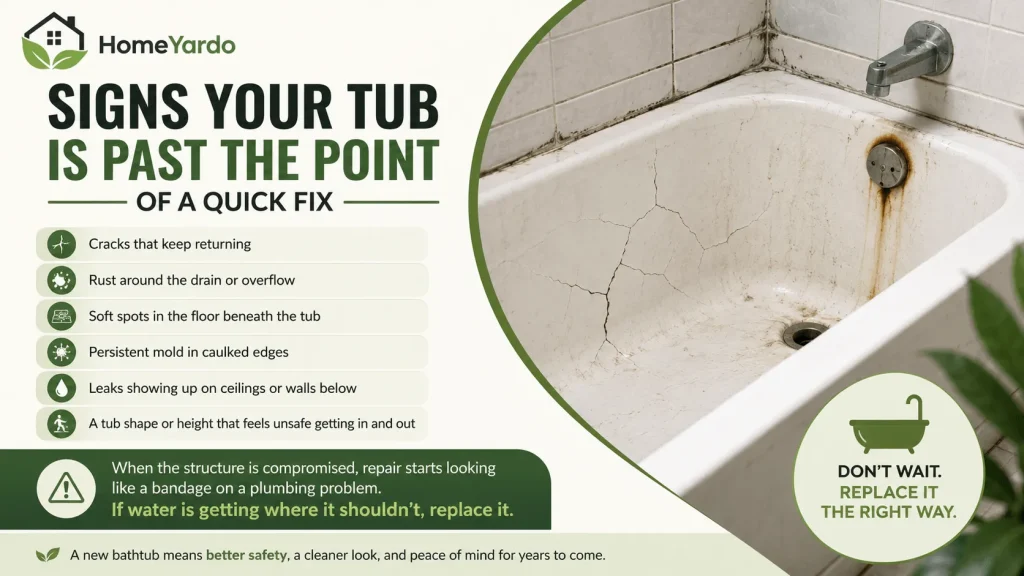
Watch for these signs:
- Cracks that keep returning
- Rust around the drain or overflow
- Soft spots in the floor beneath the tub
- Persistent mold in caulked edges
- Leaks showing up on ceilings or walls below
- A tub shape or height that feels unsafe getting in and out of
When the structure is compromised, repair starts looking like a bandage on a plumbing problem. If water is getting where it shouldn’t, the tub may be the least expensive part of the eventual repair bill.
An old tub can also become a cleaning trap. Once the finish wears down, soap scum and mineral stains cling like they pay rent.
How Replacement Compares With Refinishing or Repair
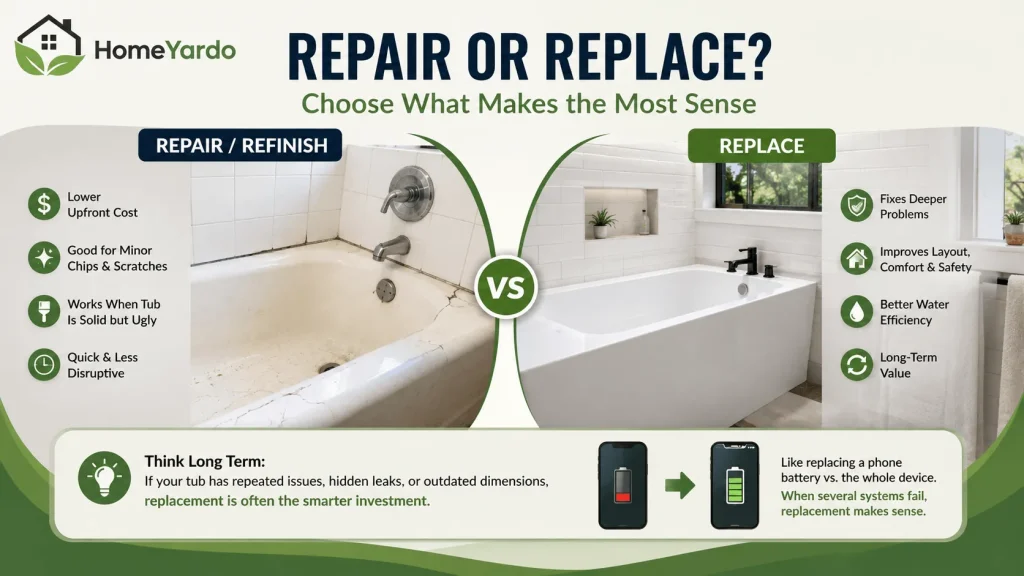
Repair is usually cheaper upfront, which makes it tempting. If your tub has one chip, a hairline scratch, or mild wear, a targeted fix can be practical. Refinishing also works well when the tub is solid but ugly.
Replacement enters the conversation when the tub has repeated damage, hidden leaks, outdated dimensions, or material failure. You’re not just paying for a prettier basin. You’re correcting deeper problems and often improving layout, comfort, and water efficiency.
A full bathtub replacement may also make sense if you’re already updating tile, plumbing fixtures, or flooring. Opening the bathroom once is usually easier than tackling the same zone in stages.
Think of it like replacing a phone battery versus replacing the whole device. If several systems are failing at once, one more repair starts looking a little optimistic.
Materials Matter More Than Most Homeowners Expect
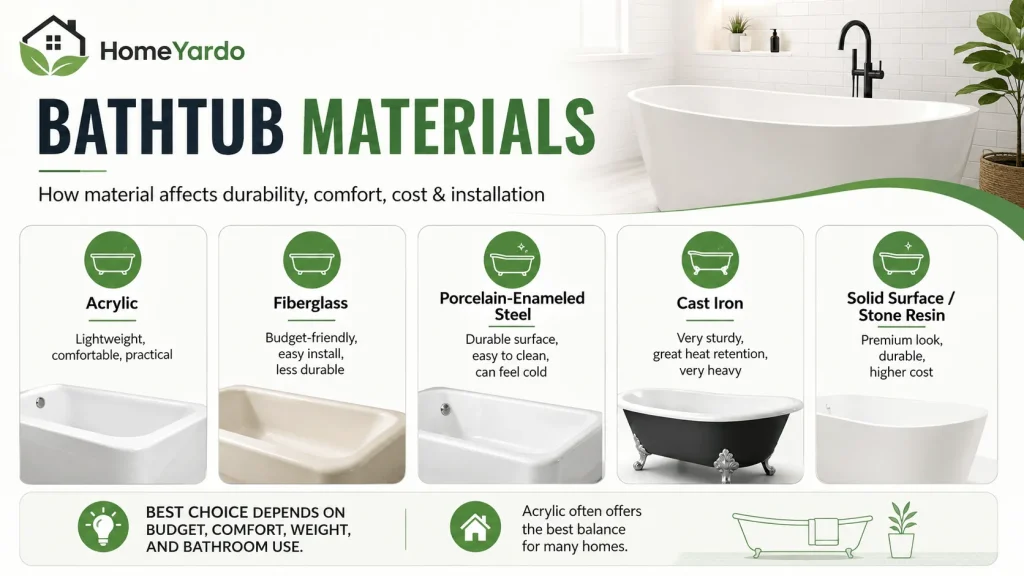
Not all bathtubs age the same way. Material affects weight, durability, cost, heat retention, and how easy installation will be. That matters more than style alone.
Common options include:
- Acrylic tubs are lightweight, comfortable to the touch, and widely available, making them a popular choice for many bathrooms.
- Fiberglass tubs are budget-friendly and easy to install, but they may be more prone to scratching, fading, and flexing over time.
- Porcelain-enameled steel tubs offer a durable surface that is easy to clean, though they can chip and may feel colder than other materials.
- Cast iron tubs are extremely sturdy and excellent at retaining heat, but their heavy weight can make installation more challenging.
- Solid surface or stone resin tubs provide a high-end look with strong durability, though they typically come with a higher price tag.
If your home is older, weight can be a real-world issue. A cast iron tub on an upper floor may require structural review. Acrylic often wins for practicality because it balances cost, comfort, and installation ease.
The best choice depends on how you use the bathroom. A guest bath and a primary suite usually don’t need the exact same setup.
Budgeting for More Than the Tub Itself
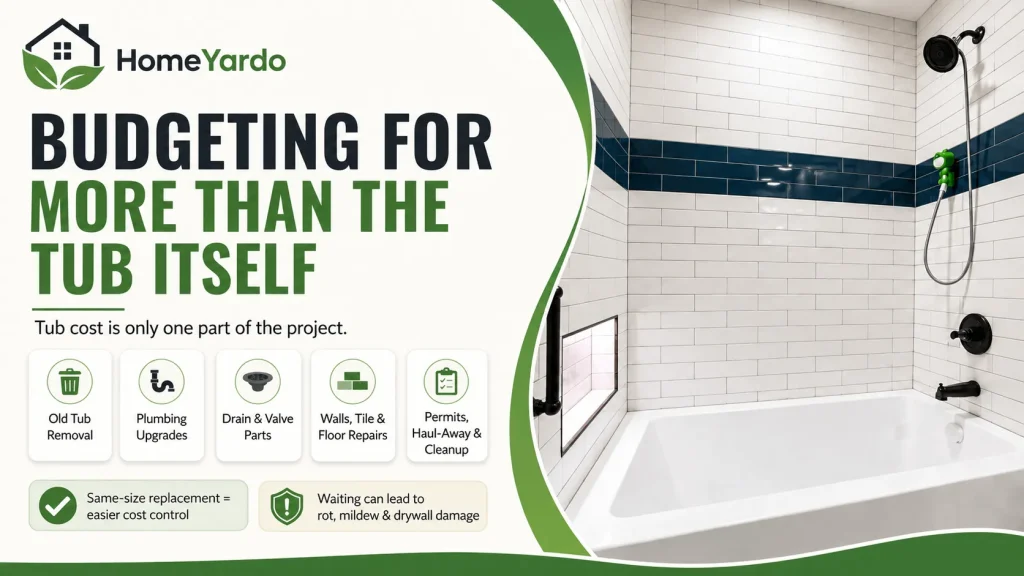
The tub price is only one part of the project. Labor, plumbing adjustments, demolition, disposal, and wall repair can change the total fast. Bathroom projects are famous for revealing surprises with zero shame.
Your budget should account for:
- Removal of the old tub
- Possible plumbing upgrades
- New valve or drain components
- Wall surround, tile, or waterproof panels
- Flooring repairs if hidden damage appears
- Permit requirements in your area
- Haul-away and cleanup
If your existing tub size matches the new one, costs are usually easier to control. Changing dimensions or moving plumbing raises complexity quickly.
It’s also worth considering the cost of waiting. A leaking or unstable tub can lead to subfloor rot, mildew, and drywall damage. Delaying replacement may feel cheaper now, but the math often gets rude later.
Safety, Accessibility, and Daily Comfort
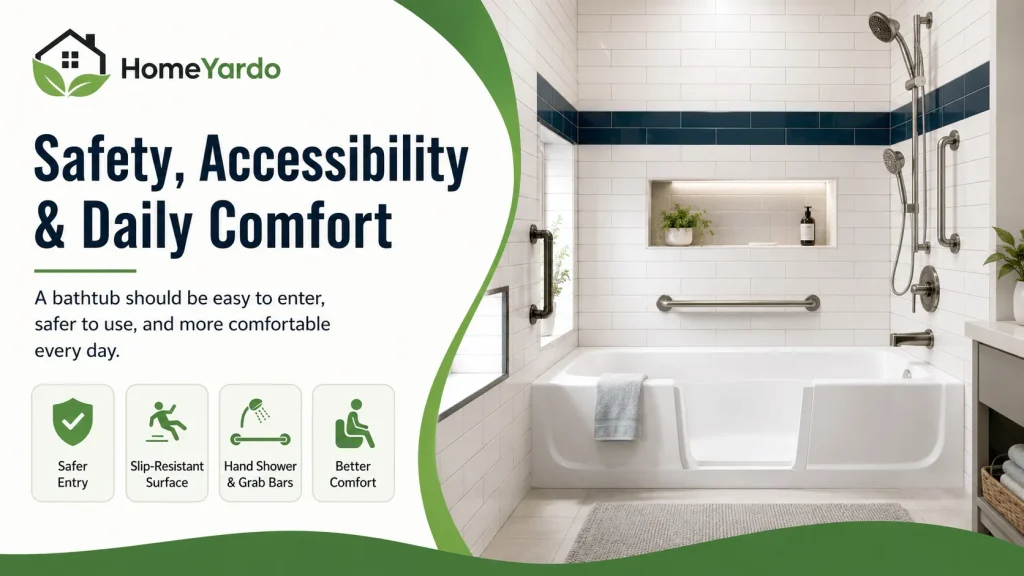
A tub isn’t just a design feature. It’s a piece of daily-use equipment, and bad equipment gets old fast. If stepping over a high apron feels awkward now, it probably won’t improve with time.
Replacement can solve practical problems such as:
- Slippery surfaces
- High sidewalls that are hard to enter
- Narrow interiors that feel cramped
- Poor support for bathing children or pets
- Incompatible shower-tub setups
For aging homeowners or multigenerational households, accessibility deserves serious attention. Features like lower thresholds, built-in seating, hand shower compatibility, and grab bar reinforcement can make the bathroom safer without making it look clinical.
Comfort matters too. A deeper soaking tub can change how the room gets used, while a standard alcove model may be the better call if space is tight and function comes first.
A bathroom should work for your body, not challenge it before coffee.
What the Installation Process Usually Looks Like
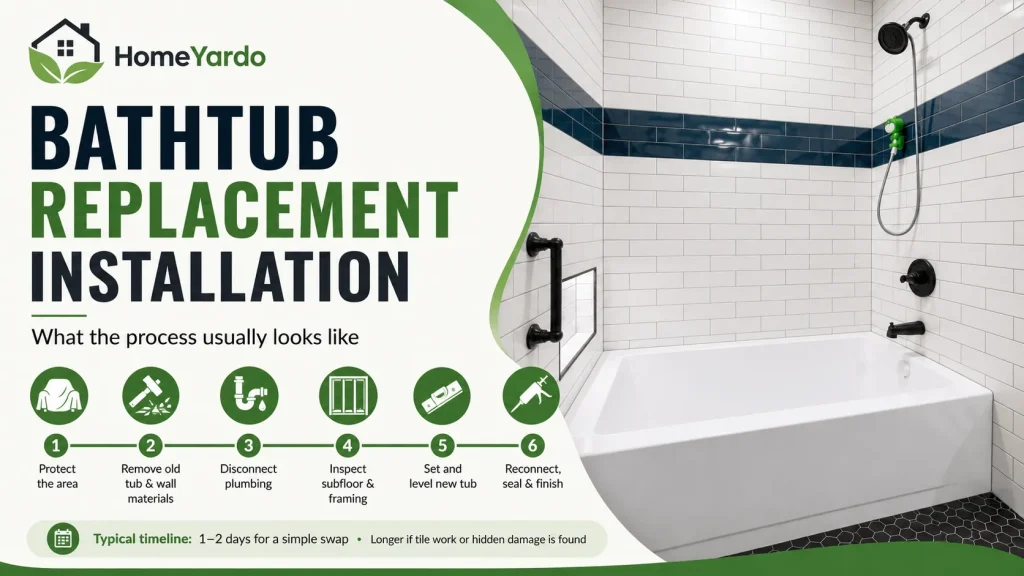
Bathtub replacement is not usually a one-afternoon DIY experiment. Even when the new tub is similar in size, the job often involves demolition, plumbing work, leveling, sealing, and finish repairs.
A typical process includes:
- Protecting nearby floors and fixtures
- Removing wall materials around the tub
- Disconnecting plumbing and drain fittings
- Taking out the old unit
- Inspecting framing and subfloor for damage
- Setting and leveling the new tub
- Reconnecting plumbing
- Installing surround materials and sealing joints
Timeline depends on complexity. A straightforward swap may take a day or two, while custom tile work or hidden water damage can stretch the schedule.
During planning, ask where water shutoffs are, how debris will be removed, and whether the bathroom will be usable at any point during the project. Those details affect daily life more than most estimate sheets admit.
Style Choices That Add Value Without Getting Trend Drunk
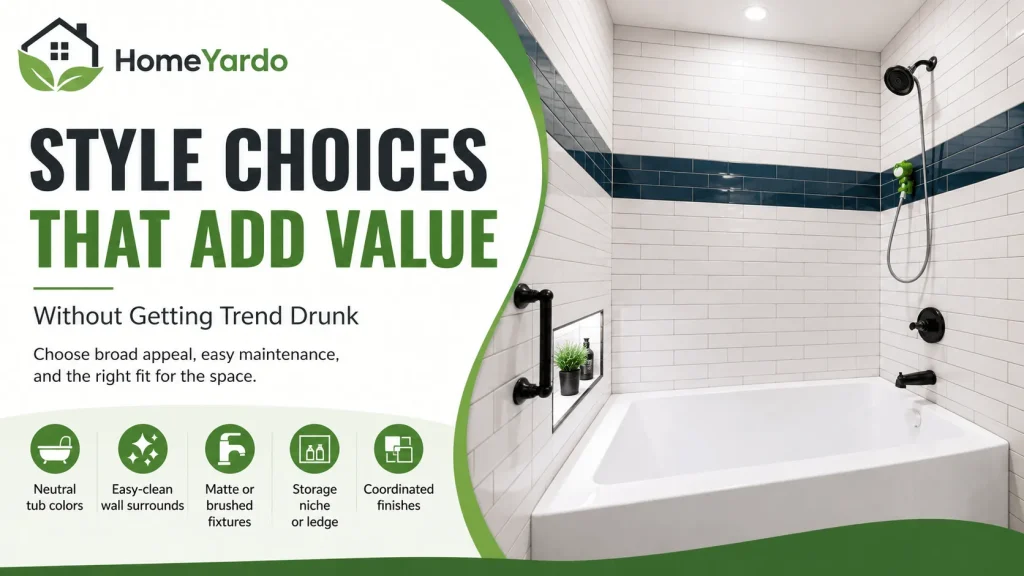
A new tub can freshen the whole room, but trendy choices age faster than grout lines in a busy household. The smartest updates feel current without locking you into a very specific look.
Practical style decisions include:
- Neutral tub colors such as white or soft bone
- Simple wall surrounds that are easy to clean
- Matte or brushed fixtures that hide fingerprints better
- Niches or ledges for storage
- Coordinated drain and overflow finishes
If resale matters, aim for broad appeal. Most buyers want a bathroom that feels clean, functional, and easy to maintain. A sculptural black tub may look great on social media, but not every home needs main-character plumbing.
Also think about proportion. A giant soaking tub in a modest bathroom can make the room feel pinched. Good design usually comes down to fit, flow, and maintenance, not just wow factor.
How to Decide if Now Is the Right Time
The best time to replace a bathtub is usually before small issues become expensive ones. If your current tub is leaking, unstable, hard to clean, or simply no longer fits your needs, waiting rarely improves the outcome.
Ask yourself:
- Is the damage cosmetic or structural?
- Have repairs already been attempted more than once?
- Are you planning a broader bathroom update soon?
- Does the tub feel safe and comfortable for everyone using it?
- Would a replacement reduce maintenance and future risk?
If most answers point toward frustration, replacement is probably the practical move. You don’t need a luxury renovation to justify it. Sometimes the smartest home upgrade is the one that stops a problem, improves everyday use, and spares you from one more battle with mystery stains.
A bathtub should help your bathroom feel dependable. That’s a low bar, literally, but a very important one.
FAQ’s
If there are repeated cracks and leaks, soft places, a lot of rust, persistent mold, or structural deterioration that cannot reliably be corrected with repairs, bathtub replacement may be more appropriate.
Minor chips, scratches and surface damage are usually less expensive to repair or refinish. If the damage keeps coming back or the tub has underlying issues, it might make more sense to replace it.
A simple bathtub replacement can take one to two days. More complicated renovations including plumbing improvements, tile work or hidden water damage can take longer.
Acrylic is popular because it is light, pleasant and relatively easy to install. Fiberglass is cheap, but cast iron is quite durable and holds heat well, albeit it is a lot heavier.
Small surface cracks can occasionally be fixed or refinished. Replacement might be a preferable solution for repeated cracking, structural damage or cracks related to leaks.
Yes. Features such as slip-resistant surfaces, reduced entry heights, built-in seats, hand-shower compatibility, reinforcement for grab bars can be incorporated into a replacement.
The entire cost can include the new tub, labor, demolition, plumbing adjustments, drain components, wall surrounds or tile, flooring repairs, permits and disposal of the old tub.
If the tub is in good shape structurally, but looks a little worn out, refinishing is a good alternative. In cases where the tub leaks, gets damaged repeatedly or has structural issues, replacement is usually better.