Proven Ways to Reduce the Risk of Costly AC Breakdowns
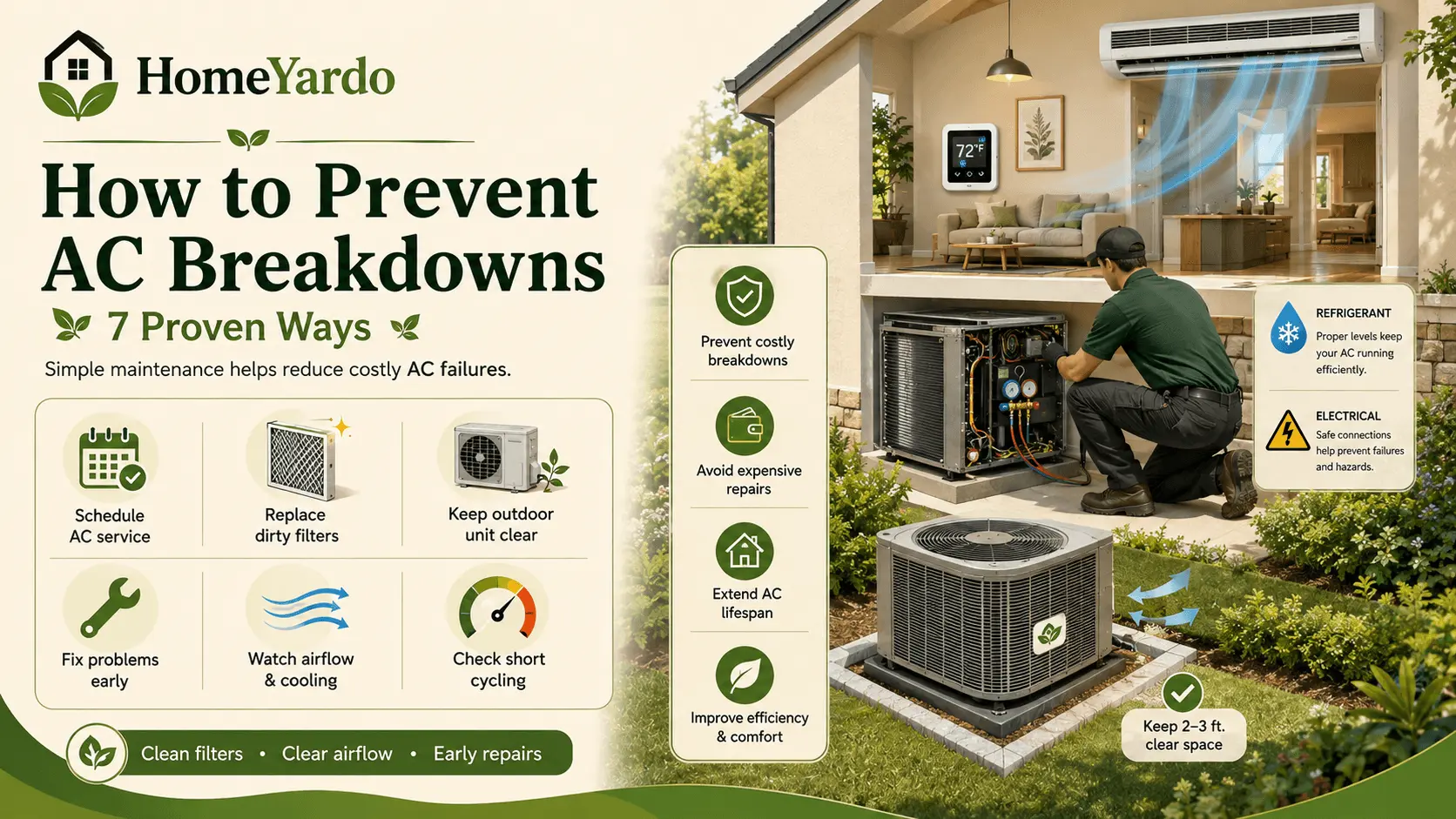
Here are some practical recommendations on how to avoid costly malfunctions of your AC unit: clean outdoor units, clean filters, professional AC service Early repairs
When it’s hot outside, an air conditioner is already working overtime, so even a small mechanical or electrical defect can add to the stress on vital components. Routine maintenance and early diagnosis can detect airflow restrictions, worn parts, electrical difficulties, refrigerant problems and other issues before they become major breakdowns.
It is very important to pay attention to an AC unit when it starts changing sounds, airflow changes, temperature control or cycle duration. Finding Trusted AC repair services near you can help you resolve increasing problems before continued use puts further strain on the system.
For most households, preventing AC breakdowns is not a difficult job. With regular expert inspections, basic maintenance, and paying attention to early warning signs, dependable operation of an air conditioner during the cooling season can be obtained.
1. Schedule Regular AC Service Appointment
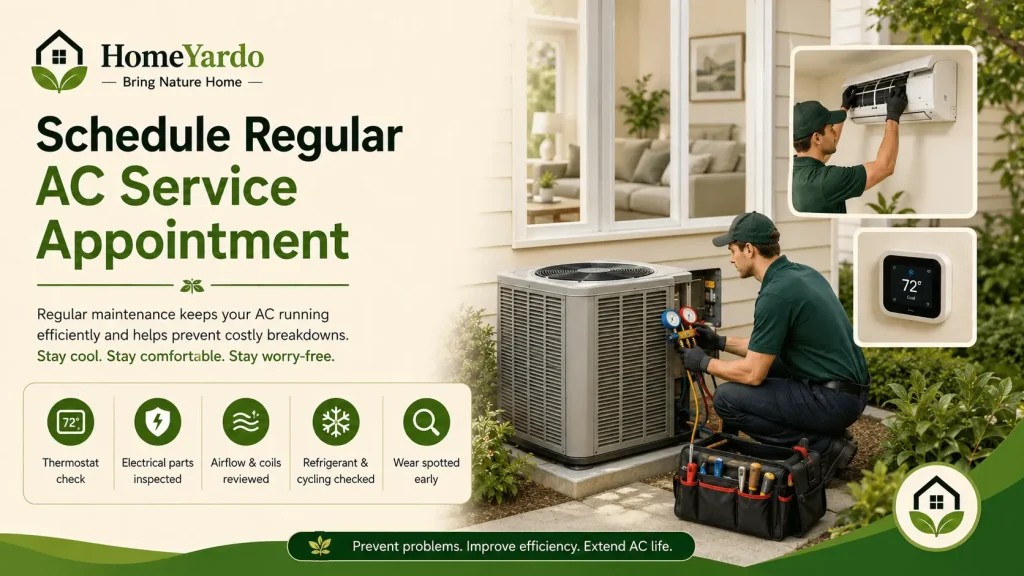
With expert AC maintenance, a technician has a chance to inspect important parts before the system is used a lot. Depending on the system, an inspection can include the thermostat, electrical connections, capacitors, motors, airflow, performance-related refrigerant, coils, safety controls and other components.
Regular service identifies possible problems early before they become big problems. A faulty electrical component, limited ventilation or other issue may be easier to repair before it results in a major system failure.
Routine maintenance also gives homeowners a chance to learn the health of an older air conditioner and spot sections that may require attention before the next high cooling demand time.
What Is AC Maintenance?
A professional AC inspection may include:
- Test thermostat operation
- Checking electrical connections and components.
- Check airflow
- Inspection of exposed coils and components
- Inspection for any signs of wear, tear or damage
- Refrigerant performance review
- Condenser area – external view
- Operation & Cycling System check
The exact maintenance approach will depend on type, age and condition of the AC system.
2. Replace Air Filters
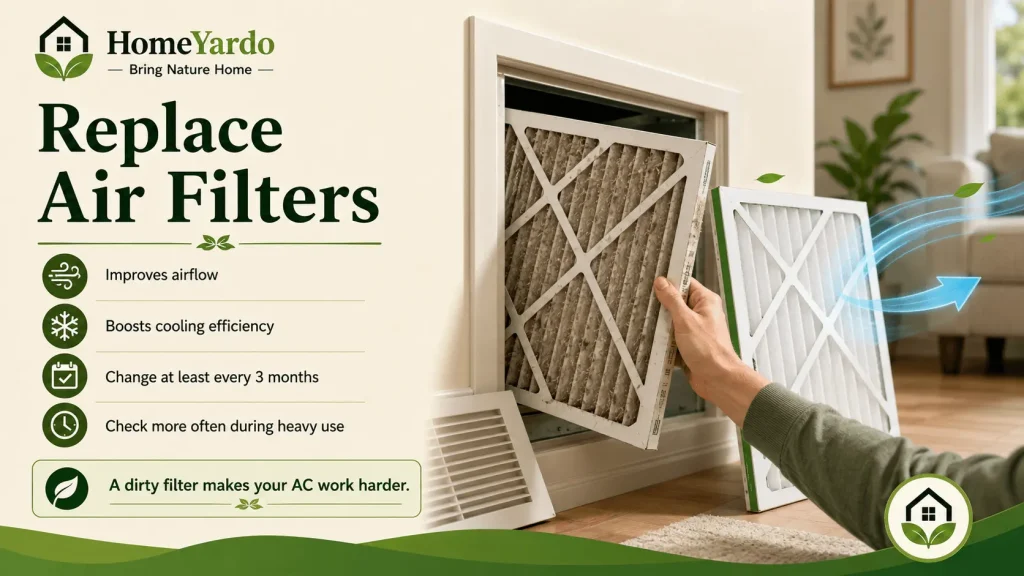
A dirty air filter can restrict the passage of air via an air conditioning system and force the unit to work harder than it should. This can limit airflow, decrease cooling efficiency, increase run time and place additional stress on the system.
ENERGY STAR recommends checking HVAC filters weekly while under heavy use, and changing them out at least every three months.
The correct replacement plan will depend on the type of filter, home conditions, pets, indoor air quality issues, and how often the system is running. If your filter seems dirty or is obstructing airflow, you may need to change it sooner.
Dust can’t get thru to sensitive parts inside if the filters are clean. If the airflow from the supply vents is significantly weaker, then a simple maintenance task a homeowner can undertake is to check the filter.
3. Maintain the Outside of the AC Unit Clean
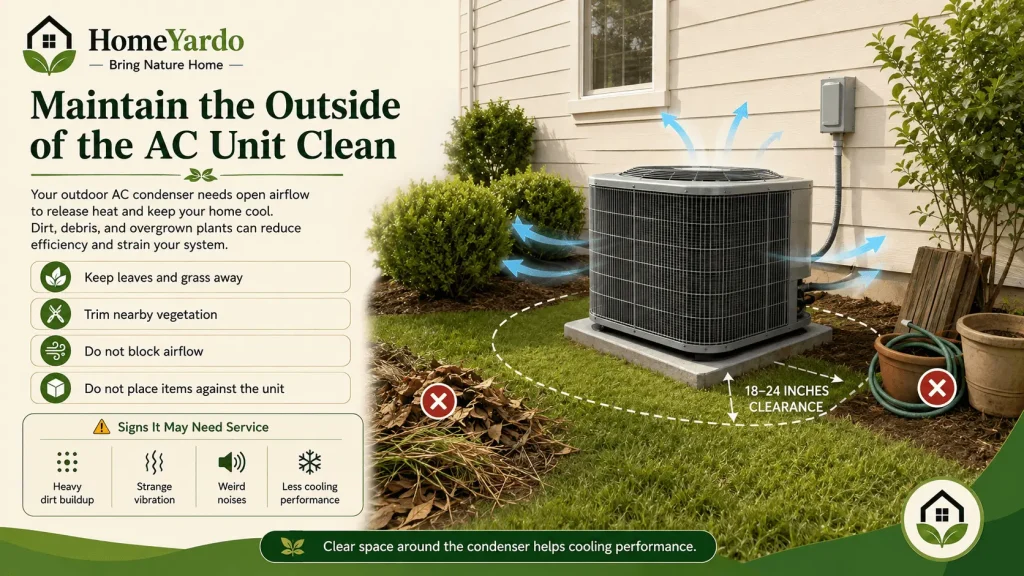
The outside condenser needs adequate air flow to carry away the heat it picks up from inside the home. Leaves, grass, mud, branches and other items around the unit might restrict airflow and reduce the unit’s ability to transfer heat efficiently. While checking the exterior of your home, it can also be worth inspecting garage door weather stripping for gaps or damage that may allow drafts and moisture inside.
Keep the space around the outdoor unit generally clear and don’t put anything right up against it. Be sure to control vegetation so it doesn’t impede the condenser.
Homeowners can visually inspect the surrounding area of the property but should not enter or touch electrical components within the house unless they are properly educated.
Signs Your Outdoor Unit Needs Service
Caution:
- Large dirt around condenser
- Strange vibration.
- Weird noises
- Physical harm on display
- Less cooling performance
- Air flow limited around unit
This may not be a certain evidence of a specific problem but it could be a clue that a professional inspection is worth it.
4. Recognize Early Symptoms of AC
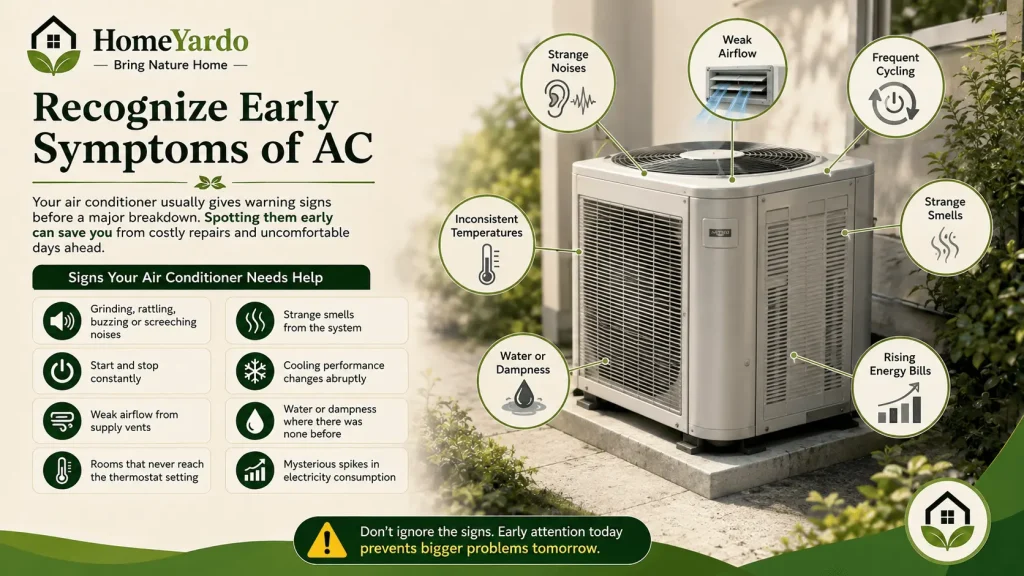
It is not common for an air conditioner to have all the major malfunctions without some apparent change in functioning. If you hear strange noises, notice less airflow, the system turning on and off too often, inconsistent temperatures, odd smells, or a decrease in cooling ability, it may be time for a check-up.
If you ignore these symptoms, you have an underlying problem when the system is under operating load.
Signs Your Air Conditioner Needs Help
Look out for:
- Grinding, rattling, buzzing or screeching noises
- Start and stop constantly
- Weak airflow from supply vents
- Rooms that never reach the thermostat setting
- Strange Smells from the System
- Cooling performance changes abruptly
- Water or dampness where there was none before
- Mysterious spikes in electricity consumption
The symptom doesn’t always mean the AC is likely to fail. These alterations should be easily recognized early to allow a knowledgeable specialist to find out the real cause.
5. Resolve Refrigerant Issues Quickly
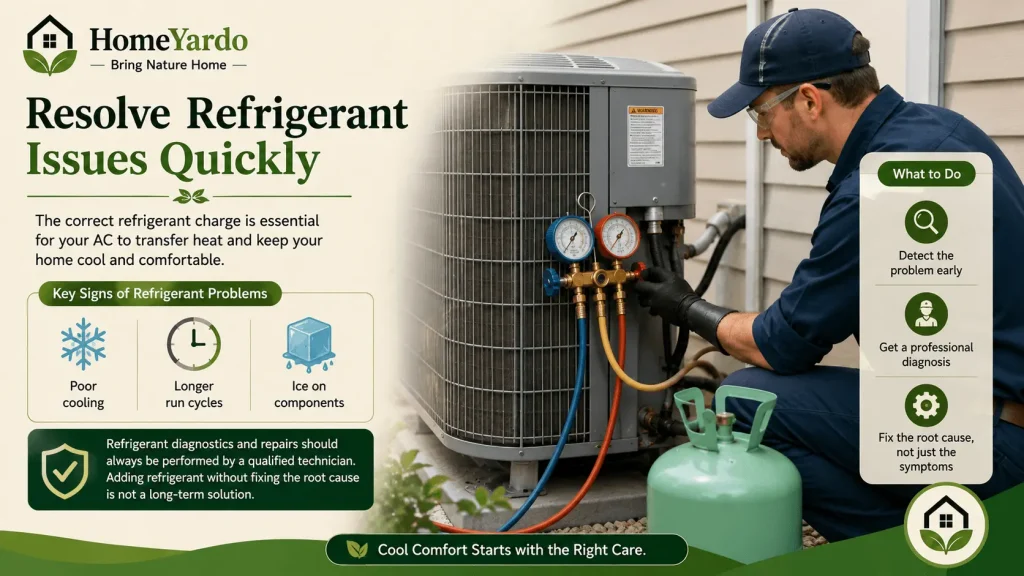
The air conditioner must have the correct amount of refrigerant charge to transfer heat throughout the cooling cycle. Reduced cooling performance may result from a refrigerant leak or other refrigerant problem.
You may have an issue if you detect indicators like poor cooling, long run cycles or ice formation on specific sections. These symptoms may represent other problems and should not be interpreted to mean that there is a refrigerant leak.
It is crucial that a professionally competent technician performs refrigerant diagnosis and repair. Adding refrigerant without finding and treating the root problem may not be a long-term solution.
6. Don’t Forget Electrical Problems
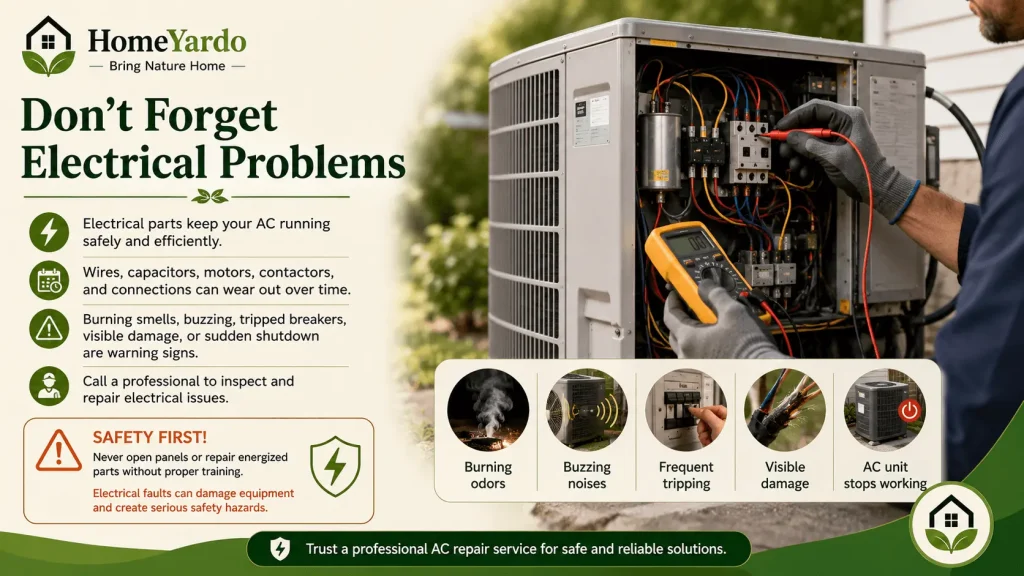
Electrical components are essential for starting, running and controlling the many portions of an air conditioning system. Over time, the wires, contactors, electrical connections, motors and capacitors might break or wear out.
If you notice burning aromas, buzzing noises, frequent tripping of electrical breakers, visible damage, or if your AC unit simply stops operating, you need to call in a specialist. The same principle applies to other home systems: when a component such as a garage door spring shows signs of serious wear or damage, professional repair is safer than attempting a complex repair yourself.
“Homeowners should never open panels or attempt to repair energized components without proper training. Faults in the electrical system can harm equipment and create safety hazards.
If you are experiencing electrical or mechanical problems, professional AC repair services can safely inspect these components.
7. Beware of Frequent Short Cycling
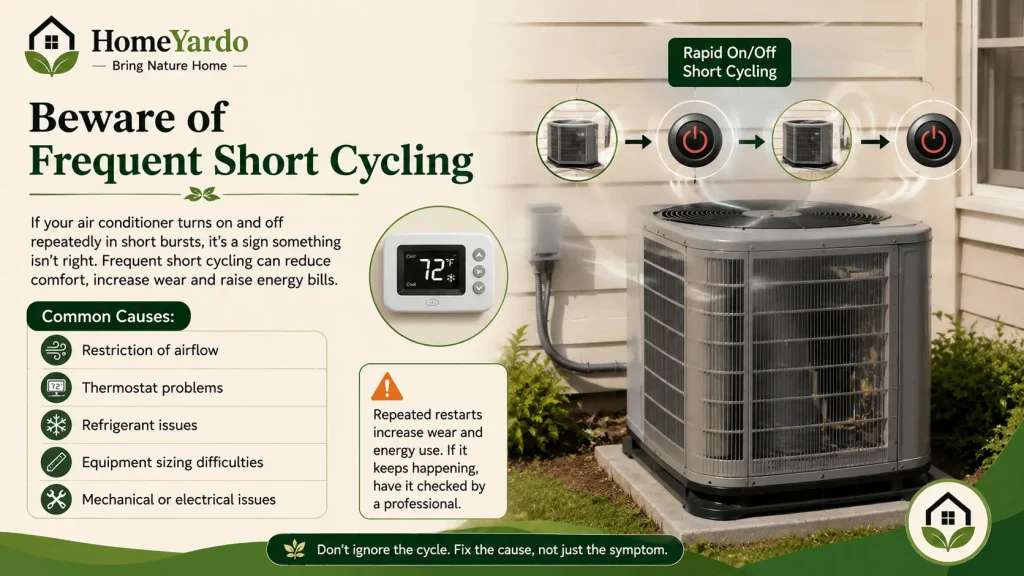
In most cases , the air conditioner runs in cooling cycles . The thermostat senses changes in the indoor temperature . However if the system is started and stopped repeatedly every few seconds it can signal there is a problem that needs to be diagnosed.
There are some disadvantages with brief riding such as:
- Restriction of airflow
- Thermostat problems
- Refrigerant issues
- Equipment Sizing Difficulties
- Mechanical or electrical issues
Repeated restarts raise the running demand of the system. If there is a repeating pattern, homeowners should have the reason addressed rather than assume frequent cycling is normal.
When to Call an AC Contractor
Some AC maintenance can be performed by homeowners, such inspecting the filter and clearing the exterior area. Professional diagnosis is needed for other disorders.
If you spot: Call a licensed AC technician:
- Electrical problems
- Refrigerating Problems
- Continued poor cooling
- Bicycling, over and again
- Weird mechanical noises
- Major spill of water
- Burned odor
- A system that continually crashing
- Issues after basic maintenance
With skilled diagnosing , you find the actual cause of the problem . You don ’t swap parts based on symptoms .
Regular Maintenance Can Help You Avoid AC Failure
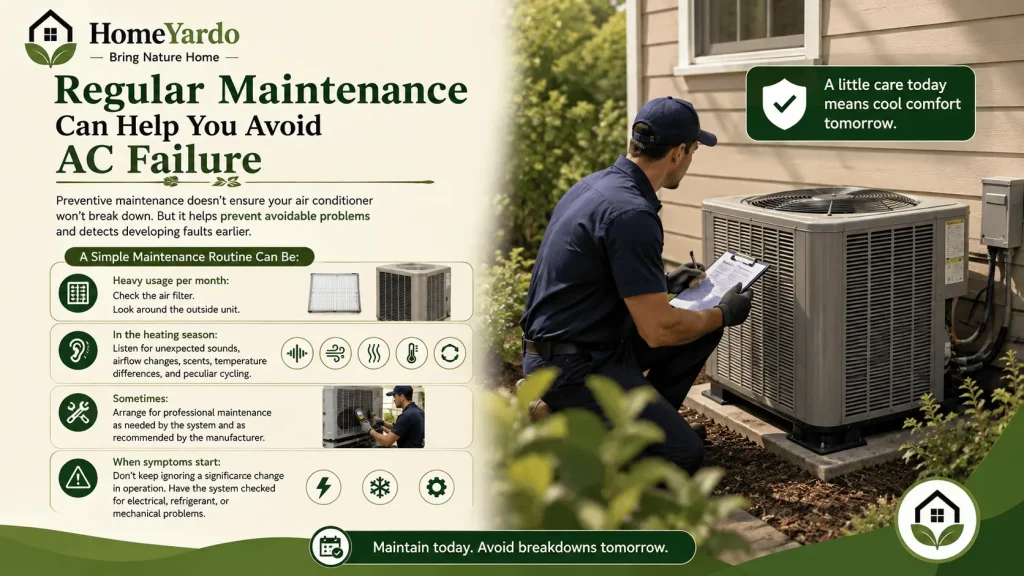
Preventive maintenance doesn’t ensure your air conditioner won’t break down. Parts fail, electrical issues arise, and old systems need to be replaced at some point.
Maintenance can help to prevent problems that do not need to exist, and to detect developing faults earlier.
A Simple Maintenance Routine Can Be:
- Heavy usage per month:
- Check the air filter. Look around the outside unit.
- In the heating season:
Listen for unexpected sounds, airflow changes, scents, temperature differences, and peculiar cycling. - Sometimes:
Arrange for professional maintenance as needed by the system and as recommended by the manufacturer. - When symptoms start:
Don’t keep ignoring a significant change in operation. Have the system checked for electrical, refrigerant, or mechanical problems.
Closing Remarks
Routine maintenance, clean filters, clear outdoor equipment and timely repairs all help make expensive AC breakdowns less frequent. Watch for danger flags like odd noises, poor airflow, short cycle, inadequate cooling, and electrical symptoms.
There are certain simple maintenance tasks a homeowner may do, but refrigerant, electrical and mechanical problems should be handled by a skilled professional. It is good practice to address little problems before they get bigger, to keep your cooling reliable and extend the life of important AC parts.
FAQ’s
Regular maintenance, clean air filters, good airflow around the outdoor unit, and rapid attention to odd noises or changes in cooling will assist to reduce the chances of an AC breaking down. Professional inspections can also spot growing problems before they become more significant.
The proper interval depends on the filter and conditions at home. ENERGY STAR recommends examining your HVAC filters at least once a month during heavy use and replacing them at least every three months. If the filter is dirty or is restricting airflow, you may need to change it more frequently.
Some of the more common warning signs are weird noises, poor air flow, brief cycling, uneven cooling, strange smells, poor temperature control, frequent stop downs and sudden changes in energy usage. There are many potential causes for these symptoms and a professional diagnosis may be needed.
A filter that is too clogged might slow down the flow of air and make the system work harder. Limited airflow over a period of time might affect the cooling performance and cause stress on components. Easy to check and change dirty filter to maintain the system working properly.
No, not that much. There are several things that can cause a lack of cooling. Restricted air flow, electrical problems, mechanical problems or refrigerant problems. If you suspect refrigerant, have a certified technician diagnose the system to determine if you have a leak or other problem.
Frequent short cycling might be caused by airflow restrictions, thermostat difficulties, refrigerant problems, equipment size or mechanical and electrical faults. If the tendency continues, a professional diagnosis may help to spot the problem.
AC electrical components can be dangerous and should generally be checked and repaired by a highly qualified specialist. Homeowners can undertake some simple maintenance like cleaning filters and ensuring sure the external unit is clear, but electrical repairs should be done by someone with the right training.”
No maintenance program can assure an AC will not break down. However, regular maintenance can assist detect developing concerns such as wear and tear, airflow constraints, electrical failures, etc. earlier and so reduce the chance of preventable breakdowns and unplanned downtime.