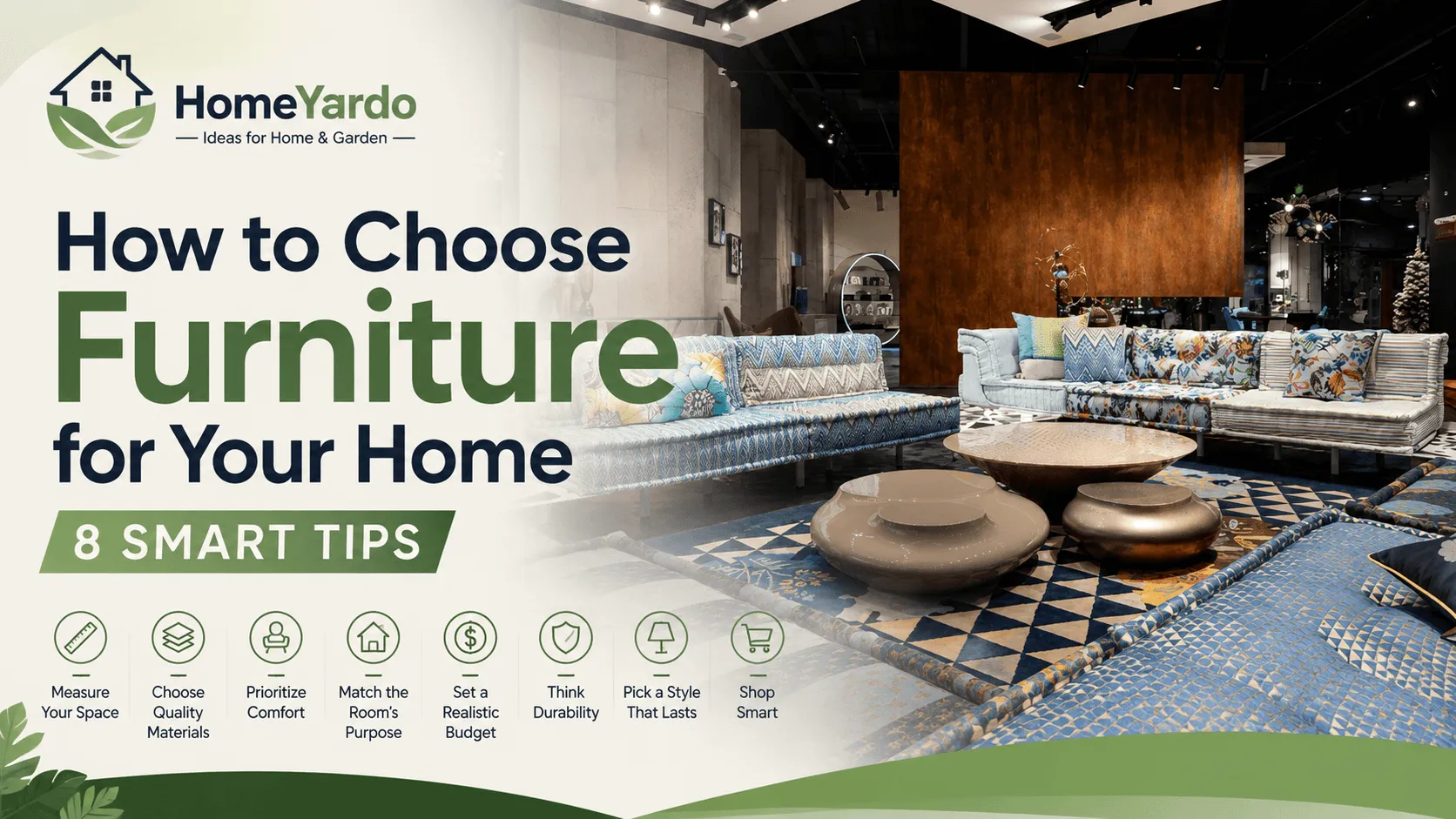
How to Choose Furniture for Your Home: 8 Smart Tips
Buying furniture sounds simple until you’re staring at fifty sofas that all claim to be “timeless.” In Texas, the scale and variety of the housing market give shoppers plenty of different spaces to furnish: the state had about 12.6 million housing units in 2024 and nearly 11 million households, with an average of 2.69 people per household. Budget matters too, with median household income at $78,476 for 2020–2024. Whether you’re furnishing a compact apartment or a larger family home, the best choices come down to dimensions, durability, everyday habits, and what you can comfortably afford. A good piece should look right, feel right, and survive real life.
Start With the Way You Actually Live

Before you compare colors, fabrics, or leg styles, look at your daily routine. Your furniture needs to match what your home goes through, not what a staged showroom suggests. If you eat dinner on the couch, host cousins every other weekend, or share your space with a dog that sheds like it’s a side job, your priorities are already pretty clear.
Think about practical details like:
- How many people use the room every day
- Whether kids or pets will climb, spill, or scratch
- If the piece needs hidden storage
- How often you rearrange your layout
- Whether comfort matters more than formality
A velvet cream sofa may look great online. In a high-traffic living room with snacks and pets, it can turn into a stress test.
Focus on Materials, Not Just Looks
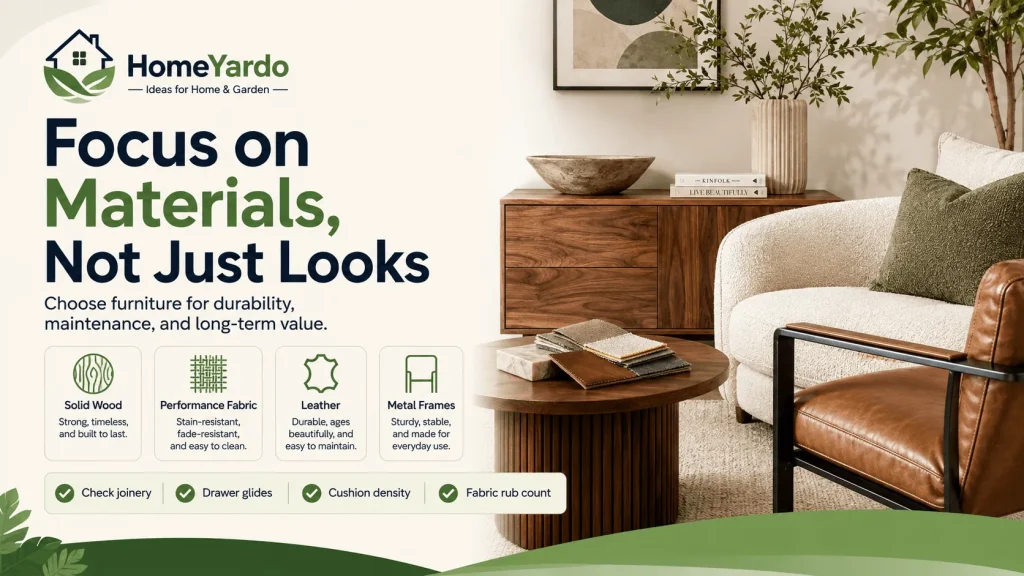
A lot of furniture looks solid under bright showroom lighting. The real test comes later, when drawers stick, cushions flatten, or veneers start peeling. Materials tell you a lot about durability, maintenance, and long-term value, so it helps to know what you’re paying for.
Solid wood usually lasts longer than particleboard, and understanding different wood types can also help when matching furniture with existing flooring, such as red oak wood flooring. Performance fabric can handle stains better than delicate weaves. Leather can age beautifully, but it also shows scratches and needs care. Metal frames often work well for a cleaner, modern look, especially in smaller spaces.
When you shop at a Texas furniture store, pay attention to construction details, not just styling. Check joinery, drawer glides, cushion density, and fabric rub counts if available. It’s not glamorous, but neither is replacing a dining chair after one wobbly holiday dinner.
Measure First and Save Yourself the Headache
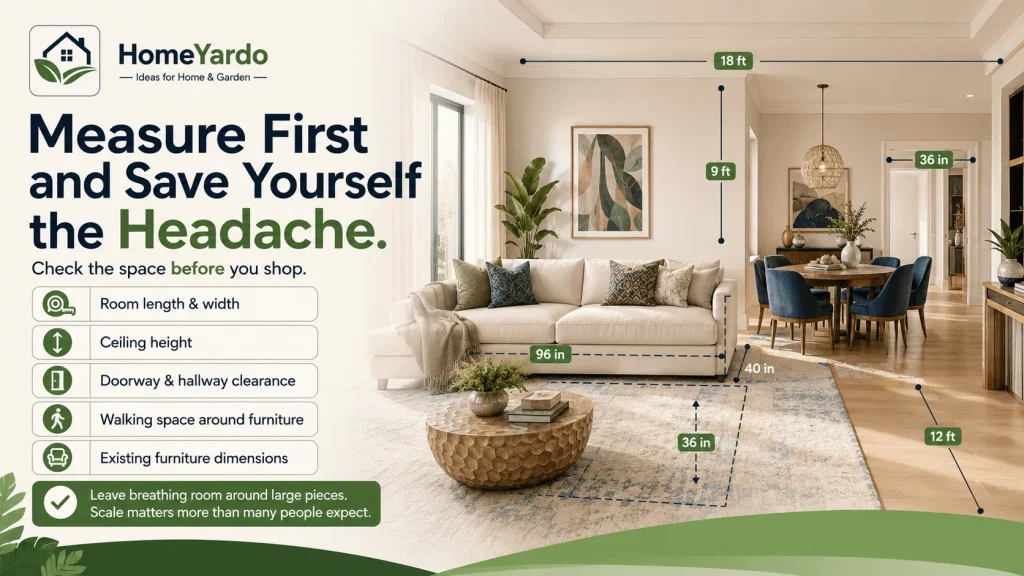
A surprising number of furniture mistakes start with optimism and a tape measure that never left the drawer. You need the dimensions of the room, the wall space, and the path the item takes into your home. That includes stairwells, elevators, tight entryways, and corners that seem harmless until a sectional gets stuck there.
Write down these measurements before shopping:
- Room length and width
- Ceiling height for tall pieces
- Doorway and hallway clearance
- Space needed to walk around the item
- Existing furniture dimensions for comparison
Leave breathing room around large pieces. A dining table might technically fit, but if no one can pull out a chair without bumping a wall, the room will feel cramped. Scale matters more than many people expect.
Match the Room’s Purpose Before the Style
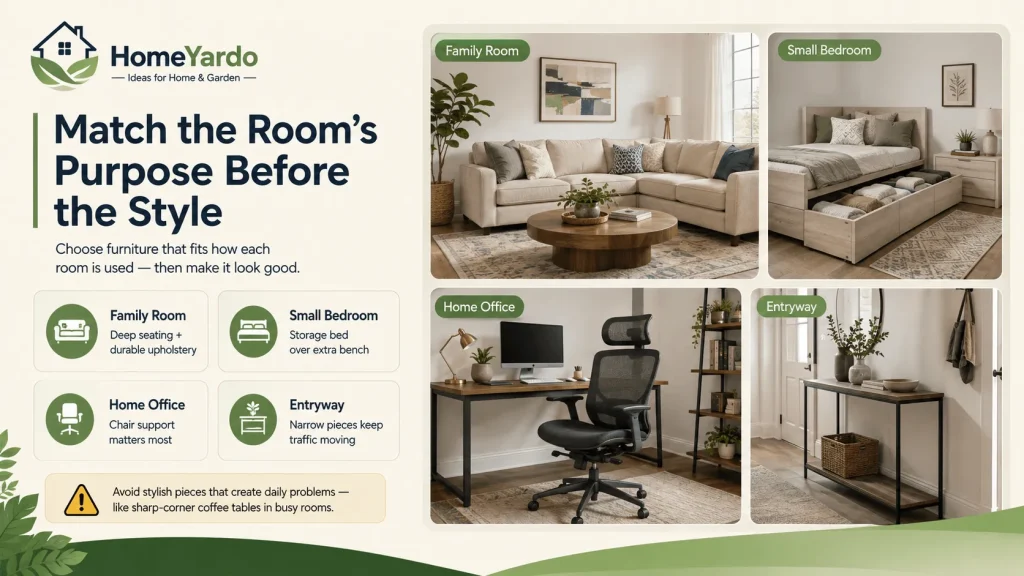
You can love a piece and still buy the wrong one. That usually happens when style takes the wheel and function gets shoved in the trunk. Every room has a job. Your furniture should support that job first, then make it look good.
A few examples make this easier:
- In a family room, deep seating and durable upholstery often beat formal silhouettes
- In a small bedroom, a storage bed may do more for you than a decorative bench
- In a home office, chair support matters more than a trendy shape
- In an entryway, narrow pieces prevent traffic jams
Style still matters. You want your home to feel pulled together. Just don’t let aesthetics trick you into buying a coffee table with sharp corners for a room where people sprint through with backpacks and laundry baskets.
Set a Budget That Includes the Hidden Costs

Furniture prices can escalate quickly, especially once delivery, assembly, protection plans, and accessories show up in the total. A realistic budget keeps you from overspending on one item and cutting corners on everything else.
Break your budget into categories instead of treating the room as one giant number. You might spend more on a sofa you use every day and less on accent tables or decorative stools. That’s usually smarter than buying everything at the same quality level.
Keep these extra costs in mind:
- Delivery fees
- Assembly charges
- Fabric protection or warranties
- Sales tax
- Rugs, lighting, and accessories needed to complete the space
If you’re furnishing a whole room, phase the purchase if needed. Empty corners are less annoying than buying fast and regretting it for five years.
Test Comfort Like You Mean It

Comfort is oddly easy to ignore when you’re distracted by colors and price tags. Sit on the sofa. Lean back in the chair. Open the drawers. Stand up from the dining seat without performing a gym lunge. If the piece feels awkward in the store, it won’t improve at home.
Pay attention to seat depth, back support, arm height, and cushion firmness. Taller people often need deeper seats. Shorter people may find some sectionals uncomfortable because their feet barely touch the floor. Mattresses, office chairs, and recliners deserve even more scrutiny because you’ll notice bad ergonomics fast.
If several people in your household use the same piece, get their input too. The “perfect” chair loses some shine when everyone avoids sitting in it. Furniture should earn its square footage.
Think Beyond Trends and Plan for Longevity
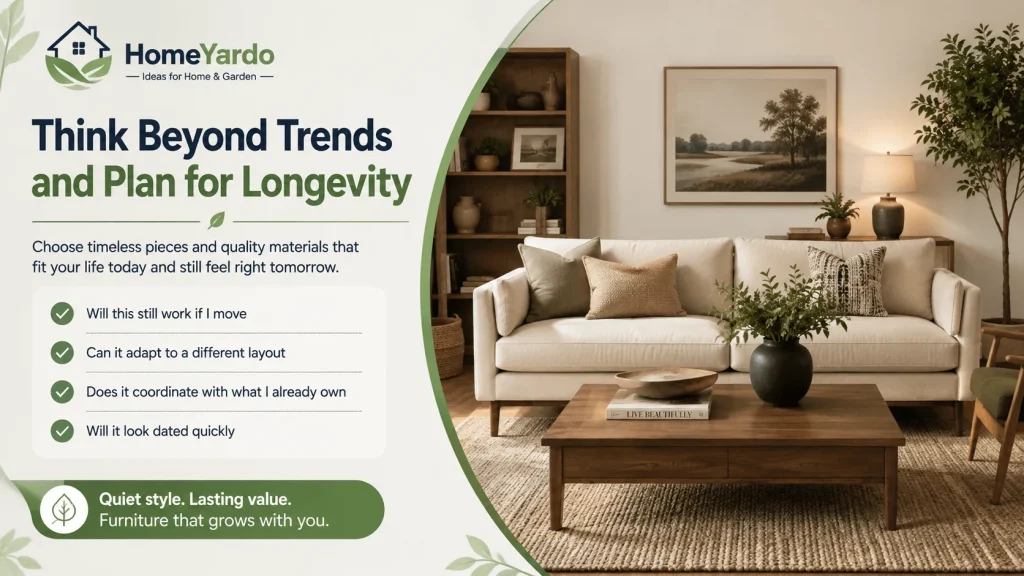
Trends can be fun, but large furniture purchases age better when the base is versatile. It’s usually safer to bring personality through pillows, lamps, art, and smaller accent pieces than through a neon green sectional you may resent by next spring.
Look for shapes and finishes you can live with over time. Neutral upholstery, classic wood tones, and simple lines give you more flexibility if your taste shifts. That doesn’t mean your home needs to look bland. It means your expensive pieces should have staying power.
Ask yourself:
- Will this still work if I move
- Can it adapt to a different layout
- Does it coordinate with what I already own
- Will it look dated quickly
A good furniture choice doesn’t need to scream for attention. Quietly useful often wins in the long run.
Shop Smarter by Comparing In Person and Online
The best approach usually mixes digital research with in-person testing. Online browsing helps you compare dimensions, finishes, and prices quickly. Visiting stores helps you judge scale, texture, and comfort, which photos often distort.
Read reviews with a little skepticism and a lot of attention to patterns. One dramatic complaint may be random. Twenty comments about sagging cushions are a clue. Check return policies before you buy, especially for custom or made-to-order pieces.
If possible, take photos of items you like and compare them against pictures of your home. That small step can reveal when a piece is too bulky, too cold-toned, or strangely formal for the rest of your space.
Good furniture shopping isn’t about finding the fanciest option. It’s about choosing pieces that fit your home, your routine, and your future plans without creating daily friction. When you make decisions with measurements, materials, comfort, and function in mind, your home feels more usable from day one. And honestly, that’s a lot better than owning a beautiful chair that no one wants to sit in.
FAQ’s
Think about how you want to utilize the area, measure the space available, select a budget, evaluate materials and test comfort before buying.
Measure the room, doorways, hallways and available wall space before you shop. Leave adequate space to stroll around and to open doors, cabinets and chairs easily.
Consider the size and the materials, construction, comfort, durability, function of the area, maintenance demands, style, and total cost of the furniture.
Furniture does not have to match exactly. You can use complementing colors, materials, finishes or styles to create a cohesive effect, but still enable each area to have its own personality.
Solid wood, solid metal frames, resilient upholstery and well-constructed materials can offer good long-term durability. It all depends on how the furniture will be used.
Set a total room budget and prioritize most used elements such as sofas, beds, dining tables, and office chairs. Don’t forget to factor in shipping, assembly, taxes and extras.
Online purchasing allows you easily compare pricing, dimensions and finishes; visiting a store lets you test comfort, materials and scale. You can use both methods to make a better choice.
Don’t just look at the look. Look at build quality, materials used, construction, quality of hardware, longevity of upholstery, warranty and whether the design would function should your home change in the future.