
Commercial Reupholstery: The Future of Office Design

Styles change. Furniture wears down. But replacing everything every few years can be expensive and wasteful. Businesses looking for a sensible way to give existing furniture a new look, rather than replace pieces that are still technically sound, are turning to commercial reupholstery. It can help companies cut down on waste, manage expenditures, and refresh their workspace with less disruption than a full furniture makeover.
Why Office Design Is Moving Toward Sustainability
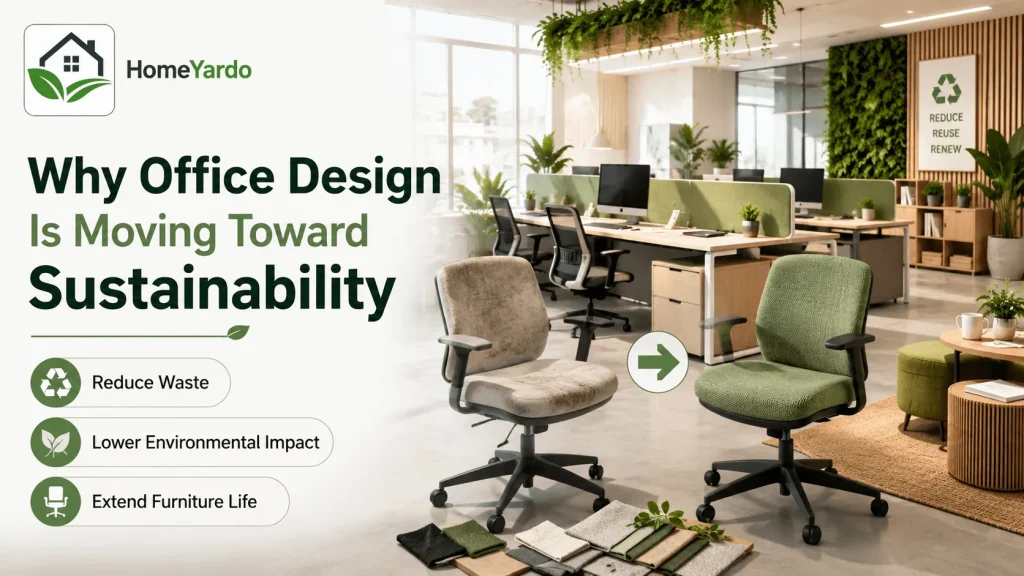
Sustainability is becoming increasingly important in office design. More customers, employees, and business executives are paying attention to how organizations use resources and dispose of waste. The furniture a corporation chooses can be part of that broader approach.
Businesses may want to investigate whether old furniture can be refurbished and kept in use instead of automatically replacing usable furniture when the upholstery becomes worn or outdated.
Reducing Waste
Office furniture may wind up in landfills when organizations choose to replace rather than repair or refurbish it. Reupholstery increases the useful life of suitable furniture by replacing old fabric and padding while preserving the existing structure.
For firms with high volumes of seating, extending the life of furniture can help reduce the amount of material sent for disposal during an office refresh.
Lowering the Environmental Impact
To make new furniture, manufacturers need raw materials, energy, transportation, and packaging. Reupholstery works with existing furniture and can eliminate the need for an entirely new product.
The environmental impact will vary based on the furniture, materials, transportation, and scope of the project. Still, keeping usable furniture in service can contribute to a more resource-conscious approach to office design.
Conserving Raw Materials
Wood, metal, plastic, foam, and fabrics all require resources to produce. If the structure of a piece of commercial furniture is still sound, only the worn-out upholstery may need to be replaced. This can require less new material than replacing the whole piece.
This gives companies an opportunity to make better use of their existing interiors and reupholster furniture to give it a new look.
Meeting Corporate Sustainability Goals
Companies may have sustainability goals related to waste reduction, resource use, and responsible purchasing. Reupholstering suitable office furniture can support these efforts by extending product life and avoiding unnecessary disposal.
Businesses can also track the number of furniture pieces restored rather than replaced as part of their wider sustainability reporting.
How Reupholstery Supports Sustainable Design
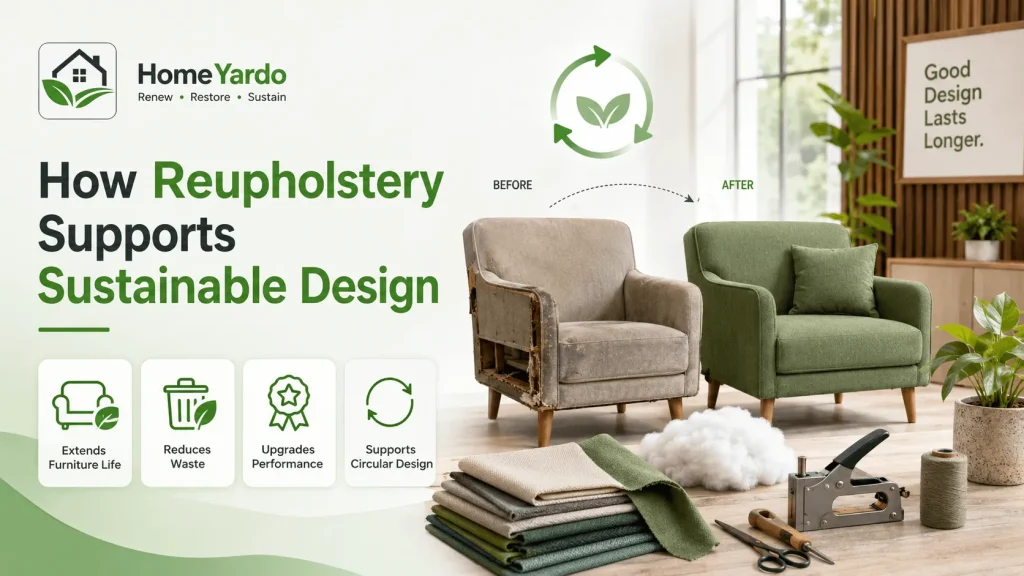
Sustainable design isn’t only about buying less. It also involves using existing products and materials more efficiently. Reupholstery is one example of this approach because it increases the useful life of commercial furniture.
Reusing existing furniture also supports the broader circular economy, where products and materials remain in use for longer instead of becoming waste.
- Extends furniture life – Commercial furniture frames can last for years. This means the fabric and cushioning may wear out before the frame does. Instead of throwing away the whole piece, businesses can reupholster it.
- Upgrades performance – Appropriate new cushioning and commercial-grade materials can improve comfort, appearance, and durability based on how the furniture is intended to be used.
- Reduces new material use – With the existing frame in place, the project can focus on replacing only the components that actually need attention.
- Keeps furniture out of landfills – Furniture that is still usable can remain in service for longer instead of being discarded when an office is redesigned.
The outcome can be an office that looks modern, remains functional, and supports a more sustainable way of managing furniture—all without the cost and waste of replacing everything with new furniture.
The Role of Quality Materials and Craftsmanship

Reupholstery works best when it is done with the right materials and competent craftsmanship. The quality of the fabric, foam, stitching, and installation can influence how well the finished furniture performs in a busy commercial environment.
Fabric Selection
Not every fabric is appropriate for commercial use. Office furniture is subject to everyday use and is often placed in high-traffic areas, so fabric selection should consider durability, ease of cleaning, appearance, and anticipated traffic.
A competent upholsterer can advise businesses on the best fabrics for the location and function of the furniture.
Professional Craftsmanship
Good preparation, stitching, fitting, and cushioning techniques can mean the difference between a short-term cosmetic repair and a lasting refurbishment.
Experienced professionals can also determine whether the frame and internal components are suitable for reupholstery before any work begins.
Durable Padding
Padding influences both comfort and the service life of upholstered furniture. When the right foam is used for the application, high-density foam can hold its shape better than lower-quality alternatives.
The appropriate foam density and construction depend on the type of furniture and how frequently it will be used.
Fire Safety Compliance
Depending on the intended location and purpose of the furniture, commercial furniture may also need to meet certain fire-safety and material requirements. Businesses should confirm the requirements that apply to their project and select materials accordingly.
When companies hire trusted commercial upholstery services in Vancouver, they have professionals to cover all of this.
How Reupholstery Supports Office Design Trends
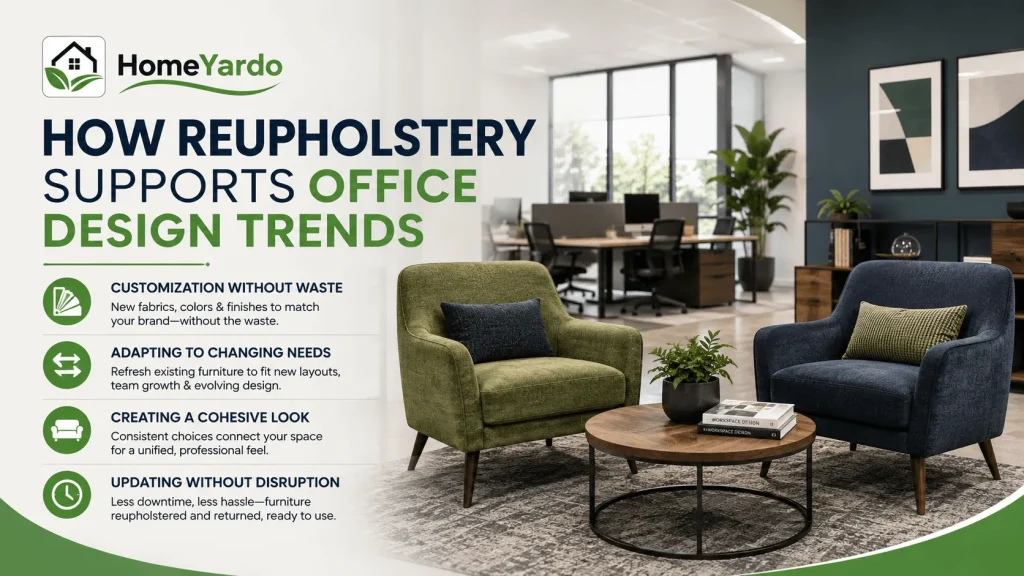
Offices are evolving as companies reconfigure their spaces to support different working styles, layouts, and employee needs. Reupholstery gives businesses a way to update furniture they already have rather than replacing every item.
Customization Without Waste
Reupholstery gives businesses the opportunity to select new fabrics, colors, and finishes that may better suit their existing branding or interior design.
This allows greater control over the style of existing furniture while avoiding the waste of replacing usable pieces simply because the upholstery looks old.
Adapting to Changing Needs
As teams expand, layouts shift, and firms develop their design direction, offices change. Reupholstery allows existing furniture to adapt to those changes.
It can be applied to different furniture pieces, such as coordinating the textiles of several pieces so older seating matches a newly designed workspace without replacing it.
Creating a Cohesive Look
Consistent fabric, color, or finish choices can visually connect different pieces of furniture. This can create a more cohesive workspace without requiring companies to buy a complete matching set.
Updating Without Disruption
A full office furniture replacement may require planning, delivery, removal, and disposal. Reupholstery can be less disruptive when furniture is collected, worked on away from the office, and returned when ready.
The exact timeline depends on the quantity and type of furniture, materials selected, and scope of work. Businesses should discuss scheduling with their upholstery provider before starting the project.
The Business Case for Reupholstery
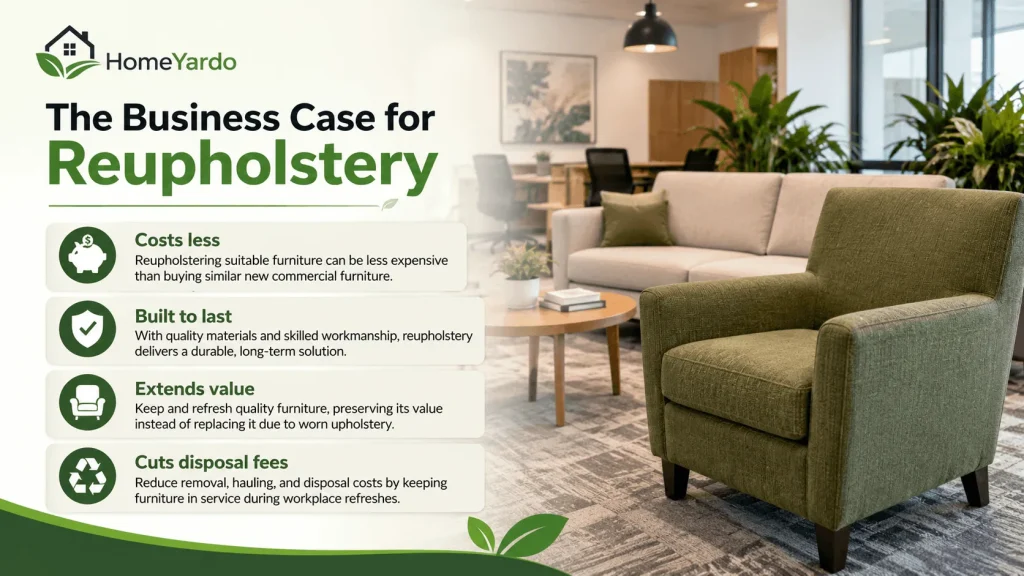
Of course, sustainability isn’t the only reason businesses are turning to reupholstery. Cost, furniture quality, durability, and disruption to operations are also important factors.
- Costs less – Reupholstering suitable furniture can be less expensive than buying similar new commercial furniture. Savings depend on the amount and condition of the furniture and the materials selected.
- Built to last – With a solid frame, proper commercial-grade materials, and skilled workmanship, reupholstery can provide a sustainable long-term solution rather than a temporary cosmetic patch.
- Extends value – Reupholstery helps businesses continue using furniture they already own, preserving the value of quality pieces that might otherwise be replaced because of worn upholstery.
- Cuts disposal fees – Keeping furniture in service when a business refreshes its workplace can reduce the need for removal, hauling, and disposal.
As the scale of the project increases, these savings may become more significant for firms with a large amount of upholstered furniture. A proper assessment can help determine whether reupholstering is financially practical compared with buying new.
Choosing a Reupholstery Partner

The choice of upholstery provider is as important as the choice of fabric. Look for experience with commercial furniture, examples of completed projects, suitable material options, clear timelines, and warranty details.
Before approving the work, ask:
- What types of commercial furniture do you reupholster most often?
- What fabrics and padding are suitable for our level of use?
- Can you provide examples of comparable projects?
- How long will the project take?
- Will the furniture be completed in-house or off-site?
- What does the quoted price include?
- What warranty do you provide?
Always ask to see previous work if you can. It gives you a better understanding of the provider’s workmanship, finishing quality, and ability to handle furniture similar to yours.
Vancouver-based Canada Ace provides reliable business upholstery services in Vancouver for offices, hospitality, and more.
Summary
Commercial reupholstery provides organizations with an alternative to leaving worn furniture as it is or buying entirely new furniture. Existing furniture with a sound structure can be updated with new fabric and cushioning to improve its appearance, comfort, and usability while extending its service life.
It can also support sustainable office design by reducing unnecessary disposal and making greater use of existing furniture and resources. Reupholstery can be a practical way for companies to upgrade their space without the cost and disruption of complete furniture replacement, provided they use suitable commercial-grade materials, skilled craftsmanship, and proper planning.
FAQ’s
Commercial reupholstery is the process of replacing fabric, padding, and other worn upholstery components of office or commercial furniture while preserving the existing furniture structure.
Reupholstery can reduce waste by extending the useful life of serviceable furniture frames. It can also reduce the need for new materials and disposal of existing furniture.
Yes. Existing office furniture can be given a fresh look by choosing new fabrics, colors, textures, and padding that match a new design.
It can be less expensive than replacing good-quality commercial furniture, especially when the existing frames are sound. The actual cost depends on the furniture, materials, and amount of work involved.
Office chairs, reception seating, couches, lounge chairs, conference seating, benches, and other upholstered commercial furniture may often be reupholstered if their frames are in good condition.
The lifespan depends on the quality of the fabric, padding, frame, craftsmanship, and amount of daily use. Commercial-grade materials are generally selected to handle heavier use than typical residential furniture.
Consider durability, ease of cleaning, appearance, comfort, expected traffic, and applicable commercial safety requirements. An experienced upholsterer can help select fabrics appropriate for the location and intended use.
Yes. Extending the useful life of existing furniture can reduce furniture waste sent to landfills and reduce the demand for replacement furniture.
Ask about experience with commercial furniture, examples of previous work, suitable material options, project timelines, warranty information, and the provider’s ability to work around your business schedule.