How the Growing Environment Affects Plant Quality
Most farmers and commercial growers focus on selecting seeds or genetics with desirable traits such as high yield, fast growth, disease resistance, etc. But despite having ideal inherent traits, some growers don’t get the desired outcome. That is where environmental factors such as water, light, temperature, soil, etc. come into play, affecting the growth potential.
The same principle applies to specialty crops such as hemp, where growing conditions can influence the quality of raw material later used in products such as CBD oils.
With global warming, climate change is rapidly affecting crop cultivation, raising concerns about agricultural sustainability. This piece of writing explores the environmental factors that are changing and how they affect crop productivity, so you can adapt your cultivation practices accordingly.
Understanding Growing Environment for Optimal Plant Quality
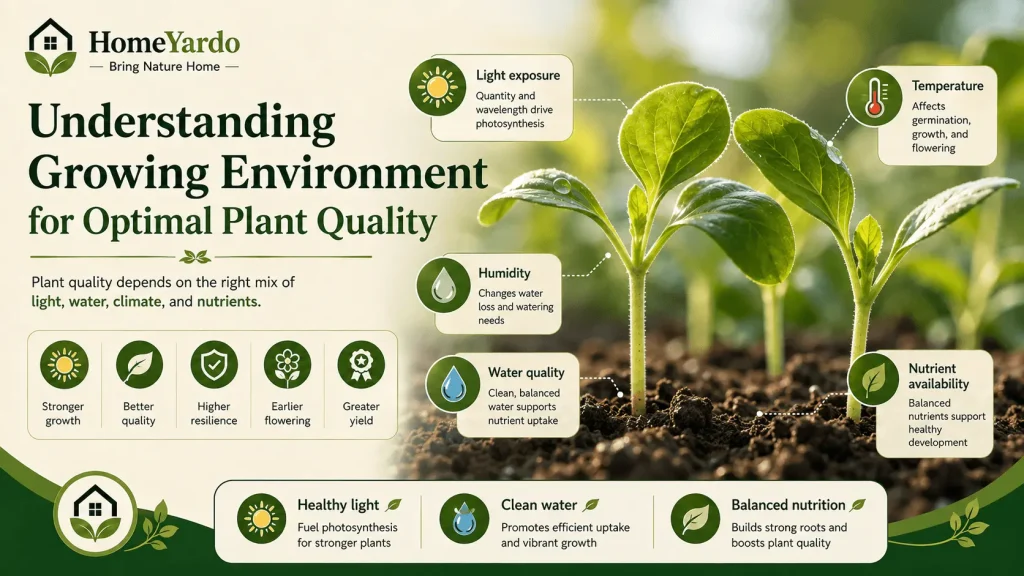
No doubt, plant genetics determine traits such as taste, yield, chemical profiles, etc. But you can only achieve the inherited traits if you consider the environment and its changes, such as:
Light Exposure
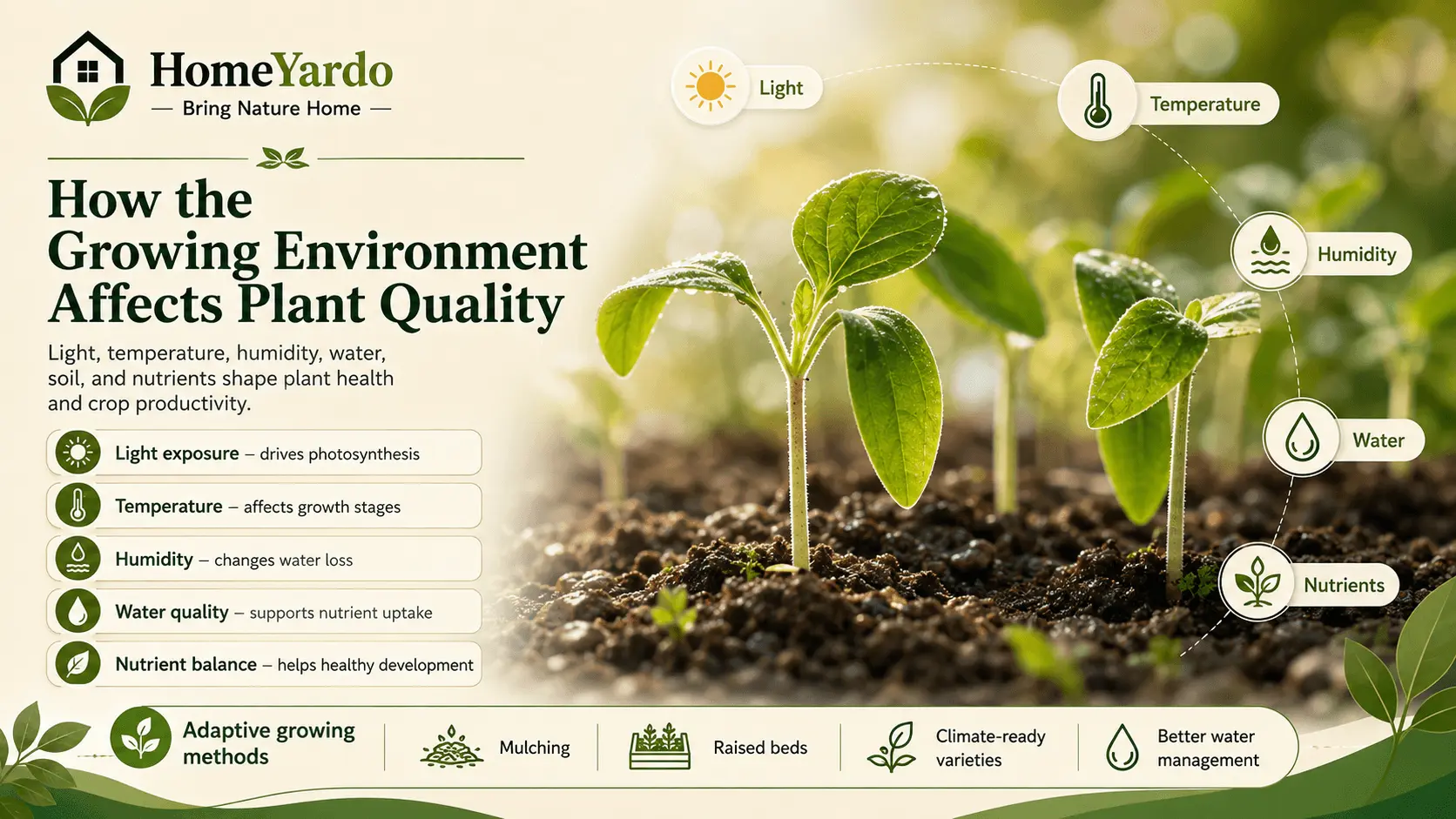
Sunlight required for crops is measured in terms of quantity and quality. Quantity comes with high intensity to support photosynthesis. Some plants need more light quantity, while others thrive in low light.
Moreover, the light quality matters in terms of wavelength, where blue and red-light wavelengths directly affect plant growth. The more the plant gets these wavelengths, the faster they grow.
Temperature
Temperature directly influences photosynthesis and other stages of plant growth, such as germination and flowering. Depending upon the genetics, some plants grow more smoothly in high temperatures, while others need cooler environments. Temperature changes may support the transition from leafy growth to flowering.
Humidity
Humidity also affects crops and determines how much and how frequently they need water. In high-humidity areas, plants lose less water during transpiration, so less water is necessary. Hot, dry, and windy conditions come with more water loss, so a constant water supply is needed to support growth and nutrient movement.
Water Quality
Plants depend on water throughout their growth, but the condition of that water matters as much as the amount supplied. It should generally have a pH between 6.5 and 8.4 and contain low levels of salts and other contaminants. Poor-quality irrigation water can interfere with nutrient uptake and limit healthy plant development.
Nutrient Availability
Plants need around 17 micro- and macronutrients, including nitrogen, potassium, magnesium, calcium, phosphorus, and sulfur, as well as micronutrients such as iron, zinc, molybdenum, manganese, etc. They must be in balance, as both excess and deficiency can restrict plant growth stages. Soil quality depends on the availability of these nutrients naturally or through external sources, such as fertilization.
Adaptive Cultivation Methods for Climate Changes
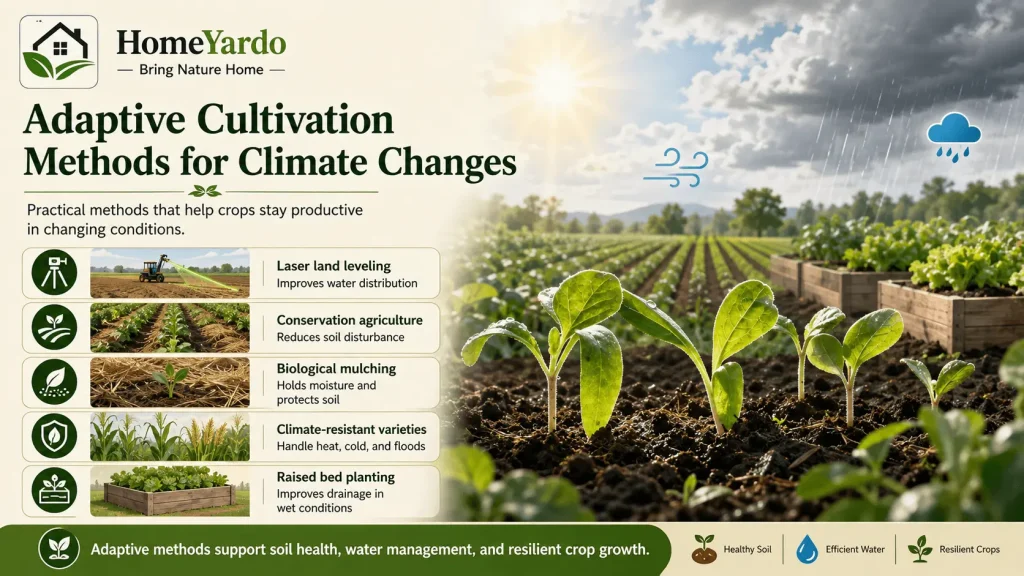
Agricultural sustainability amid rapidly changing environments lies in adaptive cultivation methods such as:
- Laser land leveling: Use of laser-guided equipment to create an even field surface for even water distribution and uniform plant growth.
- Conservation agriculture: A farming approach without unnecessary soil movement, crop rotation, and keeping crop residues to prevent erosion for crop productivity.
- Biological mulching: Covering the soil with beneficial living organic materials to promote soil quality through temperature regulation and moisture conservation.
- Use of Climate-Resistant Varieties: For withstanding changing climatic conditions and sustaining crops under extreme heat, cold, floods, salty water, etc.
- Raised bed planting: Cultivating crops on elevated beds for better water drainage and management during floods or heavy rainfall.
Bottom Line
Any crop’s productivity depends on its genetics, but growing conditions support the plant in achieving its full potential. Plants can only deliver their inherited traits when provided with suitable water, soil, nutrients, temperature, humidity, and other favorable growing conditions.
So, for rapidly changing environmental factors, adaptive cultivation is the only solution. Whether crops are grown for food or medicinal products, the consistent quality depends on the right combination of genetics and supportive growing conditions.
FAQ’s
The growing environment affects whether plants can achieve their genetic potential. Factors such as light, temperature, humidity, water quality, soil, and nutrient availability can influence plant growth, productivity, and overall quality.
The main environmental factors include light exposure, temperature, humidity, water quality, nutrient availability, and soil conditions. Changes in these conditions can affect different stages of plant growth and crop productivity.
Water quality can affect nutrient uptake and healthy plant development. Irrigation water with excessive salts or contaminants may interfere with plant growth, while suitable water quality supports nutrient movement and development.
Farmers can use adaptive cultivation methods such as laser land leveling, conservation agriculture, biological mulching, climate-resistant varieties, and raised bed planting. These practices can help manage challenges such as extreme temperatures, flooding, water stress, and soil erosion.