
Flush Mount Lights: Styles for Every Interior
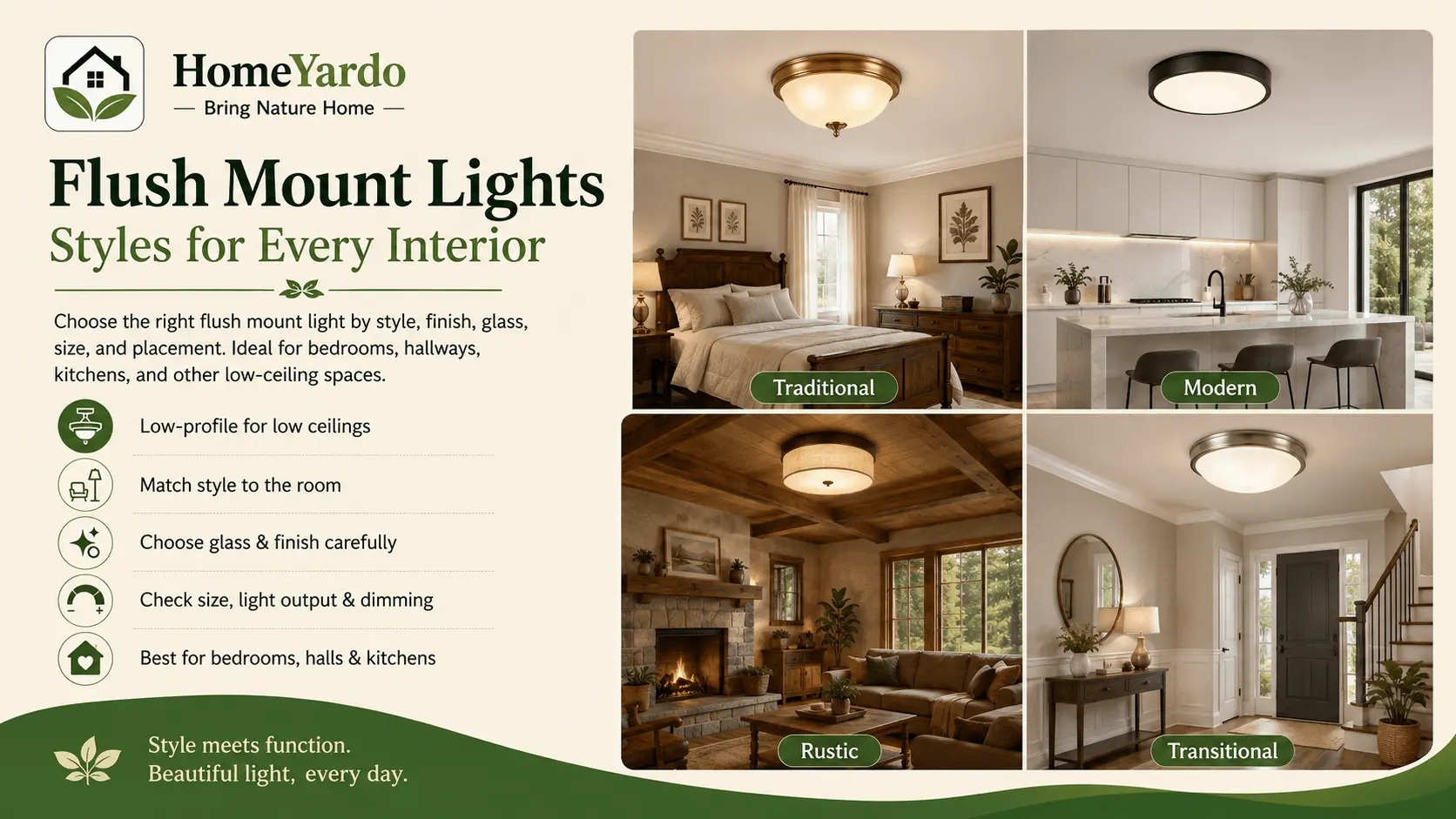
Interior design requires elements that facilitate comfort, proportion, and harmony. Ceiling lamps can help create an atmosphere in a room by complementing furniture, paintings, finishes, and architecture well. For such tasks, flush-mount lamps are preferable as their small sizes allow for saving space above.
Premium flush mount lights come in traditional, contemporary, rustic, transitional, and industrial designs and can be used in bedrooms, entrance halls, stairwells, kitchens, and other low ceiling rooms. The forms, finishes, and glass shades of lamps can relate to different interior designs in a house. In this article, we will review various lamp designs and the factors that make them suitable for an interior.
Classic Forms Add Lasting Structure
The classic flush mount light fixtures often have well-proportioned sizes, curved frames, soft glass, and metal accents such as brass, bronze, and nickel finish. All these characteristics make it appropriate to use them in rooms that have crown molding, paneling, traditional pieces of furniture, or historic elements. The plain dome or drum will add to the overall look of the room without cluttering the ceiling.
The traditional design does not have to be highly ornamental and decorated. A simple frame with the opal lampshade can link the old-style furniture with upholstery and more modern elements.
Modern Profiles Preserve Visual Calm
Contemporary fixtures make use of simple geometric shapes, shallow frames, smooth finishes, and little decoration. Round disks, squares, and narrow drums can match up with adjacent pieces of furniture and architecture without disrupting the neat appearance of the ceiling. Each finish type-black matte, polished nickel, white, and aged brass-offers its own level of contrast.
A small fixture can give a small room a sense of cohesion, not emptiness. But the size needs to be proportionate to the size of the room, the furnishings, and the exposed ceiling. Otherwise, the fixture is either too small or too large for the purpose.
Glass Styles Shape Light and Mood
Glass affects both the fixture’s appearance and the quality of illumination across the room. Opal or frosted glass reduces glare and creates a soft glow, while clear glass exposes the bulbs and produces sharper detail. Ribbed, seeded, etched, or faceted glass introduces texture that remains visible even when the fixture is off.
Shade selection should reflect the purpose of the space. Bedrooms and quiet seating areas usually benefit from diffused illumination, while halls and entries may require clearer output. Decorative glass can become a focal feature when the surrounding palette remains restrained.
Metal Finishes Connect Interior Details
The fixture finish does not need to match every handle, faucet, frame, or furniture accent. It should relate to one or two nearby materials so the choice appears deliberate. Warm brass can complement walnut and cream, while nickel can connect naturally with gray stone or cooler paint colors.
Mixed-metal rooms still require a clear visual hierarchy. One dominant finish can appear across major fixtures, while a secondary finish adds contrast through smaller details. A flush mount may support either role, based on its scale, placement, and decorative presence.
Natural Materials Create Warm Character
Flush-mounted ceiling lights with woven materials, wooden features, linen lampshades, and materials that resemble stones create an element of warmth without overpowering the ceiling. Such materials blend well with casual, coastal, farmhouse, and Scandinavian interior styles as they create some softness on hard surfaces. Neutral finishes also complement wooden or stone floors, simple furniture, and walls with neutral colors.
Natural materials should always match existing materials in the space to achieve balance. Wooden elements can be used to match existing furniture or cabinetry, while woven elements can be matched with baskets and fabrics. Consistent use of similar materials will create harmony with the whole interior design.
Natural finishes also go well with wood flooring, stone surfaces, neutral walls and basic furniture.
Style Guide for Common Interiors
A fixture should respond to the room’s architecture before it follows a temporary trend. The table below shows how common flush mount styles can support several interior themes without requiring an exact decorative match.
| Interior Style | Suitable Fixture Features | Recommended Spaces |
|---|---|---|
| Traditional | Soft glass, warm metal, balanced ornament | Bedrooms, halls, formal entries |
| Contemporary | Slim profile, simple geometry, smooth finish | Offices, kitchens, modern bedrooms |
| Rustic | Aged metal, natural texture, sturdy frame | Mudrooms, cabins, casual family rooms |
| Industrial | Dark finish, exposed hardware, clear glass | Lofts, corridors, utility areas |
| Transitional | Clean shape, classic materials, subtle detail | Guest rooms, entries, family spaces |
The comparison can narrow the available choices, but scale and light output deserve equal attention. A striking piece may still feel misplaced when its proportions conflict with the room or its shade blocks useful illumination. Style works best when appearance, dimensions, and function support the same design purpose.
Conclusion
Premium flush mount lights can add depth to lower ceilings, support layered illumination, and connect materials across nearby rooms. Before selection, review the dimensions, bulb requirements, canopy size, shade opacity, finish, dimmer compatibility, and approved location rating. These checks help prevent an attractive design from creating practical concerns after installation. A successful ceiling fixture feels connected to the room from every viewpoint. Its profile respects the available height, its finish relates to nearby materials, and its illumination supports the activities below. Careful selection allows a compact fixture to become a quiet yet valuable part of a thoughtful interior design.
FAQ‘s
Flush mount lights are ceiling fittings that sit near to the ceiling rather than hanging down on a stem or chain. Because they have a low profile, they are particularly handy in places with low ceilings.
Yes. Because of their small size they allow more vertical space than many pendant or chandelier-type fixtures. This makes flush mount lighting a practical solution for bedrooms, corridors, entryways and other rooms with lower ceilings.
A flush mount fixture is installed flush to the ceiling whereas a semi-flush mount fixture drops a bit below the ceiling. Flush mounts usually require less vertical clearance and are often a preferable option for lower ceilings.
The size depends on the room size, ceiling space, furniture and general interior style. The fixture should be visually present enough for the room size without taking up the available ceiling space.
Yes. Flush mount lights are a great option for bedrooms, because they save vertical space, and can provide you some general overhead lighting. Frosted or opal glass might be handy when a softer light is desired.
Yes, as long as the fitting picked is appropriate for the kitchen position and offers sufficient general lighting. You could still want to add task lighting over the countertops and other work locations.
The finest glass depends on the lighting effect you want to achieve. Frosted and opal glass gives a softer, diffused light, whereas transparent glass gives a more direct light and shows the bulbs more. Ribbed, seeded, etched and faceted glass adds a beautiful texture.
It doesn’t have to match every metallic finish in the space. A fixture can also coordinate with one or two surrounding materials. Mixed metals interiors can be done if one of the finishes is prominent to the eye and the other is regulated contrast.