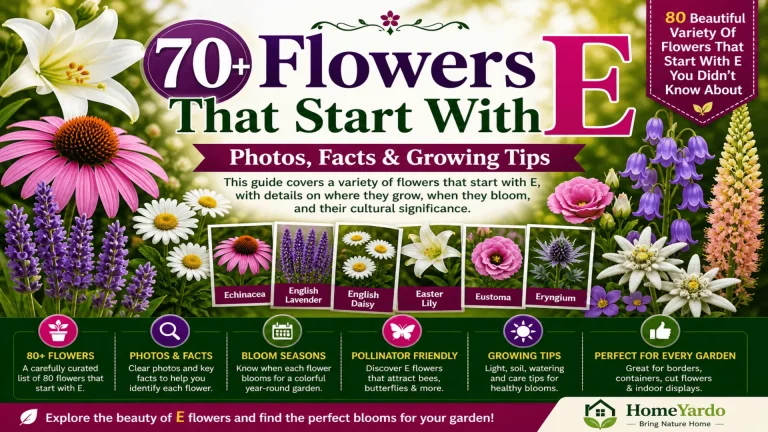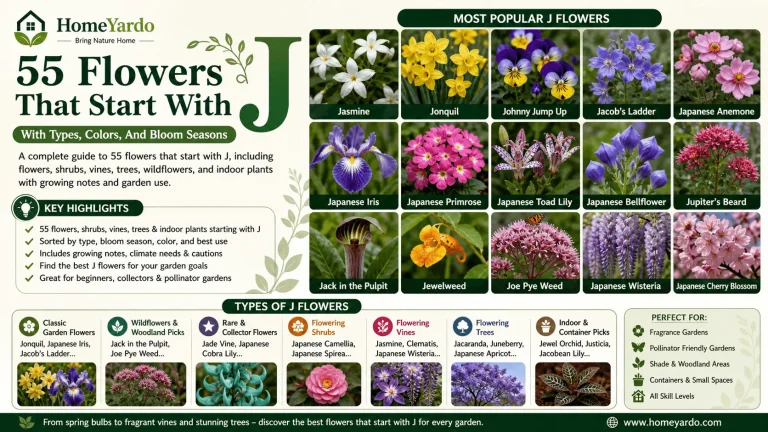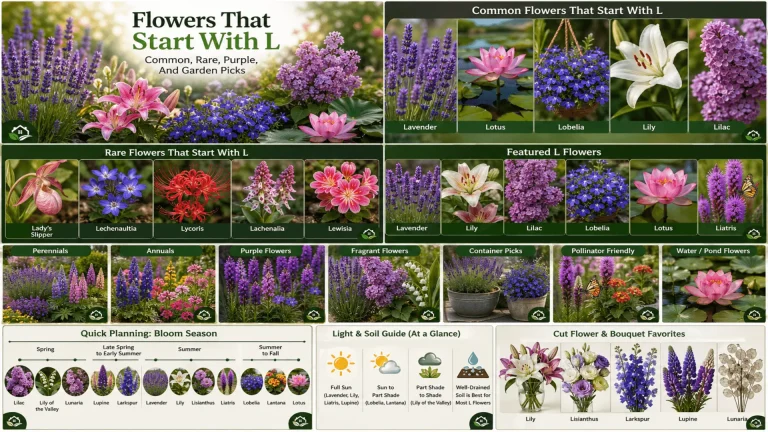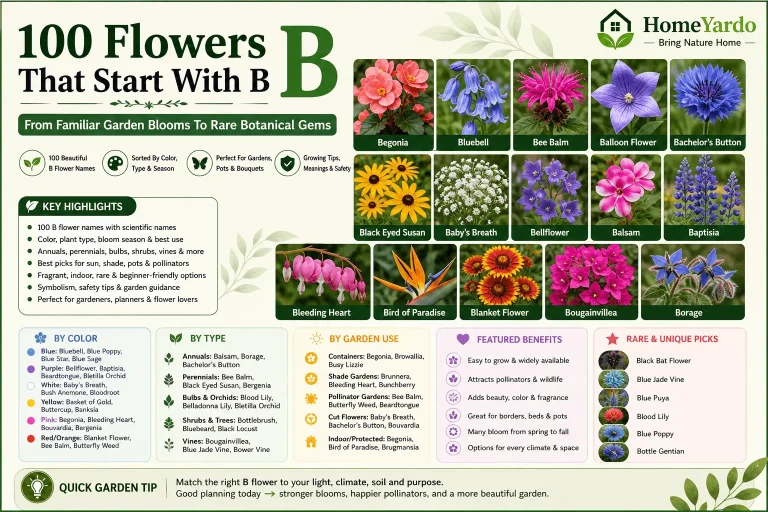
76 Beautiful Variety Of Flowers That Start With H You Didn’t Know About
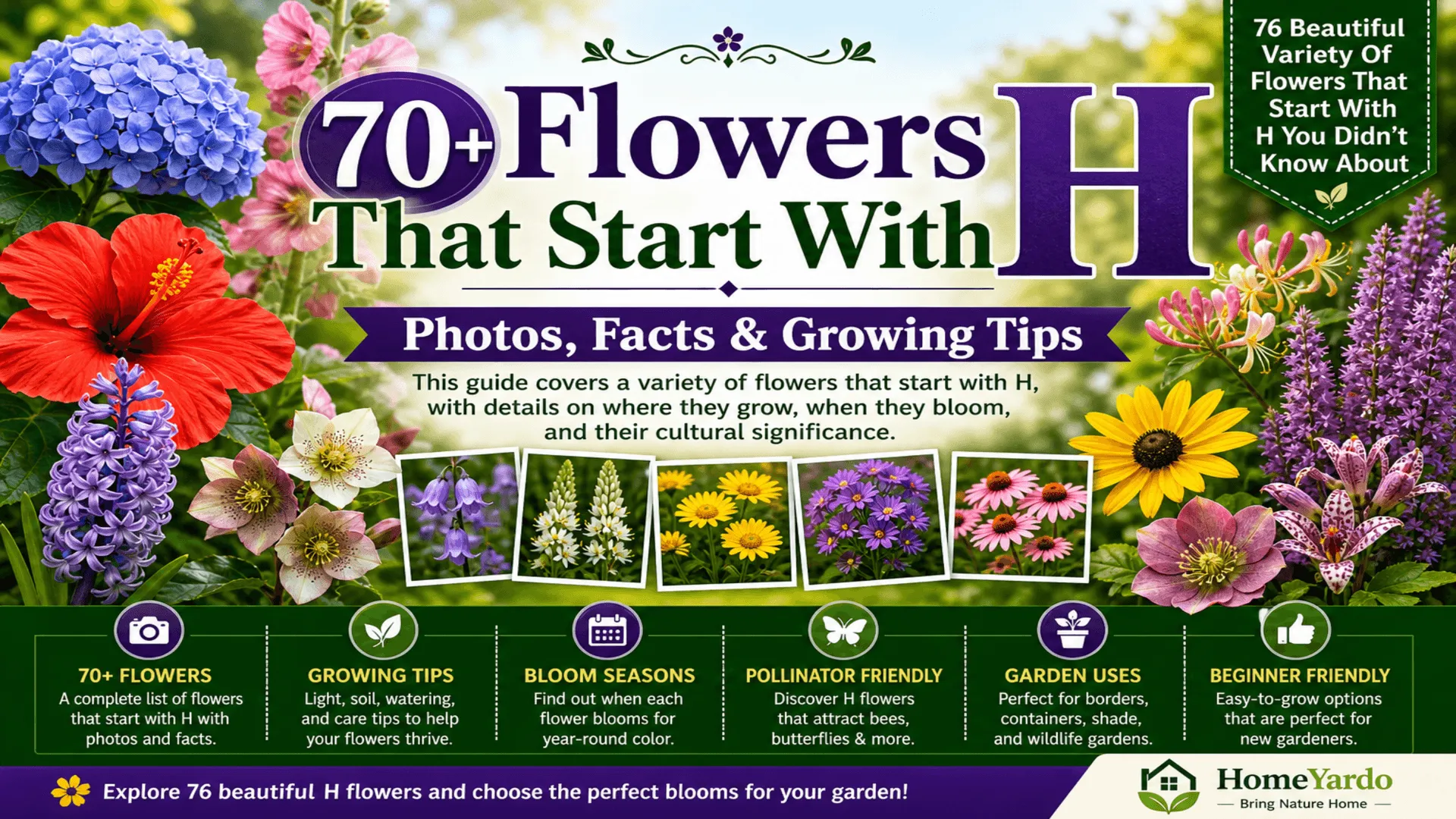
Flowers starting with H range from familiar garden favorites to less common names that still deserve a place in alphabetical flower guides. Hydrangea, hibiscus, hyacinth, and hellebore are among the best-known examples, but the letter H also includes many rarer flowers, botanical name entries, and specialty plants that readers may not come across often.
This guide brings together 76 flower names that start with H, along with quick-growing notes, a practical comparison table, and grouped sections that help narrow choices by color, bloom season, fragrance, light, container use, pollinator value, and ease of care. It can be used as both a name list for quick browsing and a gardening guide for choosing flowers that fit the right space.
Readers moving through the alphabet one letter at a time can also browse flowers that start with G for another list of familiar and lesser-known blooms.
Quick Answer: What Are Flowers That Start With H?
Flowers that start with H include hydrangea, hibiscus, hyacinth, hellebore, hollyhock, heliotrope, honeysuckle, heather, helenium, hosta, heuchera, Hesperis, harebell, Houstonia, Haemanthus, hairy toad lily, Hippeastrum, Helichrysum, Hypericum, honeywort, honesty, Hebe, hawkweed, Himalayan blue poppy, and many more.
This guide brings together 76 H flower names, including both familiar garden flowers and less common botanical-name entries.
76 Flower Names That Start With H
| 1: Hydrangea 2: Hibiscus 3: Hyacinth 4: Hellebore 5: Hollyhock 6: Heliotrope 7: Honeysuckle 8: Heather 9: Helenium 10: Hosta 11: Heuchera 12: Hesperis 13: Harebell 14: Houstonia 15: Haemanthus 16: Hairy Toad Lily 17: Hippeastrum 18: Helichrysum 19: Hypericum 20: Honeywort 21: Honesty 22: Hebe 23: Hawkweed 24: Himalayan Blue Poppy 25: Hardy Geranium 26: Helianthus 27: Helianthemum 28: Heliconia 29: Hemerocallis 30: Hepatica 31: Heucherella 32: Hyssop 33: Hyacinthoides 34: Hylotelephium 35: Helipterum 36: Heliopsis 37: Hamamelis 38: Habranthus | 39: Halimiocistus 40: Hylomecon 41: Heloniopsis 42: Hunnemannia 43: Hoheria 44: Huernia 45: Hoya 46: Hacquetia 47: Herbertia 48: Harlequin Flower 49: Himalayan Honeysuckle 50: Hyacinth Bean 51: Hyacinth Orchid 52: Hoary Stock 53: Horned Poppy 54: Helonias 55: Helleborine 56: Hibbertia 57: Hidalgoa 58: Heterocentron 59: Heimia 60: Hedychium 61: Heliophila 62: Helmholtzia 63: Hesperaloe 64: Hylocereus Flower 65: Hyptis 66: Hymenocallis 67: Helwingia 68: Heterotheca 69: Hoary Alyssum 70: Hardy Fuchsia 71: Heartleaf Bergenia 72: Hyssop Loosestrife 73: Hummingbird Mint 74: Hawaiian Rose 75: Hydrophyllum 76: Holboellia |
How To Use This Guide
Start with the comparison table to compare some of the most popular H flowers at a glance. Then use the grouped sections below to explore flower names by familiarity, garden use, color, fragrance, bloom season, light needs, container use, and beginner friendliness. After this H guide, readers can continue the series with flowers that start with A to keep exploring alphabetical flower lists one letter at a time.
Flowers That Start With The Letter H: A Glance
The table below gives a fast comparison of popular H flowers by color, bloom season, light, fragrance, and growing style.
| Flower | Botanical name | Type | Main colors | Bloom season | Light | Fragrant | Life cycle | Container friendly | Beginner friendly |
|---|---|---|---|---|---|---|---|---|---|
| Hydrangea | Hydrangea spp. | Shrub | Blue, pink, white, purple | Summer to early fall | Part sun to part shade | Sometimes | Perennial | Yes | Yes |
| Hibiscus | Hibiscus spp. | Shrub or perennial | Red, pink, yellow, orange, white | Summer to fall | Full sun | Lightly | Perennial or tender perennial | Yes | Yes |
| Hyacinth | Hyacinthus orientalis | Bulb | Purple, pink, white, blue | Spring | Full sun to part sun | Yes | Bulb perennial | Yes | Yes |
| Hellebore | Helleborus spp. | Perennial | White, pink, green, plum | Late winter to spring | Part shade to shade | Lightly | Perennial | Yes | Yes |
| Hollyhock | Alcea rosea | Tall flowering plant | Pink, red, yellow, white, purple | Summer | Full sun | No | Biennial or short lived perennial | Limited | Moderate |
| Heliotrope | Heliotropium arborescens | Tender perennial | Purple, lavender, white | Summer to fall | Full sun | Yes | Tender perennial | Yes | Moderate |
| Honeysuckle | Lonicera spp. | Vine or shrub | Cream, yellow, pink, red | Spring to summer | Full sun to part sun | Often | Perennial | Sometimes | Moderate |
| Heather | Calluna vulgaris | Low shrub | Pink, purple, white | Summer to fall | Full sun | Lightly | Perennial | Yes | Yes |
| Helenium | Helenium spp. | Perennial | Yellow, orange, red | Midsummer to fall | Full sun | No | Perennial | Sometimes | Yes |
| Hosta | Hosta spp. | Foliage perennial | Lavender, white | Summer | Part shade to shade | Sometimes | Perennial | Yes | Yes |
| Heuchera | Heuchera spp. | Foliage perennial | White, pink, coral | Late spring to summer | Part shade | Lightly | Perennial | Yes | Yes |
| Hippeastrum | Hippeastrum spp. | Bulb | Red, pink, white, striped | Winter to spring | Bright light | Lightly | Bulb perennial | Yes | Yes |
| Honeywort | Cerinthe major | Flowering plant | Blue, purple, violet | Spring to summer | Full sun to part sun | No | Annual | Yes | Moderate |
| Hebe | Hebe spp. | Shrub | White, pink, blue, purple | Summer to fall | Full sun | Lightly | Perennial | Yes | Moderate |
| Hardy Geranium | Geranium spp. | Perennial | Pink, purple, blue, white | Late spring to summer | Full sun to part shade | Lightly | Perennial | Yes | Yes |
| Helianthus | Helianthus spp. | Flowering plant | Yellow, bronze | Summer to fall | Full sun | No | Annual or perennial by type | Limited | Yes |
| Heliopsis | Heliopsis helianthoides | Perennial | Yellow, orange yellow | Summer to fall | Full sun | No | Perennial | Sometimes | Yes |
| Hemerocallis | Hemerocallis spp. | Perennial | Yellow, orange, red, pink | Summer | Full sun to part sun | Sometimes | Perennial | Yes | Yes |
| Heliconia | Heliconia spp. | Tropical flowering plant | Red, orange, yellow | Summer to fall | Full sun to part sun | No | Tender perennial | Yes in warm climates | Moderate |
| Himalayan Blue Poppy | Meconopsis betonicifolia | Perennial | Blue | Late spring to summer | Part shade | No | Perennial | Limited | Difficult |
This list of flowers that start with H includes familiar garden favorites, lesser-known blooms, and a few botanical-name entries that readers often see in alphabetical flower guides.
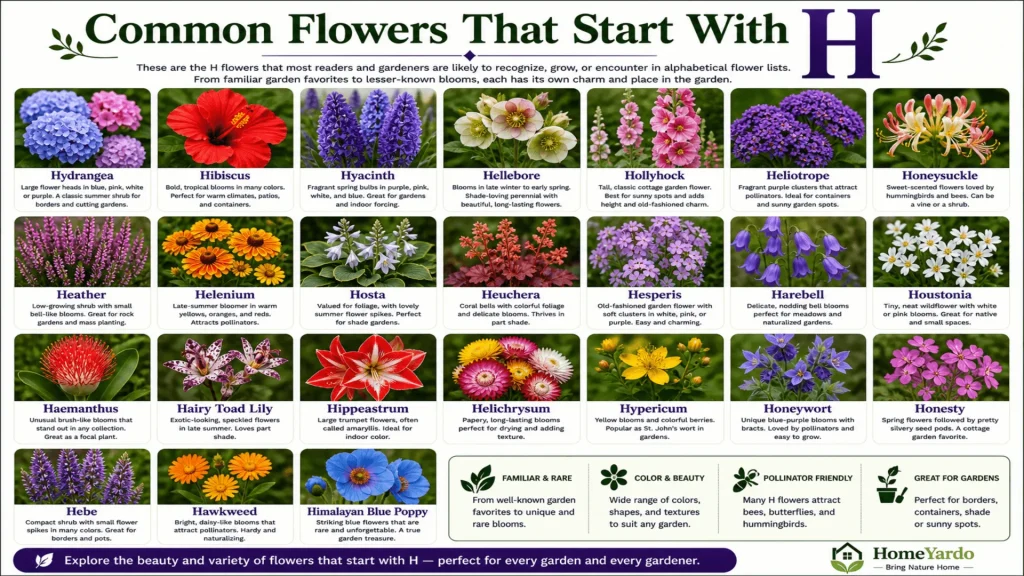
Common Flowers That Start With H
These are the H flowers that most readers and gardeners are likely to recognize, grow, or encounter in alphabetical flower lists. It starts with familiar garden flowers, then adds several less common but still worthwhile names that help round out the topic without drifting into random plant names. Readers who enjoy familiar, widely grown blooms can also browse flowers that start with C for another strong mix of classic garden flowers.
Hydrangea
Hydrangea is one of the most recognizable H flowers because of its large flower heads and strong summer presence. It appears in foundation beds, cottage borders, and cutting gardens, and it comes in shades of blue, pink, white, and purple.
Some types can shift flower color depending on soil conditions, while others remain stable. It is a dependable choice for gardeners who want a big floral display with the structure of a shrub.
Hibiscus
Hibiscus stands out for its large, open blooms and tropical look. It is one of the boldest flowers in this group and works well in warm-climate gardens, sunny patios, and large containers.
Some hibiscus types return each year, while others are grown more like tender summer plants in cooler regions. It is especially useful when bright colors and a dramatic look are the main goals.
Hyacinth
Hyacinth is a spring bulb known for dense flower spikes and rich fragrance. It brings early color in purple, pink, white, and blue, and it is one of the easiest H flowers to recognize in spring displays.
It is also a popular choice for indoor forcing in pots. For gardeners who want scent and compact spring color, hyacinth remains one of the strongest options.
Hellebore
Hellebore earns attention because it blooms when much of the garden still looks quiet. Flowers often appear from late winter into early spring, which makes it useful for shade beds and woodland-style planting.
Its colors can be muted or rich, depending on the type, and that softer appearance is part of its charm. It is one of the best perennial H flowers for low-light areas.
Hollyhock
Hollyhock is a classic tall flower with stems lined with large blooms. It fits naturally into cottage gardens and looks especially good against walls, fences, or the back of a sunny border.
It is often grown as a biennial or short-lived perennial. Gardeners use it when they want height, old-fashioned character, and a stronger vertical line in planting.
Heliotrope
Heliotrope is valued for its fragrance and rich purple tones. Its clustered blooms are smaller than hydrangea or hibiscus, but the scent gives it a special place in containers, patio plantings, and fragrance-focused gardens.
In cooler climates, it is often treated as a seasonal plant, while in warmer areas, it may grow longer. It is one of the best H flowers for readers who want scent as much as color.
Honeysuckle
Honeysuckle is known for tubular flowers, a sweet scent, and wildlife value. Depending on the species, it can grow as a vine or a shrub, which gives it a different habit from many other flowers in this guide.
It works well when vertical interest is needed, and it can draw hummingbirds, bees, and butterflies. Some types need more careful selection because a few forms spread too easily in the wrong setting.
Heather
Heather brings a finer texture than many larger H flowers. It forms low mounds and carries small bell-like blooms in pink, purple, or white, often creating a soft carpet of color.
It works well in rock gardens, low borders, and mass planting. The individual flowers are small, but the overall effect is clean and attractive.
Helenium
Helenium is a strong late-season flower with warm shades of yellow, orange, and red. It adds energy to borders when earlier summer bloomers begin to slow down.
Its open flower form also suits pollinator planting. Gardeners who want dependable late color often find helenium easier to place than more unusual H flowers.
Hosta
Hosta is usually grown for foliage first, but it does flower, which is why it appears in many H flower lists. Its summer flower spikes rise above the leaves in pale lavender or white, adding a softer bloom effect to shade planting.
It is a fair inclusion as long as the foliage-first nature of the plant is kept clear. In shaded gardens, it still works as a flowering accent.
Heuchera
Heuchera, often called coral bells, is another plant grown as much for foliage as for bloom. Its delicate flower stems add movement above colorful leaves and help soften the look of containers and borders.
It works especially well in part shade. Readers who want subtle flowers paired with strong foliage often enjoy it more than louder bloomers.
Hesperis
Hesperis is a lighter, more old-fashioned flower that suits informal planting and natural-looking gardens. It usually carries clusters of blooms in white, pink, or purple.
It is a good choice for readers who want something softer than hydrangea or hibiscus. The overall look feels airy and relaxed rather than bold.
Harebell
Harebell is a delicate wildflower with nodding bell-shaped blooms. It looks best in meadow-style planting, naturalized spaces, or gardens that need a lighter floral touch.
Its appeal comes from grace rather than mass. In a list filled with strong, showy flowers, harebell adds contrast and softness.
Houstonia
Houstonia is a small wildflower that many gardeners know less well, but it deserves a place for its neat form and gentle beauty. It often appeals to readers who enjoy native or small-scale planting.
It is not the loudest flower on the page, but it adds range. It is a good example of an H flower that feels subtle and refined.
Haemanthus
Haemanthus is one of the more unusual H flower choices and is often remembered for its rounded, brush-like bloom form. It has a striking appearance that stands apart from common border flowers.
It works better as a standout or collector-style choice than as a first garden pick. For readers who want something visually different, it brings instant contrast.
Hairy Toad Lily
Hairy toad lily is a late-season shade flower with spotted blooms that can look almost orchid-like at first glance. It brings interest when many summer flowers are already fading.
This is one of the best H flowers for readers who want something unusual without losing real garden value. It is especially useful in part shade spaces that need a later floral accent.
Hippeastrum
Hippeastrum is familiar to many gardeners through large indoor flowering bulbs often sold as amaryllis. Its trumpet-shaped blooms come in red, pink, white, and striped forms, and the flowers make a strong statement in containers.
It is especially useful for readers looking for an H flower that works indoors. Even when grown as a seasonal bulb display, it is still a highly recognizable flower name.
Helichrysum
Helichrysum is often linked with strawflower types that keep their shape and color well after cutting or drying. The petals have a papery texture that makes them stand out from softer flowers.
This is a useful addition because it brings another texture and purpose into the list. It also helps cover more flower-name intent without losing focus.
Hypericum
Hypericum is better known to some readers as St. John’s wort, but the botanical name appears often in alphabetical flower lists. Its flowers are usually yellow and open, and some garden forms also carry decorative berries after flowering.
It works well as a bridge between common-name and Latin-name intent. It also adds a useful example of a flowering shrub that gardeners may know by more than one name.
Honeywort
Honeywort is a soft blue-purple flowering plant with unusual bracts and good pollinator appeal. It feels less formal than hydrangea or hibiscus and suits relaxed cottage or wildlife planting.
This is a helpful addition because it gives the article another true flower name that readers may not already know. It also strengthens coverage for unusual and pollinator-friendly picks.
Honesty
Honesty is often remembered for spring flowers and the papery seed pods that follow. The blooms are simple and attractive, usually in purple, white, or pink shades.
It deserves a place because it is a recognized flower name that appears in broader alphabetical lists. It also adds variety in form and season.
Hebe
Hebe is often grown as a compact shrub with spikes of small flowers in white, pink, blue, or purple. It sits close to the line between flowering shrub and flower-list entry, which makes it a good example of how this topic overlaps with garden shrubs.
Adding Hebe improves breadth while staying honest about plant habit. It reflects what readers often encounter in alphabetical flower lists.
Hawkweed
Hawkweed is a more naturalistic flowering plant with bright yellow or orange daisy-like blooms, depending on the type. It is not as common in ornamental border writing as hollyhock or hibiscus, but it still appears often in alphabetical flower-name lists.
This is a useful support entry for list depth. It gives the page more breadth without forcing another major shrub into the mix.
Himalayan Blue Poppy
Himalayan blue poppy is one of the most striking, unusual flowers that can be added to an H flower guide. Its cool blue petals make it memorable even for readers who have only seen it in photos.
It is also a strong fit for the rare-flower angle. Even readers who do not plan to grow it will recognize it as one of the standout names in the group.
More Flowers That Start With H
After the most familiar H flowers, the list opens into a wider mix of cottage garden plants, shade perennials, bulbs, tropical flowers, herbaceous bloomers, and specialty entries that appear in botanical or alphabetical references. Some are common in gardens, some are better known in plant collections, and some are included because readers often search for them as flowers even when their garden role is broader.
Familiar But Less Common Garden Flowers
- Hesperis, often known as dame’s rocket, brings loose clusters of purple, pink, or white flowers that suit informal planting and old-fashioned borders. It works best where a softer, airy look is more appealing than bold flower heads.
- Harebell is a delicate wildflower with nodding bell-shaped blooms that fit meadow-style planting and natural-looking spaces. Its charm comes from grace and movement rather than strong mass.
- Houstonia is a small flowering plant that works well in naturalized settings and quieter garden corners. It is easy to overlook at first, but its neat form makes it a refined addition to a broader flower guide.
- Haemanthus stands out for its rounded, brush-like flower heads. It feels more unusual than most border flowers and is often remembered for its shape as much as its color.
- Hairy toad lily is one of the best late-season shade flowers in this group. Its spotted blooms bring interest at a time when many summer flowers have already faded.
- Hippeastrum is familiar to many readers through indoor bulb displays often sold as amaryllis. It is one of the strongest H flower choices for bright indoor color.
- Helichrysum is valued for papery blooms that hold their shape well, especially in dried arrangements. It adds a different texture from softer petals and broadens the list in a useful way.
- Hypericum is better known to some gardeners as St. John’s wort. It often appears in alphabetical flower lists because of its bright yellow blooms and its value as a flowering shrub or perennial.
- Honeywort is a relaxed, blue-purple flowering plant with unusual bracts and good pollinator appeal. It fits cottage style and wildlife planting especially well.
- Honesty earns its place for both spring flowers and decorative seed pods. It brings a season change and visual interest even after blooming has finished.
- Hebe sits close to the line between flowering shrub and flower list entry, but it deserves inclusion because readers frequently encounter it in alphabetical flower guides. Its compact habit makes it useful in borders and containers.
- Hawkweed is not as common in ornamental planting as hollyhock or hibiscus, but it still appears often in broad alphabetical lists. The daisy-like flowers add a simpler, natural look.
- Himalayan blue poppy is one of the most visually memorable names in the group. Its cool blue petals make it a standout choice for readers drawn to rare or unusual flowers.
- Hardy geranium is one of the most useful perennial additions to a broader H flower guide. It is long-flowering, easy to place, and often more forgiving than readers expect.
- Helianthus brings sunflower-type energy to the list and helps cover an important botanical name that many readers recognize. It works well where height, bright color, and late-season interest are the goal.
- Helianthemum, often called sun rose, suits sunny borders and rock gardens. It adds a compact, spreading habit that contrasts with taller H entries.
- Heliconia contributes a tropical look with bold bracts and upright growth. It broadens the list while still feeling relevant to readers interested in dramatic flowering plants.
- Hemerocallis, commonly known as daylily, is too familiar and useful to leave out of a larger H guide. It adds strong summer color and dependable perennial value.
- Hepatica is a quieter woodland flower that suits readers looking for early-season or shade-friendly names. It works better as a refined garden choice than as a showy highlight.
- Heucherella bridges heuchera and tiarella in both look and garden use. It is a helpful support entry for readers interested in foliage-rich planting that still includes flowers.
- Hyssop adds herb garden and pollinator value to the list. Its upright flowering spikes make it a practical choice for sunny planting.
- Hyacinthoides, often linked with bluebells, strengthens the spring bulb side of the page. It is especially useful for readers browsing seasonal flowers.
- Hylotelephium, the group that includes many upright sedums, deserves a place because readers often notice the flower heads even when they purchase the plant for its structure. It is valuable for late-season color.
- Helipterum, often associated with paper daisy types, adds another useful dried flower entry. It supports the broader flower name intent without drifting off topic.
- Heliopsis is one of the best lesser-known garden flowers in the H group. It is bright, reliable, and easier for many gardeners than fussier late-season choices.
Latin Flower Names That Start With H
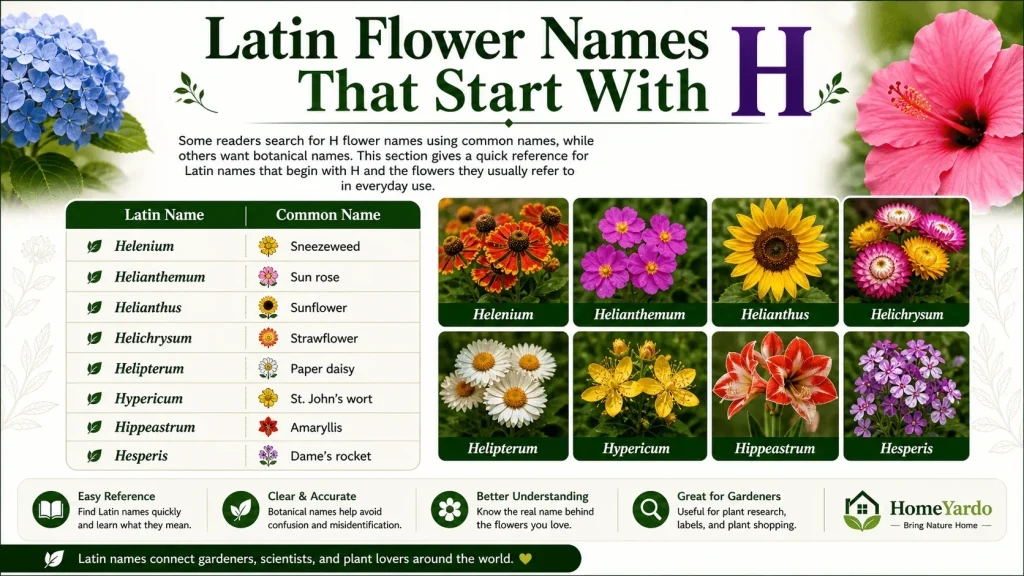
Some readers search for H flower names using common names, while others want botanical names. This section gives a quick reference for Latin names that begin with H and the flowers they usually refer to in everyday use. For another letter-based flower guide in the same series, readers can also explore flowers that start with L to compare more alphabetical flower names.
| Latin Name | Common Name |
|---|---|
| Helenium | Sneezeweed |
| Helianthemum | Sun rose |
| Helianthus | Sunflower |
| Helichrysum | Strawflower |
| Helipterum | Paper daisy |
| Hypericum | St. John’s wort |
| Hippeastrum | Amaryllis |
| Hesperis | Dame’s rocket |
Why Common Names and Latin Names Get Mixed Together
H named Flowers often blends common names and Latin names because many gardeners use both, depending on what they learned first. A plant may be sold under a common name, while nursery tags, seed catalogs, or reference guides may favor the botanical name.
Latin names also help avoid confusion when one common name points to several different plants. That matters in alphabetical lists, where accuracy helps more than decoration.
Best H Flowers by Garden Need
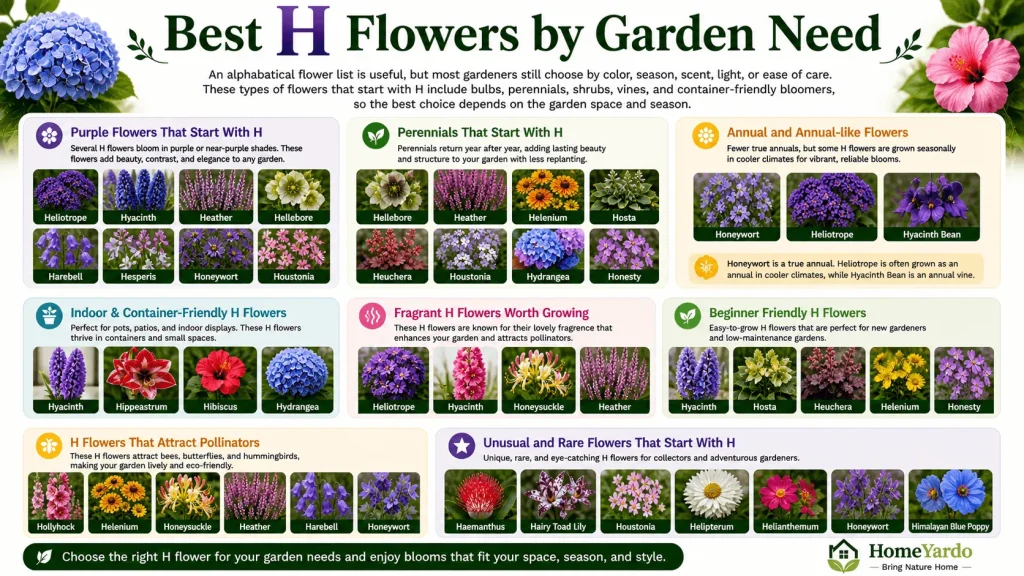
An alphabetical flower list is useful, but most gardeners still choose by color, season, scent, light, or ease of care. These types of flowers that start with H include bulbs, perennials, shrubs, vines, and container-friendly bloomers, so the best choice depends on the garden space and season.
Purple Flowers That Start With H
Several H flowers bloom in purple or near-purple shades. Heliotrope is one of the richest options, hyacinth offers stronger spring color, and heather brings softer purple tones in mass planting.
Hellebore, harebell, Houstonia, Hesperis, and honeywort can also fit a purple-leaning garden, depending on type and local availability. This makes H a surprisingly good letter for purple flowers.
Perennials That Start With H
If the goal is a flower that returns year after year, hellebore, heather, helenium, hosta, heuchera, Houstonia, and many hydrangeas are strong choices. These plants add repeat value without needing to be replanted every season.
Some H flowers act as long-term anchors, while others are shorter-lived but still worthwhile. Matching the plant to climate and light remains the key.
Annual and Annual-like Flowers
True annual flowers that start with H are fewer, but some plants are commonly grown that way, depending on the climate. Honeywort is a clear annual example, while heliotrope may be treated like a seasonal plant in cooler conditions.
This distinction matters because many alphabetical flower lists never explain the difference between a true annual and a tender perennial grown as an annual. That detail helps readers plan more realistically.
Indoor and Container-Friendly H Flowers
Hyacinth and Hippeastrum are among the best H flowers for indoor seasonal displays. Hyacinth works well in forced spring pots, while Hippeastrum is a classic bulb for bright indoor flowering.
Hibiscus, heliotrope, and compact hydrangea types can also do well in containers, especially where climate or space makes in-ground planting less practical. Indoor use and patio container use are not the same, so that difference matters.
Fragrant H Flowers Worth Growing
Heliotrope is one of the best scented flowers in the H group. Hyacinth is also known for its strong fragrance, while some honeysuckles bring a sweet scent that carries beyond the plant itself.
Heather may offer a lighter fragrance depending on the type, but it is usually chosen more for appearance and texture. Readers who want scent first should focus on heliotrope, hyacinth, and selected honeysuckles.
Beginner Friendly H Flowers
Hyacinth is one of the easiest starting points because bulbs are simple to plant, and the bloom result is clear. Hosta, heuchera, heather, helenium, and honesty are also approachable choices for readers who want dependable performance.
The best beginner flowers still depend on light and climate, but these options are easier to manage than many rare or fussy flowers. They are also more likely to be available in local garden centers.
H Flowers That Attract Pollinators
Hollyhock, helenium, honeysuckle, heather, harebell, and honeywort can all support pollinator-friendly planting. Bees and butterflies often visit open flower forms and late bloomers, while hummingbirds are drawn to tubular blooms such as honeysuckle.
Pollinator value depends on the exact species and local conditions, but several H flowers fit well into wildlife-friendly gardens. That adds another practical reason to look beyond the most familiar names.
Unusual And Rare Flowers That Start With H
Haemanthus, hairy toad lily, Houstonia, Helipterum, Helianthemum, honeywort, and Himalayan blue poppy help round out the list for readers who want something less obvious. These flowers add variety without pushing the article off topic.
Some are unusual because of shape, while others are simply less common in garden centers. They work best as support to the familiar flowers, not as replacements for them.
What To Know Before You Plant H Flowers
An alphabetical flower guide is useful for sorting names, but planting success depends on more than the first letter. Light, bloom season, growth habit, mature size, and climate all shape how well a plant will perform in a garden.
Some H names are simple bloom-focused choices, while others bring a broader role through foliage, shrub form, or vining growth. Knowing that difference makes it easier to choose the right plant for the right space.
How To Choose the Right H Flower
An alphabetical list is useful for finding names, but planting success depends on more than the first letter. Once the list is narrowed down, the better question becomes which H flower fits the site, the season, and the kind of garden space available.
Plants vs Flowers That Start With H
Not every H name belongs in a strict flower list. Some plants that start with H are valued mainly for structure, leaves, or overall garden presence, while others are chosen first for the flowers they produce.
Hyacinth, hellebore, hollyhock, and heliotrope are usually included because the blooms are the main attraction. Hydrangea, honeysuckle, hosta, heuchera, and Hebe can still fit, but each one may offer more than flowers alone, which is why the distinction matters.
Match The Flower To Light And Bloom Season
Light and bloom timing matter more than alphabetical grouping when it comes to planting choices. Hellebore, hosta, heuchera, hepatica, and hairy toad lily are better suited to part shade or shade, while hibiscus, hyacinth, hollyhock, heliotrope, helianthus, and heliopsis usually perform better in brighter conditions.
Bloom season also changes how useful a plant feels in the garden. Hellebore and hepatica help earlier in the year, hyacinth and hyacinthoides lift spring displays, hydrangea and hibiscus carry summer color, and helenium, hylotelephium, and hairy toad lily help extend interest later into the season.
Shrubs, Vines, Bulbs, and Perennials Play Different Roles
Even when flower names begin with the same letter, their garden roles can be very different. Hydrangea and Hebe act more like flowering shrubs, honeysuckle and Holboellia bring climbing or vining value, hyacinth and Hippeastrum are used more like bulb displays, and hardy geranium, hellebore, heuchera, and helenium behave as long-term perennials.
That difference matters when choosing plants for a border, patio, wall, shade bed, wildlife garden, or indoor display. The right choice depends not just on bloom color, but also on whether height, fragrance, structure, repeat value, or seasonal impact matters most.
Which H Flowers Need More Care Before Planting
A few H flowers need more attention before planting. Some honeysuckles spread too freely in the wrong setting, the Himalayan blue poppy needs more exact growing conditions than many common garden flowers, tropical choices such as heliconia or some hibiscus types may struggle outside warm climates, and strongly fragrant flowers like hyacinth or heliotrope may be better placed where the scent can be enjoyed without overwhelming a small space.
That does not mean these flowers should be avoided. It simply means the exact plant, climate fit, and available space should be checked before planting. A broad flower guide is most helpful when it points readers toward the right setting, not just the right letter.
Flower Meanings and Symbolism
Flower meanings can add another layer of interest, even though the main focus is usually on identification and garden use. Hydrangea is often linked with heartfelt emotion, hyacinth with sincerity, honeysuckle with affection, heliotrope with devotion, and heather with admiration or good fortune.
These meanings can vary by culture, tradition, and even flower color, so they are best treated as a general guide rather than a fixed definition. The strongest value still comes from the flower names, growing details, and how each one fits into a garden.
| Flower | Common Symbolism |
|---|---|
| Hydrangea | Gratitude, heartfelt emotion |
| Hyacinth | Sincerity, feeling, remembrance |
| Honeysuckle | Affection, warmth |
| Heliotrope | Devotion, loyalty |
| Heather | Admiration, luck |
Conclusion
Flower names that start with H cover a wider range than many readers expect. Hydrangea is one of the most familiar, heliotrope is one of the strongest for fragrance, hellebore is a reliable perennial for shade, and Himalayan blue poppy stands out as one of the more memorable, unusual picks.
The easiest way to use this guide is to start with the comparison table, scan the broader names list, then narrow the choices by light, bloom season, scent, and garden style. That turns an alphabetical flower page into a more useful planting guide.
FAQ’s
There is no fixed number because some lists include only common names, while others also include Latin names, rare wildflowers, or less common flowering plants. A practical garden list often lands somewhere between 20 and 35 useful examples.
Hydrangea is one of the most popular because it is widely grown and easy to recognize. Hibiscus and hyacinth are also very familiar, especially in warm-climate gardens and spring bulb displays.
Heliotrope is often one of the strongest choices for fragrance in the H group. Hyacinth is also well known for scent, and some honeysuckle types can be noticeably fragrant.
Hellebore, heather, helenium, hosta, heuchera, and many hydrangeas are perennial choices. Some H flowers are perennial in mild climates but may be treated differently in colder areas.
Yes, hyacinth and Hippeastrum are common indoor flowering options, especially in pots. Hibiscus can also be grown indoors with strong light and the right care.
Hyacinth, hosta, heuchera, heather, helenium, and honesty are good beginner-friendly choices. They are easier to find, easier to understand, and more forgiving than many rare plants.
Haemanthus, hairy toad lily, Houstonia, Helipterum, honeywort, and Himalayan blue poppy are some of the less common names. These flowers add variety and interest without losing the H theme.
Yes, purple-leaning H flowers include heliotrope, hyacinth, heather, hellebore, harebell, Houstonia, Hesperis, and honeywort. The shade can range from pale lavender to deeper violet.
Common names are the everyday names most gardeners use, such as hydrangea or hyacinth. Latin names are botanical names, such as Helenium or Helichrysum, and they help identify plants more accurately.
References
- Hydrangea macrophylla – Missouri Botanical Garden Plant Finder
- Hibiscus moscheutos – Missouri Botanical Garden Plant Finder
- Hyacinthus orientalis – Missouri Botanical Garden Plant Finder
- Helleborus orientalis – Missouri Botanical Garden Plant Finder
- Alcea rosea (Hollyhock) – NC State Extension Plant Toolbox
- Heliotropium arborescens (Heliotrope) – NC State Extension Plant Toolbox
- Lonicera (Honeysuckle) – NC State Extension Plant Toolbox
- Calluna vulgaris (Heather) – NC State Extension Plant Toolbox
- Helenium – NC State Extension Plant Toolbox
- Hosta – NC State Extension Plant Toolbox
- Heuchera – NC State Extension Plant Toolbox
- Tricyrtis hirta (Hairy Toad Lily) – NC State Extension Plant Toolbox
- Hesperis matronalis – NC State Extension Plant Toolbox
- Hippeastrum – NC State Extension Plant Toolbox
- Hypericum prolificum – NC State Extension Plant Toolbox
- Lunaria annua (Honesty) – NC State Extension Plant Toolbox
- Cerinthe major (Honeywort) – Royal Horticultural Society
- Meconopsis betonicifolia (Himalayan Blue Poppy) – Royal Horticultural Society