85 Beautiful Variety Of Flowers That Start With C You Didn’t Know About
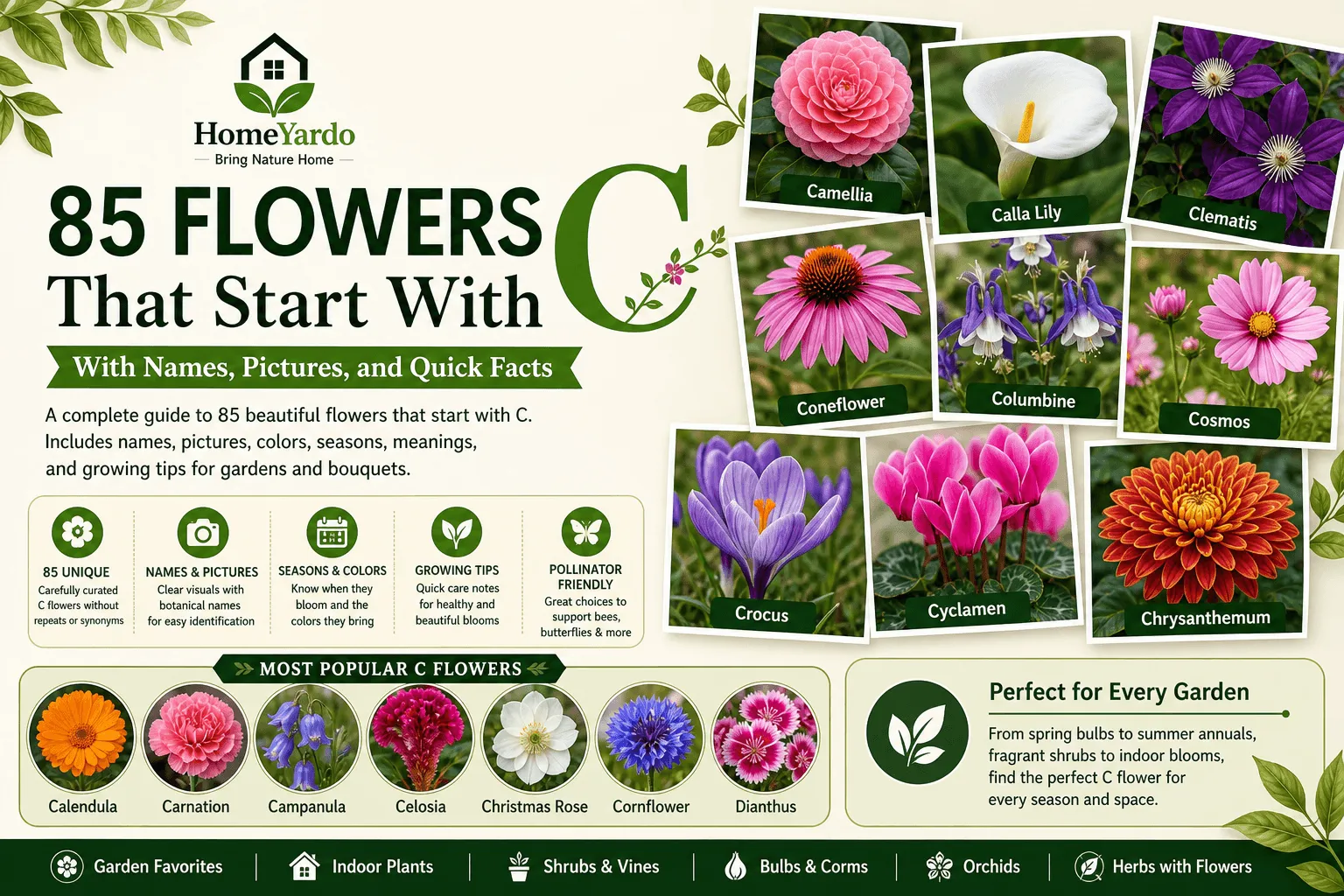
Flowers with C include some of the most familiar blooms in gardens, bouquets, containers, and indoor displays. This group covers soft spring bulbs, bold summer annuals, flowering shrubs, vines, orchids, meadow flowers, and unusual plants with memorable shapes or scents.
This guide includes 85 unique C flower names without repeating close synonyms as separate entries. Each flower is listed with its botanical name, flower type, common colors, bloom season, best use, and quick notes to make the list practical rather than just alphabetical.
Some entries are classic herbaceous flowers, while others are flowering shrubs, bulbs, vines, orchids, or houseplants. They are included because their blooms are the main reason people recognize or grow them.
Quick Answer: What Are The Most Popular C Flowers?
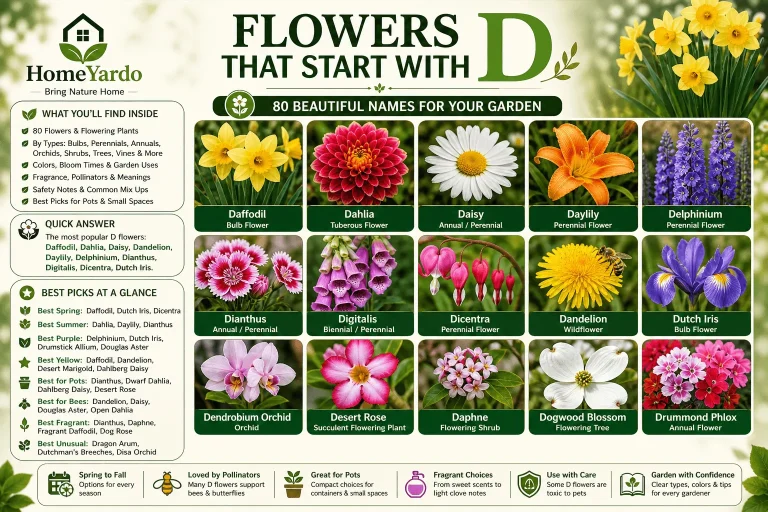
Some of the most popular C flowers are Calendula, Calla Lily, Camellia, Campanula, Carnation, Celosia, Chrysanthemum, Clematis, Columbine, Coneflower, Coreopsis, Cosmos, Crocus, Cyclamen, and Cornflower.
These names are common in gardens, floral arrangements, container displays, and seasonal planting. The full list below includes 85 unique flowers beginning with C, including familiar, rare, indoor, fragrant, and pollinator-friendly options. For more alphabet flower ideas, compare this guide with flowers that start with A before choosing names for a garden or learning list.
How This 85 Flower List Was Curated
This list of Flower start with C focuses on common flower names and widely recognized flowering plants that begin with the letter C. It includes true flowers, flowering shrubs, vines, bulbs, orchids, and indoor flowering plants when the bloom is the main feature.
Synonyms and close duplicate names are not counted twice. Cockscomb is covered under Celosia. Catnip is covered under Catmint. Centaurea is covered under Cornflower. Geranium is covered under Cranesbill. Safflower is covered under Carthamus. Lily of the Valley is covered under Convallaria.
The goal is a clean list of 85 unique C flower names, not a padded list with repeated common names.
Plants Vs Flowers That Start With C

Not every C flower grows as a soft garden annual or perennial. Some are shrubs, vines, bulbs, orchids, or houseplants that are commonly included in flower lists because their blooms are the reason they are grown.
Camellia is a flowering shrub. Clematis is a flowering vine. Crocus grows from a bulb or corm-like structure. Cattleya Orchid and Cymbidium Orchid are orchids. Cyclamen and Christmas Cactus are often grown as indoor or protected flowering plants.
Including these plants gives a more useful flower guide because people often choose flowers by bloom shape, color, season, and display value rather than by strict plant category.
Types Of Flowers Starting With C

Flowers with C can be grouped by growth habit, life cycle, and how they are used in gardens or indoor displays. Some are quick annuals, some return for years, and others grow as shrubs, vines, bulbs, orchids, herbs, or houseplants.
This grouping makes the 85 flower list easier to understand before comparing individual names in the full table.
| Type | C Flower Examples | Best For |
|---|---|---|
| Annual flowers that start with C | Calendula, Cosmos, Cornflower, Celosia, Clarkia, China Aster, Cleome | Fast seasonal color, seed starting, summer beds |
| Perennials that start with C | Coneflower, Coreopsis, Catmint, Columbine, Coral Bells, Cowslip, Creeping Phlox | Long-term garden planting and repeat bloom value |
| Flowering Shrubs | Camellia, Ceanothus, Carolina Allspice, Crepe Myrtle, Calluna, Cistus | Garden structure, seasonal bloom, landscape planting |
| Flowering Vines | Clematis, Coral Vine, Cup and Saucer Vine, Clitoria | Trellises, fences, arches, vertical color |
| Bulbs And Corms | Crocus, Chionodoxa, Crown Imperial, Crocosmia, Crinum, Convallaria | Spring color, seasonal impact, naturalized planting |
| Orchids | Cattleya Orchid, Cymbidium Orchid | Indoor displays, protected growing spaces, floral arrangements |
| Indoor Flowering Plants | Cyclamen, Clivia, Christmas Cactus, Cape Primrose, Cineraria, Calceolaria | Windowsills, indoor pots, shaded protected spaces |
| Herbs With Flowers | Chamomile, Chives, Clary Sage, Comfrey, Chicory | Herb gardens, pollinator beds, natural style planting |
Some flowers can fit more than one type. For example, Crocosmia is a perennial grown from corms, while Calla Lily and Canna Lily may behave as tender perennials in warm climates but are often grown seasonally in colder areas.
C Flower Names At A Glance
This table gives a fast comparison of all 85 flowers. Bloom season and growing use can vary by climate, species, and cultivar, so the notes should be used as a practical guide rather than a fixed rule.
| Flower Name | Botanical Name | Type | Main Colors | Bloom Season | Best Use | Indoor Or Outdoor | Beginner Level | Fragrance | Pollinator Value |
|---|---|---|---|---|---|---|---|---|---|
| Calendula | Calendula officinalis | Annual | Orange, yellow | Spring to fall | Borders, herb gardens | Outdoor | Easy | Light | Moderate |
| California Poppy | Eschscholzia californica | Annual or short-lived perennial | Orange, yellow, cream | Spring to summer | Wildflower beds | Outdoor | Easy | Low | Moderate |
| Calla Lily | Zantedeschia spp. | Tender perennial | White, pink, yellow, purple | Spring to summer | Containers, bouquets | Both | Moderate | Low | Low |
| Camassia | Camassia spp. | Bulb | Blue, violet, white | Spring | Naturalized planting | Outdoor | Moderate | Low | Moderate |
| Camellia | Camellia spp. | Flowering shrub | White, pink, red | Winter to spring | Shrub borders | Outdoor | Moderate | Light | Moderate |
| Campanula | Campanula spp. | Perennial | Blue, purple, white | Late spring to summer | Cottage gardens | Outdoor | Easy | Low | Moderate |
| Campion | Silene spp. | Perennial or biennial | Pink, red, white | Spring to summer | Wildflower gardens | Outdoor | Easy | Low | Moderate |
| Candytuft | Iberis spp. | Perennial or annual | White, pink | Spring | Edges, rock gardens | Outdoor | Easy | Light | Moderate |
| Canna Lily | Canna spp. | Tender perennial | Red, orange, yellow, pink | Summer to fall | Tropical borders | Outdoor | Moderate | Low | Moderate |
| Canterbury Bells | Campanula medium | Biennial | Blue, purple, pink, white | Late spring to summer | Cottage gardens | Outdoor | Moderate | Low | Moderate |
| Cape Daisy | Osteospermum spp. | Tender perennial or annual | White, purple, pink, yellow | Spring to fall | Containers, sunny borders | Outdoor | Easy | Low | Moderate |
| Cape Primrose | Streptocarpus spp. | Perennial | Purple, pink, white, blue | Spring to fall | Indoor pots | Indoor | Moderate | Low | Low |
| Cardinal Flower | Lobelia cardinalis | Perennial | Red | Summer to fall | Moist gardens | Outdoor | Moderate | Low | High |
| Carnation | Dianthus caryophyllus | Perennial | Pink, red, white, yellow | Spring to summer | Bouquets, borders | Both | Moderate | High | Moderate |
| Catmint | Nepeta spp. | Perennial | Lavender, blue, purple | Late spring to fall | Pollinator borders | Outdoor | Easy | Aromatic foliage | High |
| Cattleya Orchid | Cattleya spp. | Orchid | Purple, white, pink, yellow | Varies | Indoor orchid display | Indoor | Moderate | Often fragrant | Low |
| Celosia | Celosia argentea | Annual | Red, orange, pink, yellow | Summer to fall | Bedding, cutting | Outdoor | Easy | Low | Moderate |
| Chamomile | Matricaria chamomilla or Chamaemelum nobile | Annual or perennial | White, yellow | Summer | Herb gardens | Outdoor | Easy | High | Moderate |
| China Aster | Callistephus chinensis | Annual | Pink, purple, white, red | Summer to fall | Cutting gardens | Outdoor | Moderate | Low | Moderate |
| Chicory | Cichorium intybus | Perennial | Blue | Summer to fall | Meadow planting | Outdoor | Easy | Low | Moderate |
| Christmas Rose | Helleborus niger | Perennial | White, pink tinted | Winter to spring | Shade gardens | Outdoor | Moderate | Low | Moderate |
| Chrysanthemum | Chrysanthemum spp. | Perennial | Many shades | Late summer to fall | Seasonal color, bouquets | Outdoor | Moderate | Light | Moderate |
| Chrysogonum | Chrysogonum virginianum | Perennial | Yellow | Spring to summer | Groundcover | Outdoor | Easy | Low | Moderate |
| Cineraria | Pericallis × hybrida | Tender perennial | Blue, purple, pink, white | Winter to spring | Indoor and patio pots | Both | Moderate | Low | Low |
| Clarkia | Clarkia spp. | Annual | Pink, purple, white | Spring to summer | Cottage gardens | Outdoor | Easy | Low | Moderate |
| Clematis | Clematis spp. | Vine | Purple, white, pink, blue | Spring to fall | Trellises, fences | Outdoor | Moderate | Some varieties | Moderate |
| Clivia | Clivia miniata | Perennial | Orange, yellow, cream | Winter to spring | Indoor shade pots | Indoor | Moderate | Low | Low |
| Columbine | Aquilegia spp. | Perennial | Blue, red, yellow, purple | Spring to early summer | Woodland borders | Outdoor | Easy | Low | High |
| Coneflower | Echinacea spp. | Perennial | Purple, pink, white, orange | Summer to fall | Pollinator beds | Outdoor | Easy | Low | High |
| Coral Bells | Heuchera spp. | Perennial | Pink, white, red | Spring to summer | Shade borders | Outdoor | Easy | Low | Moderate |
| Coral Vine | Antigonon leptopus | Vine | Pink, coral | Summer to fall | Fences, arches | Outdoor | Moderate | Low | High |
| Coreopsis | Coreopsis spp. | Perennial or annual | Yellow, gold, red | Summer to fall | Long bloom borders | Outdoor | Easy | Low | High |
| Cornflower | Centaurea cyanus | Annual | Blue, pink, white | Late spring to summer | Cutting, meadow beds | Outdoor | Easy | Low | Moderate |
| Cosmos | Cosmos bipinnatus | Annual | Pink, white, magenta | Summer to fall | Easy summer color | Outdoor | Easy | Low | High |
| Cranesbill | Geranium spp. | Perennial | Blue, purple, pink, white | Spring to summer | Groundcover, borders | Outdoor | Easy | Low | Moderate |
| Crocosmia | Crocosmia spp. | Perennial corm | Orange, red, yellow | Summer | Accent planting | Outdoor | Moderate | Low | High |
| Crocus | Crocus spp. | Bulb or corm | Purple, yellow, white | Late winter to spring | Early color | Outdoor | Easy | Low | Moderate |
| Crown Imperial | Fritillaria imperialis | Bulb | Orange, yellow, red | Spring | Statement planting | Outdoor | Moderate | Musky | Moderate |
| Cup and Saucer Vine | Cobaea scandens | Vine | Purple, white | Summer to fall | Trellises | Outdoor | Moderate | Light | Moderate |
| Cuphea | Cuphea spp. | Annual or perennial | Red, purple, orange | Summer to fall | Containers, borders | Outdoor | Easy | Low | High |
| Cuckoo Flower | Cardamine pratensis | Perennial | Pale pink, white | Spring | Meadow gardens | Outdoor | Moderate | Low | Moderate |
| Cymbidium Orchid | Cymbidium spp. | Orchid | White, green, pink, yellow | Winter to spring | Indoor orchid display | Indoor | Moderate | Light | Low |
| Cyclamen | Cyclamen spp. | Perennial | Pink, white, red, purple | Fall to spring | Indoor pots, shade | Both | Moderate | Light | Low |
| Chocolate Cosmos | Cosmos atrosanguineus | Tender perennial | Dark red, brown | Summer to fall | Rare flower displays | Outdoor | Moderate | High | Moderate |
| Cactus Flower | Cactaceae family | Succulent flower | Pink, yellow, white, red | Varies | Dry gardens, pots | Both | Moderate | Some varieties | Moderate |
| Calibrachoa | Calibrachoa spp. | Tender perennial | Many shades | Spring to fall | Hanging baskets | Outdoor | Easy | Low | Moderate |
| California Flannel Bush | Fremontodendron californicum | Flowering shrub | Yellow | Spring to summer | Dry shrub borders | Outdoor | Moderate | Low | Moderate |
| Calluna | Calluna vulgaris | Shrub | Pink, purple, white | Summer to fall | Heather gardens | Outdoor | Moderate | Low | Moderate |
| Canada Violet | Viola canadensis | Perennial | White, yellow centers | Spring to summer | Woodland gardens | Outdoor | Moderate | Light | Moderate |
| Canadian Goldenrod | Solidago canadensis | Perennial | Yellow | Late summer to fall | Meadow planting | Outdoor | Easy | Low | High |
| Canary Island Daisy | Asteriscus sericeus | Tender perennial | Yellow | Spring to summer | Coastal style pots | Outdoor | Moderate | Low | Moderate |
| Carthamus | Carthamus tinctorius | Annual | Orange, yellow | Summer | Cutting, dried flowers | Outdoor | Easy | Low | Moderate |
| Caspia | Limonium sinuatum or related statice types | Annual or perennial | Purple, white, pink | Summer | Filler flowers | Outdoor | Moderate | Low | Moderate |
| Castor Bean | Ricinus communis | Tender perennial | Red, cream | Summer | Bold foliage and flowers | Outdoor | Moderate | Low | Moderate |
| Celandine | Chelidonium majus or related species | Perennial | Yellow | Spring to summer | Naturalized areas | Outdoor | Easy | Low | Moderate |
| Chinese Lantern | Physalis alkekengi | Perennial | White flowers, orange pods | Summer | Ornamental pods | Outdoor | Moderate | Low | Moderate |
| Chives | Allium schoenoprasum | Perennial herb | Purple | Spring to summer | Herb gardens | Outdoor | Easy | Onion scent | High |
| Cleome | Cleome hassleriana | Annual | Pink, white, purple | Summer to fall | Tall borders | Outdoor | Easy | Low | High |
| Chionodoxa | Scilla forbesii | Bulb | Blue, white, pink | Early spring | Naturalized bulbs | Outdoor | Easy | Low | Moderate |
| Clary Sage | Salvia sclarea | Biennial or short lived perennial | Pink, lavender, white | Summer | Herb borders | Outdoor | Moderate | Aromatic | High |
| Checkered Lily | Fritillaria meleagris | Bulb | Purple, white | Spring | Damp meadow gardens | Outdoor | Moderate | Low | Moderate |
| Chinese Forget Me Not | Cynoglossum amabile | Annual | Blue, pink, white | Summer | Cottage gardens | Outdoor | Easy | Low | Moderate |
| Christmas Cactus | Schlumbergera spp. | Succulent houseplant | Pink, red, white, orange | Winter | Indoor display | Indoor | Easy | Low | Low |
| Cistus | Cistus spp. | Shrub | White, pink, purple | Spring to summer | Dry sunny gardens | Outdoor | Moderate | Light | Moderate |
| Cinquefoil | Potentilla spp. | Perennial or shrub | Yellow, white, pink | Spring to fall | Borders, groundcover | Outdoor | Easy | Low | Moderate |
| Convallaria | Convallaria majalis | Perennial | White, pink | Spring | Shade gardens | Outdoor | Moderate | High | Low |
| Crinum | Crinum spp. | Bulb | White, pink, red | Summer | Warm climate borders | Outdoor | Moderate | Often fragrant | Moderate |
| Clitoria | Clitoria ternatea | Vine | Blue, white, purple | Summer to fall | Trellises, warm gardens | Outdoor | Moderate | Low | Moderate |
| Comfrey | Symphytum officinale | Perennial | Purple, pink, cream | Spring to summer | Natural gardens | Outdoor | Easy | Low | High |
| Cowslip | Primula veris | Perennial | Yellow | Spring | Meadow style borders | Outdoor | Moderate | Light | Moderate |
| Caladium | Caladium spp. | Tuberous plant | White or greenish flowers | Summer | Tropical containers | Both | Moderate | Low | Low |
| Calceolaria | Calceolaria spp. | Tender perennial | Yellow, orange, red | Spring to summer | Indoor pots | Indoor | Moderate | Low | Low |
| Carolina Allspice | Calycanthus floridus | Flowering shrub | Burgundy, red brown | Spring to summer | Fragrant shrub borders | Outdoor | Moderate | High | Moderate |
| Cardoon | Cynara cardunculus | Perennial | Purple | Summer | Architectural gardens | Outdoor | Moderate | Low | High |
| Cherry Blossom | Prunus spp. | Flowering tree | Pink, white | Spring | Ornamental trees | Outdoor | Moderate | Light | Moderate |
| Corydalis | Corydalis spp. | Perennial | Yellow, pink, blue, purple | Spring to summer | Shade gardens | Outdoor | Moderate | Low | Moderate |
| Creeping Phlox | Phlox subulata | Perennial | Pink, purple, white, blue | Spring | Groundcover | Outdoor | Easy | Light | Moderate |
| Crown Vetch | Securigera varia | Perennial | Pink, white | Summer | Slopes, groundcover | Outdoor | Moderate | Low | Moderate |
| Carpet Bugle | Ajuga reptans | Perennial | Blue, purple | Spring | Groundcover | Outdoor | Easy | Low | Moderate |
| Creeping Jenny | Lysimachia nummularia | Perennial | Yellow | Summer | Groundcover, containers | Outdoor | Easy | Low | Moderate |
| Crepe Myrtle | Lagerstroemia indica | Flowering shrub or tree | Pink, red, purple, white | Summer | Ornamental landscapes | Outdoor | Moderate | Low | Moderate |
| Candlestick Plant | Senna alata | Shrub | Yellow | Summer to fall | Tropical gardens | Outdoor | Moderate | Low | High |
| Crossandra | Crossandra infundibuliformis | Tender perennial | Orange, coral, yellow | Summer to fall | Indoor pots, warm patios | Both | Moderate | Low | Moderate |
| Cupid’s Dart | Catananche caerulea | Perennial | Blue, lavender, white | Summer | Cottage gardens | Outdoor | Easy | Low | Moderate |
| Ceanothus | Ceanothus spp. | Flowering shrub | Blue, white, pink | Spring to summer | Shrub borders | Outdoor | Moderate | Light | High |
Common Flowers That Start With C

| Common C Flower | Why It Is Common | Best Use |
|---|---|---|
| Carnation | Long vase life, many colors, familiar floral use | Bouquets and borders |
| Chrysanthemum | Strong autumn color and many forms | Fall displays and arrangements |
| Camellia | Evergreen shrub with refined winter to spring blooms | Shrub borders |
| Calla Lily | Elegant flower shape and wedding use | Containers and formal bouquets |
| Cosmos | Easy annual with soft, airy flowers | Summer beds and cutting gardens |
| Crocus | One of the earliest spring flowers | Lawns, pots, and rock gardens |
| Clematis | Classic climbing flower with many styles | Trellises and fences |
| Calendula | Simple to grow and cheerful in color | Herb gardens and borders |
| Coneflower | Tough perennial with pollinator value | Sunny perennial beds |
| Columbine | Distinct spurred flowers and spring color | Woodland and cottage gardens |
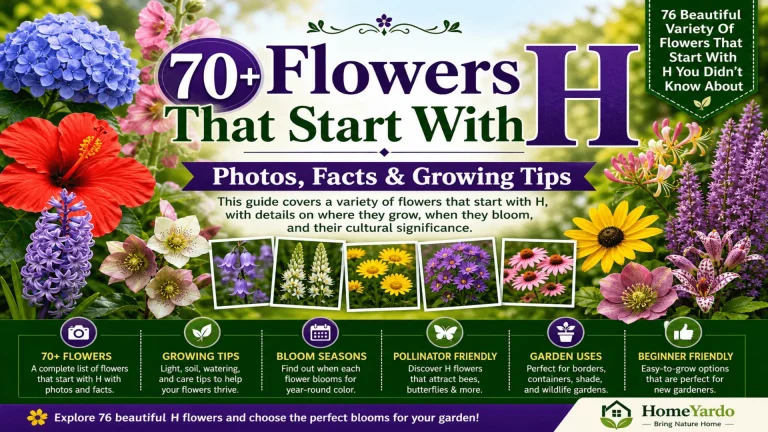
A common flower is usually easy to recognize, easy to find, or widely used in gardens and floral arrangements. Carnation, Chrysanthemum, Calla Lily, Camellia, Cosmos, and Crocus are some of the strongest examples because they appear often in bouquets, seasonal displays, and beginner-friendly gardens. For more recognizable bloom names, check flowers that start with H for additional garden favorites and floral examples.
Rare Flowers That Start With C

Less common C flowers add interest because of unusual color, flower shape, scent, or growth habit. These are not always rare in a botanical sense, but they are less likely to appear in basic flower lists.
| Flower | What Makes It Unusual | Best Placement |
|---|---|---|
| Chocolate Cosmos | Dark velvety flowers with a chocolate-like scent | Scented summer borders |
| Crown Imperial | Tall stem with hanging bell flowers and a leafy crown | Spring focal point |
| Cattleya Orchid | Large orchid blooms with collector appeal | Indoor orchid display |
| Cymbidium Orchid | Long-lasting sprays of elegant flowers | Indoor display and arrangements |
| Camassia | Soft blue spring spikes with natural meadow appeal | Naturalized spring planting |
| Cup and Saucer Vine | Large bell-like climbing flowers | Trellises and fences |
| Chionodoxa | Early star-shaped blooms | Lawns and spring bulb beds |
| Checkered Lily | Nodding checkered flowers | Damp meadow gardens |
| Calceolaria | Pouch-shaped spotted flowers | Indoor pots |
| Clitoria | Bright blue vine flowers | Warm trellises and containers |
| Ceanothus | Blue flowering shrub with pollinator value | Sunny shrub borders |
| California Flannel Bush | Bright yellow flowers on a dry garden shrub | Warm dry landscapes |
Chocolate Cosmos, Checkered Lily, and Crown Imperial are especially memorable because their flower shape or color is hard to confuse with common bedding plants. For more or less common alphabet flower ideas, flowers that start with K can help expand a unique flower name collection.
Best C Flowers By Season

Bloom time helps narrow a flower list quickly. Many C flowers bloom in spring, while others carry summer borders, brighten fall displays, or add color indoors during cooler months.
| Season | Best C Flowers | Why They Fit | Best Use |
|---|---|---|---|
| Spring | Crocus, Camellia, Columbine, Campanula, Camassia, Candytuft, Chionodoxa, Cowslip, Cherry Blossom, Creeping Phlox | Early to mid-season color with many cool-weather flowers | Spring beds, woodland gardens, bulbs |
| Summer | Cosmos, Coreopsis, Celosia, Canna Lily, Cape Daisy, Cornflower, Crocosmia, Calibrachoa, Cleome, Crossandra | Heat season color and strong garden presence | Borders, pots, cutting gardens |
| Fall | Chrysanthemum, Celosia, Coreopsis, Cyclamen, Chocolate Cosmos, Canadian Goldenrod, Crepe Myrtle | Late color and seasonal display value | Fall containers and borders |
| Winter Or Cool Season | Christmas Rose, Cyclamen, Clivia, Christmas Cactus, Camellia, Cineraria | Flowers that perform in cool weather or indoor settings | Indoor pots, shade gardens, winter interest |
Climate change affects bloom timing. A flower that blooms in spring in one region may bloom earlier, later, or for a shorter period in another. Seasonal planting ideas can be expanded with flowers that start with S, since this letter includes many strong spring and summer bloomers.
C Flower Names By Color
Color is one of the easiest ways to choose a flower. Many C flowers come in several shades, so the groupings below highlight common color forms rather than every possible cultivar.
| Color Group | C Flowers To Consider |
|---|---|
| White | Calla Lily, Candytuft, Cineraria, Christmas Rose, Cosmos, Crocus, Cape Primrose, Convallaria |
| Yellow | Calendula, Coreopsis, Cowslip, Chrysogonum, Canary Island Daisy, Celandine, Cinquefoil, Canadian Goldenrod |
| Orange | California Poppy, Canna Lily, Clivia, Crocosmia, Celosia, Crossandra, Calendula |
| Red | Cardinal Flower, Canna Lily, Chrysanthemum, Celosia, Castor Bean, Crossandra, Carnation |
| Pink | Camellia, Carnation, Cosmos, Cyclamen, Cherry Blossom, Calibrachoa, Clarkia |
| Blue and Purple Flowers That Start With C | Campanula, Catmint, Clematis, Columbine, Cornflower, Crocus, Chinese Forget Me Not, Clitoria |
| Dark Or Unusual | Chocolate Cosmos, Crown Imperial, Cattleya Orchid, Carolina Allspice |
For a soft garden palette, combine Candytuft, Cosmos, Camellia, and Cape Primrose. For stronger color, use Celosia, Canna Lily, Crocosmia, Cardinal Flower, and Chrysanthemum.
Indoor And Container Friendly C Flowers

Indoor and container-friendly flowers are helpful for balconies, patios, windowsills, shaded porches, and small spaces. Some prefer indoor protection, while others grow best outdoors in pots.
| Growing Space | C Flowers | Care Note |
|---|---|---|
| Indoor Pots | Cyclamen, Clivia, Cineraria, Christmas Cactus, Cattleya Orchid, Cymbidium Orchid, Cape Primrose, Calceolaria, Crossandra | Give bright light without harsh direct sun for most types |
| Patio Containers | Calla Lily, Calibrachoa, Celosia, Cuphea, Canna Lily, Cape Daisy, Candytuft, Cistus | Use containers with drainage holes |
| Hanging Baskets | Calibrachoa, Cuphea, Cape Daisy, Creeping Jenny | Water regularly during warm weather |
| Shaded Containers | Cyclamen, Coral Bells, Cape Primrose, Clivia | Protect from hot afternoon sun |
| Warm Climate Pots | Crossandra, Canna Lily, Calla Lily, Clitoria | Keep soil evenly moist where needed |
Cyclamen, Clivia, and Christmas Cactus are strong indoor picks. Calibrachoa, Celosia, Cape Daisy, and Cuphea are better for outdoor container color.
Beginner Friendly C Flowers
Beginner-friendly flowers are easy to find, simple to grow, and forgiving under basic care. They should give visible results without needing complicated pruning, feeding, or climate control.
| Beginner C Flower | Why It Is Easy | Best Starting Method |
|---|---|---|
| Calendula | Grows fast and flowers freely | Seed |
| Cosmos | Tolerates simple sunny beds | Seed |
| Coreopsis | Long blooming and sturdy | Plant or seed |
| Cornflower | Easy annual for meadow-style beds | Seed |
| Crocus | Simple bulb for early color | Bulb or corm |
| Catmint | Drought-tolerant once established | Plant |
| Calibrachoa | Strong container color | Young plant |
| Candytuft | Low-maintenance edging plant | Plant |
| Coneflower | Tough perennial with pollinator value | Plant or seed |
| Creeping Phlox | Reliable spring groundcover | Plant |
| California Poppy | Good for dry sunny areas | Seed |
| Cowslip | Good spring perennial in suitable conditions | Plant or seed |
For the easiest start, choose Calendula, Cosmos, Cornflower, Crocus, Catmint, and Coreopsis. These flowers give a strong reward without demanding advanced care.
Wildflowers And Pollinator-Friendly Picks

Many C flowers fit natural style planting and help support bees, butterflies, hummingbirds, and other pollinators. Pollinator value depends on region, flower form, pesticide use, and whether a cultivar still offers accessible nectar or pollen.
| Pollinator Friendly C Flower | Main Visitors Or Value | Best Garden Style |
|---|---|---|
| California Poppy | Bees and beneficial insects | Dry wildflower beds |
| Cardinal Flower | Hummingbirds in suitable regions | Moist gardens |
| Columbine | Bees and hummingbirds | Woodland borders |
| Coneflower | Bees, butterflies, seed heads for birds | Sunny perennial beds |
| Coreopsis | Bees and butterflies | Long bloom borders |
| Cornflower | Bees and other insects | Meadow beds |
| Chicory | Bees and meadow insects | Natural gardens |
| Cuckoo Flower | Early-season insects | Damp meadows |
| Canadian Goldenrod | Late-season pollinators | Meadow planting |
| Chives | Bees | Herb gardens |
| Catmint | Bees and butterflies | Sunny borders |
| Cleome | Bees, butterflies, hummingbirds | Tall summer beds |
| Ceanothus | Bees and beneficial insects | Shrub borders |
Single or semi-double flowers are often more useful for pollinators than heavily doubled forms because nectar and pollen are easier to reach.
Best C Flowers For Garden Use

Different C flowers fit different garden jobs. Some are best for borders, while others work better in pots, shade, trellises, dry beds, or groundcover areas.
Borders

Borders need flowers that add color, shape, and repeat value across the season.
| Border Flower | Why It Works |
|---|---|
| Coreopsis | Long blooming and bright |
| Coneflower | Strong stems and pollinator value |
| Catmint | Soft color and aromatic foliage |
| Cosmos | Airy summer flowers |
| Chrysanthemum | Late-season color |
| Campanula | Cottage-style bloom shape |
Containers

Containers need compact growth, strong color, and reliable performance in limited soil space.
| Container Flower | Why It Works |
|---|---|
| Calibrachoa | Trails beautifully in baskets |
| Calla Lily | Gives elegant vertical form |
| Celosia | Adds bold texture |
| Cyclamen | Works in cool shaded pots |
| Cape Daisy | Bright sunny container flower |
| Cineraria | Strong cool-season pot color |
Trellises And Fences

Climbing flowers help add height without taking up much ground space.
| Climbing Flower | Why It Works |
|---|---|
| Clematis | Classic flowering vine |
| Coral Vine | Soft pink clusters |
| Cup and Saucer Vine | Large bell-shaped flowers |
| Clitoria | Blue warm climate vine |
Shade Or Part Shade

Shaded sites need flowers that tolerate lower light while still adding color or texture.
| Shade-Friendly Flower | Why It Works |
|---|---|
| Camellia | Evergreen shrub with winter to spring bloom |
| Clivia | Good for protected shade |
| Christmas Rose | Blooms in cool shaded spaces |
| Coral Bells | Fine flowers and colorful foliage |
| Cyclamen | Strong shade container choice |
| Cape Primrose | Good in bright indirect light |
Dry Or Sunny Spots

Dry sunny areas need tougher plants that handle heat, drainage, and bright exposure.
| Dry Or Sunny Flower | Why It Works |
|---|---|
| California Poppy | Handles dry sunny sites well |
| Cistus | Mediterranean-style shrub |
| Catmint | Drought-tolerant once established |
| Coreopsis | Reliable summer color |
| Candytuft | Good for sunny edges |
| Cactus Flower | Built for dry conditions |
C Flower Meanings And Symbolism
Flower meanings vary across cultures, regions, and traditions. The meanings below are common associations, not fixed rules.
| Flower | Common Meaning | Best Ocassion Or Use | Note |
|---|---|---|---|
| Carnation | Love, admiration, remembrance | Bouquets, gifts, memorial flowers | Meaning changes by color |
| Chrysanthemum | Joy, longevity, remembrance | Fall arrangements, seasonal displays | Cultural meaning varies widely |
| Calla Lily | Elegance, beauty, purity | Weddings and formal arrangements | Often used for refined designs |
| Camellia | Admiration, affection, refinement | Garden gifts, ornamental planting | Strong visual link to elegance |
| Columbine | Grace, uniqueness, resilience | Cottage gardens and spring displays | Symbolism varies by tradition |
| Cosmos | Harmony, order, simple beauty | Summer bouquets | Soft, airy form supports the meaning |
| Crocus | Renewal, early hope | Spring planting | One of the first signs of spring |
| Calendula | Warmth, comfort, remembrance | Herb gardens and cheerful beds | Known for its golden color |
| Cornflower | Hope, delicacy, devotion | Meadow bouquets | Blue color gives a strong identity |
| Cyclamen | Sincere affection, lasting care | Indoor gifts | Often used in cool-season pots |
| Chamomile | Calm, rest, patience | Herb gardens | Linked with its soft scent |
| Cherry Blossom | Renewal, beauty, passing time | Spring landscapes | The bloom period is brief |
Symbolism can support bouquet choices, but flower freshness, color, season, and availability matter just as much.
Origin And Native Range Of Popular C Flowers
Many popular C flowers have broad garden histories, and hybrids may have mixed backgrounds. Native range notes are best treated as general background rather than exact data for every cultivar.
| Flower | Broad Native Region Or Origin Note | Current Garden Use |
|---|---|---|
| Calendula | Mediterranean region | Annual beds and herb gardens |
| California Poppy | Western North America | Wildflower and dry garden planting |
| Calla Lily | Southern Africa | Containers and floristry |
| Camellia | East and Southeast Asia | Flowering shrubs |
| Campanula | Europe and temperate regions | Cottage gardens |
| Carnation | Mediterranean region | Cut flowers and borders |
| Cattleya Orchid | Central and South America | Indoor orchid displays |
| Chrysanthemum | East Asia | Fall displays and bouquets |
| Clematis | Many temperate regions | Flowering vines |
| Coneflower | North America | Pollinator gardens |
| Cosmos | Mexico and nearby regions | Summer annual beds |
| Crocus | Europe, North Africa, and Asia regions | Spring bulbs |
| Cyclamen | Mediterranean and nearby regions | Indoor and shade displays |
| Chocolate Cosmos | Mexico | Rare ornamental displays |
| Chinese Forget Me Not | Asia | Cottage gardens |
| Christmas Cactus | Brazil | Indoor flowering plant |
| Ceanothus | North America, especially the western regions | Flowering shrubs |
| Clivia | Southern Africa | Indoor and shade pots |
| Canna Lily | Tropical and subtropical Americas | Tropical style gardens |
| Cornflower | Europe and western Asia | Meadow and cut flower planting |
Origin can help explain growth preferences. Mediterranean plants often like sun and drainage, while woodland plants may prefer cooler, shaded conditions.
Safety And Toxicity Notes For C Flowers
Some C flowers may be unsafe if eaten, especially around pets, children, or grazing animals. Plant safety should be checked before planting unfamiliar flowers in accessible areas.
| Flower | Safety Note |
|---|---|
| Castor Bean | Seeds are highly toxic and should be handled with extreme care |
| Celandine | Sap may irritate skin, and ingestion may be unsafe |
| Crown Imperial | Bulbs can be unsafe if eaten |
| Cyclamen | Tubers may be toxic if ingested |
| Caladium | Contains irritating compounds and may be unsafe if chewed |
| Christmas Rose | Hellebores can be toxic if eaten |
| Calla Lily | Can irritate the mouth if chewed |
| Convallaria | Lily of the Valley is toxic if ingested |
For homes with pets or small children, choose planting spots carefully and confirm safety through a local extension service, veterinarian, or plant safety database.
Common Mistakes When Choosing C Flowers
Choosing flowers by name alone can lead to poor results. A flower may look perfect in a picture, but fail if the light, soil, climate, or space does not match its needs.
| Mistake | Better Choice |
|---|---|
| Choosing tender perennials for cold outdoor beds | Grow them in containers or treat them as seasonal plants |
| Confusing shrubs with bedding flowers | Check mature size before planting |
| Ignoring sunlight needs | Match each flower to sun, part shade, or shade |
| Buying indoor flowers for harsh outdoor heat | Use indoor plants in protected spaces |
| Counting synonyms as separate flowers | Group Cockscomb under Celosia and Safflower under Carthamus |
| Choosing toxic plants without checking safety | Review plant safety before planting around pets or children |
| Expecting bloom season to be identical everywhere | Check local climate and cultivar information |
| Planting vigorous spreaders in small beds | Use containers or controlled spaces |
A stronger flower choice starts with the site first, then color, height, season, and maintenance level.
Quick Identification Guide For C Flowers
Flower shape can make identification easier. Many C flowers fall into clear visual groups, even when colors vary.
| Flower Shape Or Habit | Examples |
|---|---|
| Bell Shaped | Campanula, Canterbury Bells, Cup and Saucer Vine |
| Daisy Like | Cosmos, Coreopsis, Cape Daisy, Chamomile, Chrysogonum |
| Trumpet or Funnel-Shaped | Calla Lily, Clivia, Crinum |
| Spurred | Columbine |
| Plumed Or Crested | Celosia |
| Orchid Shaped | Cattleya Orchid, Cymbidium Orchid |
| Vine Flowers | Clematis, Coral Vine, Cup and Saucer Vine, Clitoria |
| Bulb Flowers | Crocus, Chionodoxa, Crown Imperial |
| Groundcover Flowers | Creeping Phlox, Carpet Bugle, Creeping Jenny, Candytuft |
| Shrub Flowers | Camellia, Ceanothus, Carolina Allspice, Crepe Myrtle |
For quick visual matching, look at bloom shape first, then plant habit, season, and leaf type.
Fragrant C Flowers And Bouquet Favorites
Some C flowers are valued for fragrance, while others are useful in bouquets because of their vase life, stem strength, shape, or texture. Keeping these ideas together avoids repeating the same flowers in separate sections and makes the article easier to read.
Carnation is one of the best C flowers for bouquets because it lasts well in a vase, comes in many colors, and may have a light clove-like scent. Chamomile adds a softer herbal fragrance and works well in relaxed garden-style arrangements. Chocolate Cosmos is more unusual because of its dark color and chocolate-like scent, making it useful where fragrance and mood matter more than long vase life.
Calla Lily, Cattleya Orchid, and Cymbidium Orchid are better for formal bouquets because they have clean shapes and a refined look. Chrysanthemum, China Aster, Celosia, Cosmos, Cornflower, and Caspia are useful cut flowers because they add color, texture, softness, or filler value. For dried arrangements, Celosia, Carthamus, Caspia, Chinese Lantern, and Cupid’s Dart can hold their shape or color well after cutting.
For a classic bouquet, Carnation and Chrysanthemum are strong choices. For a formal wedding style, calla lilies and orchids work better. For more bouquet-friendly flower names, compare these picks with flowers that start with L for classic arrangement ideas.
Conclusion
Flowers starting with C include easy garden favorites, bouquet flowers, indoor blooms, vines, bulbs, shrubs, and rare picks. From Carnation and Camellia to Cosmos, Crocus, Clematis, and Chocolate Cosmos, this group gives plenty of choices for color, season, fragrance, and garden style.
The best C flower depends on the goal. Choose Calendula, Cosmos, or Coreopsis for easy growing, Calla Lily or Carnation for bouquets, and Cyclamen or Clivia for indoor color.
FAQ’s
Many flower names start with the letter C, and this guide lists 85 unique examples without counting close synonyms as separate flowers. A short list may include only common garden flowers, while a broader flower guide can include flowering shrubs, vines, bulbs, orchids, houseplants, and herbs when the bloom is the main feature. This is why names like Camellia, Clematis, Crocus, Cattleya Orchid, and Christmas Cactus belong in a complete C flower guide.
Carnation is one of the most popular flowers that starts with C because it is widely used in bouquets, gifts, weddings, and floral arrangements. Chrysanthemum, Calla Lily, Camellia, Cosmos, and Crocus are also highly recognizable C flowers. Popularity depends on the use: Carnation is common in floristry, Crocus is loved for early spring color, and Cosmos is a favorite for easy summer gardens.
Carnation, Chamomile, Chocolate Cosmos, Carolina Allspice, Convallaria, and some Cattleya Orchids are among the best fragrant flowers that start with C. Each has a different scent style, so the best choice depends on the kind of fragrance preferred. Carnation can smell spicy, Chamomile has a soft herbal scent, Chocolate Cosmos is known for a chocolate-like fragrance, and Carolina Allspice can have a sweet, spicy scent.
Perennial C flowers include Camellia, Catmint, Chrysanthemum, Clematis, Clivia, Columbine, Coneflower, Coreopsis, Coral Bells, Crocosmia, Cowslip, Crinum, Creeping Phlox, Cyclamen, and Christmas Rose. These flowers can return for more than one season when planted in the right climate and growing conditions. Some C flowers, such as Calla Lily, Canna Lily, and Crossandra, may grow as perennials in warm regions but need protection or seasonal treatment in colder areas.
Yes, several indoor flowers with C, including Cyclamen, Clivia, Cineraria, Christmas Cactus, Cattleya Orchid, Cymbidium Orchid, Cape Primrose, Calceolaria, and Crossandra. These plants are useful for windowsills, bright indoor corners, and protected containers. Most indoor C flowers need bright light, controlled watering, and suitable temperatures, but their exact care needs vary by plant type.
Rare or less common C flowers include Chocolate Cosmos, Crown Imperial, Cattleya Orchid, Camassia, Checkered Lily, Calceolaria, Clitoria, Ceanothus, and Cup and Saucer Vine. These flowers stand out because of their unusual scent, shape, color, or growth habit. They are not always rare in a botanical sense, but they are less common in simple garden flower lists and can make a collection feel more distinctive.
Purple or blue-toned flowers that start with C include Campanula, Catmint, Clematis, Columbine, Cornflower, Crocus, Chinese Forget Me Not, Cattleya Orchid, Cyclamen, Cup and Saucer Vine, and Clitoria. Some of these flowers are true purple, while others lean blue, violet, lavender, or magenta. Color can also change by cultivar, so the plant label or variety description should be checked before planting.
Calendula, Cosmos, Cornflower, Clarkia, Cleome, China Aster, Chinese Forget Me Not, and California Poppy are among the easiest C flowers to grow from seed. These flowers are good choices for simple seasonal color because they usually germinate well and produce visible results without advanced care. A sunny spot, prepared soil, and steady moisture during early growth usually help them establish well.
Carnation, Chrysanthemum, Calla Lily, Celosia, Cosmos, Cornflower, China Aster, Cattleya Orchid, Cymbidium Orchid, Caspia, and Cupid’s Dart are strong bouquet choices. Carnations and Chrysanthemums are useful because they offer good vase value and many colors. Calla Lily and orchids add formal shape, while Caspia, Cosmos, and Cornflower bring softer movement and texture.
The prettiest C flower depends on the style of flower preferred. Calla Lily has a clean and elegant shape, Camellia has full rose-like blooms, Clematis adds dramatic climbing flowers, and Chocolate Cosmos has a dark, unusual look. For soft garden beauty, Cosmos and Columbine are strong choices, while Cattleya Orchid and Cymbidium Orchid suit a more refined indoor or bouquet display.
White flowers that start with C include Calla Lily, Candytuft, Cineraria, Christmas Rose, Cosmos, Crocus, Cape Primrose, Convallaria, Camellia, and Clematis. White C flowers work well in formal gardens, moon gardens, shaded borders, indoor pots, and wedding arrangements. Some white flowers, such as Convallaria and Carnation, may also add fragrance along with color.
Yellow flowers that start with C include Calendula, Coreopsis, Cowslip, Chrysogonum, Canary Island Daisy, Celandine, Cinquefoil, Canadian Goldenrod, Cactus Flower, and Candlestick Plant. Yellow flowers are useful for brightening borders and pairing with blue, purple, white, or orange blooms. Coreopsis and Calendula are especially practical because they are colorful, cheerful, and easy to use in sunny planting areas.
Blue flowers that start with C include Cornflower, Chicory, Chinese Forget Me Not, Clitoria, Campanula, some Clematis varieties, and Chionodoxa. Cornflower is one of the clearest blue choices in this group and is widely recognized for its strong color. Clitoria has a vivid tropical blue, while Chicory gives a softer wildflower look.
Red flowers that start with C include Cardinal Flower, Canna Lily, Carnation, Chrysanthemum, Celosia, Crossandra, and some Camellia varieties. Cardinal Flower is one of the strongest true red options and is especially striking in moist garden areas. Red Carnations and red Camellias are also popular because they are familiar, bold, and easy to recognize.
C flowers that bloom in spring include Crocus, Camellia, Columbine, Campanula, Camassia, Candytuft, Chionodoxa, Cowslip, Cherry Blossom, Checkered Lily, and Creeping Phlox. These flowers are useful for bringing color after winter and can help build a layered spring garden. Bulbs, woodland perennials, and flowering shrubs are especially important in the spring group.
Winter or cool-season C flowers include Christmas Rose, Cyclamen, Clivia, Christmas Cactus, Camellia, and Cineraria. Some bloom outdoors in mild climates, while others are better indoors or in protected containers. Christmas Cactus and Clivia are popular indoor choices, while Camellia and Christmas Rose can bring outdoor color when many other plants are quiet.
Butterfly-friendly C flowers include Coneflower, Coreopsis, Cosmos, Catmint, Cornflower, Cleome, Canadian Goldenrod, Chives, Ceanothus, and Cardinal Flower. These flowers can support pollinators when grown in suitable regions and planted without harsh pesticide use. Simple or semi-double flower forms are usually better than heavily doubled blooms because nectar and pollen are easier to reach.
C flowers that grow well in pots include Calibrachoa, Calla Lily, Celosia, Cyclamen, Cineraria, Cape Daisy, Cuphea, Crossandra, Clivia, Cape Primrose, and Christmas Cactus. Containers are useful for patios, balconies, shaded porches, and indoor displays. Good drainage, suitable pot size, and regular watering are important because container plants dry out faster than flowers growing in open ground.
No, not all C flower names are classic bedding flowers. Some are flowering shrubs, vines, bulbs, orchids, succulents, herbs, or houseplants that are included because their blooms are the main ornamental feature. Camellia, Clematis, Christmas Cactus, Cattleya Orchid, and Crocus are good examples of plants that may not fit a narrow flower definition but still belong in a practical C flower guide.
Beginner-friendly C flowers include Calendula, Cosmos, Coreopsis, Cornflower, Crocus, Catmint, Candytuft, Coneflower, California Poppy, Calibrachoa, and Creeping Phlox. These flowers are easier because they are widely available, rewarding, and not overly demanding. The best choice still depends on local climate, sunlight, soil, and whether the plant will grow in the ground or a container.
Wedding-friendly C flowers include Calla Lily, Carnation, Chrysanthemum, Cattleya Orchid, Cymbidium Orchid, Cosmos, Cornflower, Caspia, China Aster, and Chocolate Cosmos. Calla lilies and orchids suit formal wedding designs because of their clean shape and refined appearance. Cosmos, Cornflower, and Caspia work well in softer garden-style bouquets because they add movement, texture, and a natural look.
References
- Missouri Botanical Garden Plant Finder: Calendula officinalis
- Missouri Botanical Garden Plant Finder: Camellia japonica
- Royal Horticultural Society: Clematis Plant Guide
- Royal Horticultural Society: Zantedeschia Plant Guide
- NC State Extension Gardener Plant Toolbox: Cyclamen
- NC State Extension Gardener Plant Toolbox: Zantedeschia
- USDA Plants Database: Echinacea purpurea
- Kew Plants Of The World Online: Camellia japonica