A Beginner’s Guide to Home Energy Efficiency: How Roof Upgrades Reduce Utility Bills
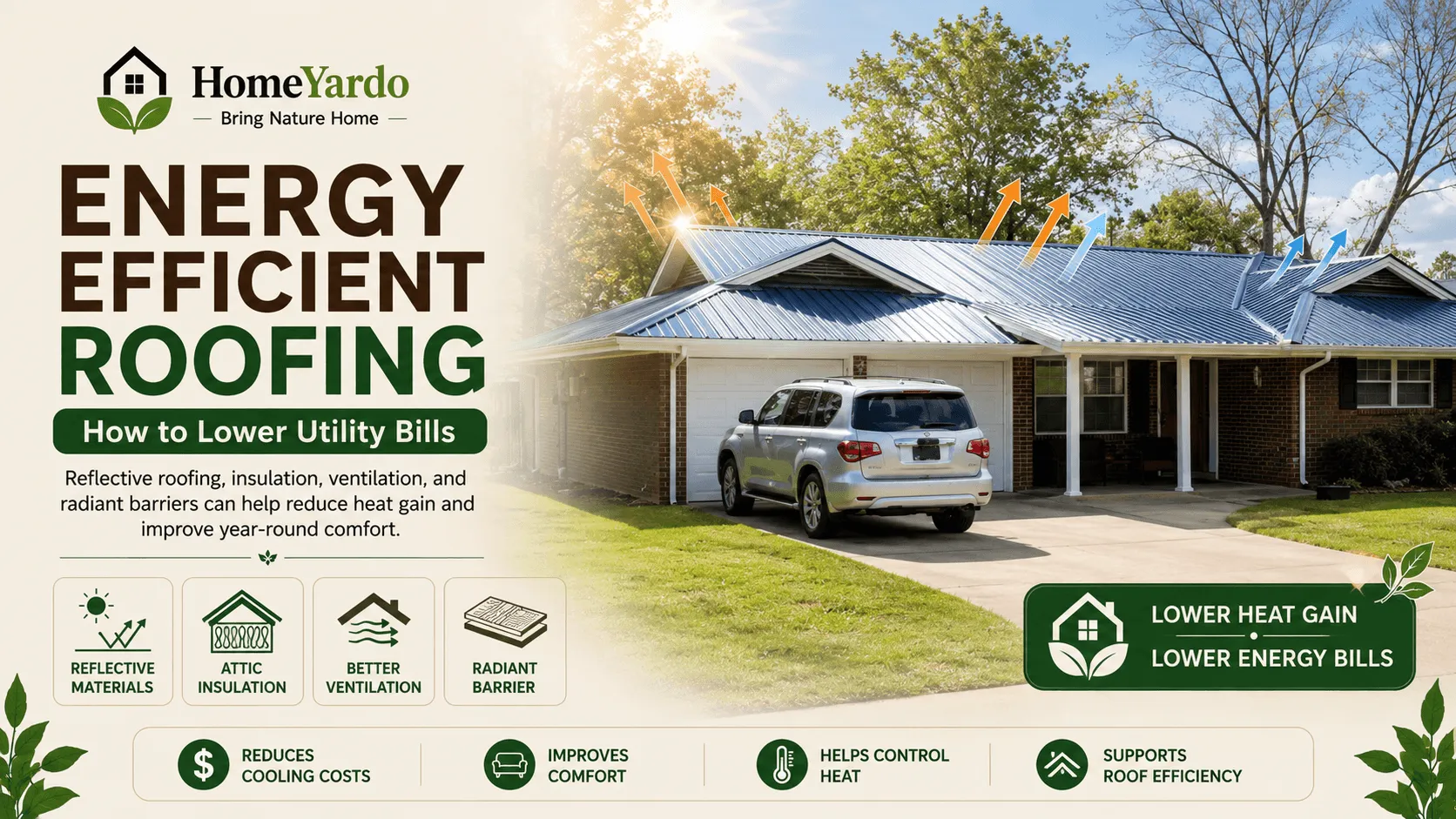
High energy bills stay one of the most annoying expenses that homeowners face every single month. During hot summer months, your air conditioning unit runs nonstop just to keep indoor rooms comfortable, while winter months bring a fresh wave of high heating costs. Most people spend time replacing old windows, putting seals around door frames, or adjusting their thermostats to save money, but they completely forget about the main source of heat loss and heat gain: the roof.
If you want to build a real energy-efficient building envelope, homeowners often look at local home improvement guides and regional technical studies, like those from Window Pro Tx, to see how different roofing materials handle extreme weather conditions. When you understand how heat travels inside a house structure and pick high-performance materials, you can easily cut down monthly electricity bills and keep your living spaces much more comfortable throughout the whole year.
Here is a clear, step-by-step breakdown showing how your choice of roofing changes your energy use, along with simple actions you can take to make any home more energy efficient roofing.
Understanding Heat Transfer in Residential Homes
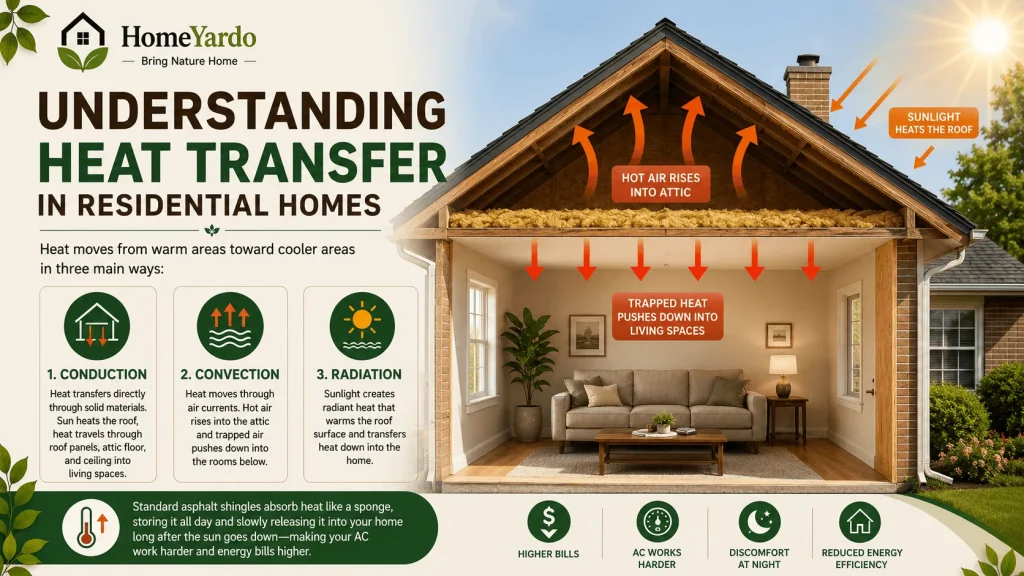
To bring your energy costs down, it helps to learn how heat actually moves inside and outside your house. Heat always moves from warm places toward cooler spaces in three main ways:
- Conduction: Heat transferring directly through solid items. When sun hits the outer roof, heat travels straight through the roof panels, past the attic floor, and right down through your ceiling into living spaces.
- Convection: Heat moving around through air currents. Hot air naturally goes up into your attic space, and then trapped hot air pushes downwards into rooms on top floors.
- Radiation: Heat energy moving through electromagnetic waves. Direct sunlight creates radiant heat that warms the roof surface, which then pushes that heat down into the house structure.
Standard asphalt shingles act just like sponges for heat. They soak up thermal energy from sunlight all day long and then slowly push that trapped heat inside your home hours after the sun goes down. Because of this, your air conditioner has to work constantly late into the night.
Key Features of Energy-Efficient Roofing Systems
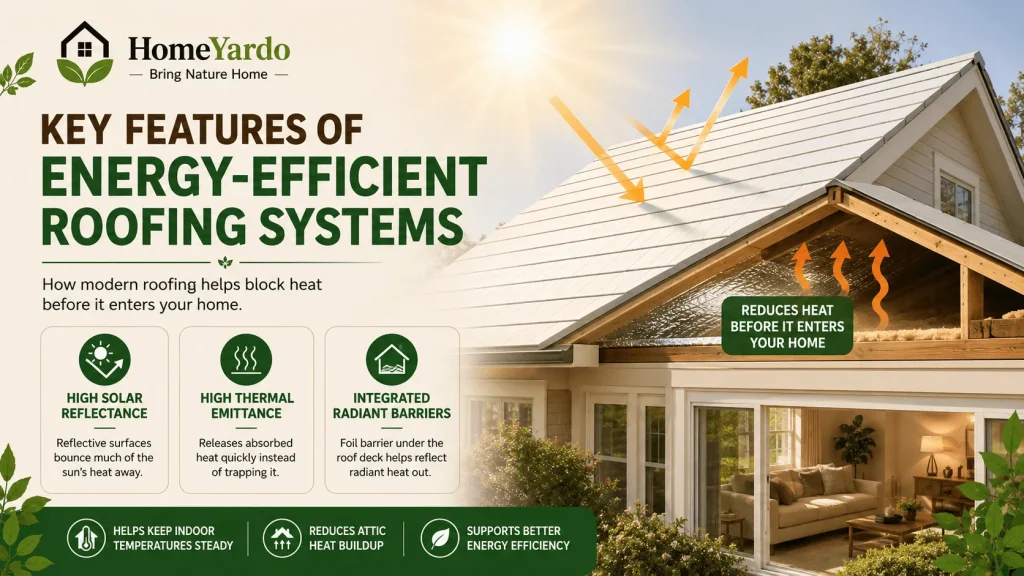
Modern roofing materials use basic science to block solar heat before it enters. Upgrading to high-efficiency panels helps keep indoor temperatures steady using specific features:
1. High Solar Reflectance
Solar reflectance tells you how well a roof surface bounces solar energy away from the building. Common black or dark gray shingles soak up 90% or even more of solar radiation. On the other hand, light-colored roofing materials and special reflective coatings bounce up to 70% of solar heat away from your house, stopping heat before it breaks through the outer walls.
2. High Thermal Emittance
Thermal emittance means how fast a material releases heat it already absorbed instead of keeping it inside. Materials with good thermal emittance cool down very fast after the sun sets, so stored heat doesn’t leak into your bedrooms during evening hours.
3. Integrated Radiant Barriers
A radiant barrier is simply a reflective foil layer placed right under your roof deck. It acts like a heat shield, bouncing up to 97% of radiant heat back out through the roof surface instead of letting it slip into your attic space.
Comparing Common Roofing Materials
Different kinds of roofing give you completely different performance when you look at long-term energy savings and heat control.
| Roofing Material | Heat Absorption Level | Average Lifespan | Energy Savings Potential |
|---|---|---|---|
| Traditional Asphalt | High (Traps solar heat) | 15–20 Years | Low |
| Architectural Shingles | Moderate to High | 20–25 Years | Moderate |
| Reflective Metal | Low (Reflects solar radiation) | 40–70 Years | High |
| Clay/Concrete Tiles | Low (High thermal mass) | 30–50 Years | High |
Standard options might look cheaper during initial installation, but reflective metal sheets, standing seam designs, and tile options give much higher utility savings over time, which easily pays back the extra cost.
Practical Steps to Maximize Attic Energy Efficiency
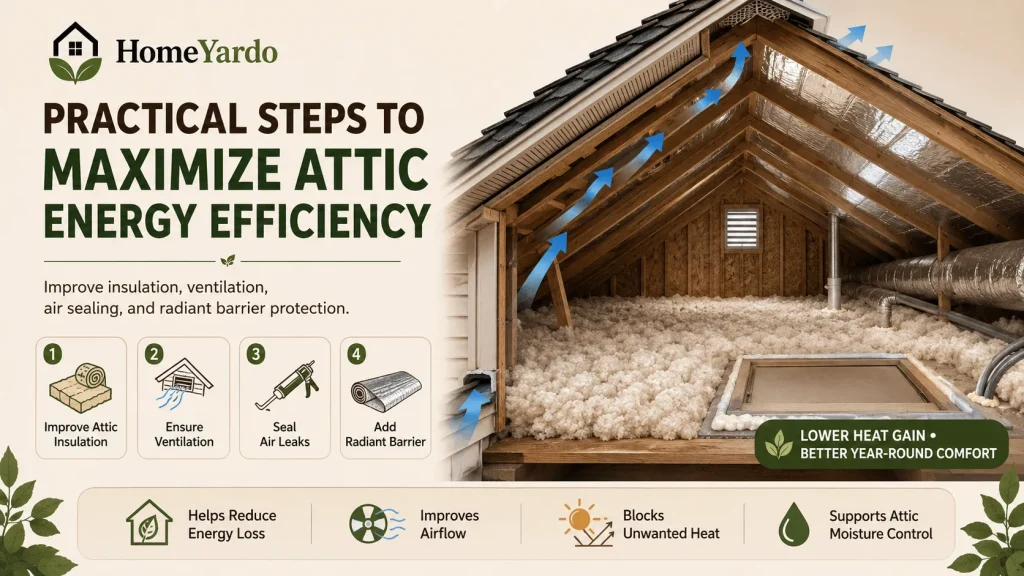
Replacing your main roof material is the biggest step you can take, but getting maximum efficiency means you need a full thermal protection plan. Follow these four basic steps to get the best outcome:
Step 1: Improve Attic Insulation
Roof surfaces need to work together with your attic insulation. Make sure your attic floor has enough thick layers of blown-in fiberglass, cellulose, or spray foam. Proper insulation thickness keeps warm air from escaping into the attic during cold winter months.
Working in hot, confined areas like attics for manual labor requires physical endurance. Homeowners doing DIY renovations often use targeted workout routines like deck of cards exercises to build core strength and body condition before taking on heavy house repair projects.
Step 2: Ensure Adequate Attic Ventilation
Proper ventilation is also an important part of overall home energy management. For another approach to improving ventilation and reducing heat loss, see what heat recovery ventilation is and how it works. This steady airflow clears out hot trapped air and stops moisture from building up, which prevents mold and wood rot.
Step 3: Seal Air Leaks Around Openings
Walk around your attic and look for unsealed gaps near plumbing pipes, electric wires, exhaust fans, and attic access doors. Use expanding foam cans or thick sealant to close every tiny gap completely tight.
Step 4: Add Radiant Barrier Sheathing
If you are putting on a completely new roof deck, pick plywood boards that have a shiny aluminum barrier attached to the bottom side. This builds a continuous wall against heat moving downward.
Long-Term Financial Benefits Beyond Energy Bills
Putting money into a heat-reflective roof gives back several financial perks beyond just cheaper monthly bills:
- Longer HVAC Lifespan: When extreme attic temperatures fall from 140°F down close to normal outdoor temperature, your cooling and heating systems don’t have to run nearly as hard. Less wear and tear keeps your compressors and fans working for extra years. Regular seasonal HVAC tune-ups and maintenance can also help keep heating and cooling equipment operating properly.
- Lower Repair Costs: Strong materials like steel panels, aluminum, and tiles stand up against heavy winds, hail impacts, and cracking caused by daily heat expansion.
- Insurance Discounts: Many insurance firms give yearly price cuts on premiums for houses built with impact-resistant, fireproof, and weather-durable roof materials.
- Better Home Value: House buyers always search for modern properties that have low monthly bills and durable structural materials already installed.
Final Checklist for Homeowners
Before starting your home efficiency updates,
check off these quick items:
- Review utility bills: Check your highest summer power bills so you know your starting baseline.
- Check attic heat levels: Measure how warm your attic gets on a bright, sunny afternoon compared to outdoor air.
- Check intake vents: Look to see if soffit vents are blocked by old insulation or dust.
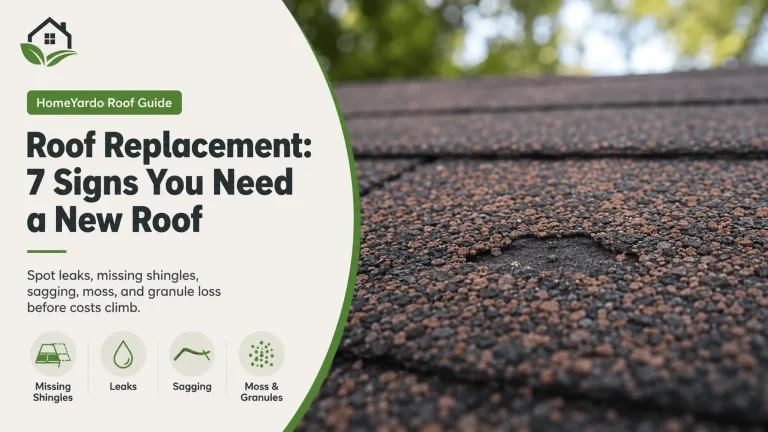
- Determine roof age: Figure out if your current roof panels are getting close to their end of life before planning new upgrades. If the roof is already showing signs of deterioration, learn how to know when your roof needs replacement before investing in energy-efficiency upgrades.
Taking these straightforward steps with reflective surfaces, proper ventilation, and insulation will keep your home comfortable while lowering your monthly bills for years to come.
FAQ’s
Radiation efficient roofing can deflect more solar radiation and more efficiently transfer heat out from the property to help reduce the amount of heat coming in. This can lessen the requirement for cooling, especially in hot weather conditions.
Good energy performance can be achieved using reflective metal roofing, some reflective shingles, and well chosen clay or concrete tile. The best option relies on climate, roof design, insulation and installation.
Yes. Proper attic insulation inhibits the transmission of heat to and from the living space from the roof/attic area. It can also assist maintain indoor temperatures more consistent and ease the load on heating and cooling systems.
A reflective barrier is a reflective substance put in the roof or attic assembly to prevent radiant heat transfer. It is particularly beneficial in hot areas when integrated into a well-designed attic system.
Properly planned attic ventilation can assist remove excess heat and moisture if the ventilation system is properly built. This is a complement, not a replacement, to insulation and air sealing.
That can be, especially if an old roof is already toward the end of its useful life. The total value depends on the roofing material, local climate, energy prices, installation cost, condition of the roof, and estimated lifespan.