
What is Heat Recovery Ventilation and How Does It Work?
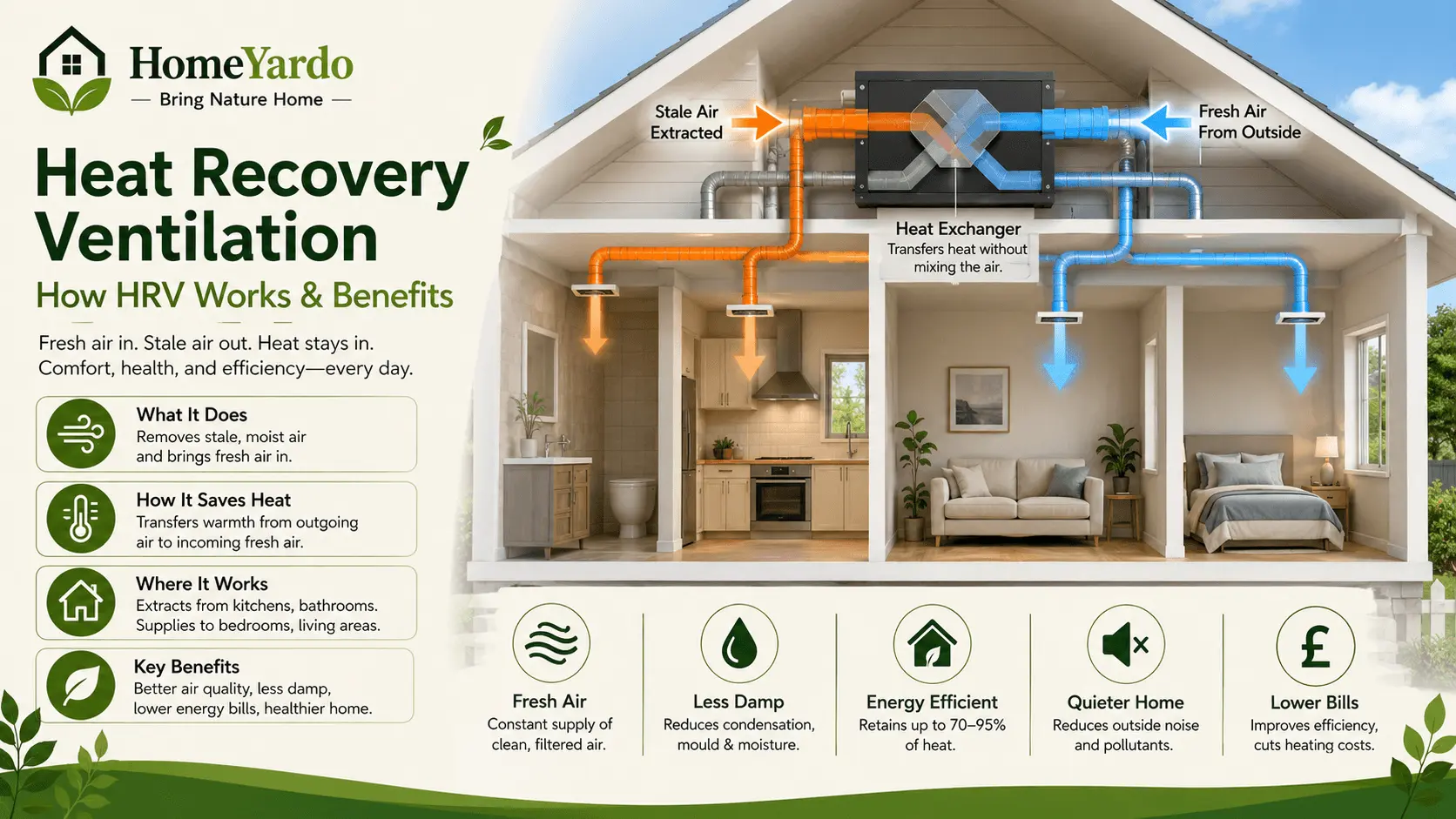
If you have ever stood in your kitchen on a chilly morning, torn between opening a window to clear the steam from your porridge and keeping every last bit of warmth inside, you will love what we are about to tell you. There is a clever bit of kit that lets you have both. It is called Heat Recovery Ventilation, or HRV for short, and it is quietly becoming one of the most popular additions to UK homes. Let us walk you through what it actually is, how it works, and why so many homeowners are getting rather excited about it.
What Exactly Is Heat Recovery Ventilation?
Put simply, a HRV system is a technique to make sure fresh air is moving around your home while also recovering the heat from the stale air as it leaves. Instead of losing that lovely warm air every time you open a window or switch on an extractor fan, an HRV system grabs the heat before it escapes and uses it to warm up the fresh air coming in.
Think of it like a very polite guest who, on their way out of your party, hands their coat to the person arriving so they do not get cold. That is essentially what your HRV unit is doing, swapping warmth between outgoing and incoming air, all day, every day, without you having to lift a finger. This is brilliant news for anyone who has ever worried about choosing between good air quality and a toasty home. With HRV, you genuinely get to enjoy both at once.
HRV At a Glance

Heat Recovery Ventilation (HRV) is a mechanical ventilation system which exhausts stale interior air and replaces it with fresh outdoor air, recovering heat from the departing air. Much of the heat from the extracted air is transferred to the entering air in a heat exchanger, without the two air streams interacting.
For the non-technical:
- What it does: It pulls stale, damp air out and delivers fresh air in.
- How it saves heat: It uses the heat of the air flowing out to warm the fresh air coming in.
- Where the air is taken from: Usually from kitchens, bathrooms and other damp places.
- Where fresh air is supplied: Normally bedrooms, sitting rooms and other areas which are occupied.
- Main types: Whole house MVHR and single room hrv.
- Good for: Well insulated homes, new builds, renovations and homes where ventilation needs improving.
- Main benefits: enhanced ventilation, reduced heat loss, reduced humidity in the building, enhanced indoor air quality.
- Typical heat recovery: Many systems can recover a large fraction of the heat from the extracted air, although the actual performance depends on the system, installation and operating conditions.
Why Do Homes Need Mechanical Ventilation?

Modern homes are built to be wonderfully airtight. All that insulation and double glazing does a smashing job of keeping the cold out and the warmth in, but it also means moisture, cooking smells, and stale air have nowhere to go. Without a way for fresh air to get in and old air to get out, homes can start to feel a bit stuffy, and in worse cases, damp and mould can creep in.
Traditionally, we solved this by simply opening windows or relying on trickle vents, but that means all your carefully paid for heat goes straight out into the British drizzle. HRV solves this problem beautifully by giving your home a constant, gentle supply of fresh air without throwing your heating bills out of the window along with it.
How Does HRV Work?

Here comes the fun bit. An HRV system is made up of a central unit, usually tucked away in a loft, utility room, or airing cupboard, along with a network of ducts that run through your home. These ducts connect to vents in rooms where fresh air is needed, typically bedrooms and living rooms, and extract vents in rooms where moisture and odours tend to build up, like kitchens and bathrooms.
The real star of the show is something called a heat exchanger, which sits inside the central unit. As warm, stale air is pulled out of your kitchen or bathroom, it passes through the heat exchanger on its way outside. At the very same time, fresh air from outdoors is drawn in and passed through the other side of that same exchanger. The two air streams do not mix with each other, so you are not taking in any of that stale air.
Instead, the heat is being conducted from the out-going stream of air to the new one. The end result of all of this is that the air coming into your house is already warm, and in some cases, it is retaining 70 to 95 percent of the heat! That is some rather impressive bit of engineering for something that just hums away in the background doing its business.
What Are the Main Types of HRV?

Mechanical Ventilation With Heat Recovery (MVHR)
Method 1 – The first is Mechanical Ventilation with Heat Recovery, MVHR, which is a total house system. It employs ducting to continually supply and extract air throughout all rooms, ideal for new buildings or homes undergoing a major refurbishment.
Single-Room HRV
Method 2 The second is Single Room Heat Recovery Ventilation, also known as decentralized or point ventilation. These are small units placed into a single wall, usually in specific rooms such as bathrooms or kitchens where extensive ducting is not possible. They’re a terrific choice for existing homes or flats when ripping up floors and ceilings for ductwork just isn’t on the cards.
What Are the Benefits of HRV?

Beyond the obvious energy savings, there are some genuinely lovely side benefits to having HRV in your home. Because it is constantly filtering incoming air, it can help reduce pollen, dust, and outdoor pollution getting inside, which is a real treat for anyone with allergies or asthma.
It also helps keep condensation and damp at bay, since moist air is being whisked away before it has a chance to settle on your windows or walls. Many homeowners also notice their homes simply feel fresher. There is none of that stuffy, closed up feeling you sometimes get in a very well insulated house, just a gentle, steady supply of clean air circulating throughout.
Is HRV Right for Your Home?

Whole house MVHR systems tend to work best when installed during construction or a major renovation, since they need ducting throughout the property. If you are in an existing home and cannot face the disruption, single room units are a fantastic middle ground, offering many of the same benefits room by room without the upheaval. It is always worth having a chat with a qualified installer.
What to Check Before Installing HRV

Before choosing an HRV or MVHR system, consider the size and layout of your home, the level of airtightness, where ductwork can be installed, and which rooms need supply or extraction.
It is also worth checking the system’s heat recovery performance, airflow rates, noise levels, filter requirements and installation requirements. A qualified ventilation professional can assess the property and recommend a system that is suitable for the home’s layout and ventilation needs.
For an existing property, single-room heat recovery units may be more practical where installing a full duct network would require major building work.
You should also consider other sources of unwanted air leakage, such as gaps around doors, and garage door weather stripping can help seal those areas.
Final Thoughts
Heat Recovery Ventilation really is one of those wonderful pieces of technology that solves two problems at once. You get fresh, healthy air circulating through your home while holding onto the warmth you have already paid for. It is efficient, it is clever, and once it is installed, it works away happily in the background so you can get on with enjoying a warm, fresh smelling home, whatever the weather is doing outside.
FAQs
HRV is a system that extracts stale, moist air from your home and replaces it with fresh air from outside. It exchanges heat between the outgoing and incoming air streams, reducing heat loss and helping keep the inside comfortable.
An HRV system transfers heat from the outgoing air to the incoming air using a heat exchanger, without mixing the two air streams. In other places such as kitchens and bathrooms, the warm air is blown out and replaced with fresh air from outside that is warmed before it enters the living areas and bedrooms.
HRV stands for heat recovery ventilation while MVHR stands for Mechanical Ventilation with Heat Recovery. MVHR normally means a full house system with ducting to constantly supply and extract air from the residence.
Yes. Whole-house MVHR systems are easier to install during construction or major remodels because they require ductwork. Single-room heat recovery systems are able to provide ventilation to existing residences when the installation of ducts would be disruptive without major structural renovation.
Yes. An HRV can continually remove the damp air from places like bathrooms and kitchens and help cut down on condensation and too much moisture. This can help to create a drier and fresher interior atmosphere.