How to Choose the Right Pressure Washer for Your Cleaning Needs
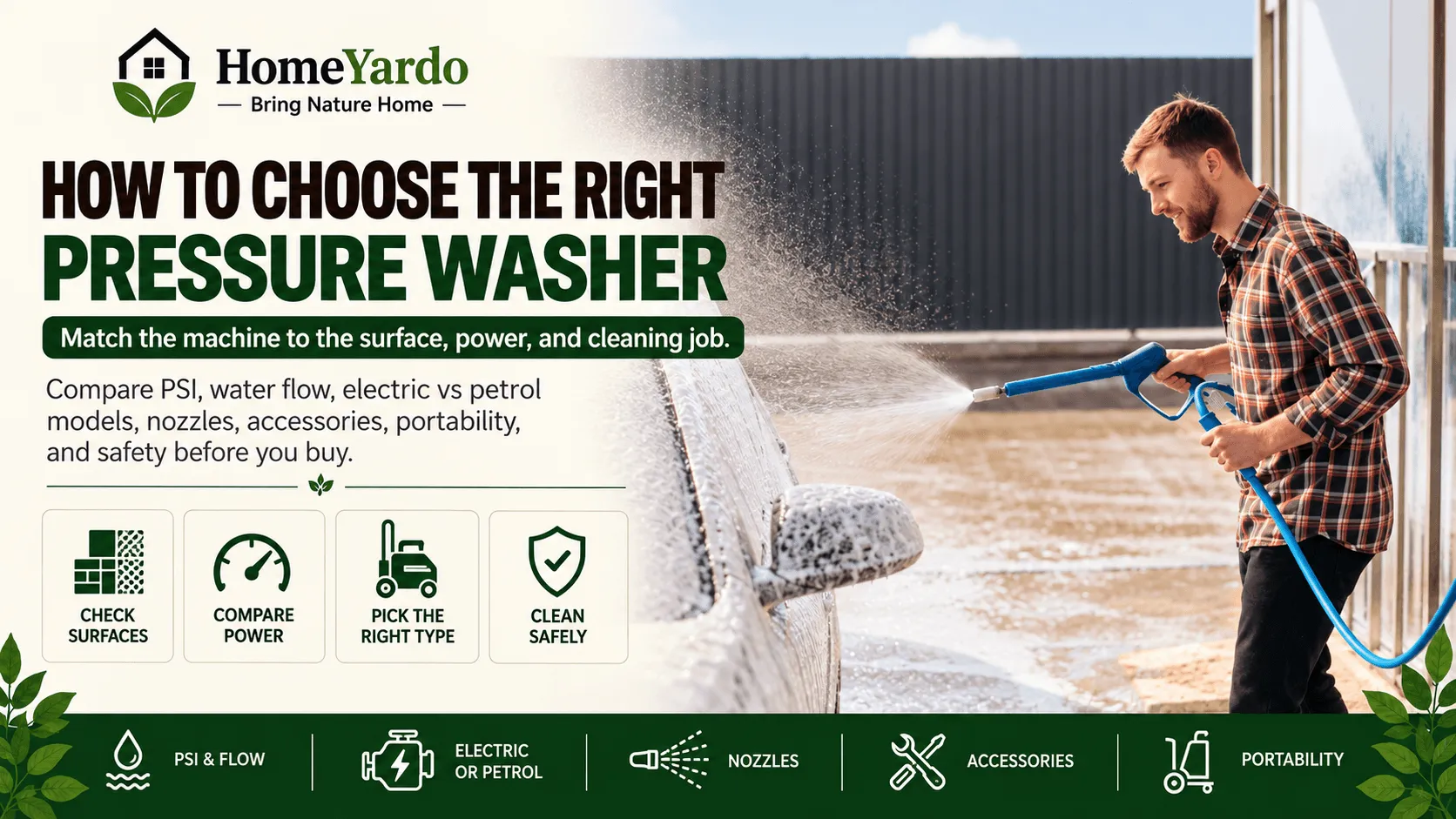
Keeping outdoor areas clean is easier when the equipment matches the job. A garden hose may handle loose dust and light dirt, but built-up grime on driveways, patios, fences, vehicles, and other outdoor surfaces can require more cleaning force.
A pressure washer uses a concentrated stream of water to loosen dirt and surface buildup more efficiently. However, pressure washers differ in power, water flow, power source, accessories, and intended use.
Choosing the right pressure washer therefore starts with one simple question: what do you actually need to clean?
Think About Your Cleaning Needs
Start by listing the surfaces and items you expect to clean most often.
A homeowner washing a car, bicycle, garden furniture, or small patio has very different requirements from someone regularly cleaning large driveways, masonry, decks, or heavily soiled outdoor areas.
If you expect to deal with larger areas or stubborn buildup, you may need a High Pressure Washer capable of producing greater cleaning force.
For lighter household jobs, a smaller machine with more moderate pressure may be easier to control, move, and store.
Think about:
- The types of surfaces you will clean
- How much dirt normally builds up
- The size of the cleaning area
- How frequently you expect to use the machine
- Whether you need to move it around a large property
Matching the washer to these needs can prevent you from buying either more power than necessary or a machine that struggles with your regular cleaning jobs.
Understand Pressure and Water Flow
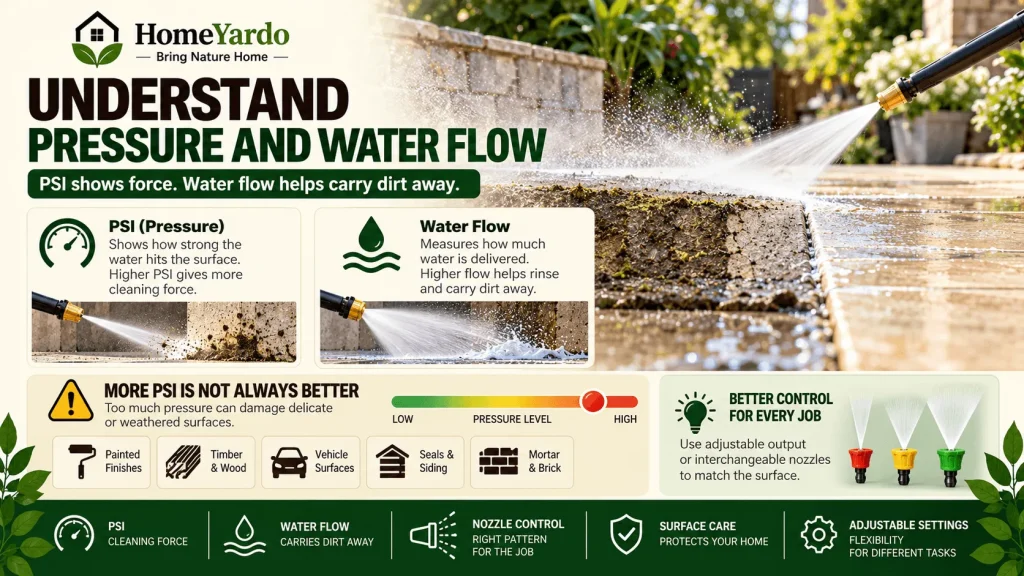
Two specifications commonly used when comparing pressure washers are pressure and water flow.
Pressure is often measured in PSI, or pounds per square inch. It indicates how forcefully the water leaves the machine. Higher pressure can help loosen stubborn grime from suitable hard surfaces.
Water flow describes how much water the machine delivers over a given period. Depending on the market, this may be listed in gallons per minute or litres per minute.
Both measurements matter.
High pressure helps break dirt loose, while adequate water flow helps carry that loosened dirt away.
More PSI Is Not Always Better
It can be tempting to choose the machine with the highest PSI rating, but more pressure is not automatically better for every job.
Excessive pressure can damage softer or weathered materials. Painted finishes, timber, seals, some siding, vehicle surfaces, mortar, and other delicate materials may require lower pressure and a wider spray pattern.
HomeYardo’s existing exterior-maintenance guidance also recommends identifying the material before pressure washing and using a cleaning method suited to that surface.
A pressure washer with adjustable output or interchangeable nozzles gives you greater control when moving between different jobs.
Match the Pressure Washer to the Surface
The surface being cleaned should have a major influence on your choice.
A machine suitable for concrete may be unnecessarily aggressive for painted furniture or a vehicle.
As a general approach:
| Cleaning Job | What to Look For |
|---|---|
| Cars and bikes | Controlled lower pressure and a suitable wide spray |
| Outdoor furniture | Moderate output with good pressure control |
| Patios and walkways | Moderate pressure and useful water flow |
| Driveways | Greater cleaning capacity for larger hard surfaces |
| Decks and timber | Adjustable pressure and careful nozzle selection |
| Masonry | Suitable pressure based on material condition |
| Large outdoor areas | Stronger output and useful surface-cleaning accessories |
These are selection principles rather than universal pressure settings. Surface age, material, coatings, existing damage, and manufacturer instructions should always be considered before cleaning.
Consider Electric or Petrol Models
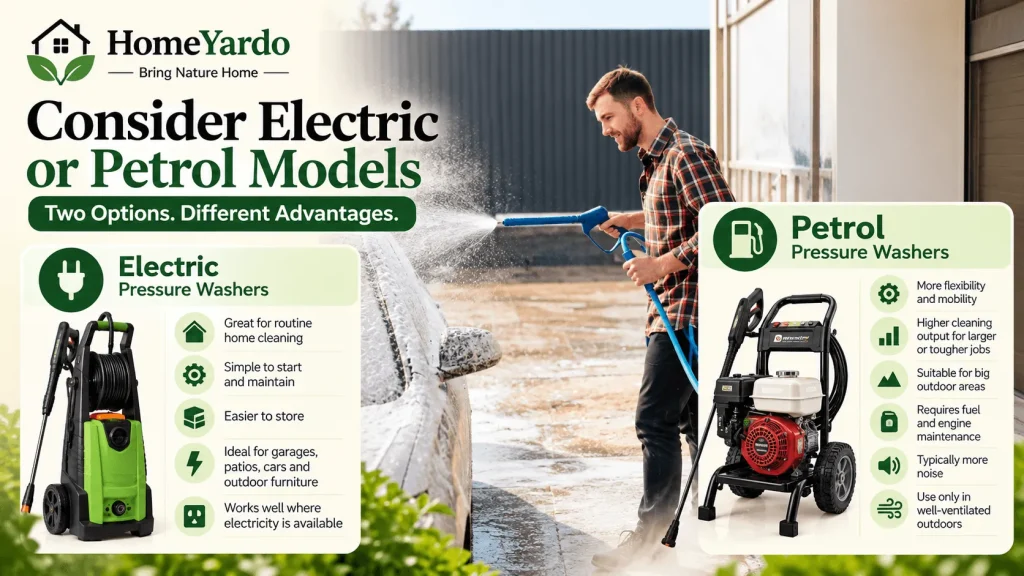
Electric and petrol pressure washers are two common choices, and each suits a different type of user.
Electric Pressure Washers
Electric models are often practical for routine household cleaning.
They are generally simple to start and can work well for jobs around garages, patios, cars, outdoor furniture, and other accessible areas where a suitable power supply is available.
They may also be easier to store than larger petrol-powered units.
An electric model may make sense if you:
- Mainly clean around the house
- Have easy access to electricity
- Want relatively simple startup and maintenance
- Do not need very high output for extended periods
Petrol Pressure Washers
Petrol-powered models can provide more flexibility when cleaning locations where electrical access is limited.
Depending on the model, they may also provide higher cleaning output for demanding jobs and larger areas.
They are often better suited to users who need more mobility or regularly tackle heavier outdoor cleaning.
Petrol machines, however, normally require more consideration for fuel, engine maintenance, storage, exhaust, and noise.
Never operate a petrol-powered machine in an enclosed or poorly ventilated space.
Check Nozzles and Pressure Control
Nozzle choice has a major effect on how concentrated the water stream becomes.
A narrow spray concentrates cleaning force into a smaller area, while a wider spray spreads it across a larger surface.
For homeowners who plan to clean several different materials, interchangeable nozzles or adjustable pressure can make a pressure washer much more useful.
Begin with a less aggressive setting whenever you are unsure how a surface will react. Test a small, inconspicuous area before cleaning the entire surface.
Avoid assuming that one nozzle or pressure setting is appropriate for every job.
Check the Accessories
Once you understand the machine’s basic output, look at the accessories available for it.
Accessories such as surface cleaners, foam cannons, stubby spray guns, extension wands, and quick-connect fittings can make certain jobs easier or faster.
A surface cleaner, for example, can be useful when working across suitable large flat areas. A foam cannon may be useful for vehicle washing when used with compatible products and appropriate pressure.
Before paying extra for accessories, ask whether you will genuinely use them.
Also check compatibility. Fittings, hoses, spray guns, nozzles, and accessories are not always interchangeable between machines.
Consider Hose Length, Cable Length, and Portability
Specifications such as PSI often receive most of the attention, but practical details can have a major effect on everyday use.
A short hose can become frustrating when cleaning a driveway or moving around a vehicle. A heavy machine may be difficult to move frequently. Small wheels may also struggle on gravel, lawns, or uneven paving.
Before choosing a pressure washer, check:
- High-pressure hose length
- Power-cord length on electric models
- Wheel size
- Handle design
- Machine weight
- Hose and accessory storage
- Overall storage dimensions
For a small property, a compact washer may be convenient. For a larger outdoor area, longer reach and better portability may matter more.
Consider How Often You Will Use It
Frequency of use can help determine how much machine you actually need.
If the pressure washer will come out only a few times each year for cars, furniture, and small cleaning jobs, a compact homeowner model may be sufficient.
Regular cleaning of large paved areas or demanding outdoor surfaces may justify a machine designed for heavier and longer use.
Also consider replacement parts and servicing. A machine that can be maintained and repaired may offer better long-term value than one chosen only because its initial price is low.
Keep Safety in Mind
A pressure washer can deliver water with enough force to cause injury or damage property.
Never direct the spray toward people or animals. Avoid spraying electrical equipment, outlets, damaged windows, seals, or any surface that may allow pressurized water to enter the building.
Wear suitable closed footwear and eye protection, and maintain stable footing while cleaning.
Start with a wider spray pattern or lower setting and increase cleaning force only when the surface requires it.
Before pressure washing siding, painted surfaces, timber, masonry, garage doors, or similar materials, check the manufacturer’s recommended cleaning method. HomeYardo’s exterior-maintenance guidance notes that excessive pressure can remove paint, damage wood, deteriorate mortar, and force moisture behind siding.
When Should You Avoid Pressure Washing?
A pressure washer is useful, but it is not appropriate for every surface.
Avoid aggressive pressure washing where water could damage the material, strip a finish, worsen existing cracks, or enter areas that should remain dry.
Extra care may be required around:
- Damaged or loose siding
- Old or flaking paint
- Weathered timber
- Deteriorating mortar
- Electrical fittings
- Windows and seals
- Delicate decorative finishes
- Roof materials unless the manufacturer specifically permits the cleaning method
For some surfaces, a garden hose, soft brush, or suitable low-pressure cleaning method may be safer.
Quick Pressure Washer Buying Checklist
Before buying, compare the machine against your real cleaning requirements rather than choosing by power alone.
Check:
- What surfaces will I clean?
- Do I need light, moderate, or heavier cleaning performance?
- Can the pressure be adjusted?
- What water-flow rate does the machine provide?
- Would electric or petrol suit my property better?
- Is the hose long enough?
- Is the machine easy to move and store?
- Are replacement nozzles and accessories readily available?
- Can parts be serviced or replaced?
- Does the manufacturer provide clear surface and safety instructions?
A machine that performs your regular tasks comfortably is usually a better choice than one selected simply because it has the highest pressure rating.
Choosing the Right Pressure Washer
Choosing the right pressure washer comes down to matching the equipment to the work.
Start with the surfaces you plan to clean, then compare pressure, water flow, electric and petrol options, pressure control, accessories, portability, and expected frequency of use.
You do not need maximum pressure for every household cleaning task. You need enough cleaning performance for the job while retaining enough control to protect the surface underneath.
The right choice can make exterior cleaning quicker and more manageable while reducing the risk of unnecessary surface damage. Regular cleaning can also support the wider maintenance of your home’s exterior and help you maintain a clean look between larger maintenance projects.
FAQ’s
There is no single PSI level that suits every household surface. Cars, furniture, timber, concrete, siding, and masonry can all tolerate different levels of cleaning force. Choose a machine with enough capacity for your hardest regular job and, where possible, adjustable pressure for lighter surfaces.
Electric pressure washers often suit routine residential cleaning where power is readily available. Petrol models can offer greater mobility and may suit larger or more demanding jobs. The better option depends on where you clean, how often you use the machine, and the amount of cleaning power required.
Potentially, but the same setting should not automatically be used for both. A driveway can normally tolerate a more aggressive cleaning approach than a vehicle finish. Use appropriate nozzles, pressure settings, distance, and manufacturer guidance for each surface.
Not necessarily. Higher PSI provides greater cleaning force, but excessive pressure can damage softer materials and finishes. Water flow, pressure control, build quality, accessories, and suitability for your actual cleaning tasks also matter.
Consider pressure, water flow, power source, adjustable settings, hose length, machine weight, nozzle options, accessory compatibility, storage, replacement parts, and the surfaces you intend to clean.
They can. A suitable surface cleaner, foam cannon, extension wand, or nozzle can make specific jobs more efficient. Accessories should be selected according to the tasks you actually perform rather than simply buying the largest accessory package.
Yes. Excessive pressure, an unsuitable nozzle, or holding the spray too close can damage some surfaces. Weathered wood, weak concrete, damaged mortar, painted materials, and aging finishes deserve particular care. Always test an inconspicuous area first.
There is no fixed schedule. Cleaning frequency depends on local conditions, surface material, dirt buildup, weather, and manufacturer recommendations. Clean when needed rather than applying high-pressure washing routinely to every exterior surface.