Gutter Warning Signs to Check Before the First Freeze
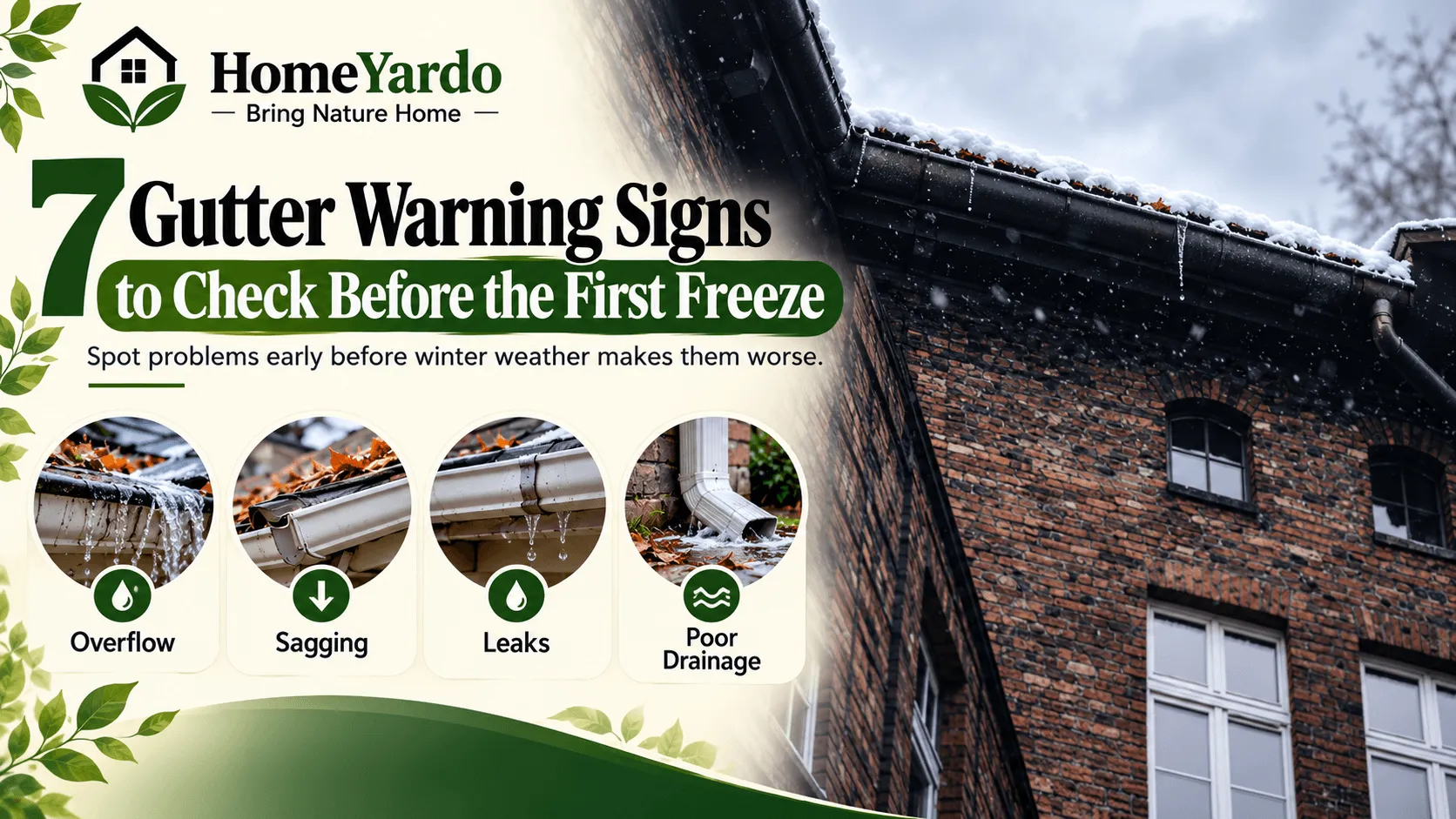
Cold weather can turn a small gutter problem into a much more noticeable one. A gutter that drips occasionally in autumn can create an icy patch near an entrance once temperatures fall. Water collecting beside the foundation can also become more concerning as the ground repeatedly freezes and thaws.
Fortunately, many gutter warning signs appear before the first major winter storm. Overflowing water, sagging sections, leaking joints, loose fasteners, and poor downspout drainage can all indicate that the system needs attention.
A prewinter inspection can help homeowners determine whether the appropriate response is cleaning, a targeted repair, drainage correction, or replacement.
Quick Gutter Warning Signs to Look For
Before freezing weather arrives, look for:
- Water overflowing during rain
- Gutters visibly sagging or pulling away
- Leaks around seams, corners, or end caps
- Standing water inside gutter sections
- Loose brackets or fasteners
- Downspouts that discharge beside the foundation
- Persistent puddles below downspouts
- Water flowing across steps or walkways
- Recurring clogs shortly after cleaning
- Storm-damaged or disconnected sections
One symptom does not automatically mean the entire system needs replacing. The location, frequency, and underlying cause of the problem matter.
1. Watch What Happens During a Rainstorm

One of the easiest ways to identify a gutter problem is to observe the system during steady rainfall from a safe position on the ground.
Water should enter the gutter and move toward the downspout. If it spills over the outer edge instead, leaves or debris may be blocking the outlet. Poor gutter slope, inadequate capacity, or a damaged section can produce similar symptoms.
Pay attention to where overflowing water lands.
Water streaming across an entrance may create a slipping hazard after temperatures drop below freezing. Repeated splashing against siding, fascia, or the area beside the foundation can also indicate that runoff is not being managed correctly.
Check whether the downspout produces a steady discharge during rainfall. Avoid climbing a ladder during wet, windy, or icy conditions.
If recurring overflow continues after appropriate cleaning and adjustments, a gutter replacement service may be worth discussing. A useful assessment should explain whether the gutter has deteriorated, lost its proper alignment, or developed damage that repairs cannot reliably correct.
The objective should be to restore dependable drainage rather than automatically replace an otherwise repairable system.
2. Notice Sagging Before Ice Adds More Weight

Gutters should remain securely attached to the building while maintaining enough slope for water to travel toward the outlets.
A visible dip can allow water, leaves, and sediment to collect. Sections pulling away from the fascia can also become less stable as additional debris accumulates.
Freezing conditions make these problems more concerning because trapped water can freeze inside low spots. The resulting ice adds weight to a section that may already have weakened brackets or fasteners.
Look from ground level for:
- Visible dips or uneven gutter lines
- Sections separating from the fascia
- Loose or twisted brackets
- Misaligned corners
- Fasteners lying on the ground
- Water remaining in one area after rain
A sagging gutter does not always require full replacement. A contractor may be able to correct the slope or replace failed supports when the gutter itself remains structurally sound.
If the material is badly distorted, cracked, corroded, or failing in several areas, broader replacement may make more sense.
Ask what caused the sagging before deciding on the repair. Simply adding fasteners to a damaged section may not correct the underlying drainage problem.
3. Check for Leaks at Corners, Seams, and Joints

A small gutter leak may appear harmless during mild weather. Once temperatures fall, repeated dripping onto steps or walkways can freeze and create a slippery surface.
Inspect accessible areas visually for:
- Water marks beneath joints
- Dripping seams
- Loose end caps
- Small cracks
- Corrosion
- Failed or separating sealant
- Staining on fascia or siding below the gutter
The overall condition of the material should guide the response.
A structurally sound gutter with one isolated leaking joint may need only a targeted repair. Multiple leaks, widespread corrosion, cracking, or distortion can indicate that repeated patching will provide diminishing returns.
Avoid treating sealant as a universal solution. Dirt, movement, poor alignment, corrosion, or physical damage beneath the joint should be identified before resealing it.
A lasting repair addresses the reason the joint failed, not only the visible drip.
4. Follow Downspouts to Their Final Outlet

A gutter system does not finish its job when water enters a downspout. Runoff still needs somewhere appropriate to go.
Downspouts that discharge directly beside the foundation can leave surrounding soil wet even when the gutters themselves are clean and properly aligned.
Practical guidance on gutters and downspout drainage explains why water should be directed away from the structure. The appropriate arrangement depends on the property’s grading, drainage system, soil conditions, and applicable local requirements.
Inspect the discharge area for:
- Persistent puddles
- Soil erosion
- Water flowing back toward the house
- Buried or obstructed outlets
- Leaves covering the discharge point
- Repeatedly saturated soil
If runoff continues pooling after the downspout has been extended, the problem may involve poor yard drainage around the home rather than the gutter system alone.
Underground drainage connections may require professional assessment when their route or discharge point cannot be confirmed.
5. Look for Water and Ice Problems Around Entrances

Gutter problems deserve faster attention when runoff reaches a front door, garage entrance, steps, driveway, or frequently used walkway.
Even a relatively small leak can repeatedly wet the same surface. Once temperatures fall, that moisture may freeze into a thin layer of ice that is difficult to see.
Watch for recurring wet areas beneath gutter corners and downspout connections. Note any location where roof runoff crosses the normal walking route.
Correcting the gutter leak and redirecting the runoff addresses the source of the problem.
Winter conditions make ice safety around walkways important even when the drainage issue appears minor. Treat slippery surfaces appropriately, and never attempt elevated gutter repairs during icy, snowy, or windy conditions.
6. Distinguish a Clogged Gutter From a Failing System

An occasional blockage does not mean the gutters need replacing.
Leaves, twigs, seeds, and other debris commonly accumulate around downspout openings, particularly on properties with nearby trees. Removing the obstruction may restore normal drainage.
The situation is different when problems return immediately after cleaning.
Cleaning alone will not correct:
- Severely distorted gutter sections
- Multiple failing joints
- Broken supports
- Incorrect slope
- Significant corrosion
- Cracked materials
- Poorly positioned downspouts
If the same overflow or standing-water problem repeatedly returns, investigate the condition and configuration of the system rather than treating every occurrence as another clog.
A contractor should be able to explain which components remain serviceable, which can be repaired, and which genuinely require replacement. This makes the proposed work easier to evaluate and helps avoid unnecessary replacement.
7. Inspect Gutters After Wind, Freezing Rain, and Heavy Snow
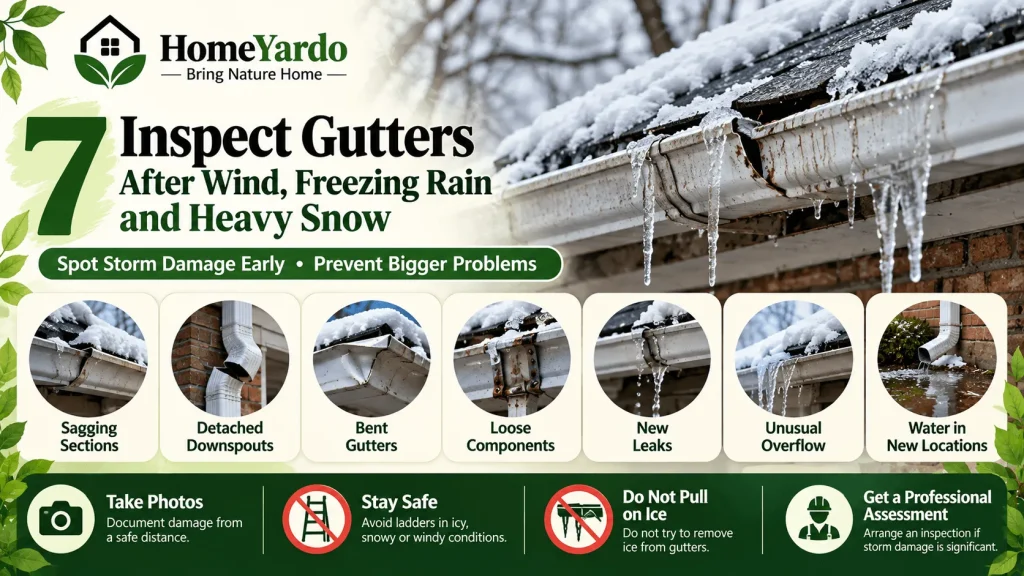
A gutter can appear functional before a storm and develop problems afterward.
Strong winds may loosen attachments. Falling branches can dent or disconnect sections. Ice and heavy snow can place additional loads on gutters and their supports.
Some damage may not become apparent until temperatures rise and melting water begins flowing through the system again.
Once conditions are safe, walk around the property and look for:
- Newly sagging sections
- Detached downspouts
- Bent gutters
- Loose components
- New leaks
- Unusual overflow
- Water collecting in unfamiliar locations
Photograph suspicious areas from a safe distance so changes can be compared later or shown to a contractor.
Do not pull on ice-covered gutters, attempt to knock ice loose from underneath, or climb onto a ladder in hazardous winter conditions.
If a storm has caused substantial visible damage, arrange an appropriate assessment before the next period of severe weather.
When Does a Gutter Need Repair Rather Than Replacement?
Many gutter problems can be repaired when damage is isolated and the rest of the system remains structurally sound.
Repair may be reasonable when there is:
- One leaking seam
- A limited number of loose brackets
- A localized blockage
- A minor slope problem
- An isolated damaged downspout connection
Replacement becomes more reasonable when deterioration is widespread or the same problems continue returning despite appropriate maintenance.
Possible replacement indicators include multiple failing joints, extensive corrosion, substantial distortion, repeated separation from the fascia, widespread cracking, or sections that can no longer maintain adequate drainage.
Age alone should not determine the decision. Actual material condition and system performance provide better evidence.
What Should a Prewinter Gutter Inspection Include?
A useful inspection considers the entire drainage route rather than looking only inside the gutter channel.
Check:
- Roof edge and gutter entry: Can runoff enter the gutter without obvious obstruction?
- Gutter channel: Are there clogs, standing water, cracks, or corrosion?
- Slope: Does water travel toward the intended outlet?
- Supports: Are brackets and fasteners secure?
- Joints and corners: Are there visible leaks?
- Downspouts: Are they connected and unobstructed?
- Discharge area: Does water move away from the building?
- Ground conditions: Is runoff creating erosion or persistent pooling?
- Entrances and paths: Could escaping water create an icing hazard?
This whole-system approach makes it easier to identify the actual cause rather than repeatedly treating the visible symptom.
Make the Prewinter Inspection a Habit
Gutter maintenance does not require an elaborate schedule. A visual check before winter and another inspection after major storms can reveal developing problems while they are still manageable.
Clear safely reachable debris, confirm that visible outlets are unobstructed, and observe drainage during the next rainfall.
Gutter checks should also form part of a broader seasonal plan for protecting your home from weather damage, particularly before periods of heavy rain, snow, or freezing temperatures.
While checking gutters before cold weather, homeowners can also winterize outdoor faucets and sprinkler systems to reduce the risk of freeze-related damage elsewhere around the property.
Keep notes or photographs of recurring overflow, leaks, or standing water. A record can help a contractor understand whether the problem is isolated or recurring.
The goal of prewinter gutter maintenance is simple: give roof runoff an unobstructed route away from the home before freezing weather makes existing weaknesses harder and potentially more hazardous to address.
FAQ’s
Common warning signs include overflowing water, sagging sections, leaking seams, loose brackets, standing water, recurring clogs, disconnected downspouts, and water pooling near the foundation.
Yes. Checking gutters before freezing weather can identify clogs, leaks, sagging, and drainage problems before trapped water turns to ice or runoff creates slippery areas.
Not necessarily. Localized sagging caused by failed supports or incorrect slope may be repairable. Replacement may be more appropriate when the gutter is extensively distorted, cracked, corroded, or failing in several locations.
Persistent overflow can result from poor slope, an obstructed downspout, damaged gutter sections, inadequate drainage, or other system problems. The cause should be identified before assuming another cleaning will solve it.
They can contribute to poor drainage when runoff repeatedly falls or discharges close to the building. The effect depends on grading, soil, drainage arrangements, rainfall, and the condition of the surrounding property.
Isolated leaks, loose brackets, or minor alignment problems may be repairable. Multiple failing joints, severe distortion, widespread corrosion, cracking, or recurring problems after appropriate repairs can make replacement more reasonable.
Visual inspection from the ground is safer than climbing during hazardous weather. Avoid ladders and elevated gutter work when surfaces are wet, icy, snowy, or exposed to strong winds. Arrange professional inspection when the problem cannot be evaluated safely from ground level.