A First-Time Renter’s Guide To Apartments In Tucson, AZ

Renting your first apartment in Tucson involves more than comparing monthly rent. Cooling costs, utilities, location, parking, lease terms, transportation, storage, and the condition of the unit can all affect what living there actually costs and feels like.
This guide explains how first-time renters can compare apartments in Tucson, build a realistic housing budget, inspect a unit, review a lease, and prepare for move-in without overlooking expenses or practical details.
Start with the full monthly cost, not the advertised rent
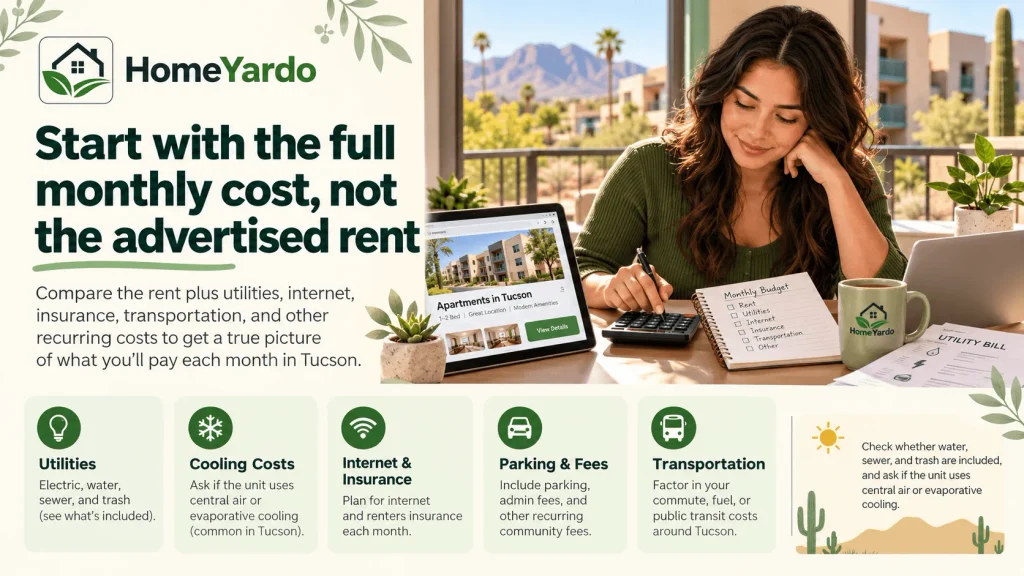
One of the easiest mistakes to make as a first-time renter is deciding what you can afford based on rent alone. An apartment advertised at a comfortable monthly rate can become much less comfortable once electricity, internet, insurance, transportation, and other recurring expenses are added.
Start by building a monthly housing budget that includes the expenses you expect to pay directly. Ask each property manager which utilities are included because the answer can differ from one apartment community to another. Water, sewer, and trash may be bundled into the rent, billed separately by the property, or placed in your name.
Electricity deserves particular attention in Tucson. Cooling is part of daily life for a significant portion of the year, so two apartments with similar rent can have noticeably different overall costs depending on their size, sun exposure, insulation, cooling system, and your own temperature preferences.
When touring a unit, ask what type of cooling it uses. Central air conditioning and evaporative cooling don’t provide exactly the same experience, and you shouldn’t assume that every apartment has the system you prefer. If possible, find out whether the apartment you’re considering faces strong afternoon sun and whether ceiling fans or shaded windows are available.
Your budget should also account for costs that don’t appear on the rental listing. Depending on the property, these might include:
- Application or screening fees.
- A refundable security deposit and other permitted move-in charges.
- Pet rent or pet-related fees if you have an animal.
- Renter’s insurance if the lease requires it.
- Reserved parking, covered parking, or garage charges.
- Internet service.
- Laundry expenses if your unit doesn’t include a washer and dryer.
Transportation belongs in the calculation too. Saving money on rent doesn’t always reduce your total monthly spending if the apartment adds a long drive to work or school. The same principle applies when choosing a studio apartment: compare location, usable space, transportation, and recurring expenses together rather than looking only at the advertised rent.
You don’t need a perfect forecast. You need enough room in your budget that a larger electric bill, an unexpected car repair, or another ordinary expense doesn’t make rent difficult to pay.
Choose a Tucson apartment around your actual routine
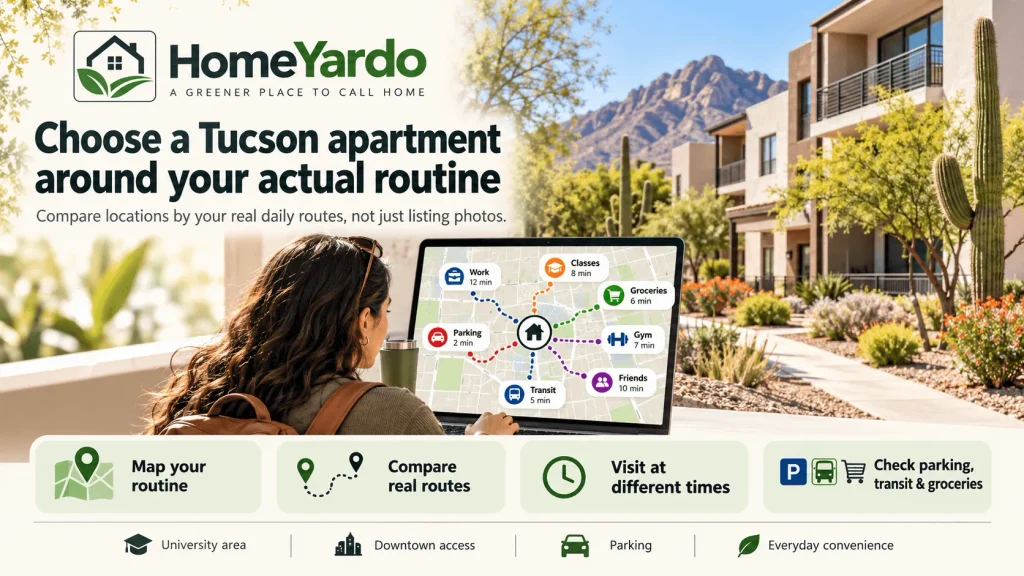
First-time renters sometimes begin their search with a neighborhood they have heard about or an apartment that photographs well. A better approach is to map the places you visit most often and work outward from there.
Think about where you work, attend classes, buy groceries, exercise, meet friends, and handle regular appointments. Then consider how frequently you need to reach each place. Someone commuting to the University of Arizona may judge locations differently from someone working on the east side or traveling throughout the metro area for work.
Tucson offers apartments in very different settings. Central locations can put renters closer to the university, downtown, restaurants, and established neighborhoods. Properties farther east, north, south, or west may offer a different mix of space, parking, traffic patterns, and nearby services. There isn’t one part of the city that makes sense for every renter.
Rather than searching for the “best neighborhood,” narrow the question. Which area creates the least friction for your life?
Create a shortlist and compare properties on the same criteria. You might browse several listing sources, property management websites, and options such as Bright Properties apartments in Tucson to get a clearer sense of what different locations, layouts, and amenities offer before scheduling tours.
When you compare addresses, look beyond distance on a map. Consider the route itself. A property may appear close to work but require a drive that becomes inconvenient during busy periods. Another apartment might be slightly farther away but sit near the roads, transit connections, or services you regularly use.
Visit the area at more than one time of day when possible. A complex that feels quiet on a weekday morning may have a different atmosphere after work or on a weekend evening. Pay attention to traffic, lighting, parking availability, noise, and how comfortable you feel walking between your vehicle and the unit.
Also check the practical things that won’t appear in listing photos. Where is the nearest grocery store? Is there covered parking? How far will you carry groceries from your car? Where do guests park? If you rely on public transportation, how convenient is the nearest stop for the routes you actually need?
These details can sound minor during an apartment search. Once you repeat them several times a week, they become part of whether the apartment feels convenient or frustrating.
Inspect the apartment as if you already lived there
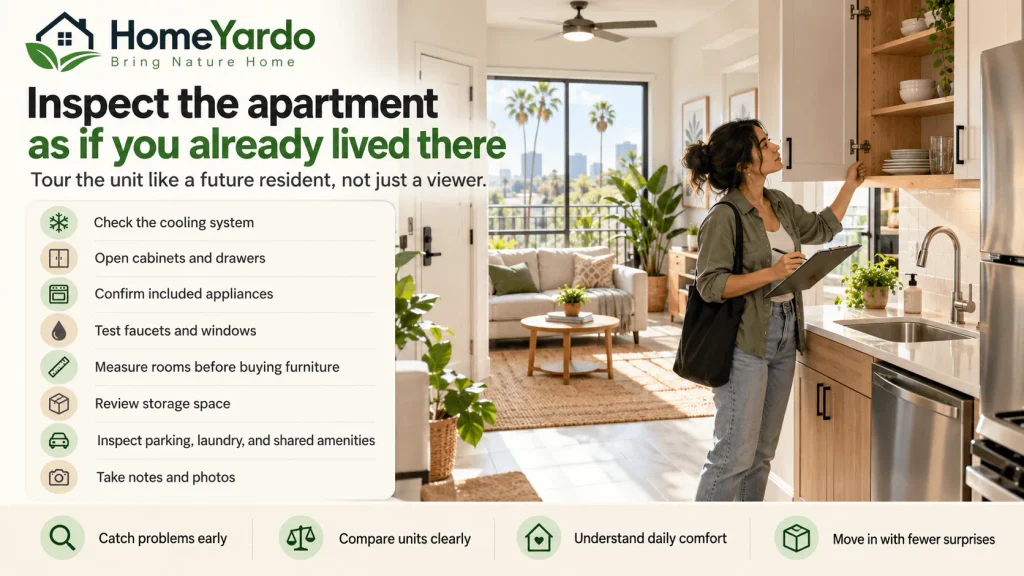
An apartment tour isn’t just a chance to decide whether you like the kitchen countertops. Treat it as a short inspection of the space you’ll depend on every day.
Start with the cooling system. If the apartment is occupied or utilities are active, ask whether you can see it operating. Listen for unusual noises and notice whether air seems to reach the bedrooms as well as the main living area. Ask who handles maintenance if the system stops working and how residents normally submit repair requests.
Then move through the apartment according to a normal day.
Open kitchen cabinets and drawers. Check whether you have enough food storage and counter space for the way you cook. Look for outlets where you would realistically plug in appliances. If a refrigerator, stove, dishwasher, microwave, washer, or dryer comes with the unit, confirm exactly which appliances are included in the lease.
Taking accurate room measurements before choosing furniture for your home can help you avoid buying a bed, sofa, desk, or dining table that overwhelms the available floor space.
Test faucets if permitted, look under sinks for obvious signs of moisture, and check that doors and windows operate properly. Look at window coverings and exterior exposure as well. A large west-facing window can affect afternoon comfort differently from a shaded one. If direct sunlight or privacy is a concern, suitable window treatments can help control glare, manage incoming sunlight, and make bedrooms and living areas more comfortable.
Pay attention to storage. Walk-in closets are easy to notice, but everyday storage matters just as much. Where will you put cleaning supplies, luggage, a vacuum, bicycles, seasonal belongings, and bulk purchases? A slightly smaller apartment with useful storage can sometimes function better than a larger unit with awkward dead space.
Outside the unit, inspect the path you’ll use every day. Find the mailbox, trash area, laundry facilities, assigned parking space, bicycle storage, and any shared amenities that matter to you. If a listing advertises a pool, fitness center, or other feature, confirm that you would realistically use it rather than allowing it to outweigh something more important.
Parking deserves extra attention in Tucson, particularly if you value shade. Ask whether spaces are assigned, whether covered parking costs extra, what the guest-parking policy is, and what happens if someone uses your assigned space.
Before leaving, take photos or notes if the leasing agent permits it. After seeing four or five apartments, clear differences tend to blur together. A simple comparison sheet covering rent, estimated utilities, cooling, parking, laundry, commute, storage, and lease terms.
Once you’ve chosen a property, planning the move early can save trouble during the first week. HomeYardo’s household moving guide includes useful reminders about arranging utilities, organizing paperwork, preparing for moving day, and setting up the essential rooms first.
Read The Lease before treating The Apartment As yours

Getting approved can feel like the finish line for a first-time renter. It isn’t. The lease is where many of the most important details become binding, so give yourself time to read it rather than signing immediately because you’re excited about the apartment.
Check that the rent, lease dates, security deposit, included utilities, parking arrangements, pets, and any promised concessions match what you were told. If something discussed during the tour matters to your decision, don’t rely solely on a verbal assurance. Ask where it appears in the lease or related written documents.
Pay particular attention to rules covering late rent, maintenance requests, guests, subletting, property access, lease renewal, early termination, and the move-out process. You should also understand whether the lease automatically converts to another arrangement at the end of the term or requires specific notice if you plan to leave.
Arizona has a state law governing standard residential rental housing and the responsibilities of landlords and tenants. The Arizona Residential Landlord and Tenant Act is available through the Arizona Department of Housing. Reading the official information is worthwhile if you’re unfamiliar with rental agreements or want to better understand the legal framework around your lease.
This is general renter guidance, not legal advice. If you have a dispute or don’t understand the legal effect of a lease provision, consider getting advice from an appropriate legal professional or tenant-assistance organization before making an important decision.
You should also document the apartment’s condition when you move in. Walk through the unit before unpacking and photograph existing damage such as chipped surfaces, stained carpet, cracked blinds, wall marks, damaged cabinets, or appliance problems. Complete any move-in condition form provided by management and keep your own copy.
Don’t assume a minor issue is too small to record. The purpose isn’t to complain about every scratch. It’s to create an accurate record of what was already present when you received the apartment.
Keep the lease, payment records, inspection documents, maintenance correspondence, and other rental paperwork together. A dedicated folder in cloud storage works well because you can access it even if paper copies get lost during a move.
Finally, plan for the apartment itself rather than trying to furnish everything immediately. Live in the space for a short time before buying large pieces if you can. You may discover that you need shelving more than an extra chair, blackout curtains more than decorative lighting, or a compact dining table instead of the larger one you originally pictured.
Once the essentials are in place, small renter-friendly changes can make your home feel more personal without filling limited apartment space with unnecessary furniture or decorations.
Make your first Tucson apartment a practical choice
A good first apartment in Tucson does not necessarily have the lowest rent, newest appliances, or longest amenities list. It should fit comfortably within your total budget and work with your everyday routine.
Compare the full monthly cost, evaluate the location based on the places you actually visit, inspect the unit carefully, understand the cooling and parking setup, and read the lease before signing. Those steps can make choosing among apartments in Tucson, AZ much easier and reduce unpleasant surprises after move-in.
FAQs
Budget for more than advertised rent. Depending on the property and your lease, total housing costs can include electricity, water, sewer, trash, internet, renter’s insurance, parking, laundry, pet-related charges, transportation, and other recurring expenses. Ask each property which costs are included before comparing apartments.
Check the total monthly cost, cooling system, utilities, commute, parking, laundry, storage, included appliances, internet availability, lease terms, maintenance process, and the physical condition of the unit.
Cooling systems vary by property. Ask whether the unit uses central air conditioning, evaporative cooling, or another system and confirm which utility costs you are responsible for. Window orientation, shade, insulation, and the apartment’s size can also affect indoor comfort.
Consider both. A lower-rent apartment may not save money if it significantly increases transportation costs or makes everyday errands difficult. Compare the total cost and convenience of living at each property rather than rent alone.