5 Reasons to Consider Window Treatments for Your Home

Windows bring natural light, outdoor views, and fresh air into a home, but the way a window performs inside a room also depends on how it is covered. The right window treatments can help manage sunlight, improve privacy, support indoor comfort, and bring the room’s design together.
Blinds, shades, curtains, drapes, and shutters all serve slightly different purposes. Some give you greater control over light, while others provide more privacy, insulation, or decorative appeal.
If you are considering a simple interior upgrade, here are five practical reasons window treatments may be worth adding to your home.
1. Window Treatments Help Control Natural Light
Natural light can make a room feel bright, open, and welcoming. Too much direct sunlight, however, can create glare on televisions, computer screens, and other reflective surfaces. It may also make certain rooms uncomfortable during the brightest parts of the day.
Window treatments give you much greater control over how much sunlight enters the space.
Blinds can be tilted to redirect incoming light. Shades can be raised or lowered depending on the time of day, while curtains and drapes can provide anything from light filtering to near-total room darkening.
The best choice depends on how you use the room.
A home office may benefit from adjustable blinds that reduce screen glare without making the room dark. A bedroom may work better with room-darkening or blackout shades, while a living room may only need light-filtering curtains.
If you are comparing local products and installation options, searching for window treatments near me can help you see which styles, materials, and configurations are available for your particular windows.
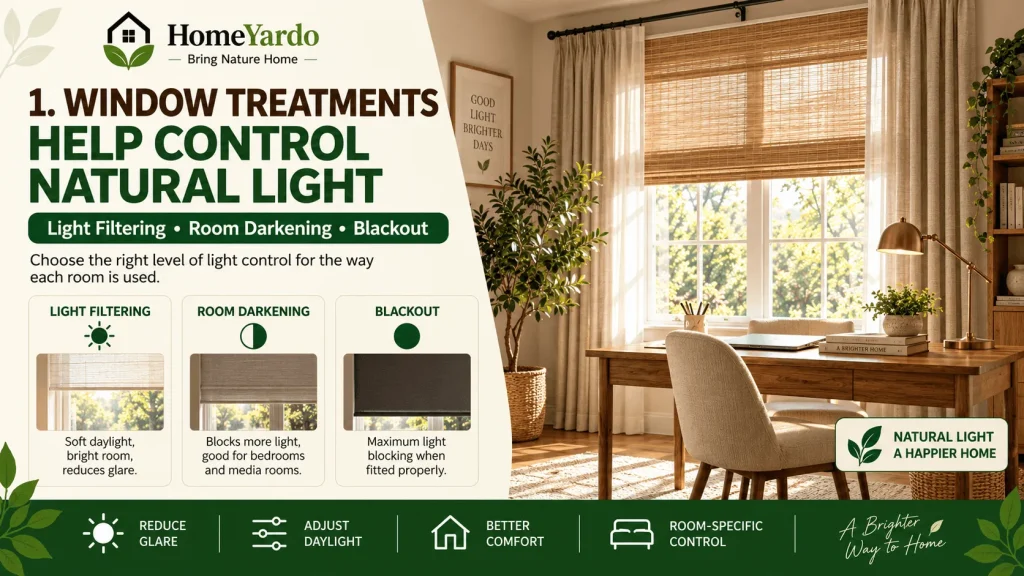
Light Filtering vs Room Darkening vs Blackout
These terms are often used interchangeably, but they do not mean exactly the same thing.
- Light-filtering treatments soften incoming sunlight while keeping the room relatively bright.
- Room-darkening treatments block substantially more light and work well in bedrooms and media rooms.
- Blackout treatments are designed to block as much outside light as possible when properly fitted.
Choosing between them should depend on the purpose of the room rather than appearance alone.
2. Window Treatments Add Privacy
Privacy is another major reason homeowners install window coverings.
Without curtains, shades, blinds, or shutters, people outside may be able to see into the home, particularly after dark when interior lights are turned on.
Window treatments provide a physical and visual barrier between indoor living spaces and the outside.
The amount of privacy varies by treatment.
Sheer curtains soften the view but may provide limited nighttime privacy. Blinds and shutters give you more control because their slats can be adjusted. Roller shades, cellular shades, and lined curtains can provide much greater coverage when fully closed.
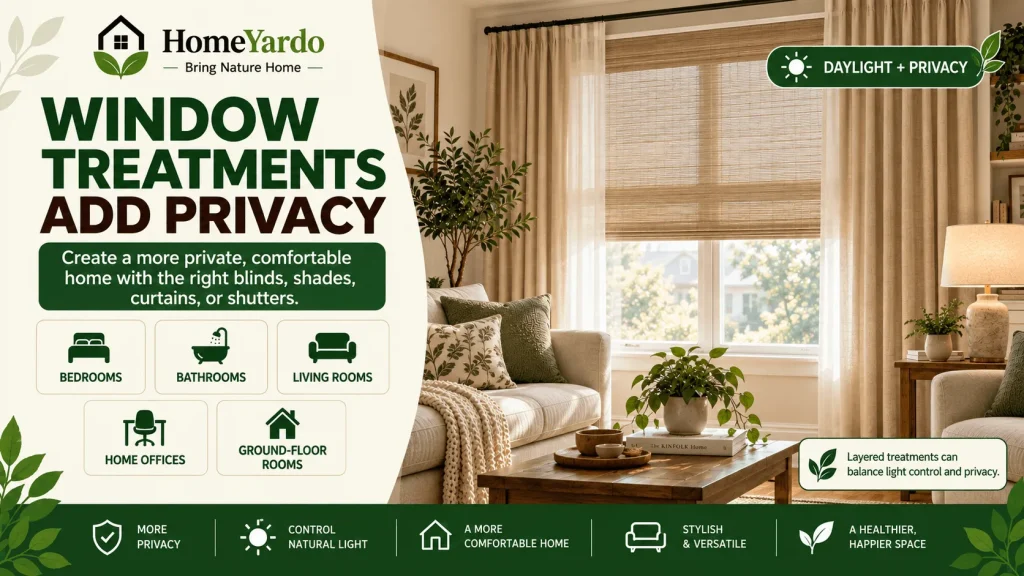
Privacy is especially important in:
- Bedrooms
- Bathrooms
- Street-facing living rooms
- Ground-floor rooms
- Home offices
- Homes positioned close to neighboring properties
For rooms that require both daylight and privacy, layered treatments can work well. A light-filtering shade can be used during the day, with curtains or another covering closed when more privacy is needed.
3. They Can Make Your Home More Comfortable

Windows are one of the places where indoor and outdoor conditions interact most noticeably.
Direct sunlight through a window can make a room warmer during sunny weather. During colder periods, poorly performing windows can also contribute to heat loss and uncomfortable areas near the glass.
Certain window treatments can help reduce these effects when they are selected and installed correctly.
Cellular shades, lined curtains, shutters, and other closely fitted coverings may create an additional barrier at the window. This can help reduce unwanted solar heat during warmer periods or limit heat loss during colder weather.
Window coverings should not be treated as a substitute for properly installed and efficient windows, though. If windows are damaged, drafty, difficult to operate, or reaching the end of their useful life, it may be worth reviewing your window replacement options as well.
Which Window Treatments Work Best for Comfort?
Different rooms may need different solutions.
- Cellular shades are commonly chosen where insulation is a priority because their honeycomb structure traps pockets of air.
- Blackout curtains can help reduce direct sunlight in bedrooms and other rooms where heat and light control are important.
- Shutters provide adjustable light control while creating a more substantial covering across the window.
- Layered treatments, such as shades combined with curtains, offer flexibility because each layer can serve a different purpose.
The effectiveness of any treatment depends on its material, construction, fit, window orientation, climate, and how consistently it is used.
4. Window Treatments Improve the Look of a Room
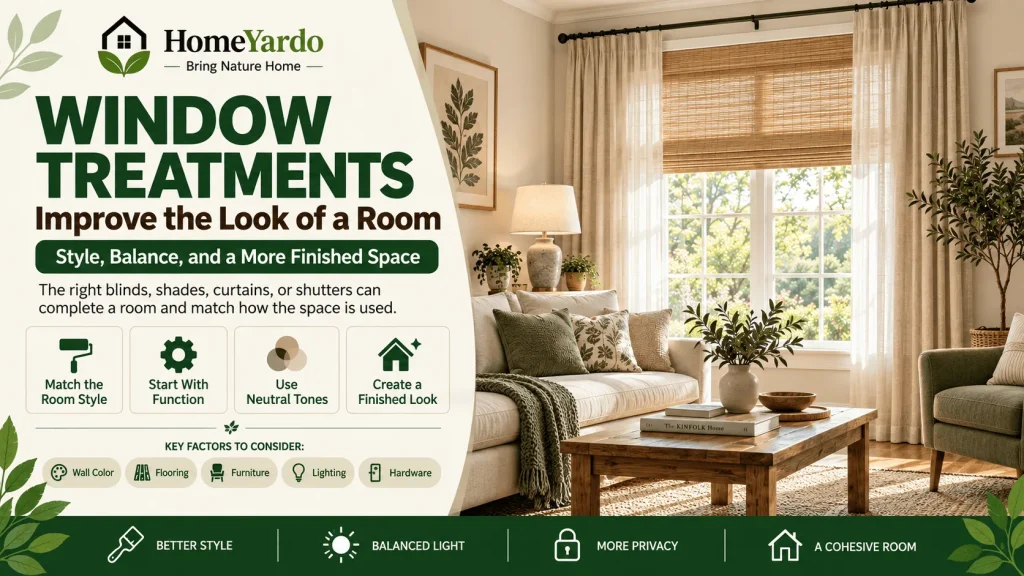
Window coverings also have a strong visual impact.
Windows naturally attract attention because they interrupt the wall surface and bring light into the room. Leaving them untreated can work in some interiors, but in many spaces the right treatment makes the room look more complete.
The style should complement the room rather than compete with it.
For a clean, modern interior, simple roller shades, Roman shades, or streamlined blinds may fit well. Traditional or softer interiors may suit full-length curtains or drapes. Plantation-style shutters can create a more structured architectural appearance.
Consider the surrounding:
- Wall color
- Flooring
- Furniture
- Lighting
- Window size
- Ceiling height
- Existing finishes and hardware
You do not necessarily need every element to match. The goal is to create a combination that feels intentional.
If you are changing several parts of the room at once, it can also help to consider window coverings as part of the wider home improvement planning process rather than choosing them separately after everything else has been finished.
How Should Window Treatments Be Matched to a Room?
Start with function before choosing color or fabric.
Ask what the window treatment actually needs to accomplish. Does the room need privacy? Less glare? Better darkness at night? Softer daylight? A more finished appearance?
Once the functional requirements are clear, choosing the style becomes much easier.
Neutral shades are versatile and tend to work across changing decor styles. Patterned curtains can become a stronger visual feature, while treatments that closely match the wall color can create a quieter appearance.
5. Window Treatments Can Help Protect Interior Furnishings
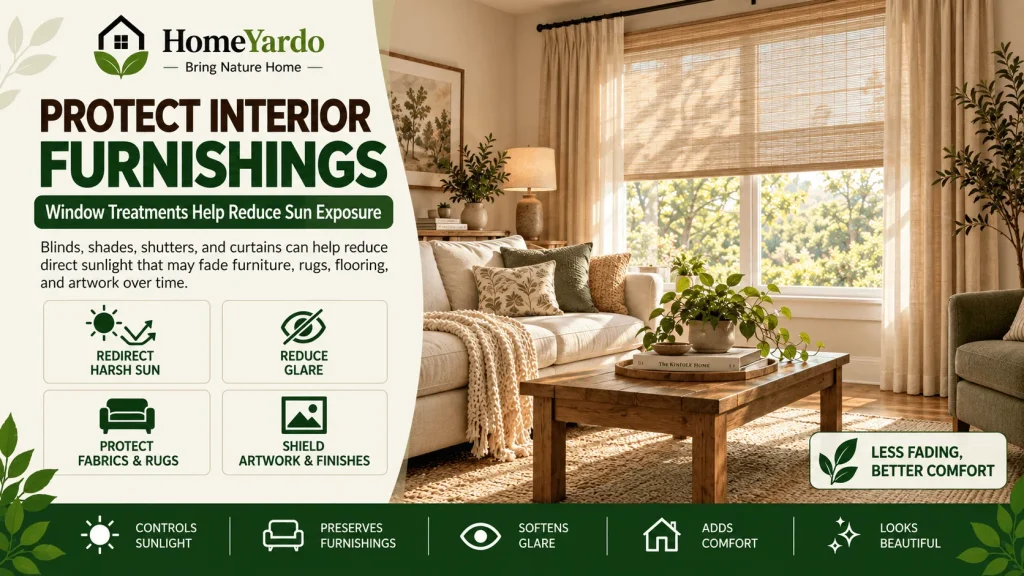
Strong, repeated exposure to sunlight can contribute to fading and discoloration in some interior materials over time.
Furniture fabrics, rugs, flooring, artwork, and decorative finishes positioned close to sunny windows may receive hours of direct light each day.
Window treatments give homeowners another way to manage that exposure.
Blinds or shutters can redirect direct sunlight while still allowing daylight into the room. Solar shades are designed to reduce glare and solar exposure while preserving some outward visibility. Curtains and room-darkening shades can provide greater coverage when direct sunlight is strongest.
This does not mean every room needs heavy coverings throughout the day. Adjustable treatments allow you to respond to how sunlight moves across the room.
What Type of Window Treatment Should You Choose?
There is no single treatment that works best for every window.
The right choice depends on what matters most in the room.
| Window Treatment | Best Suited For | Main Benefit |
|---|---|---|
| Blinds | Offices and living spaces | Adjustable light control |
| Roller shades | Modern interiors | Simple, compact design |
| Cellular shades | Bedrooms and living areas | Light and temperature control |
| Curtains | Most living spaces | Style and flexible coverage |
| Blackout curtains | Bedrooms and media rooms | Strong light reduction |
| Shutters | Living rooms and street-facing windows | Privacy and adjustable light |
| Sheer curtains | Bright living areas | Soft filtered daylight |
Before buying, measure the window carefully and decide whether the treatment will be mounted inside or outside the window frame. Also check how the window opens so that handles, locks, and moving panels remain accessible.
Homes with children or pets should also consider cordless or appropriately secured operating systems where available.
Are Window Treatments Worth It?
For many homeowners, yes.
A well-chosen window treatment can address several needs at once. It can manage sunlight, increase privacy, make a room more comfortable, protect furnishings from direct sun exposure, and improve the finished appearance of an interior.
The value comes from choosing the treatment according to the room rather than simply selecting the most attractive option.
A bedroom and home office may need very different window coverings even when the windows are similar in size.
Final Thoughts
Window treatments do much more than cover glass.
They can help control natural light, create privacy, improve indoor comfort, protect furnishings, and support the overall design of a room. With blinds, shades, curtains, drapes, and shutters available in many materials and styles, homeowners can choose a solution based on how each room is actually used.
Start by deciding what matters most—light control, privacy, comfort, appearance, or a combination of these factors. From there, it becomes much easier to choose a window treatment that suits both the window and the room.
FAQ’s
Window treatments are coverings or decorative features installed around or over windows. Common examples include blinds, shades, shutters, curtains, and drapes.
Window treatments can control sunlight, improve privacy, support indoor comfort, enhance interior design, and reduce direct sunlight reaching furniture and other interior surfaces.
Blackout shades, lined curtains, shutters, and fully closed blinds can provide strong privacy. The best choice depends on the window position, room, and amount of daylight you want to retain.
Bedrooms often benefit from room-darkening or blackout curtains and shades because they provide privacy and reduce unwanted outside light.
Blinds generally use adjustable slats that can be tilted to control light. Shades are typically made from a continuous piece of fabric or material that raises and lowers over the window.
Some treatments can reduce direct solar heat entering through windows. Cellular shades, lined curtains, shutters, and solar shades are common options, although their performance varies according to material, fit, window orientation, and climate.
Not necessarily. Treatments should suit the purpose and design of each room. Using related colors, materials, or finishes can still create consistency throughout the home without making every window identical.
Yes. Curtains and drapes are two of the most common types of window treatments, along with blinds, shades, and shutters.
Start with the main purpose of the room. Consider how much light control and privacy you need, whether temperature control matters, your preferred design style, window dimensions, operating method, and budget before selecting a treatment.
They can reduce the amount of direct sunlight reaching furniture, rugs, flooring, and artwork. Adjustable blinds, shutters, curtains, and solar shades are useful when sunlight regularly falls on interior furnishings.