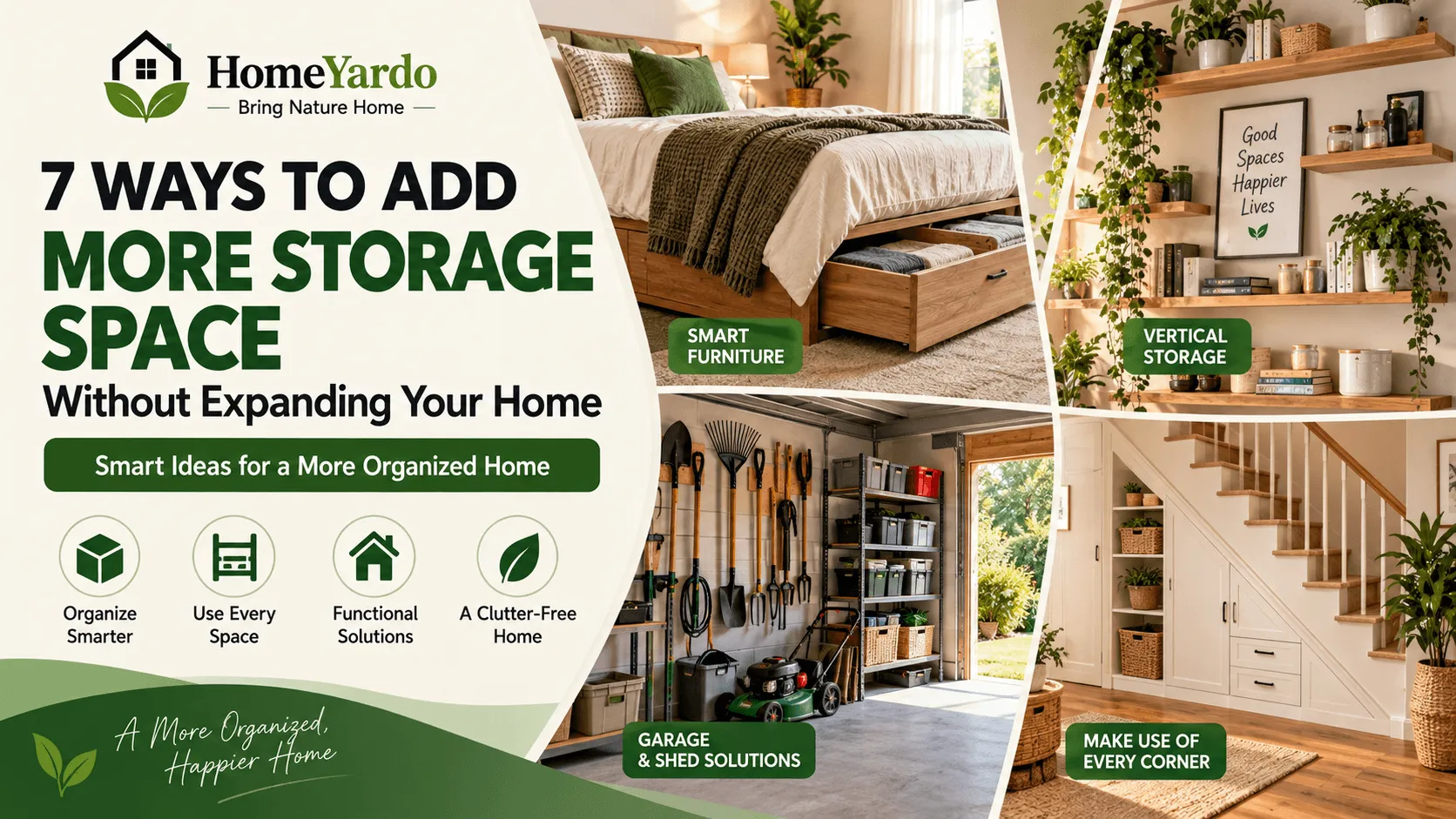
7 Effective Ways to Add More Storage Space Without Expanding Your Home
Running out of storage space can make even a well-designed home feel smaller than it really is. As household needs change, belongings accumulate and rooms begin serving multiple purposes, finding a practical place for everything becomes harder.
The solution does not always have to be a larger house or an expensive extension.
In many homes, the better approach is to improve how existing space is used. Walls, awkward corners, furniture, garages, sheds and seasonal storage areas can all provide extra capacity without increasing the home’s main living footprint.
If you want to add more storage space without expanding your home, start by identifying what needs to stay close at hand, what can move to less accessible areas and which belongings could be stored outside the primary living space.
The following seven approaches can help create a more organized home without sacrificing comfort or usable floor area.
1. Make Better Use of Vertical Space
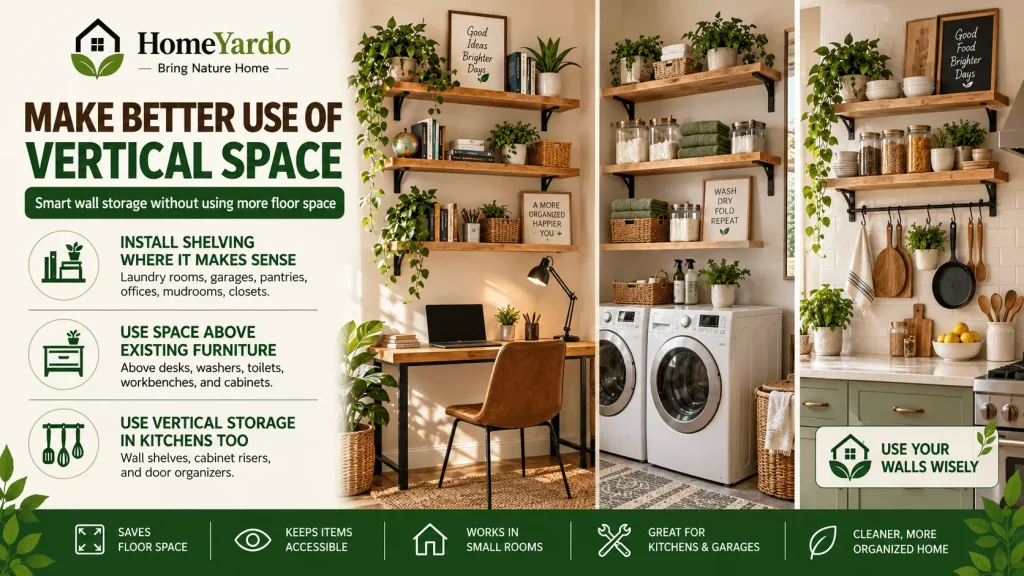
Floor area is limited, but walls often contain unused storage potential.
Using vertical space can increase capacity without narrowing walkways or adding bulky freestanding furniture.
Install Shelving Where It Makes Sense
Wall-mounted shelving works particularly well in:
- Laundry rooms
- Utility rooms
- Garages
- Home offices
- Pantries
- Mudrooms
- Closets
Shelves can keep frequently used items visible and accessible while reducing the need for additional cabinets.
Before installing them, consider what they will hold. Lightweight household items need very different supports from heavy tools, appliances or filled storage bins.
Shelving should be securely attached to suitable wall supports and installed according to the manufacturer’s load rating.
Use Space Above Existing Furniture
The areas above desks, washing machines, toilets, workbenches and storage cabinets are often left empty.
Appropriately sized shelves or wall cabinets can turn this space into useful storage without interfering with everyday movement.
Keep frequently used belongings within comfortable reach. Reserve higher shelves for lighter items that are needed only occasionally.
Use Vertical Storage in Kitchens Too
The same principle works particularly well in kitchens, where counter and cabinet space can disappear quickly.
Door-mounted organizers, additional cabinet shelving and carefully positioned wall storage can help make existing cabinetry work harder.
Homeowners dealing specifically with crowded kitchens can also review these kitchen storage solutions for room-specific ideas.
2. Choose Furniture That Provides Hidden Storage
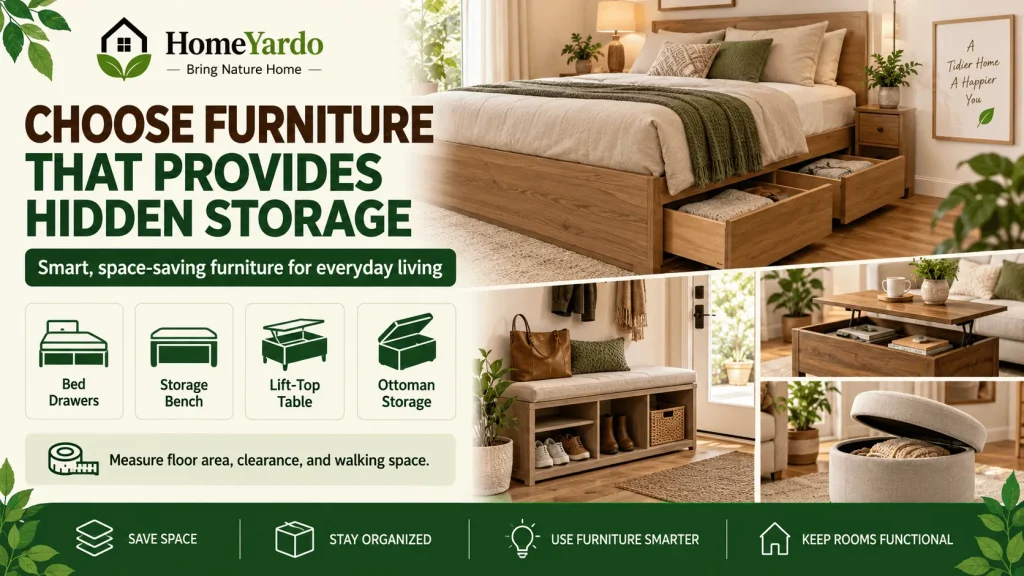
Not every storage improvement requires new cabinetry or permanent construction.
Furniture that performs more than one function can provide useful capacity while preserving the space needed for daily activities.
Look for Storage in Everyday Furniture
Useful options include:
- Beds with built-in drawers
- Storage benches
- Lift-top coffee tables
- Ottomans with internal compartments
- Window seats with drawers
- Entryway seating with shoe storage
A storage bench near the entrance can hold shoes, bags and seasonal accessories.
A bed with built-in drawers can accommodate spare bedding or clothing without requiring another dresser or cabinet.
The right option depends on the room, available clearance and the items that need a permanent home.
Avoid Adding Furniture Just for Storage
More furniture does not automatically mean better storage.
A new cabinet may technically provide extra capacity while making a room harder to use.
Before buying storage furniture, measure:
- Available floor area
- Door swing
- Drawer clearance
- Walking routes
- Nearby furniture
- Access to electrical outlets or vents
The goal is to improve how the room functions rather than filling every empty area with another storage unit.
3. Reclaim Underused Areas of Your Home
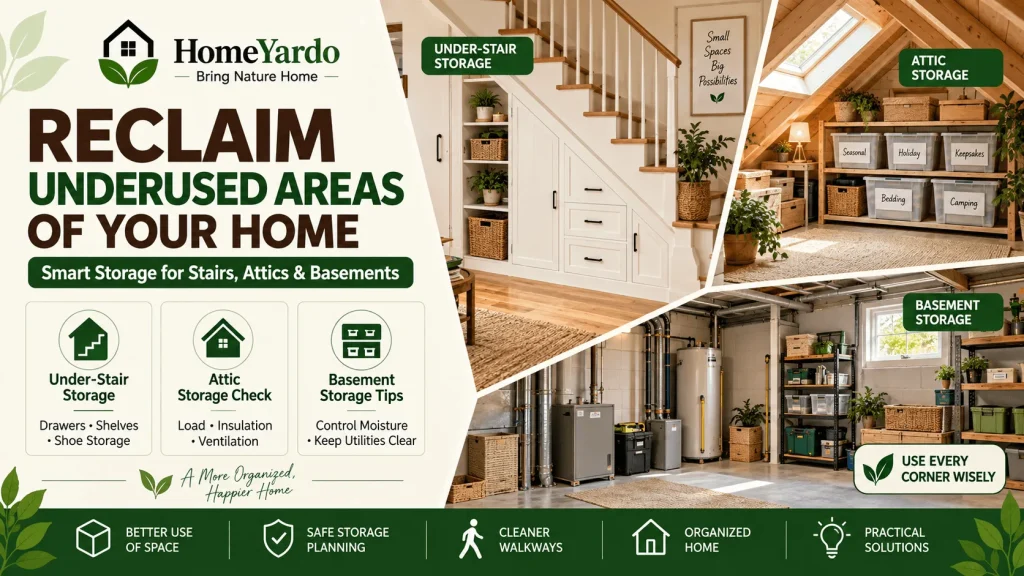
Many homes contain spaces that are too awkward for conventional furniture but still have storage potential.
Under-stair areas, alcoves, hallway recesses, corners and unused wall sections can often be converted into practical storage zones.
Turn Awkward Spaces Into Useful Storage
The area beneath a staircase may accommodate:
- Built-in drawers
- Shallow cupboards
- Open shelving
- Shoe storage
- Cleaning-supply storage
A hallway recess may work well for a narrow cabinet or shelving system without reducing useful walking space.
Custom-built storage can make sense where dimensions are irregular, but modular shelving or adjustable systems may be sufficient in simpler spaces.
Can an Attic Be Used for Storage?
Yes, but an attic should not automatically be treated as spare warehouse space.
Before storing heavy belongings there, consider:
- Structural load capacity
- Access
- Insulation
- Ventilation
- Temperature extremes
- Moisture
- Fire safety
- Nearby wiring or equipment
If the floor was not designed for storage loads, placing heavy boxes across it may create structural concerns.
Storage platforms should also avoid compressing insulation or blocking necessary ventilation. The U.S. Department of Energy’s guidance on attic insulation is a useful starting point when assessing how storage changes could interact with insulation.
Is a Basement Suitable for Storage?
Basements can provide substantial capacity, but moisture should be considered before moving belongings downstairs.
Keep moisture-sensitive items off bare floors and avoid placing important belongings directly against potentially damp walls.
Do not block access to:
- Electrical panels
- Water shutoffs
- Furnaces
- Sump pumps
- HVAC equipment
- Drainage systems
Homes with recurring moisture issues should address the cause before turning the basement into a primary storage area. HomeYardo’s guide to basement water and flooding provides useful background on basement water management.
4. Add Residential Garages for Larger Storage Needs
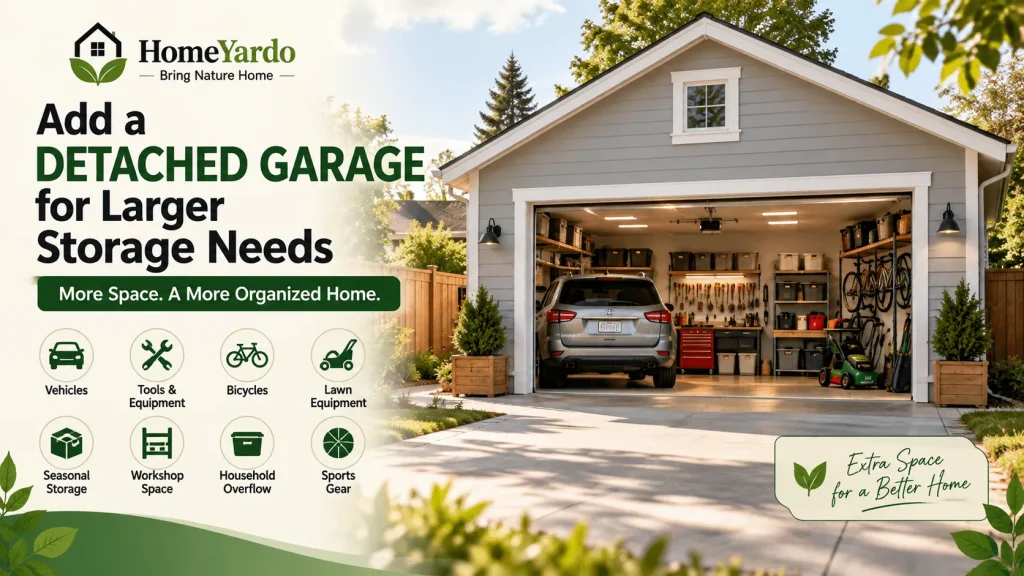
Interior organization can solve many storage problems, but it has limits. Large equipment, recreational vehicles, workshop tools, and bulky seasonal belongings may require more space than the house can reasonably provide.
For homeowners with sufficient outdoor space, residential garages can provide dedicated storage without extending the main living area. A detached garage can keep vehicles, lawn equipment, tools, seasonal items, and workshop supplies organized while reducing pressure on indoor rooms.
Choose a Residential Garage That Fits Your Property and Needs
The right garage size depends on what needs to be stored and how the space will be used. A garage designed only around vehicle dimensions may still feel cramped once shelving, tools, bicycles, or equipment are added.
Allow enough room for opening vehicle doors, accessing shelves, moving equipment safely, and accommodating future storage needs.
Plan Residential Garage Storage for Long-Term Use
A well-planned residential garage storage layout should account for wall shelving, overhead storage, lighting, ventilation, security, and clear walking paths.
If the garage will also serve as a workshop, leave enough open space around tools and work areas to move safely.
Local zoning rules, property setbacks, and permit requirements should always be checked before construction begins.
5. Use a Garden Shed for Outdoor Equipment
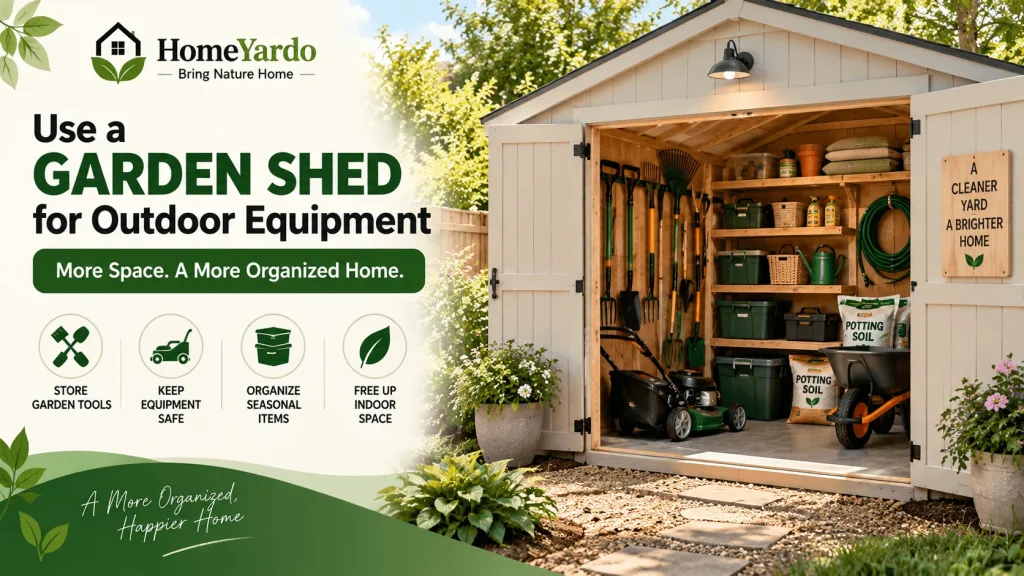
Not every household needs a full-size garage.
If most of the storage problem comes from gardening tools, lawn equipment and outdoor supplies, a shed may provide enough additional space.
Moving these items outside the house or existing garage can free indoor capacity while keeping equipment close to where it is used.
Organize the Shed Around Its Contents
Before choosing a shed, list what actually needs to go inside.
Possible items include:
- Lawn mowers
- Garden tools
- Hoses
- Planters
- Wheelbarrows
- Outdoor cushions
- Hand tools
- Bags of soil or amendments
- Seasonal outdoor equipment
Long-handled tools can often be stored vertically on wall-mounted racks.
Smaller supplies work well on shelves or in clearly labeled containers.
Large equipment should remain accessible without requiring several other belongings to be moved first.
Leave a Clear Access Route
A shed that is completely filled may technically hold more belongings but becomes frustrating to use.
Allow enough room to:
- Open the door fully.
- Enter safely.
- Reach commonly used equipment.
- Remove large items.
- Return equipment without rearranging the entire shed.
Protect Stored Items From Weather and Moisture
Outdoor storage needs suitable drainage, ventilation and weather protection.
Inspect the roof, doors and seals periodically.
Keep moisture-sensitive belongings away from damp surfaces, and avoid packing items so tightly that air cannot circulate.
Chemicals, fuels and similar products require extra care. The EPA’s household hazardous waste guidance explains why household chemicals should be stored, handled and disposed of according to their individual safety requirements.
6. Create a Dedicated Space for Seasonal Belongings
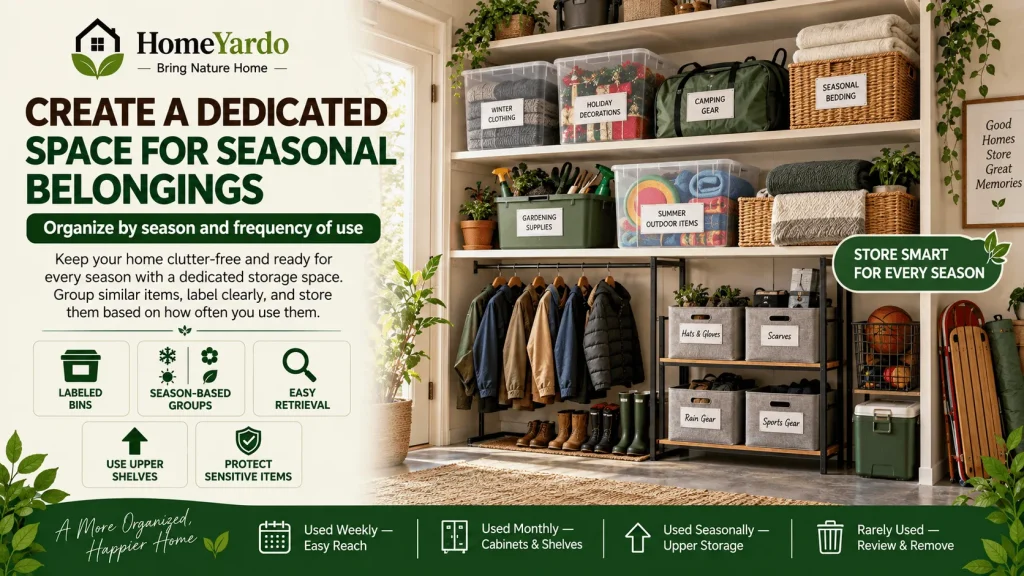
Seasonal belongings cause storage problems because they occupy space all year while being used only occasionally.
Common examples include:
- Holiday decorations
- Winter clothing
- Outdoor cushions
- Camping equipment
- Sports gear
- Seasonal bedding
- Fans or portable heaters
- Gardening supplies
Giving these items their own system can free everyday storage for things that are actually used regularly.
Organize by Season and Frequency of Use
Group belongings according to when they are needed.
Instead of mixing unrelated items across multiple boxes, create categories such as:
- Winter clothing
- Holiday decorations
- Summer outdoor items
- Camping equipment
- Gardening supplies
Clearly labeled containers make complete groups easier to retrieve.
HomeYardo’s guide on how to prepare your home for seasonal changes also covers ways to organize seasonal equipment and household belongings.
Use a Simple Accessibility Rule
A useful storage hierarchy is:
- Used weekly: Keep within easy reach.
- Used monthly: Store in cabinets, closets or standard shelving.
- Used seasonally: Move to upper shelves, attics, garages or dedicated storage areas where conditions are suitable.
- Rarely used: Decide whether the item still needs to be kept.
This approach helps prevent prime storage areas from being occupied by belongings that are used only once or twice a year.
Keep Storage Conditions in Mind
Not every item belongs in an attic, basement or outdoor structure.
Electronics, photographs, documents, certain fabrics and temperature-sensitive materials may require more stable indoor conditions.
In areas exposed to possible flooding, important belongings should be stored above likely water levels.
Ready.gov’s flood preparedness guidance also recommends protecting important records and maintaining secure copies of essential documents.
7. Make Storage Part of Your Long-Term Home Improvement Plan
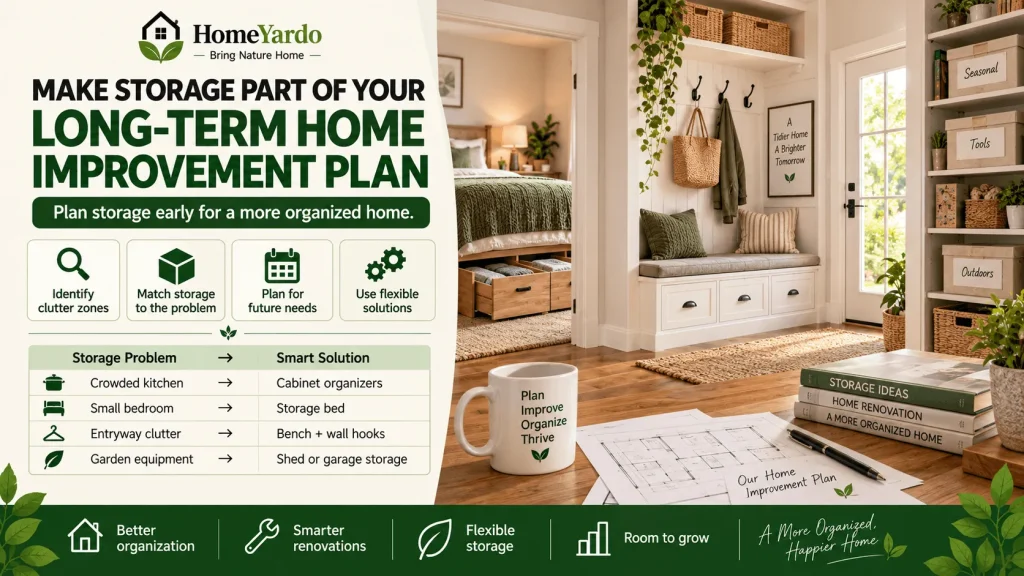
Storage is often treated as a problem to solve after renovation work has already been completed.
By then, useful opportunities may have been missed.
Planning storage alongside other improvements makes it easier to incorporate capacity without filling rooms with additional furniture later.
Identify Where the Storage Problem Actually Starts
Before making changes, identify the areas where clutter repeatedly develops.
Ask questions such as:
- Is the entryway crowded with shoes and bags?
- Are kitchen counters holding items that should be stored elsewhere?
- Is the garage full of seasonal belongings?
- Are bedroom closets being used for household equipment?
- Are garden tools taking over parking space?
- Are rarely used items occupying the easiest-to-reach cabinets?
The answer helps determine whether the home needs better organization, new built-in storage or additional storage outside the living area.
Match the Solution to the Storage Problem
Different problems require different solutions.
| Storage Problem | Possible Solution |
|---|---|
| Crowded kitchen | Cabinet organizers and vertical shelving |
| Small bedroom | Storage bed or built-in drawers |
| Entryway clutter | Bench storage and wall hooks |
| Seasonal belongings | Labeled bins and dedicated storage zone |
| Garden equipment | Shed |
| Workshop tools | Garage wall storage |
| Large household overflow | Garage, shed or suitable exterior storage |
| Awkward unused space | Built-in or modular shelving |
This prevents homeowners from investing in a large storage project when a smaller change could solve the real problem.
Think About Future Needs
Household storage changes over time.
A space that currently contains a few boxes may eventually need to accommodate:
- Children’s equipment
- New hobbies
- Sports gear
- Tools
- Additional vehicles
- Home-office supplies
- Mobility equipment
- Seasonal furniture
Adjustable shelving and modular cabinets are often easier to adapt than highly specialized storage installations.
Homeowners already considering broader renovation work can incorporate these decisions into a home remodeling guide rather than addressing storage after the rest of the project is finished.
How Do You Decide Which Storage Solution Is Best?
Start with the belongings rather than the storage product.
Make an inventory of what needs a home, then separate items into four groups:
- Frequently used
- Occasionally used
- Seasonal
- Rarely used
Next, estimate the physical space required.
Small household items may only need shelves or drawer organizers. Garden tools may justify a shed. Vehicles, machinery or workshop equipment may require a garage.
Also consider the conditions each item requires. Something that fits inside a shed may still be unsuitable there if it is sensitive to heat, cold or moisture.
Storage Safety Mistakes to Avoid
Creating more capacity should not introduce new hazards.
Avoid:
- Overloading shelves
- Storing very heavy objects overhead
- Blocking electrical panels or utility equipment
- Restricting exits
- Covering ventilation openings
- Compressing attic insulation
- Leaving fuels or chemicals near ignition sources
- Storing moisture-sensitive belongings directly on basement floors
- Creating narrow or unstable access routes
- Installing shelves without suitable structural support
Structural, electrical or major building alterations should be evaluated by appropriately qualified professionals when required.
Create More Storage Without Making Your Home Bigger
Creating more storage does not necessarily mean increasing the size of the house.
In many cases, the better solution is to decide which belongings need immediate access, which can move to secondary storage and which no longer need to occupy space at all.
Vertical shelving, multifunctional furniture and reclaimed corners can increase capacity inside the home. Better seasonal organization can make closets and garages easier to use. For larger equipment, a garden shed or detached garage can provide dedicated space without changing the main building’s footprint.
The most effective system is one that matches the property, belongings, budget and household routine.
Plan around how the space will actually be used, leave room for future needs and choose storage that makes everyday living easier rather than simply creating more places to accumulate belongings.
FAQ’s
How can I add more storage space without adding another room?
Use existing walls, unused corners, multifunctional furniture, under-stair areas and better seasonal organization first. Larger belongings can be moved to a garage or shed where suitable.
What is the cheapest way to create more storage at home?
Decluttering, reorganizing existing cabinets and adding simple wall shelving are usually among the lowest-cost options. Using containers and labels can also improve existing storage without construction.
How can I create storage in a small house?
Prioritize vertical storage, furniture with built-in compartments and areas that do not consume useful floor space. Keep frequently used items accessible and move seasonal belongings to less prominent locations.
Is built-in storage better than freestanding furniture?
Built-ins can make better use of awkward spaces and create a cleaner layout. Freestanding and modular furniture is usually easier to move, replace or reconfigure. The better option depends on budget and how permanent the storage needs are.
Is attic storage safe?
It can be, but only when the structure, access, insulation, ventilation and environmental conditions are suitable. Heavy loads should not be added without knowing whether the attic floor can safely support them.
Can I use my basement for storage?
Yes, provided moisture, flooding and utility access are properly considered. Keep sensitive belongings off the floor and avoid blocking electrical, plumbing or mechanical equipment.
Is a shed enough for extra home storage?
A shed can work well for garden tools, lawn equipment and durable outdoor belongings. It may not be appropriate for electronics, important documents or items that require controlled temperature and humidity.
Is a detached garage worth it for storage?
It can provide substantial capacity when the household needs room for vehicles, equipment, tools or a workshop. Because it is a larger project, cost, permits, access, site layout and long-term needs should be considered first.
How should seasonal items be stored?
Group them by season, use labeled containers and place less frequently used belongings farther from primary living areas. Keep temperature- or moisture-sensitive items in appropriate indoor conditions.
How do I prevent new storage space from becoming cluttered?
Assign each area a clear purpose and avoid filling every available shelf immediately. Periodically remove duplicates, damaged items and belongings that are no longer used.