Detached Garage vs. Attached Garage: Which Is Better?
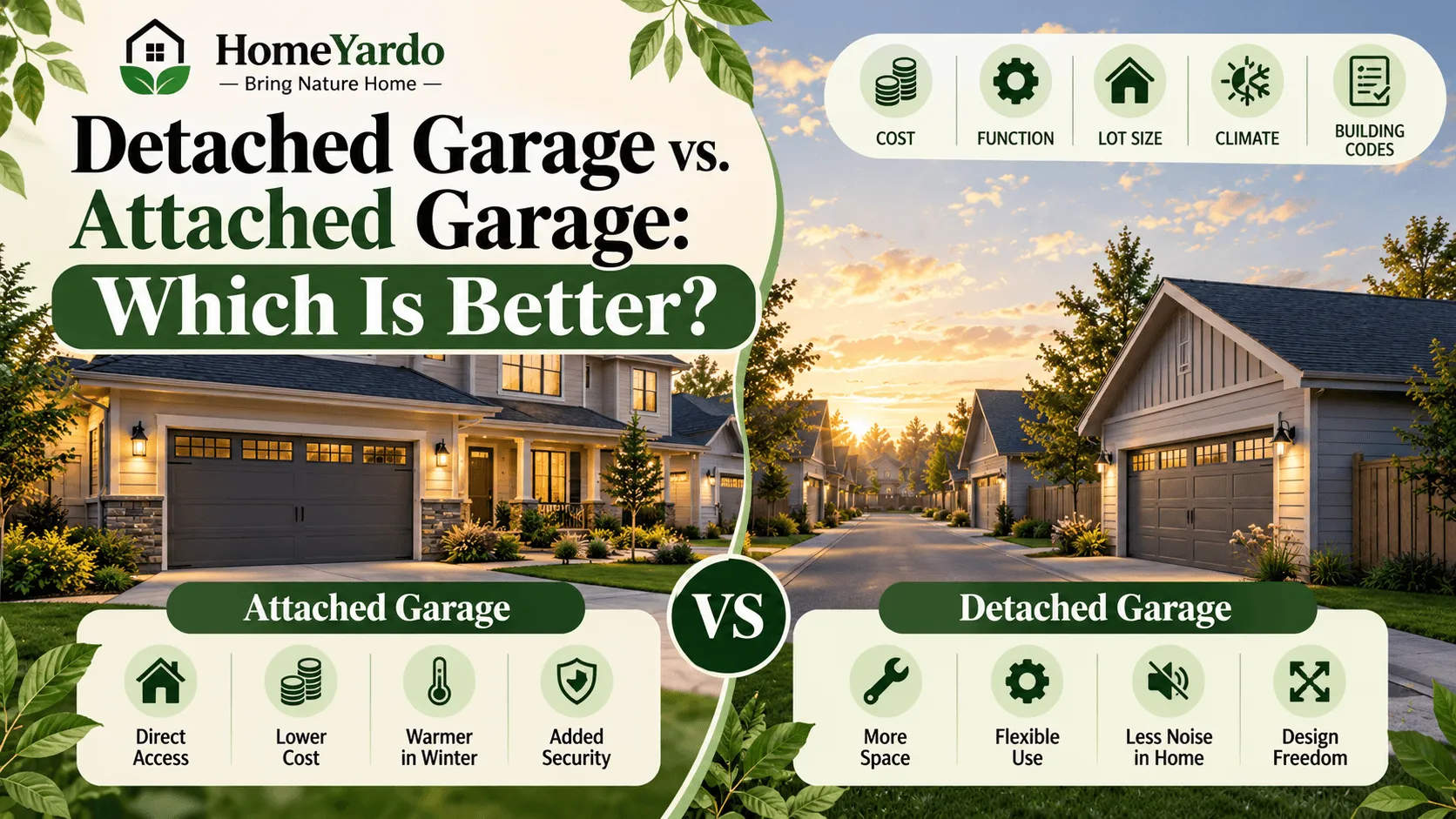
An attached garage can be the best pick for people who want easy access, lower costs to build, and do not want to walk in bad weather. A detached garage is good if you want a quiet place to work, keep the noise and smells out of your home, get more space away from the house, or want a more open design. The best garage for you depends on your lot size, how much money you want to spend, the weather where you stay, and what you will use the space for.
Both choices come with real pros and cons. The garage that works well for a busy family living in a cold area might not be right for someone who likes hobbies and has a big rural yard.
This guide puts the two next to each other. You can look at both and feel sure when you make your choice.
What Sets Attached and Detached Garages Apart
The main difference is easy to see. One is connected to your home and shares a wall, while the other stands alone. This small thing changes a lot. It can change the cost, the rules for safety, how comfortable it is, and the way you use the space.
Attached Garage Basics
- The garage often has one shared wall with the house. It might also share a part of the roof.
- It is common for the garage to lead right into the kitchen, mudroom, or laundry room. There will be an inside door between the two.
- You will usually find this kind of garage in most new homes and many places in the suburbs.
Detached Garage Basics
- This is made as its own building. Sometimes, it is joined to the house by a covered path. This path is named a breezeway.
- You will see this often on older homes, farms, and in places with larger lots.
- You can put it in the backyard, to the side of the house, or close to an alley.
Attached Garage Pros and Cons
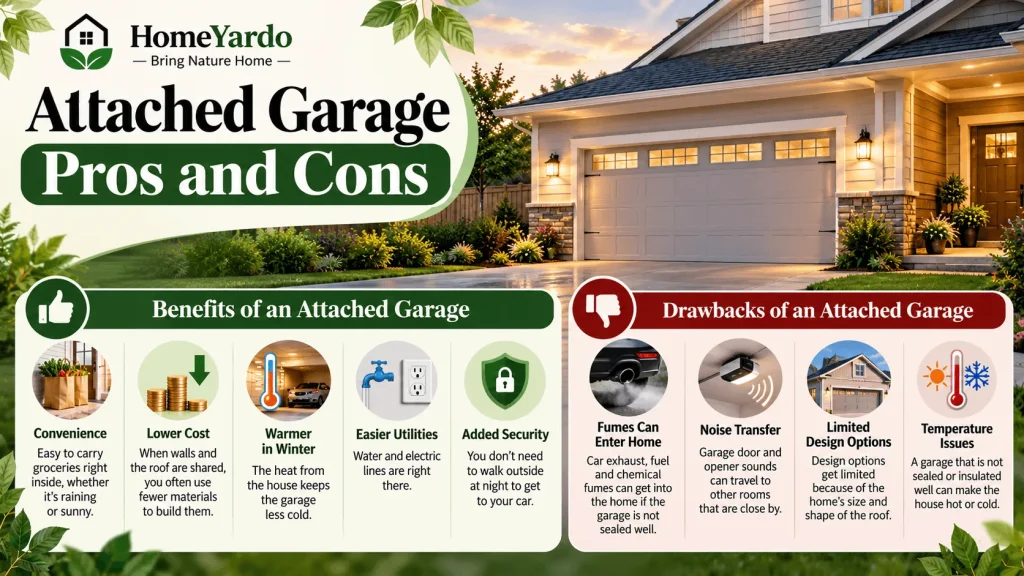
Attached garages are very common in homes in the United States, and for good reason. Still, there can be some issues that come with having your garage connected right next to your living space. It is a good idea to think about these before you decide.
Benefits of an Attached Garage
- Convenience: it is easy to carry groceries right inside, whether it is raining or sunny.
- Lower cost: when walls and the roof are shared, you often use fewer things to build them.
- Warmer in winter: the heat that comes from the house keeps the garage less cold.
- Easier utilities: water and electric lines are right there.
- Added security: you do not need to walk outside at night to get to your car.
Drawbacks of an Attached Garage
- Car exhaust, fuel, and chemical fumes can get into the home if the garage is not sealed well.
- Garage door and opener sounds can travel to other rooms that are close by.
- Design options get limited because of the home’s size and shape of the roof.
- A garage that is not sealed or insulated well can make the house hot or cold.
Detached Garage Pros and Cons
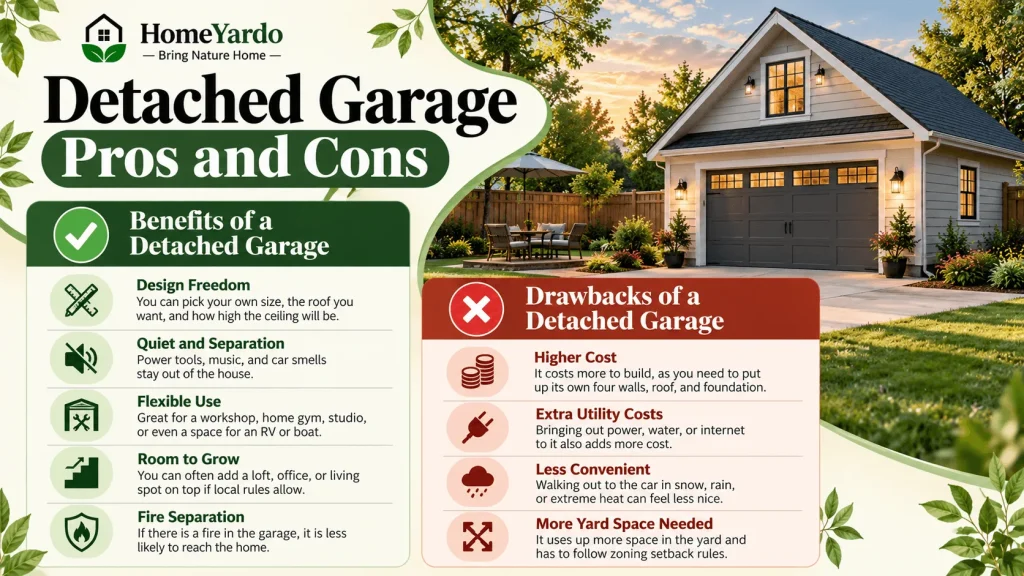
A detached garage lets you choose the size and look that fit your needs. You can use it in many ways. The main downsides are that it often costs more and you have to walk outside each time you park your car.
Benefits of a Detached Garage
- Design freedom: You can pick your own size, the roof you want, and how high the ceiling will be.
- Quiet and separation: Power tools, music, and car smells stay out of the house.
- Flexible use: This is great for people who want a workshop, a home gym, a studio, or even a space for an RV or boat. If you plan to use the space for tools or projects, our garage workshop setup guide explains how to plan work zones, power, lighting, ventilation, and storage around the way you actually work.
- Room to grow: Owners often add a loft, office, or living spot on top if local rules say it is okay.
- Fire separation: If there is a fire in the garage, it is less likely to reach the home.
Drawbacks of a Detached Garage
- It costs more to build, as you need to put up its own four walls, roof, and foundation.
- Bringing out power, water, or internet to it also adds more cost.
- Walking out to the car when there is snow, rain, or it is very hot can feel less nice.
- It uses up more space in the yard and has to follow the zoning setback rules.
Attached vs. Detached Garage: Side-by-Side Comparison
Here’s how the two styles compare on the things that most homeowners care about. Use this as a quick guide when you think about your needs.
Cost, Convenience, and Lot Size
- Building cost: Attached garages often have a lower cost. A detached garage can be more expensive.
- Convenience: With an attached garage, you get direct entry into the home. A detached garage means you walk outside to get in or out.
- Lot size: An attached garage can fit on smaller lots. A detached garage needs more space on your lot.
Comfort, Noise, and Everyday Use
- Winter comfort: Attached garages let heat from the house reach them. A detached garage is colder unless you add heat or insulation.
- Noise and fumes: In an attached garage, noise or smell can get into the house. A detached garage keeps these away from your home.
- Workshop or hobby use: An attached garage can be good, but a detached garage is better for this.
Design and Future Flexibility
- Design freedom: When a garage is attached to your house, the shape of your house can limit the design. A detached garage gives you many more options.
- Space above for living: Sometimes, you can build a room above an attached garage. A detached garage often lets you add a living space up top too, if the zoning rules say it’s okay.
- If extra storage is one of your main reasons for building, these residential garage storage ideas can help you plan enough room for vehicles, shelving, tools, equipment, and future needs.
How Much Each Garage Type Usually Costs
Cost is often the main thing people look at. The numbers below show about how much you will pay in the United States for a normal two-car garage. The real price can change. It depends on where you live, the materials you use, and how nice you want it to look in the end.
Average Cost of an Attached Garage
- Two-car attached garage, built new or as an addition: about $25,000 to $55,000
- Converting a carport into an attached garage: about $10,000 to $25,000
Average Cost of a Detached Garage
- Two-car detached garage, custom-built: The cost is usually from $30,000 to $65,000.
- Prefab or kit detached garage, installed: The price is often from $15,000 to $35,000.
- Running electrical power to a detached garage: This will cost about $1,000 to $4,000.
- Adding a finished room or apartment above: Often, it will be $50,000 or even more, and this is added to the price of the garage.
Permits, site preparation, and the garage door are often listed as different costs. So, you should ask builders what their quote will cover. If the garage is part of a larger addition or renovation, our residential remodeling guide explains how budgets, contractors, permits, utilities, and project scope fit together
Safety, Building Codes, and Zoning Rules
Both garage types come with rules. These rules help keep your family and your neighbors safe. If you know these rules early, you can avoid paying extra to change plans later.
Attached Garage Safety Requirements
- Most codes in the US say you must use fire-resistant drywall on the wall and ceiling that connects the garage with the house.
- The door between the garage and the home needs to follow fire safety rules. It should be solid wood, solid steel, or a fire-rated door.
- A carbon monoxide detector just inside the home, close to the garage door, gives extra safety.
- Do not warm up a car when the garage door is closed.
Detached Garage Zoning Rules
- Setback rules say how close the garage can be to the property line or to other buildings.
- There are rules about height limits, how much of the lot you can use, and HOA guidelines. These can affect the size and style of your garage.
- If you want to add a bathroom or a living space above the garage, you will usually need extra permits and more inspections.
Which Garage Fits Your Lifestyle?
The best garage is the one that fits the way you live each day. These short profiles can help you find where you belong.
An Attached Garage Makes Sense If You…
- Live in a place where winters get cold, and there is a lot of snow or rain.
- Have young kids, older people, or anyone with trouble moving around in your home.
- Own a small lot or a narrow spot in the city.
- Want to build for less money and set everything up in the easiest way.
A Detached Garage Makes Sense If You…
- Use the space for loud hobbies, like woodworking or fixing cars
- Have a big lot with enough room for another building
- Want to have more options later, like an office, studio, or a rental place upstairs
- Want to keep smells, noise, and mess far from your house
Picking the Right Garage Door for Either Style
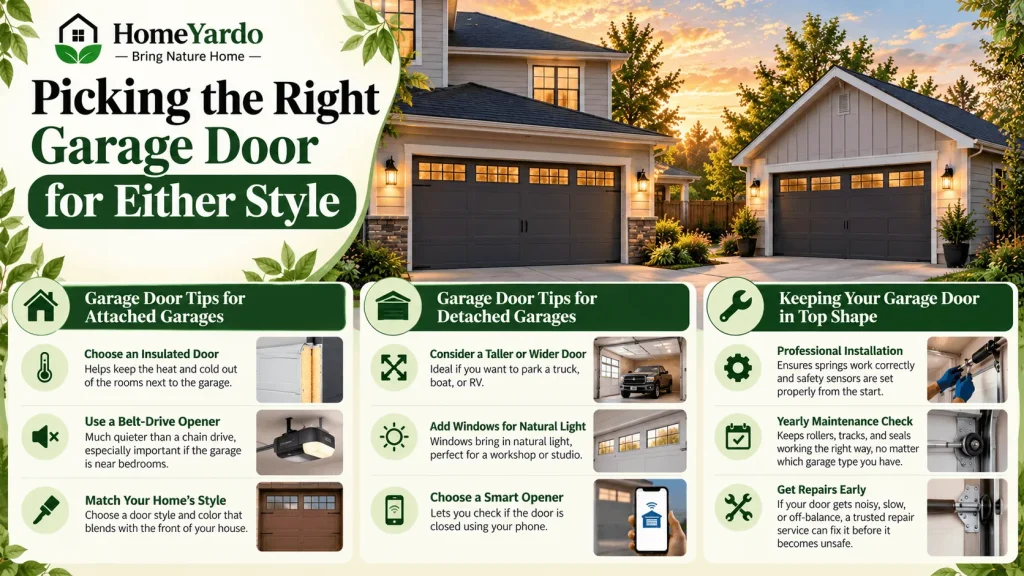
No matter which garage you pick, the door is the biggest part that moves. It is also one of the first things people see when they look at your home from the street. The right door can help make your home feel better, keep things quieter, keep you safe, and improve your curb appeal.
Garage Door Tips for Attached Garages
- Choose an insulated door. It will help keep the heat and cold out of the rooms that are next to it.
- A belt-drive opener will be much quieter than one with a chain drive. This can matter if the garage is near bedrooms.
- Make sure the door’s style and color match the home. This way, it will blend in with the front of the house.
Garage Door Tips for Detached Garages
- Think about getting a taller or wider door if you want to keep a truck, boat, or RV in the garage.
- Add some windows to let in natural light if you use the space as a workshop or studio.
- Choose a smart opener so you can check if the door is shut using your phone.
Keeping Your Garage Door in Top Shape
- A professional garage door installation will make sure the springs work right and that safety sensors are set the way they should be from the beginning.
- A yearly garage door maintenance check helps the rollers, tracks, and seals keep working the right way, no matter which kind of garage you have.
- If your door gets noisy, slow, or off-balance, a trusted garage door repair service can fix it before it becomes unsafe.
The Bottom Line on Choosing Your Garage
There is not just one clear winner when you look at the attached garage versus detached garage debate. An attached garage is better for the ease it gives and often costs less. A detached garage is better if you want more flexibility, a quieter space, and some distance from the house.
Before You Decide
- Check the local zoning and HOA rules first.
- Get quotes for both options if your lot lets you do it.
- Think about how you will use this space in five years or even ten years from now.
When you need to pick a door for your new garage or want to replace the one you have now, ADS Garage Doors and Gates Repair is there to help. You can find a safe and trusted option that matches your home’s look. Get in touch with their team to talk about your plans.
FAQ’s
A detached garage can be better for workshops, noisy hobbies, extensive storage, design flexibility, and physical separation from the house. An attached garage may be better when direct access, weather protection, efficient lot use, and everyday convenience are higher priorities.
It can be, particularly when structural components can be integrated with the house and utilities are nearby. Actual cost depends on garage size, foundation, site conditions, roof design, structural work, finishes, utilities, permits, and local labor rates.
A well-designed detached garage may make a property more useful and attractive to certain buyers, especially when parking, storage, or workshop space is limited. The effect on property value varies by market, construction quality, project cost, and buyer demand.
Common disadvantages include walking outside to reach the house, more independent structural construction, longer utility runs, use of additional yard space, and zoning or setback restrictions.