How To Design A Backyard For High-Energy Dogs
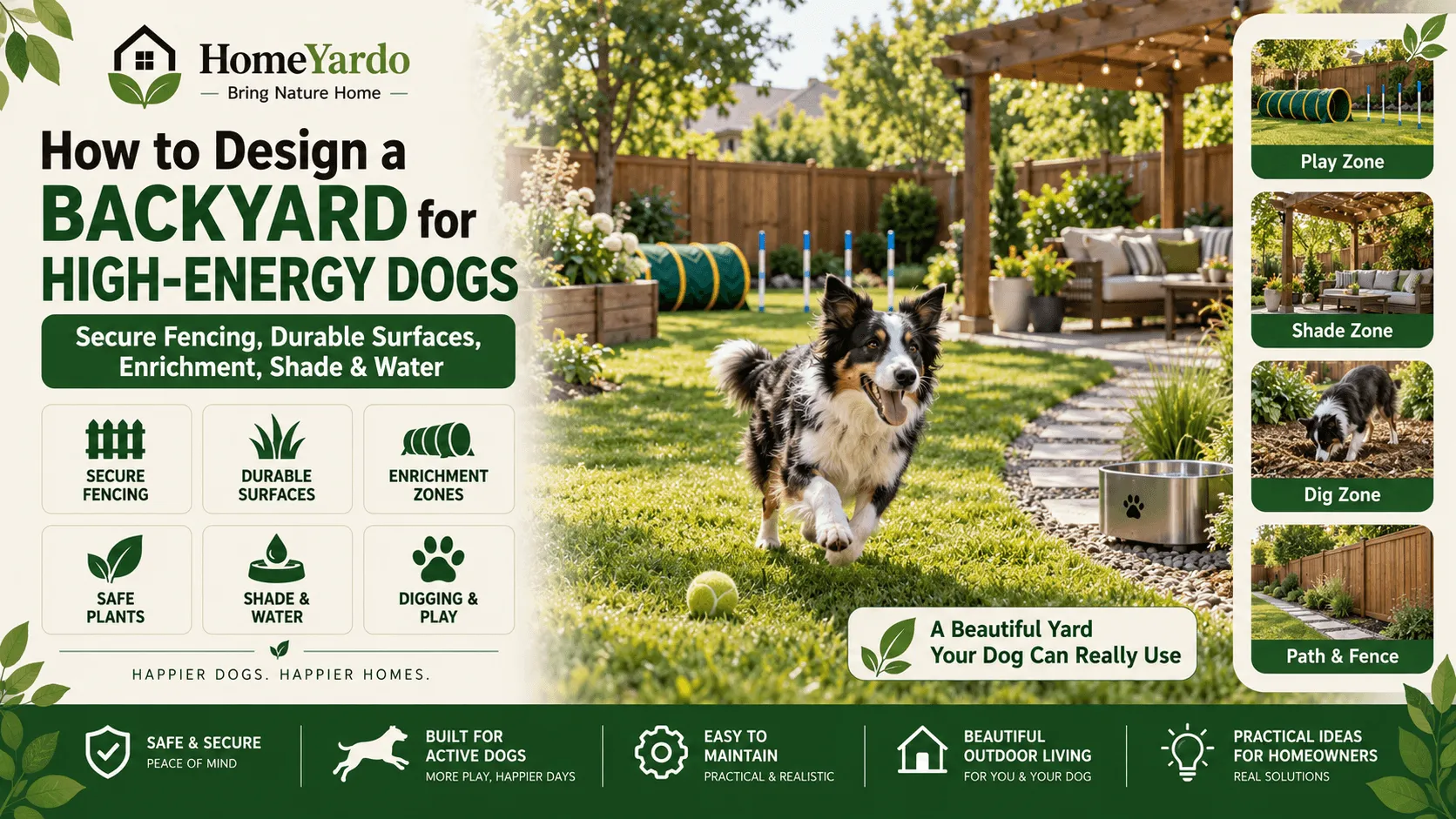
Living with a high-energy dog changes the way you think about a backyard.
A patch of grass may look perfectly adequate to us, but for a dog that wants to run, sniff, chase, dig, explore, and solve problems, an empty lawn can become boring surprisingly quickly.
Border Collies, Australian Shepherds, Vizslas, Jack Russell Terriers, working-line Labradors, and other active dogs were developed for physically or mentally demanding work. A backyard cannot replace walks, training, social interaction, or appropriate exercise, but a thoughtful outdoor setup can give an active dog more useful ways to spend its energy.
The goal is not to sacrifice your landscaping. A well-designed backyard for high-energy dogs can still have attractive planting, usable paths, seating areas, and a lawn. The difference is that the layout accounts for how your dog actually uses the space.
What Does a High-Energy Dog Need From a Backyard?
Before changing the fence or replacing your lawn, watch what your dog already does outside.
Does your dog patrol the fence? Dig beside shrubs? Sprint the same route every afternoon? Search the ground with their nose? Watch neighboring dogs through the fence?
Those behaviors tell you more about the right backyard layout than a generic landscaping plan will.
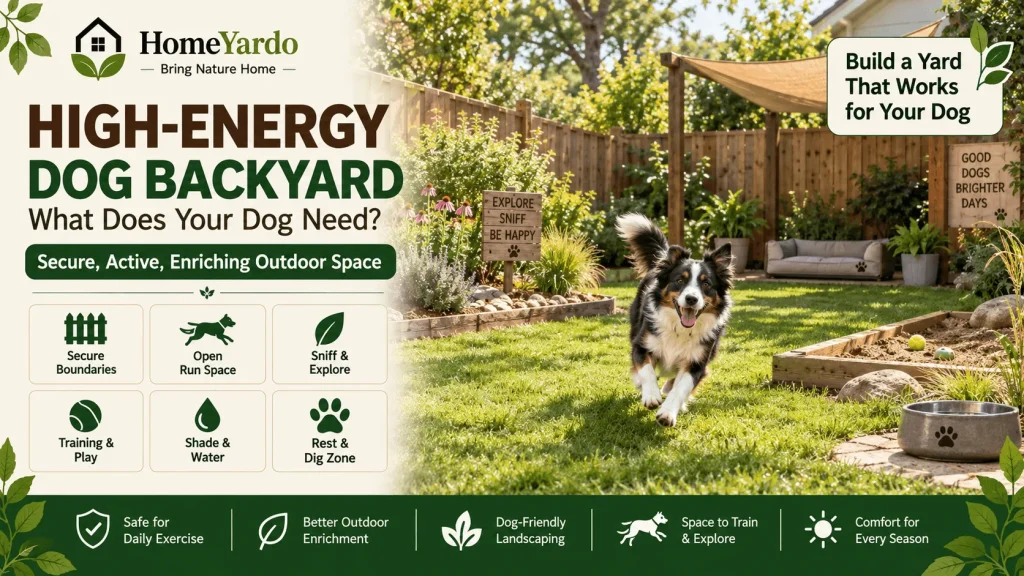
Most active dogs benefit from a combination of:
- Secure boundaries
- Open movement space
- Opportunities to sniff and explore
- Short training or play sessions
- Mental enrichment
- A permitted digging area where appropriate
- Shade and drinking water
- Comfortable places to rest
- Landscaping that can tolerate regular dog traffic
You do not necessarily need a large property. A smaller yard divided into useful activity zones may offer more enrichment than a large empty lawn.
Homeowners planning the wider space can also use HomeYardo’s backyard design ideas to decide how dog areas, entertaining space, paths, planting, and seating should work together.
1. Start With Secure, Dog-Proof Fencing
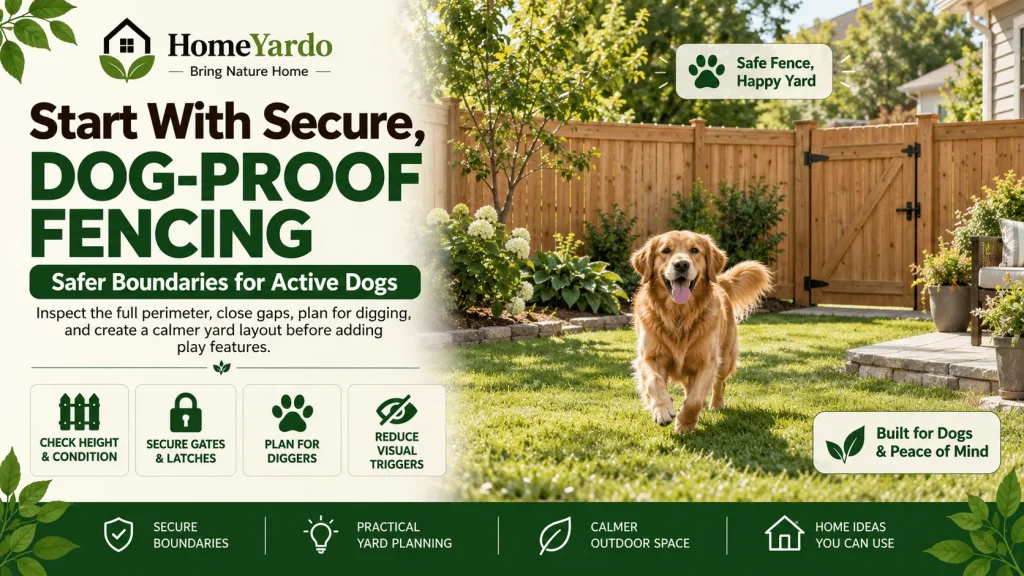
Before thinking about landscaping or play equipment, check the boundary.
High-energy dogs can also be determined diggers, jumpers, climbers, or problem-solvers. The right fence therefore depends on the individual dog rather than breed alone.
Check Fence Height and Condition
There is no single fence height that works for every dog. A taller, athletic dog may require a higher barrier than a small dog that has never attempted to jump.
Inspect the entire perimeter for:
- Loose boards
- Gaps beneath gates
- Damaged panels
- Climbable objects beside the fence
- Weak latches
- Spaces a small dog could squeeze through
Do not assume an existing fence is secure simply because it looks intact from the patio. If you are replacing the enclosure entirely, consider your dog’s size and behavior alongside privacy, materials, maintenance, local rules, property boundaries, and gate placement. HomeYardo’s guide to fence companies in Cincinnati also shows the types of installation and material questions homeowners should consider when comparing professional fencing options.
Plan For Dogs That Dig
A dog that repeatedly digs beside the boundary may need more than a standard fence.
Depending on the fence type and site, an appropriately installed buried barrier or L-shaped footer may help discourage digging underneath it. Any modification should be suitable for the property and installed without leaving sharp or exposed materials where paws can reach them.
Consider Visual Triggers
Some dogs repeatedly run, bark, or become highly excited when they can see people, wildlife, vehicles, or neighboring dogs through an open fence.
In those cases, reducing direct sightlines may help. Solid fencing or carefully positioned screening can create a calmer section of the yard.
Homeowners planning a new enclosure should consider the dog’s size, jumping and digging behavior, gate security, visibility triggers, local rules, and the overall yard layout before choosing a fence.
2. Build Mental Enrichment Into the Yard
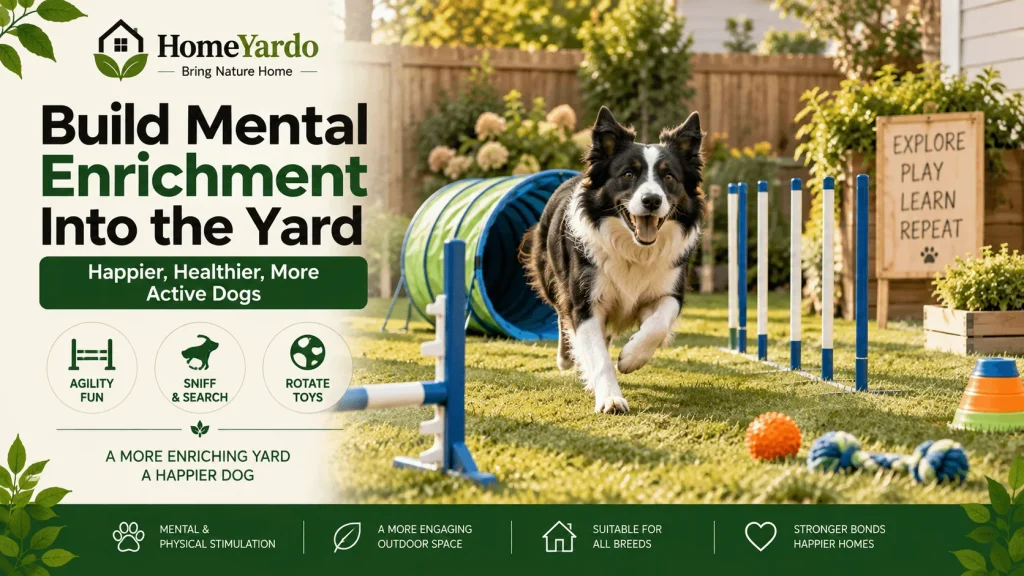
Running is only one way for a dog to use energy.
A dog can finish a game of fetch and still be looking for something to do because physical activity and mental engagement are not interchangeable.
Create a few simple opportunities for your dog to think.
Add a Simple Agility Area
You do not need a competition-level course.
A few appropriately sized weave poles, a tunnel, ground-level obstacles, or other safe training equipment can provide variety. Keep jumps and impact activities appropriate for the dog’s age, health, size, and physical condition.
Short training sessions are often more useful than leaving equipment in the yard and expecting a dog to entertain itself.
Create Sniffing and Search Games
A dog’s nose can turn an ordinary backyard into an activity area.
Hide a favorite toy and ask your dog to find it. Scatter part of a suitable food allowance through a safe patch of grass. Create a simple scent trail. Move hiding places periodically so the game does not become predictable.
Sniffing gives the dog something to investigate instead of simply running laps.
Rotate Outdoor Enrichment
Leaving the same toys outside for months can make them less interesting.
Rotate balls, tug toys, food-dispensing toys, scent games, and training activities. Always choose products appropriate for your dog’s size and chewing habits, and supervise items that could break apart or be swallowed.
This type of activity area can be especially useful for naturally driven working breeds. Border Collies, in particular, are famous for excelling at agility and herding-style activities, so owners planning around that breed should look at its physical and mental activity needs rather than relying on yard size alone.
3. Give Frequent Diggers a Legal Digging Zone
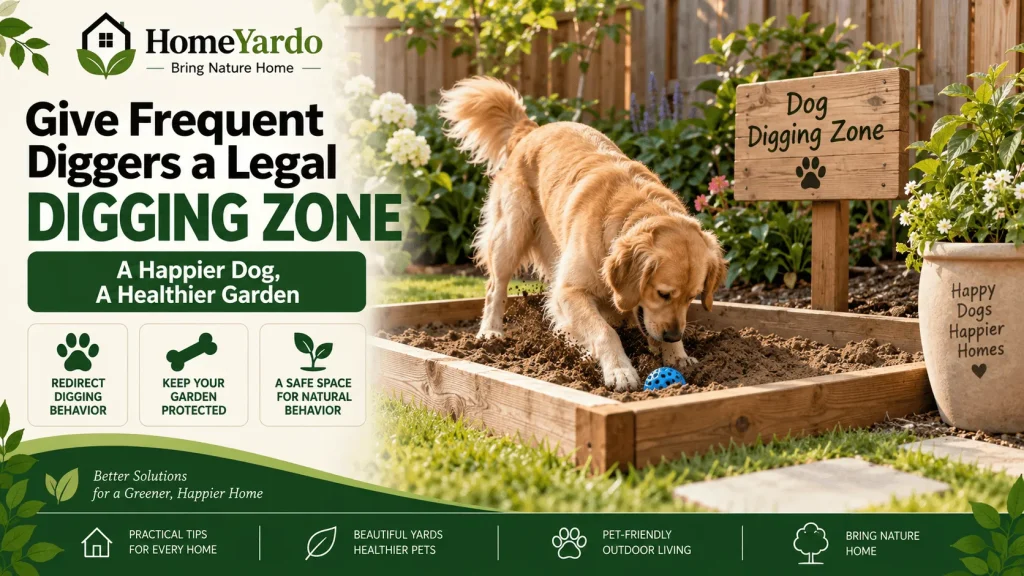
Digging is not always something landscaping can eliminate.
Dogs may dig while exploring scents, seeking cooler soil, trying to reach something underground, playing, or simply because digging itself is rewarding.
If your dog repeatedly targets the garden, redirecting the behavior may be easier than constantly repairing flower beds.
How to Make a Dog Digging Area
Choose a suitable corner away from fences, utilities, irrigation lines, and valuable plants.
Create a defined digging area with dog-appropriate loose material. Then bury a toy or another safe reward near the surface and encourage your dog to search there.
When the dog chooses that area, reward the behavior.
Clear visual boundaries can help distinguish the digging zone from nearby planting beds.
A designated digging spot will not solve every digging problem. Sudden or persistent attempts to escape the yard deserve closer attention because the motivation may be different.
4. Choose Ground Cover That Can Handle Dog Traffic
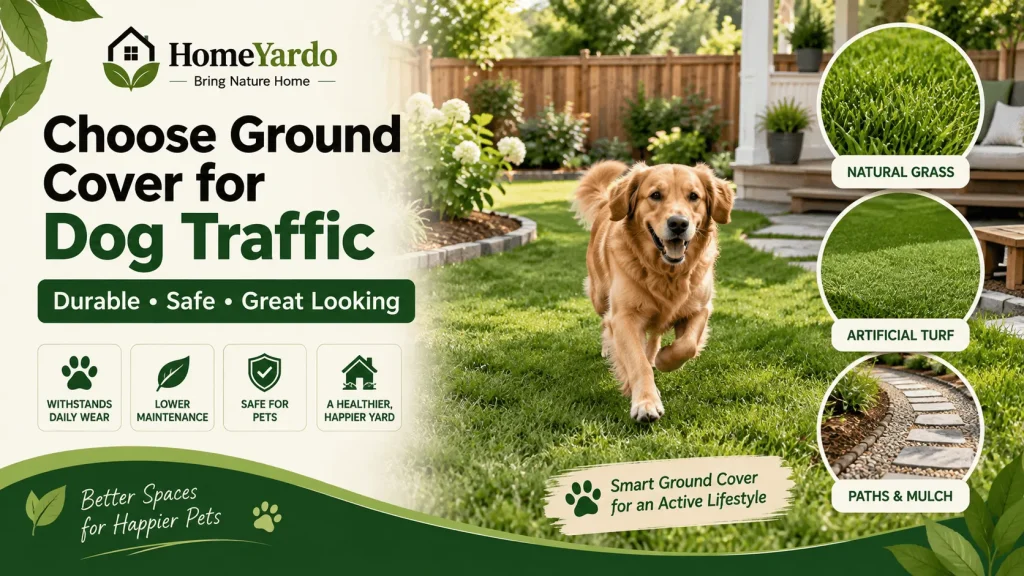
A conventional lawn can struggle when an energetic dog repeatedly follows the same route.
You may eventually see compacted soil, worn tracks, muddy patches, damaged turf, or bare areas around gates and fence lines.
Instead of repeatedly reseeding the same spot, design around predictable traffic.
Natural Grass
If you prefer a living lawn, select turf suited to your local climate, sunlight, soil, drainage, and expected traffic.
Some turf species tolerate wear better than others, but there is no universal “best grass for dogs. Local growing conditions matter. Buffalo-type grasses may suit some regions, while zoysia is used in certain warm climates because established turf can tolerate substantial wear.”
Keeping the lawn healthy also requires sensible irrigation, mowing, drainage, and soil care.
Artificial Turf
Synthetic turf avoids mowing and muddy worn patches, which can make it attractive for heavily used dog areas.
It still needs maintenance. Waste must be removed, surfaces need cleaning, drainage must work correctly, and exposed artificial turf can become hot in sunny weather.
Check surface temperature before allowing a dog to remain on it during hot conditions.
Paths, Mulch, and Gravel
If your dog already runs the same route every day, you may be able to incorporate that route into the landscape.
A defined path can look much better than an accidental strip of bare soil.
The material needs to be comfortable underfoot, properly contained, and suitable for your dog’s behavior. Avoid sharp aggregate and materials your dog persistently tries to eat.
For other sections of the yard, reducing unnecessary lawn and using defined paths can also lower routine landscape maintenance. If you are trying to reduce the amount of vulnerable lawn elsewhere, HomeYardo’s guide to low-maintenance backyard landscaping covers paths, reduced turf areas, hardscaping, planting, and site-appropriate ground cover in more detail.
5. Provide Shade, Water, and a Cool-Down Area

Active dogs can generate plenty of body heat during play.
A backyard designed around activity should therefore include an obvious recovery zone rather than treating shade as an afterthought.
Create Reliable Shade
Shade can come from:
- A mature tree
- Covered patio
- Pergola
- Shade sail
- Another properly installed outdoor structure
Remember that shade moves as the sun changes position. A spot shaded early in the morning may be exposed later in the day.
Keep Fresh Water Available
Provide clean drinking water whenever your dog is outside.
A stable bowl is less likely to tip during play. Clean it regularly, particularly in warm weather.
Add a Comfortable Resting Spot
A shaded bed, mat, or other dog-appropriate resting surface gives an active dog somewhere to settle after play.
Place the rest area away from the busiest running route.
A good dog yard should encourage both activity and settling down.
6. Landscape With Dog Safety in Mind
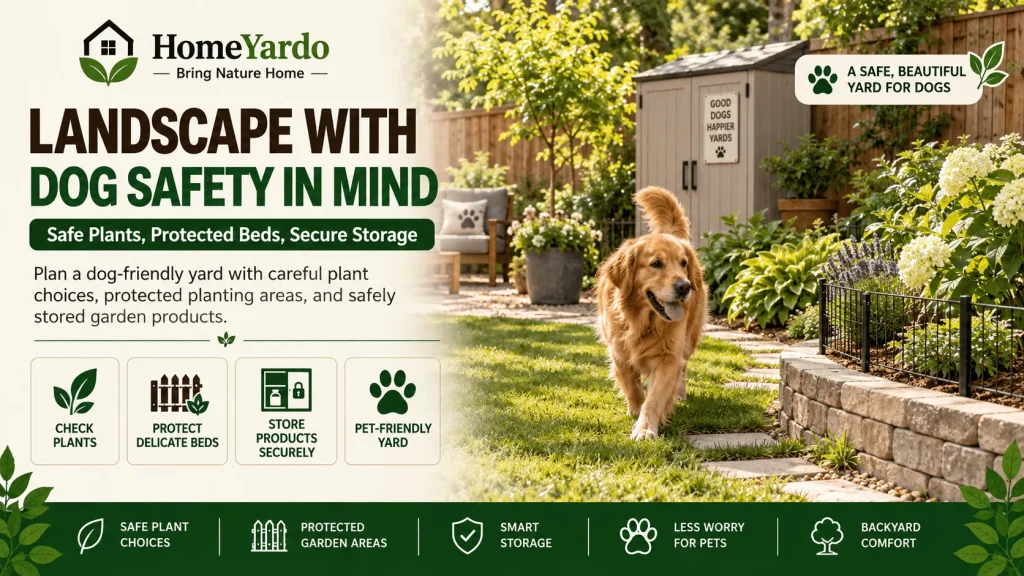
Dogs interact with landscaping differently from people.
They push through shrubs, sniff mulch, dig around roots, drink from puddles, and sometimes chew things they should not.
That makes plant selection and garden-product storage part of backyard planning.
Check Plants Before Adding Them
Do not rely only on common plant names. Confirm the exact plant whenever possible because toxicity varies by species.
Azaleas, oleander, and sago palms are among the plants identified by the ASPCA as toxic to dogs. Other plants may cause different levels of concern depending on the species, plant part, and amount eaten.
Before planting something within your dog’s reach, check it against a reputable veterinary toxic-plant database.
Protect Delicate Planting Areas
You do not necessarily need to remove ornamental beds from a dog-friendly yard.
Instead, place delicate plants away from sprinting routes and use borders, raised beds, or other suitable barriers where needed.
Hardier planting usually works better beside paths and activity areas.
Store Garden Products Securely
Fertilizers, pesticides, herbicides, compost additives, slug products, and other garden materials should be selected and stored with pets in mind.
“Organic” or “natural” should not automatically be interpreted as safe for a dog to swallow.
Read product labels, follow application instructions, observe any required re-entry period, and keep concentrated products where pets cannot reach them.
7. Match the Backyard Layout to Your Dog
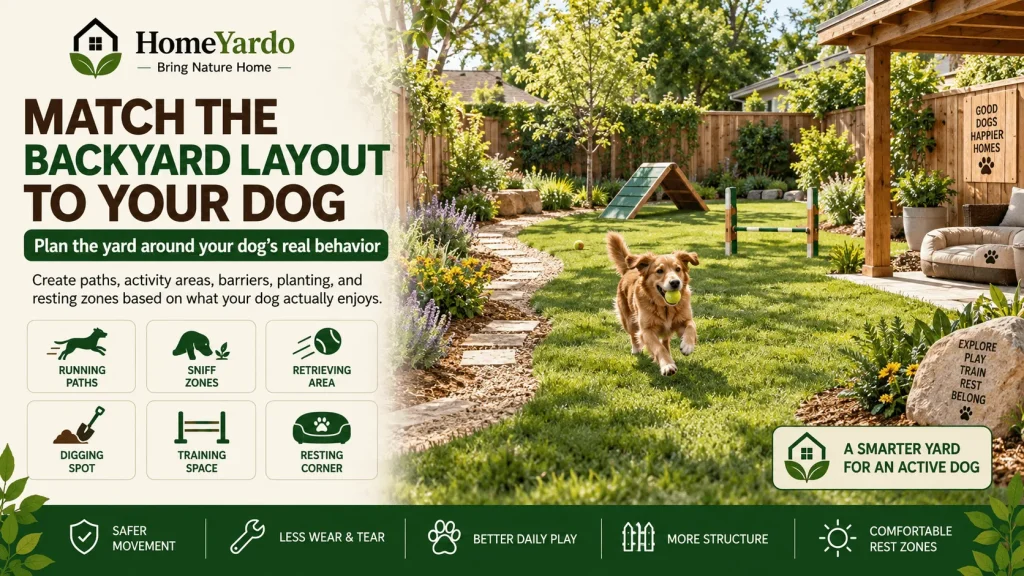
There is no universal layout for every energetic breed.
Two dogs of the same breed can also have very different preferences.
A herding dog may enjoy structured training, search games, and activities involving direction and control. A scent-driven dog may spend much more time investigating smells. Some athletic dogs enjoy short bursts of fast running, while others prefer retrieving or interactive play with their owner.
Think in terms of behavior rather than stereotypes.
Ask:
What activities does my dog repeatedly choose?
What causes overexcitement?
Does the dog prefer running, sniffing, retrieving, digging, or training?
Where does the dog naturally rest?
Which areas of the yard receive the most wear?
Answering those questions will help determine where paths, activity areas, barriers, planting, and resting zones belong.
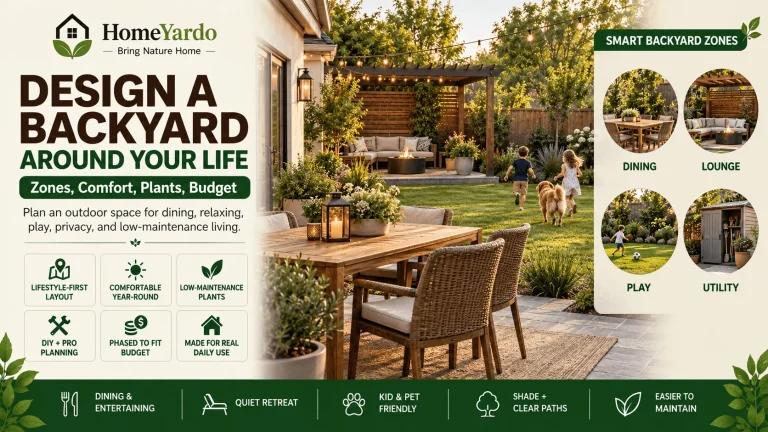
8. Divide the Backyard Into Activity Zones
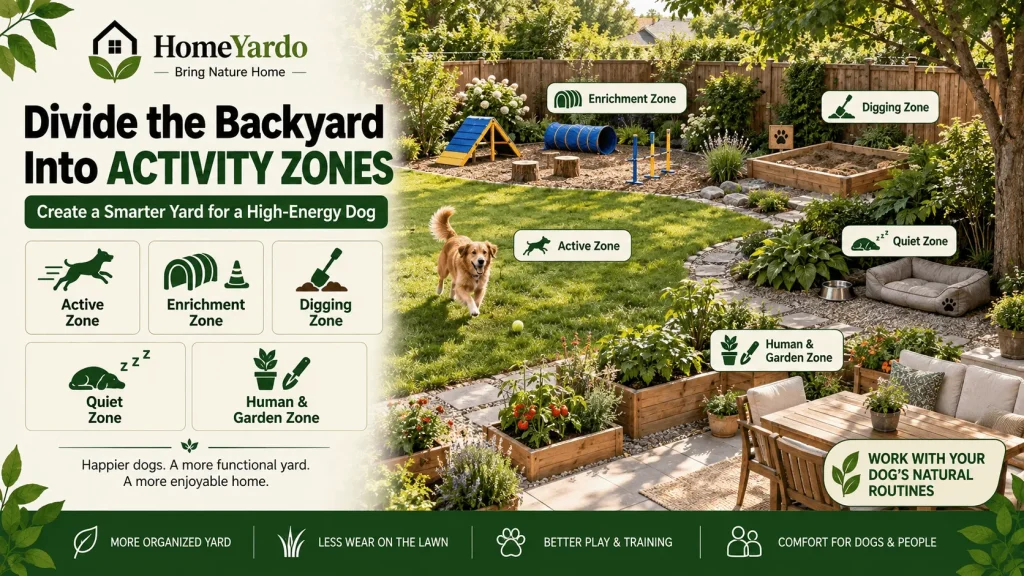
One useful improvement for a high-energy dog yard is zoning.
Instead of asking one lawn to perform every job, give different sections different purposes.
Active Zone
Keep an open section for retrieving, training, or movement. Remove unnecessary obstacles from regular running routes.
Enrichment Zone
Use another area for scent games, supervised puzzle activities, or simple training equipment.
Digging Zone
For dogs that enjoy digging, place the permitted digging area away from garden beds and boundaries.
Quiet Zone
Create shade, water access, and a comfortable resting place where the dog can disengage from activity.
Human and Garden Zone
Patios, seating areas, vegetable beds, delicate plants, and decorative borders can occupy sections that do not conflict with the dog’s normal movement patterns.
This approach helps the yard remain attractive because you are working with predictable behavior rather than constantly repairing the areas your dog naturally uses.
9. Don’t Use the Backyard as a Replacement for Exercise
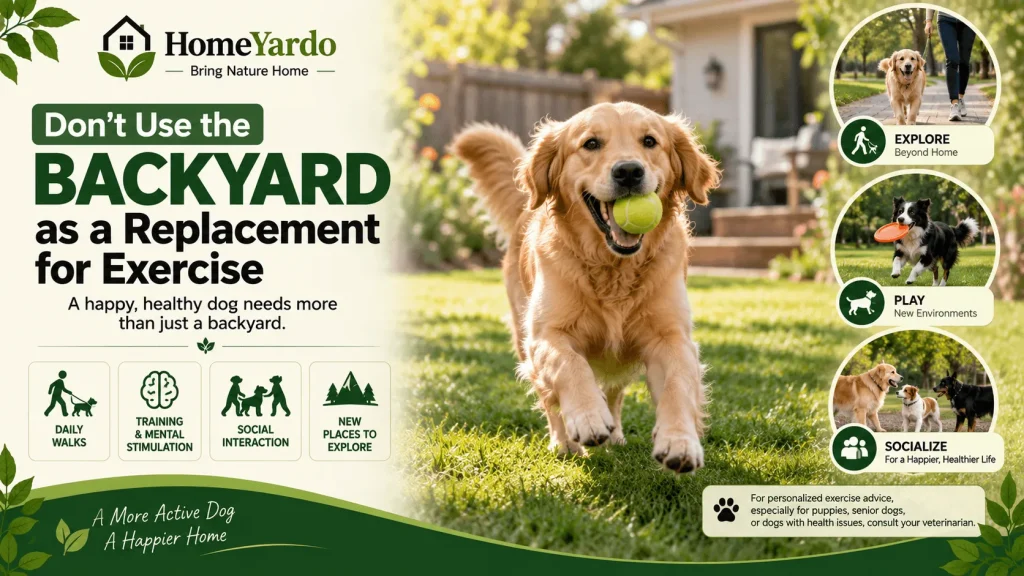
Even a well-designed backyard has limits.
Simply opening the door does not automatically provide meaningful exercise or enrichment.
Many dogs still need walks, training, social contact, exploration away from home, interactive play, and activities suited to their age and physical condition.
The backyard works best as another part of that routine.
If you are unsure how much or what type of activity is suitable for your dog, particularly for a puppy, senior dog, or dog with a medical or mobility issue, ask your veterinarian for individual guidance.
A Simple Backyard Layout for an Active Dog
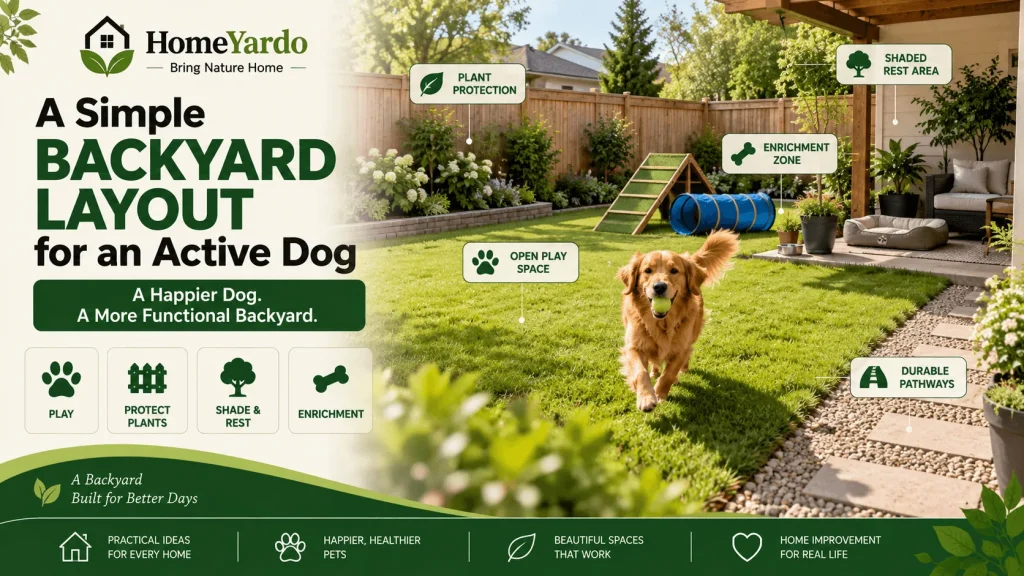
A practical setup does not have to be complicated.
You might keep an open central section for play, create a durable path along an established running route, protect planting beds around the perimeter, place enrichment equipment in one corner, and establish a shaded resting area near the house.
A frequently used gate can have a harder-wearing surface around it rather than struggling turf.
A dog that digs can have its own designated area.
Plants that could present a poisoning risk can be removed from accessible areas or replaced with options verified as suitable for your household.
The result still looks like a landscaped backyard. It simply handles dog activity much better.
Final Thoughts
You do not have to choose between an attractive garden and a yard your dog can actually use.
Start with safety. Secure the boundary and remove obvious hazards. Then look at your dog’s existing habits before deciding where to put paths, lawn, plants, enrichment areas, and shade.
The strongest backyard design does not fight the dog’s natural movement patterns. It plans around them.
Give an energetic dog appropriate opportunities to move, sniff, think, play, and rest, while remembering that the yard is only one part of a healthy daily routine. With that balance, your outdoor space can remain useful for your dog without surrendering the garden you enjoy.
FAQ’s
Start with secure fencing, then provide usable running space, shade, fresh water, durable surfaces, mental enrichment, and a comfortable rest area. Watch how your dog naturally uses the yard and design around those movement patterns.
Useful features can include an open play area, scent-game zone, simple training equipment, a designated digging area, durable paths, shade, water, and a quiet resting spot. The right combination depends on your dog’s behavior and available space.
Use short interactive activities rather than relying only on free running. Try supervised scent searches, retrieving, training sessions, appropriate puzzle toys, hide-and-find games, and simple agility activities.
There is no single material that suits every yard. Climate-appropriate turf, properly installed artificial grass, suitable gravel, mulch, pavers, and dedicated paths can all work in different situations. Consider heat, drainage, traffic, maintenance, and whether your dog tends to chew or dig at the material.
Start by identifying where and why the damage occurs. Repeated running routes can become intentional paths, while dogs that dig may benefit from a designated digging zone. Choosing turf suited to local conditions and reducing lawn in heavily trafficked areas can also help.
Artificial turf can withstand repeated traffic and eliminate muddy worn patches, but it still requires cleaning and adequate drainage. It may also become hot in direct sun, so surface temperature should be checked during warm weather.
Plant toxicity varies by species. Azaleas, oleander, and sago palms are examples of plants identified as toxic to dogs by the ASPCA. Check the botanical identity of any plant against a veterinary toxic-plant database before placing it where a dog can chew it.
Not necessarily. Yard size alone does not provide exercise or mental stimulation. A smaller space with structured play, scent work, training, safe movement areas, and regular activities outside the home can be more useful than a large empty lawn.
Usually not. A backyard offers familiar sights and smells, while walks and other appropriate activities provide environmental variety, training opportunities, exploration, and interaction. Individual exercise requirements vary with age, breed, health, and temperament.