Artificial Turf For Dogs: Is It Worth It for Your Yard?
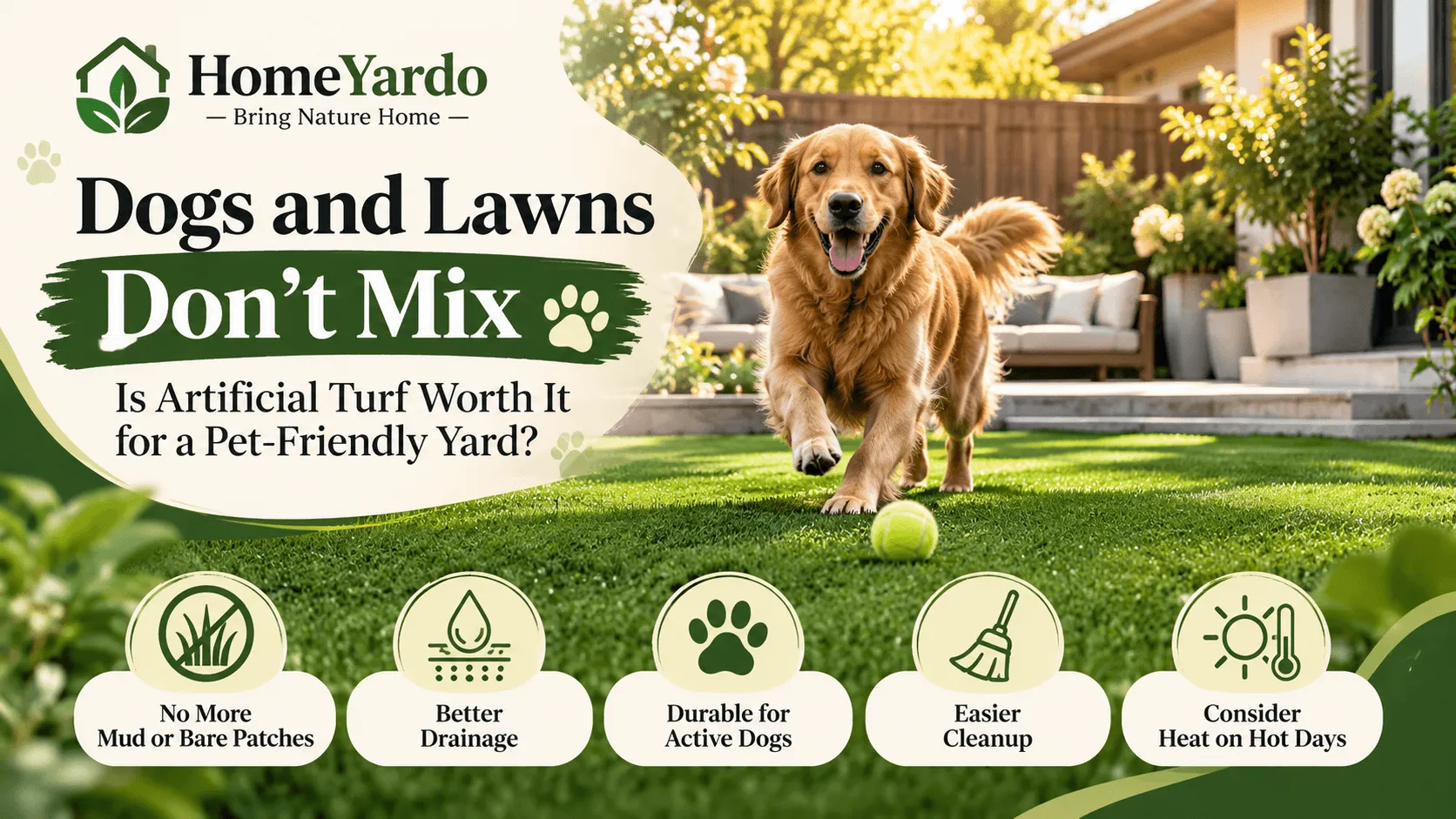
If you have a dog, you already know the pattern. The grass looks great in spring, then worn paths appear, yellow spots begin to spread, and after a week of rain the back door can turn into a mud-and-paws situation.
At some point, many pet owners start wondering whether artificial turf could solve the problem. It can help with some of the biggest frustrations of maintaining a lawn with dogs, but it also comes with its own maintenance, drainage, heat, and installation considerations.
Here is a practical look at what artificial turf for dogs can and cannot do, and what to think about before replacing part or all of a natural lawn.
Why Dogs Can Be Hard On Natural Lawns
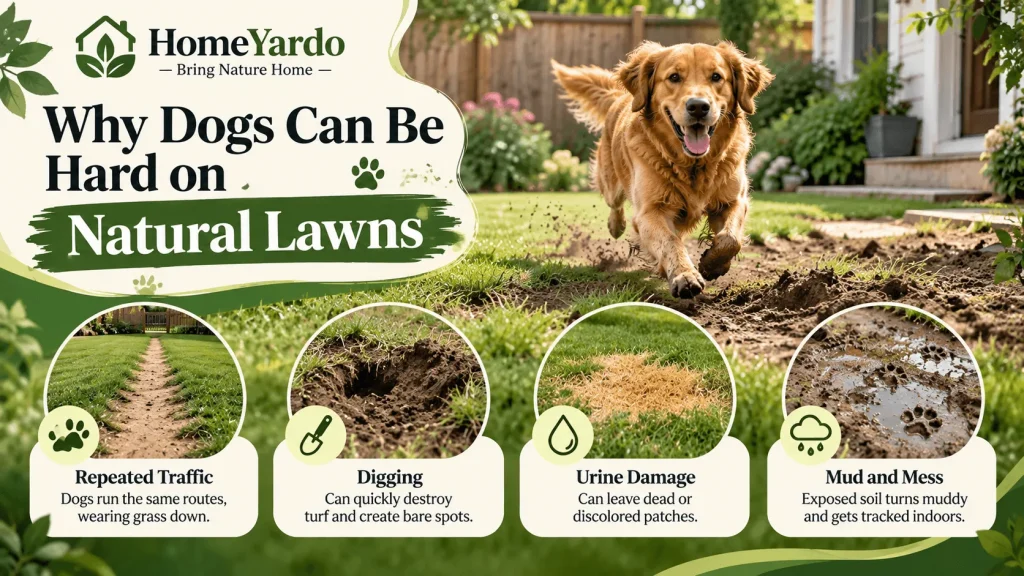
Dogs often run along the same routes through a yard, especially around gates, fences, play areas, and doors. Over time, that repeated traffic can wear grass down faster than it recovers.
Digging can make the problem worse. Dog urine may also damage patches of turfgrass, while exposed soil becomes muddy during wet weather and gets tracked back into the house.
You can reseed, patch, or replace damaged sections, but heavily used areas may need repeated attention when a dog uses the yard every day.
If repeated running, digging, and worn paths are the bigger problem, planning a backyard for high-energy dogs can help address traffic patterns, activity zones, shade, ground cover, and planting rather than treating the lawn in isolation.
Is Artificial Turf Good For Dogs?
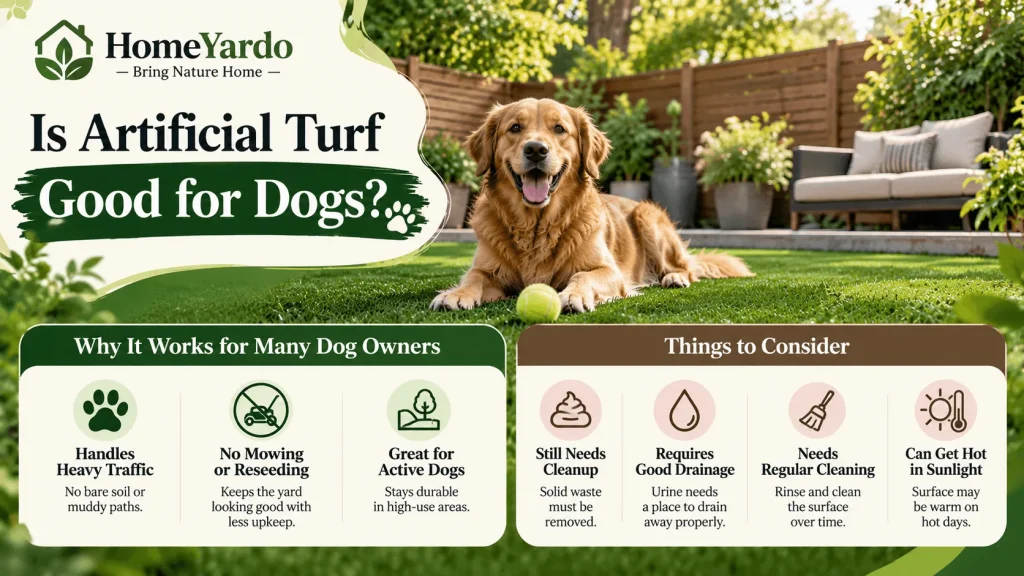
Artificial turf can be a practical option for some dog owners because repeated foot traffic does not create bare soil and muddy paths in the same way damaged natural grass can.
It also eliminates mowing and reseeding in the artificial-turf area.
That does not mean it is maintenance-free. Solid waste still needs to be removed, urine needs somewhere to drain, the surface needs periodic cleaning, and artificial turf can become hot when exposed to strong sunlight.
Whether it works well in a pet-friendly yard depends heavily on the complete installation, including the turf, backing, base, drainage, infill, seams, edges, shade, and cleaning routine.
Why Drainage Matters In Artificial Turf For Dogs
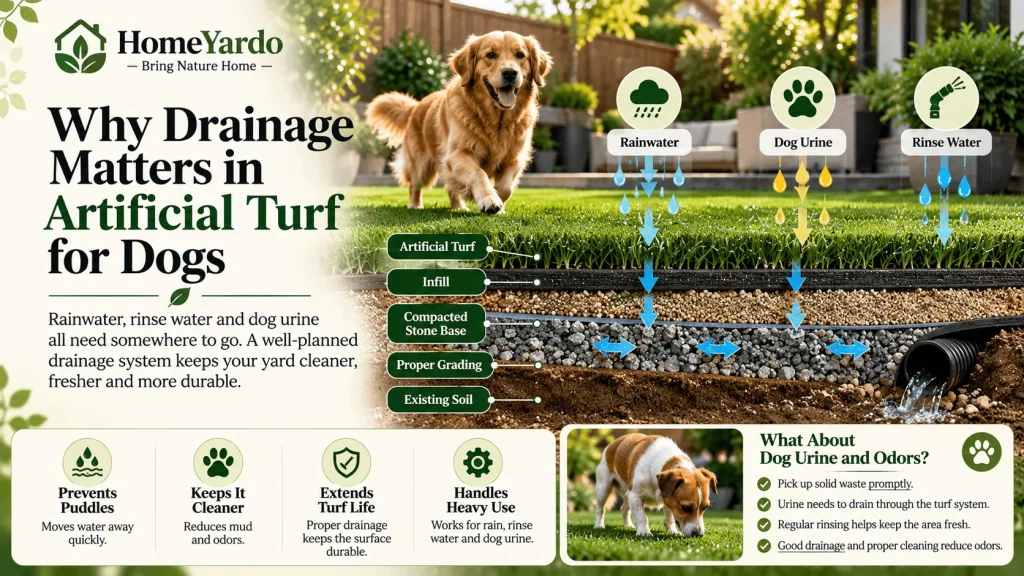
A pet yard puts extra demands on drainage. Rainwater, rinse water, and dog urine all need somewhere to go.
A good installation usually involves removing unsuitable surface material, preparing the base, and grading the area so water can move away rather than collecting beneath or on top of the turf.
The exact base and drainage system should depend on the existing soil, slope, runoff pattern, turf product, and conditions in the yard.
If the yard already holds water after rain, identify and correct the underlying problem first. HomeYardo’s guide to fixing yard drainage explains how grading, compacted soil, runoff, low spots, and drainage systems can affect where water collects.
Cheap or poorly planned installations that overlook drainage may lead to puddling, difficult cleaning, or odor problems that people later blame on the turf itself.
What About Dog Urine And Odors?
Artificial turf does not make pet waste disappear.
Solid waste still needs to be picked up promptly, while urine needs to pass through the turf system and drain away. Areas used regularly by dogs may also need rinsing.
Poor drainage, accumulated organic material, and inadequate cleaning can contribute to lingering smells.
Before installation, ask how urine will move through the turf and base and what cleaning routine the turf manufacturer recommends.
Finding an Installer Who Knows Pet Yards
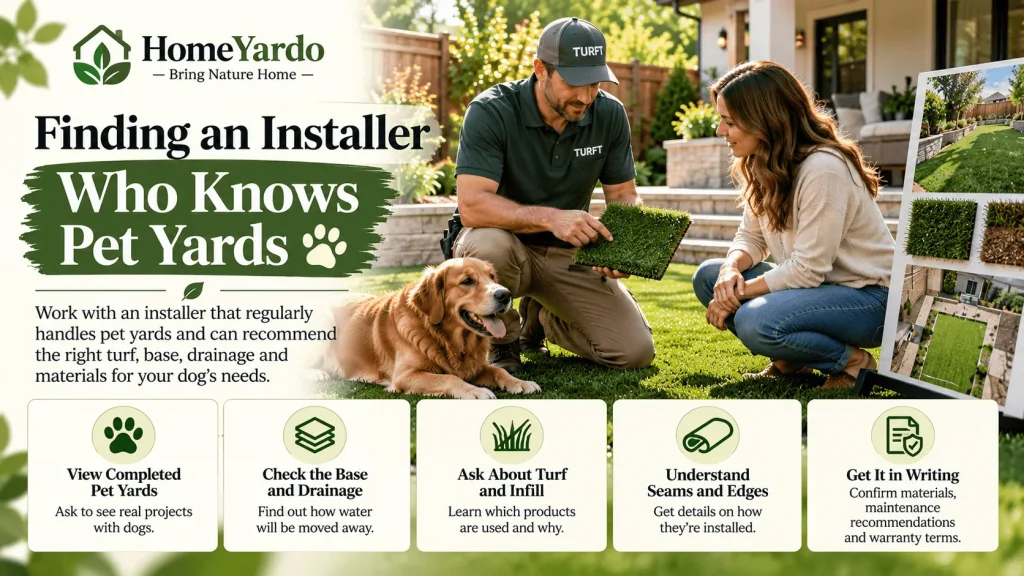
If you’re planning a project, it helps to work with a company that regularly handles areas designed for dogs rather than choosing an installer based only on how the finished turf looks.
Turft is one of the Knoxville artificial lawn installers that lists pet-friendly turf in its Knoxville services, and it describes the product as durable, easy to clean, and resistant to digging.
Whoever you contact, ask to see completed pet yards. Find out how the base and drainage system will be built, what turf and infill will be used, and how the installer handles seams and edges.
You should also get the proposed materials, maintenance recommendations, and warranty terms in writing.
Cleaning Artificial Turf After Dogs
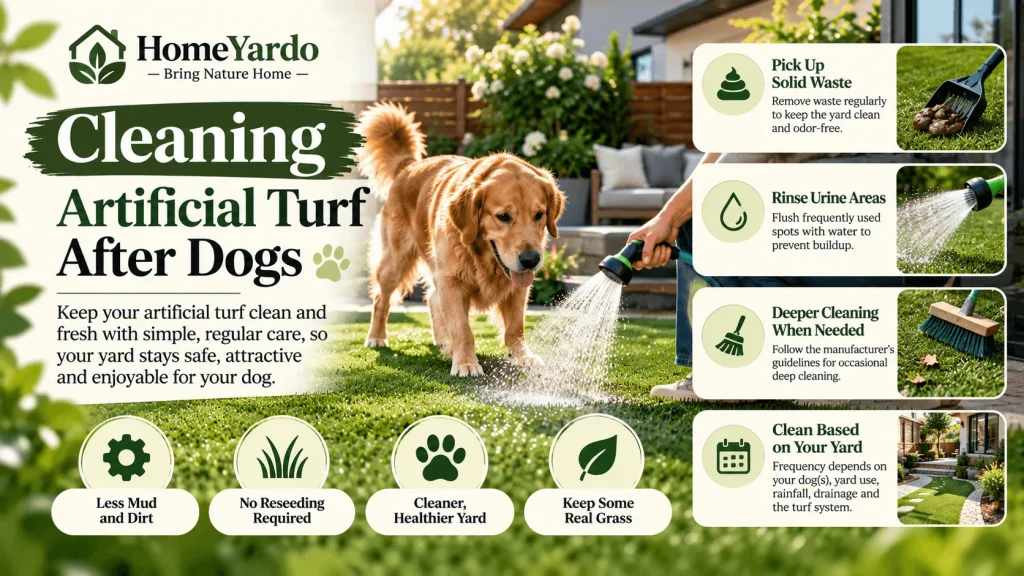
Artificial turf does not mean you never have to clean the yard.
Solid waste still needs to be picked up, and areas frequently used for urination may need to be rinsed with water so residue does not continue accumulating.
Some yards will also benefit from occasional deeper cleaning according to the turf manufacturer’s instructions.
How often cleaning is needed depends on the number and size of dogs, how much of the yard they use, rainfall, drainage, and the turf system itself.
The difference is that you are no longer repeatedly dealing with reseeding, exposed dirt, or grass worn down along the dog’s favorite routes.
Artificial turf also does not have to replace the entire lawn. Low-maintenance backyard landscaping ideas such as defined paths, smaller lawn areas, planting beds, ground covers, and hardscaping can reduce upkeep while allowing you to keep some living grass.
Does Artificial Turf Get Too Hot For Dogs?
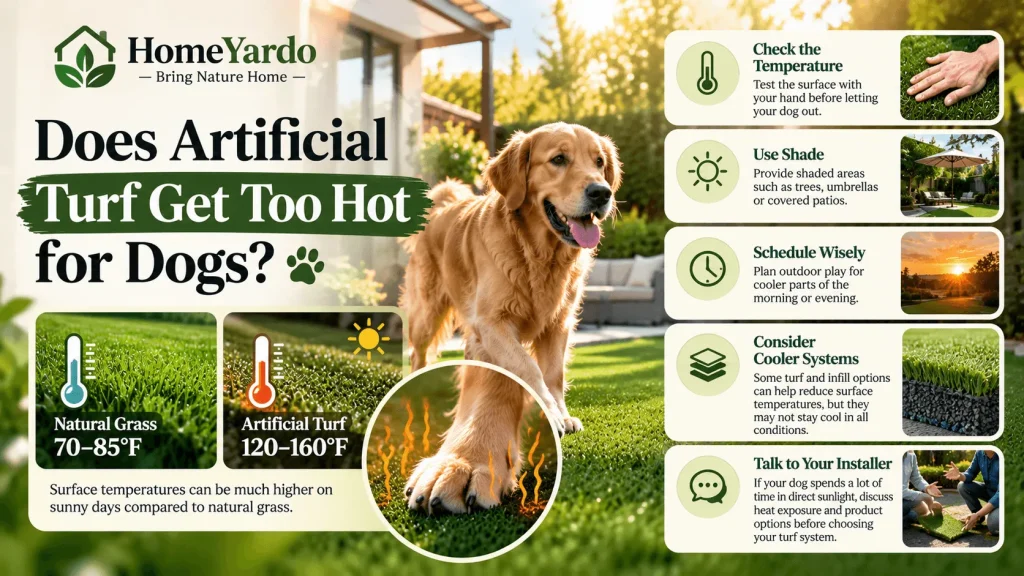
On hot, sunny afternoons, synthetic turf can become much warmer than natural grass.
That matters for dogs because they are walking directly on the surface with their paws.
Before letting your dog stay on artificial turf during hot weather, check the surface temperature yourself. Shade and scheduling outdoor activity for cooler parts of the morning or evening can help.
Some turf systems and infill products are marketed as reducing surface temperatures, but that does not mean the surface will remain cool under every weather condition.
If your dog spends a lot of time outside in direct sunlight, discuss heat exposure with the installer before choosing the turf system.
Artificial Turf vs Natural Grass For Dogs
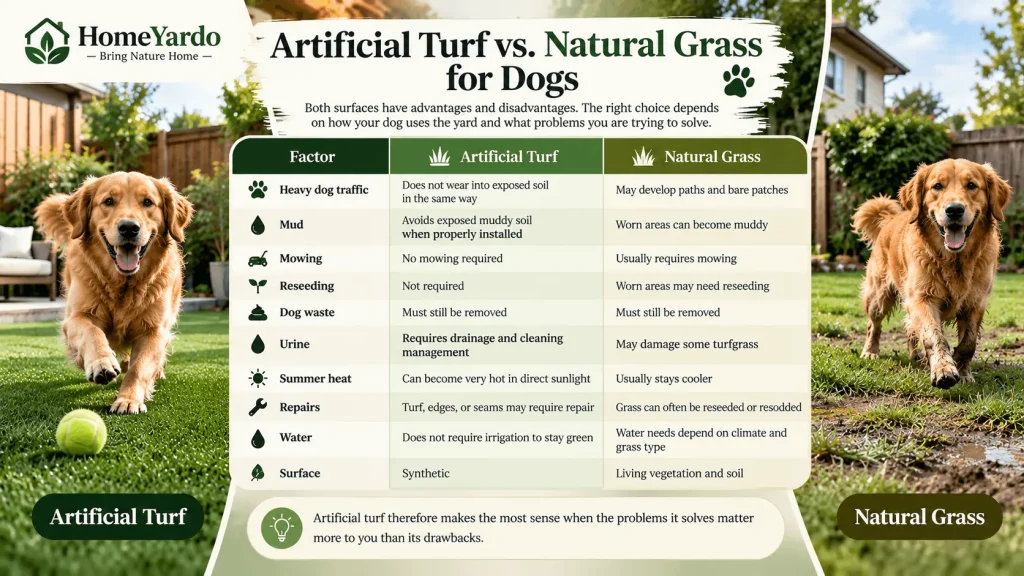
Both surfaces have advantages and disadvantages. The right choice depends on how your dog uses the yard and what problems you are trying to solve.
| Factor | Artificial Turf | Natural Grass |
|---|---|---|
| Heavy dog traffic | Does not wear into exposed soil in the same way | May develop paths and bare patches |
| Mud | Avoids exposed muddy soil when properly installed | Worn areas can become muddy |
| Mowing | No mowing required | Usually requires mowing |
| Reseeding | Not required | Worn areas may need reseeding |
| Dog waste | Must still be removed | Must still be removed |
| Urine | Requires drainage and cleaning management | May damage some turfgrass |
| Summer heat | Can become very hot in direct sunlight | Usually stays cooler |
| Repairs | Turf, edges, or seams may require repair | Grass can often be reseeded or resodded |
| Water | Does not require irrigation to stay green | Water needs depend on climate and grass type |
| Surface | Synthetic | Living vegetation and soil |
Artificial turf therefore makes the most sense when the problems it solves matter more to you than its drawbacks.
A small, heavily used dog run may be a stronger candidate for turf than replacing a large natural lawn that already performs well.
Pros And Cons Of Artificial Turf For Dogs
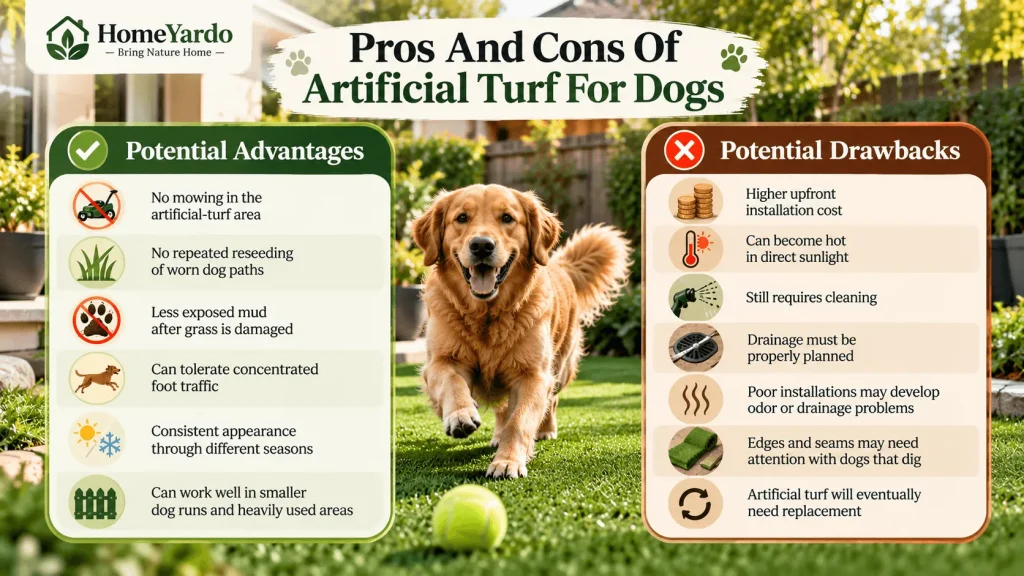
Artificial turf can solve several problems that dog owners face with natural lawns, but it also introduces a different set of maintenance and comfort considerations. Looking at both sides makes it easier to decide whether it suits your yard, climate, budget, and the way your dog uses the space.
Potential Advantages
- No mowing in the artificial-turf area
- No repeated reseeding of worn dog paths
- Less exposed mud after grass is damaged
- Can tolerate concentrated foot traffic
- Consistent appearance through different seasons
- Can work well in smaller dog runs and heavily used areas
Potential Drawbacks
- Higher upfront installation cost
- Can become hot in direct sunlight
- Still requires cleaning
- Drainage must be properly planned
- Poor installations may develop odor or drainage problems
- Edges and seams may need attention with dogs that dig
- Artificial turf will eventually need replacement
Questions to Ask Before You Commit
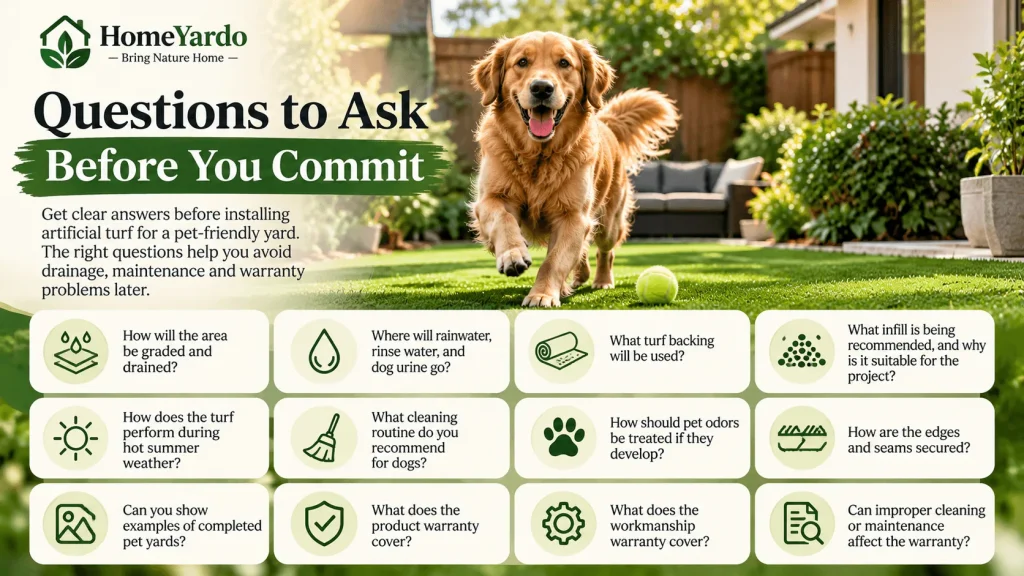
Before hiring an artificial turf installer for a pet-friendly yard, ask:
- How will the area be graded and drained?
- Where will rainwater, rinse water, and dog urine go?
- What turf backing will be used?
- What infill is being recommended, and why is it suitable for the project?
- How does the turf perform during hot summer weather?
- What cleaning routine do you recommend for dogs?
- How should pet odors be treated if they develop?
- How are the edges and seams secured?
- Can you show examples of completed pet yards?
- What does the product warranty cover?
- What does the workmanship warranty cover?
- Can improper cleaning or maintenance affect the warranty?
Getting clear answers before installation is much easier than trying to correct drainage or maintenance problems afterward.
When Is Artificial Turf Worth It for Dog Owners?
Artificial turf is not right for every dog or every yard.
If you love the feel and appearance of natural grass and your dog is happy on the lawn you already have, there may be little reason to replace it.
Turf may make more sense if your dog repeatedly destroys the same small lawn area, if mud is a constant problem, or if you have a dedicated dog run where natural grass struggles under concentrated traffic.
It can also appeal to homeowners who are tired of repeatedly mowing, patching, and reseeding heavily used areas.
Before replacing a large section of lawn, however, think about how the entire outdoor space is used. Designing a backyard around activity areas, paths, shade, pets, and everyday routines can sometimes solve more problems than simply changing the ground surface.
Natural grass may still be the better fit when the existing lawn performs well, the yard receives intense direct sun with little shade, or replacing a large healthy lawn would offer little practical benefit.
The Bottom Line
Consider dog artificial turf as a business.
Mud, bare running paths, turf area mowing, and the need for frequent lawn repairs may all decrease. In return, you must carefully consider surface temperature, drainage, cleaning, installation quality, and eventual replacement.
In smaller yards, dog runs, or heavily trafficked areas of a lawn where natural grass frequently fails, artificial turf can be especially useful.
Get multiple quotes before deciding, find out how the base and drainage system will be constructed, go over the cleaning specifications, and select a setup that works for both your dog and your budget.
FAQs About Artificial Turf for Dogs
Artificial turf can work well in heavily used dog yards because it does not develop bare soil and muddy running paths in the same way damaged natural grass can. Its suitability depends on drainage, cleaning, installation quality, heat exposure, and how the dog uses the yard.
Dog urine does not kill synthetic turfgrass, but it still needs to drain through the system. Regular rinsing and appropriate cleaning may be necessary to prevent residue and odors from accumulating.
It can develop odors when urine, waste, or organic material builds up or when drainage is poor. Prompt waste removal, good drainage, rinsing, and periodic cleaning can help manage the problem.
Artificial turf can become very hot in direct sunlight. Check the surface before letting a dog spend time on it during hot weather and provide shade or use the yard during cooler periods when necessary.