10 Low-Maintenance Backyard Landscaping Ideas
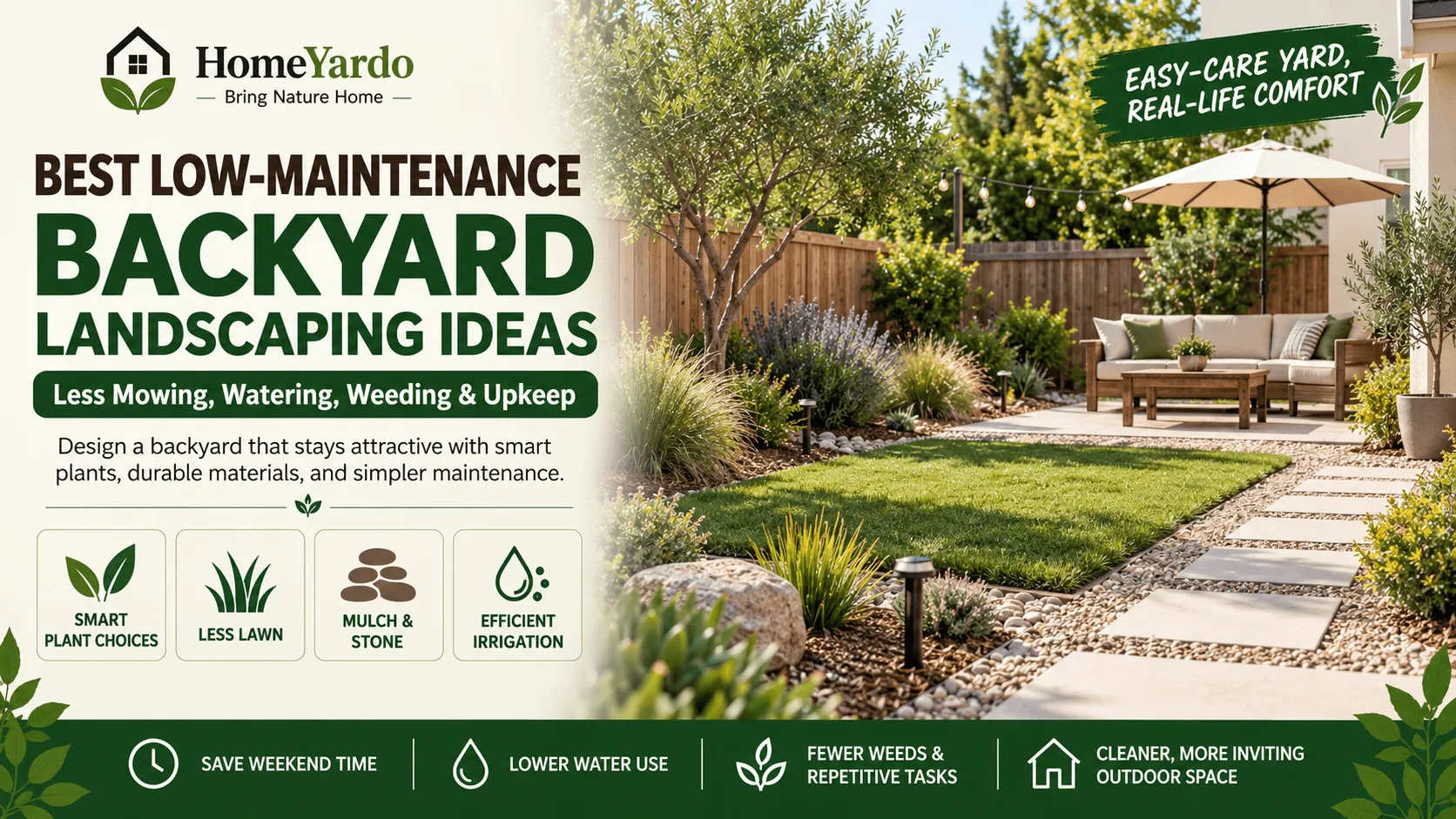
A beautiful backyard should give you somewhere to relax, not another list of jobs every weekend. The best low-maintenance backyard landscaping ideas reduce mowing, watering, weeding, pruning, and seasonal repairs while still making the yard feel finished and inviting.
That usually means working with the conditions already present in your yard. Choose plants that suit your climate and soil, keep lawn only where it serves a purpose, use durable hardscaping, cover exposed soil, and automate routine watering where it makes sense.
The goal isn’t a maintenance-free backyard. No living landscape is completely hands-off. The goal is to design one where most of the work has already been prevented.
What Makes a Backyard Low Maintenance?
A low-maintenance backyard uses plants, surfaces, and features that suit the site and don’t require frequent intervention to remain attractive.
Before buying plants or laying stone, look at four things: sunlight, soil drainage, available space, and how you actually use the yard. A design that ignores any of these can create more work rather than less.
A practical low-care yard usually has:
- Plants suited to the local growing conditions
- Less unnecessary turf
- Covered soil that discourages weeds
- Clearly defined beds and pathways
- Efficient irrigation
- Hardscape materials suited to the climate
- Enough space for plants to reach mature size
- Good drainage around patios, paths, beds, and the house
Get those basics right and many routine landscaping jobs become smaller or disappear entirely.
1. Choose Plants That Need Less Care
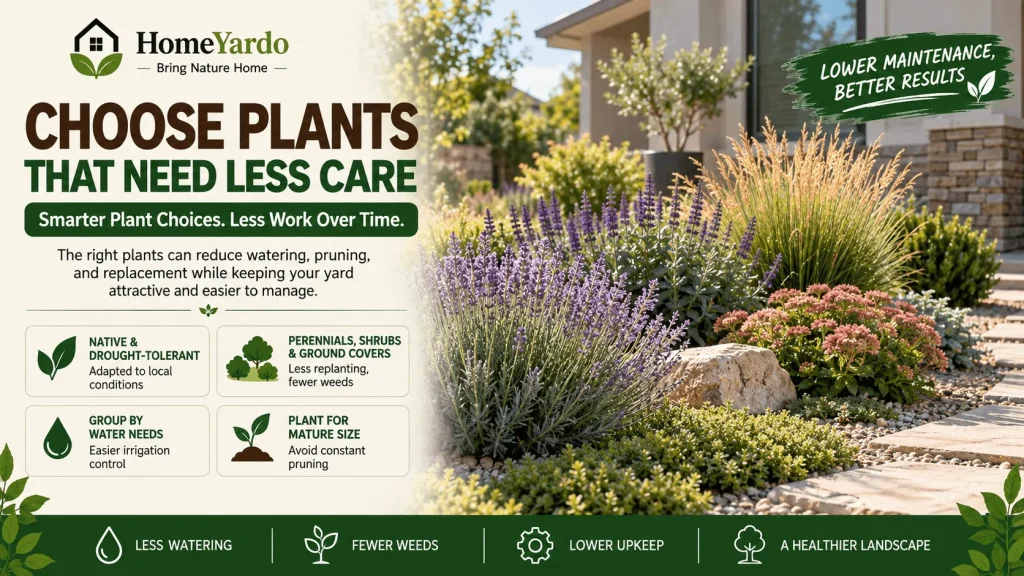
Plant selection has a bigger effect on future maintenance than almost any decorative decision.
A plant constantly struggling with the wrong amount of sunlight, moisture, temperature, or soil will need more watering, feeding, pruning, treatment, or replacement. Plants matched to the site are much easier to live with.
Native and Drought-Tolerant Plants
Regionally appropriate native plants can be useful because they are adapted to local environmental conditions. That doesn’t mean every native plant is automatically low maintenance, so check its mature size, moisture needs, soil preferences, and growth habit before planting.
Research cited by Ayres Associates found that replacing turf with native groundcover in certain landscapes can reduce maintenance costs by as much as 80%. Treat that figure as an example rather than a guaranteed saving for every residential yard.
Drought-tolerant plants can also reduce watering once established. Lavender, salvia, ornamental grasses, sedum, and other drought-tolerant choices may work well where the climate and soil suit them.
For sunny areas, HomeYardo’s guide to low-maintenance plants for full sun can help narrow the choices according to heat, soil, and growing conditions.
Use Perennials, Shrubs, and Ground Covers
Annual flowers can provide plenty of color, but many need replacing every growing season. Perennials return for multiple years and can reduce repeated planting.
Shrubs provide height and structure without filling an entire bed with plants that require regular attention. Spirea, certain viburnums, and appropriately selected compact shrubs are useful examples, but pruning needs vary by species and cultivar.
Ground covers can fill gaps between larger plants and reduce exposed soil. Creeping thyme and sedum are useful in suitable sunny, well-drained sites, while different plants will be needed for damp or heavily shaded areas.
Fewer empty gaps usually mean fewer opportunities for weeds.
Group Plants by Water Needs
Plants that need similar amounts of water should be grouped together. This practice, often called hydrozoning, makes irrigation easier to control.
A dry border shouldn’t share an irrigation zone with plants that prefer consistently moist soil. Separating them prevents one group from receiving too much water simply because another needs more.
Check mature plant dimensions as well. A shrub expected to become six feet wide will create years of unnecessary pruning if it is planted two feet from a path.
Plant for the mature landscape, not the size of the plant at the garden center.
2. Reduce the Amount of Lawn You Have to Maintain
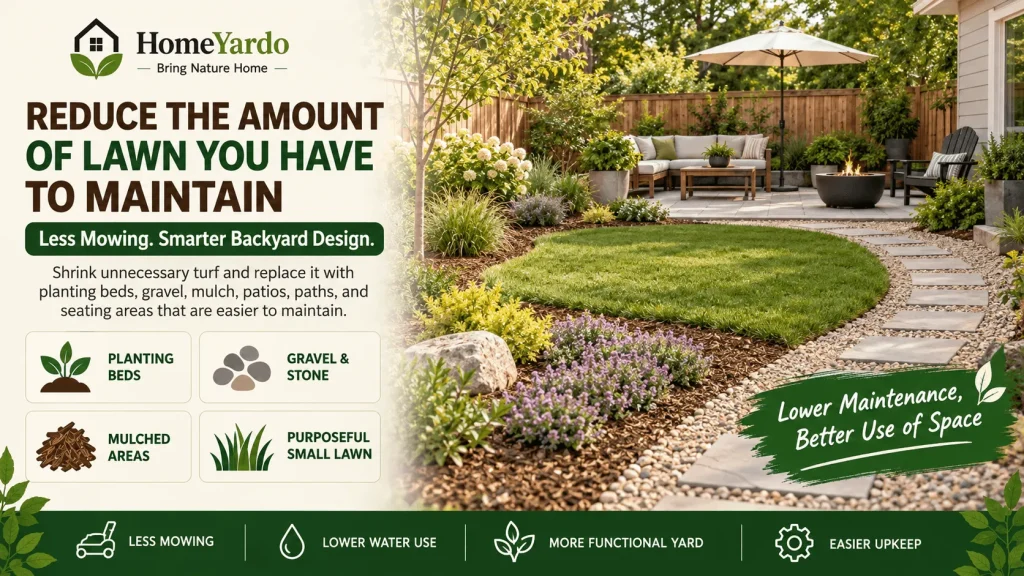
A large lawn can consume more maintenance time than almost any other part of a backyard.
Depending on the grass and climate, turf may require mowing, irrigation, edging, fertilizing, weed control, aeration, or seasonal renovation. If you rarely use much of the lawn, maintaining all of it may not make sense.
Replace unnecessary sections with:
- Planting beds
- Ground covers
- Gravel
- Stone
- Mulched areas
- Patios
- Paths
- Seating areas
This doesn’t mean removing every blade of grass.
Families with children or pets may still benefit from a smaller central lawn. The difference is that the turf has a purpose rather than occupying the yard simply because it has always been there.
Where grass remains, choose a species suitable for your region, sunlight, soil, and expected traffic. Zoysia and Bermuda suit certain warm regions, while fine fescues can be useful in some cooler areas. Local extension guidance is a better final source for choosing turf than a nationwide rule.
3. Plan Drainage Before Adding New Landscaping
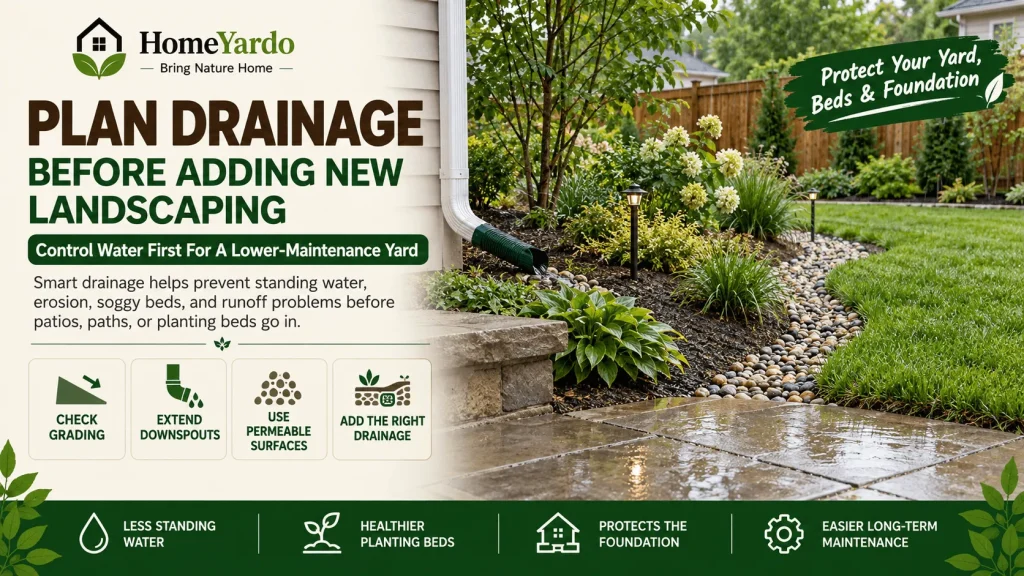
Low maintenance starts with controlling water.
A beautiful planting bed won’t stay easy to manage if it sits in standing water after every storm. The same applies to patios, gravel areas, and paths that direct runoff toward the house.
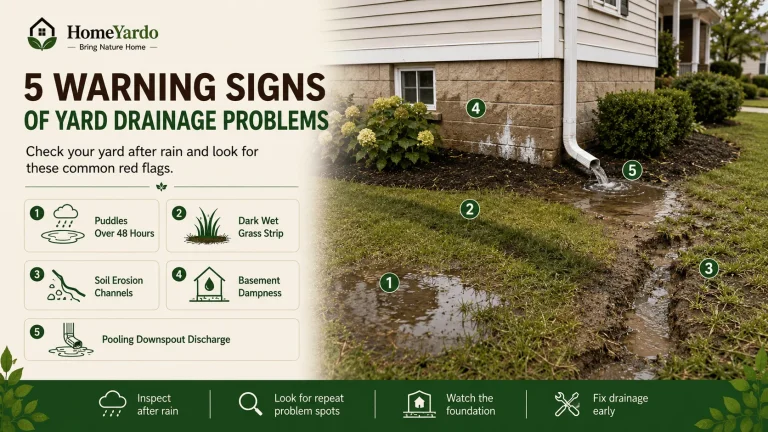
Watch your yard during or shortly after heavy rain. Look for persistent puddles, eroded soil, saturated planting beds, and runoff moving toward the foundation.
Before installing major hardscape, decide where rainwater will travel.
Possible solutions vary with the cause and may include:
- Correcting minor grading issues
- Extending downspouts
- Improving compacted soil
- Creating swales
- Using permeable surfaces
- Installing suitable drainage systems
- Planting rain-tolerant species in naturally wetter areas
Homeowners dealing with recurring standing water can read HomeYardo’s guide to yard drainage before redesigning the affected area.
Drainage is much easier to plan before a patio or garden bed goes in than after it starts causing problems.
4. Add Decorative Stone and Defined Garden Areas
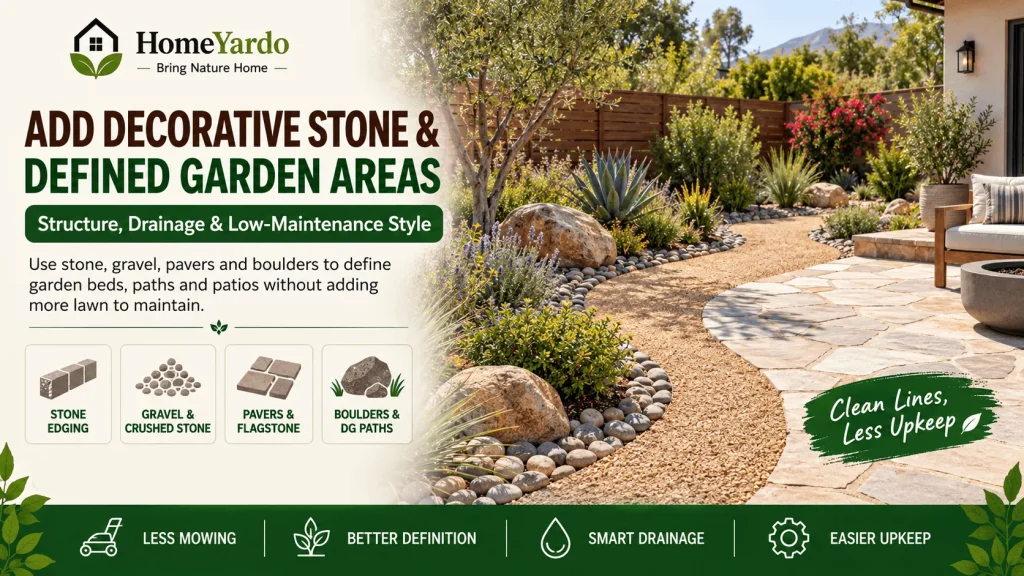
Hardscaping adds structure without creating another living surface that needs mowing, feeding, or regular watering.
Stone can define planting areas, edge paths, cover selected areas of soil, and create contrast between plants and hard surfaces.
Mexican beach pebbles work well around suitable planting beds, pathways, patios, and borders where their smooth, dark appearance fits the design.
They aren’t the only option.
- Gravel and crushed stone can suit paths, informal seating areas, and selected drainage features.
- Flagstone and pavers create durable walking and patio surfaces.
- Landscape boulders provide permanent structure without taking on the upkeep of another planted area.
- Decomposed granite can create compact, natural-looking paths where it is suitable for the climate and installation.
Choose the material based on drainage, foot traffic, accessibility, climate, and upkeep—not appearance alone.
Too many different materials can also make a small yard feel busy. Repeating two or three materials generally creates a more settled design.
5. Create Simple, Functional Pathways
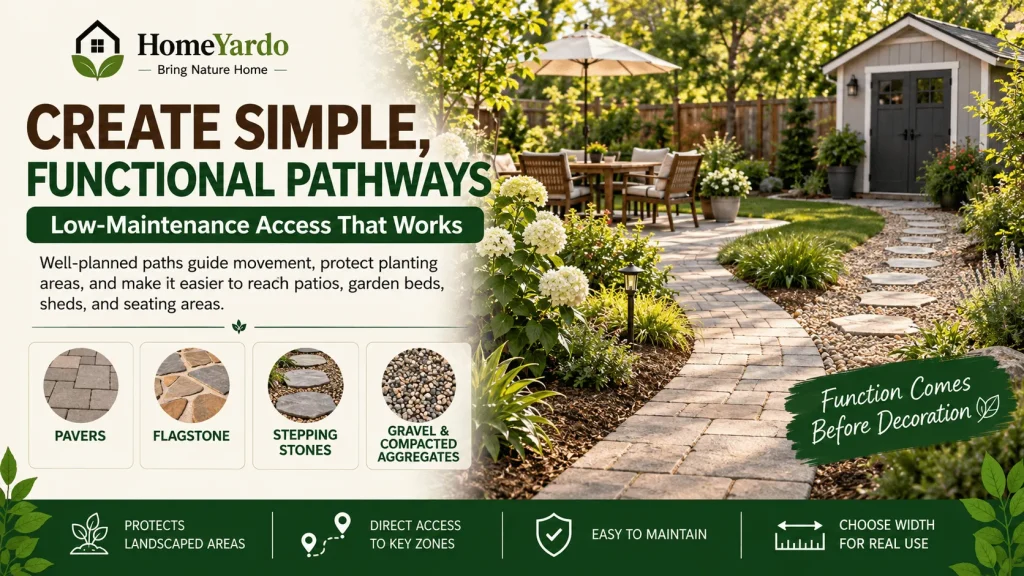
Paths organize how people move through a backyard and protect other landscaped areas from foot traffic.
They can also make maintenance easier by creating direct access to garden beds, patios, sheds, seating areas, and outdoor utilities.
Common low-care path materials include:
- Pavers
- Flagstone
- Stepping stones
- Gravel
- Compacted aggregates
Loose gravel drains well and is relatively simple to install, although it can migrate beyond the path and occasionally needs raking or topping up.
Homeowners who like the appearance of gravel but want a firmer surface can also consider self-binding gravel, provided the material and installation method suit the site.
Keep paths wide enough for their intended use. A decorative stepping-stone route can be narrow, while a frequently used route for bins, wheelbarrows, strollers, or mobility devices requires a different surface and width.
Function comes before decoration here.
6. Use Mulch to Reduce Weeding and Moisture Loss
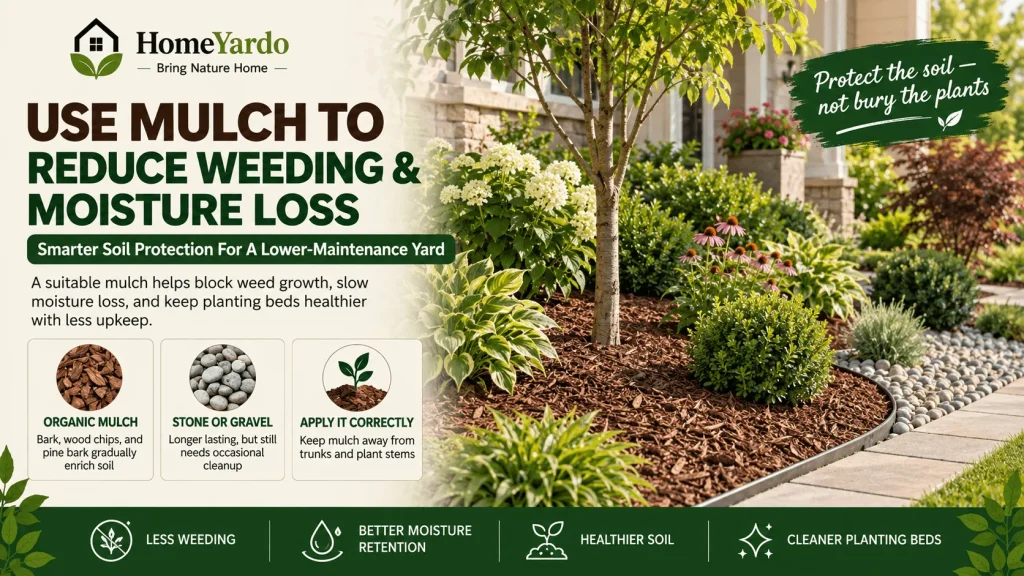
Exposed soil gives weed seeds room and light to establish. A suitable mulch covers the soil surface, slows moisture loss, and can reduce weed growth.
Organic options include:
- Shredded bark
- Wood chips
- Pine bark
- Other locally suitable plant-based mulches
Organic materials gradually break down and contribute organic matter to the soil, although they need periodic replenishment.
In good landscape designs, gravel and decorative stone can be used as a longer-lasting inorganic mulch. They don’t decay, but leaves, soil and other debris can accumulate between stones over time, so they’re not totally maintenance-free.
Avoid piling mulch against tree trunks or plant stems. Mulch depth should also suit the material and plant rather than following one rule everywhere.
The point is to protect the soil, not bury the plants.
7. Install an Efficient Irrigation System
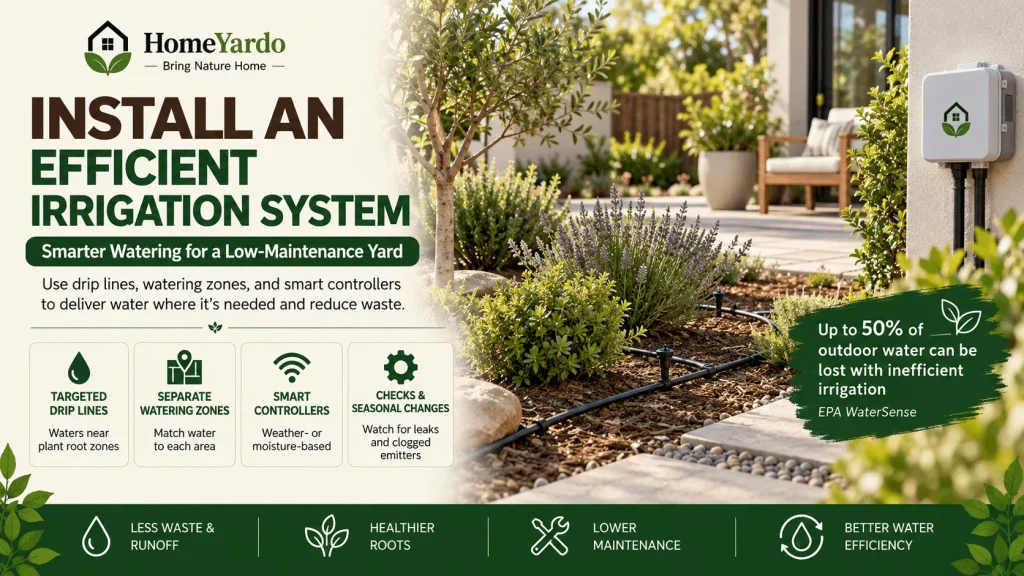
Dragging a hose around the backyard several times a week is hardly a low-maintenance system.
Where permanent irrigation is appropriate, drip lines or other targeted systems can deliver water near plant root zones instead of spraying every surface indiscriminately.
As much as 50% of the water used outdoors can be lost through wind, evaporation, and runoff caused by inefficient irrigation methods and systems, according to EPA WaterSense.
Don’t assume the entire backyard is one watering zone when designing your system. Make the irrigation system fit the land.
Imagine: Different Water Requirements for Different Zones: Drip irrigation for suitable beds; weather-based controllers; soil-moisture-based controllers; routine checks for blocked emitters and leaks; seasonal schedule changes; turn off rain where appropriate; new plants need more consistent watering during establishment of their roots. Low-water planting does not mean no-water planting from day one.
8. Choose Outdoor Materials That Age Well
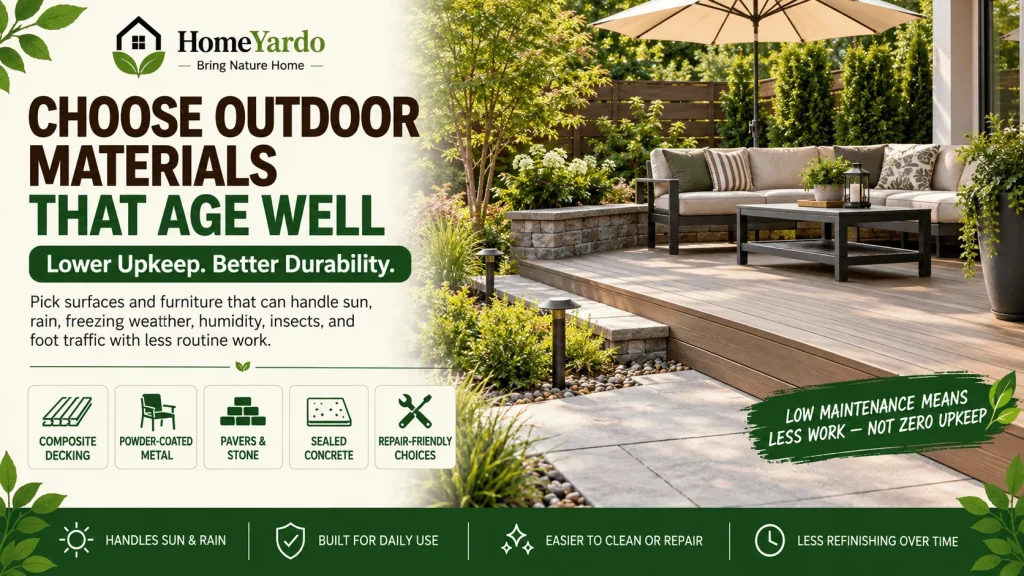
A low-maintenance landscape can still become high maintenance if the patio, deck, furniture, or edging needs frequent refinishing.
Compare materials according to their expected exposure to sun, rain, freezing conditions, humidity, insects, and foot traffic.
Depending on the project, lower-upkeep choices may include:
- Quality composite decking
- Aluminum furniture
- Powder-coated metal
- Properly installed pavers
- Suitable natural stone
- Sealed or appropriately finished concrete
Every material still needs some care. “Low maintenance” should mean less routine work, not zero upkeep.
Also consider repairability. A surface that can be cleaned or have one damaged unit replaced may be easier to own long term than a material requiring complete refinishing when something goes wrong.
9. Add Outdoor Features You Will Actually Use
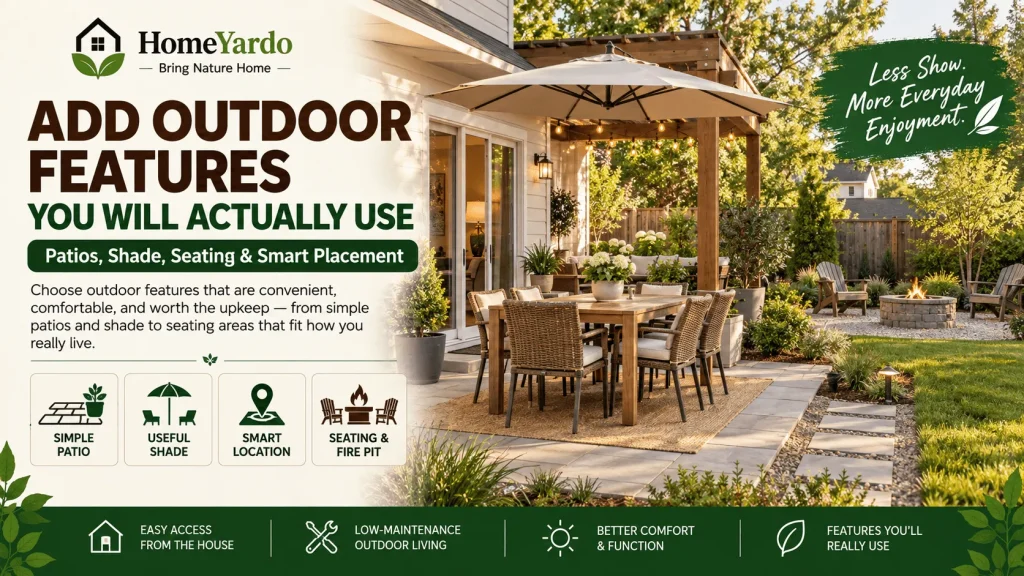
Adding fewer, better-planned features usually works better than filling every empty corner.
A simple patio can provide dining, seating, and entertaining space without creating another planted area to maintain. A gravel seating area can serve a similar purpose in a more informal yard.
Shade can come from an umbrella, shade sail, pergola, covered patio, or suitable tree depending on the site.
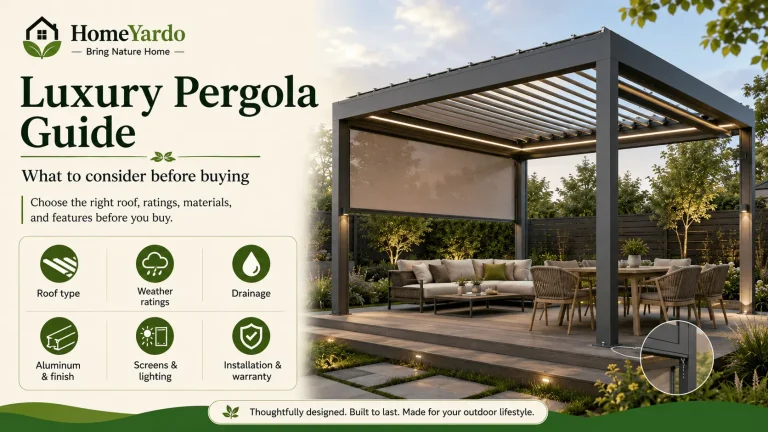
If you’re considering a permanent structure, think about use before appearance. HomeYardo’s guide to choosing a pergola for your backyard explains why roof type, drainage, weather exposure, placement, and intended use should be considered early.
Location matters too.
A dining patio close to the kitchen will generally be more convenient than one hidden at the back of the property. A fire pit needs suitable clearances and must comply with local fire and building requirements. A seating area should have a comfortable route from the house.
The easier a feature is to use, the less likely it is to become an expensive decoration nobody visits.
10. Keep the Backyard Design Simple
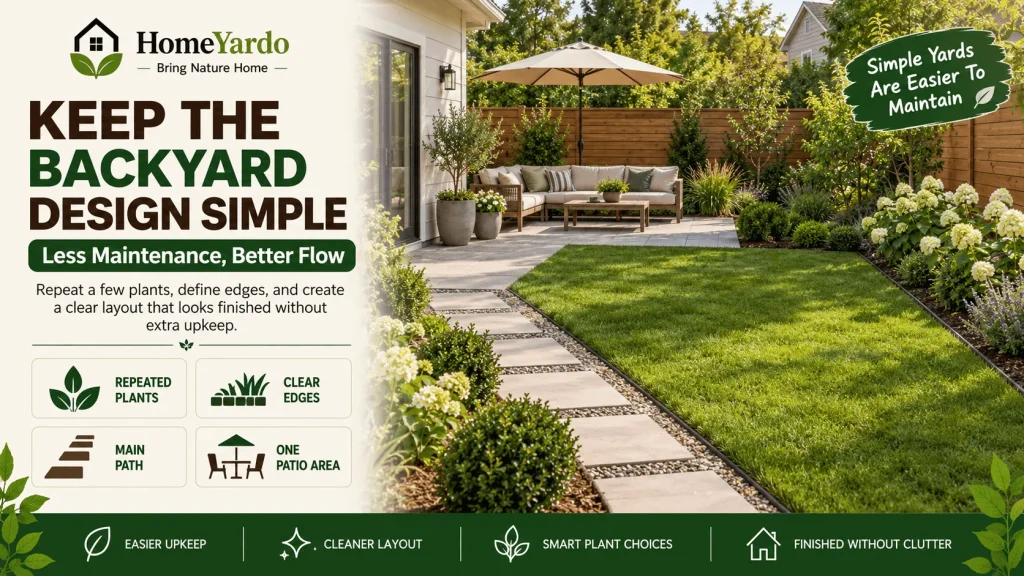
Complex landscaping often creates complex maintenance.
Instead of buying one of every plant that catches your eye, repeat a smaller selection throughout the yard. Repetition makes beds look intentional and simplifies pruning, watering, and plant care because fewer species have to be managed.
Clear edges also help. Define where lawn stops, where planting begins, and how people move from one area to another.
A simple low-maintenance layout might include a small lawn, two or three generously planted beds, a main path, one patio or seating area, and repeated shrubs or perennials.
That’s enough.
A backyard doesn’t need something happening in every square foot to look finished.
How Do You Make an Existing Backyard Lower Maintenanace?
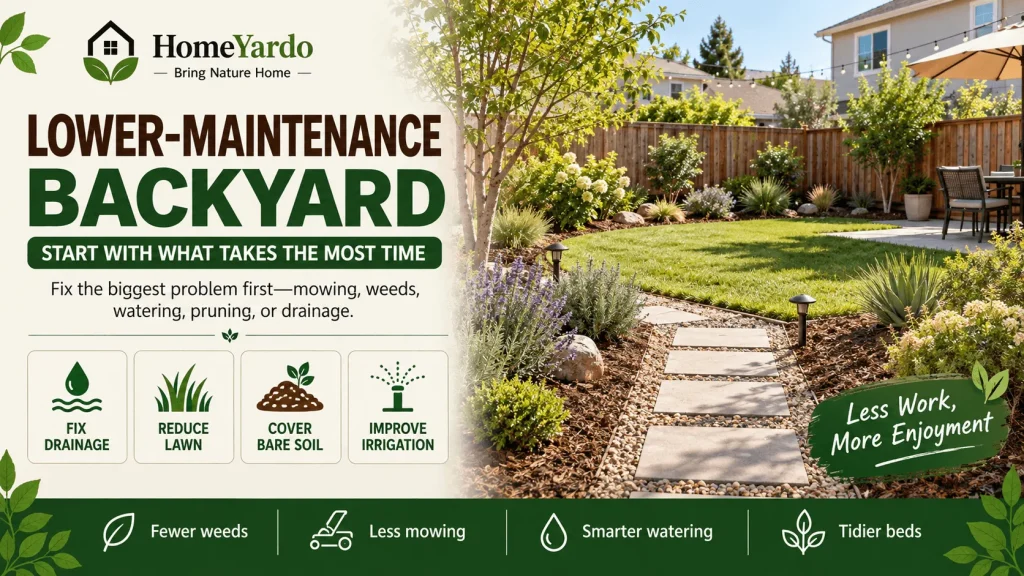
You don’t need to redesign the entire yard at once.
Start with whichever task consumes the most time.
If mowing is the problem, shrink the lawn. If weeds are the problem, improve bed coverage and mulch. If watering takes too long, reconsider placement of plants and irrigation. If you are continually pruning your shrubs, perhaps they are just too big for the space they were planted in.
A convenient order is: Correct drainage or grading issues.
- Remove plants that consistently struggle in the site.
- Reduce unused lawn.
- Correct overcrowded planting.
- Cover exposed soil.
- Improve irrigation.
- Define pathways and beds.
- Add hardscape only where it serves a purpose.
Changing the highest-maintenance part first usually produces a bigger improvement than doing several decorative projects at once.
Final Thoughts
The best low-maintenance backyard landscaping ideas aren’t shortcuts. They’re design choices that prevent unnecessary work later.
Use plants that suit the climate and available space. Keep lawn where you genuinely use it. Protect bare soil. Plan drainage before installing hardscape. Make irrigation fit the planting rather than watering everything equally. And choose outdoor materials according to how they’ll perform after years of weather exposure, not just how they look when they’re new.
A successful low-maintenance backyard will still need seasonal attention.
It simply shouldn’t demand every weekend.
FAQ‘s
A simple landscape with regionally suitable plants, limited lawn, mulched beds, clearly defined pathways, and efficient irrigation is usually easier to maintain. The best combination depends on climate, soil, sunlight, drainage and how the yard is used. Matching the landscape to those conditions matters more than choosing one supposedly maintenance-free material.
Start by reducing features that create recurring work. Unused lawns can be replaced with planting beds, ground covers, patios or appropriate areas of gravel. Select plants that are adapted to local conditions, mulch bare soil, group plants according to water needs and use targeted irrigation. Use a simple layout that is easy to access and maintain.
Alternatives to grass are ground covers appropriate to the region, mulch, gravel, planting beds, patios, pavers and other hardscapes. The right replacement depends on foot traffic, drainage, climate, sunlight, pets, children and local restrictions. You can also keep a smaller lawn while replacing only the areas that aren’t being used.
The best choices are plants suited to your USDA hardiness zone or local climate, sunlight, soil, drainage, and available space. Native plants, selected perennials, ornamental grasses, ground covers, and slow-growing shrubs can require relatively little attention once established, but no single plant list works well in every region.
Lawn might need more regular attention, but gravel isn’t maintenance-free. Leaves and organic material still need to be removed, weeds can grow in accumulated debris and loose stones may move into adjacent areas. Good edging, good site preparation, good drainage and the right aggregate make gravel areas easier to manage.
Use repetition and structure rather than filling every gap with a different feature. Combine a limited plant palette with defined beds, a clear pathway, one or two hardscape materials, and a useful seating area. Mixing evergreen structure with seasonal plants can keep the landscape interesting without creating excessive pruning, planting, or watering work.
Neither is automatically better. Organic mulch is useful around many plants because it protects soil and gradually breaks down, but it needs replenishing. Stone is more durable, but it can collect debris and get hot in open areas. Consider the plants, the climate, the drainage, the look you want, and how much maintenance you’re prepared to do.
Don’t go for the big hardscaping; start with the inexpensive changes. Don’t water lawn areas you don’t use. Divide overgrown plants. Apply the right mulch. Pull out dead plants. Change watering schedule. Make simple bed edges. Large patios and lots of stonework can reduce some maintenance, but aren’t required to create a simpler yard.