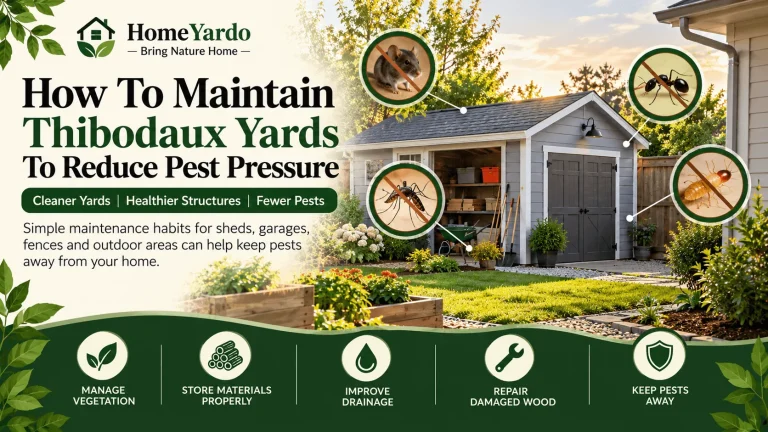
How Austin Yard Design Can Reduce Pest Pressure Near Your Home

A well-designed yard does more than improve curb appeal. It affects where rainwater collects, how quickly planting beds dry, where shade and shelter form, and how close vegetation, mulch, food residue, and stored materials sit to the house.
Those conditions can influence pest activity. Ants, cockroaches, mosquitoes, rodents, and other pests often respond to moisture, food, shelter, and protected travel routes. Austin Public Health also identifies standing water and overgrown vegetation as conditions that can contribute to mosquito or rodent problems.
In Central Texas, long warm periods and seasonal rainfall make exterior maintenance especially worthwhile. The goal is not to create a pest-proof yard. It is to reduce the conditions that make the area immediately around the house more attractive or easier for pests to use.
How Yard Design Affects Pest Pressure Around a Home
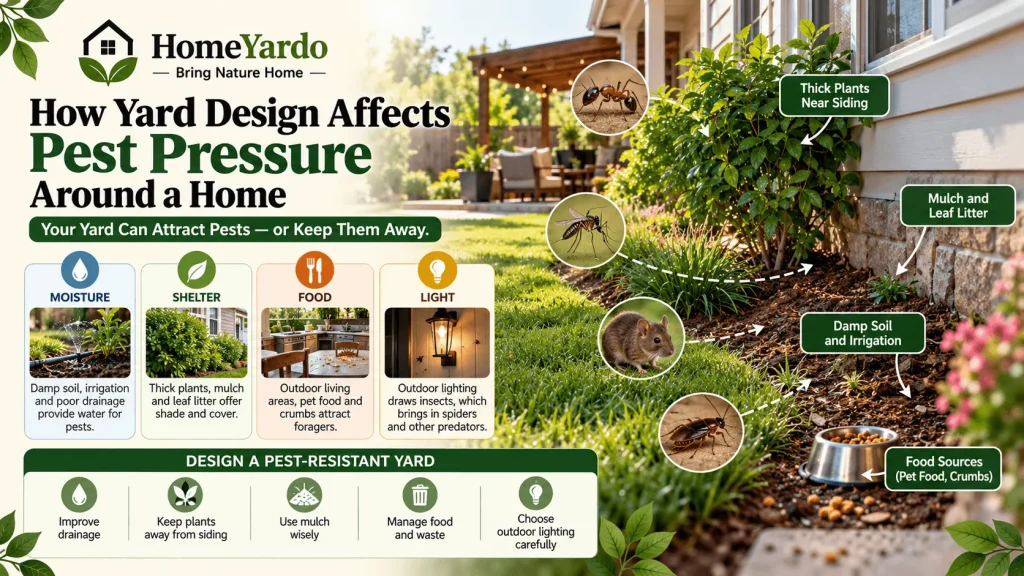
Pests do not usually choose a house at random. They follow conditions. A strip of damp soil, a thick layer of mulch, or a hedge that touches the siding offers water, shade, and cover, and any pest living nearby will find it. The foundation is where those conditions meet the building, so activity that starts in the yard often arrives at the wall first.
Central Texas adds its own pattern. Summers are hot and long, which pushes insects and small animals toward shade and moisture. Rain often comes in intense bursts, and clay-heavy soils in many Austin neighborhoods shed water slowly or crack and swell as moisture changes. Irrigation fills the gaps between storms, so many yards stay damp near plantings even in dry weather.
Outdoor living spaces make the effect stronger. Patios, decks, outdoor kitchens, and fire pits bring food, drinks, lighting, and people to the edge of the house. Crumbs, grease, pet food, and trash attract foragers, and lights draw the insects that spiders and other predators follow.
The practical point is simple. The yard works as an approach route, and its design can either slow pests down or deliver them to the door. Changing the conditions near the foundation is often more effective than treating insects one at a time.
Think of the area beside the foundation as a transition zone. The fewer sources of unnecessary moisture, dense shelter, food residue, and direct plant contact it contains, the easier it becomes to notice pest activity before it reaches an opening in the building.
Mulch Beds, Irrigation Lines, and Moisture Near the Home
Mulch helps plants by holding moisture and moderating soil temperature, and that same quality makes it attractive to pests. A deep layer holds water, keeps the soil underneath cool and damp, and provides cover for ants, cockroaches, earwigs, sowbugs, and other moisture-loving insects. When mulch is piled against the foundation, it also hides the base of the wall, so entry points and early signs go unseen.
A thin, even layer works better. Many landscapers suggest two to three inches, and keeping it several inches away from the siding or slab edge leaves a visible strip where pests are easy to spot. Stone or gravel near the foundation dries faster and offers less cover than organic mulch, though it should still be kept tidy.
Irrigation deserves just as much attention. Sprinkler heads that spray the wall, broken lines that saturate a bed, and drip tubing that leaks along the foundation keep the soil wet day after day. Constant moisture draws ants and cockroaches, supports mosquito larvae in standing puddles, and softens wood trim near the ground. Check zones during the day, watch for soggy spots or unexplained green patches, and adjust spray patterns so water reaches plants and not the walls.
Drainage ties everything together. A common guideline is for soil to slope away from the house, dropping about six inches over the first ten feet. Gutters and downspouts should carry roof water well beyond the foundation, since a downspout that empties at the wall creates a permanent damp zone.
If puddles repeatedly form after storms or irrigation, this guide to fixing yard drainage explains how grading, downspouts, compacted soil, and drainage systems affect where water collects.
Dense Shrubs, Stacked Materials, and Shaded Patio Edges
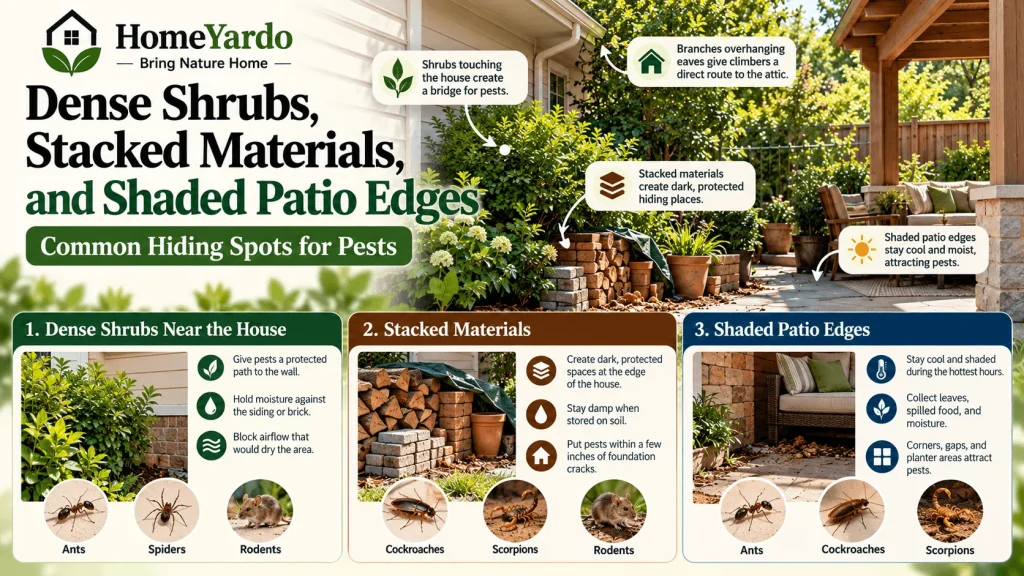
Vegetation planted too close to the house creates a bridge. Dense shrubs that touch siding or brick give ants, spiders, and rodents a protected path to the wall, hold moisture against the surface, and block airflow that would otherwise dry the area. Branches that rest on the roof or overhang the eaves give climbers, including roof rats, a direct route to the attic.
Stacked materials add shelter. Firewood piles, scrap lumber, bricks, pavers, pots, bags of soil, and tarps create dark, protected spaces at the edge of the house. Cockroaches, scorpions, and rodents use these gaps during the day, and a pile that sits against the foundation puts them within a few inches of the nearest crack. Items stored directly on soil also stay damp, which attracts more insects.
Shaded patio edges deserve a look too. The corners where a patio meets a wall, the space beneath built-in seating, and the gaps around planters and outdoor kitchens stay cool and shaded through the hottest hours. Leaves, spilled food, and moisture collect there, and the spot becomes a regular stop for ants and cockroaches.
When recurring pests continue to gather around a home’s foundation despite routine cleanup, homeowners can contact Reliant Pest Management in Austin for an inspection to identify the species involved and locate potential entry points. In Austin’s warm climate, pests such as fire ants, cockroaches, and rodents can remain active for much of the year, so identifying the source of the activity is important before deciding on the appropriate treatment.
Practical Yard-Care Steps That Reduce Pressure

Most of the useful changes are simple and cost little. These steps form a reasonable starting routine:
- Improve drainage by regrading low spots, extending downspouts, and cleaning gutters so water flows away from the foundation.
- Trim shrubs, vines, and tree limbs so they stay at least a foot or more away from walls and well clear of the roofline.
- Keep mulch at a reasonable depth of about two to three inches, and pull it back several inches from the siding or slab edge.
- Repair irrigation leaks, aim sprinkler heads away from walls, and shorten watering near the foundation.
- Move firewood, lumber, pots, and other stacked items away from the house, and store them off the ground.
- Keep patios and outdoor kitchens clean by wiping surfaces, sweeping crumbs, storing pet food indoors, and using trash cans with tight lids.
- Seal gaps around utility lines, vents, and the base of the wall with appropriate materials.
Homeowners redesigning more than the foundation edge can also use these low-maintenance backyard landscaping ideas to reduce repeated watering, pruning, mowing, and other routine yard work.
Do these checks after storms as well as on a regular schedule. A heavy rain shows where water collects and which downspouts fail. Walk the perimeter, look for puddles, soggy mulch, new ant trails, and droppings, and fix problems while they are small.
Outdoor lighting can help or hurt. Bright white lights near doors draw flying insects, which in turn draw spiders. Warm-colored bulbs placed away from entrances reduce that effect. When activity keeps moving closer to the walls despite these habits, a visit from pest management experts or another licensed company can show whether the cause lies in the yard layout, a hidden entry point, or a nearby nest.
A Seasonal Routine For Central Texas
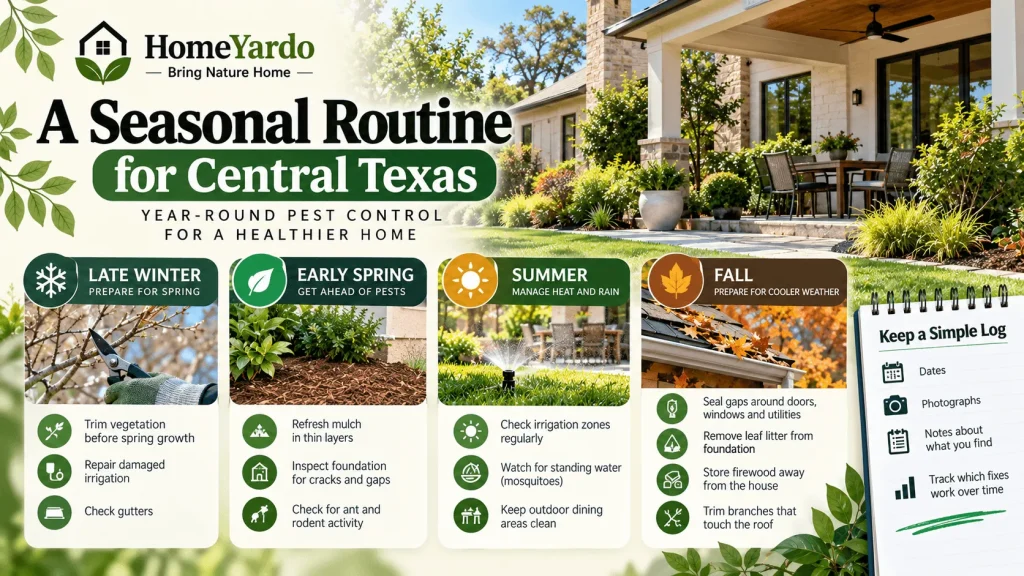
Austin’s climate gives pests several active seasons, so a routine that follows the calendar works better than a single cleanup. In late winter, trim vegetation before spring growth, repair damaged irrigation, and check gutters. Early spring is a good time to refresh mulch in thin layers and inspect the foundation for cracks and gaps before ant and rodent activity picks up.
Summer brings heat and bursts of rain. Check irrigation zones regularly, since overwatering during hot weather is common, and watch for standing water that could support mosquitoes. Keep outdoor dining areas clean, because food and drink residue attract ants and flies quickly in warm weather.
Fall is the time to prepare for cooler temperatures that push pests toward shelter. Seal gaps around doors, windows, and utility penetrations, remove leaf litter from beside the foundation, and stack firewood away from the house. Trim branches that touch the roof before rodents begin looking for winter shelter.
The same approach can be built into ordinary property upkeep. HomeYardo’s seasonal pest checks guide explains how moisture, entry points, vegetation, stored materials, and signs of pest activity can be checked during routine maintenance.
Keep a simple log with dates, photographs, and notes about what you find. Over time, it shows which areas stay damp, where trails appear, and which fixes work. That record is also helpful if a professional is ever needed, since it shortens the time it takes to find the cause.
Final Takeaway
Austin yard design can influence how much moisture, shelter, food, and protected cover exists near a home’s foundation and outdoor living areas.
Start with the conditions rather than the pest itself. Keep drainage moving away from the structure, watch irrigation for leaks and overspray, manage mulch carefully, maintain space around dense vegetation, remove unnecessary clutter, and keep patios and outdoor kitchens clean.
These steps cannot guarantee a pest-free property, but they make the area around the home less accommodating and make new activity easier to spot. When pests continue returning despite good maintenance, correct identification and a professional inspection may be the next sensible step.
FAQs
Landscaping can reduce conditions that support pest activity by improving drainage, limiting unnecessary moisture, preventing dense vegetation from touching the structure, managing mulch, removing clutter, and keeping food waste away from exterior walls. It cannot eliminate every pest problem, but it can make the area around a home less attractive and easier to inspect.
Mulch can retain moisture and provide protected spaces for some insects and other small organisms. That does not mean homeowners need to remove mulch entirely. Avoid excessively deep layers and keep the base of exterior walls visible enough to inspect.
Persistent moisture can create favorable conditions for several pests and can also contribute to standing water. Check irrigation for leaks, overspray, clogged emitters, and zones that remain wet longer than the plants require.
Start by removing standing water. Empty or maintain containers, plant saucers, gutters, pet bowls, toys, buckets, and other items that collect water. Austin Public Health recommends checking for and draining standing water at least weekly.