Patio Door Installation: Sliding vs. French vs. Hinged, What Works Best for Your Space
If you have ever stood in your backyard and thought, “there has to be a better way to get in and out of this house,” you are not alone. The door connecting your home to your outdoor living area matters more than most homeowners realize. A well-planned patio door installation shapes how your space feels, how much natural light comes through, how well your home holds in heat or cool air, and how easily your family moves between indoors and out. Choosing the right style for your situation is the first step toward getting all of that right.
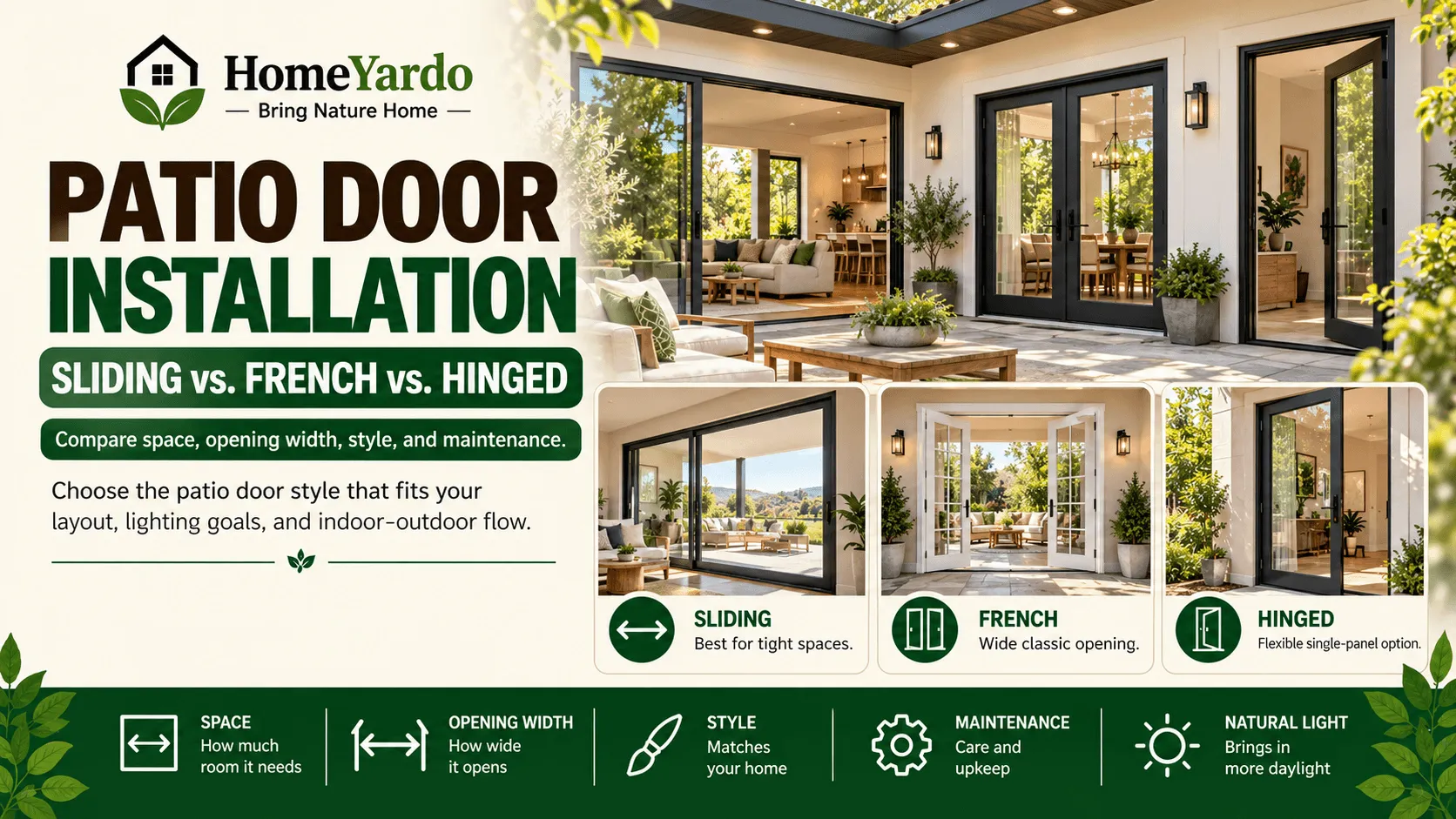
The three most common options are sliding patio doors, French doors, and hinged patio doors. Each one has real advantages, and each one has drawbacks depending on your layout, your lifestyle, and your home’s architecture. This guide breaks down all three so you can walk into any conversation with a contractor already knowing what questions to ask.
Why the Door Style Choice Matters More Than You Think
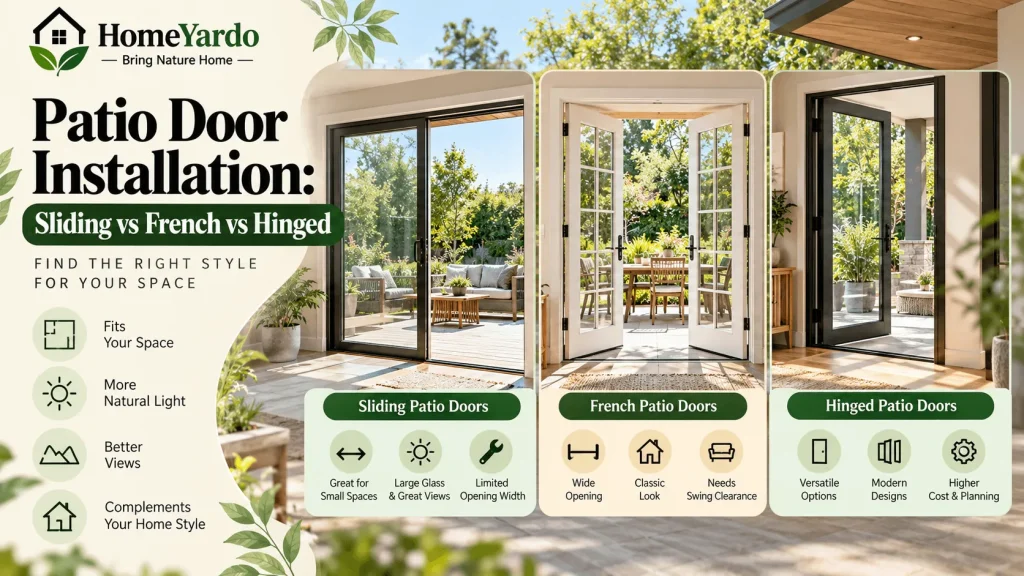
A lot of homeowners focus on color, glass, or hardware when thinking about a new patio door. Those things matter, but the style of door comes first because everything else builds on top of it. The style determines how much floor space you need to clear, how wide the opening actually gets when the door is fully open, and how much glass you end up with for natural light and views.
Getting the style wrong can mean a beautiful door that never quite works for how your family actually lives. The same principle applies when you balance style and function in home upgrades: appearance matters, but the feature also needs to support everyday use. Getting it right means a door you barely have to think about because it just fits.
Sliding Patio Doors
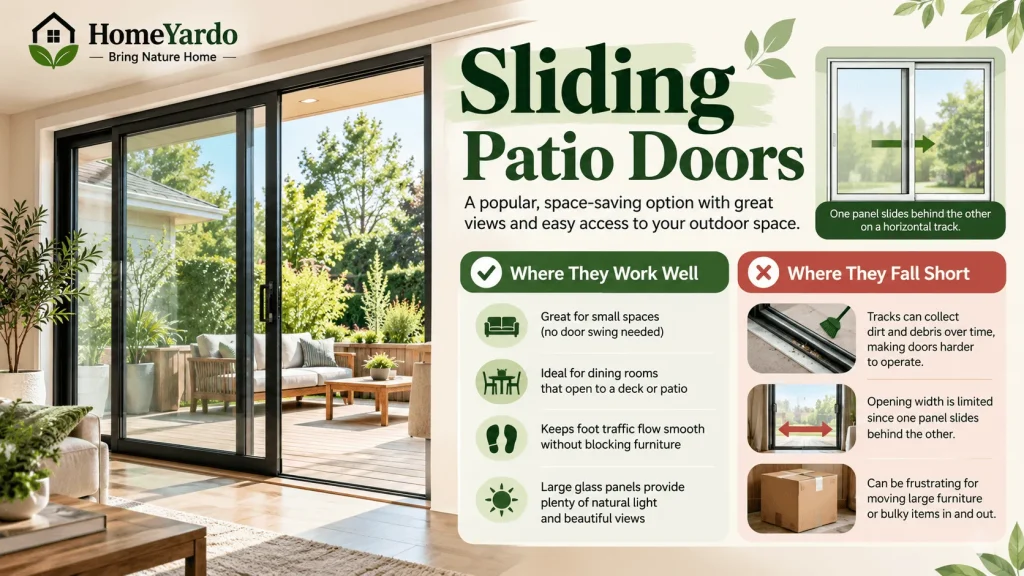
Sliding patio doors are the most widely installed option in residential homes, and there are good reasons for that. The panels glide along a horizontal track, so one panel slides behind the other rather than swinging out into a room or onto a deck. That makes them a natural fit for spaces where swing clearance is limited.
Where they work well:
Smaller rooms benefit a lot from sliding doors because you do not have to account for a door arc. If your dining room connects directly to a deck and the table sits close to the door wall, a sliding door keeps the flow clean. They also work well on decks or patios where a swinging door would interrupt foot traffic or bump into outdoor furniture.
From a light and view standpoint, sliding doors are hard to beat. Most configurations offer a large fixed glass panel alongside the sliding panel, which means a wide, uninterrupted view even when the door is closed. That is a genuine advantage if you back up to a yard or landscape you want to look at.
Where they fall short:
One of the most common complaints about sliding doors is the track. Over time, dirt, debris, and wear can make sliding panels harder to operate. Quality hardware and regular maintenance help, but it is something to keep in mind. The opening width is also limited by design. Because one panel slides behind the other, you never get the full width of the door frame as clear passage. For moving furniture or large items in and out, that can be frustrating.
French Patio Doors
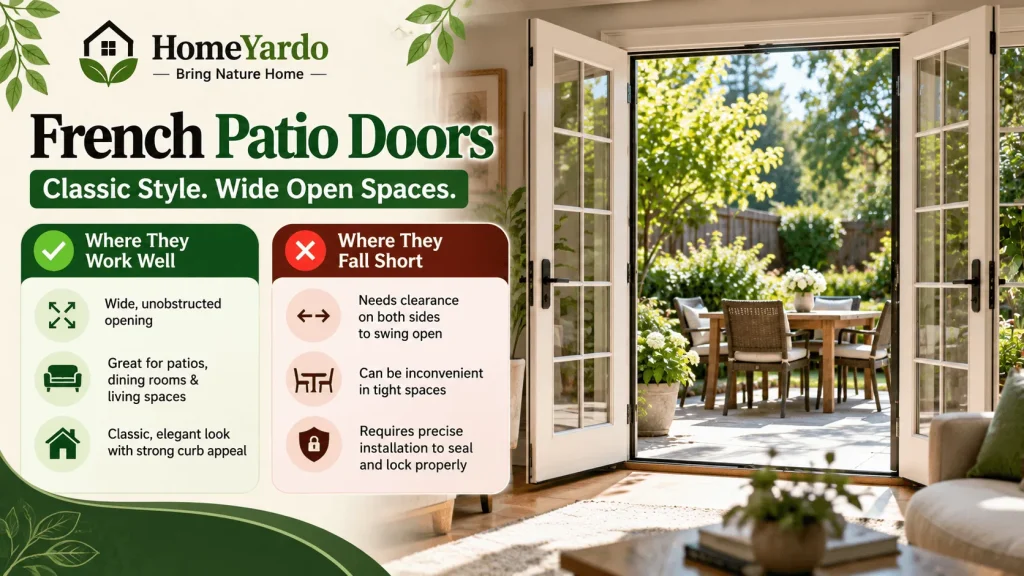
French doors are two panels that are hinged on the outer edges and meet in the middle. Both panels swing open at the same time, which gives you a wide, unobstructed opening that sliding doors simply cannot match. They have a classic, traditional look that suits a lot of home styles, particularly older construction, craftsman designs, and more formal architectural details.
Where they work well:
If clearance is not an issue, French doors are genuinely satisfying to use. Opening both panels creates a wide passageway that makes moving between indoor and outdoor spaces feel natural and easy. They are popular on patios connected to dining rooms, living rooms, or great rooms where the indoor-outdoor connection is meant to feel intentional and open.
Door style should also relate to the rest of the facade. When making a larger exterior update, consider how the door works with the windows, trim, siding, and other exterior features that complement your home.
Where they fall short:
French doors need clearance on both sides of the opening for the panels to swing freely. That limits where you can place furniture inside the room and what you can put directly outside the door. If you have a small deck or a screened-in porch where space is tight right at the doorway, two outward-swinging panels can be a real inconvenience.
There is also a seam where the two doors meet in the middle, which requires a secure locking mechanism to maintain weather resistance and security over time. It is important that the installation is done precisely so the doors align well and seal properly. A door that rubs or does not close flush is not just annoying. It can affect energy performance and security.
Hinged Patio Doors (Single or Multi-Panel)
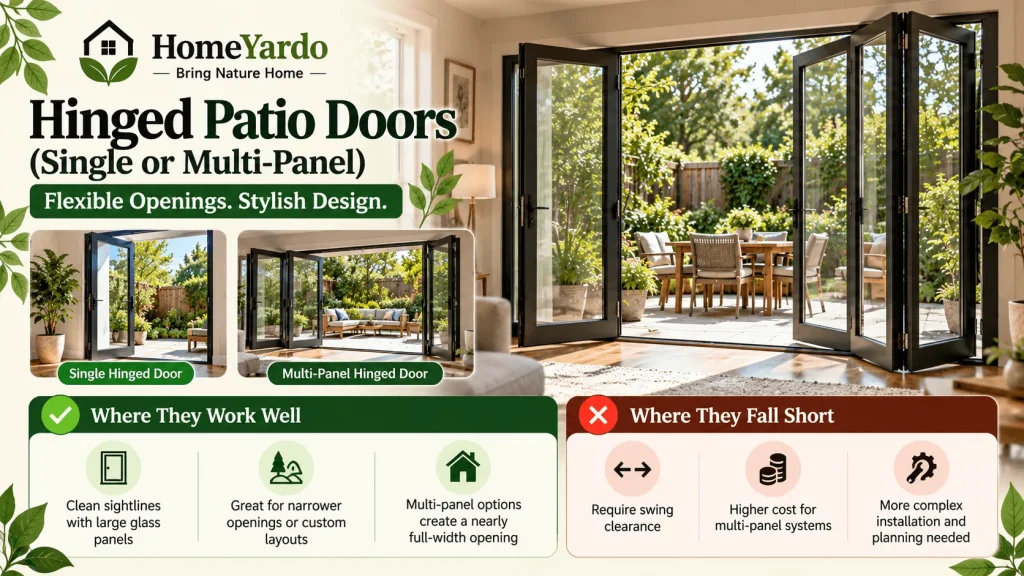
Hinged patio doors are similar to French doors in that they swing on hinges, but this category includes single-panel hinged doors as well as larger multi-panel configurations where one or more panels swing open while others may remain fixed. Think of an oversized single door, or a door-plus-sidelight configuration where one large panel opens and flanking glass panels stay in place.
Where they work well:
A single hinged patio door is a practical middle ground when you want the clean sightlines of a large glass door without the complexity of two swinging panels. It suits narrower openings where a full French door setup would be too wide, and it looks more substantial than a standard sliding door in terms of design character.
Multi-panel hinged configurations are increasingly popular in renovation projects where homeowners want to dramatically open up a wall and strengthen the connection with an outdoor living area. If the patio itself is part of a larger project, it helps to plan the door alongside the surrounding residential concrete patio and outdoor surfaces rather than treating each improvement separately.
Some of these systems fold or stack to the side, creating a nearly full-width opening that blends indoor and outdoor living in a way that feels completely different from any standard door. These are a bigger investment and require careful planning, but the result can be striking.
Where they fall short:
Single hinged patio doors, like French doors, require swing clearance. They also create an asymmetrical opening, which does not suit every layout or every homeowner’s preference. For the multi-panel folding versions, the cost and the complexity of installation go up significantly. They work best when the project is planned from the beginning with that type of door in mind, not as an afterthought.
How to Think About Your Space Before Choosing
Before settling on a style, walk through a few practical questions:
How much clearance do you have? Measure the space on both sides of the door opening, inside the room and outside on the deck or patio. If furniture crowds the opening on either side, swinging doors create real problems. Sliding panels eliminate that concern entirely.
How wide do you need the opening to be? If you frequently move large items between your home and yard, or if you want a genuinely open connection during warmer months, a wider opening matters. French doors and multi-panel systems beat sliding doors in this department.
What style fits your home? A craftsman bungalow looks right with French doors. A newer, more minimal home might suit a clean sliding door or a hinged single panel better. The door should look like it belongs, not like it was added as an afterthought. Looking at the principles of home exterior design can also help you coordinate the new door with existing windows, siding, trim, materials, and architectural proportions.
What is your priority: maintenance ease or design impact? Sliding doors are generally lower-maintenance day to day. French and hinged doors have more visual impact but require precise installation and good hardware to perform well over time.
The Installation Side of the Equation
No matter which style you choose, the quality of the installation determines how well the door actually performs. A sliding door installed on an uneven track will stick and drag within a few seasons. A French door hung slightly out of plumb will not seal properly, which means drafts and potential water infiltration at the seam. A hinged door with an improperly flashed frame can let moisture work its way into the wall system before you ever notice a problem inside.
Patio doors should also become part of your regular exterior checks after installation. A simple seasonal home maintenance routine can help you spot deteriorating seals, drainage issues, difficult operation, or moisture problems around exterior doors before they become more expensive repairs.
This is why choosing your door style and choosing who installs it deserve equal attention. The best door on the market can underperform if the surrounding frame, the rough opening preparation, the flashing, and the threshold are not addressed carefully during the installation process.
Ask any contractor you consider about how they handle the rough opening, how they address any rot or damage they find, and how they seal and flash the exterior frame. Those answers will tell you a lot about whether the door you invest in will still be working well a decade from now.
A Quick Side-by-Side Summary
| Quick | Sliding | French | Hinged (Single/Multi) |
|---|---|---|---|
| Swing clearance needed | No | Yes, both sides | Yes, one or both sides |
| Full-width opening | No | Yes | Depends on configuration |
| Best for small spaces | Yes | Not ideal | Situational |
| Traditional look | Moderate | Strong | Moderate to strong |
| Maintenance | Track cleaning required | Hinge and seal maintenance | Hinge and seal maintenance |
| Light and views | Excellent | Excellent | Good to excellent |
Final Thoughts
There is no single right answer when it comes to patio door style. The best choice for your home depends on your layout, your architecture, how you actually use the space, and what you want the door to do for you long-term. If the new patio door is one part of a broader renovation, creating a residential exterior refresh plan can help you prioritize repairs and coordinate related exterior projects in the right order.
Spending time thinking through those factors before you commit to a style, a material, or a price point will save you from buyer’s remorse after the install is done.
Once you know what you want, invest in quality materials and make sure the installation is handled by someone who takes the preparation as seriously as the product. That combination is what produces a patio door that still looks good, operates smoothly, and seals tight years down the road.
FAQ’s
A sliding patio door is often the easiest option for a small room, patio, or deck because the panels move horizontally instead of swinging into usable space. Measure the clear opening and surrounding furniture layout before deciding.
Neither style is universally better. Sliding doors save space and provide large glass areas, while French doors can provide a wider clear opening and more traditional appearance. The better choice depends on your layout and priorities.
They can be, but price depends on size, frame material, glass package, hardware, installation conditions, and product quality. Compare complete installed quotes rather than assuming one door style will always cost more.
Traditional French doors can provide a wide clear opening when both panels are operable. Large multi-panel sliding, stacking, or folding systems can create even broader openings, depending on their configuration.
Sliding doors are often suitable because they do not need an exterior swing area. A single hinged door may also work if it can swing inward without interfering with furniture or circulation.
They can be. Energy performance depends on the complete door assembly, including glazing, frame material, weatherstripping, construction, product ratings, and installation quality. Compare rated products rather than relying on door style alone.
The answer depends on the product, available clearance, weather exposure, local requirements, security considerations, and the surrounding layout. Confirm the intended swing direction before ordering because it affects both indoor and outdoor usable space.
A straightforward replacement may be completed relatively quickly, while projects involving structural changes, damaged framing, custom doors, exterior finishing, or enlarged openings can take longer. The installer should assess the existing opening before providing a project-specific timeline.
Often, yes, provided a suitable French-door unit fits the opening and the surrounding structure and clearance support it. Changes to the opening, threshold, trim, framing, or exterior finish may be necessary depending on the existing installation.
Open and close every operating panel, test the locks, inspect the threshold, check visible seals and trim, and make sure the door moves without rubbing, dragging, or excessive resistance. Ask the installer to explain maintenance and warranty requirements before final sign-off.