How New England Homeowners Avoid Winter Propane Runouts
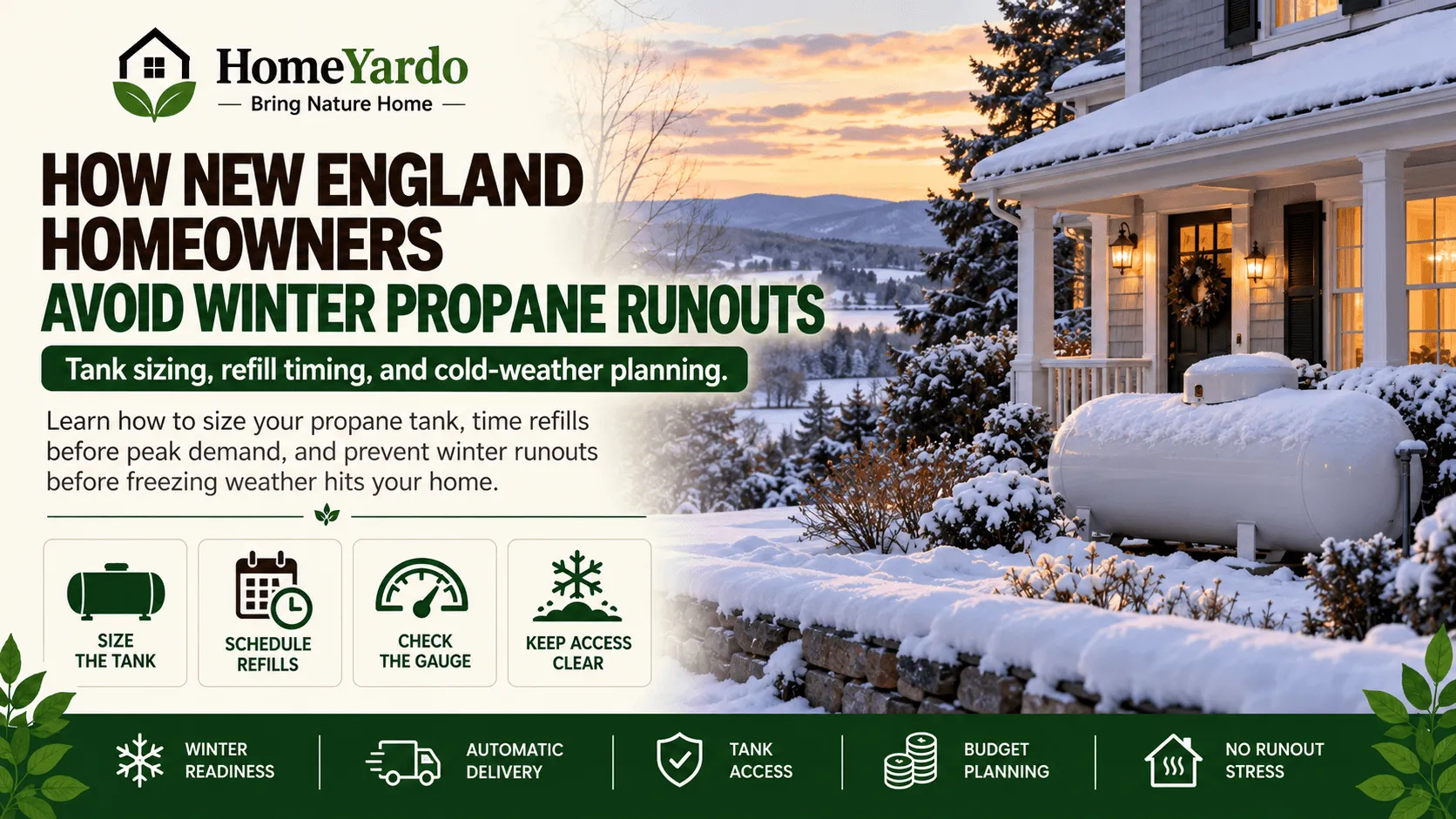
The first hard freeze of the season usually lands on a Sunday night, and that’s when the panic calls start. Somebody’s tank hit 18 percent over the weekend, the gauge is buried under ice, and the family is debating whether to run space heaters off extension cords. I’ve watched this exact scene play out in Worcester County more times than I can count, and it’s almost always avoidable. A little planning in September saves you a very cold, very expensive January.
Here’s the thing most homeowners learn the hard way: propane logistics in New England are seasonal, not reactive. Delivery trucks fill up their routes early, drivers know which driveways are nightmares after a snowstorm, and suppliers price and schedule around demand that spikes hard from November through March. If you’re still calling for your first fill in the middle of the season, you’re competing for slots with thousands of other people doing the same thing. Setting up propane delivery before the rush gives you a route slot, a driver who knows your property, and a fill schedule that runs on data instead of guesswork.
What follows is the system I’d use if I owned a home in Central Massachusetts. It’s not complicated, but it’s specific, and that specificity is what keeps your heat running when the temperature hits single digits.
Why Your Tank Runs Out at the Worst Possible Time
Cold weather does two things at once, and both work against you. It raises how much fuel you burn, because your furnace cycles more often to hold the same indoor temperature. And it slows down how much usable vapor your tank can produce, because propane pressure drops as the tank gets cold and empties. Those two effects stack right when your usage is highest.Cold weather does two things at once, and both work against you. It raises how much fuel you burn, because your furnace cycles more often to hold the same indoor temperature. If the system seems to be running much longer than normal even after accounting for colder weather, check for other HVAC warning signs rather than assuming higher propane use is caused by outdoor temperature alone.
Cold weather does two things at once, and both work against you. It raises how much fuel you burn, because your furnace cycles more often to hold the same indoor temperature. And it slows down how much usable vapor your tank can produce, because propane pressure drops as the tank gets cold and empties. Those two effects stack right when your usage is highest.
Most homeowners only look at the gauge. That’s a mistake. The gauge tells you what’s in the tank today, not how fast it’s disappearing. I’d rather you track cold-degree days than percentages. The federal Department of Energy publishes broad guidance on home heating efficiency and seasonal energy use that’s worth reading before you plan a season, because it reframes the whole problem around demand instead of a single number on a dial.
A tank sitting at 30 percent in October is very different from the same tank sitting at 30 percent during an extended cold snap. If your home is burning through heating fuel faster than expected while rooms still feel cold or drafty, it may also be worth checking for signs your home needs new insulation. Fuel planning works best when the house itself is not wasting the heat you’re paying to produce.
Match the Tank to the House, Not the Other Way Around
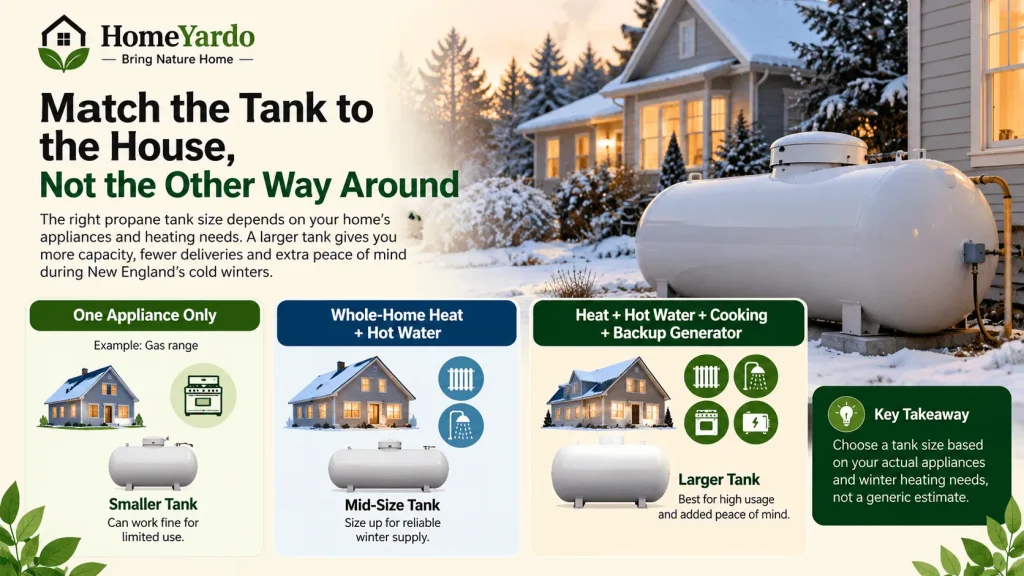
Oversized tanks aren’t wasteful and undersized tanks aren’t thrifty. Tank size affects how often you need a refill and how safely the system runs in deep cold. A 500-gallon tank typically holds around 400 gallons of usable fuel, which gives you a buffer during a cold snap. A 250-gallon tank on the same house means more frequent deliveries and less margin when a storm shuts down roads for a few days.
If you heat a whole house, cook on gas, run a propane water heater, or have a generator, your usage stacks fast. I’d take a slightly larger tank over a “just enough” tank every single time in this climate. The extra capacity is insurance you barely notice until the night you need it.
Here’s a rough way to think about it:
- One appliance only (say, a gas range): a smaller tank can work fine.
- Whole-home heat plus hot water: size up, because winter draw is relentless.
- Heat, hot water, cooking, and a backup generator: you’re in the big-tank category, full stop.
Ask your supplier to size the tank against your actual appliances, not a generic estimate. A good driver will do this in five minutes over the phone.
Switch Your Head Out of “Call When It’s Low” Mode
Automatic delivery exists for a reason. It tracks your usage history and local weather, then schedules a refill before the tank gets anywhere near empty. That removes the single biggest cause of runouts: you forgetting to check a gauge in a week when you’re shoveling snow and working late.
Manual checking still has a place. I’d walk out to the tank every two weeks from November through March, note the percentage in your phone, and compare it to the last reading. A rapid drop over a short window is your signal that something changed, whether that’s a colder stretch or a leak, and it’s a signal worth acting on.
Propane planning should also be paired with heating-system preparation. Homeowners who arrange seasonal HVAC tune-ups before sustained winter use have a chance to identify maintenance issues before the heating system is working through the coldest part of the year.
Make Your Driveway Ready Before the Truck Shows Up
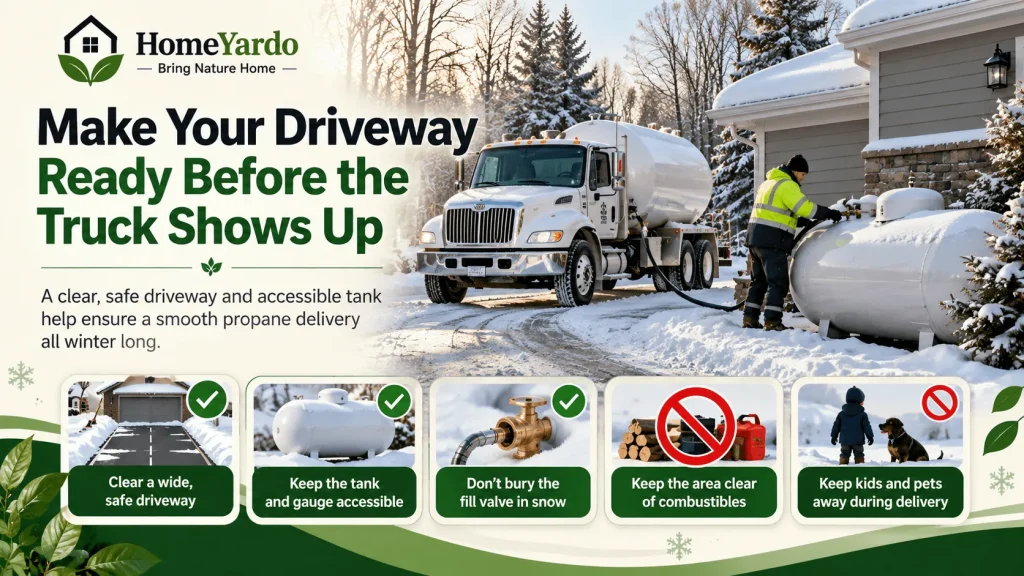
This one is on you, and it matters more than people admit. A delivery driver can’t safely pull a heavy truck down a rutted, icy, half-plowed driveway. If the tank can’t be reached, the fill doesn’t happen, and now you’re at the back of the queue.
So clear a path wide enough for a truck, keep the tank and its gauge accessible, and don’t bury the fill valve under a snowbank. Make sure the tank area stays clear of anything combustible, and keep kids and pets away during a fill. Fire safety organizations such as the National Fire Protection Association publish general guidance on handling and storage of flammable fuels that’s a decent sanity check for your setup.
The homeowners who never run out aren’t luckier or richer. They just keep a clear driveway and a filled tank.
Budget the Season, Not the Month
Propane spending is lumpy. You’ll burn most of your annual fuel in a few cold months, and then barely touch the tank in summer. If you budget monthly, those winter bills feel brutal. If you budget seasonally, they feel normal, because you planned for them.
Some suppliers offer programs that spread payments across the year. Take one if it fits your cash flow. Broad pricing patterns in the fuel market come from the Energy Information Administration, and understanding that fuel costs move with national supply and demand helps you stop taking a January price jump personally. It’s weather and markets, not your supplier being cruel.
One more practical habit: schedule your summer fill. Fuel tends to be cheaper and trucks are easier to book when nobody else is thinking about heat.
Quick Checklist Before the First Cold Snap
Fuel isn’t the only system that needs attention before freezing weather arrives. If you’re preparing the property for winter at the same time, make sure you also winterize outdoor faucets and sprinkler systems before the first expected freeze.
- Confirm your tank size is right for your appliances.
- Set up automatic delivery or a firm recurring schedule.
- Test your carbon monoxide detector and check the furnace before it’s needed.
- Find and label your tank’s shutoff valve.
- Clear a truck-width path and keep the tank accessible all winter.
- Pick a payment plan now, not in February.
Run that list in October and your winter gets a lot less dramatic. If you’d rather hand the whole thing to a crew that’s done it for generations in this region, propane delivery is worth sorting out early.
The real question isn’t whether you can save a few dollars calling a cut rate hauler right when you’re out. It’s whether you want to spend a February night watching a gauge drop while you wait on hold. Which of those two timelines do you want to live in this winter?
FAQ’s
There isn’t one reorder percentage appropriate for every household or supplier. Ask your propane provider for its recommended reorder point based on your tank, consumption, location, and delivery schedule. During severe weather or unusually high usage, contacting the supplier earlier may be appropriate.
Check it regularly throughout the heating season and more frequently during extended cold weather, heavy propane use, generator operation, or major storms. Recording each reading can help you see how quickly fuel is being consumed.
Space-heating demand usually rises as outdoor temperatures fall because the heating system operates more frequently or for longer periods. Hot water, cooking, fireplaces, dryers, and generators can add to household propane consumption.
It can be useful for households that depend heavily on propane, especially for primary heating. Programs vary by supplier, so ask how deliveries are calculated, whether monitoring equipment is used, and what responsibilities remain with the homeowner.
That depends on road conditions, the property, and the supplier’s safety requirements. Snow and ice may make a driveway or tank inaccessible. Keep the delivery route and tank area cleared according to your supplier’s instructions.
Greater storage capacity can provide more fuel between deliveries, but tank size should match the property’s actual requirements. Appliance load, usage, available installation space, regulations, and supplier recommendations all matter.
Contact your propane supplier and follow its instructions before returning the system to service. A runout may require safety procedures before appliances are operated again. Do not attempt repairs or modify propane equipment yourself.
If the tank is approaching your supplier’s recommended reorder point, contacting the supplier before a forecast storm can provide more scheduling flexibility. Do not wait for severe weather to arrive before checking the gauge.
Yes. A propane generator operating for many hours during an outage can substantially increase consumption. Include generator use in your winter fuel planning and tell your propane supplier if a generator has been added to the property.
Heating demand can sometimes be reduced through appropriate thermostat management, heating-system maintenance, air sealing, insulation improvements, and other efficiency measures. The best options depend on the house and heating equipment.