7 Signs of a Failing Garage Door Spring: Phoenix Checklist
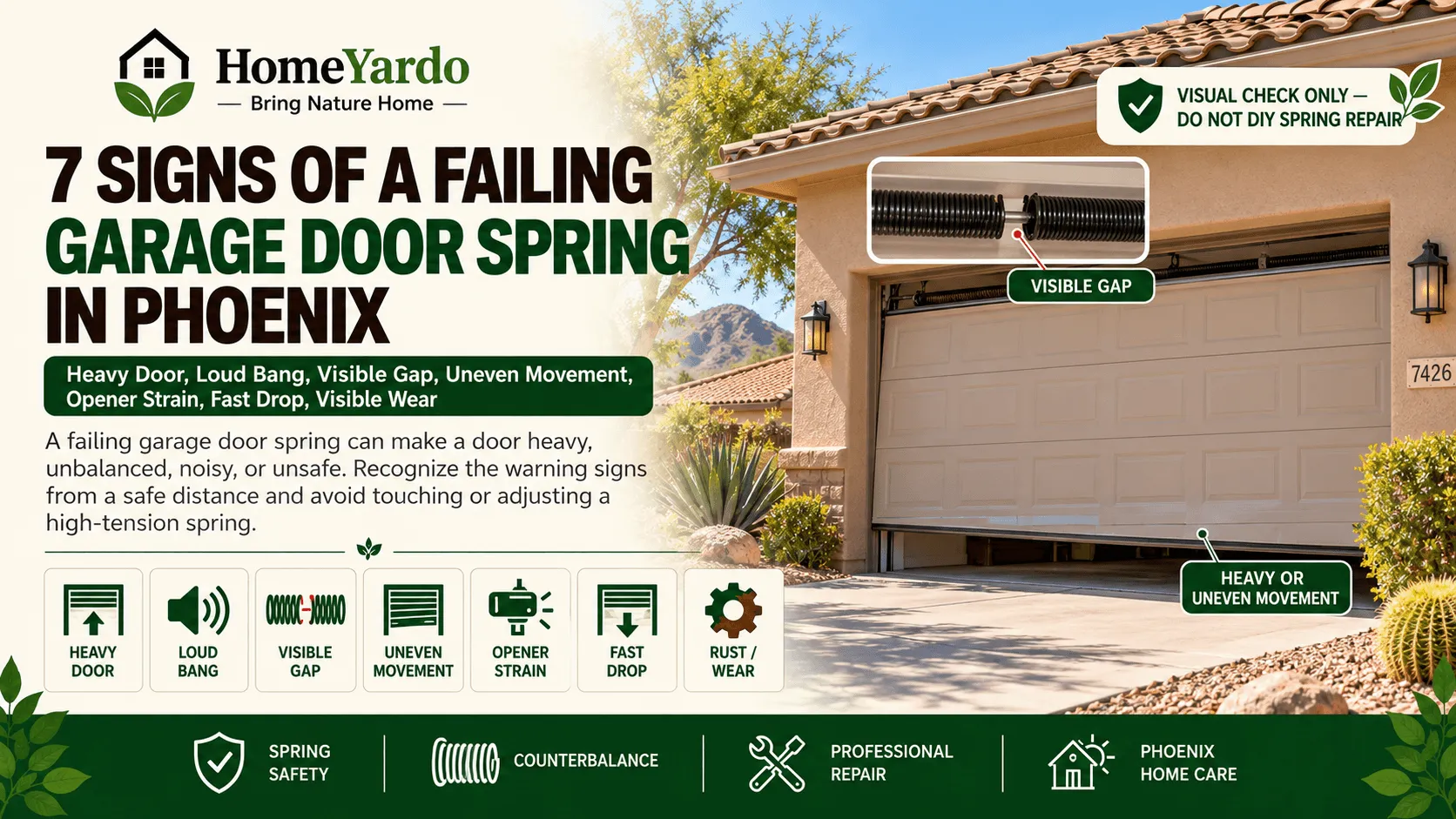
A failing garage door spring can show warning signs before it breaks, but some springs fail with little obvious notice. A door that suddenly feels heavy, moves unevenly, drops too quickly, or makes a loud bang needs attention because the spring system helps counterbalance the door’s weight.
For Phoenix homeowners, the safest approach is to recognize the symptoms without touching, adjusting, or attempting to replace a high-tension spring.
I Love It Garage Doors is a family-owned garage door repair and installation company serving Phoenix and surrounding Valley communities. The company lists Arizona ROC #359771 and offers same-day repairs, warrantied repairs and installations, and 24-hour emergency service.
For homeowners already dealing with a suspected spring problem, Phoenix garage door spring repair is one of the company’s core services, alongside cable, roller, panel, and opener repairs.
What Does a Garage Door Spring Actually Do?
Garage door springs counterbalance much of the door’s weight so the system can move in a controlled manner. Depending on the system, a residential door may use torsion springs mounted above the opening or extension springs positioned alongside the horizontal tracks.
The opener works with this counterbalanced system. It should not have to compensate for a spring that has lost its ability to support the door properly.
That distinction matters because homeowners sometimes assume a struggling door automatically means the opener has failed. Spring, cable, track, sensor, and opener problems can produce overlapping symptoms.
If your main problem is that the garage door won’t close, HomeYardo’s troubleshooting guide covers other possible causes, including sensors, obstructions, opener settings, tracks, rollers, springs, and cables.
7 Signs of a Failing Garage Door Spring
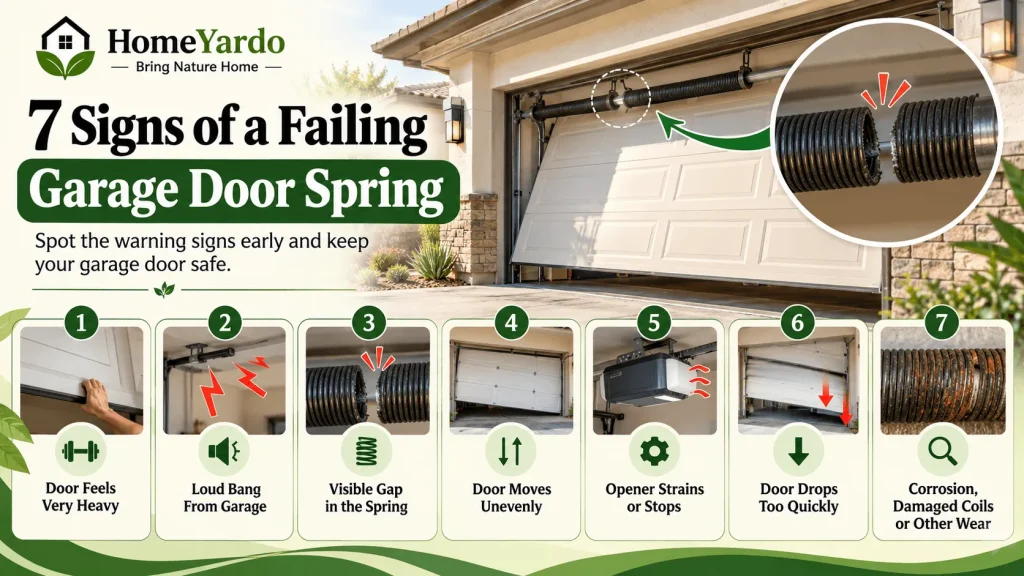
No single symptom should be used to diagnose every garage door problem. These seven warning signs, however, can indicate that a spring has weakened, become damaged, or broken.
1. The Garage Door Suddenly Feels Very Heavy
One of the clearest warning signs is a major change in how the door behaves.
The spring system carries much of the load through counterbalance. If a spring breaks or stops providing adequate support, the door may feel unusually heavy.
Do not repeatedly operate a door that suddenly behaves this way. Continuing to use the opener can place extra load on other components.
2. You Hear a Loud Bang From the Garage
A broken torsion spring can release its stored energy suddenly and create a sharp, startling sound.
You may hear the bang even when nobody is operating the door. If this happens, inspect the spring visually from a safe distance before attempting to use the garage door.
A loud bang followed by a door that will not open normally is a strong reason to stop operating the system and call a technician.
3. There Is a Visible Gap in the Torsion Spring
A torsion spring is normally wound into a continuous coil.
When it breaks, separation between sections of the coil may become visible. This often appears as a noticeable gap in the spring above the garage door.
Extension springs can show different symptoms, including unusual stretching, sagging, or separation.
These should only be visually inspected. Do not touch, pull, wind, loosen, or otherwise test a suspected damaged spring.
4. The Garage Door Moves Unevenly or Looks Crooked
A door that rises unevenly or appears lower on one side may have a counterbalance or cable problem.
This symptom does not automatically prove that the spring is at fault. Lift cables and related hardware can create similar behavior.
That distinction is important because both systems can involve considerable tension. If the door becomes crooked or binds during movement, stop operating it and arrange an inspection rather than trying to straighten it manually.
5. The Garage Door Opener Strains or Stops
Listen to how the opener sounds.
An opener that suddenly groans, struggles, moves the door slowly, or stops before completing its travel may be working against an improperly balanced door.
The opener itself could also be responsible, so this symptom needs to be considered with the others. A visible spring gap plus a struggling opener is much more suggestive of a spring problem than opener noise alone.
6. The Door Drops Too Quickly
A properly functioning counterbalance system helps control the door’s weight throughout its movement.
If the door drops unusually fast, slams down, or cannot remain properly supported, stop using it.
A falling garage door can injure a person or pet and damage anything in its path. Do not stand underneath an unstable door or attempt to hold it up manually.
7. You Notice Corrosion, Damaged Coils, or Other Wear
Visible deterioration deserves attention even when the door still operates.
Look from a safe position for corrosion, unusual gaps, deformation, damaged coils, or nearby frayed cables. New or worsening noises can also justify an inspection.
Age alone does not tell you exactly when a spring will break because spring design, door weight, installation, usage frequency, environment, and maintenance all affect service life.
Homeowners who want to inspect the rest of the system can use HomeYardo’s garage door maintenance checklist for routine checks involving tracks, rollers, sensors, seals, cables, and opener performance.
Quick Symptom Guide
Several garage door faults can look similar. This table can help you decide what to do without trying to diagnose high-tension hardware yourself.
| Symptom | Possible Cause | Safest Next Step |
|---|---|---|
| Loud bang followed by a heavy door | Broken spring | Stop operating the door and call a technician |
| Visible gap in torsion spring | Broken spring | Do not touch the spring; arrange repair |
| Door rises crooked | Spring, cable, or balance problem | Stop operation and request an inspection |
| Opener strains or stalls | Balance, spring, opener, or mechanical issue | Have the system diagnosed |
| Door drops rapidly | Counterbalance problem | Keep people clear and stop using it |
| Frayed cable | Cable or related hardware damage | Do not operate or handle it |
| New squeaking or corrosion | Wear or maintenance issue | Schedule inspection if symptoms persist |
How Can You Safely Check a Garage Door Spring?
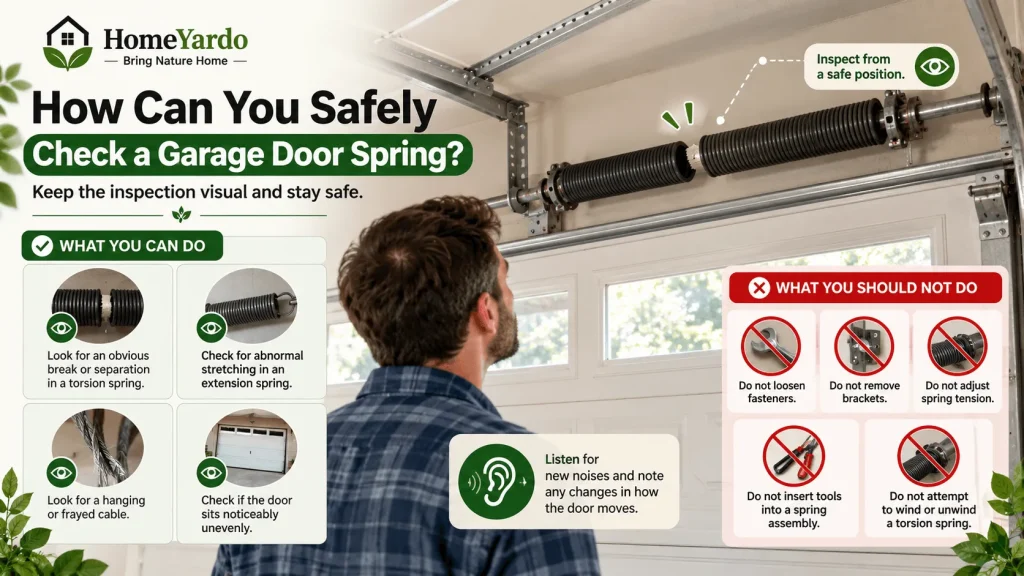
Keep the inspection visual.
From a safe position, look for an obvious break or separation in a torsion spring, abnormal stretching in an extension spring, a hanging or frayed cable, or a door that sits noticeably unevenly.
Listen for new noises and note whether the door’s movement has changed.
Do not loosen fasteners, remove brackets, adjust spring tension, insert tools into a spring assembly, or attempt to wind or unwind a torsion spring.
If you are not sure whether the spring is causing the problem, stop there. A professional can distinguish a spring failure from a cable, track, roller, or opener problem.
Broken Spring vs. Opener Problem: How Can You Tell?
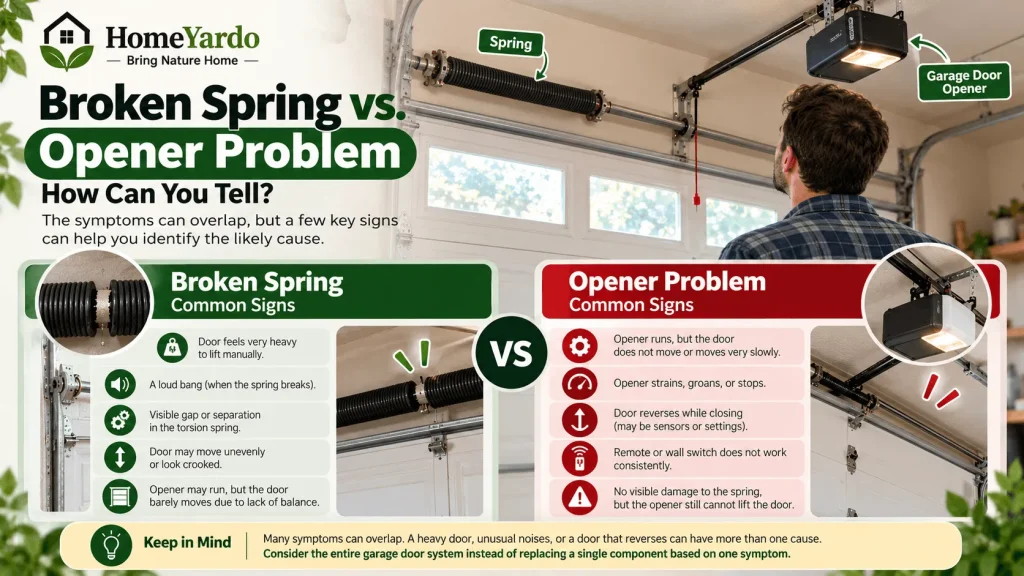
The symptoms can overlap.
If the opener motor runs but the door barely moves, the problem may involve the spring, opener drive system, or another mechanical component. If the door becomes extremely heavy at the same time or you can see a separated torsion spring, spring failure becomes more likely.
A door that reverses while closing may instead have an obstruction, sensor problem, travel-setting issue, or excessive resistance elsewhere in the system.
That is why diagnosis should consider the whole door rather than replacing a component based on one symptom.
Why Garage Door Spring Repair Is Not a DIY Job
Garage door springs store mechanical energy under tension. Improper adjustment or removal can cause a spring, winding tool, bracket, cable, or other component to move unexpectedly.
There is another problem with guessing: the replacement spring needs to match the door and counterbalance system. Installing an unsuitable spring can leave the door improperly balanced even when it appears to operate.
A technician can also inspect related components while the system is being serviced, including:
- Lift cables
- Drums
- Bearings
- Rollers
- Hinges
- Tracks
- Spring mounting hardware
- Door balance
- Opener operation
The goal is not simply to make the door move again. It is to restore controlled, balanced operation.
Why Contractor Verification Matters in Arizona
Arizona homeowners can verify contractor licensing through the Arizona Registrar of Contractors before hiring a company.
Checking the license record helps confirm that the contractor has an active license and that the license classification is appropriate for the work being performed.
I Love It Garage Doors lists Arizona ROC #359771. Homeowners should still verify current licensing information directly through the Arizona Registrar of Contractors when hiring, just as they should with any contractor.
The company says its technicians have several years of garage-door industry experience, its repairs and installations are warrantied, and same-day service is available across Phoenix, Scottsdale, Mesa, Tempe, Chandler, Gilbert, Glendale, and other Valley communities.
Those are also useful questions to ask any garage door company you are comparing: Who will perform the work? Is the contractor appropriately licensed? What does the warranty cover? Will the full door be inspected after the spring work?
Does Phoenix Weather Affect Garage Door Springs?
Phoenix garage doors operate in a demanding environment. High summer temperatures, dust, repeated daily operation, and seasonal storms can affect a garage door system as a whole.
Arizona’s defined monsoon season runs from June 15 through September 30. Once that period ends, homeowners have a useful opportunity to visually check the garage door for developing problems before holiday traffic increases household use.
Weather should not be treated as proof that a particular spring is about to fail. Usage, spring type, installation, door weight, condition, and other mechanical factors matter too.
For a broader seasonal inspection of the garage, see HomeYardo’s fall garage maintenance checklist.
What Should You Do If You Think the Spring Is Broken?
Stop using the garage door until the problem has been assessed.
Keep children and pets away from the door and its hardware. Avoid repeatedly pressing the opener button to see whether the system will work on another attempt.
From a safe distance, note:
- Whether you heard a loud bang
- Whether a gap is visible in the spring
- Whether a cable appears loose or damaged
- Whether one side of the door sits lower
- Whether the opener runs but the door does not move normally
- Whether the door dropped unexpectedly
Giving those observations to the technician can make the initial diagnosis easier.
If the vehicle is trapped behind a door with a suspected broken spring, tell the repair company when you call rather than attempting to force the door open.
What Should a Technician Check After Spring Repair?
Replacing the failed component is only part of a proper service visit.
The repaired door should operate smoothly and remain correctly balanced. Related cables and hardware should also be inspected for visible wear or damage, and the opener should be checked after the door’s mechanical operation has been restored.
Safety systems should operate correctly as well.
Homeowners can continue with routine visual inspections between professional service visits, but spring tension and other high-tension adjustments should remain professional work.
Final Takeaway
The most recognizable signs of a failing or broken garage door spring are a suddenly heavy door, a loud bang, a visible gap in a torsion spring, uneven movement, opener strain, rapid closing, and visible deterioration around the spring or cables.
The important part is knowing where homeowner troubleshooting should stop.
You can safely observe the system from a distance and record what changed. You should not touch or adjust a suspected damaged spring, cable, or counterbalance assembly.
For Phoenix homeowners, catching unusual operation early can also prevent a spring-related problem from placing unnecessary strain on the opener and other garage door components.
FAQ’s
Common warning signs include a door that suddenly feels unusually heavy, uneven movement, a visible gap in a torsion spring, opener strain, rapid closing, new noises, or visible deterioration. A loud bang can indicate that a spring has already broken.
A separated torsion spring often has a visible gap in its coil. The door may also become extremely heavy or fail to open normally. Because cable and opener problems can create similar symptoms, avoid touching the hardware and have the system professionally inspected.
Continuing to operate a garage door with a suspected broken spring can place additional load on the opener and may create unsafe door movement. Stop using the door and arrange professional service.
A counterbalance problem, including a damaged or broken spring, can make the door feel much heavier than normal. Do not assume the spring is the only possible cause, especially if cables or other hardware also appear damaged.
A garage door spring can make a sharp sound when it breaks. If you hear a sudden bang, visually inspect the spring from a safe distance and check whether the door now operates differently. Do not touch the spring.
Garage door spring replacement involves components under substantial tension. Homeowners should not attempt to wind, unwind, remove, or adjust a spring without the appropriate professional training and equipment.
That depends on the door’s spring configuration, the condition and service history of the existing springs, and the replacement specifications. A technician should inspect the complete counterbalance system and explain whether replacing one or multiple springs is appropriate.
Spring life varies according to spring design and cycle rating, door weight, installation, frequency of use, environment, and maintenance. Cycle rating and actual condition are more useful than assuming every spring will last a fixed number of years.
An improperly balanced door can make the opener work harder than intended. If the opener suddenly begins straining at the same time the door becomes heavy or develops spring-related symptoms, stop operating it until the mechanical system is checked.
Spring work should be handled by a trained garage door professional. When hiring in Arizona, homeowners should verify applicable contractor licensing and check the contractor’s current record with the Arizona Registrar of Contractors.