How To Plan A Successful Residential Exterior Refresh

A successful residential exterior refresh starts with more than choosing paint colors or improving your landscaping. The order in which you complete your projects matters just as much as the materials you select.
A worn garage door, poor drainage, damaged siding, or neglected exterior repairs can affect your plans. Addressing these problems early helps prevent unnecessary expenses and repeated work.
Whether you’re preparing to sell your home or simply want to improve its appearance, having a clear plan makes the process easier. Here’s how to organize your exterior improvements, prioritize repairs, and achieve results that last.
Start With a Clear Goal for the Refresh
Before choosing materials or contacting contractors, decide what you want your exterior improvements to accomplish.
Are you trying to improve curb appeal, address maintenance problems, increase functionality, or prepare your property for sale?
Your answer will influence which projects deserve attention and how much money you should allocate to each one.
For larger improvements, reviewing the basics of planning your home improvement project can help you organize your decisions.
Questions to Answer Before Starting Any Exterior Project
Consider these questions before making purchases:
- Are you updating your home’s appearance or addressing existing damage?
- Do you plan to sell soon or stay in the property for several years?
- Which exterior features need immediate repairs?
- Can you complete everything together, or should you spread the work over several seasons?
- Which existing architectural features do you want to preserve?
Write down your answers and establish three or four main priorities.
This gives you a useful reference when comparing materials, reviewing contractor estimates, and deciding which improvements can wait.
Walk Your Exterior and Note What’s Actually Wearing Out
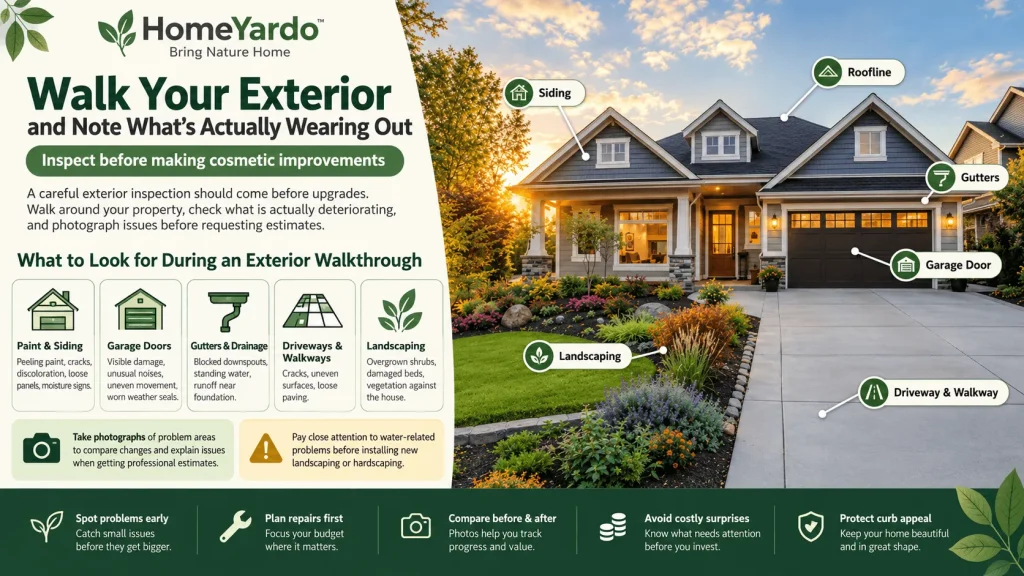
A careful exterior inspection should come before any cosmetic improvements.
Walk around your property and examine the condition of the siding, roofline, garage door, driveway, landscaping, gutters, and outdoor fixtures.
Take photographs of anything that needs attention. They will help you compare changes and explain problems when requesting professional estimates.
What to Look for During an Exterior Walkthrough
Pay particular attention to:
- Paint and siding: Look for peeling paint, cracks, discoloration, loose panels, and signs of moisture.
- Garage doors: Check for visible damage, unusual operating noises, uneven movement, and deteriorating weather seals.
- Gutters and drainage: Identify blocked downspouts, standing water, and areas where runoff collects near the foundation.
- Driveways and walkways: Note cracks, uneven surfaces, and loose paving materials.
- Landscaping: Identify overgrown shrubs, damaged planting beds, and vegetation growing against exterior surfaces.
Water-related problems deserve particular attention.
If rainwater regularly collects near your foundation, investigate the cause before installing new landscaping or hardscaping. Understanding your options for fixing yard drainage can help you determine whether professional assessment is needed.
Avoid operating a visibly damaged garage door until its condition has been evaluated.
Set a Realistic Budget Before Choosing Products
Exterior improvements can become expensive when homeowners select products before establishing their budgets.
Start by estimating the total amount you can comfortably spend. Separate necessary repairs from optional upgrades and obtain estimates for larger projects.
Comparing complete project costs is more useful than comparing material prices alone.
Building a Budget That Actually Holds Up
Divide your budget into four categories:
| Budget category | What to include |
|---|---|
| Essential repairs | Damaged siding, drainage problems, unsafe garage doors, and structural concerns |
| Functional improvements | Garage door replacement, exterior lighting, and improved access |
| Cosmetic improvements | Painting, landscaping, decorative fixtures, and driveway upgrades |
| Contingency | Unexpected damage, additional materials, and unforeseen labor |
Consider setting aside a contingency amount appropriate to the property’s condition and the complexity of the proposed work.
Older homes and projects involving concealed damage may require larger reserves.
When comparing contractor estimates, confirm whether removal, disposal, preparation, installation, and finishing costs are included.
For more extensive renovations, a home remodeling guide can help you understand the wider planning process.
Decide Which Projects Are DIY and Which Need a Professional

Completing smaller exterior projects yourself may reduce labor expenses. However, certain repairs require specialist equipment, technical knowledge, and appropriate safety precautions.
The important distinction is whether a task involves ordinary maintenance or potentially hazardous building components.
A Simple Way to Sort DIY From Professional Work
| Potential DIY projects | Professional projects |
|---|---|
| Planting flowers and applying mulch | Garage door spring and cable repairs |
| Cleaning accessible outdoor fixtures | Major electrical installations |
| Painting accessible trim | Structural repairs |
| Replacing simple decorative accessories | Major drainage modifications |
| Basic landscaping maintenance | Garage door installation |
Even apparently simple jobs require suitable tools and safe working conditions.
Avoid working at unsafe heights or attempting repairs involving electrical wiring and heavy moving equipment without appropriate training.
Garage door springs and cables operate under considerable tension. Their adjustment, repair, and replacement should be handled by trained technicians.
Put Your Exterior Projects in the Right Order

Completing exterior improvements in the wrong sequence can create unnecessary expenses.
Painting before repairing damaged siding or installing landscaping before addressing drainage may leave you repeating work.
Organize your improvements according to how each project affects the next.
A Practical Exterior Renovation Sequence
Follow this general order:
- Inspect the property: Identify existing damage, maintenance concerns, and potential safety issues.
- Address water and structural problems: Resolve significant drainage problems, leaks, and necessary structural repairs.
- Complete major installations: Schedule garage door replacement, siding repairs, and other substantial work.
- Prepare and paint surfaces: Complete surface repairs and allow suitable preparation before applying exterior finishes.
- Finish hardscaping and landscaping: Complete walkways, planting beds, decorative improvements, and final cleanup.
The sequence may change depending on your property’s condition and contractor availability.
Ask contractors to coordinate any overlapping work before construction begins.
Plan Around Your Home’s Biggest Visual Feature First

Certain exterior features have a greater visual impact than others.
On many properties, the garage door occupies a substantial portion of the front elevation. Its color, design, and condition can influence the overall appearance of the house.
Consider major visual features before finalizing smaller decorative improvements.
Why the Garage Door Deserves an Early Decision
A garage door should complement your home’s architectural style while providing dependable operation.
Before deciding whether to repair, repaint, or replace it, consider:
- Its current mechanical condition.
- Whether the existing design complements your planned exterior colors.
- The condition of its panels, seals, and hardware.
- Whether repair costs justify keeping the existing door.
- How a replacement might affect your overall renovation budget.
If your garage door works properly and remains in good condition, repainting or replacing its weather seals may be sufficient.
A damaged or unreliable door may require professional assessment.
Reviewing a garage door maintenance checklist can help you recognize routine maintenance requirements and signs that professional service may be necessary.
If you notice anything besides how it looks while doing your walkthrough, you should talk to a pro about garage door installation. Make sure you do this before you finish planning everything else.
Choose Materials That Fit Lawndale’s Climate

Lawndale, North Carolina, experiences warm, humid summers, cooler winters, and rainfall throughout the year.
These conditions make moisture resistance, proper installation, and ongoing maintenance important considerations when selecting exterior materials.
Choose products according to their suitability for your property’s exposure rather than appearance alone.
Material Choices Worth Prioritizing for This Climate
Consider the following options when planning your improvements.
Exterior siding
Fiber cement and appropriately installed vinyl siding are options worth considering.
Their performance depends on correct installation, suitable flashing, and proper moisture management.
Do not install new siding over damaged or moisture-compromised underlying materials without addressing the cause.
Garage doors
Steel and fiberglass garage doors are available in styles suitable for many residential properties.
Compare corrosion resistance, finish durability, insulation, maintenance requirements, and manufacturer warranties.
Exterior paint
Choose exterior paint compatible with your existing surface and suitable for local conditions.
Proper cleaning, surface preparation, priming where required, and suitable application conditions will affect the finished result.
Landscaping materials
Select mulch, groundcover, and plants suited to the property’s sunlight, soil drainage, and maintenance requirements.
Keep landscaping materials away from vulnerable siding and ensure the finished ground level does not direct water toward the foundation.
Time Your Project to the Right Season

Weather can influence installation schedules, material performance, and how quickly your exterior improvements can be completed.
Plan major work around suitable weather conditions while allowing enough flexibility for unexpected delays.
Best Times to Start Different Exterior Projects
Exterior painting: Spring and fall may offer suitable painting conditions, but temperature, humidity, rainfall, surface moisture, and manufacturer instructions matter more than the season itself.
Avoid painting damp surfaces or when rain is expected before the coating can cure adequately.
Landscaping
Spring and fall are often suitable periods for establishing many landscape plants.
However, the appropriate planting window depends on the species and local conditions.
Garage door repairs and installation
Garage door work can generally be scheduled throughout the year.
Arrange repairs promptly when safety or reliable access is affected.
Hardscaping
Schedule driveway, paving, and drainage work according to the contractor’s recommendations and expected weather.
Consider how heavy equipment may affect landscaping that has already been installed.
Allow extra time between dependent projects so unexpected delays do not disrupt your entire schedule.
Avoid the Most Common Refresh Mistakes

Exterior improvement projects often exceed their budgets or schedules because homeowners overlook important planning decisions.
Recognizing common mistakes early can help keep your renovation organized.
Mistakes That Derail Exterior Refresh Projects
1. Prioritizing appearance over necessary repairs
Fresh paint cannot correct underlying moisture problems or deteriorating materials.
Complete necessary repairs before cosmetic improvements.
2. Overlooking the garage door
An aging or damaged garage door may affect both the appearance and functionality of your property’s exterior.
Consider its condition before making final design decisions.
3. Ignoring drainage
Decorative landscaping should not prevent proper water runoff.
Investigate drainage problems before installing new planting beds or hardscaping.
4. Underestimating the budget
Low initial estimates can be misleading when preparation, removal, installation, and unexpected repairs are excluded.
Request sufficiently detailed quotations.
5. Scheduling contractors in the wrong order
Confirm which projects must be completed before others can begin.
Clear scheduling reduces the chance of damaging newly completed improvements.
Keep the Refresh Looking Good After It’s Done
Your exterior improvements will require ongoing maintenance.
Regular inspections help you identify developing problems before they affect other parts of the property.
Create a maintenance schedule based on your home’s materials, local conditions, and manufacturer recommendations.
A Basic Maintenance Routine to Protect Your Investment
| Frequency | Recommended maintenance |
|---|---|
| Monthly | Visually inspect the garage door and check accessible exterior areas for developing problems |
| Seasonally | Inspect drainage, clear accessible debris, maintain landscaping, and examine painted surfaces |
| After significant storms | Check for damage, displaced materials, blocked drainage, and water accumulation |
| Annually | Review major exterior components and arrange professional servicing where appropriate |
Follow your garage door manufacturer’s maintenance instructions.
Inspect accessible components without loosening hardware or attempting to adjust springs and cables.
If the door moves unevenly, appears damaged, or develops unusual operating problems, arrange a professional inspection.
If you update your garage door and it does not feel right, you need to call a garage door company in Lawndale, NC. They can look at the problem for you. This helps to stop small issues before they turn into bigger ones.
A Good Plan Makes the Refresh Worth Doing
Improving your home’s exterior does not require completing every project at once.
Start with a clear objective, inspect your property, establish a realistic budget, and prioritize repairs that protect your home.
Choose materials that suit your local climate and schedule improvements in an order that avoids unnecessary work.
If your garage doors need work, maybe a repair, a tune-up, or you feel that you want a new one Cleveland County Garage Doors can help you. They will talk with you to plan what is best for your garage doors. This way, you feel sure about what comes next with your other updates. You can get a free estimate. Find out how garage door repair in Lawndale, NC can fit in with what you want to do.
FAQ’s
Start by inspecting your home’s exterior and identifying necessary repairs. Address safety concerns, water damage, and deteriorating materials before choosing decorative upgrades.
Your budget depends on your property’s condition, the number of improvements planned, material choices, and local labor costs. Obtain several detailed estimates for larger projects and include a contingency for unexpected expenses.
Safety-related repairs, water management, and significant structural problems should generally come before painting, landscaping, and decorative improvements. Major installations should also be scheduled before finishing work whenever possible.
Consider its mechanical condition, repair requirements, age, appearance, and the cost of suitable replacement options. A qualified technician can assess whether repair is practical or replacement should be considered.
Spring and fall often provide favorable conditions for several types of exterior work. However, painting, landscaping, and construction each have different weather requirements. Follow product instructions and local contractor recommendations.