What Makes a Bathroom Remodel Worth the Money?
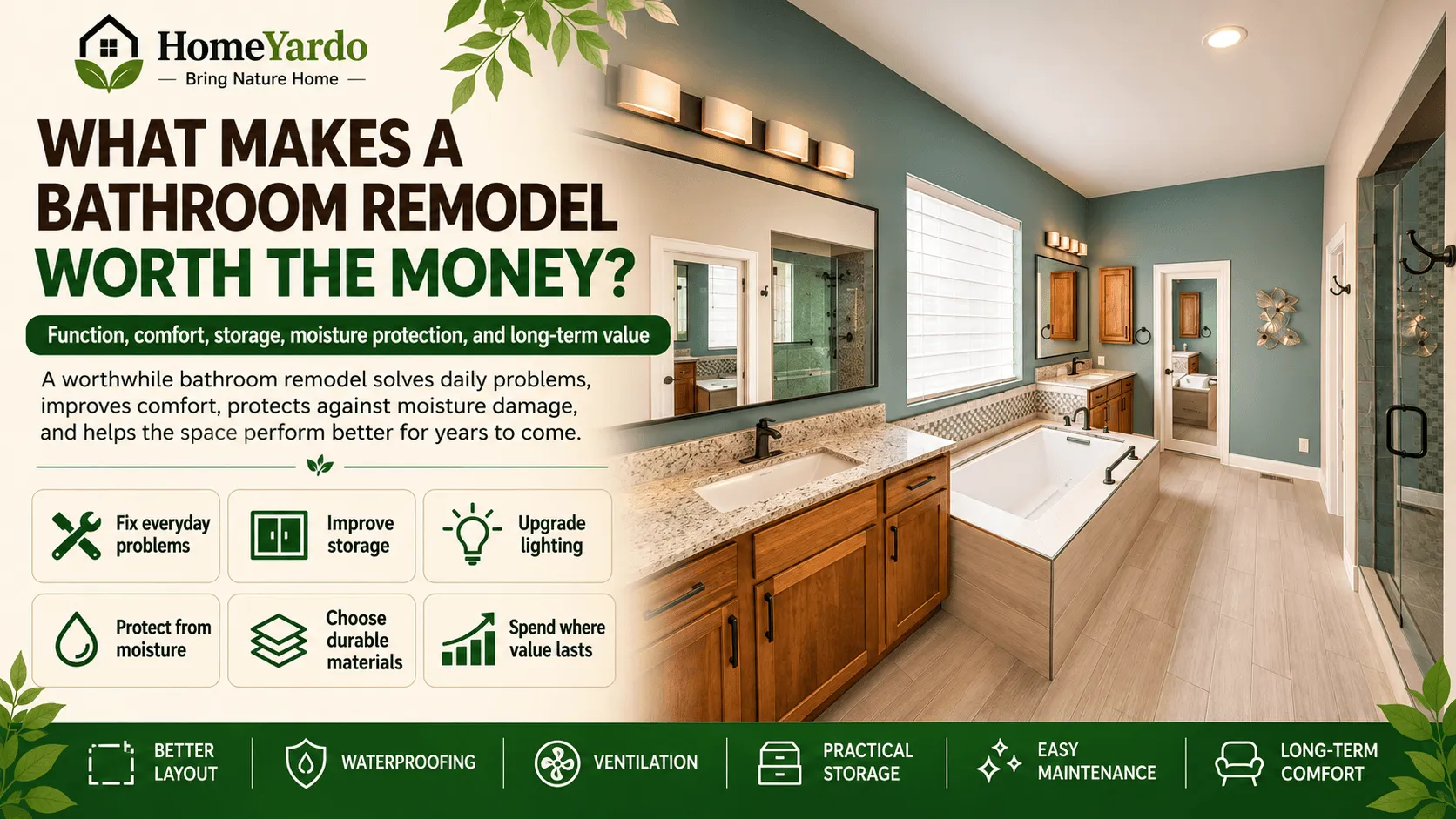
A bathroom remodel worth the money does more than improve the appearance of a room. It solves everyday problems, protects the home from moisture damage, reduces unnecessary maintenance, and makes the space more comfortable to use.
In Indianapolis, where homes range from older bungalows to newer suburban properties, remodeling priorities can vary considerably. One bathroom may need better storage and lighting, while another requires plumbing repairs, improved ventilation, or a more practical shower.
The best results come from spending on improvements that make a noticeable difference without creating unnecessary expenses. That means looking beyond attractive finishes and considering how the bathroom will perform years after the work is finished.
The Right Contractor Helps You Avoid Expensive Surprises
A bathroom renovation can involve plumbing, electrical work, waterproofing, cabinetry, flooring, and ventilation. When these elements are not coordinated properly, even a relatively small project can become expensive.
A reliable contractor should begin by reviewing the existing space, discussing your priorities, and identifying construction conditions that could affect the budget.
If you’re comparing local options, it helps to work with a bathroom remodeler in Indianapolis who understands the housing styles and common bathroom issues found in the area. Older properties may have outdated plumbing configurations, uneven framing, deteriorated subfloors, or ventilation systems that need attention before new finishes are installed.
Before hiring anyone, request a written estimate that explains:
- The work included in the proposed renovation.
- Materials, fixtures, and product allowances.
- Potential additional charges and change-order procedures.
- Permit and inspection responsibilities.
- Expected construction stages and completion milestones.
- Workmanship warranties and responsibility for repairs.
A low initial quote does not automatically represent good value. A clearly documented scope, suitable materials, and competent installation can help prevent expensive disagreements and corrections later.
Start With the Problems You Deal With Every Day
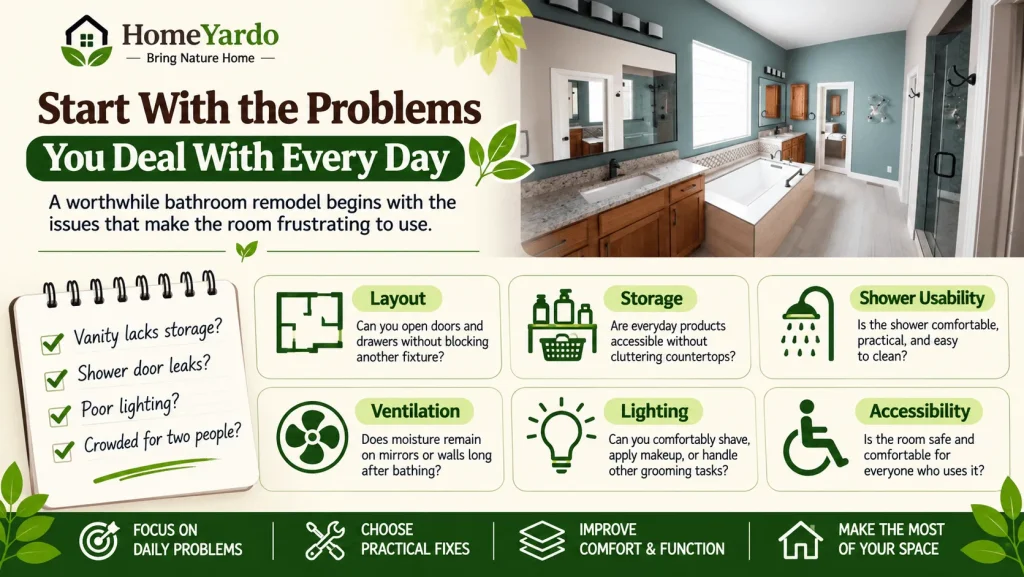
A worthwhile remodel usually begins with something that consistently makes the bathroom frustrating to use.
Perhaps the vanity offers little storage, the shower door leaks, or the lighting leaves shadows across the mirror. Maybe two people struggle to use the space at the same time.
These issues deserve attention before choosing tile patterns or decorative fixtures.
Walk through your normal bathroom routine and identify the features that slow you down. Pay particular attention to:
- Layout: Can you open doors and drawers without blocking another fixture?
- Storage: Are everyday products accessible without cluttering countertops?
- Shower usability: Is the shower comfortable, practical, and easy to clean?
- Ventilation: Does moisture remain on mirrors or walls long after bathing?
- Lighting: Can you comfortably shave, apply makeup, or handle other grooming tasks?
- Accessibility: Is the room safe and comfortable for everyone who uses it?
A room that already has a functional layout may only need targeted improvements. There is little reason to relocate plumbing or rebuild an entire wall if smaller changes will solve the underlying problems.
For a broader explanation of renovation sequencing, see HomeYardo’s bathroom renovation planning guide.
Water Management Is Where Smart Remodels Separate Themselves
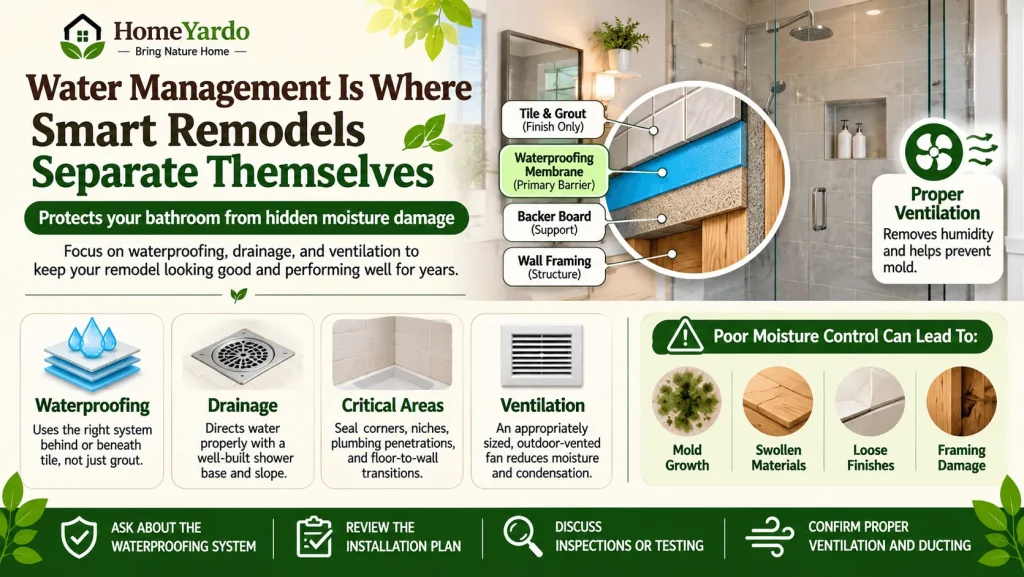
A bathroom can look beautiful while hiding serious construction problems.
Waterproofing, drainage, substrate preparation, and ventilation are among the most important investments because they protect the materials homeowners cannot easily inspect after installation.
A tiled shower, for example, needs an appropriate waterproofing system behind or beneath its finished surfaces. Tile and grout alone should not be treated as a waterproof barrier.
Pay attention to shower bases, corners, plumbing penetrations, niches, and transitions between floors and walls.
Poor moisture management can contribute to damaged framing, swollen materials, loose finishes, and mold growth.
Ask the contractor which waterproofing system will be used, how it will be installed, and what inspections or testing are appropriate for the project.
Ventilation deserves equal attention. An appropriately sized exhaust fan that vents outdoors helps remove humid air and reduce persistent condensation. Fan performance depends on the room, ductwork, installation, and operating controls.
These improvements may be invisible once the renovation is complete, but they can determine whether the finished bathroom remains dependable.
Storage Should Be Planned Like a Functional System
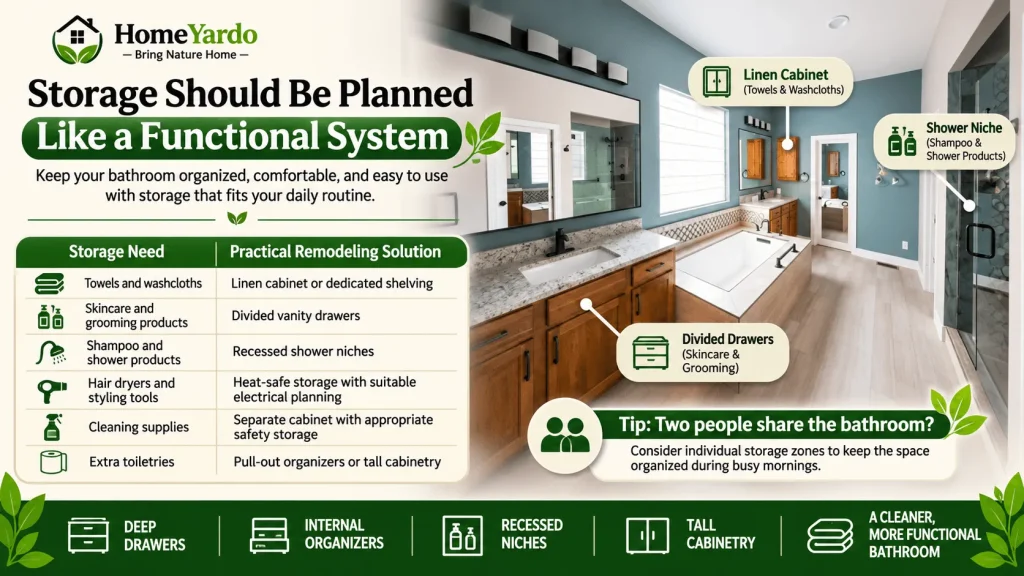
Bathrooms become cluttered quickly when storage is treated as an afterthought.
A thoughtfully planned vanity can improve daily organization without requiring additional floor space. Deep drawers, internal organizers, recessed cabinets, and shower niches can all make frequently used items easier to access.
Consider what actually needs to be stored in the room.
| Storage Need | Practical Remodeling Solution |
|---|---|
| Towels and washcloths | Linen cabinet or dedicated shelving |
| Skincare and grooming products | Divided vanity drawers |
| Shampoo and shower products | Recessed shower niches |
| Hair dryers and styling tools | Heat-safe storage with suitable electrical planning |
| Cleaning supplies | Separate cabinet with appropriate safety storage |
| Extra toiletries | Pull-out organizers or tall cabinetry |
If two people share a bathroom, individual storage zones can make the space easier to manage during busy mornings.
Not every bathroom needs more cabinets. Sometimes replacing one poorly organized vanity with a better-designed unit provides enough improvement.
Lighting Can Completely Change How the Room Performs
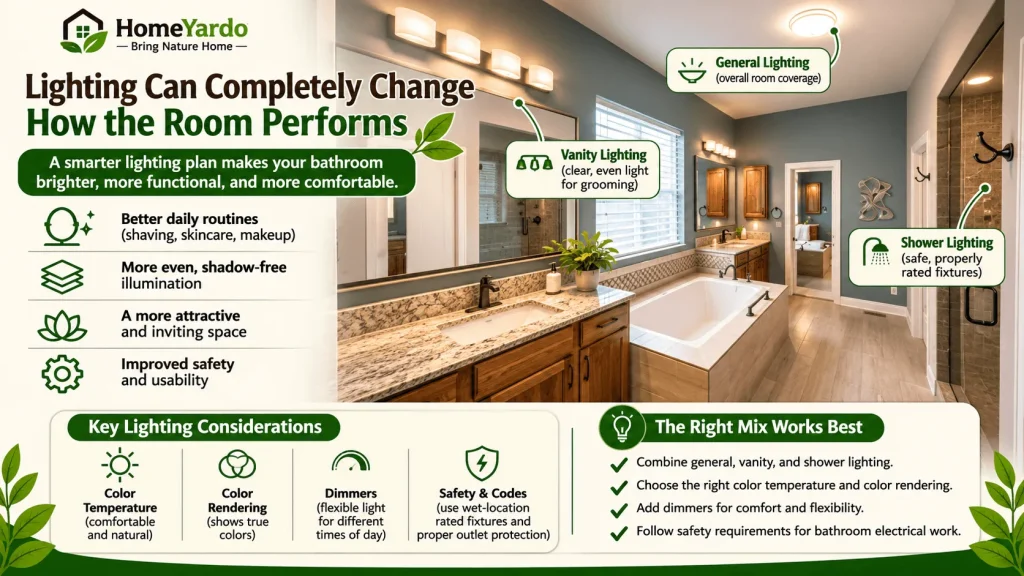
A single overhead light may illuminate the bathroom, but it often creates shadows around the face and leaves other areas poorly lit.
A better lighting plan combines general illumination with task lighting where people need it most.
Vanity lighting positioned to illuminate the face can make shaving, skincare, and makeup application easier. Ceiling fixtures provide broader coverage, while properly rated shower lighting can improve visibility in enclosed spaces.
Color temperature and color rendering also affect how finishes and skin tones appear. Choose lighting that provides comfortable, accurate visibility rather than selecting bulbs based on brightness alone.
Dimmers can make the room more comfortable during evening routines, provided the fixtures and controls are compatible.
Electrical work near water must follow applicable safety requirements, including appropriate fixture ratings and outlet protection.
Good bathroom lighting is worth considering because it improves both appearance and everyday usability without necessarily requiring a complete redesign.
Material Choices Need to Match Real Household Use
The most expensive material is not always the best choice for a bathroom.
A guest bathroom used occasionally has different requirements from a family bathroom that handles several showers every day.
When comparing finishes, consider durability, moisture exposure, cleaning requirements, traction, and how easily components can be repaired or replaced.
| Material | Main Advantage | What to Consider |
|---|---|---|
| Porcelain tile | Durable and moisture-resistant | Grout maintenance and surface traction |
| Quartz countertop | Nonporous and generally easy to maintain | Product care instructions and heat exposure |
| Natural stone | Distinctive appearance | Sealing needs and sensitivity to certain cleaners |
| Acrylic shower surround | Relatively simple routine cleaning | Installation quality and product durability |
| Ceramic tile | Broad design selection | Suitability for the intended surface and grout upkeep |
| Quality metal fixtures | Long-term functionality and replaceable components | Finish care, warranty, and replacement-part availability |
Households dealing with hard water may prefer fixtures and finishes that are easier to wipe clean.
Slip resistance is another practical concern, particularly for bathroom floors and shower bases.
A finish package should suit the people using the room, not simply look appealing in a showroom.
Budgeting Well Means Knowing Where the Value Comes From
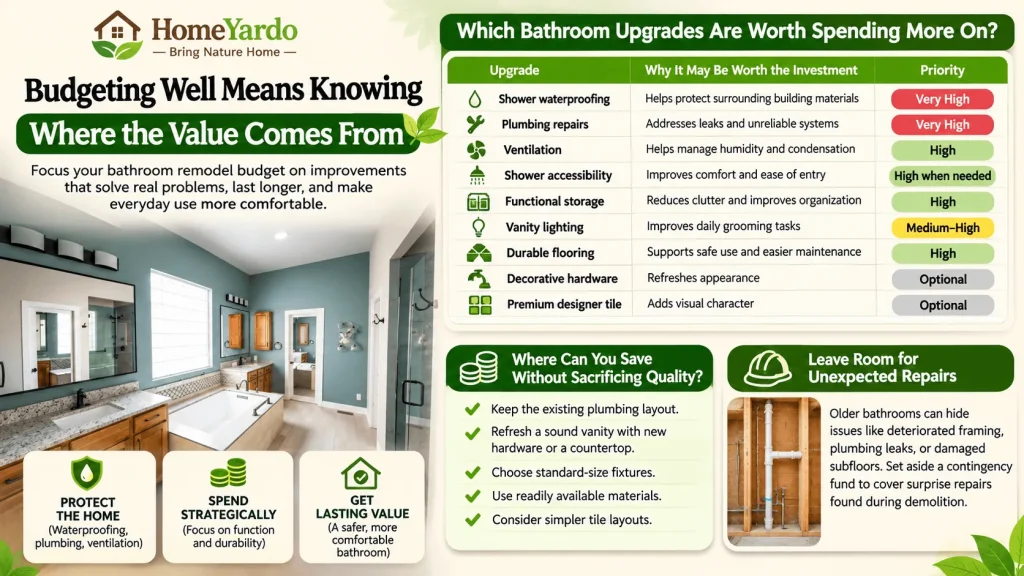
A remodeling budget can disappear quickly when decorative upgrades receive the same priority as structural or functional improvements.
The better approach is to protect spending on necessary work before choosing optional features.
Which Bathroom Upgrades Are Worth Spending More On?
Some improvements offer value through durability, safety, or daily convenience rather than through resale price alone.
| Upgrade | Why It May Be Worth the Investment | Priority |
|---|---|---|
| Shower waterproofing | Helps protect surrounding building materials | Very High |
| Plumbing repairs | Addresses leaks and unreliable systems | Very High |
| Ventilation | Helps manage humidity and condensation | High |
| Shower accessibility | Improves comfort and ease of entry | High when needed |
| Functional storage | Reduces clutter and improves organization | High |
| Vanity lighting | Improves daily grooming tasks | Medium–High |
| Durable flooring | Supports safe use and easier maintenance | High |
| Decorative hardware | Refreshes appearance | Optional |
| Premium designer tile | Adds visual character | Optional |
These are practical priority assessments, not guaranteed resale-return rankings.
Where Can You Save Without Sacrificing Quality?
Not every element needs to be replaced.
Keeping the existing plumbing layout can sometimes reduce labor and material costs. A structurally sound vanity may only need updated hardware or a new countertop.
Standard-size fixtures, readily available materials, and simpler tile layouts can also help control expenses.
Avoid reducing costs by skipping proper waterproofing, required electrical protection, or necessary repairs.
Leave Room for Unexpected Repairs
Older bathrooms can conceal deteriorated framing, plumbing leaks, damaged subfloors, or previous repairs that were never completed properly.
A contingency fund helps cover conditions discovered during demolition without forcing rushed decisions.
The appropriate amount depends on the age of the home, the project scope, and what can reasonably be inspected before construction.
For a closer look at project scope and pricing, read HomeYardo’s bathroom remodel cost and planning guide.
How Do You Know If a Bathroom Remodel Is Worth the Investment?
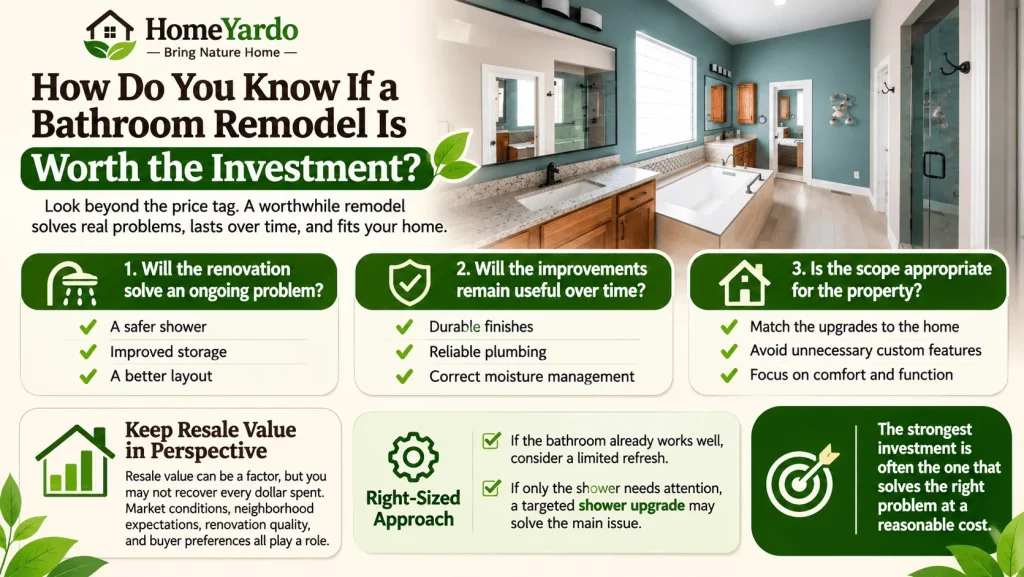
A renovation’s value should be judged across several factors, not simply by comparing its cost with a hoped-for increase in property value.
Consider three questions:
- Will the renovation solve an ongoing problem? A safer shower, improved storage, or better layout may deliver everyday benefits.
- Will the improvements remain useful over time? Durable finishes, reliable plumbing, and correct moisture management can reduce future problems.
- Is the scope appropriate for the property? A modest bathroom may not need expensive custom features to become comfortable and attractive.
Resale value is another consideration, but homeowners should not assume they will recover every dollar spent. Market conditions, neighborhood expectations, renovation quality, and buyer preferences all influence how improvements are valued.
If the existing bathroom works well, a limited refresh may offer better value than a complete replacement.
Likewise, if only the shower needs attention, a targeted shower upgrade may resolve the main issue without rebuilding the entire room.
The strongest investment is often the one that solves the right problem at a reasonable cost.
Final Takeaway: Spend on What Makes the Bathroom Work Better
A bathroom remodel feels worth the money when the finished space is easier to use, simpler to maintain, and built to handle everyday moisture and wear.
Choose a contractor who explains the process clearly. Prioritize practical layout changes, reliable waterproofing, comfortable lighting, usable storage, and materials suited to the household.
Decorative finishes still have their place, but they should support the bathroom’s function rather than consume the budget needed to build it properly.
A successful renovation does not need to be the most expensive one. It needs to solve the problems that made remodeling worthwhile in the first place.
FAQ’s
It can be, especially when the project fixes water damage, improves usability, replaces failing fixtures, or makes the room easier to maintain. The financial return varies by property and local market, so resale value should not be the only consideration.
Improvements that address poor functionality, deteriorated materials, moisture problems, or outdated fixtures often provide meaningful practical value. Their effect on resale value depends on the quality of the work and buyer expectations.
Waterproofing, drainage, plumbing, ventilation, and safe electrical work form the foundation of a dependable bathroom. Layout and storage are also important because they determine how comfortably the room functions.
Often, yes. Keeping major fixtures close to their existing locations can reduce plumbing modifications and associated labor. However, changing the layout may be worthwhile when the current arrangement creates substantial usability problems.
Use a coordinated color scheme, well-positioned lighting, clean finishes, practical storage, and a consistent hardware style. Standard-size fixtures and carefully selected materials can create an attractive result without requiring luxury products.
Not necessarily. Keep components that are structurally sound, functional, compatible with the new design, and in good condition. Replacing items simply because they are old can increase expenses without delivering much benefit.
A well-executed renovation may improve market appeal and resale value, particularly when the existing bathroom is noticeably outdated or damaged. However, the amount recovered depends on the local housing market, project cost, renovation scope, and buyer preferences.