Fire Bricks vs Regular Bricks: Differences & Best Uses
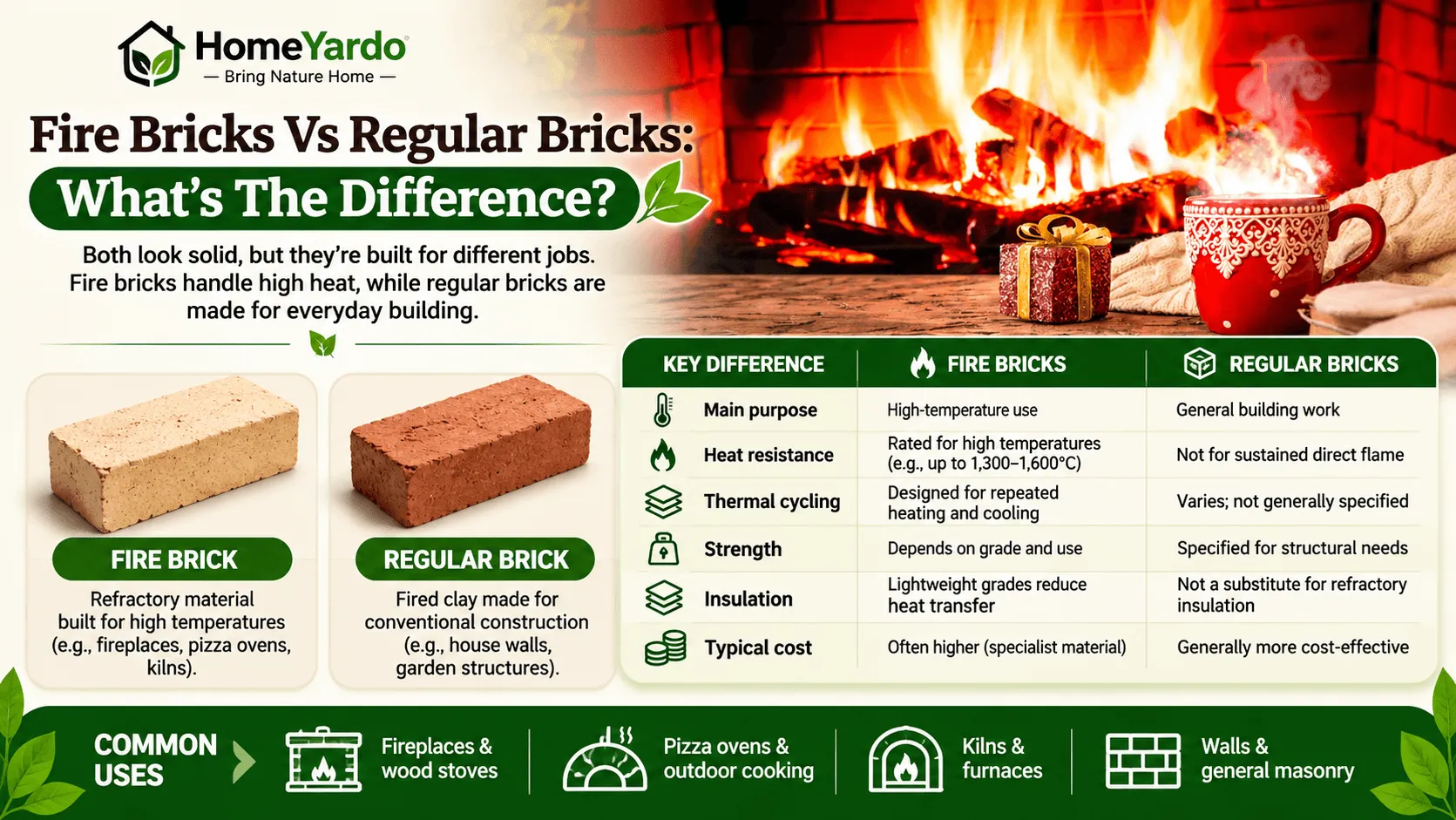
A brick that works perfectly well in a garden wall may perform badly inside a wood-fired pizza oven. Both look solid and both are made to last, but they face very different conditions. Walls need to carry loads and withstand the weather; oven linings must cope with direct flames and repeated heating.
The main difference between fire bricks and regular bricks is their intended use. Fire bricks are refractory products engineered for high temperatures. Regular bricks are primarily made for conventional masonry. Knowing the distinction helps you choose materials that are suitable, durable, and safe.
What Are Fire Bricks And Regular Bricks Made From?
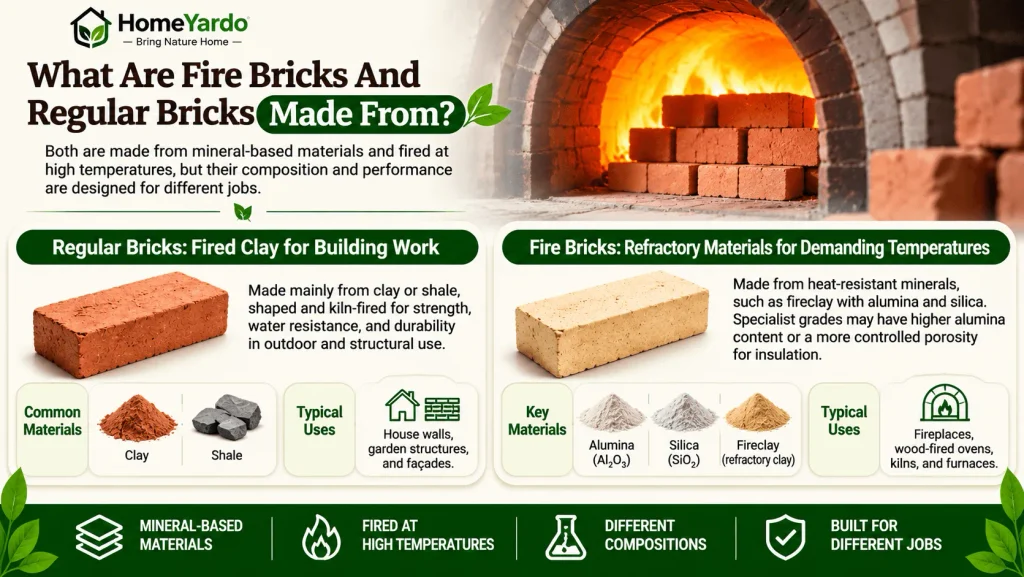
Although both types are manufactured using mineral-based materials and high-temperature firing processes, their compositions and performance requirements differ.
The materials used during manufacturing determine how each brick responds to heat, physical loads and environmental exposure.
Regular Bricks: Fired Clay for Building Work
Most traditional building bricks are made from clay or shale, shaped and fired in a kiln to develop their strength. Manufacturers control their composition and firing conditions to achieve properties such as compressive strength, water absorption and resistance to weathering.
You will find clay bricks in house walls, garden structures, façades, and other structural applications. Some are dense, while others contain perforations or have different levels of porosity. Being fired during manufacture does not mean a regular brick has been tested for prolonged contact with flames.
Fire Bricks: Refractory Materials For Demanding Temperatures
A fire brick, also called a refractory brick, is manufactured from heat-resistant minerals. Common fireclay grades contain alumina and silica in proportions selected to provide the required refractory performance.
Some specialist bricks have a higher alumina content for more demanding furnace conditions. Others use carefully controlled porosity to provide insulation. This means firebricks are not created equal: their precise composition determines how they perform, not merely their name or appearance.
Fire Bricks Vs Regular Bricks: Key Differences At A Glance
| Property | Fire bricks | Regular bricks |
|---|---|---|
| Main purpose | Refractory linings and high-temperature use | Conventional walls and building work |
| Heat exposure | Rated grades can withstand high temperatures | No assumed rating for continuous direct flame exposure |
| Thermal cycling | Selected for the expected heating and cooling cycles | Performance varies; not generally specified for refractory duty |
| Heat storage | Dense grades offer substantial thermal mass | Depends on density and construction |
| Insulation | Lightweight insulating grades offer low thermal conductivity | Not a substitute for purpose-made refractory insulation |
| Strength | Depends on grade and intended loading | Specified for structural masonry requirements |
| Cost | Often higher for specialist grades | Usually more cost-effective for ordinary construction |
Heat Resistance Is the Biggest Difference
Regular fired clay bricks are non-combustible, but that does not make them interchangeable with refractory products. Under sustained direct heat, an unsuitable brick may deteriorate, crack or lose its intended performance.
Fire bricks are made to withstand extreme temperatures within their published limits. For example, certain dense fireclay bricks are rated to 1,300°C, while some high-alumina grades have ratings of 1,600°C. These are product specifications, not temperatures that every fireplace or oven reaches.
Thermal Shock and Repeated Firing Matter
Heating causes materials to expand; cooling causes them to contract. Rapid temperature changes can create thermal stress, particularly when one part of a brick gets hotter than another.
Appropriate refractory grades are selected with these conditions in mind. However, even a fire brick can crack due to severe thermal shock, unsuitable installation or excessive mechanical stress. A rating for maximum temperature alone cannot predict how long a lining will last.
Mechanical Strength Is a Separate Question
Regular bricks may have excellent compressive strength for load-bearing walls. Dense refractory bricks can also resist wear and loading in hearths or furnace linings, but lightweight insulating grades are comparatively fragile.
The better choice depends on whether the brick must support masonry, resist abrasion or endure direct heat. These are separate demands, and no single brick excels at all of them.
Are All Fire Bricks the Same?
Dense Fire Bricks Store Useful Heat
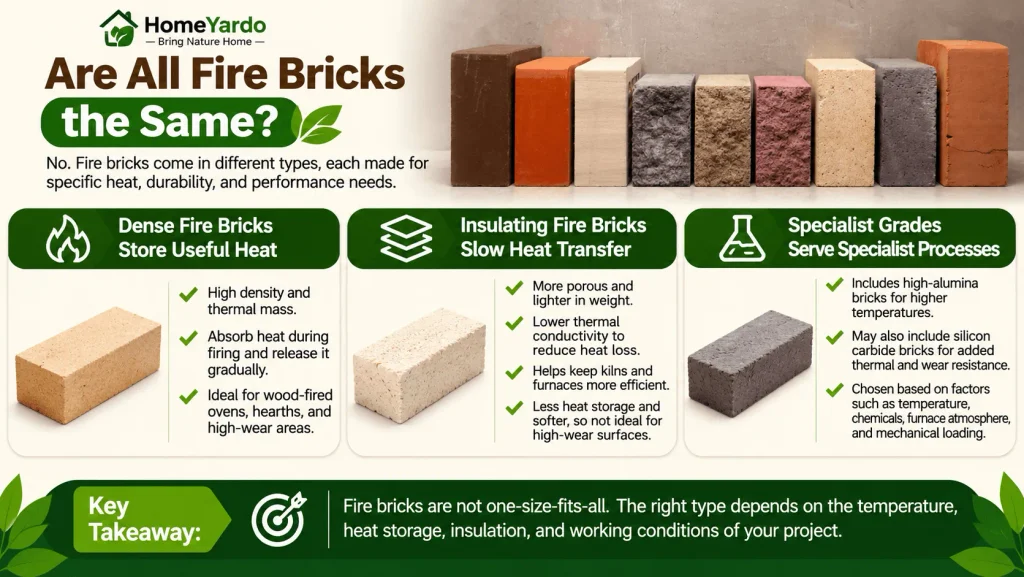
Dense fireclay bricks have substantial mass and can absorb heat during firing, then release it gradually. This heat retention is especially useful in wood-fired ovens, where a hot floor helps cook food even after the flames have died down.
Their density also suits some hearths and hot faces exposed to wear. However, storing heat is not the same as stopping it from travelling into surrounding materials.
Insulating Fire Bricks Slow Heat Transfer
Insulating fire bricks are deliberately made more porous and lighter, with lower thermal conductivity. They reduce heat loss and keep the mass of a kiln or furnace lining down.
Because they store less heat and are generally softer than dense bricks, they are not always suitable for heavily used oven floors or areas exposed to impact.
Specialist Grades Serve Specialist Processes
High-alumina refractory bricks are used where temperatures or service conditions exceed those suited to basic fireclay. Silicon carbide bricks may be chosen for particular combinations of thermal and wear demands. The correct material also depends on chemicals, furnace atmosphere and mechanical loading.
Where Are Fire Bricks and Regular Bricks Used?
The correct material depends largely on where the brick will sit and what it will experience during operation.
A brick forming the inner wall of a firebox faces different demands from one used in a decorative outer enclosure.
Fireplaces and Wood-Burning Stoves
Inside a fireplace or stove, bricks may come into direct contact with flames, embers and intense radiant heat. The firebox lining therefore needs a material specified for that appliance. Dense fireclay or compatible insulating liners may be used, depending on the design.
Regular bricks can still be suitable for parts of a surrounding fireplace structure, provided they are outside the refractory working face and meet the installation requirements. Replacing a stove’s original insulating liner with a dense brick simply because it fits can change how heat reaches the appliance body.
Pizza Ovens and Outdoor Cooking Areas
A pizza oven needs both heat storage and protection for surrounding construction. Dense refractory bricks are popular for cooking floors because they retain heat and provide a hard working surface. Oven domes or walls may also use suitably rated refractory masonry.
For a project involving sustained direct heat, properly specified fire bricks help create a lining intended for repeated firing. The outer enclosure can use other appropriate building materials, often separated from the hot face by insulation.
Homeowners planning a larger outdoor cooking space may also find HomeYardo’s guide to building a safe fire pit area useful for understanding surrounding surfaces and layout considerations.
Kilns and Industrial Furnaces
A wood-fired kiln, ceramic kiln or industrial furnace may operate for extended periods at demanding temperatures. Here, refractory design becomes more specialised. Dense bricks can form a durable working face; insulating bricks may sit behind them to reduce energy loss.
Other applications include forges, foundries and heat-treatment equipment. Exposure to slag, flux or corrosive gases can make chemical resistance just as important as temperature resistance.
Which Brick Should You Choose for Your Project?
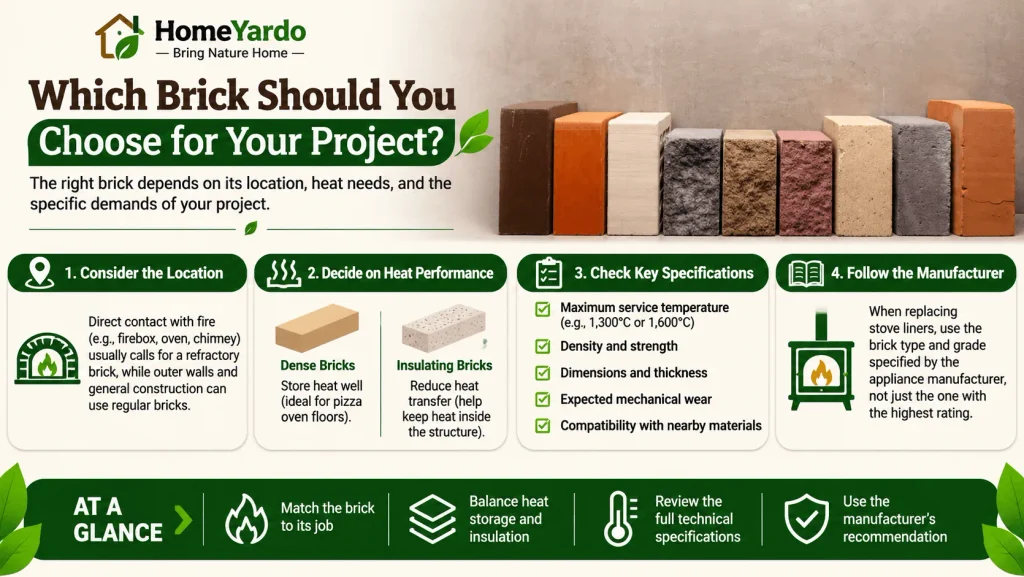
Start by asking where the brick will sit. A brick lining a fire chamber has a different job from one forming a decorative outer wall. Direct contact with fire usually calls for an appropriately rated refractory product; general masonry needs bricks selected for structural and environmental conditions.
Next, decide whether you want to retain heat or limit its transfer. Dense bricks offer useful thermal mass for a pizza oven floor. Insulating bricks reduce heat escaping towards the outer structure. Many successful high-temperature builds use both, with each material placed where it performs best.
Check the maximum service temperature, density, dimensions, expected mechanical wear and compatibility with nearby materials. Thickness deserves attention: a brick at half the thickness of another is not necessarily an equivalent replacement. It may store less heat or provide a different level of protection.
Finally, follow the appliance manufacturer’s instructions when replacing stove liners. The right brick is the one specified for the actual conditions, not simply the one with the highest temperature rating.
Does Installation Affect Brick Performance and Safety?
Correct material selection is only part of a reliable installation. Mortar, joints, supports, insulation and ventilation can all affect how a refractory lining performs.
Use Suitable Mortar
Even a correctly chosen refractory brick can perform poorly with the wrong jointing material. Conventional mortar is not automatically suitable for a hot-face lining. Refractory mortar or cement must match the brick, temperature, joint size and exposure conditions.
Account for Movement
Repeated heating and cooling can strain both bricks and joints. Larger ovens, kilns, and furnaces may need designed expansion allowances, suitable insulation and secure support. Filling every gap rigidly can create stress rather than solve it.
Watch for Signs of Damage
Inspect accessible linings, once cool, for loose bricks, open joints, crumbling edges and cracks that are spreading. Visible deterioration does not always mean complete failure, but displaced bricks or exposed metalwork deserve prompt attention.
Cutting brick may release hazardous silica dust. Use suitable wet cutting or extraction methods and appropriate respiratory protection. Seek professional advice where a stove, fireplace, or flue repair could affect safe operation.
Are Fire Bricks Worth the Higher Cost?
For a heat-exposed lining, a correctly specified fire brick can provide value through reliable performance, appropriate durability and fewer unsuitable-material repairs. Its extra cost makes sense when ordinary building bricks cannot meet the service requirements.
For conventional walls, regular bricks are usually the more cost-effective option. Paying for exceptional heat resistance in a location that does not need it offers little practical benefit.
Remember to budget for mortar, insulation, cutting, and installation as well as the bricks themselves. For product specifications and information about refractory materials, consult Vitcas before settling on a system.
Frequently Asked Questions About Fire Bricks
Yes. Dense fire bricks generally need suitable masonry or diamond-cutting equipment. Softer insulating grades can be easier to shape, but both require appropriate dust precautions.
Sometimes. Reuse depends on their condition, grade and previous exposure. Reject cracked, unstable or heavily worn bricks, and confirm that any reused material suits the intended duty.
No. Colour reflects materials and manufacturing conditions, not a reliable temperature rating. Check the manufacturer’s technical data instead of judging a brick by its shade.
Neither is better for every project. Regular bricks suit conventional construction; fire bricks are made for selected high-temperature environments. The safest, most effective choice comes from matching the material’s composition, thermal performance and strength to its actual position and purpose.