
Understanding Beverage Refrigerator Power Usage and Operating Costs
A beverage refrigerator keeps drinks cold and easy to reach without taking up space in the main kitchen refrigerator. But because it may run 24 hours a day, its electricity use deserves attention before you choose a model.
Before you buy a refrigerator designed specifically for beverages, check its annual energy consumption, capacity, temperature range, door design, and installation requirements. These details give you a much better picture of what the appliance may actually cost to operate.
How Much Electricity Does a Beverage Refrigerator Use?
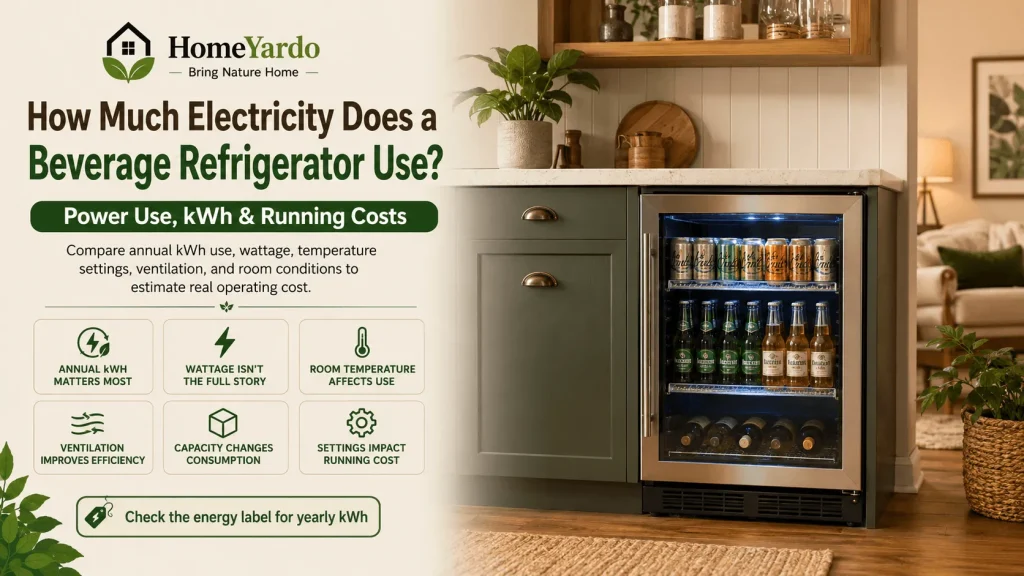
Beverage refrigerator power usage varies considerably between models. Capacity, construction, efficiency, room temperature, ventilation, temperature settings, and everyday use all affect how much electricity the appliance consumes.
The most useful figure for comparing models is usually annual energy consumption in kilowatt-hours (kWh) rather than wattage alone. Wattage tells you the electrical demand while components are operating, but a refrigerator’s compressor does not necessarily run continuously at full load.
ENERGY STAR’s certified-product database illustrates how much specifications can differ. Certified cooler models listed in its database have their annual electricity consumption reported in kWh per year, allowing buyers to compare energy performance alongside capacity and other features.
This makes the manufacturer’s energy label or published annual kWh figure a better starting point for estimating operating expenses than simply comparing appliance wattages.
How Do You Calculate Beverage Refrigerator Operating Cost?
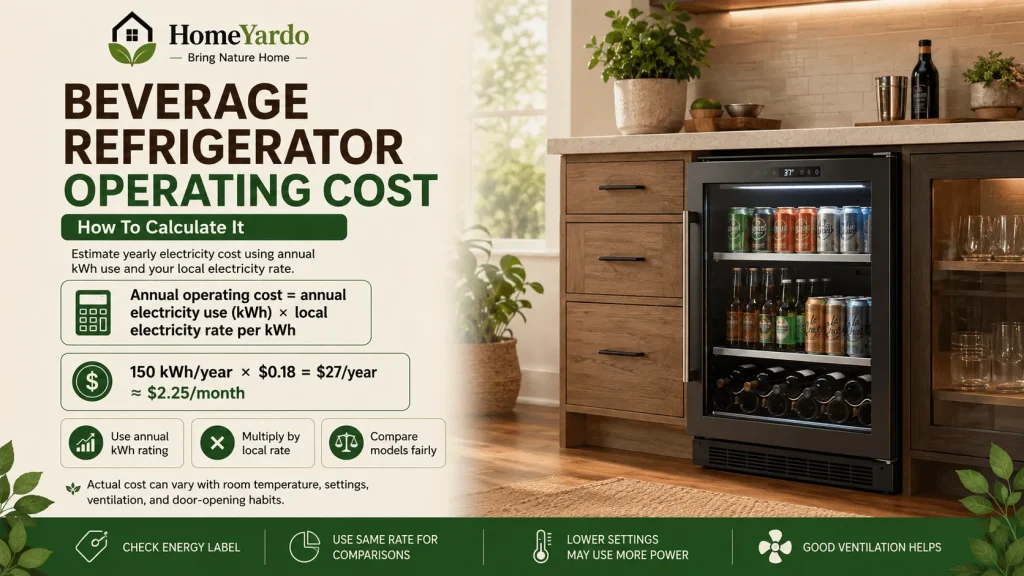
You can estimate the annual electricity cost with a straightforward calculation:
Annual operating cost = annual electricity use (kWh) × local electricity rate per kWh
Suppose a particular model is rated at 150 kWh per year and electricity costs $0.18 per kWh:
150 × $0.18 = $27 per year
That works out to approximately $2.25 per month.
This is an estimate rather than a guaranteed electricity bill. Actual consumption can change with room conditions, temperature settings, ventilation, door-opening habits, appliance condition, and other operating factors.
When comparing two refrigerators, use the same electricity rate for both calculations. That gives you a fairer comparison of their estimated long-term running costs.
What Affects Beverage Refrigerator Power Usage and Operating Costs?
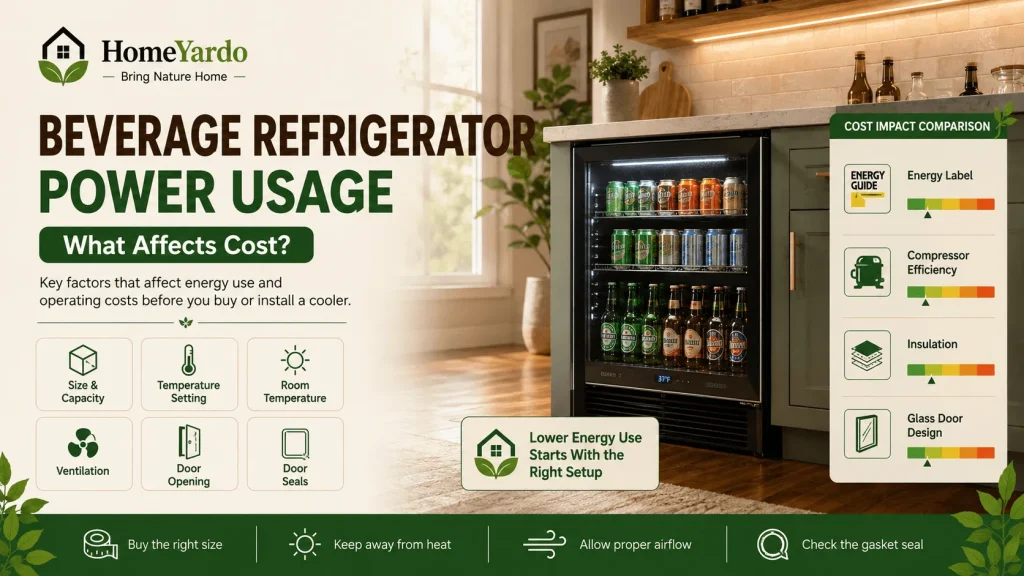
The number printed on an energy label is useful, but real-world conditions still matter. A refrigerator in a cool, ventilated kitchen doesn’t operate under the same conditions as an identical appliance squeezed into a hot cabinet with inadequate airflow.
Several factors deserve particular attention.
Refrigerator Size and Capacity
Larger refrigerated spaces generally require more energy to cool than smaller ones, although size alone does not determine efficiency.
ENERGY STAR recommends buying an appropriately sized refrigerator because larger units generally consume more energy. The practical lesson for a beverage cooler is simple: don’t pay to cool empty capacity that you rarely use.
Estimate how many cans, bottles, or other drinks you normally need to store, then compare models within that capacity range.
Temperature Settings
Temperature settings influence the workload placed on the cooling system. Setting the cabinet colder than necessary can cause the system to run more frequently or for longer periods.
The correct setting depends on the drinks being stored and the operating range specified by the manufacturer.
For a dedicated beverage refrigerator, check the available temperature range before purchasing. A model should be capable of maintaining the temperature you want without requiring you to operate it at an unnecessarily aggressive setting.
Ambient Room Temperature
The temperature surrounding the appliance affects how hard its refrigeration system must work.
A cooler placed beside an oven, in direct afternoon sunlight, or in another consistently warm location has more external heat to deal with than one installed in a cooler room.
ENERGY STAR recommends locating refrigerators and coolers away from heat sources such as ovens and direct sunlight. This is an easy detail to overlook during kitchen or entertainment-room planning.
Managing heat gain throughout the home can also affect overall energy use, and energy-efficient roofing is one way homeowners can reduce unwanted heat entering the house.
Ventilation Around the Refrigerator
Refrigeration systems need to release heat. Proper ventilation is also important elsewhere in the home, particularly in kitchens and other enclosed areas. Heat recovery ventilation can help improve fresh-air circulation while recovering heat from outgoing air.
If a freestanding appliance is pushed into a space that doesn’t provide the clearances required by its manufacturer, heat may not dissipate as intended. Built-in and freestanding beverage refrigerators can also have different ventilation arrangements, so they shouldn’t automatically be treated as interchangeable.
Check the installation manual for required side, rear, and top clearances before deciding where the unit will go.
Frequency of Door Opening
Every time the door opens, warmer room air can enter the cooled cabinet. The refrigerator then has to restore its internal conditions.
Opening the door occasionally isn’t a problem; that’s what the appliance is designed for. Repeated or prolonged openings, however, add to the cooling load.
Organizing drinks by type can help. If commonly used beverages have an obvious place, there’s less need to stand in front of an open refrigerator searching for one bottle.
Door Seals and Gaskets
The door gasket creates the seal between the cabinet and the room.
A dirty, damaged, loose, or deteriorated gasket can allow unwanted air exchange. ENERGY STAR specifically recommends checking refrigerator door seals and replacing them when they no longer remain airtight.
Inspect the gasket periodically for tears, deformation, debris, or areas that don’t make consistent contact when the door closes.
Insulation and Door Design
Insulation slows heat transfer into the refrigerated compartment and reduces the cooling load.
Door construction matters as well. Beverage refrigerators are often sold with glass doors because buyers can see the contents without opening them. The thermal performance of those doors can vary according to their construction and insulation.
If energy use is a priority, compare the actual annual kWh ratings of the models you’re considering rather than assuming that two refrigerators of similar dimensions will consume the same amount of electricity.
Compressor and Cooling-System Efficiency
The compressor is a major component of the refrigeration cycle, but overall efficiency depends on the complete appliance design.
ENERGY STAR notes that efficient refrigeration products may combine higher-efficiency compressors with improved insulation and better temperature and defrost mechanisms.
Some modern models also use variable-speed or inverter-type compressor technology. Rather than judging efficiency from one feature name, compare the complete energy specification for the appliance.
Energy Rating
The energy label is one of the fastest ways to compare refrigerators before purchase.
For U.S. buyers, ENERGY STAR reports that certified coolers can be more efficient than models that merely satisfy federal minimum energy-efficiency requirements. The exact certification threshold varies according to cooler type and configuration.
Look at:
- Annual energy consumption in kWh
- Appliance capacity
- Model configuration
- Certification or efficiency rating
- Estimated operating cost, when provided
- Features that may affect energy consumption
Compare appliances of a similar size and type whenever possible.
Does a Glass-Door Beverage Refrigerator Use More Electricity?
Not necessarily in every model.
Glass affects heat transfer differently from an insulated solid panel, but modern beverage refrigerators can use insulated or multi-pane glass and other design features to limit heat gain. Compressor efficiency, insulation, cabinet construction, capacity, temperature settings, and installation conditions also contribute to total energy consumption.
The safest comparison is therefore model against model using annual kWh consumption.
Don’t reject a glass-door cooler solely because it has glass, and don’t assume a solid-door unit is automatically cheaper to operate. Check the measured energy specification.
How Can You Compare Two Beverage Refrigerators for Energy Efficiency?
Start with models that provide the storage capacity and temperature range you actually require. Then compare their annual electricity consumption rather than focusing only on purchase price.
| Factor | What to Check | Why It Matters |
|---|---|---|
| Capacity | Cubic feet or stated storage capacity | Avoids paying to cool unnecessary space |
| Annual energy use | kWh/year | Makes electricity consumption easier to compare |
| Door type | Glass or solid | Can affect thermal performance |
| Installation type | Built-in or freestanding | Determines ventilation requirements |
| Temperature range | Manufacturer specifications | Shows whether the unit suits your drinks |
| Efficiency certification | ENERGY STAR or applicable local label | Provides an independent efficiency benchmark |
| Warranty | Compressor and appliance coverage | Helps assess ownership protection |
A cheaper refrigerator isn’t automatically the less expensive refrigerator to own.
Purchase price and operating cost should be considered separately.
Tips to Reduce Beverage Refrigerator Operating Costs
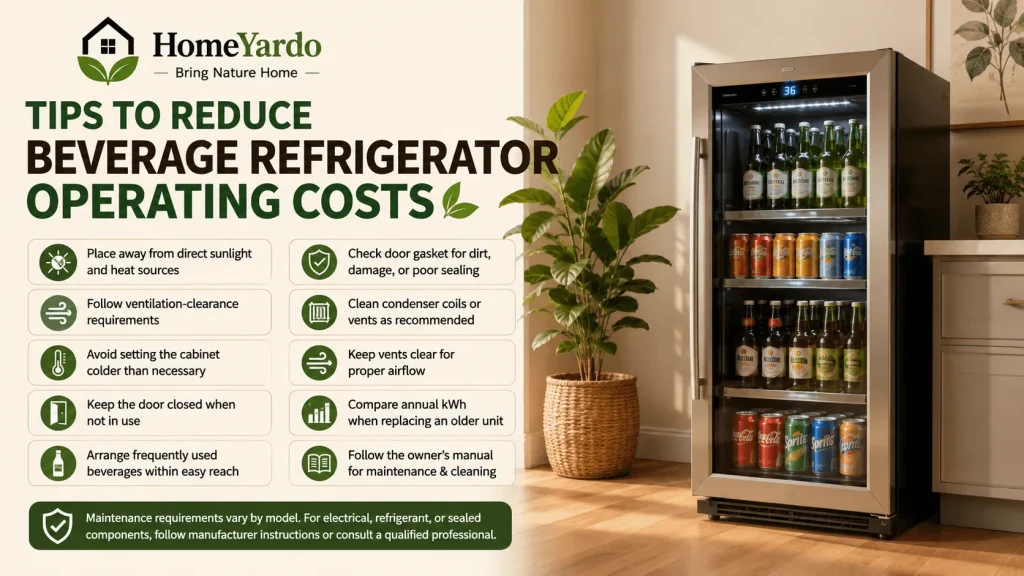
You don’t need to constantly adjust the appliance to improve efficiency. Most useful changes involve choosing a sensible location, following the manufacturer’s setup requirements, and avoiding habits that make the cooling system work unnecessarily.
Try these practices:
- Place the refrigerator away from direct sunlight and major heat-producing appliances.
- Follow the manufacturer’s ventilation-clearance requirements.
- Avoid setting the cabinet colder than your beverages require.
- Keep the door closed when you’re not removing or replacing drinks.
- Arrange frequently used beverages where they’re easy to find.
- Check the door gasket for dirt, damage, or poor sealing.
- Clean accessible condenser coils or ventilation areas when the manufacturer recommends it.
- Keep vents free from objects that could restrict airflow.
- Compare annual kWh consumption when replacing an older unit.
- Follow the owner’s manual for maintenance and cleaning instructions.
Maintenance requirements vary by model. Disconnecting power or accessing electrical, refrigerant, or sealed mechanical components should only be done according to manufacturer instructions or by a qualified service professional where appropriate.
When Is Higher Power Usage a Sign of a Problem?
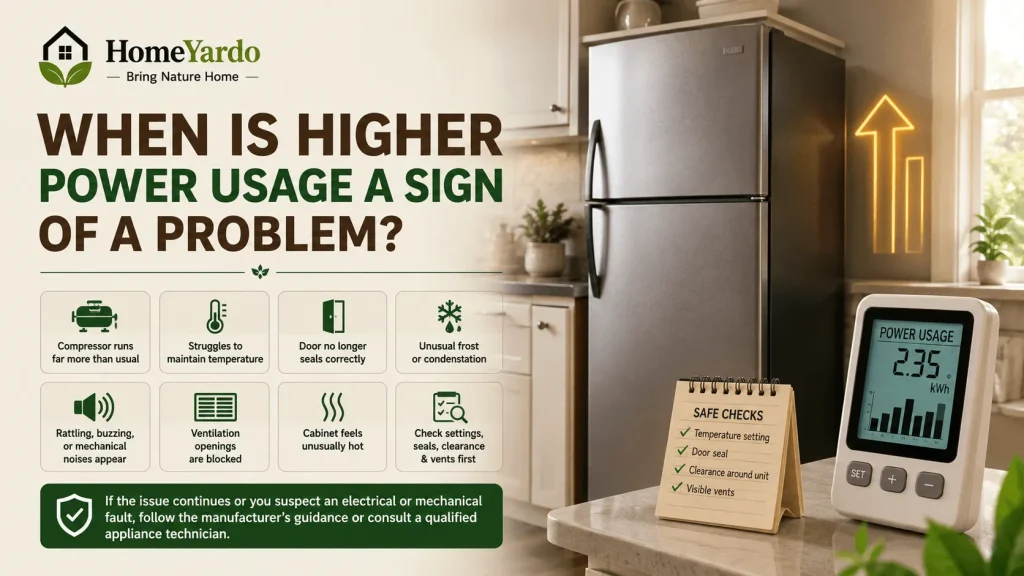
An increase in electricity consumption doesn’t automatically mean the refrigerator is failing. Hotter room conditions, a lower temperature setting, increased use, or frequent door opening can all change consumption.
A noticeable change becomes more meaningful when it appears alongside other symptoms, such as:
- The compressor seems to run far more than usual
- The refrigerator struggles to maintain its set temperature
- The door no longer seals correctly
- Unusual frost or condensation develops
- New rattling, buzzing, or mechanical noises appear
- Ventilation openings are blocked
- The cabinet feels unusually hot around areas that previously remained cooler
Start with safe checks such as the temperature setting, door seal, surrounding clearance, and visible vents.
Similar preventive maintenance principles apply to other household heating and cooling equipment, and seasonal HVAC tune-ups can help identify developing problems before peak heating or cooling demand.
What Should You Check Before Buying a Beverage Refrigerator?
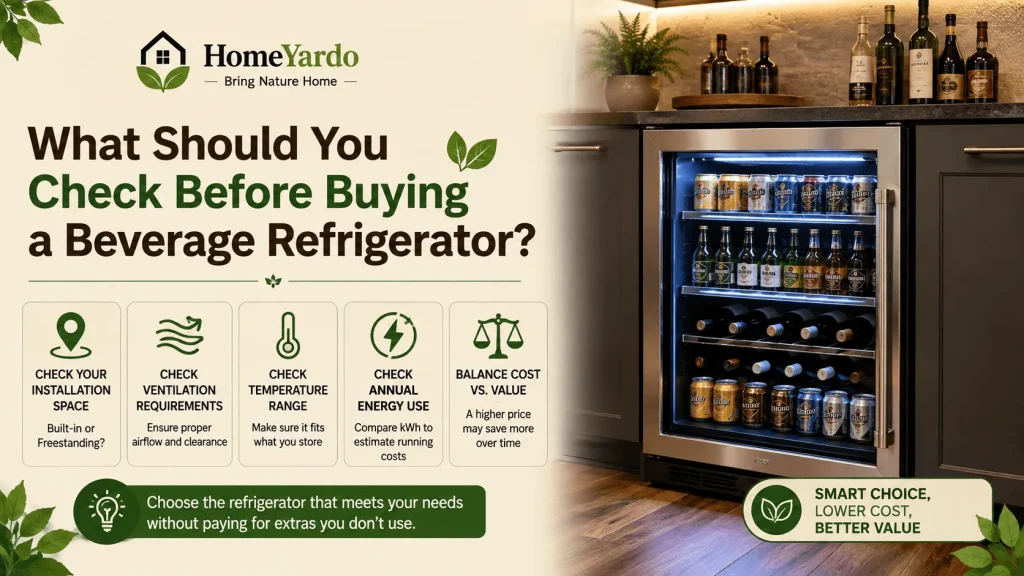
Don’t compare beverage refrigerators by appearance and capacity alone.
Check where the appliance will be installed, whether the model is approved for built-in or freestanding use, how much ventilation it requires, and whether its temperature range suits what you plan to store.
Then look at its annual kWh figure.
A model with a slightly higher purchase price may cost less to operate if it uses substantially less electricity, although whether that difference recovers the higher upfront price depends on your local electricity rate and how long you keep the appliance.
The best choice is the refrigerator that meets your storage needs without adding capacity, features, or energy consumption you won’t use.
Beverage Refrigerator Power Usage: The Bottom Line
Beverage refrigerator power usage depends on more than the appliance’s advertised wattage. Capacity, annual energy rating, room temperature, ventilation, temperature settings, door design, seals, and everyday use all influence operating costs.
Before purchasing, compare similar models using annual kWh consumption and your local electricity rate. Once installed, sensible temperature settings, adequate airflow, good door seals, and routine maintenance can help the refrigerator operate as intended.
That approach gives you something more useful than guessing whether a refrigerator is “energy efficient”—it gives you a realistic way to compare what different models may cost to own.
FAQ’s
There is no single power-use figure for every beverage refrigerator. Capacity, model design, temperature setting, ambient conditions, and efficiency all affect consumption. Check the manufacturer’s annual energy-use specification in kWh/year for the individual model. That figure is more useful for estimating operating cost than wattage alone.
Divide the refrigerator’s annual kWh consumption by 12, then multiply that number by your electricity price per kWh. As an example, a refrigerator rated at 150 kWh per year would use an average of 12.5 kWh per month. At $0.18/kWh, the estimated monthly cost would be $2.25.
Some use relatively little electricity, while larger, less efficient, or poorly installed units may consume considerably more. Instead of judging the appliance category as a whole, compare annual kWh ratings between models of similar capacity and configuration.
That depends on the appliance’s annual energy consumption and local electricity prices. Multiply the stated kWh/year figure by your electricity rate to estimate yearly cost. Remember that actual household consumption can differ from standardized energy-label estimates because operating conditions aren’t identical.
A colder setting can increase cooling demand because the appliance must maintain a larger temperature difference between the cabinet and surrounding room. Use a setting appropriate for the beverages being stored rather than automatically choosing the coldest available option.
Glass-door construction can affect heat transfer, but door material alone doesn’t determine total electricity use. Insulated glass, cabinet insulation, compressor efficiency, capacity, seals, and operating conditions all matter. Compare the annual kWh specifications of individual glass- and solid-door models for a meaningful answer.
Normally, a refrigerator designed for continuous operation should be used according to the manufacturer’s instructions rather than switched off every night. Repeatedly allowing the cabinet and drinks to warm means they must be cooled again later. If the unit will be unused for an extended period, follow its manual for shutdown and storage procedures.
The relationship isn’t simple enough to assume that an empty unit will always cost more or less to operate. Cabinet design, compressor cycling, room conditions, door openings, and thermal mass all affect operation. For buying decisions, the model’s standardized annual energy rating remains the better comparison metric.
Compare annual energy consumption between similar-capacity models and look for recognized energy-efficiency certification where applicable. Also check door construction, insulation, installation requirements, temperature controls, and appliance size. ENERGY STAR provides certified-product information for eligible refrigerator and cooler categories.
Yes, particularly when comparing otherwise similar models. ENERGY STAR states that certified cooler categories must meet efficiency requirements beyond applicable federal minimum standards, although the required improvement varies by cooler configuration. Purchase price, annual kWh use, capacity, features, and expected ownership period should all be considered together.
Sources and Further Reading
- U.S. Environmental Protection Agency, ENERGY STAR — Refrigerators. Accessed August 27, 2026.
- U.S. Environmental Protection Agency, ENERGY STAR — Refrigerators & Freezers Key Product Criteria. Accessed August 27, 2026.
- U.S. Department of Energy — Refrigeration Products. Accessed August 27, 2026.