Best Benchtop Water Filter Options for Clean, Great-Tasting Tap Water
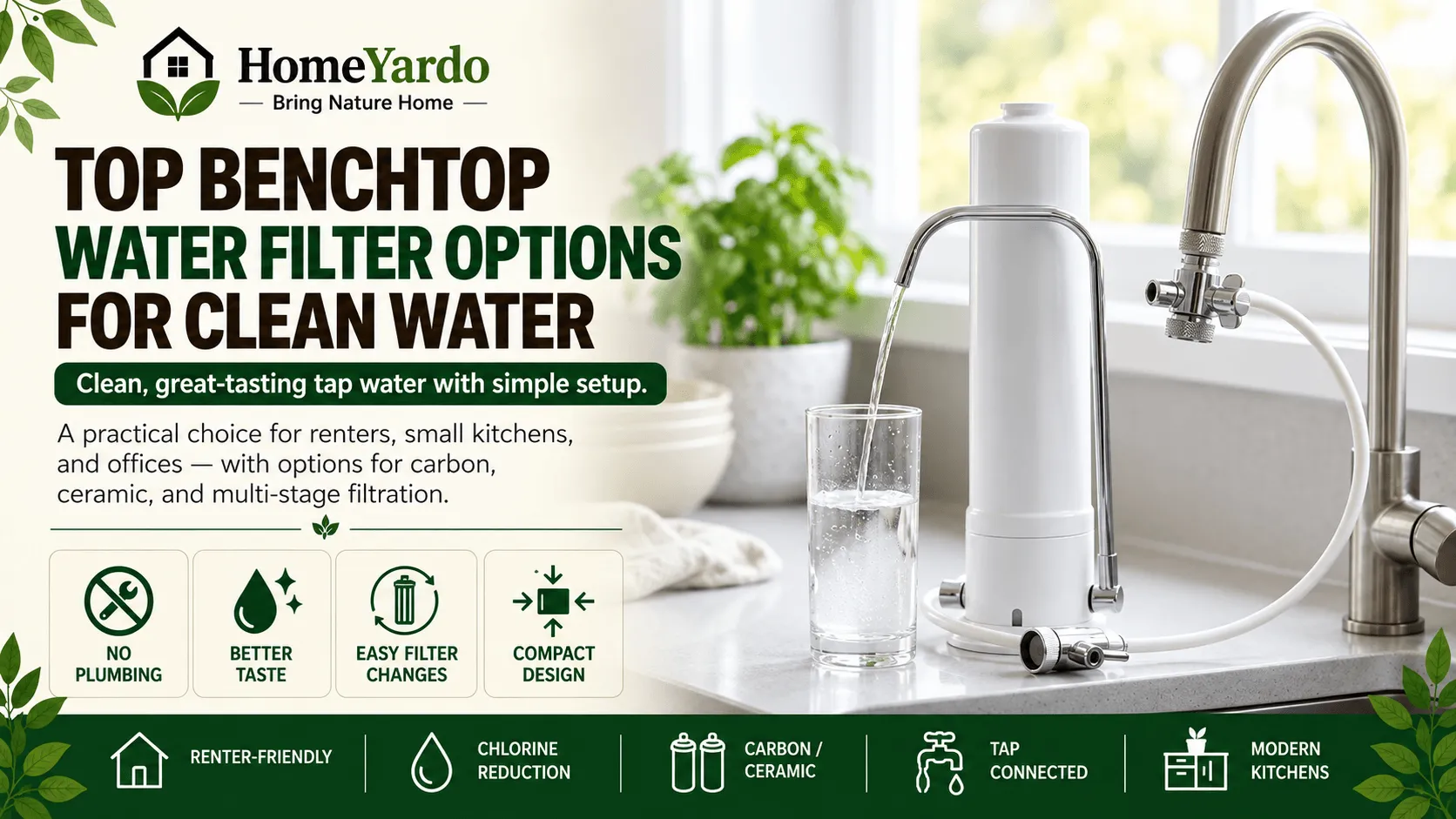
If your drinking water smells like chlorine or tastes flat, a benchtop water filter can be a practical fix for both well water and city water. It gives you clean tap water without the mess of major plumbing work, which is why so many people choose this type of water filtration system for apartments, rental homes, and office kitchens. The best options are easy to set up, easy to maintain, and built to match the issues you notice every day when you fill a glass.
Key Highlights
- A benchtop water filter is a simple filtration system for renters, small kitchens, and offices.
- It can improve filtered water taste by reducing chlorine and other common water contaminants.
- Many units connect to your tap without plumbing changes, drilling, or difficult installation.
- Filter choices matter because each filter cartridge targets different water quality concerns.
- Some systems use carbon filters, ceramic media, or reverse osmosis for different filtration goals.
- Costs can start around $139, with higher pricing for stronger contaminant reduction.
Understanding Benchtop Water Filters for Australian Homes
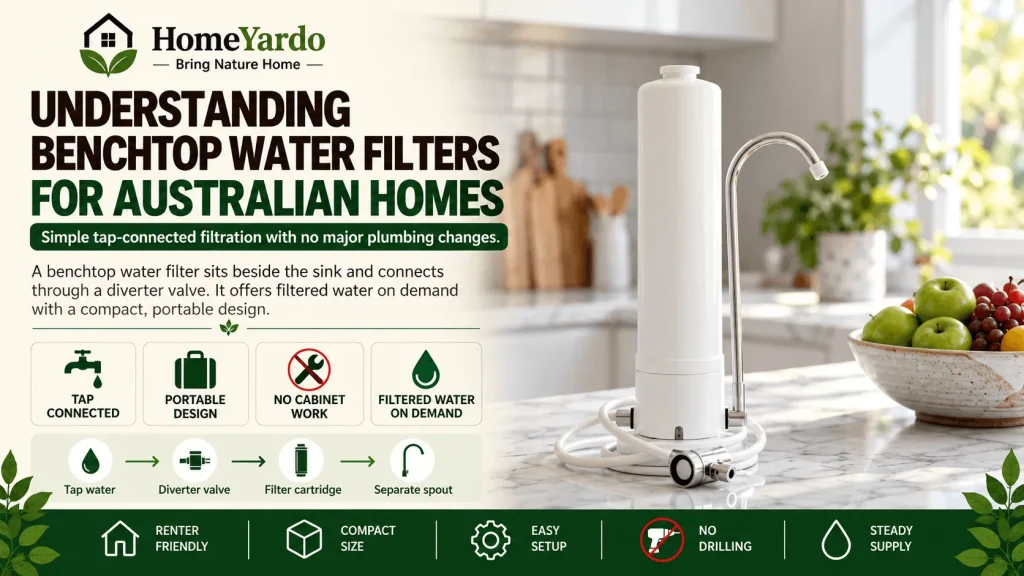
A benchtop water filter sits beside your sink and connects directly to the tap water line through a diverter valve. The filtration process starts when you turn on cold water and redirect the water supply through the unit, where the filter cartridge treats it before it flows from a separate spout.
For home use, the biggest benefits are portability, compact size, and simple setup. Compared with under-sink systems, it avoids cabinet work and plumbing changes. Compared with jug filters, it offers a more direct filtration process at the tap, which suits people who want a steady supply without waiting for a pitcher to refill.
Choosing the Best Benchtop Water Filter in Australia
Start with your actual water problem. If you’re still comparing filtration types, this guide to choosing a home water filtration system explains how water quality, contaminants, installation, and maintenance should shape your choice. If taste and odour are the issue, a simple water filter system with chlorine reduction may be enough. If your concern is broader, look at the filter cartridge and its stated reduction claims for heavy metals, fluoride, PFAS, or bacterial cysts, as well as any potential health effects.
It also helps to think beyond the first purchase. A best countertop filtration system for water should have easy filter replacement, clear cartridge options, and a price that makes sense next to bottled water or a whole-house setup. Basic models can start at $139, while more advanced systems cost several hundred dollars.
Popular Types of Benchtop Water Filter Systems
Not every countertop filter works the same way, and that matters when you are comparing results. Some systems focus on chlorine taste and smell, while others target heavier-duty reduction claims such as heavy metals, harmful chemicals, fluoride, PFAS, or cysts like Cryptosporidium and Giardia.
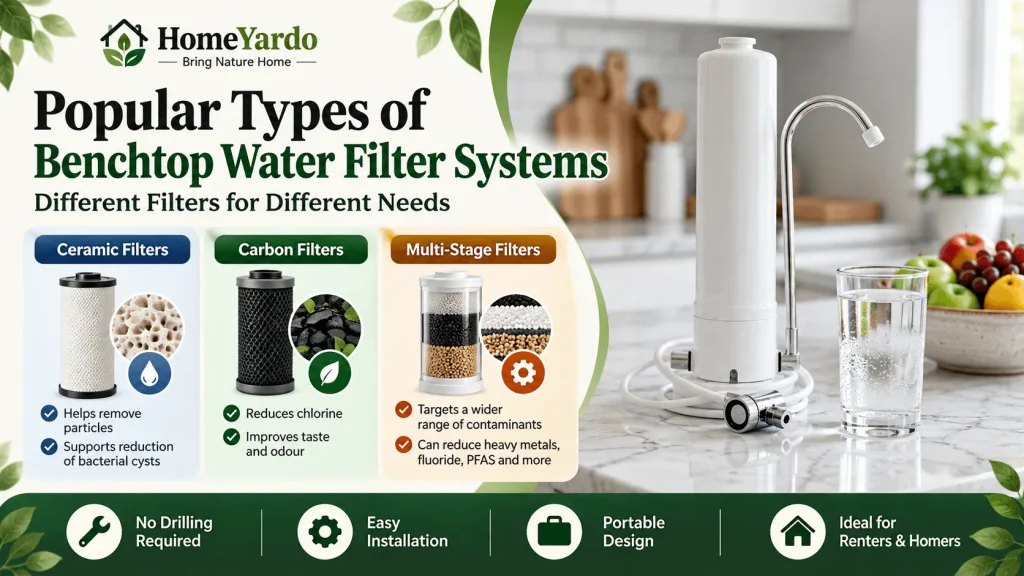
This makes benchtop filtration a flexible filtration solution for hard water. You will see carbon filters, ceramic options, and multi-stage units, each designed for different filters and different household needs. The next sections break down where each type fits best and what trade-offs you should expect in daily use.
Gravity-Fed versus Pressure-Fed Models
Here is the short answer: yes, many benchtop water filter systems do not need drilling, and pressure-fed models often connect straight to an existing faucet. In practical terms, the main difference between a gravity-fed filter and a pressure-fed filter is how clean water moves through the unit. One relies on gravity, while the other uses household water pressure.
That affects daily use. A pressure-fed filter usually gives a faster flow rate because the tap pushes water through this type of system. A gravity-fed filter can be useful where direct connection is not ideal, but filtration speed is usually slower.
| Type | How it works | What to expect |
|---|---|---|
| Gravity-fed filter | Water moves through the only filter by gravity alone | Slower flow rate, no tap pressure needed |
| Pressure-fed filter | Tap water pressure drives the filtration | Faster filtration speed, direct faucet connection |
Ceramic, Carbon, and Multi-Stage Filtration
Yes, benchtop water filters can be effective at removing common harmful contaminants, but the result depends on the media inside the cartridge. Some units use coconut carbon to remove chlorine. Others add ceramic filters or multi-stage filtration when the goal is broader contaminant reduction.
A simple example helps. If your main issue is a chemical taste in your local water supply, carbon filters are often the first place to look. If you want a wider range of contaminants addressed, a more advanced cartridge may suit your needs better.
- Ceramic filters can help with particles and support the reduction of bacterial cysts.
- Carbon filters are commonly used to reduce chlorine and improve taste.
- Multi-stage filtration can target a wide range of contaminants in one filter cartridge.
- Some cartridges are built for heavy metals, fluoride, PFAS, or cyst reduction.
Models That Don’t Require Plumbing or Drilling
Yes, there are benchtop systems that do not require plumbing or drilling, and that is one of their strongest selling points. A typical countertop water filter arrives ready to install, ensuring the production of clean drinking water. You remove the aerator from the kitchen faucet, attach the diverter valve, place the unit on the counter, and run cold water through it.
That makes them a convenient option if your main concern is avoiding permanent changes. Renters, small offices, and anyone who may move soon usually benefit most because the unit can go with them. If you’re choosing a filtration setup as part of a larger kitchen update, these kitchen remodeling ideas can help you plan faucets, water efficiency, storage, and other practical upgrades together.
- No cabinet cutting or sink modifications are needed for many models.
- Installation is usually done at the faucet, not inside the wall or bench.
- Portable design makes the system easier to move between homes.
- Some units can later be converted for under-bench use with a separate kit.
How Benchtop Water Filters are Installed and Used
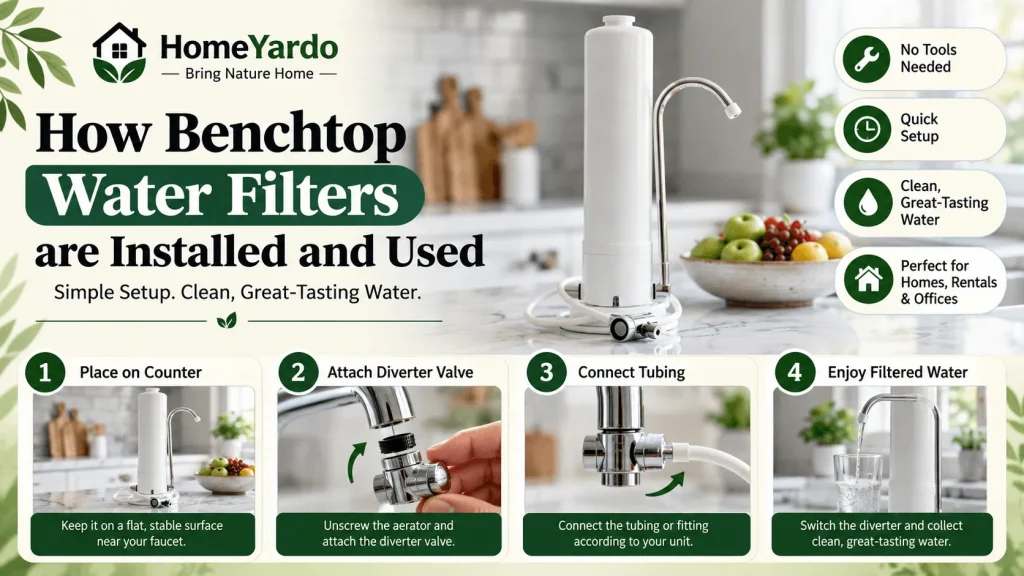
Most benchtop countertop water filter system units are designed for simple filter installation at the kitchen sink. The unit sits on the counter with its spout overhanging the sink, and a diverter valve sends water from the faucet into the housing when you want filtered water.
In day-to-day use, it works like a point-of-use water filtration system. Turn on cold water, switch the diverter, and collect treated water from the unit spout. Once installed, the routine is straightforward, but a few setup and maintenance habits make a big difference.
Basic Installation Steps for Most Units
If you are wondering how to install a typical benchtop water filter, the process is usually simple. Most units are supplied complete and ready to connect. The first setup often takes just a few minutes if your faucet accepts the included adapter.
A clear step-by-step approach helps avoid leaks and confusion. Once the connections are secure, your water supply can be redirected through the filter housing whenever you switch the diverter valve.
- Place the unit on a flat, stable counter near the faucet.
- Unscrew the aerator from the tap and attach the diverter valve.
- Connect the tubing or fitting according to the unit design.
- Check that the filter cartridge is seated correctly before first use.
After setup, regular maintenance matters. You will need to monitor filter replacement timing, since a worn cartridge can reduce performance and affect water taste.
Tips for Quick Setup Without Tools
A quick setup is one reason this type of countertop filter appeals to renters and busy households. In many cases, no tools are needed because the unit is built to screw directly onto the faucet through a diverter connection. That keeps the process clean and manageable, even if you have never installed a filter before.
To make setup smoother, prepare the space first. Clear the counter, confirm the faucet aerator can be removed, and keep the unit close enough that the outlet spout reaches the sink comfortably.
- Use a flat, dry section of counter to keep the unit steady.
- Run cold water only during first use unless the instructions say otherwise.
- Keep replacement filters nearby so future changes are faster.
- For basic carbon filters, flush the cartridge before regular drinking use.
That small prep saves time now and later, especially when your first filter change comes due.
Safe First Use and Troubleshooting
The first run through a new filter system should always be treated as a flushing step, not your first glass for drinking. Running water through the unit helps clear any loose carbon fines and gets the cartridge ready for safe water use. If the taste seems odd at first, that usually points to the need for more flushing.
Troubleshooting is usually simple because the setup is simple. If flow drops, check the diverter, the faucet connection, and whether the cartridge is due for replacement. If leaks appear, look at the adapter and threaded fittings first.
- Flush the new cartridge before judging water quality.
- Recheck all fittings if dripping starts near the faucet connection.
- Replace tired filters on time to maintain contaminant reduction for common water contaminants.
Design Considerations for Modern Benchtop Filters
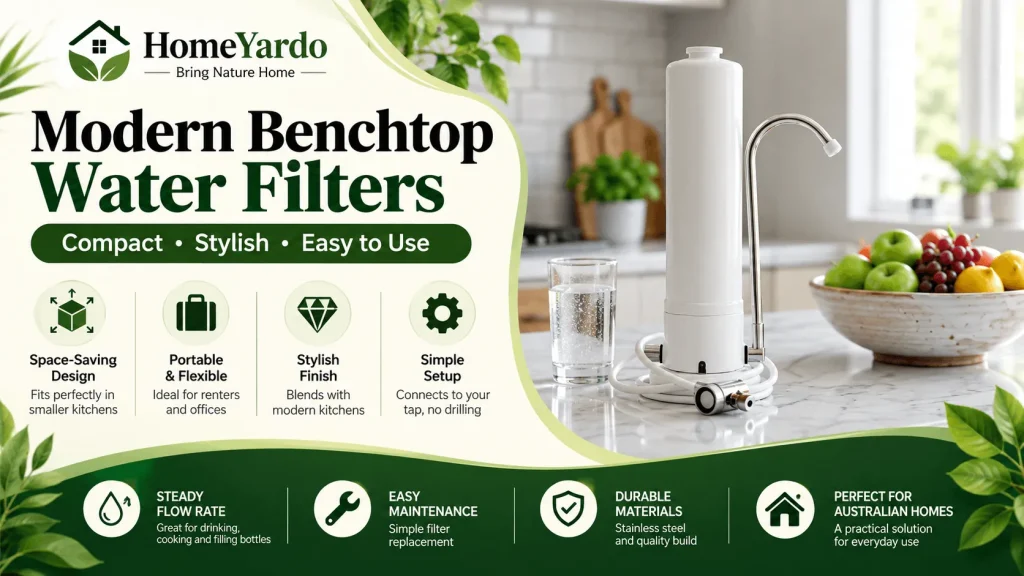
Performance matters, but design affects whether you enjoy using the filter every day. A portable unit with a compact footprint is easier to place in smaller kitchens, break rooms, or rental spaces where counter space is already limited.
Materials matter too. Some people want stainless steel for a more durable feel and a cleaner look beside modern appliances, while others focus on lightweight designs that are easy to move. The best modern filters balance stylish appearance with practical daily use, which the next sections unpack.
Space-Saving, Portable, and Stylish Options
Recent reviews often favour benchtop systems that solve real kitchen problems, not just water treatment claims. In practice, that means space-saving designs, easy portability, and a clean look near the kitchen sink with effective sink water filtration. A unit can filter well, but if it crowds the counter or feels awkward to move, people notice quickly.
For smaller homes and rentals, compact shape is a real advantage. The filter should sit securely on the counter, leave room for food prep, and still align neatly with the sink for filling bottles, pots, or a kettle.
- Space-saving models suit apartments and tighter counters.
- Portable systems work well for renters or office kitchens.
- Stylish finishes can blend better with modern kitchen surfaces.
- Fewer visible plastic components may appeal to buyers focused on appearance.
Ease of Use and Everyday Practicality
Ease of use is what keeps a filter in daily rotation instead of getting ignored on the counter. A practical unit should switch cleanly between regular tap water and filtered output, with a flow rate that feels reasonable for glasses, cooking, and filling a bottle or multiple bottles of water before work.
The filtration process should also be easy to live with. If the water comes out too slowly or the setup feels awkward every time you use it, frustration builds fast. That is why simple diverter controls and clear replacement schedules matter more than flashy extras.
- A steady flow rate makes daily use less annoying.
- Simple filter replacement reduces the chance of missed maintenance.
- A practical faucet connection helps the system fit normal kitchen habits.
Materials and Build Quality
Build quality shapes how dependable a benchtop filter feels over time. Strong housings, secure fittings, and well-made parts matter, especially in a unit connected directly to tap pressure. Some systems use housings rated for high pressure, which can also support later conversion to under-bench use with the right kit.
Material choice also affects confidence. Many buyers like stainless steel for durability and appearance, while a ceramic surface can add another functional layer in certain filter designs. Good construction is one reason a benchtop system can feel like a better long-term option than relying on plastic bottles.
- Stainless steel often appeals for durability and a cleaner finish.
- A ceramic surface may support particulate or cyst-focused filtration.
- Some cartridges use materials certified to relevant NSF International or NSF standards.
Conclusion
In conclusion, selecting the right benchtop water filter can significantly enhance the quality of your tap water, providing you with clean and great-tasting hydration at home. By understanding the various types of filtration systems available and their unique features, you can make an informed decision that suits your lifestyle and needs. Remember to consider installation ease, design, and maintenance when choosing your filter to ensure it fits seamlessly into your daily routine. With the right choice, you can enjoy fresh, filtered water and contribute to a healthier lifestyle.
FAQ’s
Some are, but not all. Benchtop systems vary by filter cartridge, so you need to check the contaminant reduction claims carefully across key factors. Certain cartridges are made for fluoride and heavy metals, while basic options may focus mainly on chlorine and taste rather than broader water contaminants.
Many do not. A typical countertop filter connects to the faucet with a diverter valve, so installation can happen without permanent plumbing changes or drilling. That makes it a portable option for renters, offices, or anyone who wants access to a filtered water supply, including options like osmosis filters, without modifying the kitchen.
Start with your water quality issue. If the goal is best-tasting tap water from various water sources, look for a filter system with chlorine reduction claims and an easy filter replacement schedule. If taste problems come with other concerns, choose a cartridge that matches those reduction claims instead of buying on price alone.