Biohazard Cleaning: What It Is, When It’s Needed, and How It Works
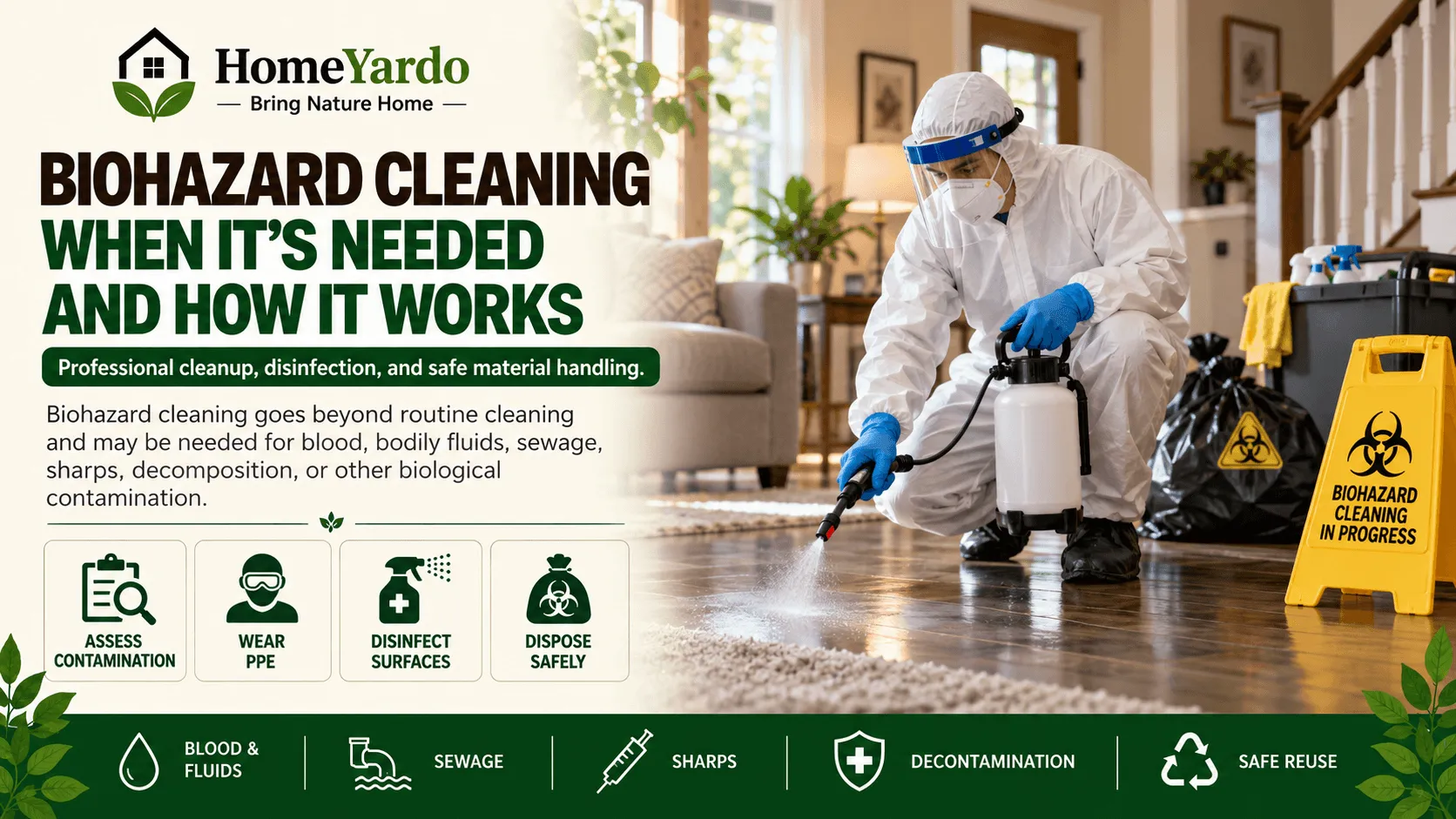
Biohazard cleaning is the professional removal, cleaning, disinfection, and disposal of materials contaminated by blood, bodily fluids, human or animal waste, or other potentially infectious substances.
It goes beyond ordinary household cleaning. The aim is to identify contamination, limit exposure, remove affected materials when necessary, disinfect suitable surfaces, and restore the area so it can be used safely again.
Cases involving significant blood loss, decomposition, sewage, sharps, or biological contamination that has soaked into porous materials may require trained professionals rather than routine cleaning methods.
Biohazard Cleaning at a Glance
Biohazard cleaning may be needed when a home, business, vehicle, or other property contains biological material that could expose occupants or workers to harmful microorganisms.
A professional response commonly involves:
- Restricting access to the contaminated area
- Assessing how far contamination has spread
- Wearing appropriate personal protective equipment
- Removing visible biological material
- Cleaning affected surfaces
- Applying an appropriate disinfectant
- Removing materials that cannot be adequately decontaminated
- Packaging and managing contaminated waste correctly
- Checking the work area before it is returned to normal use
The exact procedure depends on the source, amount, location, and extent of contamination.
What Is Biohazard Cleaning?
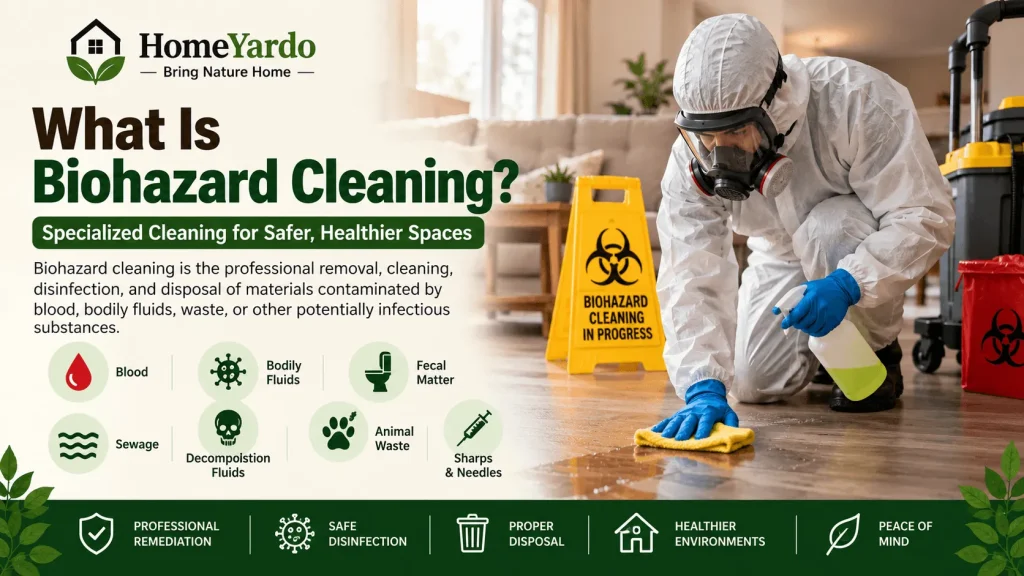
Biohazard cleaning is a specialized remediation process used in areas contaminated by biological materials that may pose an exposure risk.
Possible hazards include blood, certain bodily fluids, fecal matter, sewage, decomposition fluids, animal waste, contaminated needles, and other potentially infectious materials.
The objective is not simply to remove a visible stain or unpleasant odor. Biological material may spread beneath flooring, soak into furniture, enter wall cavities, or remain in other places that ordinary surface cleaning does not reach.
The OSHA Bloodborne Pathogens Standard requires employers whose workers have occupational exposure to blood or other potentially infectious materials to use appropriate exposure controls and decontamination procedures.
That distinction helps explain why professional biohazard remediation is different from normal janitorial or household cleaning.
What Is Considered a Biohazard?
Not every dirty or unsanitary area is automatically a biohazard. The concern increases when biological substances capable of carrying infectious organisms are present.
Examples may include:
| Biohazard Source | Possible Cleanup Concern |
|---|---|
| Blood | Bloodborne pathogen exposure and hidden saturation |
| Bodily fluids | Contamination of surrounding surfaces and materials |
| Human or animal feces | Bacteria, viruses, parasites, and cross-contamination |
| Sewage | Microbial contamination and contaminated water |
| Decomposition | Biological fluids, odors, insects, and porous-material contamination |
| Used needles or sharps | Puncture injuries and possible blood exposure |
| Animal waste | Feces, urine, nesting material, and potentially contaminated surfaces |
The amount of material and how far it has spread matter just as much as the type of contamination.
When Is Biohazard Cleanup Needed?
Biohazard cleanup should be considered when biological contamination is extensive, difficult to contain, has entered porous materials, or would expose an untrained person to unnecessary risk.
Situations may include:
- Serious injuries involving significant blood loss
- Unattended deaths
- Suicides
- Crime scenes after law enforcement releases the property
- Sewage backups
- Severe hoarding conditions involving biological waste
- Animal feces or remains
- Contaminated sharps or needles
- Biological contamination affecting furniture or building materials
A sewage event may also create water and structural problems beyond the contaminated surface. Homeowners dealing with broader water intrusion can review HomeYardo’s guide to handling a flooded home for additional information on moisture and property damage.
Even a relatively small incident can become harder to manage when biological fluids soak into carpet, carpet padding, mattresses, upholstery, unfinished wood, subflooring, drywall, or insulation.
In those situations, wiping the visible surface may not address the full contaminated area.
What Should You Do Immediately After a Biohazard Incident?
The first priority is preventing unnecessary exposure and keeping contamination from spreading.
Avoid walking through the affected area or allowing children, pets, visitors, or unprotected workers to enter it. Do not pick up exposed needles or other sharps with bare hands, and avoid using household cleaning equipment on significant biological contamination.
Using a normal vacuum, mop, or reusable cleaning cloth in a heavily contaminated area can potentially move material into areas that were previously unaffected.
Where emergency medical care, law enforcement, fire services, or another public authority is involved, follow their instructions before arranging cleanup. Crime scenes should not be disturbed until the relevant authorities have released the property.
Once access is permitted, the extent of contamination can be assessed and an appropriate cleanup plan developed.
How Does Professional Biohazard Cleaning Work?
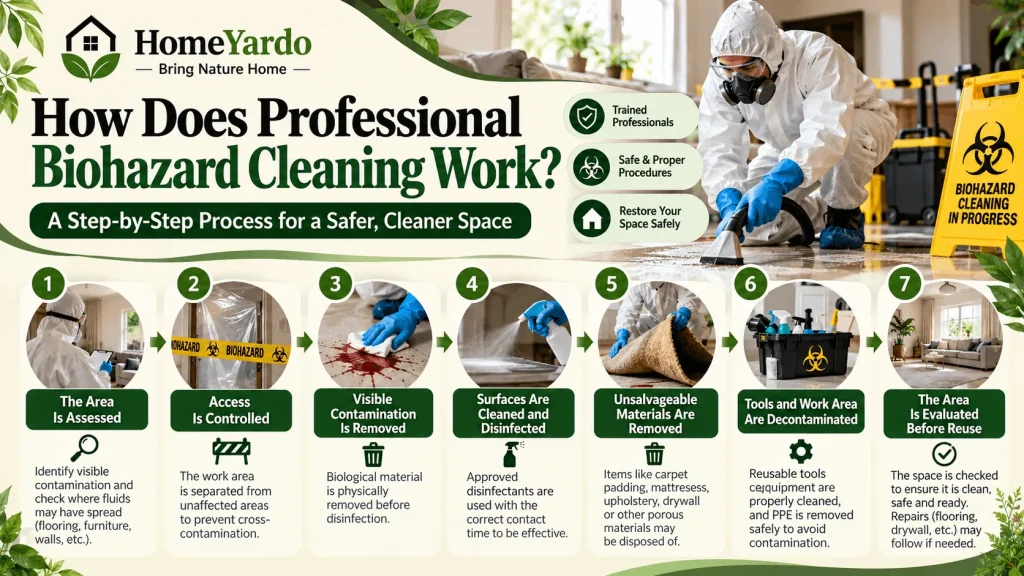
Professional biohazard cleaning generally begins with an assessment of what happened, what materials were affected, and how far contamination may have traveled.
The procedure will vary from one property to another, but several stages are common.
1. The Affected Area Is Assessed
Technicians identify visible contamination and consider where fluids may have spread beyond what can immediately be seen.
This may include checking flooring edges, carpet padding, furniture, baseboards, subfloors, walls, mattresses, and nearby contents.
2. Access Is Controlled
The work area is separated from unaffected portions of the property as appropriate.
Restricting movement helps reduce the possibility of contaminated material being carried on shoes, equipment, clothing, or other items into clean areas.
3. Visible Contamination Is Removed
Biological material must be physically removed before effective surface disinfection can take place.
The CDC’s environmental cleaning guidance describes cleaning followed by disinfection for blood and body-fluid spills.
Cleaning removes organic material and other debris that could interfere with the disinfectant reaching the surface effectively.
4. Surfaces Are Cleaned and Disinfected
After physical contamination has been removed, suitable surfaces can be treated with an appropriate disinfectant.
The EPA maintains a list of registered antimicrobial products for bloodborne pathogens and requires disinfectants to be used according to their approved label directions.
An important part of correct use is contact time. This is the period the treated surface must remain wet with the product for it to work according to its label.
Applying a disinfectant and immediately wiping it away may therefore not provide the intended result.
5. Unsalvageable Materials Are Removed
Some materials cannot be effectively cleaned after substantial biological fluids have penetrated them.
Depending on the incident, removal may be necessary for items such as:
- Carpet padding
- Mattresses
- Heavily contaminated upholstery
- Insulation
- Drywall
- Certain untreated wood products
- Other deeply saturated porous materials
Whether an item can remain depends on the material, extent of contamination, and whether it can be adequately cleaned and disinfected.
6. Tools and the Work Area Are Decontaminated
Reusable tools and equipment used inside the affected area must be handled appropriately before they are removed or used elsewhere.
Technicians also need procedures for removing protective equipment without transferring contamination to their skin, clothing, vehicles, or clean areas of the property.
7. The Area Is Evaluated Before Reuse
Cleanup should address the contamination source rather than simply improving appearance or covering odors.
Depending on the damage, building repairs such as new flooring, drywall, insulation, or paint may follow after remediation has been completed.
What Protective Equipment Is Used for Biohazard Cleaning?
Personal protective equipment, or PPE, depends on the type of contamination, exposure route, task being performed, and conditions inside the work area.
Depending on the scene, technicians may use:
- Disposable protective gloves
- Protective clothing or coveralls
- Eye protection
- Face protection
- Protective footwear or shoe coverings
- Appropriate respiratory protection when the hazard assessment requires it
PPE is only one part of exposure control.
Safe procedures may also involve hand hygiene, correct PPE removal, sharps precautions, work-area containment, waste packaging, equipment decontamination, and procedures designed to prevent material from being transferred outside the affected area.
What Happens to Biohazard Waste?
Contaminated waste must be separated and handled according to the type of material and the rules that apply in the jurisdiction where the cleanup occurs.
Depending on the situation, blood-soaked materials, sharps, or other regulated waste may require:
- Approved waste containers
- Puncture-resistant sharps containers
- Specific packaging
- Labels or markings
- Controlled storage
- Authorized transportation
- Disposal through an approved facility
Waste requirements can differ between states and local jurisdictions.
Property owners should therefore ask the cleanup provider exactly how contaminated material will be packaged, transported, documented, and disposed of rather than assuming everything can be placed in normal household trash.
Can You Clean a Biohazard Yourself?
Routine household sanitation and significant biohazard remediation are not the same task.
A minor, contained incident on a nonporous surface may sometimes be manageable when the person understands the hazard and can follow appropriate safety and product-label instructions.
More serious blood, decomposition, sewage, sharps, or widespread bodily-fluid contamination is generally better assessed by trained professionals.
Hidden contamination is one of the main concerns. Fluids can travel:
- Beneath flooring
- Into carpet padding
- Under baseboards
- Behind walls
- Into furniture
- Through seams or gaps
- Into other porous building materials
What appears to be a small surface stain may therefore represent only the visible portion of the contaminated area.
Regular household cleaning remains useful for normal sanitation. HomeYardo’s guide to strategic cleaning explains how ordinary household cleaning priorities differ from specialized contamination events.
When the extent or source of contamination is uncertain, professional assessment is generally the more appropriate approach.
How Long Does Biohazard Cleanup Take?
Biohazard cleanup can take anywhere from several hours to multiple days.
There is no standard timeline because every incident differs.
A contained spill on a hard, nonporous surface may be considerably easier to remediate than an unattended death, extensive sewage backup, or severe hoarding situation affecting several rooms.
Factors that can affect the timeline include:
- Size of the affected area
- Amount of biological material
- Type of contamination
- Number of rooms involved
- Porous versus nonporous materials
- Hidden contamination
- Structural materials that require removal
- Accessibility of the site
- Waste handling requirements
- Odor-source removal
- Additional repairs needed after remediation
Restoration work should also be distinguished from remediation. Replacing removed drywall, flooring, insulation, or other finishes may occur after contaminated material has been addressed.
How Is Biohazard Cleaning Different From Standard Cleaning?
Standard cleaning normally focuses on dirt, dust, spills, routine sanitation, and appearance.
Biohazard remediation focuses on biological contamination, exposure control, disinfection, removal of unsalvageable materials, and appropriate waste management.
| Standard Cleaning | Biohazard Cleaning |
|---|---|
| Routine dirt and household messes | Blood, bodily fluids, sewage, decomposition, and similar contamination |
| Primarily improves cleanliness and appearance | Addresses possible biological exposure |
| Typical household cleaning equipment | Specialized PPE, procedures, and equipment may be needed |
| Usually surface-level cleaning | May involve flooring, walls, furniture, or structural materials |
| Ordinary household waste | Some materials may require regulated handling |
A general cleaner may therefore not have the training, procedures, insurance, equipment, or waste-management arrangements needed for a serious biohazard incident.
How Do You Choose a Biohazard Cleaning Company?
When professional cleanup is necessary, property owners should evaluate more than price alone.
Ask the company about:
- Training for bloodborne pathogen and biohazard work
- Experience with the specific type of incident
- Insurance coverage
- Personal protective equipment and exposure-control procedures
- How the contaminated area will be contained
- How porous materials are evaluated
- What disinfectants will be used
- How contaminated waste will be transported and disposed of
- Whether required permits or waste-transport arrangements apply
- What documentation will be provided after the job
There is no single federal certification that serves as a universal license for every biohazard cleanup company in the United States.
Requirements may depend on the state, local jurisdiction, waste type, transportation method, and work being performed.
A reputable provider should be able to explain its process clearly rather than simply promise that an area will be “sanitized.”
What Should You Do After a Biohazard Incident?
After a serious biohazard incident, restrict unnecessary access to the affected area and avoid disturbing contaminated materials.
If emergency responders or law enforcement are involved, follow their instructions and wait until the property has been released before arranging remediation.
Significant blood, decomposition, sewage, sharps, or widespread biological contamination should be evaluated by a qualified cleanup provider who can determine the extent of the affected area, what can be decontaminated, what should be removed, and how contaminated waste must be handled.
Biohazard cleaning is about more than making a property look clean again. A proper response addresses the contamination source, limits cross-contamination, removes material that cannot be safely restored, and prepares the affected area for repair or normal use.
FAQ’s
A household biohazard may include blood, certain bodily fluids, feces, sewage, a decomposing human or animal remains, contaminated sharps, and other biological materials that may expose people to harmful microorganisms.
The risk depends on the type of material, amount present, exposure route, and extent of contamination.
Crime scene cleanup can be one type of biohazard cleaning, but the terms are not identical.
Biohazard remediation can also involve unattended deaths, serious injuries, sewage contamination, animal waste, hoarding environments, and other incidents that are unrelated to criminal activity.
It can address many contamination-related odors when the biological source causing the odor is fully located and removed.
Masking an odor with fragrances or deodorizing products does not replace source removal. Decomposition fluids or other contaminants that have penetrated porous materials may require those materials to be removed before the odor can be effectively addressed.
No single federal certification universally licenses every biohazard cleaning company throughout the United States.
Applicable training, occupational-safety, transportation, waste-disposal, and business requirements can vary by jurisdiction and by the work being performed.
Ask prospective providers about training, insurance, safety procedures, waste handling, and relevant local requirements.
A small contained incident may be resolved within several hours, while extensive contamination can require one or more days.
The affected area, type of material, degree of saturation, hidden contamination, waste requirements, and structural removal all influence the timeframe.
Coverage depends on the policy and the cause of the incident.
Some losses may qualify when they result from a covered event, while exclusions, deductibles, limits, or special conditions may apply. Property owners should contact their insurer directly and ask what documentation is required before assuming cleanup costs will be covered.
Yes. Blood and other liquids can move through carpet, carpet padding, flooring seams, gaps at walls, and some porous materials.
When fluid has penetrated below the visible surface, cleaning the top layer alone may not address all affected material.