Small Leaks, Big Problems: Why Minor Drips Shouldn’t Be Ignored
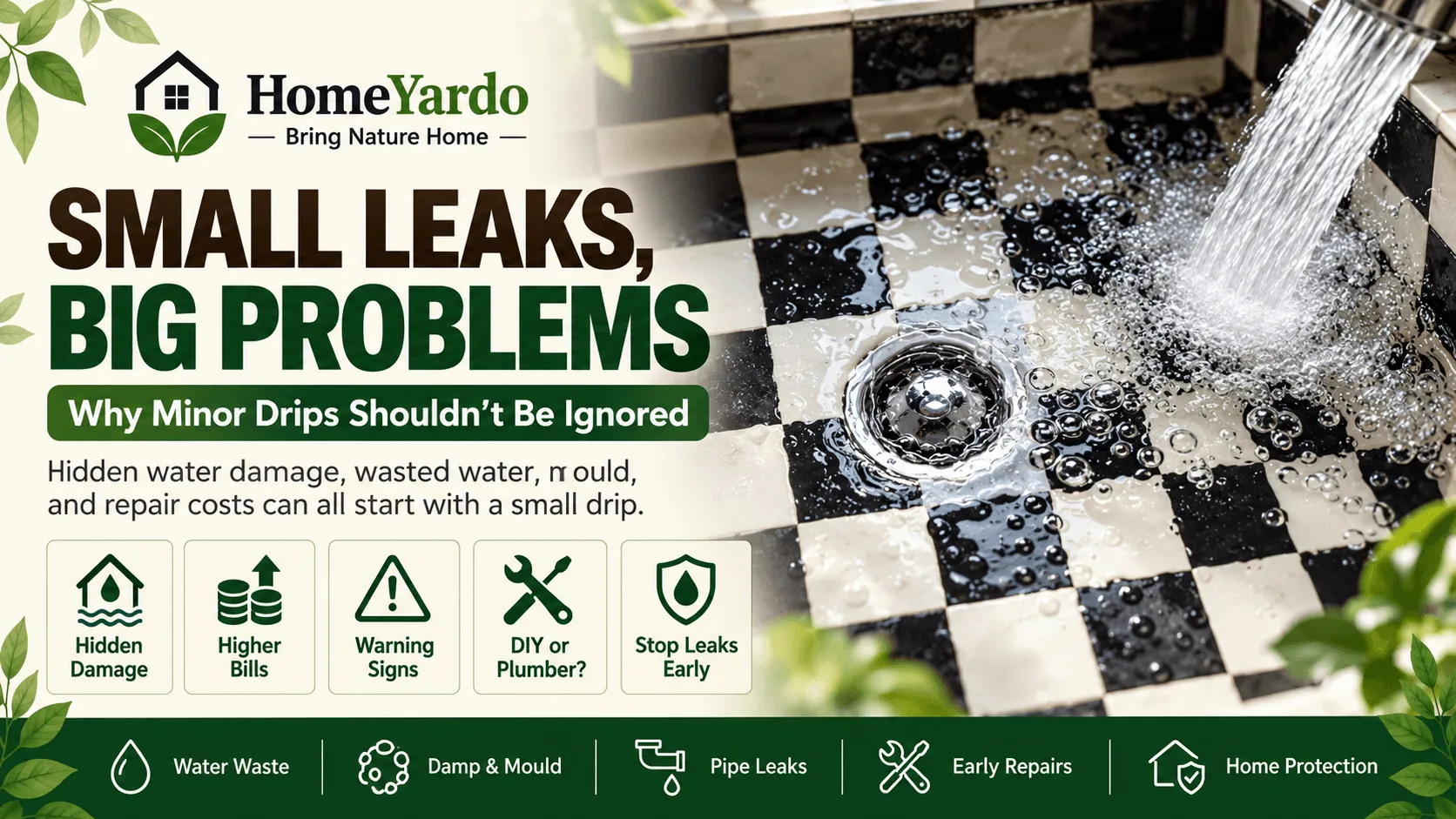
It may seem simple to put off fixing a small plumbing leak, dripping tap, or running toilet. The issue is that some leaks waste a significant amount of water, and hidden leaks can harm insulation, flooring, plasterboard, wood, and other materials before they become visible.
The appropriate course of action depends on the source of the water and whether the issue is obvious, persistent, or hidden. This guide explains the importance of small plumbing leaks, how to spot warning signs, what basic checks homeowners can perform, and when hiring a plumber is necessary.
Why Small Leaks Turn Into Big Problems
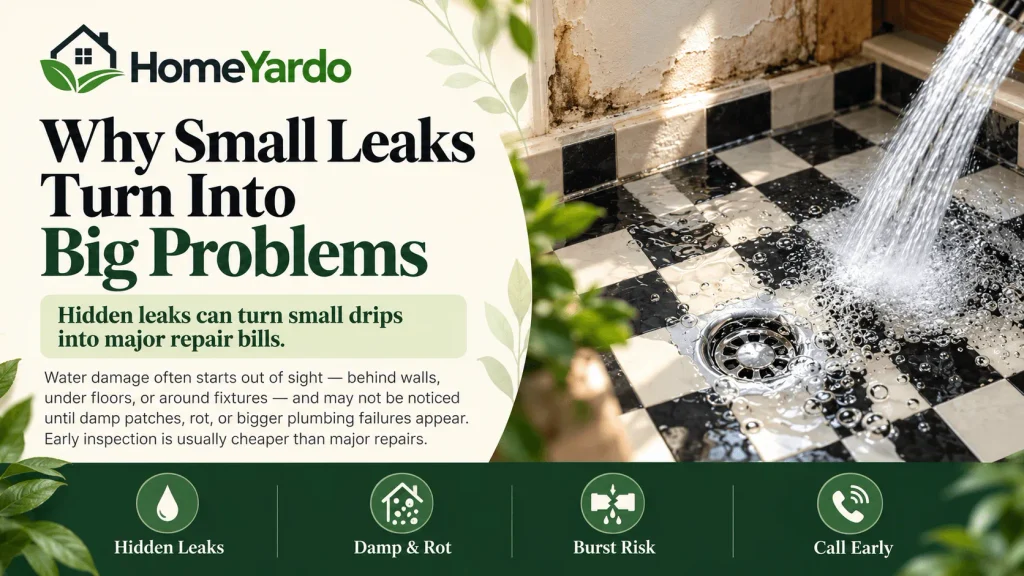
Water is patient. It finds the weakest spot and keeps working away at it…
One loose washer turns into a worn valve. A small damp patch turns into rotten floorboards. A pinhole leak turns into a fully blown burst.
The worst thing about leaks? Most of them occur where you can’t see them. Behind walls. Under floors. In the loft.
By the time you know water damage is occurring, it’s been happening for weeks (or months).
When should you pay a plumber? Earlier than you may think. If your drip returns after attempting a temporary fix, or you notice damp appearing, now is the time to search for ‘a plumber near me’ and get that leak inspected by a professional. It’s always cheaper to pay for an hour of someone’s time now than it is to pay for water damage repairs.
Think about it:
A leaking tap is easy to find because you can hear it drip. But what about a slow drip under your bath? That could be rotting your joists right now and you wouldn’t know it.
What Can Happen If You Ignore A Small Leak?
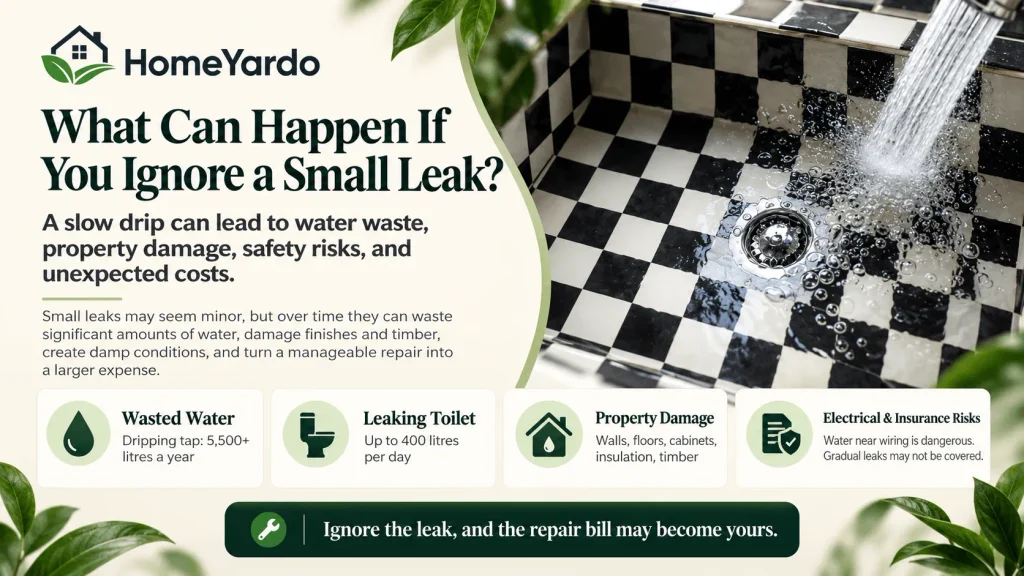
A persistent dripping tap can waste more water than it appears to one drop at a time. WaterSafe says a single dripping tap can waste more than 5,500 litres of water in a year, which can also increase costs for households on a metered supply.
Leaking toilets can waste even more. WaterSafe states that a toilet leaking from the cistern into the pan can waste up to 400 litres per day.
Damage to Walls, Floors and Timber
Concealed or persistent leaks can affect plasterboard, flooring, cabinets, insulation, timber, and finishes. The extent of damage depends on how much water is escaping, how long the leak continues, and where the moisture travels.
Damp materials may also create conditions that support mould growth, especially where ventilation and drying are poor.
Electrical Safety Risks
Water near electrical equipment, sockets, wiring, consumer units, or appliances should be treated as a safety issue. Do not handle wet electrical equipment or enter standing water where electrical hazards may be present. Isolate supplies only when it is safe to do so and seek qualified help where necessary.
Insurance Headaches
Here’s something most homeowners don’t realise…
Homeowners insurance typically covers sudden water damage such as a burst pipe. However, drip leaks that take place over time are usually considered maintenance. This means if you’ve neglected a drip for months, your claim may be denied.
If You Ignore a Leak, This Covered Claim Becomes Your Bill Ouch.
Warning Signs You May Have a Plumbing Leak
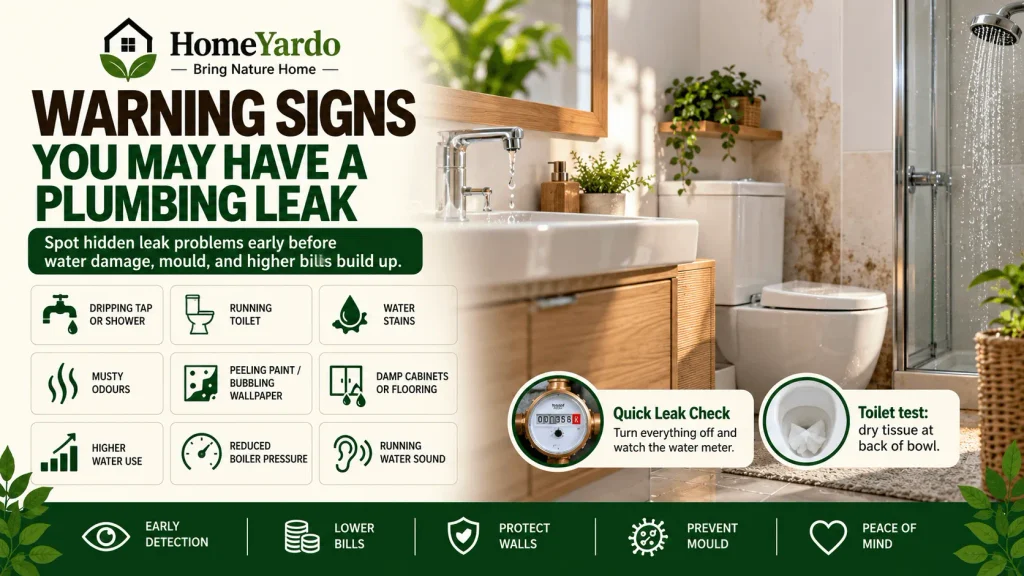
Leaks don’t always announce their presence. And Direct Line found that 35% of Brits experienced a leak over the last year — which means it’s likely to happen to you too.
Keep an eye (and an ear) out for these red flags:
- a tap or shower that keeps dripping after being turned off;
- a toilet that continues running or trickling;
- water stains or brown marks on ceilings and walls;
- persistent musty odours;
- peeling paint or bubbling wallpaper;
- damp cabinets or flooring;
- unexplained increases in metered water use;
- reduced boiler pressure where relevant;
- the sound of running water when fixtures are off.
Tip: Here’s a simple trick to test for an unseen leak. Shut off all the faucets and appliances in your home. Check your water meter. If it continues to change… you have a leak.
Toilet – keep some dry toilet paper sheets at the back of the bowl for a couple of hours. If they get wet your cistern is leaking.
Simple, right?
How to Check Your Water Meter for a Hidden Leak
If your property has a water meter, it can help identify unexplained water use. Turn off taps and water-using appliances and check whether the meter continues to register flow. HomeYardo’s guide on how to read your water meter and check for leaks explains the process in more detail.
When To Pay A Plumber (And When To DIY)
You don’t always need to call a plumber. However, knowing when to hire one can save you thousands.
Jobs You Can Usually Do Yourself
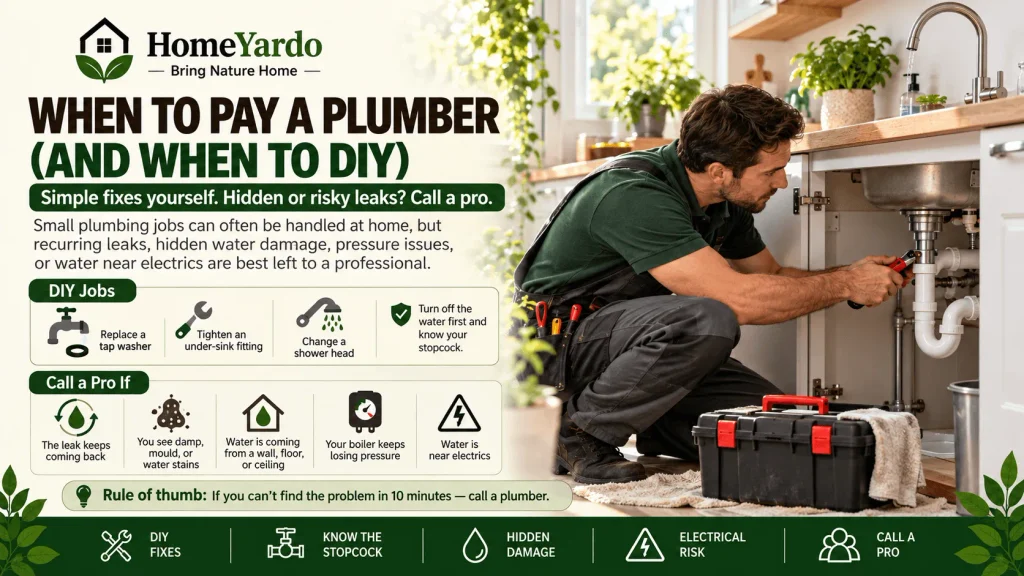
Simple repairs are okay if you’re a confident DIYer. Changing a leaky tap washer, tightening an under-sink fitting or changing a shower head can all be done relatively easily.
Find out where your stopcock is BEFORE you begin work. ALWAYS turn the water off FIRST.
Jobs That Need A Pro
Here’s the thing…
Some leaks hide a much bigger problem underneath. Call in a professional if:
- The leak keeps coming back after a DIY fix
- You can see damp, mould or water stains
- Water is coming from inside a wall, floor or ceiling
- Your boiler keeps losing pressure
- Water is anywhere near your electrics
A call-out fee seems steep for a small drip. When you consider it, against replacing a ceiling, laying flooring and drying out a wet room.
The plumber wins. Every single time.
A quick rule of thumb? If you can’t locate the problem in 10x minutes — or need tools you don’t have — take the hint. Stop guessing and call a professional plumber.
How To Stop Leaks Before They Start
The best leak is the one that never happens.
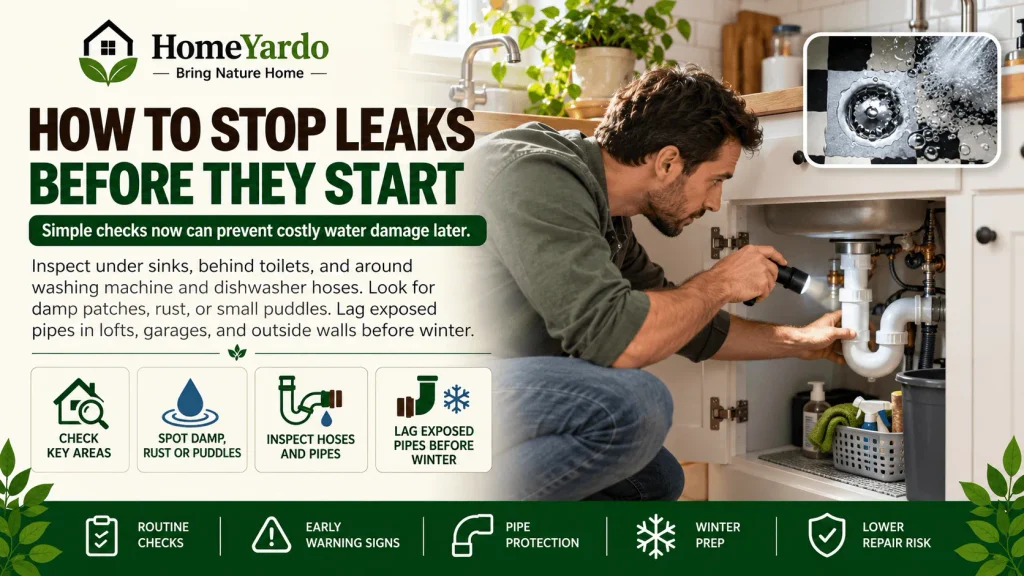
Begin with a cursory inspection of your home every few months. Check under sinks, behind the toilet and around the washing machine and dishwasher hoses. You want to find areas that are damp, have rust or small puddles.
Lag any pipes in the loft, garage or outside walls before winter arrives. Frozen pipes are one of the UK’s biggest reasons for pipe bursts, and lagging them costs very little.
It really is that simple.
Don’t Let The Drip Win
A small leak doesn’t seem like a big deal. But if it’s ignored, it can cause:
- Higher bills — from wasted water you’re paying for
- Costly repairs — to ceilings, floors and walls
- Insurance problems — if your claim gets turned down
Ok, time to review: recognize problems early, correct simple things yourself and hire a plumber when it is beyond your DIY abilities.
So don’t wait three weeks. Fix it today.
FAQs
It can. The outcome depends on how much water is escaping, where the leak is located, how long it continues, and which materials become wet. Concealed leaks can sometimes cause damage before visible signs appear.
Unknown water-meter movement, rising water usage, damp areas, stains, musty smells, bubbling paint, damaged flooring, or the sound of water when fixtures are not in use are all potential indicators.
According to WaterSafe, a toilet that leaks into the pan from its cistern can waste up to 400 liters every day. Without testing, it could be challenging to detect some silent toilet leaks.