
Is Your Older Home Ready for Modern Life? An Electrical Capacity Reality Check

Older homes can have plenty of character, but their electrical systems were often designed for a very different household.
A home that once needed to power basic lighting, a refrigerator, a television, and a few small appliances may now be running central HVAC equipment, computers, large kitchen appliances, entertainment systems, chargers, and other electrical devices at the same time.
Age alone does not mean a house needs to be rewired. The condition of the wiring, available electrical capacity, grounding, panel configuration, previous alterations, and current household loads all matter.
There are, however, warning signs worth investigating.
Flickering lights, repeatedly tripped breakers, warm outlets, unusual electrical odors, buzzing, older wiring materials, or an increasing dependence on extension cords can indicate that part of the electrical system deserves professional assessment.
Here are seven signs your home needs rewiring or another electrical upgrade—and what each one can tell you.
Quick Electrical Warning-Sign Checklist
| What You Notice | What It May Point To | What To Do |
|---|---|---|
| Lights repeatedly flicker or dim | Loose connection, voltage fluctuation, overloaded circuit, or another electrical fault | Note when it happens and arrange an assessment if it persists |
| Outlet or switch feels unusually warm | Loose connection, excessive load, or damaged component | Stop using it and have it inspected |
| Breakers repeatedly trip | Circuit overload, equipment fault, wiring problem, or capacity issue | Do not repeatedly reset without identifying the cause |
| Very old wiring is present | Aging or outdated electrical infrastructure | Have its condition and suitability evaluated |
| Heavy reliance on extension cords | Too few conveniently located receptacles or inadequate circuit planning | Review outlet and circuit needs |
| Buzzing from outlets or switches | Loose connection, arcing, or defective component | Stop using the affected device and seek qualified help |
| New high-load equipment is being added | Existing service or circuits may not support the proposed load | Have capacity calculated before installation |
These signs do not tell you by themselves that the entire house must be rewired. They tell you that further investigation may be justified.
1. Flickering Lights Are Not Always a Bulb Problem

An occasional flicker from one lamp can have a simple explanation, such as a loose bulb or a problem with the fixture.
A recurring pattern deserves more attention.
Watch what happens when higher-demand equipment starts. Do the lights noticeably dim when the microwave runs? Does switching on a vacuum affect lighting elsewhere? Does the same group of fixtures repeatedly flicker?
Those symptoms can have several causes, including loose electrical connections, circuit-loading problems, voltage fluctuations, fixture faults, or problems elsewhere in the electrical system.
Older homes can be particularly vulnerable because their original circuits may have been designed for far fewer electrical loads than a modern household uses.
That does not mean flickering automatically calls for a complete rewire. It means recurring or widespread flickering should be diagnosed rather than repeatedly treated as a bulb problem.
2. Warm Outlets and Burning Odors Need Prompt Attention

An outlet or switch that becomes unusually hot during ordinary use should not be ignored.
Heat can be associated with loose connections, damaged components, excessive electrical loads, or other faults. Discoloration, scorch marks, melting, or an unexplained burning or electrical odor make the situation more concerning.
If an outlet or switch appears to be overheating, stop using the affected device or receptacle and arrange for it to be inspected by a qualified electrician.
Do not remove the cover or attempt to investigate energized wiring yourself.
A single damaged receptacle may only require a localized repair. Multiple overheating connections, deteriorated wiring, or widespread problems can point to a larger issue.
If you are already seeing recurring symptoms throughout an older house, it may be appropriate to discuss professional home rewiring services rather than replacing individual outlets without establishing why the problems are occurring.
3. Frequently Tripped Breakers Can Reveal a Capacity Problem
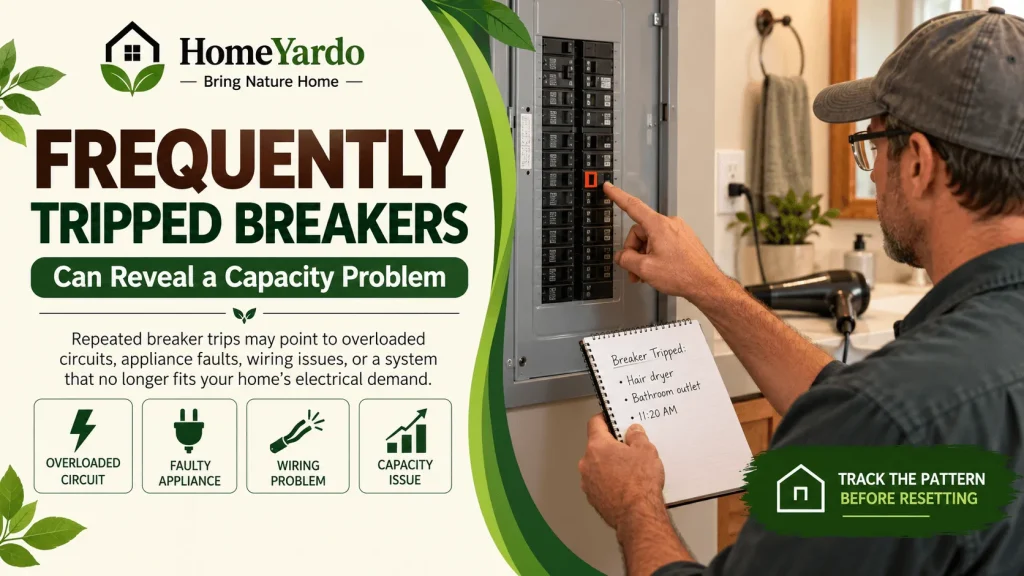
Circuit breakers are protective devices. A trip means the circuit has been interrupted under conditions the protective device is designed to respond to.
One isolated trip does not establish that your house needs rewiring.
Repeated trips are different.
Suppose using a hair dryer regularly shuts down another part of the bathroom, or normal kitchen use repeatedly trips the same breaker. The cause could involve an overloaded circuit, faulty appliance, wiring defect, breaker problem, or an electrical layout that no longer suits the home’s demands.
Repeatedly resetting the breaker without finding the cause is not a repair.
Instead, record what equipment was operating when the trip occurred. That information can help an electrician determine whether the problem is associated with an appliance, an individual circuit, the panel, or the broader electrical system.
This is particularly relevant in an older property where several modern loads may have been added without corresponding circuit or service upgrades.
4. Older Wiring Materials Deserve a Condition Assessment

Knowing what type of wiring is inside an older home can help you understand what should be inspected.
Depending on the property’s age and renovation history, an electrician may encounter older systems or materials such as knob-and-tube wiring, aluminum branch-circuit wiring, older cloth-covered wiring, or circuits without modern equipment grounding arrangements.
Finding one of these does not automatically mean the entire electrical system is unsafe or that a full rewire is the only solution.
Condition and installation details matter.
An electrician may need to assess:
- The type and age of the wiring
- Condition of insulation
- Connections and terminations
- Grounding and bonding
- Evidence of overheating or deterioration
- Previous modifications or improper repairs
- Circuit loading
- Applicable local requirements
Older properties can also contain several generations of electrical work. One room may have been updated while another still uses much older wiring.
A lot of homeowners discover these issues during renovations, inspections, or after opening up a wall for an unrelated repair. It’s one of those unpleasant plot twists that can’t be fixed with paint. Identifying old wiring early gives you more control over timing and budget.
That is why the age of the house alone is less useful than understanding what is actually installed and what condition it is in.
5. Too Few Outlets Can Show That the Electrical Layout No Longer Fits
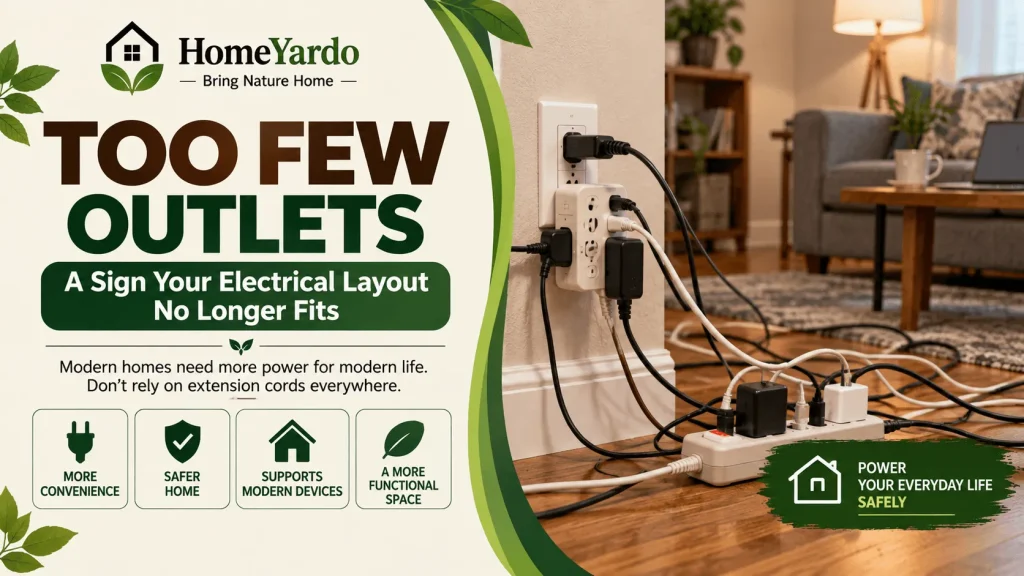
Walk through an older home and count how many extension cords, multi-outlet adapters, and power strips are being used simply to make everyday devices reach a receptacle.
A heavy dependence on them may indicate that the home’s original electrical layout no longer fits the way the rooms are used.
Bedrooms now commonly contain chargers, televisions, computers, lamps, routers, and other electronics. Kitchens may contain several countertop appliances that did not exist when an older home’s electrical layout was planned.
The answer is not simply to add outlet splitters everywhere.
A qualified electrician can determine whether additional receptacles or circuits can be added safely and whether the existing system has adequate capacity.
This is also where planning matters. HomeYardo’s guide to a whole-home electrical upgrade explains why current and future electrical loads should be considered together, particularly when renovation work will expose walls or create access to existing wiring.
6. Buzzing Sounds, Tingling, or Shocks Should Be Investigated

A properly operating switch or receptacle should not routinely buzz, crackle, or produce a shock when touched.
Unusual electrical sounds can have several possible causes, including loose connections or defective components. A tingling sensation or shock may indicate a grounding, equipment, wiring, or other electrical fault.
Do not use the severity of the sensation to decide whether the problem matters.
Stop using the affected outlet, switch, fixture, or appliance until the source has been identified.
The same caution applies to visible sparking, scorching, melted components, smoke, or persistent electrical odors. Those symptoms warrant prompt attention rather than continued testing by the homeowner.
An electrician can determine whether the problem is confined to one device or reflects a wider issue with the circuit or wiring.
7. Renovations and New Appliances Can Expose an Older System’s Limits

An electrical system that has supported a household for years may still need changes when the way the home is used changes.
Consider the loads that can accompany a modern renovation:
- Induction cooking equipment
- Larger HVAC systems
- Electric water heating
- EV charging
- Workshop equipment
- Additional kitchen appliances
- Home-office equipment
- New lighting and receptacle circuits
Adding equipment is not simply a question of whether an empty breaker position is available.
The electrical service, panel, feeders, branch circuits, and proposed loads need to be considered together.
If you are planning substantial work, review HomeYardo’s whole-home electrical upgrade before renovation guidance before walls and finished surfaces limit access to wiring.
Coordinating electrical work while walls are already open can also reduce the disruption involved in future changes.
Does an Older Home Automatically Need Rewiring?
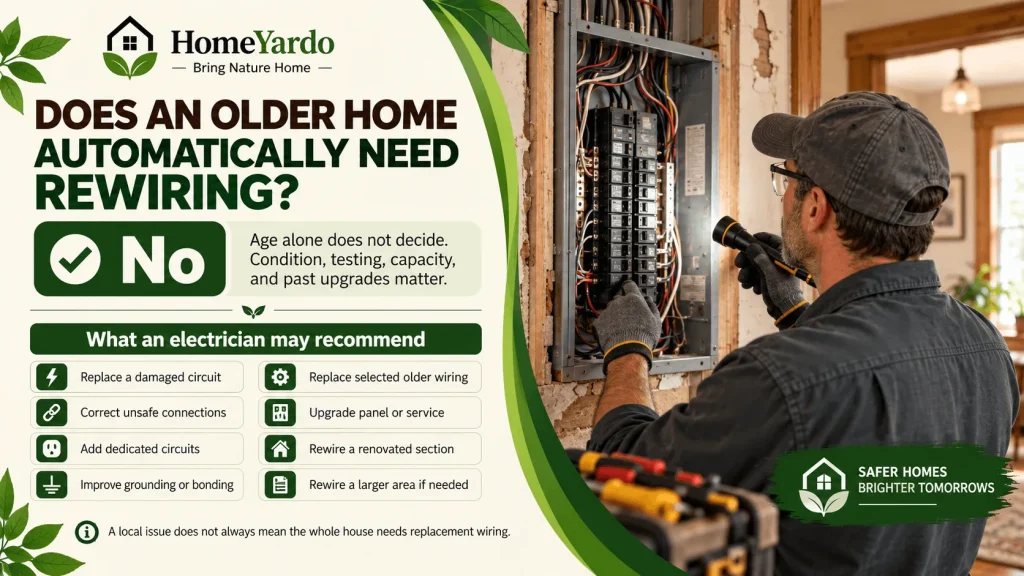
No.
The year a house was built is useful background information, but it does not determine the condition of its electrical system.
Some older properties have already received extensive electrical upgrades. Others may contain a mixture of original wiring, later additions, renovated rooms, and previous DIY work.
The decision to rewire should therefore be based on inspection and testing rather than age alone.
An electrician may find that the appropriate solution is:
- Replacing a damaged circuit
- Correcting unsafe connections
- Adding dedicated circuits
- Improving grounding or bonding
- Replacing selected older wiring
- Upgrading a panel or service
- Rewiring a renovated section
- Rewiring a larger part of the property
This distinction matters because a localized electrical problem should not automatically be presented as evidence that an entire home requires replacement wiring.
Rewiring vs. a Panel Upgrade: They Are Not the Same Thing
Homeowners sometimes use “rewiring” and “electrical upgrade” interchangeably, but they describe different work.
Rewiring generally involves replacing some or all of the conductors and associated electrical components serving the home.
A panel upgrade involves replacing or changing the electrical distribution panel and, in some projects, related service equipment.
A house can need one without necessarily needing the other.
A newer panel, for example, does not prove that all branch-circuit wiring behind the walls has been replaced. Likewise, aging wiring in one part of a property does not automatically establish that the electrical service needs to be enlarged.
A qualified electrician can evaluate both separately and explain which work is actually justified.
How an Electrician Checks Whether Your Home Has Enough Capacity
Electrical capacity should not be estimated simply by looking at how many breaker spaces remain in the panel.
An electrician can review the service and panel ratings, existing loads, major appliances, branch circuits, planned equipment, and other relevant factors before determining whether changes are required.
This becomes especially useful before installing high-demand equipment or beginning a renovation.
Homeowners can help by making a list of major existing and proposed electrical loads before the assessment. Include heating and cooling equipment, cooking appliances, water heating, laundry equipment, EV charging, workshop tools, and other high-demand devices.
That gives the electrician a better picture of how the home is used now and how its electrical needs may change.
What Should You Do if You Suspect Your Home Needs Rewiring?
Start by documenting what you have observed.
Note which lights flicker, which breakers trip, what appliances were operating at the time, whether an outlet becomes warm, and where unusual sounds or odors occur.
Do not open electrical panels, remove outlets, or disturb wiring to investigate a suspected problem unless you are qualified to perform that work.
Then arrange an assessment with a qualified electrician.
Ask the electrician to explain:
- What problem was found
- Whether it is isolated or widespread
- What testing or inspection supports the recommendation
- Whether repair, partial replacement, or broader rewiring is appropriate
- Whether the existing panel and service can support current and planned loads
- Whether permits or inspections are required locally
- Which work should be treated as a safety priority
Getting those answers makes it easier to distinguish a necessary repair from an optional capacity or convenience upgrade.
For broader renovation planning, HomeYardo’s home improvement guide can also help you coordinate electrical work with other major systems before construction begins.
When Electrical Warning Signs Need Faster Action
Some symptoms should not be put on a future renovation list.
Smoke, visible scorching, melting components, persistent burning odors, repeated arcing, or an electrical component that is becoming unusually hot can indicate a condition requiring prompt professional attention.
If there is smoke, fire, or another immediate danger, leave the affected area when necessary and contact the appropriate local emergency service.
For non-emergency faults, stop using the affected circuit, appliance, switch, or receptacle when this can be done safely and arrange for a qualified electrician to assess it.
The Bottom Line
An older home does not need rewiring simply because of its age.
What matters is whether the electrical system is in good condition, properly installed, suitable for the loads being placed on it, and capable of supporting how the home is used today.
Recurring flickering, overheated outlets, repeated breaker trips, outdated wiring, buzzing, shocks, or insufficient capacity are reasons to investigate rather than guess.
Sometimes the answer is a small repair. Sometimes selected circuits need replacement. In other properties, a larger electrical update makes more sense.
A professional assessment can establish which situation applies before you commit to unnecessary work—or allow a genuine electrical problem to continue unnoticed.
FAQ’s
Recurring flickering lights, unusually warm or discolored outlets, repeated breaker trips, buzzing or crackling, shocks or tingling, visibly deteriorated wiring, and electrical capacity problems are all reasons to have the system assessed. No single symptom automatically proves that a complete rewire is required.
You generally cannot determine the condition of concealed wiring from appearance alone. A qualified electrician can inspect accessible wiring, connections, grounding, the panel, circuits, and other parts of the system and recommend any necessary testing or repairs.
Not necessarily. Some older houses have already been upgraded, while others retain substantial portions of their original electrical systems. Condition, wiring type, previous alterations, capacity, and current safety requirements matter more than age alone.
A brief voltage change can occur when some equipment starts, but pronounced or recurring dimming can also be associated with circuit loading, loose connections, supply issues, or other electrical faults. Persistent changes should be assessed.
They can be, but wiring is only one possible cause. An overloaded circuit, faulty appliance, defective component, or another electrical issue may also cause repeated trips. Avoid repeatedly resetting a breaker without determining why it is operating.
No. A panel upgrade changes the home’s electrical distribution equipment, while rewiring replaces some or all of the wiring serving circuits. Depending on its condition and electrical demand, a property may need one, both, or neither.
Partial or staged rewiring can be possible in some properties. Whether it makes sense depends on the condition and layout of the existing system, renovation plans, access, local requirements, and how the old and new electrical work will be integrated.
If a renovation will open walls or significantly change electrical loads, having the electrical system assessed before finish work begins can prevent newly completed surfaces from having to be opened later.
Possibly. The existing service and panel need enough capacity for the proposed charging equipment alongside other household loads. An electrician can perform the appropriate load assessment before installation.
Use a qualified electrician who is permitted to perform residential electrical work in your jurisdiction. Requirements for licensing, permits, and inspections differ by location.