Garage Door Weather Seal Guide: Keep Out Drafts and Pests
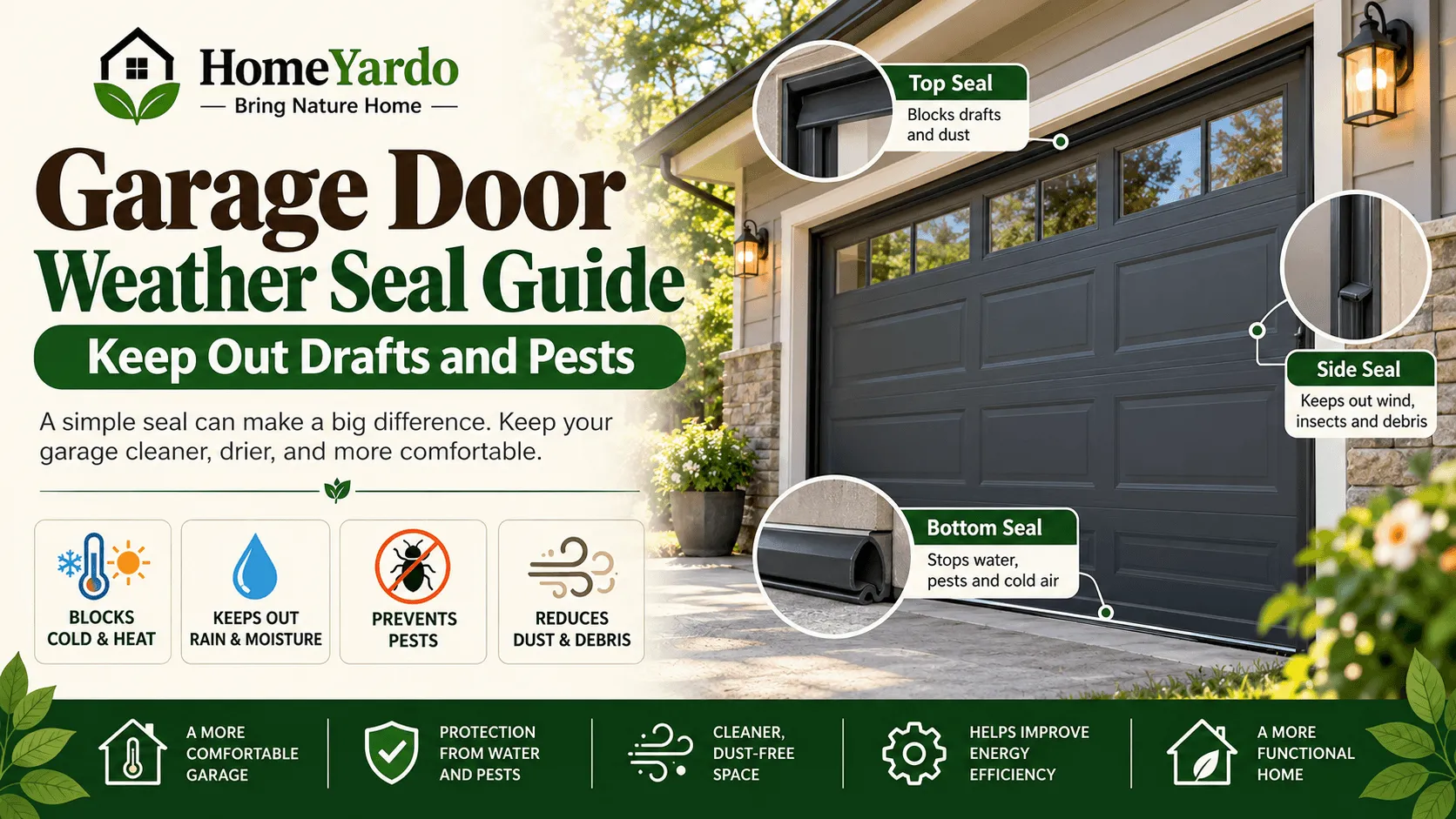
A garage door weather seal is the flexible strip of rubber or vinyl that closes the gaps around your garage door. It runs along the bottom, sides, and top of the door, and it keeps out cold air, heat, rain, dust, insects, and rodents. When the seal is in good shape, your garage stays cleaner, drier, and more comfortable. When it wears out, those gaps open up fast.
Most people don’t think about this strip until they see a puddle on the garage floor or find mouse droppings near the storage shelves. By then, the seal has usually been failing for a while.
This guide explains the main types of garage door seals, the warning signs of wear, what to check, average costs, and when it makes sense to get professional help.
Why Your Garage Door Seal Matters More Than You Think
The garage door is the largest opening in most homes, so even a small gap adds up. A good seal protects the garage itself and the rooms connected to it.
Energy Efficiency and Comfort
- Gaps around the door let outside air pour in during winter and summer.
- If a bedroom or living space sits above or next to the garage, those drafts can make that room harder to heat and cool.
- A tight seal helps keep the garage closer to a steady temperature, which also protects paint, tools, and stored items. Good perimeter sealing is particularly useful when you’re creating a functional garage workshop at home, where drafts, rainwater, dust, and debris can affect tools, storage, and everyday comfort.
Protection From Water, Pests, and Debris
- The bottom seal blocks rain and snowmelt from running under the door.
- A mouse can squeeze through a gap about the width of a pencil, so even small openings matter.
- Seals also keep out leaves, dust, and insects like spiders and ants.
If insects or rodents keep appearing even after the door is sealed, broader seasonal pest checks can help identify other openings around doors, vents, foundations, utility penetrations, and exterior building materials.
Types of Garage Door Weather Seals
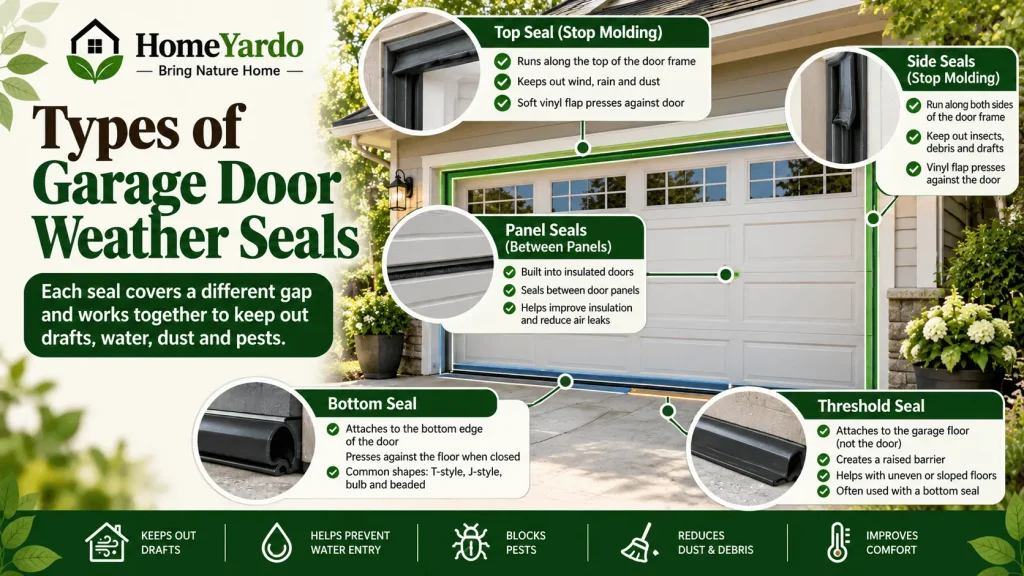
A garage door uses several seals that work together, and each one covers a different gap. Knowing which is which makes it easier to spot the weak point.
Garage Door Bottom Seal
- This rubber or vinyl strip attaches to the door’s bottom edge and presses against the floor when the door closes.
- Common shapes include T-style, J-style, bulb, and beaded seals. The right one depends on the retainer channel on your door.
- It takes the most wear because it touches the ground every time the door closes.
If water entry has already affected the concrete or you’re planning a garage-floor upgrade, this guide to epoxy resin flooring explains how moisture, slab preparation, coating type, and curing affect the finished surface.
Garage Door Threshold Seal
- A threshold is a raised strip attached to the garage floor, not the door.
- It helps when the floor is uneven or slopes toward the garage, since it creates a small barrier against water.
- It’s often paired with a bottom seal for double protection.
Side and Top Seals (Stop Molding)
- These run along both sides and the top of the door frame.
- They usually have a soft vinyl flap that presses against the door’s face when it’s closed.
- Sun, heat, and age can stiffen them and cause cracking over time.
Seals Between Garage Door Panels
- Many insulated doors have seals built into the joints between panels.
- These are part of the door’s design, so they’re harder to replace on their own.
- If these joints leak badly, it may be a sign that the door itself is near the end of its life, and professional Garage Door Installation of an insulated model may be worth considering.
Signs Your Garage Door Weatherstripping Is Failing
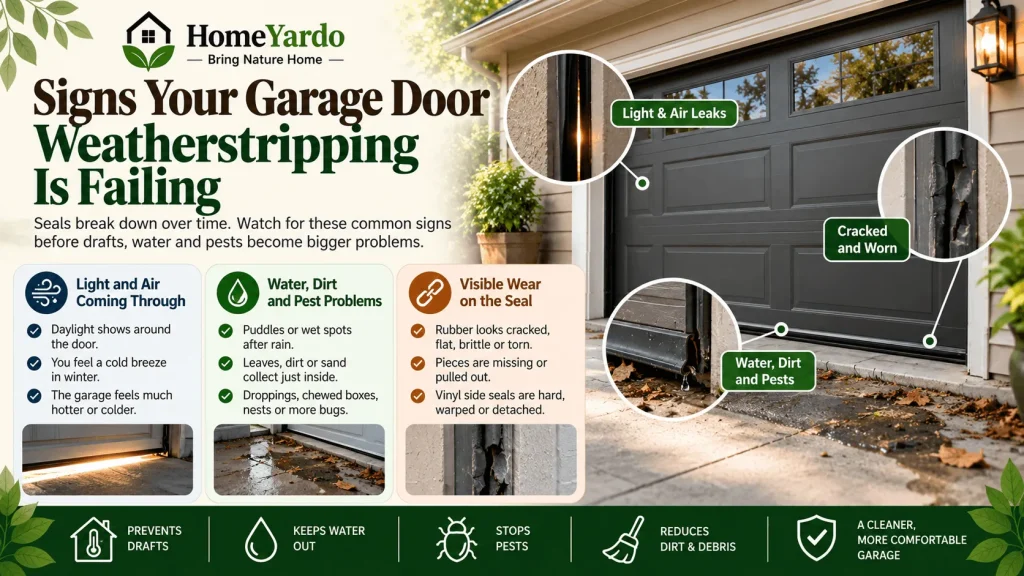
Seals rarely fail all at once. They break down slowly, and the clues show up in light, water, temperature, and unwanted visitors.
Light and Air Coming Through
- Daylight shows along the bottom or sides of the door when it’s fully closed.
- You feel a cold breeze near the door in winter.
- The garage feels much hotter or colder than it used to.
Water, Dirt, and Pest Problems
- Puddles or wet spots form inside the door after rain.
- Leaves, dirt, or sand collect just inside the garage.
- You notice droppings, chewed boxes, nests, or more bugs than usual.
Visible Wear on the Seal
- The rubber looks cracked, flat, brittle, or torn.
- Pieces have pulled out of the retainer channel or are missing.
- The vinyl on the side seals has turned hard, warped, or pulled away from the frame.
What to Check Before You Replace a Garage Door Seal
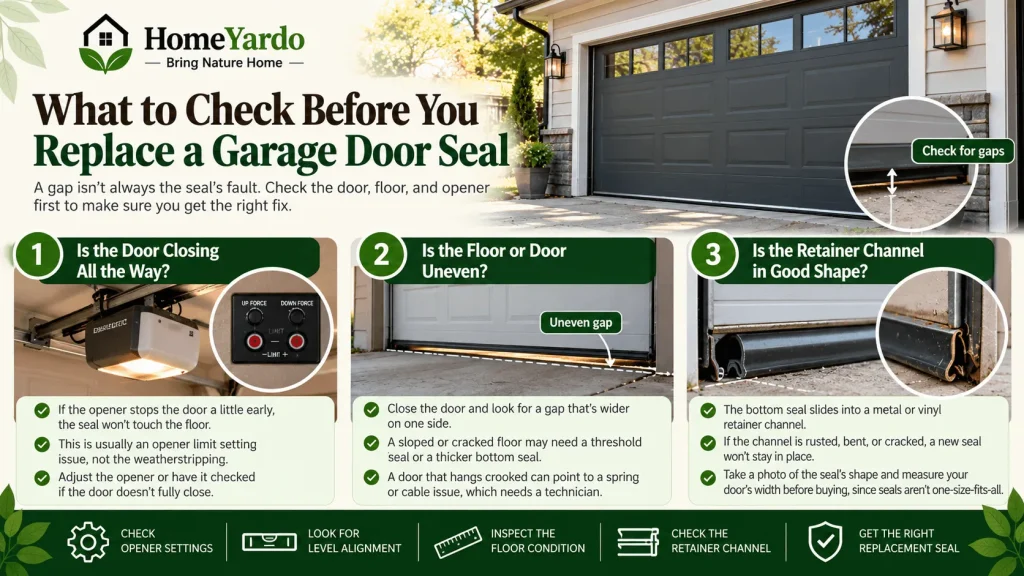
A gap under the door isn’t always the seal’s fault. A quick look at the door, floor, and opener can save you from buying the wrong part.
Is the Door Closing All the Way?
- If the opener stops the door a little early, even a brand-new seal won’t touch the floor.
- This usually points to the opener’s limit setting, not the weatherstripping.
Is the Floor or Door Uneven?
- Close the door and look for a gap that’s wider on one side than the other.
- A sloped or cracked floor may need a threshold seal or a thicker bottom seal instead of a standard one.
- A door that hangs crooked can point to a spring or cable issue, which needs a technician.
Is the Retainer Channel in Good Shape?
- The bottom seal slides into a metal or vinyl track on the door called a retainer.
- If that channel is rusted, bent, or cracked, a new seal won’t stay in place.
- Take a photo of the seal’s shape and measure your door’s width before shopping, since seals aren’t one-size-fits-all.
Average Garage Door Seal Replacement Costs
Weatherstripping is one of the most affordable garage door upgrades. The figures below are approximate U.S. averages, and your cost will depend on door size, seal material, and local labor rates. Whether you’re comparing quotes for Top Residential Garage Door Repair, or anywhere else in the country, these ranges give you a useful starting point.
Average Material Costs
- Bottom seal strip: about $20 to $60
- Threshold seal kit: about $30 to $80
- Side and top stop molding: about $40 to $100
Average Professionally Installed Costs
- Bottom seal replacement: about $100 to $250
- Bottom seal with a new retainer channel: about $150 to $300
- Side and top seals: about $150 to $350
- Full weatherstripping on a two-car door: about $250 to $450
Compared to higher heating and cooling bills or water damage to stored items, a new seal often pays for itself.
How to Make Your Garage Door Seals Last Longer
Most seals last about 3 to 5 years, but heat, cold, and daily use can shorten that. A few easy habits, along with regular Garage Door maintenance, help them hold up much longer.
Keep the Seals Clean
- Wipe the bottom seal with mild soap and water a few times a year.
- Clear away dirt, gravel, and leaves from the floor where the door lands.
- Avoid harsh cleaners or solvents, which can dry out rubber.
Protect Seals From the Weather
- Apply a silicone-based spray made for rubber to keep it flexible, especially before winter.
- In freezing weather, clear snow and ice from the door’s landing spot so the seal doesn’t freeze to the ground and tear.
- In hot, sunny climates, check vinyl side seals more often, since UV light makes them brittle.
Make Seal Checks Part of Your Routine
- Look at all your seals at the start of fall and spring.
- Do the daylight test by closing the door from inside and turning off the lights.
- Catching a small tear early is cheaper than dealing with water damage or a pest problem later.
When a Seal Problem Needs a Professional
Swapping a basic bottom seal is a common weekend project for handy homeowners. But some seal problems are really signs of a bigger issue with the door, and those are best left to a trained technician.
Situations That Call for Expert Help
- The retainer channel is rusted, bent, or needs to be replaced.
- The door hangs crooked or leaves an uneven gap, which can point to springs, cables, or tracks.
- The panels themselves are cracked, dented, or leaking at the joints.
- You’ve replaced the seal and drafts, or water still gets in.
Choosing the Right Local Pro
- Look for a company that inspects the whole door, not just the seal.
- Ask for a written estimate and a warranty on parts and labor.
- Read recent reviews from homeowners in your area.
If you live in North Texas, a trusted garage door repair company Southlake TX homeowners recommend can check whether the seal, the door, or the opener is the real cause before any money is spent.
A Tighter Seal for a Cleaner, Drier Garage
A worn weather seal is a small problem that can lead to bigger ones, from high energy bills to water stains and unwanted pests. The good news is that it’s usually one of the easiest and most affordable parts of the door to fix.
Your Quick Action Plan
- Do the daylight test this week to spot any gaps.
- Check the bottom, sides, and top seals for cracks or missing pieces.
- Plan seal checks before winter and summer each year.
If your seals are worn out or the gaps seem bigger than a seal can fix, First Responder Garage Doors can inspect your door and recommend the right solution. Contact their team today to keep drafts, water, and pests where they belong: outside.
Final Takeaway
A damaged garage door weather seal is usually a small repair, but ignoring it can allow drafts, water, dust, debris, and pests through the edges of the door. Start by identifying where the gap occurs, then inspect the bottom seal, perimeter seals, floor, retainer, and door alignment before buying replacement material.
If the seal itself is worn, match the replacement to the existing profile and door dimensions. If the door is crooked, the retainer is damaged, or springs, cables, tracks, or panels appear to be involved, treat the gap as a larger garage-door problem rather than trying to hide it with a thicker seal.
FAQ’s
There is no single best seal for every garage door. A bottom seal is normally used for gaps between the door and floor, perimeter seals cover the sides and top, and a threshold can help with certain uneven-floor or water-entry problems. The correct choice depends on where the gap occurs and which retainer profile the door uses.
Replace or inspect the seal when you see daylight around a closed door, feel drafts, notice water or debris entering, or find rubber or vinyl that is cracked, brittle, torn, flattened, loose, or missing.
Cost depends on the door width, seal type, material, retainer condition, labor rates, and whether alignment or hardware problems also need repair. A basic DIY bottom seal generally costs much less than full professional perimeter sealing or retainer replacement.
Many homeowners can replace an accessible bottom seal when the door operates normally and the retainer is intact. Match the new seal to the existing retainer profile and door width. Do not attempt spring, cable, counterbalance, or major alignment work as part of the repair.
A bottom seal attaches to the lower edge of the garage door and compresses against the floor. A threshold seal attaches directly to the garage floor and creates a raised barrier. Some garages use both.
The replacement seal may be the wrong profile or thickness, but water can also enter because of an uneven floor, driveway slope, poor corner contact, door alignment, drainage problems, or gaps between the bottom and perimeter seals.