Garage Door Won’t Close? 7 Common Causes And Easy Fixes
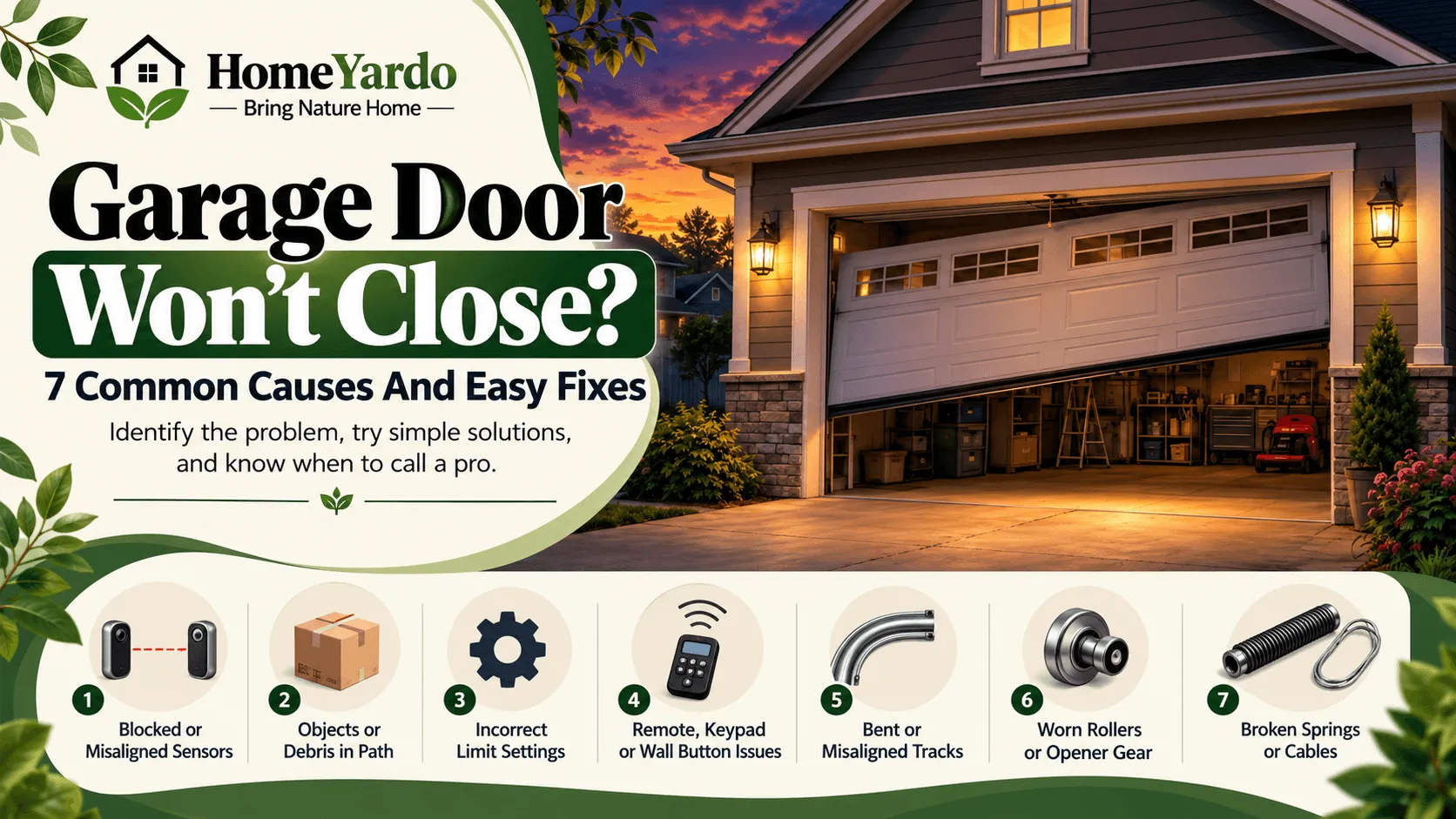
When a garage door does not close, the problem is often with one of these seven things: safety sensors that are blocked or not in line, something sitting in the door’s path, opener settings that are wrong, a remote or wall button that does not work, tracks that are bent, rollers or opener gears that are worn out, or a spring or cable that is broken. The first four are quick for many people to look at themselves. The last three problems with the garage door often call for a trained technician, especially if it is about springs or cables, because these hold a lot of force.
A stuck door can often happen when you least expect it. It may be while you are trying to leave for work, or when there is rain coming down hard. The good news is that most of these problems have a clear cause.
Garage door technicians notice the same things keep happening again and again. People think the opener is to blame. But many times, the real problem is a dirty sensor lens or even a rake sitting against the track. This guide will show what each issue looks like. It will also tell you what to check on your own that is safe. And you will know when you should call a pro for help.
If the bathroom or garage is part of a larger upgrade, understanding how residential remodeling is planned can help you coordinate budgets, contractors, scheduling, and repair work more effectively.
How a Garage Door Knows When to Close
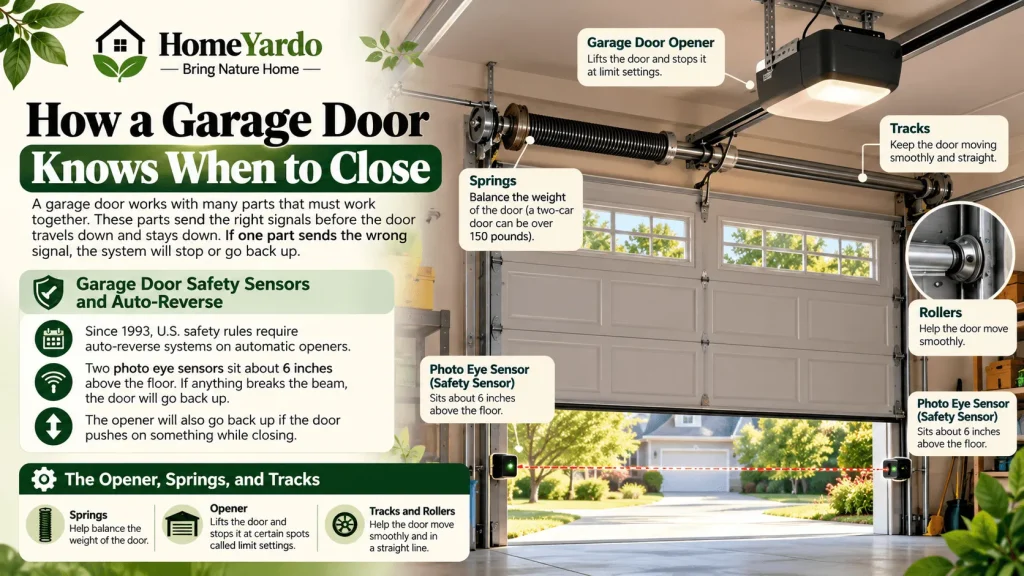
A garage door works with many parts that must work together. These parts all need to send the right signals before the door travels down and stays down. If one part sends the wrong signal, the system will stop or go back up. This helps keep people safe.
Garage Door Safety Sensors And Auto-Reverse
- Since 1993, there have been U.S. safety rules that say automatic openers must have an auto-reverse system.
- There are two photo eye sensors. These sit about 6 inches above the floor. If anything breaks the beam, the door will go back up.
- The opener will also go back up if the door pushes on something while closing.
The Opener, Springs, And Tracks
- Springs help balance the weight of the door. A two-car door can be over 150 pounds.
- The opener lifts the door and stops it at certain spots called limit settings.
- Tracks and rollers help the door move smoothly and in a straight line.
7 Common Reasons Your Garage Door Won’t Close
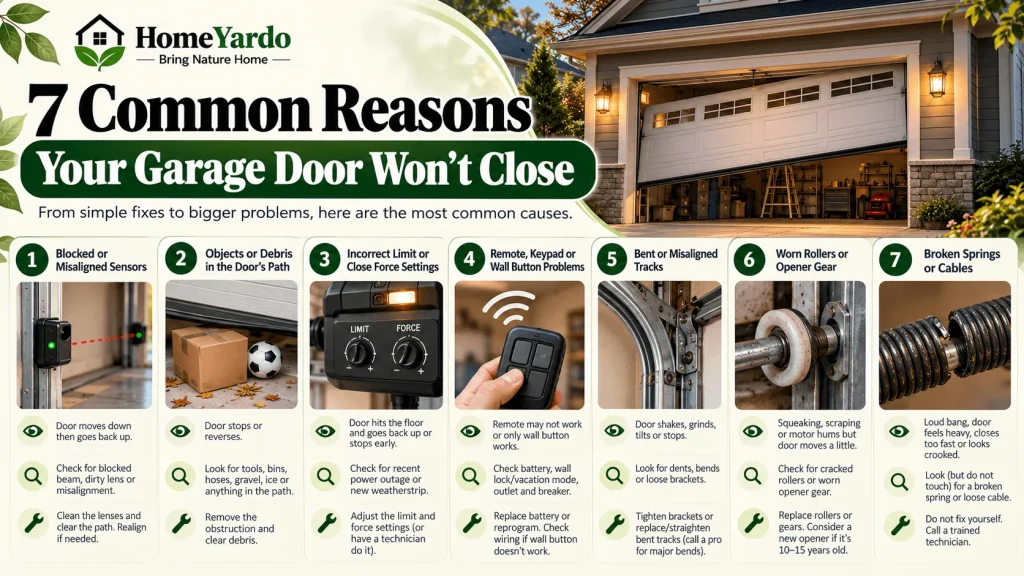
These causes can range from easy to big problems. Start with the first one, because it is the reason for most repair calls. Go down the list. The top few are what many people find to be the issue.
1. Blocked or Misaligned Garage Door Sensors
- What you’ll notice: The door moves down by a few feet, then goes back up. The opener light can blink more than once.
- What to check: Look at the small lights found on each sensor. A blinking or no light shows that there may be something blocking the beam, the bracket got bumped, the lens is dirty, or sunlight is getting into the sensor.
- Solution path: Clean up the path and softly wipe off the lenses. This usually fixes it. If the lights keep blinking, the sensors might need to be lined up again or have new wiring.
2. Objects or Debris in the Door’s Path
- What you’ll notice: The door goes down but then comes up again. Or, it stops before it closes all the way.
- What to check: Walk across the whole opening. Look for things like a garden hose, gravel, ice, or a tool stuck in the track.
- Solution path: Most of the time, if you take away whatever is blocking the track, the door works again. If dirt or ice is packed near the bottom, clear it out so the door can close flat.
- If stored tools, bicycles, bins, and seasonal equipment regularly crowd the doorway or sensor area, these garage storage ideas can help keep the garage door’s operating path clear.
3. Incorrect Limit or Close Force Settings
- What you’ll notice: The door hits the floor and then goes back up, even though nothing blocks it. Sometimes it stops before touching the floor.
- What to check: Did you have a power outage lately? Did you add a new weatherstrip or change the floor coat? These may be the cause.
- Solution path: You can change these settings. Each brand will be a bit different. If the force is set too high, the safety reverse might not work. Many people let a technician take care of this for them.
4. Garage Door Remote, Keypad, or Wall Button Problems
- What you’ll notice: The remote might not work, or sometimes only the wall button is working.
- What to check: First, make sure the lock or vacation button on the wall control is not turned on. After that, check the remote battery, the outlet, and the breaker.
- Solution path: A new battery or reprogramming will fix most issues. If the wall button does nothing, even when there is power, then there could be a wiring problem.
5. Bent or Misaligned Garage Door Tracks
- What you’ll notice: You may see the door shake, grind, tilt, or stop at the same spot each time.
- What to check: Make sure you stand in a safe spot. Look at both tracks for dents, bends, or loose brackets.
- Solution path: You can fix loose brackets with a quick repair. Bent parts of the track should be straightened or replaced. Don’t try to move a door off its track by hand.
6. Worn Rollers or a Stripped Garage Door Opener Gear
- What you’ll notice: You may hear squeaking, scraping, or a humming sound from the motor, but the garage door only moves a little.
- What to check: Look for rollers that are cracked or feel loose. If you hear the motor running but the garage door does not move, the drive gear inside the opener might be worn out.
- Solution path: You can change the rollers and gears. But if your garage door opener is between 10 and 15 years old and has needed several repairs, it might be better to have a professional do a new Garage Door Installation for you.
7. Broken Garage Door Springs or Cables
- What you’ll notice: There may be a loud bang from the garage. The door could feel very heavy. It might close too fast or look crooked.
- What to check: Look, but do not touch. A broken torsion spring has a clear gap. A damaged cable hangs loose or looks worn.
- Solution path: Do not try to fix this yourself. Springs can be dangerous and may hurt people or pets. You need to call a trained technician.
What Garage Door Repairs Usually Cost in the U.S
Knowing common prices can help you decide if an estimate is fair. The numbers here are general national averages for both parts and labor. Where you live, the size of your door, and the brand of parts you choose will all change the total cost.
Average Cost of Minor Garage Door Repairs
- Sensor realignment or replacement: This can cost from $100 to $200.
- Opener settings adjustment or service call: This may be $75 to $150.
- Remote or keypad replacement: The part can run $30 to $75.
- Roller replacement: A full set is about $100 to $250.
Average Cost of Major Garage Door Repairs
- Track or cable repair: about $125 to $300
- Torsion spring replacement: about $200 to $400
- New opener installed: about $400 to $800
If the door or opener is over 15 years old, and fixing it costs more than half of what a new one is, then it is often better to get a new one.
Simple Habits That Keep Your Garage Door Closing Smoothly
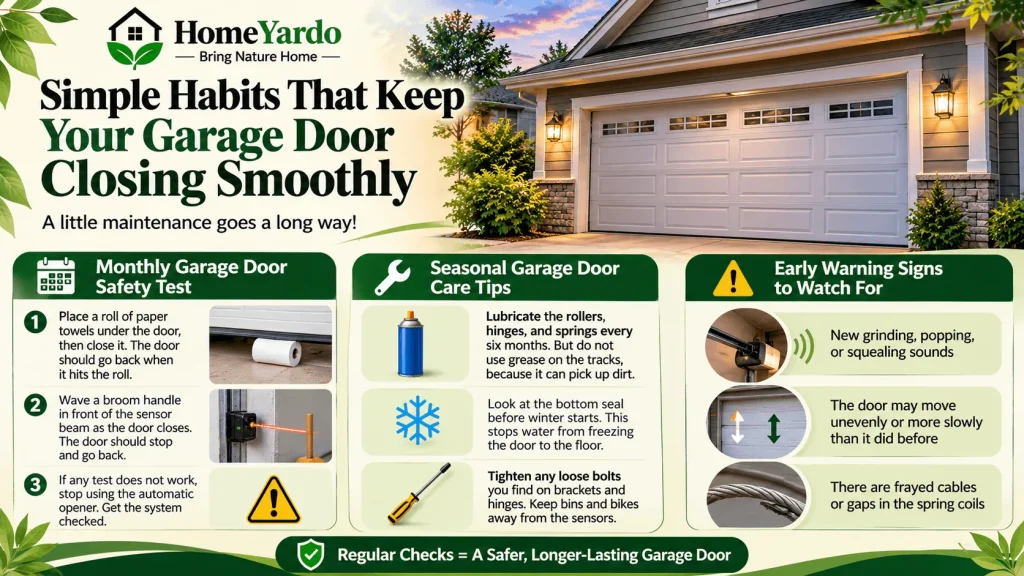
Most closing problems start slowly before they make the door stop. Just spending a few minutes each month helps you spot small problems early. A regular garage door check helps all its parts last longer.
For a broader routine, use our garage door maintenance checklist to inspect the sensors, rollers, tracks, opener, weather seals, springs, cables, and other components that affect safe operation.
Monthly Garage Door Safety Test
- Place a roll of paper towels under the door, then close it. The door should go back when it hits the roll.
- Wave a broom handle in front of the sensor beam as the door closes. The door should stop and go back.
- If any test does not work, stop using the automatic opener. Get the system checked.
Seasonal Garage Door Care Tips
- Lubricate the rollers, hinges, and springs every six months. But do not use grease on the tracks, because it can pick up dirt.
- Look at the bottom seal before winter starts. This stops water from freezing the door to the floor.
- Tighten any loose bolts you find on brackets and hinges. Keep bins and bikes away from the sensors.
Early Warning Signs to Watch For
- New grinding, popping, or squealing sounds
- The door may move unevenly or more slowly than it did before
- There are frayed cables or gaps in the spring coils
When to Stop Troubleshooting and Call a Pro
A garage door is the biggest thing people move in their homes. The U.S. Consumer Product Safety Commission says that thousands of people get hurt each year because of them. You need to know your limit so you and the door stay safe.
Garage Door Problems That Need a Technician
- Broken springs or frayed, loose cables
- A door that is off the track or hangs at an angle
- An opener that sparks, smells hot, or has wires that are damaged
- A door that does not pass the monthly safety reverse test
How to Choose a Garage Door Repair Company
- You get a clear diagnosis and a written estimate before they start any work.
- After the repair is finished, there will be a safety and balance test.
- Both the parts and the work have a warranty.
When you hire Expert Garage Door Repair, you should ask the technician how long they have worked on garage doors. Ask if they are licensed and insured where your state requires it. Check which brands of parts they use.
Getting Your Garage Back to Safe and Secure
A garage door that will not close is not hard to figure out. Start by checking the sensors and the path of the door. You should also look at the wall control. If the spring, cable, track, or opener of the garage door is damaged, then it is time to get help.
Your Next Step
- Go over the simple steps above to help find out what is wrong.
- Stay away if you think there is a spring or cable issue.
- Notice any sounds, blinking lights, or places where the door stops. This will help a technician fix it much faster.
If your garage door still will not close or it seems unsafe, the team at Global Discount Garage Door and Service can take a look. They will tell you what is wrong in simple words and fix it so your door closes as it should. Contact them today to set up a visit.
FAQ’s
Common causes include blocked or misaligned safety sensors, an obstruction in the doorway, incorrect opener travel settings, track or roller problems, or a mechanical problem with the door. Start with the sensor path and obvious obstructions before considering adjustments or repairs.
A door that reaches the floor and immediately reverses may have a travel-setting issue, encounter resistance, or detect an obstruction. Follow the troubleshooting and adjustment procedure for your specific opener rather than simply increasing closing force.
A problem with the photoelectric safety-sensor system is a common cause. Check for an obstruction, dirty lens, misalignment, obvious wiring damage, or a disturbed sensor. Do not bypass the sensors to make the door close normally.
Depending on the opener model, sensor indicator lights may blink, switch off, or behave differently when alignment or communication is lost. Clear the beam, clean the lenses, visually check their position, and consult the manual for the exact indicator-light pattern used by your opener.