The Hidden Side Of House Cleaning: What Your Eyes Can’t Always See

A home can look spotless and still have hidden cleaning problems. Dust settles inside air vents, moisture collects behind furniture, and everyday activities leave residue in places that rarely receive attention. These issues are especially frustrating because they can persist even when floors, countertops, and furniture appear perfectly clean.
For homeowners considering a houston cleaning service, understanding these overlooked areas can help determine which tasks deserve professional attention and which can be managed independently. A truly well-maintained home isn’t just about removing visible dirt. It’s also about addressing the conditions that allow dust, odors, and unwanted buildup to return.
If the bigger challenge is deciding which household tasks deserve attention first, our guide to strategic cleaning for busy moms explains how to prioritize cleaning by the areas that affect everyday use most.
The Air Inside Your Home Has A Story to Tell

Every time someone walks across a carpet, shakes out a blanket, or sits on upholstered furniture, small particles can become airborne. Some eventually settle on nearby surfaces, while others continue circulating through the room.
This helps explain why dust sometimes reappears shortly after cleaning.
Rather than constantly wiping the same furniture, consider the sources of airborne particles. Carpets, curtains, bedding, and upholstered furniture can all collect dust over time.
Vacuuming with equipment that has effective filtration can help capture particles instead of redistributing them. A vacuum fitted with a properly maintained HEPA filter may be particularly useful for households concerned about fine dust.
Heating and cooling systems also influence indoor air circulation. Follow manufacturer recommendations for filter maintenance and keep air returns unobstructed.
Dust control is only one part of indoor comfort, and our guide to home wellness trends also explains how ventilation, humidity management, HVAC filtration, and other home conditions can affect the indoor environment.
Reducing the sources of dust often makes a greater difference than repeatedly cleaning surfaces where particles eventually settle.
Humidity Can Undo Your Hard Work
Moisture is one of the most overlooked factors in household cleanliness. It can accumulate in bathrooms, laundry rooms, kitchens, and poorly ventilated storage areas.
When surfaces remain damp, they create conditions that may encourage mold growth and unpleasant odors.
The problem isn’t always obvious. Moisture can collect behind cabinets, beneath sinks, or around windows where condensation develops.
Regularly inspect areas where water is used or where ventilation is limited. Look for persistent dampness, discoloration, peeling finishes, and musty smells.
Bathroom exhaust fans and appropriate ventilation can help remove excess moisture. Dehumidifiers may also be useful in spaces that consistently experience high humidity.
However, cleaning visible mold without addressing the underlying moisture problem rarely provides a lasting solution.
If contamination is extensive, repeatedly returns, or involves hidden building materials, professional assessment may be necessary.
Your Upholstery Holds More Than Memories

Sofas, armchairs, and upholstered dining chairs receive constant use, yet they often receive less maintenance than hard surfaces.
Fabric can collect body oils, food particles, pet hair, and other residue. Over time, this buildup may contribute to discoloration and lingering odors.
Different upholstery materials require different cleaning methods, making it important to check care labels before applying products.
Some fabrics tolerate water-based cleaners, while others require specialized treatment.
Using excessive moisture can create additional problems, particularly when padding underneath the fabric takes too long to dry.
Regular vacuuming with suitable attachments helps remove loose debris from seams, cushions, and other accessible areas.
For persistent staining or heavily soiled furniture, professional upholstery cleaning may be appropriate.
The objective is to preserve the material while removing accumulated residue, not simply make the surface appear damp and freshly treated.
The Refrigerator Has a Cleaning Problem Nobody Talks About
Most people wipe refrigerator shelves after spills, but the appliance has other areas that deserve occasional attention.
Door gaskets, for example, can collect crumbs and sticky residue inside their folds. When neglected, these deposits may interfere with cleanliness around the seal.
The space beneath and behind the refrigerator can also accumulate dust, especially when the appliance has remained in the same position for years.
Certain models have accessible condenser coils that require periodic cleaning according to the manufacturer’s instructions.
Keeping these components free from excessive dust may support efficient operation, depending on the appliance’s design.
Inside the refrigerator, check expiration dates and storage containers regularly.
Spilled liquids should be cleaned promptly, and removable shelves can be washed using methods recommended by the manufacturer.
These tasks require more attention than a quick countertop wipe, but they help maintain an appliance that operates every day.
Why Grout Becomes Dirty Before the Tile Does
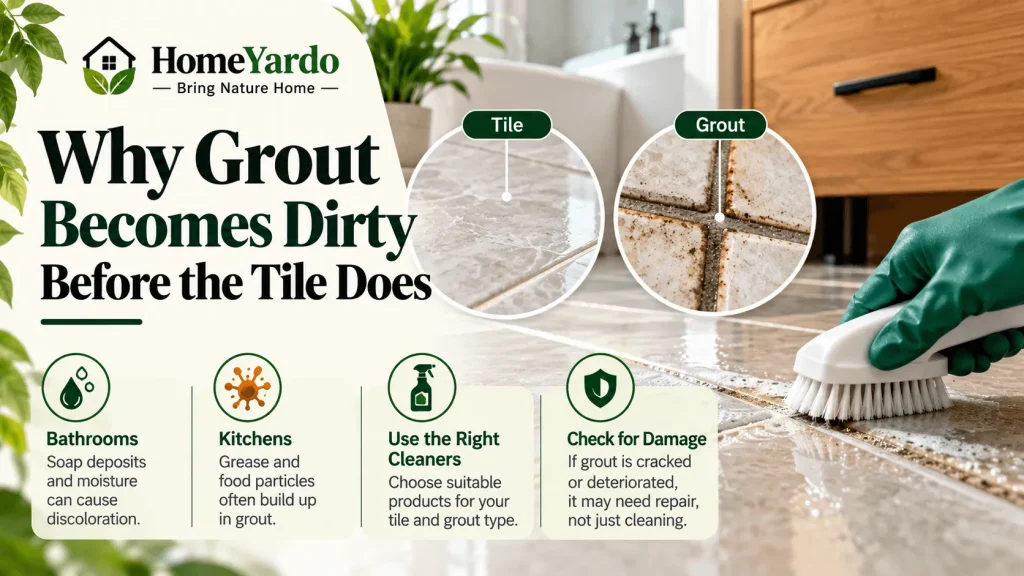
Tiled surfaces can create the impression of being easy to maintain. However, the narrow spaces between tiles frequently become the most difficult areas to clean.
Grout may absorb staining substances or collect residue, depending on its composition and finish.
In bathrooms, soap deposits and moisture contribute to discoloration. In kitchens, grease and food particles can create a similar problem.
Start by identifying the type of tile and grout before choosing a product.
Aggressive acidic cleaners can damage certain natural stones and cement-based grout, while abrasive tools may scratch delicate finishes.
Use suitable cleaners and allow them to work according to the product instructions before gently scrubbing.
If grout has cracked, deteriorated, or separated from surrounding materials, cleaning alone won’t restore its protective function.
Damaged joints should be evaluated and repaired appropriately, particularly in areas exposed to frequent water.
Cleaning Products Can Leave Problems Behind
A strong fragrance and a shiny surface don’t necessarily indicate that a product has cleaned effectively.
Some household cleaners leave residue when too much is applied or when rinsing instructions are ignored.
This can be particularly noticeable on flooring, countertops, and glass surfaces.
Sticky buildup may attract additional dirt, making surfaces appear dirty again sooner than expected.
Choosing a product suited to the material is more important than selecting the strongest formula available.
Read labels carefully, follow dilution instructions, and use the recommended amount.
Disinfecting products also require specific contact times to achieve their stated effectiveness. Simply spraying and immediately wiping may not meet those instructions.
Never mix bleach with ammonia, acidic products, or other household cleaners.
When possible, select products that clean effectively without leaving unnecessary fragrances or residue behind.
Forgotten Storage Areas Deserve a Closer Look
Closets, cabinets, and storage rooms often hide problems because their contents remain undisturbed for long periods.
Dust accumulates around stored boxes, while poorly ventilated spaces may develop stale odors or moisture problems.
Instead of emptying every storage area at once, inspect individual sections periodically.
Remove items carefully, wipe accessible surfaces, and check for signs of water damage or pest activity.
Cardboard boxes placed directly against damp walls or floors can absorb moisture and deteriorate.
In suitable areas, shelves and moisture-resistant storage containers may offer better protection for belongings.
Avoid filling storage spaces so completely that air circulation and routine inspections become impossible.
A well-organized storage area isn’t simply easier to navigate. It also makes developing problems easier to notice before they affect valuable possessions.
Sometimes Specialized Cleaning Is the Better Choice
Not every cleaning challenge can be handled with ordinary household supplies.
Post-construction dust, extensive upholstery staining, persistent moisture contamination, and heavily soiled surfaces may require specialized equipment or techniques.
Before attempting a demanding project, consider the material involved and the risks associated with improper cleaning.
Using excessive water on hardwood flooring, for example, can cause damage. Applying unsuitable chemicals to stone countertops may permanently alter their finish.
Professional cleaners may have equipment designed for particular surfaces, but their services and qualifications vary.
Ask which methods will be used, whether they are appropriate for your materials, and what preparation is required.
Some situations, particularly significant mold contamination or hazardous materials, call for specialized remediation rather than standard household cleaning.
Recognizing the difference helps protect both the property and the people occupying it.
A Cleaner Home Begins With Looking Beyond the Obvious
The most effective approach to household cleanliness involves understanding where problems originate rather than concentrating exclusively on what looks dirty.
Dusty furniture may point to particles accumulating in fabrics. A persistent odor could indicate trapped moisture, while rapidly soiled floors might contain residue from unsuitable cleaning products.
These patterns provide clues about what needs attention.
Instead of adding more chores to an already demanding routine, identify the underlying problem and choose an appropriate solution.
Some tasks require nothing more than a different cleaning method. Others benefit from better ventilation, equipment maintenance, or occasional professional assistance.
A home doesn’t need to look immaculate every moment to be comfortable and well maintained. By paying attention to overlooked surfaces, hidden buildup, and the conditions that allow problems to return, homeowners can create a fresher living environment without constantly repeating the same cleaning tasks.
FAQs About Hidden Cleaning Problems
Frequently overlooked areas include upholstery seams, beneath furniture and appliances, refrigerator gaskets, storage spaces, grout lines, window areas, air returns, and cabinets beneath sinks. Which areas need attention most often depends on how the household uses the space.
Dust can come from fabrics, tracked-in soil, pet hair and dander, outdoor particles, bedding, upholstery, and normal household activity. Improving source control, vacuuming effectively, and maintaining suitable HVAC filtration may reduce how quickly visible dust returns.
Yes. Visible countertops and floors can be clean while residue, dust, crumbs, moisture, or staining remains beneath furniture, inside appliance seals, in upholstery seams, or within storage areas.
Check beneath sinks, around plumbing connections, near windows, behind furniture positioned against exterior walls, around appliances that use water, and in bathrooms, laundry areas, basements, and poorly ventilated storage spaces.