When Your Garage Door Stops Cooperating
A garage door that stops halfway can turn a routine morning into a problem. The car is stuck, the opening may be unsecured, and you are left wondering whether trying again will make things worse. If you need someone to repair your garage door in columbus ohio, start with a clear account of what happened. Understanding the symptoms helps you make a useful first call, ask sensible questions about the proposed work, and avoid decisions made entirely out of frustration.
A Useful Repair Call Starts With Details
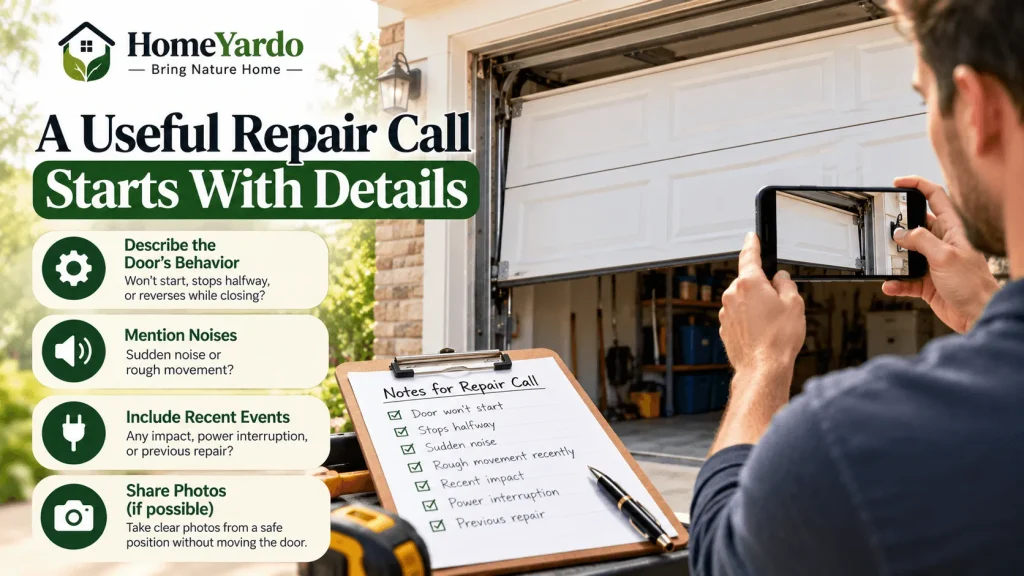
Before booking a visit, note what you have already observed. Did the door refuse to start, stop during opening, or reverse while closing? Was there a sudden noise, or had movement become rough over several days? These details give the technician a starting point.
Describe the behavior plainly. “The motor runs, but the door stays still” is more informative than “the motor must be broken.” Mention any recent impact, power interruption, or previous repair as well.
If the main symptom is that the door starts moving but refuses to finish closing, our guide to why a garage door won’t close explains common issues involving sensors, obstructions, opener settings, tracks, rollers, springs, and cables.
Photographs can help if they can be taken from a safe position without moving the door. There is no need to recreate the fault for a video. If the system appears damaged or unstable, leave it alone and explain its current position when arranging assistance.
The Motor Doesn’t Work Alone
The opener is one part of a connected mechanical system. Springs help counterbalance the door’s weight, while tracks and rollers guide its movement. A technician needs to consider how those parts work together before deciding that the motor needs replacing.
Closing problems can also involve the safety sensors near the opening. An obstruction or misalignment can prevent normal closing on systems that use these sensors. Describe any warning lights or messages already visible, but avoid assuming that a flashing light means the same thing on every model.
If the proposed solution is a new opener, ask what the inspection showed about the door itself. The explanation should connect the recommended work with the actual fault, including any mechanical issues that also need attention.
Some Problems Mean the Door Stays Put
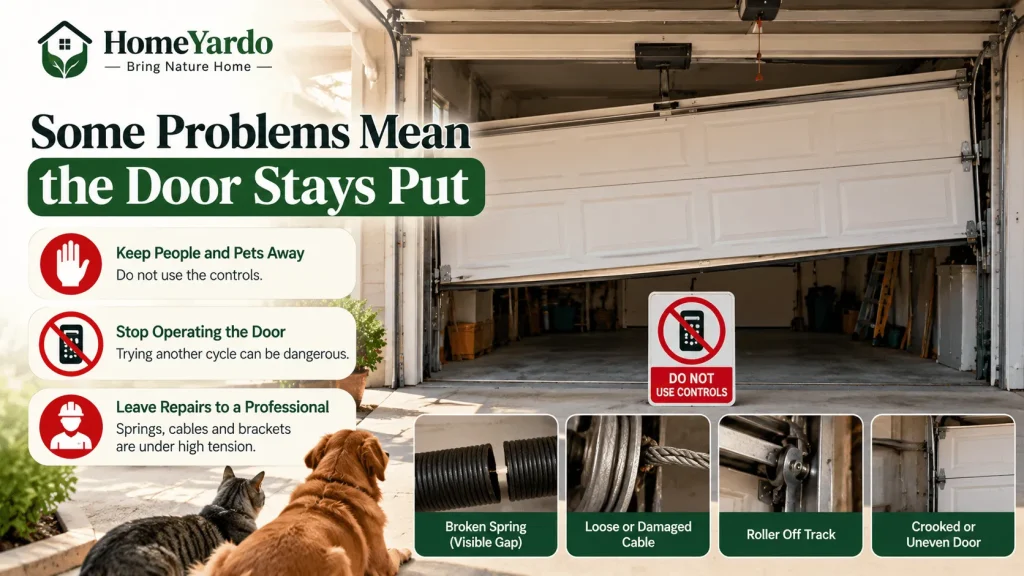
A crooked door, a loose cable, or a roller that has left its track calls for professional attention. Keep people and pets away from the opening and stop using the controls. Trying to persuade the door through another cycle can put you close to an unstable moving system.
Springs, cables, and the bottom brackets connected to the spring system involve substantial tension. Their repair and adjustment belong with a trained door systems technician. A door with a broken spring should remain out of operation until repaired.
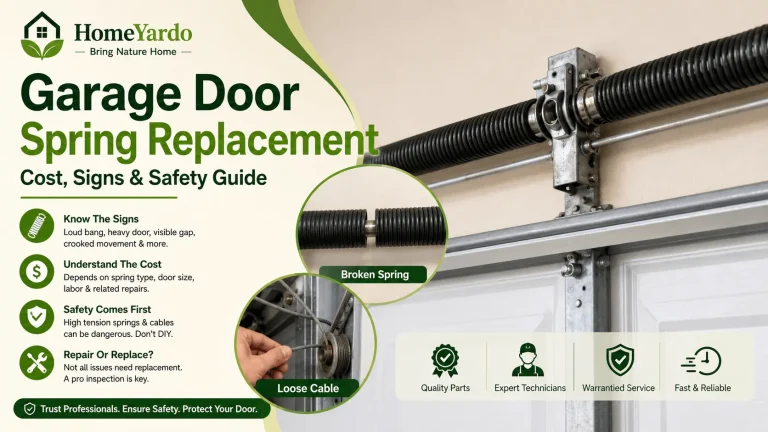
A suddenly heavy door, loud bang, visible spring gap, rapid dropping, or uneven movement can also be among the signs of a failing garage door spring, although similar symptoms can come from other parts of the system.
Tell the repair provider if the door is stuck open, hanging unevenly, or blocking your only vehicle. That information helps establish what the visit needs to address. Avoid trying to straighten panels, reposition cables, or force the door down while waiting.
Ask for a Repair You Can Understand
A useful estimate should identify the problem and explain the proposed remedy in ordinary language. Ask which components need replacement, which can remain, and what checks will be performed after the work.
Clarify what the price includes. Labor, parts, the initial inspection, removal of damaged components, and additional work should be understandable before you approve the job. If the technician discovers something else after starting, ask to discuss the revised scope before that work proceeds.
A recommendation may also include preventive work on related components. Ask how that work connects to the condition found during inspection. Separating the immediate repair from optional improvements makes the decision easier, especially when you are trying to restore access quickly.
Keep the written estimate and completed invoice. They provide a useful record if the same symptom returns or another technician works on the system later.
A New Door Should Solve a Clear Problem
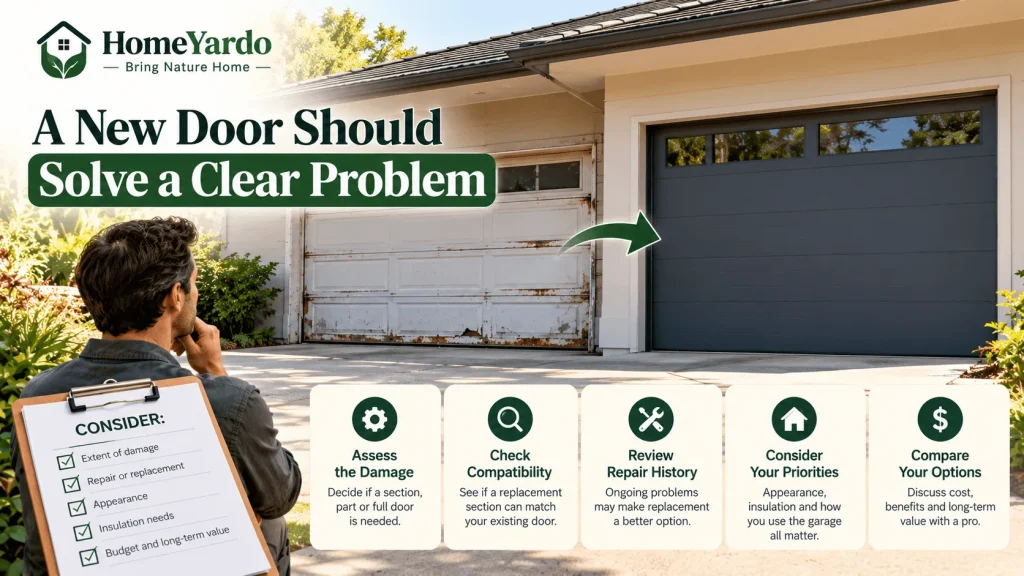
The decision to replace a garage door depends on the extent of the damage and the condition of the system. Some problems can be addressed with individual parts or a replacement section, while others call for a complete door. A professional assessment helps establish which options are practical.
Ask whether a damaged section can be matched to the existing door and whether the remaining sections are sound. If several areas show deterioration, or earlier repairs have left continuing problems, request an explanation of how another repair compares with replacement.
Bring your own priorities into the discussion. You may want to retain a door that suits the house, improve its appearance, or consider insulation because of how the garage is used. Those preferences belong alongside mechanical condition and cost. They should help define what a replacement would accomplish.
Keep Wear From Going Unnoticed
Once the door is operating properly, build routine care around the instructions for that specific door and opener. Keep the manuals accessible and ask the technician to explain the checks appropriate for a homeowner.
Look for visible changes during ordinary use: new rust, a damaged seal, unusual movement, or a sound that was not there before. Mention these changes promptly instead of waiting for the door to stop working.
Follow the manufacturer’s directions on lubrication, including the correct product and application points. Tracks should not simply be coated with grease, and different components can have different maintenance needs. The opener’s prescribed safety tests also belong on the maintenance schedule.
Keep stored items clear of the opening and sensors. A shovel leaning across a sensor’s path is a small storage problem that can become a confusing closing problem.
Watch the Door Work Before Signing Off
Before the technician leaves, ask to see the repaired system operate through its normal opening and closing cycle. Listen for the original noise and confirm that the symptom you reported has been addressed.
Have the technician verify the safety sensors and reversal system as appropriate for the opener, particularly after adjustments or repairs. Ask what routine testing you should perform afterward and what signs mean you should stop using the door and call again.
You should finish the visit knowing what failed, what was changed, and how to look after the system from that point forward. The next morning’s departure can then return to being an ordinary part of the day.
Final Takeaway
When a garage door stops cooperating, the goal is not to guess which component failed. Start by observing the symptom without repeatedly cycling an unstable door. Keep clear of damaged springs, cables, tracks, and crooked doors, then give the repair provider a clear description of what happened.
A good repair visit should leave you understanding what failed, why the proposed work was needed, what was replaced, and how the system performed afterward. That makes it easier to distinguish an immediate repair from optional work and to recognize future changes before they become another unexpected breakdown
FAQ’s
Professional assessment is appropriate when the door hangs unevenly, becomes unusually heavy, has a broken or damaged spring or cable, leaves a roller outside the track, drops unexpectedly, or continues malfunctioning after simple obstruction and sensor checks.
Several conditions can cause a door to stop during travel, including resistance in the door’s movement, opener problems, track or roller issues, spring or cable problems, or settings specific to the opener. The symptom alone does not identify the failed component.
The problem may involve the opener drive system, spring or counterbalance system, connection between the opener and door, or another mechanical component. Avoid repeatedly running the opener if the door is unusually heavy or visibly damaged.
Stop operating it when the door hangs crooked, drops unexpectedly, leaves its track, has a visibly damaged spring or cable, becomes unusually heavy, or otherwise appears unstable.