
How to Choose a Commercial or Industrial Ceiling Fan
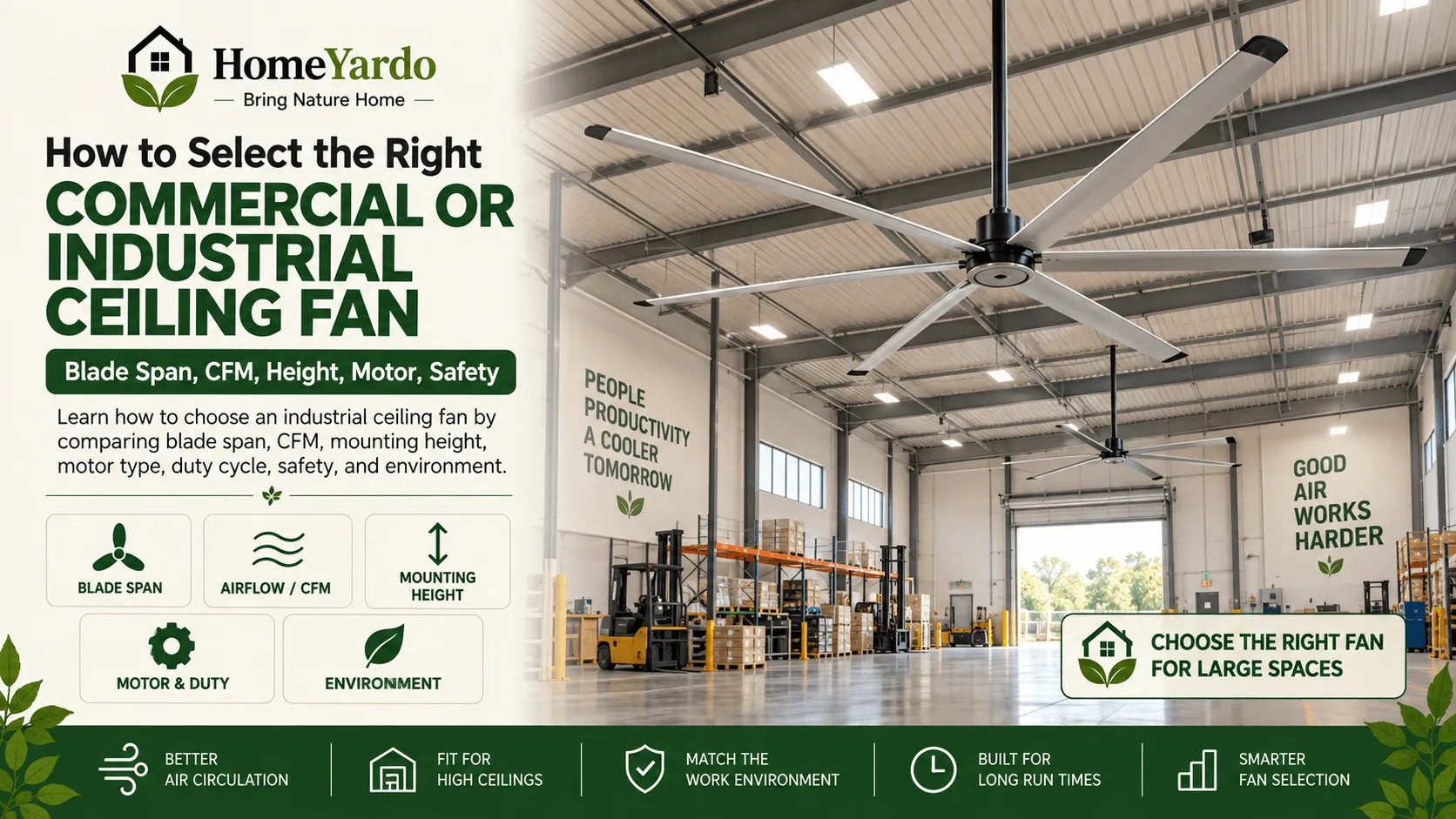
Choosing a ceiling fan for a warehouse, gym, workshop, or large commercial space is a very different exercise than picking one for a living room. The stakes are higher: a poorly matched fan wastes energy, fails to move air where it’s needed, or simply can’t handle the physical demands of a large open space with high ceilings and heavy dust or moisture. Getting the selection right means working through a handful of factors together rather than picking based on size or price alone. Room dimensions, mounting height, airflow output, motor design, and the conditions the fan will operate in all interact, and a decision that ignores one of them tends to undermine the rest.
Matching Fan Size to Room Dimensions
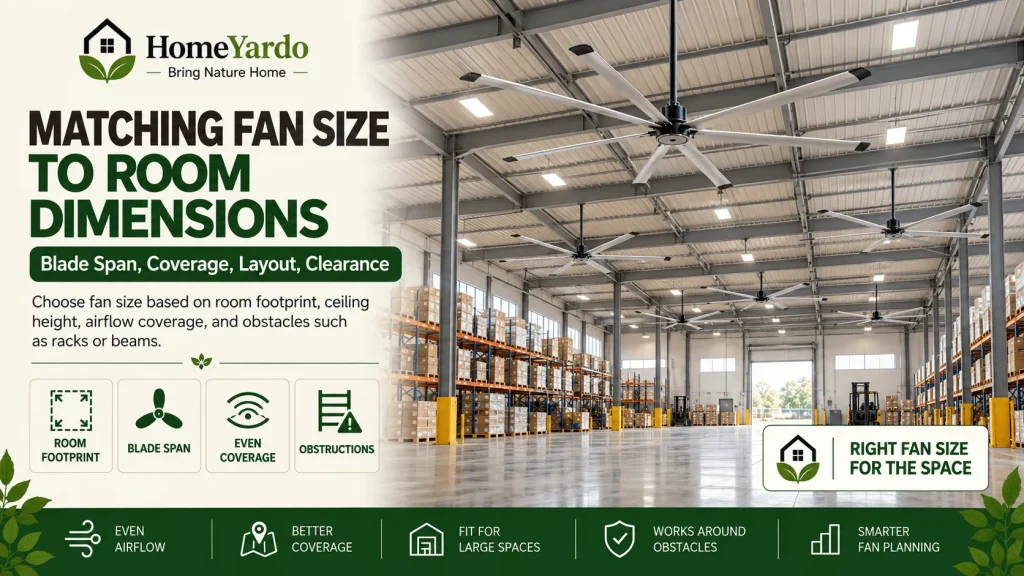
The starting point for any selection is the physical footprint of the space. A single fan with too small a blade span will leave large areas of a room stagnant, while an oversized fan in a modest space can create uncomfortable drafts or simply waste power moving more air than the room needs.
As a general guideline, larger commercial spaces call for larger blade spans or multiple fans working together rather than one oversized unit trying to cover everything. A warehouse floor of several thousand square feet is usually better served by a grid of mid-sized fans spaced at regular intervals than by a handful of massive units, because even coverage matters more than raw output concentrated in a few spots. Ceiling height and obstructions like support beams, racking, or overhead conveyors also affect how many fans are needed and where they should sit, since airflow has to reach the occupied zone, not just circulate near the ceiling.
Mounting Height and Ceiling Clearance
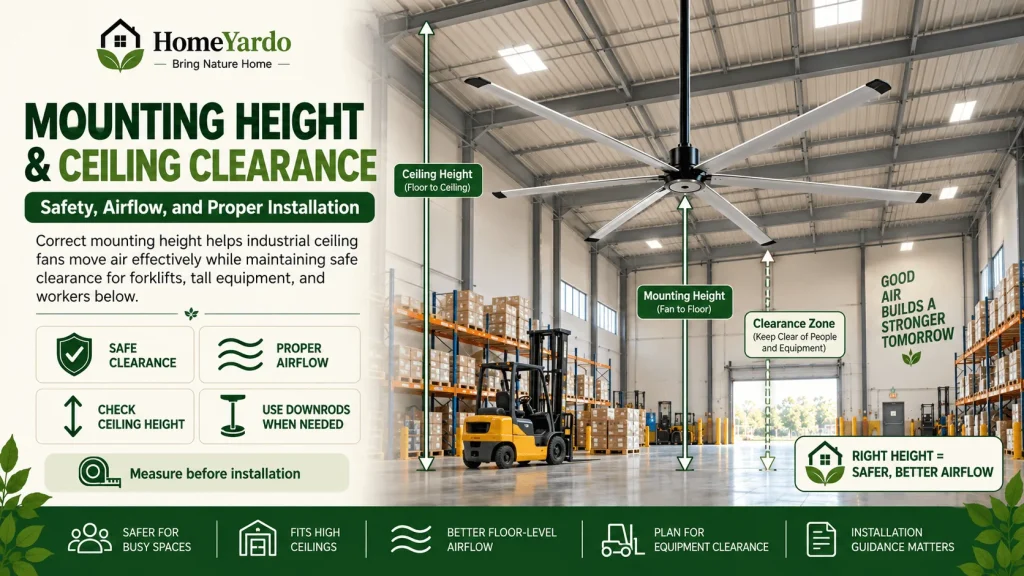
Mounting height determines both safety and performance, and it’s often where buyers run into trouble if they haven’t measured carefully beforehand. Fans mounted too low create a hazard for forklifts, tall equipment, or anyone working below them, while fans mounted too high can lose much of their effective airflow before it reaches the floor.
Most industrial and commercial fans are rated for a specific mounting height range, and manufacturers publish guidance on how far the airflow will project downward for a given ceiling height. Comparing mounting-height guidance alongside blade span helps narrow the options to fans suited to the installation, rather than guessing based on size alone. For very high ceilings, some fans use extended downrods to bring the blades closer to the occupied space, and this detail should be factored into the total cost and complexity of installation, not treated as an afterthought.
Airflow Requirements and CFM Ratings
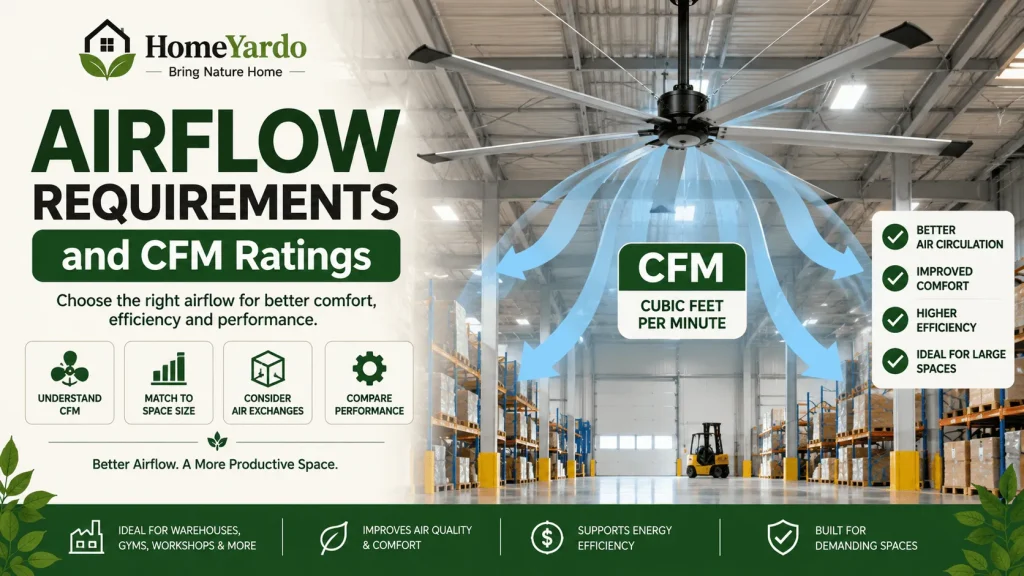
Airflow output, measured in cubic feet per minute (CFM), is the number that ultimately tells you whether a fan can do the job. Two fans with identical blade spans can have very different CFM ratings depending on blade pitch, motor power, and design efficiency, so comparing fans by size alone can be misleading.
A rough industry approach is to calculate the total air volume of the space and aim for enough combined CFM to achieve a reasonable number of air exchanges per hour, though the right target varies depending on how the space is used. A packaging facility generating heat from machinery needs more frequent air movement than a lightly used storage area. Similar airflow and equipment-performance issues can also affect HVAC systems, so it is useful to understand the warning signs of AC problems before they develop into larger failures.
When comparing products, it helps to look at CFM figures alongside the fan’s coverage diameter, since manufacturers sometimes report peak output measured directly beneath the fan rather than the effective airflow across the full coverage area. Buyers evaluating options from Industrial Fans Direct should compare the manufacturer’s CFM ratings, mounting requirements, and coverage guidance for each model, checking that the measurements apply to the planned installation rather than relying on blade span or horsepower alone.
Motor Type and Duty Cycle
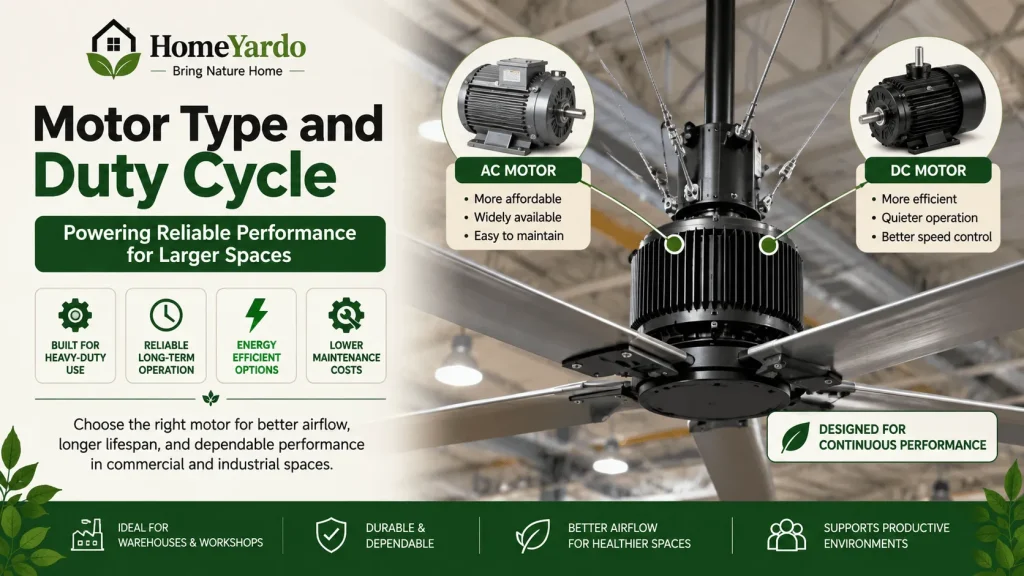
The motor is the component most responsible for long-term reliability, and commercial or industrial applications call for motors built for continuous operation rather than the intermittent use common in residential settings. Two motor types dominate this category, each with distinct tradeoffs:
- AC motors are generally more affordable upfront, widely available, and simple to maintain, making them a common choice for standard warehouse and workshop applications where budget matters and airflow needs are moderate.
- DC motors run more efficiently, operate more quietly, and typically offer finer speed control, which suits facilities that run fans for extended hours daily and want to reduce energy costs over the equipment’s lifespan.
Duty cycle rating matters as much as motor type. The same attention to operating schedules and equipment condition applies to broader commercial HVAC maintenance, where service frequency should reflect equipment age, runtime, condition, and seasonal demand. Checking the manufacturer’s duty cycle specification, rather than assuming any commercial-grade fan can handle round-the-clock use, prevents premature motor failure and the downtime that comes with it.
Operating Environment and Construction
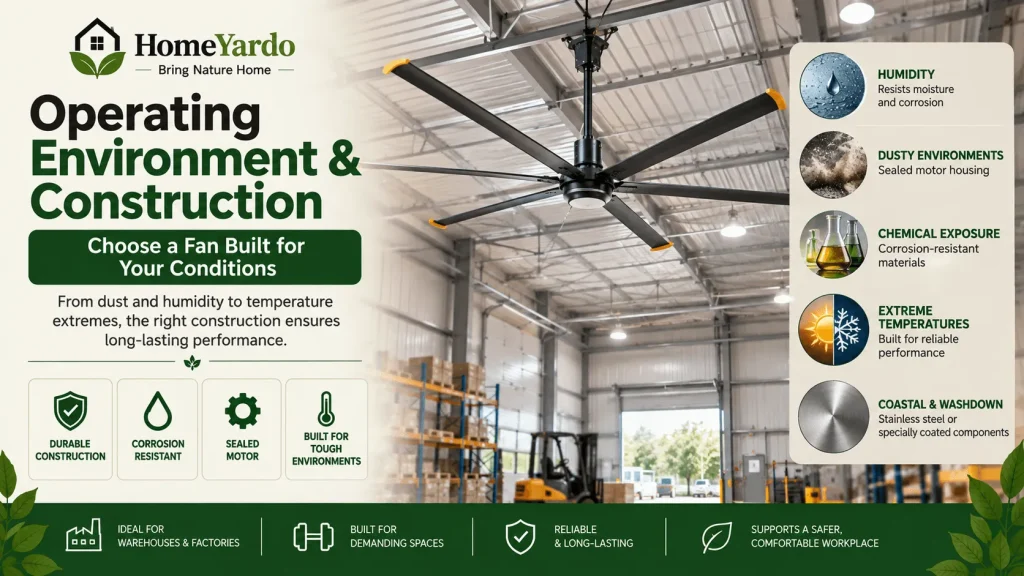
The physical environment a fan will operate in shapes which construction features actually matter. A fan destined for a climate-controlled office or retail space has very different requirements than one installed in a food processing plant, an agricultural facility, or an outdoor loading dock.
Environments with high humidity, dust, or exposure to chemicals call for fans with sealed motor housings, corrosion-resistant blades, and hardware rated for those conditions. Facilities near coastal areas or with heavy washdown requirements often need stainless steel or specially coated components to avoid rust and degradation over time. Temperature extremes can also be a factor, as some motors will lose efficiency or reliability when run outside of the rated operating range.
When you look at the environmental rating of a fan, as well as its IP rating for dust and moisture resistance, where applicable, this will help you avoid a scenario where a fan looks good on paper, but degrades quickly once it’s installed in the real conditions of the facility.
Key Takeaways
When considering choosing a commercial or industrial ceiling fan, rather than a single decision based on size or price, it’s best to make a layered decision. Room dimensions set the baseline for how many fans and what blade span are needed, mounting height determines if the airflow will reach the occupied space safely, and CFM ratings confirm the fan can move enough air to make a real difference.
The fan’s ability to endure constant commercial use will depend on the motor type and duty cycle, and the operating environment will decide which construction features are worth prioritizing. Taking all five factors into account, rather than just one or two, will result in a fan that functions dependably and keeps a facility comfortable for years, not months.
FAQ’s
The correct size depends on floor area, ceiling height, room shape, obstructions, mounting position, and the amount and distribution of airflow required. Compare the manufacturer’s coverage and mounting recommendations rather than choosing by blade span alone.
There is no single CFM target that works for every facility. The required airflow depends on the size and layout of the space, mounting height, occupancy, heat sources, and whether the goal is general circulation, perceived cooling, or destratification. CFM should be compared with coverage data and installation conditions.
The terms often overlap, but industrial models are generally designed for larger spaces, demanding environments, longer operating schedules, or higher airflow requirements. The actual construction, ratings, duty cycle, controls, and performance specifications are more useful than the product label alone.
HVLS fans can work well in large, open warehouses with high ceilings because they are designed to move a broad volume of air at relatively low rotational speed. Buildings divided by tall racks, walls, equipment, or other obstructions may require a different fan arrangement, so the floor plan should be evaluated before choosing an HVLS system.
Not by themselves. Ceiling fans primarily circulate and mix air already inside a space. If a facility needs fresh outdoor air, contaminant removal, fume extraction, or controlled air changes, a suitable mechanical ventilation or HVAC system may also be required.
Some brushless DC and direct-drive fan designs can offer lower power consumption and greater speed control, but motor type alone does not determine total efficiency. Compare tested fan performance, electrical input, airflow, expected operating hours, controls, maintenance, and purchase cost.
Check blade span, airflow performance, coverage area, mounting-height range, motor and duty rating, electrical requirements, controls, environmental suitability, overhead clearances, sprinkler compatibility, and maintenance requirements. These factors provide a more useful comparison than blade diameter alone.
Some commercial and industrial fans are designed for extended operation, but this should not be assumed for every model. Check the manufacturer’s duty-cycle, motor, operating-temperature, maintenance, and warranty specifications before planning continuous or near-continuous use.