How to Keep Your Garage Cool in the Summer Heat

To keep your garage cool when it is hot outside, you need to block hot air from coming in and help old air get out. The best things you can do are cover the garage door, close up any gaps, let air move with fans or vents, and put cover on the ceiling or space above the garage. If you spend a lot of time in the garage, you can also add a fan or a small cooling unit to help even more.
On a warm day, the inside of a closed garage can be much hotter than outside. It will often get 10 to 20 degrees hotter than the air outside. This extra heat can mess up things you have stored in the garage. It can also make your car battery work harder. Because of this, the rooms by the garage feel warmer and are tough to cool down.
This guide talks about why garages get very hot. It also shares which changes and habits help the most to cool them down.
Why Your Garage Gets So Hot
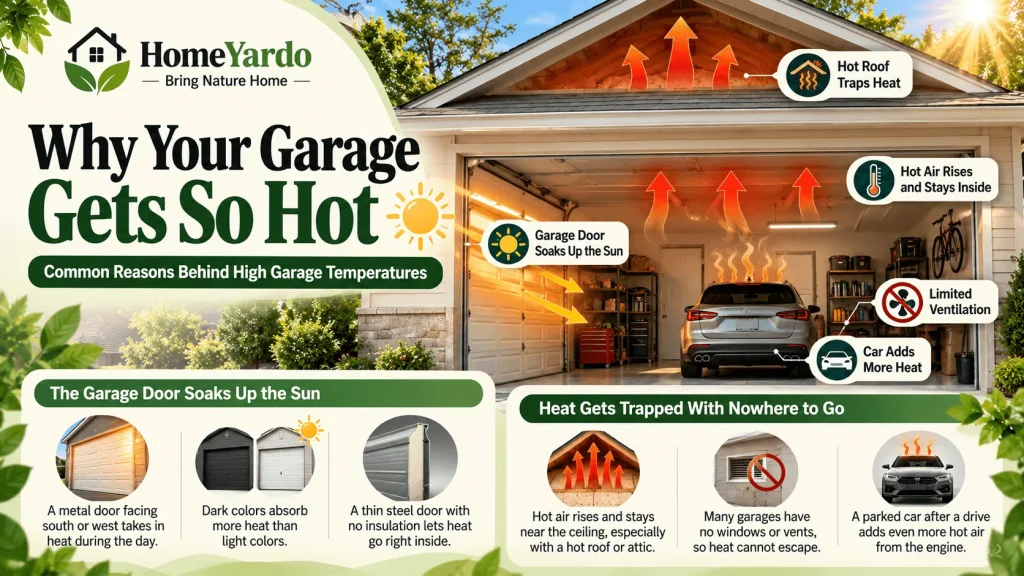
Most garages are made to keep a car safe, not for people to feel good in. The walls often have little to no insulation in them. Air does not move well inside the space. A big part of the garage can also face the sun and get hot.
The Garage Door Soaks Up the Sun
- A big metal door that faces the south or west takes in heat during the day.
- A door with a dark color will take in more heat than a light one.
- A steel door that is thin and has no insulation lets that heat go right into the garage.
Heat Gets Trapped With Nowhere to Go
- Hot air goes up and stays near the ceiling. This happens more when there is a hot roof or an attic over the garage.
- A lot of garages do not have windows or vents. So, the heat cannot get out.
- When you park a car after a drive, it puts even more hot air in the garage from the engine.
What Summer Heat Does to Your Garage and Everything in It
A hot garage is more than just a place that feels bad to be in. High temperatures can slowly damage the things you keep there. Over time, this heat may also cause problems in the rest of your home.
Heat Damage to Stored Items
- Paint, glue, and caulk can get thick, come apart, or go bad.
- Electronics, batteries, and photos can get hurt if they stay in the heat too long.
- Gasoline, propane, and aerosol cans can get more risky when they get too hot.
- Food, canned foods, and pet food can go bad quicker than you might think.
Effects on Your Car and Your Home
- Extreme heat makes car batteries wear out faster. It also causes tires and rubber parts to break down more quickly.
- If the garage is attached, the heat can move into the kitchen, laundry room, or bedroom above.
- When this happens, your air conditioner has to work harder. This can make your energy bill go up.
Start With the Garage Door
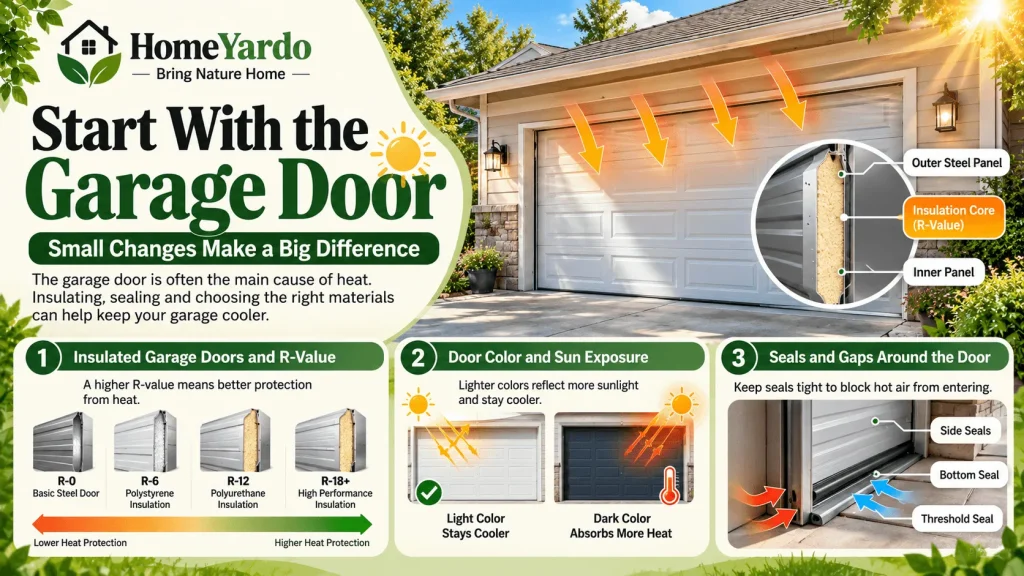
The garage door is often the main cause of heat, so you should begin here. Small steps you take with the garage door can lower the temperature more than any other fix.
An insulated garage door can also be part of broader practical home improvements when the garage is attached to the house or regularly used for storage, exercise, hobbies, or workshop activities.
Insulated Garage Doors and R-Value
- R-value tells you how well a material stops heat from passing through. A higher R-value means the garage door keeps heat out better.
- A basic steel door with just one layer does not have much or any insulation. Insulated garage doors usually have an R-value from about R-6 up to R-18 or more.
- A door with a polyurethane foam core will often keep in heat better than one made with polystyrene.
- If your garage door is old or has no insulation, getting a new one through a skilled Garage Door Installation is a good way to lower the amount of heat in the garage.
Door Color and Sun Exposure
- Lighter colors send more sunlight away. They stay cooler than dark finishes.
- If your door is facing west, it gets the hottest sun in the afternoon. So, you need to think about color and insulation even more.
Seals and Gaps Around the Door
- Worn seals at the bottom and sides can let hot outside air get in.
- Look for daylight around the edges when the door is shut.
- Doing routine Garage Door maintenance will keep the seals tight. The door will close evenly, so more cooler air will stay inside.
If you can see daylight around a closed door or feel hot outdoor air entering near the edges, HomeYardo’s guide to garage door weather stripping explains how bottom, side, top, and threshold seals address different types of gaps.
Improve Airflow and Ventilation
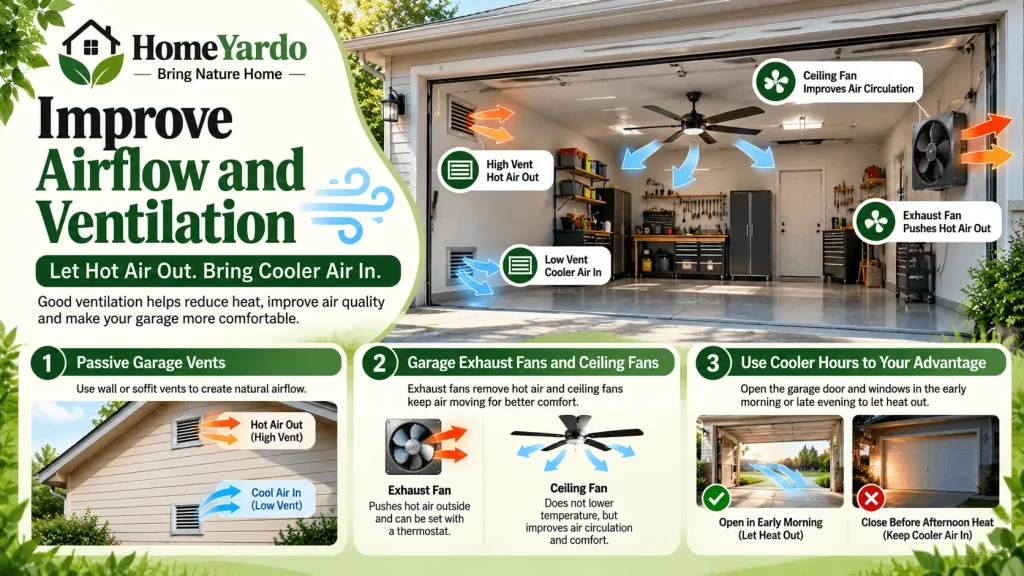
Even if you have a well-insulated garage, the hot air will build up as the day goes on. Good ventilation lets this hot air go out. It also helps cooler air come in, especially when the evening comes.
Passive Garage Vents
- Wall or soffit vents help hot air go out without the need for any electricity.
- Putting one vent low on one wall and another vent high on the other wall helps create natural airflow.
Garage Exhaust Fans and Ceiling Fans
- A wall-mounted exhaust fan will push hot air outside. It can help make the room feel better.
- Some exhaust fan models have a thermostat. This turns the fan on when the garage gets to a set temperature.
- A ceiling fan will not lower the temperature. But moving air in the garage can make it feel cooler when you work.
Use Cooler Hours to Your Advantage
- Open the garage door and any windows in the early morning or late evening. This helps to get the heat out.
- Close everything up before the hot part of the afternoon starts.
Insulate the Walls, Ceiling, and Attic
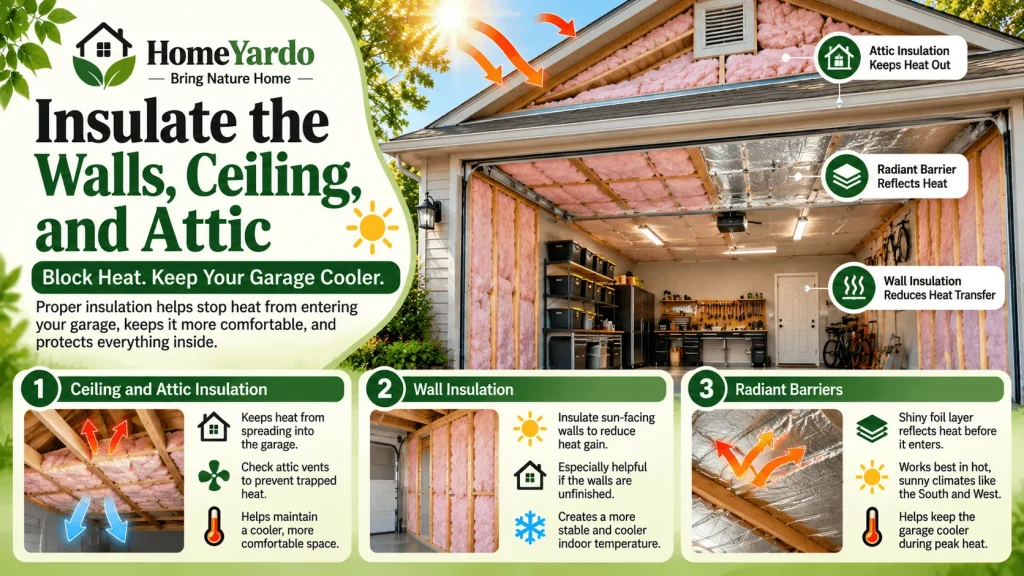
After you have taken care of the door, the roof and walls are the next places where heat can get in. A lot of garages, even the ones in new homes, have open walls. There is often little or no insulation on top. This can make the space feel hot.
If you are looking at insulation as part of a larger efficiency project, these simple home improvements explain where air sealing and insulation can make sense around garages and adjoining living areas.
Ceiling and Attic Insulation
- The heat on a hot roof can spread down into the garage for the whole day.
- If you add insulation to the garage ceiling or to the attic above, it will keep a lot of the heat out.
- Check if the attic above the garage has enough vents. A closed attic can make the garage feel even hotter.
Wall Insulation and Radiant Barriers
- Insulating walls that get a lot of sun can help a lot, especially if these walls are not finished.
- A radiant barrier is a shiny foil sheet put under the roof. It sends heat away before any comes in.
- Radiant barriers do the best job in hot places with lots of sun, like in the South and West.
Cooling Options and What They Usually Cost
If you use your garage as a gym, a workshop, or a place to hang out, you may want to add some cooling along with insulation. The numbers below are just rough averages in the U.S. These numbers change based on how big the garage is, what the weather is like, and what the local labor costs are.
Average Cost of Cooling Equipment
- Wall-mounted exhaust fan, installed: The cost is about $300 to $900
- Portable air conditioner: The price is about $300 to $700
- Window or through-the-wall AC unit: It costs about $250 to $800, and you need to add extra money for putting it in if a hole in the wall is needed
- Ductless mini-split, installed: The cost is about $2,000 to $5,000
Average Cost of Heat-Blocking Upgrades
- DIY garage door insulation kit: This can cost you about $50 to $150.
- New insulated two-car garage door, installed: You will pay about $1,500 to $4,000 for this kind of garage door.
- Garage ceiling or attic insulation, installed: It will be about $1,000 to $3,000 to have this done.
Cooling equipment runs better when you insulate the door and ceiling first. It can also cost less to operate, saving you money in the long run.
Everyday Habits That Keep Heat Down
You do not need to buy something every time. There are some easy habits that can cool down a hot garage by several degrees.
Smart Parking and Storage Habits
- Let your car cool in the driveway for 15 to 30 minutes on hot days. This will help to keep it from getting too warm.
- Move things like paint, batteries, and electronics into the house. These items can get ruined by heat.
- Keep chemicals and fuel in a cool, shady place with some air. Make sure these are not next to the wall that gets the most sun.
Reduce Heat Sources Inside
- Swap out old bulbs for LED lighting. LED bulbs give off much less heat than the old ones.
- Unplug any extra fridges or freezers if you do not need them. These give off warm air.
- Declutter areas, mainly near vents and fans. This helps for better airflow.
When to Bring in a Professional
Some cooling upgrades can be done in a weekend. Others need electrical work, changes to the building, or heavy and tight parts. Knowing the difference will help keep the project safe.
Jobs Best Left to the Pros
- Change the garage door or put in insulated panels if the door has strong springs.
- Put in a mini-split, wall AC, or set up a built-in exhaust fan.
- Add insulation to the attic if it is small or does not have enough airflow.
- Fix the door so it closes right and does not have gaps after other repairs.
Why Local Experience Matters
- Climate plays a big part in making the right choice. A garage in the hot inland valley needs more heat protection than one near the coast.
- In places like the Sacramento Valley, summer days can often be more than 100 degrees. People who need Reliable Residential Garage Door Repair will get more from technicians who know how heat affects garage doors, seals, and openers.
- A good pro will look over your whole garage door system. The expert will then tell you which upgrade gives the best results for the money you spend.
A Cooler Garage Starts With a Few Smart Moves
A garage doesn’t need to feel hot every summer. You can block heat at the door. Seal up any gaps. Add some airflow. Insulate above. These steps can help make the space feel good again. They also help keep your things safe.
Your Cool Garage Game Plan
- First, look at the insulation and seals on your garage door.
- Add some ventilation to let hot air out.
- If your roof brings in a lot of heat, insulate the ceiling or attic.
- Only think about active cooling after you have taken care of these basics.
If your garage door is letting in too much heat or does not close right, R&S Overhead Doors of NorCal can check it out. They can suggest an insulated garage door that fits your home and your budget. Get in touch with their team now. You can have a cooler garage before the next heat wave comes.
FAQ’s
Start by reducing heat entering through the garage door, roof, walls, and air gaps. Insulate the garage door and ceiling where appropriate, repair damaged weather seals, improve ventilation during cooler hours, and consider fans or mechanical cooling if the garage is regularly occupied.
Garage-door insulation can reduce heat transfer through the door panels, especially when the door receives direct sunlight. Results also depend on weather sealing, roof and wall insulation, ventilation, door orientation, and local climate.
An exhaust fan can remove accumulated hot air from the garage and replace it with outdoor air. It works best when outdoor air is cooler than the garage or when the fan is part of a planned ventilation system.
Opening the door can help when outdoor air is cooler than the garage, such as during some mornings or evenings. Leaving it open during the hottest part of the day may instead allow hotter air to enter and can create security concerns.