10 Simple Home Improvements That Can Make a Big Difference
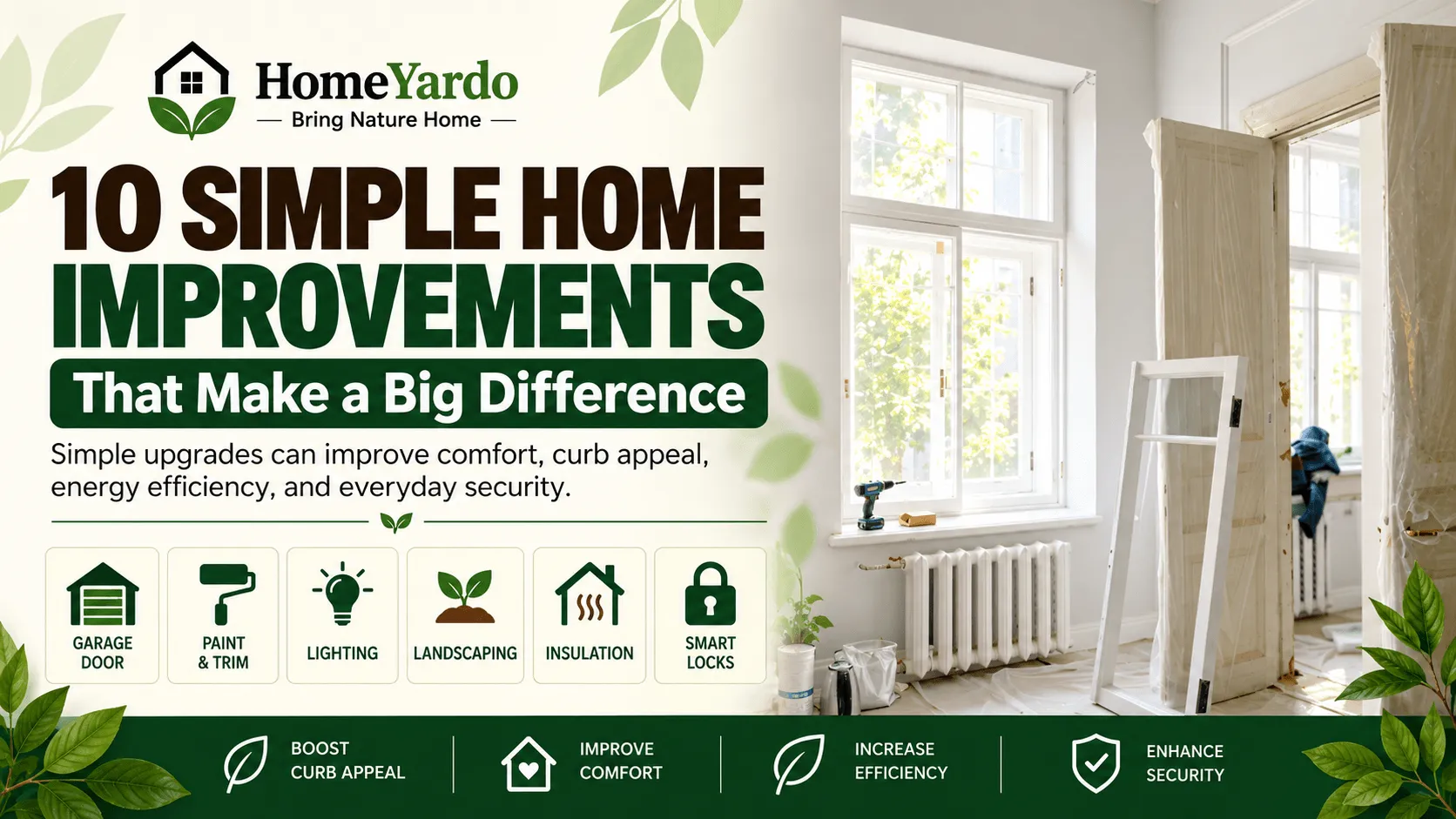
Improving your home doesn’t always require a complete renovation. Sometimes, replacing an aging garage door, refreshing exterior paint, or installing better outdoor lighting is enough to make a noticeable difference.
These simple home improvements can make your property more attractive, comfortable, secure, and easier to maintain. Some projects can be completed in a weekend, while others are better handled by professionals.
For homeowners in Salt Lake City, choosing improvements that withstand local weather is particularly important. Hot, dry summers, cold winters, snow, and seasonal temperature changes can affect doors, exterior finishes, insulation, and landscaping.
Here are ten practical upgrades worth considering, whether you want to improve curb appeal, address maintenance problems, or make everyday life more comfortable.
Upgrades That Start With Your Garage Door
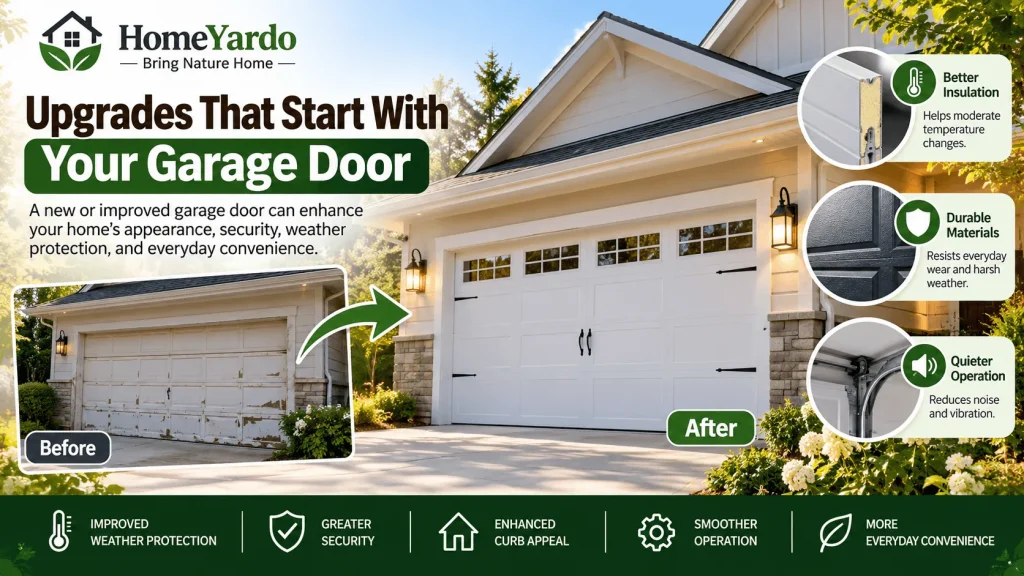
Your garage door is one of the most noticeable features of your home’s exterior. It also affects security, accessibility, weather protection, and daily convenience.
If your existing door is damaged, outdated, or difficult to operate, improving it can address several problems at once. Before replacing the entire door, it is also worth checking whether worn seals or gaps can be addressed with garage door weather stripping.
1. Replace an Aging Garage Door With an Insulated Model
Replacing an aging garage door can improve your home’s appearance while providing better weather protection.
Modern insulated models are available in different designs, materials, and insulation ratings. Choosing the right combination depends on your garage’s construction, budget, and intended use.
Consider these benefits:
- Insulated doors can help moderate temperature changes inside an attached garage.
- Modern steel doors with suitable finishes can offer good resistance to everyday wear.
- Insulated construction may reduce some operating noise and vibration.
Before purchasing a replacement, check the condition of the existing door.
A mechanically sound door with minor cosmetic damage or worn seals may only require maintenance. However, extensive panel damage, corrosion, or recurring mechanical problems can make replacement worth considering.
Remember that the insulation rating alone does not determine a garage door’s energy performance. Installation quality and effective perimeter sealing also matter.
2. Choose Professional Garage Door Installation Over a DIY Swap
Garage door installation involves more than attaching panels and connecting an opener.
The door must be correctly supported, balanced, aligned, and fitted with appropriate safety components.
Professional installation offers several practical advantages:
- Trained installers can correctly configure the spring and counterbalance system.
- Proper track alignment helps the door travel smoothly.
- Correctly fitted seals help limit drafts, moisture, and dust.
- Installation includes checking the opener and its safety features.
Garage door springs and cables operate under considerable tension. If you notice signs of spring wear or failure, see this guide to garage door spring replacement before attempting any adjustment yourself. Incorrect adjustments can cause serious injuries.
While homeowners can perform some routine maintenance, replacing an entire door and adjusting its high-tension components should generally be left to qualified installers.
Choose a door design that complements your home’s exterior, but prioritize safe operation and suitable materials.
3. Update Garage Door Hardware and Windows
If your garage door is structurally sound and operates correctly, small cosmetic changes may improve its appearance without requiring replacement.
Decorative handles, hinges, and carefully selected window designs can change how the door looks.
Consider these options:
- Choose decorative hardware that complements your front door and exterior trim.
- Add compatible garage door windows to introduce natural light.
- Replace damaged decorative components with suitable alternatives.
Before adding windows, confirm that the door manufacturer permits the modification and that the glazing meets applicable safety requirements.
Decorative hardware should never interfere with the door’s moving components, tracks, or safety systems.
Exterior Improvements That Boost Curb Appeal
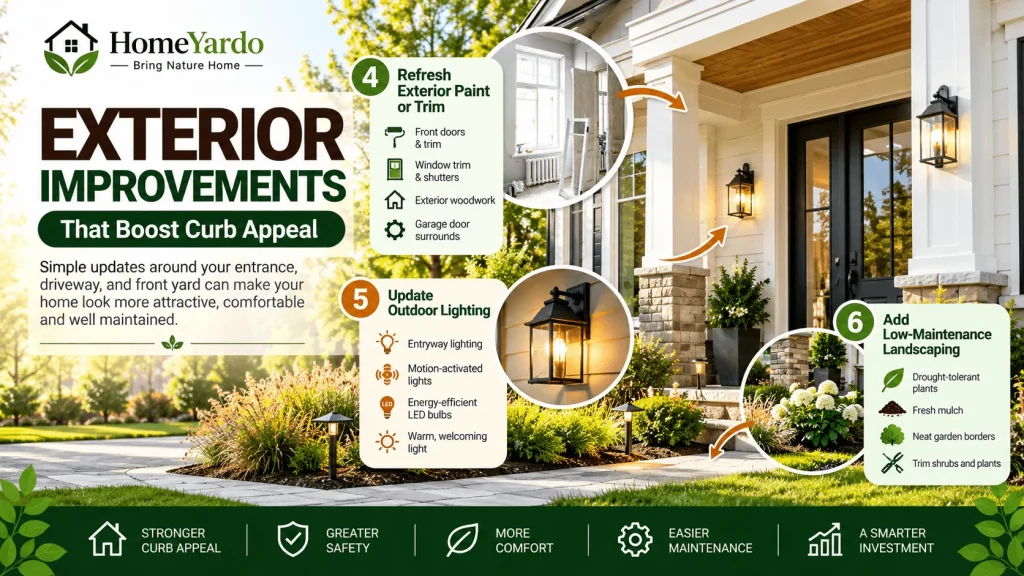
Your home’s exterior creates its first impression. Fortunately, improving curb appeal doesn’t always require expensive landscaping or major construction.
A few carefully chosen updates around your entrance, driveway, and front yard can make the property look more attractive.
4. Refresh Exterior Paint or Trim
Fresh exterior paint can make faded surfaces look cleaner and help protect suitable materials against weather exposure.
You don’t necessarily need to repaint the entire house.
Focus on areas that show the most wear, including:
- Front doors
- Window trim
- Shutters
- Exterior woodwork
- Garage door surrounds
Choose colors that complement your home’s existing siding, roof, and landscaping.
Preparation matters just as much as color selection. Clean surfaces, remove loose paint, address moisture damage, and use exterior finishes compatible with the underlying material.
In Salt Lake City, schedule exterior painting during weather conditions that meet the paint manufacturer’s temperature and curing requirements.
5. Update Outdoor Lighting Near the Entry and Driveway
Good outdoor lighting makes entrances easier to navigate after dark and can improve the appearance of your home.
Start with areas where lighting offers the greatest practical benefit.
These usually include the front entrance, driveway, garage, pathways, and steps.
Consider the following improvements:
- Install suitable weather-rated fixtures beside exterior doors.
- Use motion-activated lighting near the garage or driveway.
- Replace inefficient bulbs with compatible LED alternatives.
- Choose warm lighting where you want a welcoming appearance.
Position lights carefully to illuminate walking areas without creating unnecessary glare.
When adding new wiring or replacing fixtures that require electrical modifications, hire a qualified electrician.
6. Add Low-Maintenance Landscaping
Landscaping is another way to improve your home’s exterior without undertaking major construction.
For Salt Lake City properties, plants suited to Utah’s climate can help reduce unnecessary watering and ongoing maintenance.
Start with a few practical changes:
- Choose drought-tolerant plants suitable for your specific growing conditions.
- Refresh mulch around appropriate planting beds.
- Remove weeds and maintain neat garden borders.
- Trim shrubs that obstruct walkways, entrances, or exterior lighting.
Use plants that suit the available sunlight, soil, and irrigation conditions.
Remember that even drought-tolerant plants often need regular watering while becoming established.
Keep vegetation away from garage door tracks, exterior vents, and other areas that require maintenance access.
Energy-Efficiency Improvements Worth Making
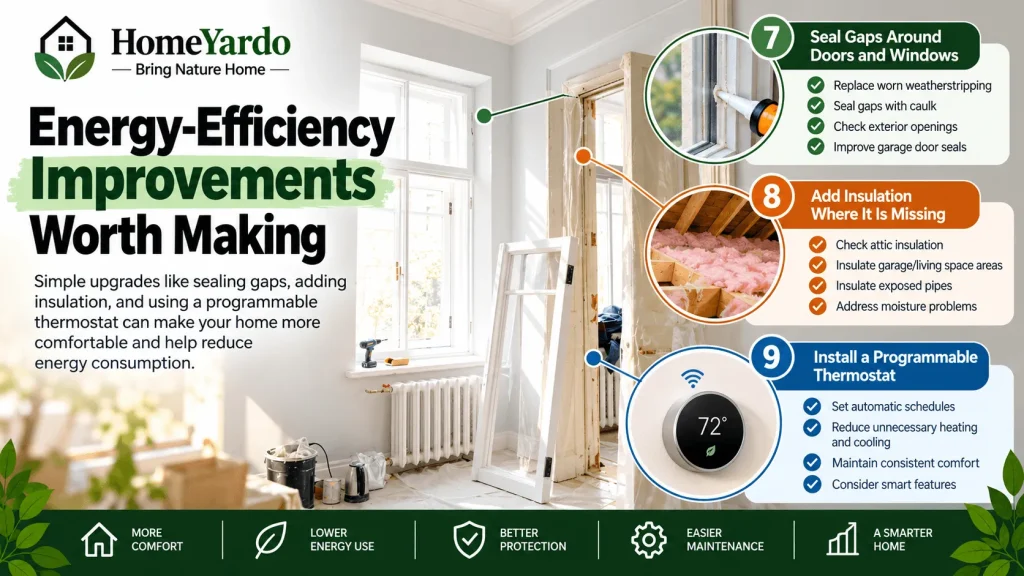
Some home improvements offer benefits that aren’t immediately visible.
Sealing gaps, improving insulation, and adjusting temperature controls can make living spaces more comfortable while potentially reducing energy consumption.
In a climate with hot summers and cold winters, these improvements deserve particular attention.
7. Seal Gaps Around Doors and Windows
Small gaps around exterior openings can allow unwanted outdoor air to enter your home.
During winter, drafts may make rooms uncomfortable. During summer, unwanted air leakage can increase the demand on your cooling system.
Weather sealing is often a relatively affordable place to begin.
Focus on these areas:
- Replace damaged weatherstripping around exterior doors.
- Seal suitable stationary gaps around window and door frames with compatible caulk.
- Inspect garage door bottom and perimeter seals for damage.
- Check for visible gaps around accessible exterior openings.
Use weatherstripping for appropriate moving joints and caulk for suitable stationary gaps.
Don’t seal intentional drainage openings or ventilation components.
Garage doors deserve particular attention because worn bottom seals and damaged perimeter weatherstripping can allow dust, moisture, and outside air into the garage.
For larger or persistent air leakage problems, a professional home energy assessment can help identify where improvements are needed.
8. Add Insulation Where It Is Missing
Insulation helps limit unwanted heat transfer between your home and its surroundings.
However, adding insulation without checking existing air leaks and moisture problems may leave important issues unresolved.
Before starting, inspect the areas most likely to need attention.
Consider these improvements:
- Check whether your attic has sufficient insulation for your climate.
- Inspect insulation around accessible areas separating attached garages from living spaces.
- Insulate appropriate exposed pipes in vulnerable unheated locations.
- Address existing moisture problems before installing new insulation.
An attic inspection can reveal uneven coverage, disturbed insulation, or areas that need further assessment.
For homeowners uncertain about their existing insulation, a qualified contractor or energy assessor can help identify suitable improvements.
Avoid covering recessed fixtures, ventilation openings, or other components without following the relevant safety requirements.
9. Install a Programmable Thermostat
A programmable thermostat makes it easier to manage indoor temperatures according to your daily routine.
Instead of adjusting the heating or cooling system manually throughout the day, you can create a schedule that reflects when people are usually home, away, or asleep.
Possible advantages include:
- Automatic temperature adjustments based on your schedule.
- Reduced unnecessary heating or cooling when appropriate.
- Greater consistency in everyday temperature management.
Some smart thermostats offer additional features, including remote access through smartphone applications.
Before purchasing a thermostat, confirm that it is compatible with your heating and cooling equipment.
Heat pumps and other specialized systems may require different control strategies. Avoid assuming that aggressive temperature setbacks will save energy with every system.
A suitable thermostat can be a convenient upgrade, particularly when its settings match your household’s routine.
Security and Safety Upgrades for Peace of Mind
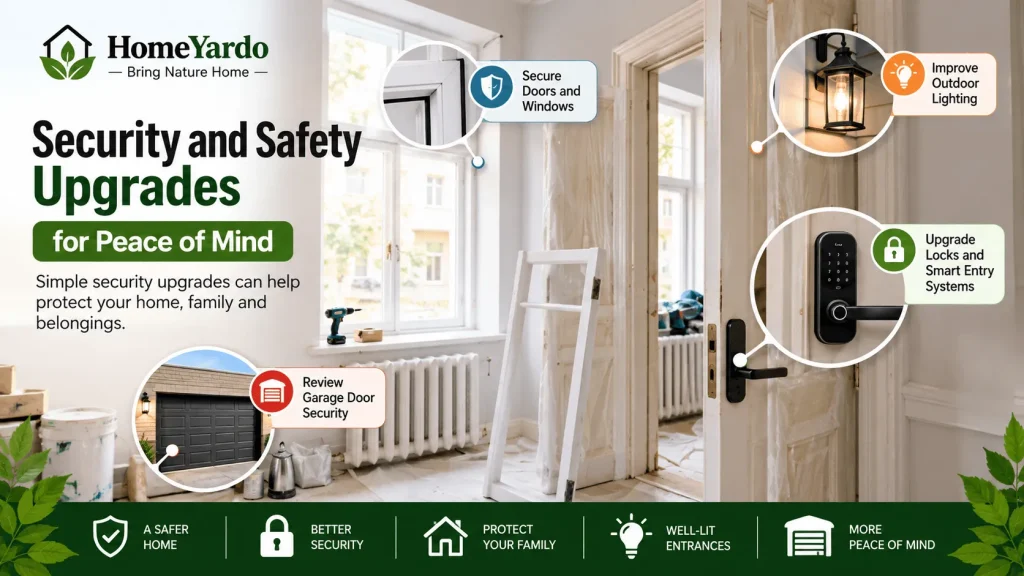
Home improvements aren’t limited to appearance and energy efficiency.
Updating entry hardware and access controls can help address everyday security concerns, particularly when existing locks are worn or outdated.
10. Upgrade Locks and Smart Entry Systems
Review your home’s main entry points, including exterior doors and the garage.
Small security improvements may include:
- Replacing worn exterior door locks with suitable deadbolts.
- Installing compatible smart locks that provide keyless entry.
- Reviewing garage door opener security features.
- Improving lighting around frequently used entrances.
Some modern garage door openers use rolling-code technology, which changes the transmitted access code between operations.
However, no single security feature eliminates every access risk.
Protect smart-home accounts with strong passwords, enable additional account security where available, and keep supported devices updated.
Before purchasing connected equipment, also consider what happens during a power outage or internet interruption.
Choose systems that suit your actual security needs rather than paying for features you are unlikely to use.
Warning Signs It Is Time for an Upgrade
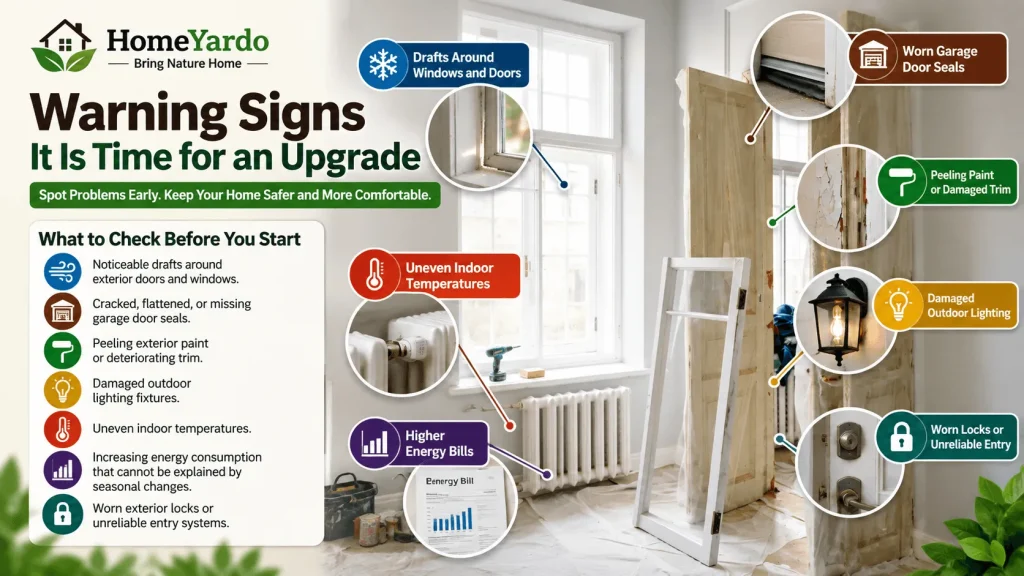
Not every home improvement needs to happen immediately.
Start by identifying areas where wear, reduced performance, or existing damage affects your daily life.
Some problems call for simple maintenance, while others require professional inspection.
What to Check Before You Start
Walk around your home and inspect the areas discussed above.
Look for these warning signs:
- Noticeable drafts around exterior doors and windows.
- Cracked, flattened, or missing garage door seals.
- Peeling exterior paint or deteriorating trim.
- Damaged outdoor lighting fixtures.
- Uneven indoor temperatures.
- Increasing energy consumption that cannot be explained by seasonal changes.
- Worn exterior locks or unreliable entry systems.
Pay particular attention to your garage door.
Grinding noises, irregular movement, visible cable damage, or sudden changes in operating performance can indicate problems that need professional attention.
Do not attempt to adjust garage door springs or cables yourself.
If your garage door is experiencing these problems, a Garage Door Repair in Salt Lake City, UT technician can inspect the system and help determine whether repair or replacement is appropriate.
An inspection can help identify worn components, damaged seals, alignment issues, and potential safety concerns.
Addressing problems when they appear may help prevent additional wear, although actual repair costs depend on the condition of the system.
How to Choose Which Home Improvements to Do First
You don’t have to complete all ten improvements at once.
The most practical approach is to prioritize work according to your home’s condition, your available budget, and the problems you want to solve.
Start with safety concerns and problems that could allow further property damage.
Next, consider improvements that address everyday discomfort or recurring maintenance issues.
Cosmetic upgrades can usually follow once urgent repairs have been addressed.
Before committing to expensive work, request written estimates from qualified contractors where necessary. Compare the proposed materials, installation scope, warranties, and any relevant permit requirements.
Planning projects in advance can also help you avoid paying for the same preparation or finishing work more than once.
Small Changes, Bigger Impact
You don’t need a complete renovation to make your home more attractive or comfortable.
Replacing worn garage door components, refreshing exterior finishes, improving lighting, sealing drafts, and upgrading everyday security can all contribute to a better-maintained property.
For Salt Lake City homeowners, choosing materials and improvements suited to the local climate can help make those upgrades more practical over time.
Start with the problems that affect your home most and work through the remaining improvements as your budget allows.
If you’re considering a garage door replacement or need professional assistance, Pioneer Overhead Door works with homeowners in the Salt Lake City area.
Contact the company to discuss your garage door’s condition, available options, and suitable installation or repair services.
FAQ’s
Painting exterior trim, replacing compatible light fixtures or bulbs, installing suitable weatherstripping, refreshing mulch, and updating decorative hardware are relatively straightforward improvements. The difficulty depends on the property’s condition and the work involved.
Exterior painting, suitable landscaping, updated garage doors, and improvements that address existing maintenance problems may contribute to property appeal. Any increase in market value depends on local demand, installation quality, project costs, and the home’s overall condition.
An insulated garage door may be useful for an attached garage, especially where temperature changes affect adjacent living spaces. Its benefits depend on the garage’s construction, existing insulation, air sealing, and intended use.
Yes. Appropriate air sealing, insulation improvements, and efficient temperature controls can reduce unnecessary energy consumption. Actual savings vary according to the home’s condition, climate, equipment, and household behavior.