What To Check First When Taking Over An Older Home

You have many questions when you take possession of an inherited house. Memories from your family will come with that home but maybe old plumbing, bills or repairs that weren’t taken care of.
When you want to sell your inherited house, this can play a big role. Before you begin making repairs, learn more about who has control over the home, what you need to do and what it costs to maintain the home.
Start here.
Things To Check On An Inherited House
- Who owns the home, are the bills up to date and does it have insurance?
- Is the home secure and protected from harm?
- Are there major issues with the roof, plumbing, electrical, etc.?
- What does it cost to fix the problems you have?
Figure Out Who Has Control Of The House

You want to know who can take control of the house before you hire anyone to do work on it. Just because your name is on the will doesn’t mean you can sell the home. It depends on who owns it and your state’s laws. Depending on ownership and local law, probate or action by an authorized executor or another legally appointed estate representative may be needed first.
Collect information on the home, deed, will/trust, mortgage, taxes, repairs, etc. If there are multiple heirs, decide on one person to contact after finding out who has control of the estate.
Are the mortgage, property tax, and utility bills up to date? Reach out to your mortgage lender and find out what they require of you and how to pay them.
Insurance may not cover your home if it sits vacant for an extended period of time. Notify your insurance provider of the death of your loved one and the status of the home. Ask what they will cover for the home.
You can use this information to help you decide what you want to do with the home. For some owners, the priority is simple: sell inherited house fast. They can compare an as-is offer to selling on the market and making cosmetic repairs to the home. Calculate what you would receive from selling and factor in repairs, closing costs, etc.
Secure The Home
One leak can destroy an uninhabited home.
Make sure all exterior doors, windows and garage doors are closed and locked. Know who has access to the home; if you need locks changed speak to whoever has control of the home. Have someone check on the home periodically if you are not nearby.
Know where your water shut-off valve and breaker box are located. If you smell gas, evacuate the home without turning on/off any appliances, lights, phones, etc. Call the fire department, police, or your gas company from outside the home. Be careful of electrical wires, open water, etc. Call an electrician or plumber if necessary.
Check underneath sinks, toilets, water heater, and anywhere else water may leak. Are there any stains on the ceiling or wet spots on the floor? Take pictures to monitor if the stain grows larger.
Consider the time of year you took possession of the home. You may need to have heat running or do some winterization to your home to prevent pipes from freezing. Do not turn all utilities off without considering the weather, condition of your home, and what your insurance company requires of you.
Is Your Home Safe To Live In?
Just because your home is older doesn’t mean it isn’t safe. However, you may not see all issues by doing a quick look around your house.
Test your smoke detector and carbon monoxide detector, and replace them if needed. If you have any outlets that spark, feel hot, have burn marks, or trip your breakers, have a certified electrician take a look at them.
If your home was built prior to 1978 you want to check for lead-based paint. Lead is most commonly found on older houses, especially around windows, doors, trim, etc. Do not sand or scrape paint that may have lead. Arrange appropriate testing or lead-safe professional work before disturbing suspect paint.
Asbestos can also be found in older materials of your home. You cannot visually identify asbestos; if it’s not broken, leave it be. If you need to do work around materials that may have asbestos, contact an asbestos-certified professional to test it.
Your home may smell odd if it has been sitting for months. Find out if there is any standing water or smells of mildew. You want to track down why there is moisture in your home before painting over it.
Check Major Repairs That Need To Be Done
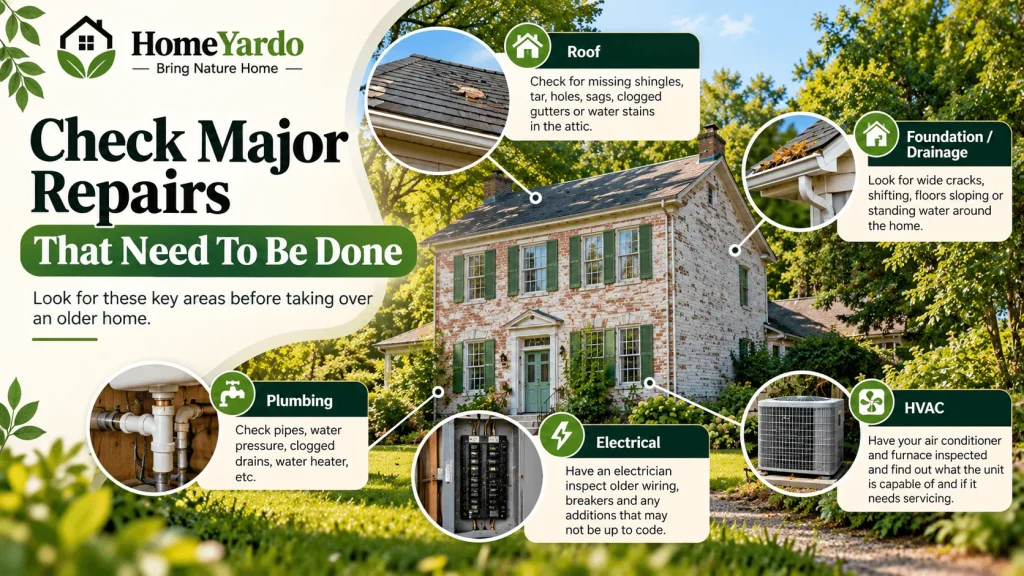
There will be smaller repairs you need to make but here are some you should be aware of before taking on an inherited house.
According to the National Association of Home Builders, about 47% of owner-occupied homes in the United States were built before 1980, based on 2024 American Community Survey data. Your home may need major repairs, but you don’t know what until you look into it further.
Here are some areas that you want to be aware of that can be expensive to repair.
- Roof – Look for any missing shingles, tar, holes, sags, clogged gutters, or water stains in your attic.
- Foundation/Drainage – Look for wide cracks, shifting, floors sloping, or standing water around the home.
- Plumbing – Pipes, water pressure, clogged drains, water heater, etc.
- Electrical – Hire an electrician to inspect your home, especially if you have older wiring, breakers, or have added things that aren’t up to code.
- HVAC – Have your air conditioner/furnace inspected, find out what the unit is capable of, and if it needs to be serviced.
You can always get a home inspection done to help you decide what repairs to make. Ask what is old in your home, when certain things were serviced, etc. Once you find issues, hire a professional to come look at the specific item that needs repair. Something that looks new may not be; something that looks old may have plenty of life left.
How Much Does It Cost To Keep Your Home?
After learning what repairs you will need, figure out what you want to fix right away and what you can wait on.
If you have a water line leaking, you want to repair that now. If your home has ugly colors, that isn’t as urgent as the previous example. Determine what is a must-fix, then get quotes from contractors on the bigger repairs. Have them let you know what that will include, or if there may be additional costs that arise.
Also, factor in property tax, insurance, utilities, lawn care, mortgage, etc. If your home is far away, you will have to drive there and spend more money to make sure everything is ok.
Jot these costs down, along with the repairs you need, to determine what you want to do with your home.
What Can I Do With My Home?
It depends on you, and the situation you’re in. You may be able to live in the home, rent it out or sell it, with any sale proceeds handled through the estate where required before a distribution to heirs.
If you plan on living there, you want to make sure your home is safe and comfortable, and know what repairs you will need to make within the next few years. Renting your home is another option, but you have to consider what tenants will do to your home, local codes, and what you can do while tenants are living there.
Selling your home is an option if you want to move out, but want to make sure your home is in good condition for your buyer. Or, if your home has major repairs that you can’t tackle yourself, you can sell your home as-is. You will have different offers, costs, and timelines to consider when selling your home.
If there are multiple people involved, you need to know who can sell the home. Talk to an estate attorney or tax advisor to find out more information before making your decision.
Key Takeaways
You have a lot to consider when inheriting a home, especially if it’s older. Here are some tips to remember.
Don’t try to make it look brand new; secure your home, learn about what needs to be repaired, and find out what your options are for the home.
Know who has control, fix what is unsafe, and determine what you want to do with your home once you have your quotes for repairs.
FAQ’s
Start by confirming who has legal authority over the property, whether insurance remains active, and whether the mortgage, taxes and essential utilities are current. Then secure the property and check for urgent safety issues, leaks, weather exposure and major system problems.
A professional home inspection can be useful, particularly when you do not know the property’s maintenance history. It can identify visible concerns involving the roof, structure, plumbing, electrical system, HVAC, moisture and other components, with specialists brought in when needed.
It depends on ownership, the estate arrangement and state law. The person named in a will is not necessarily automatically authorized to make every decision for the property. Confirm who has legal authority before authorizing substantial work or entering contracts.
Do not assume the existing policy will continue unchanged. The executor, personal representative, owner or other authorized person should contact the insurer promptly, explain that the owner has died and disclose whether the property is occupied or vacant. Coverage requirements vary by insurer and policy.