Essential Things To Consider Before Moving Into A New Home

Moving into a new home can feel like a fresh chapter. You have a new space, different routines, and an opportunity to create a home that fits the way you live now. Yet the weeks leading up to moving day can quickly become stressful when important tasks are left until the last minute.
Money, paperwork, packing, utilities, travel arrangements, children, pets, and the condition of the new property all need attention. A clear plan helps you handle these tasks in a sensible order and arrive feeling prepared rather than overwhelmed.
If the bathroom, kitchen, or other parts of the property will eventually become part of a larger renovation, understanding how residential remodeling is planned can also help you think ahead about budgets, contractors, permits, and scheduling after the move.
Plan the Move to Your New Address

Every relocation starts with a plan, but the amount of preparation depends heavily on how far you are traveling. A move across town may be completed within a day, while moving several states away can involve longer travel times, storage arrangements, delivery windows, overnight stops, and more careful coordination.
When a move involves a significant distance, decide early whether you will handle everything yourself or hire professional help. Consider how furniture, valuables, fragile belongings, vehicles, pets, and essential items will reach the new address.
If you are preparing for moving long distance, an experienced team can build a custom plan around your budget and handle packing, storage, and delivery with care. With that support in place, you can give more attention to your family and the transition waiting at the other end.
If your move crosses a significant distance, this long-distance moving checklist can also help you organize paperwork, packing, utilities, travel timing, and the first days at your new address.
Confirm important details well before moving day. Know when movers will arrive, when belongings should be delivered, how you will travel, and what you will need if your possessions arrive later than you do.
Set a Realistic Moving Budget
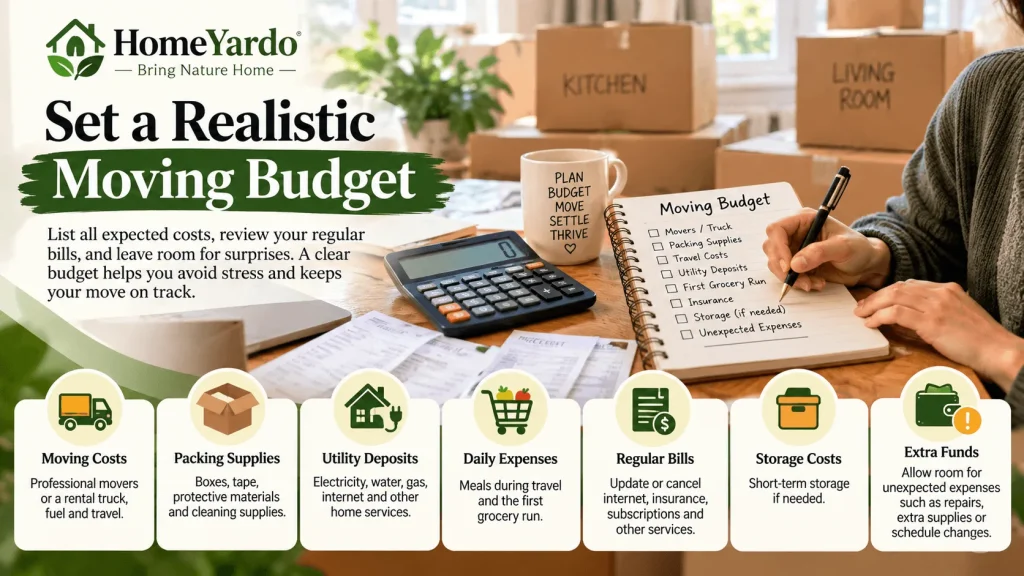
Money is often the first source of worry during a relocation, so it helps to build a clear budget well before your departure date. Start by listing every expense you can think of, from packing supplies and travel to utility deposits and the first grocery run in your new kitchen. Leave room for surprises, because small costs tend to appear when you least expect them.
Leave some room for unexpected expenses. Extra packing supplies, schedule changes, repairs, storage extensions, or last-minute travel needs can appear even when the move is carefully organized.
Review your regular bills as well. Some services may need to be canceled, while others can be transferred to the new address. Check internet plans, utilities, home services, subscriptions, insurance, and any memberships tied to your current location.
A simple spreadsheet, notebook, or budgeting app can keep everything in one place. A written timeline can also make the budget easier to manage, and our guide to planning a smooth household move covers mover arrangements, packing, scheduling, access, and moving-day preparation.
Declutter Before You Start Packing

Moving items you no longer want creates extra work at every stage. You have to sort them, pack them, transport them, unload them, and eventually find space for them again.
Before packing, go through the home one room at a time. Look at clothing that is no longer worn, duplicate kitchen items, broken electronics, unused furniture, outdated paperwork, toys, decorations, and anything else that no longer serves a purpose.
Create three simple groups:
- Keep
- Donate or give away
- Discard or recycle
Sell valuable items if you have enough time before the move. Donate usable belongings to local organizations or pass them to friends and relatives who can use them.
Reducing the amount you move may also reduce the number of boxes, packing materials, storage space, and transportation capacity you need. More importantly, it means fewer unnecessary belongings waiting for you when you begin unpacking.
Organize Important Documents and Address Changes
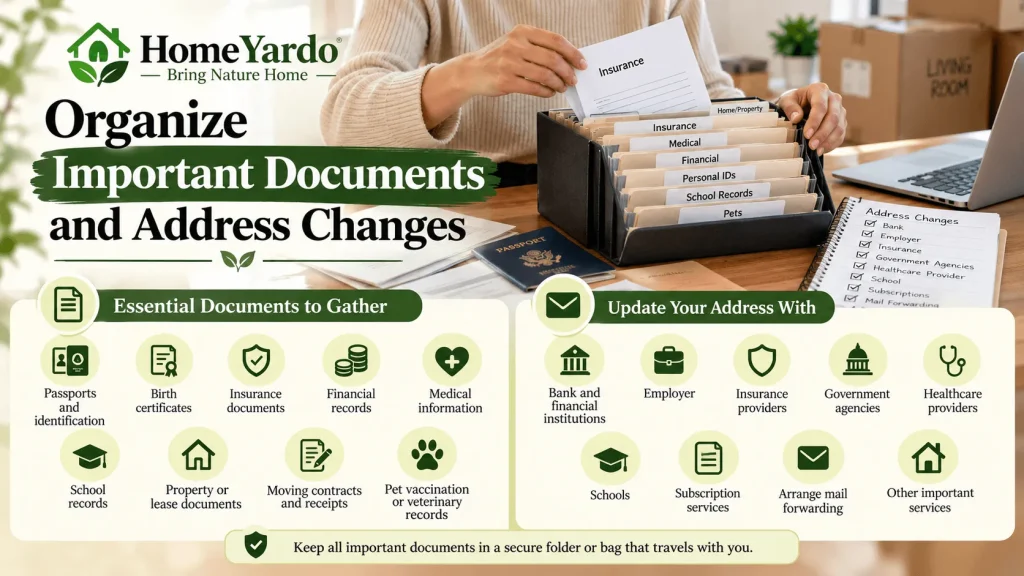
Paperwork may not be the most exciting part of a relocation, but it is one of the most important. Gather your essential records, such as:
- Passports and identification
- Birth certificates
- Insurance documents
- Financial records
- Medical information
- School records
- Property or lease documents
- Moving contracts and receipts
- Pet vaccination or veterinary records where applicable
Keep difficult-to-replace documents in a secure folder or bag that travels with you.
Your address will also need updating with organizations that send important correspondence. Depending on your circumstances, this may include your bank, employer, insurance providers, financial institutions, government agencies, healthcare providers, schools, and subscription services.
Arrange mail forwarding where available so correspondence sent to your old address does not disappear during the transition.
If children are changing schools, contact the new school early enough to understand enrollment requirements and transfer any necessary records.
Prepare Children and Pets for the Move

Moving affects every member of the household differently. Adults may be focused on work, finances, and logistics, while children may be thinking about friends, school, familiar routines, or whether their new room will feel comfortable.
Talk about the move before moving day. Explain what will change and what will stay familiar.
Help Children Adjust to the Change
Give children age-appropriate opportunities to participate. They might choose a paint color, decide where a favorite toy will go, help label boxes, or pick a family activity to do after arrival.
Try to keep familiar routines where possible. Regular meal times, bedtime routines, and familiar belongings can make a new environment feel less unfamiliar.
Avoid packing every favorite item deep inside the moving truck. Keep a few familiar toys, books, blankets, or comfort items close during the journey and first night.
Plan for Pets During Moving Day
Pets can become unsettled when boxes appear, furniture disappears, and doors remain open for long periods.
Keep food, medication, water bowls, bedding, leads, carriers, litter supplies, and familiar toys accessible.
During loading and unloading, keep pets in a secure area so they cannot slip through an open door. If the journey involves overnight accommodation or long travel periods, confirm pet-friendly arrangements in advance.
Once you arrive, give pets time to become familiar with the new environment gradually rather than giving them immediate access to every unfamiliar room or outdoor area.
Update identification details, microchip information, licenses, or veterinary records when required.
Get the New Home Ready Before Moving Day

Walking into a prepared home makes the first day much easier.
Where possible, arrange for essential utilities to be active before arrival. These may include:
- Electricity
- Water
- Gas where applicable
- Internet
- Waste collection
- Heating or cooling services
Confirm activation dates rather than assuming services will automatically continue from the previous occupant.
If you have access to the property beforehand, consider cleaning while rooms are empty. Floors, cupboards, closets, bathrooms, and other surfaces are much easier to reach before furniture and boxes fill the space.
Check whether doors and windows close securely. Change or rekey exterior locks when appropriate, especially if you do not know who may still have copies of old keys.
Test major systems and note anything requiring prompt attention. Check visible plumbing for leaks, make sure heating or cooling is operating, and identify repairs that will be harder to reach once furniture is in place.
Once the practical setup is handled, thinking about new home design can help you arrange storage, furniture, lighting, and everyday spaces around the way your household actually lives.
Complete a Basic New-Home Safety Check

Safety checks do not need to become a major project, but a few basic tasks are worth completing as soon as possible.
Test smoke alarms throughout the home. Check carbon monoxide alarms where they are installed or required. Replace batteries or outdated devices when necessary.
Locate the main water shutoff so you know how to stop the supply quickly if a pipe or fixture leaks. Find the electrical panel and make sure you can access it without moving furniture or stored boxes.
Check doors, windows, stairs, railings, exterior lighting, and obvious trip hazards. If the property has a garage, pool, fireplace, security system, or other special features, learn how they operate rather than waiting until something goes wrong.
Homeowners with young children or pets may need additional precautions such as stair gates, cabinet locks, window safeguards, secure fencing, or safe storage for cleaning products and medications.
Pack a First-Night Essentials Bag
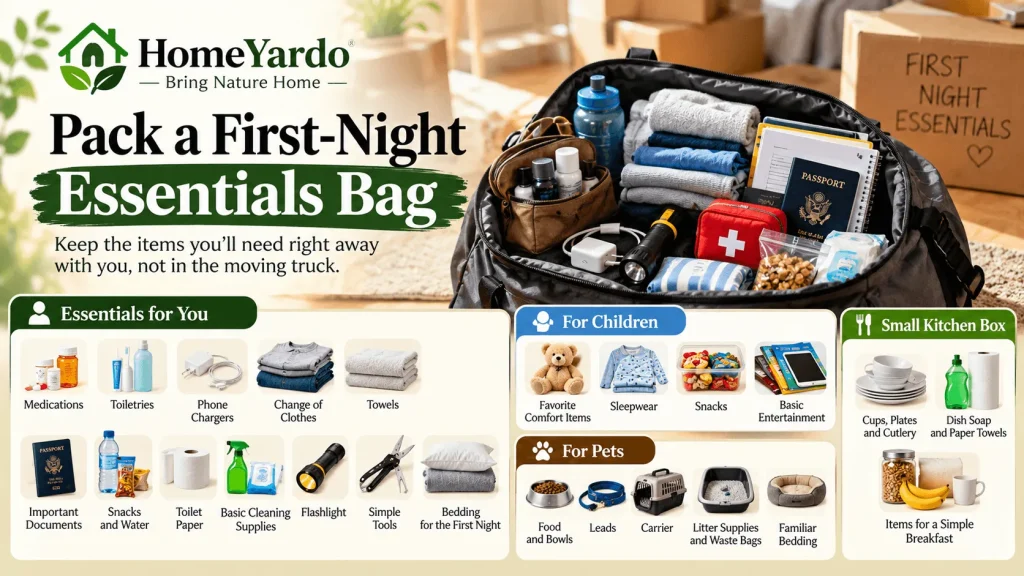
Even an organized move can leave you surrounded by boxes when you need a toothbrush, phone charger, or clean clothes.
Pack a separate essentials bag or box that stays with you rather than going into the main moving shipment.
Include items such as:
- Medications
- Toiletries
- Phone chargers
- A few changes of clothes
- Towels
- Important documents
- Snacks and water
- Toilet paper
- Basic cleaning supplies
- A flashlight
- Simple tools
- Bedding for the first night
If children are traveling with you, keep their favorite comfort items, sleepwear, snacks, and basic entertainment easy to reach.
For pets, prepare food, bowls, medication, leads, carriers, litter supplies, waste bags, and familiar bedding.
It can also help to prepare a small kitchen box containing cups, plates, cutlery, dish soap, paper towels, and anything needed to make a simple breakfast the next morning.
Decide What to Unpack First
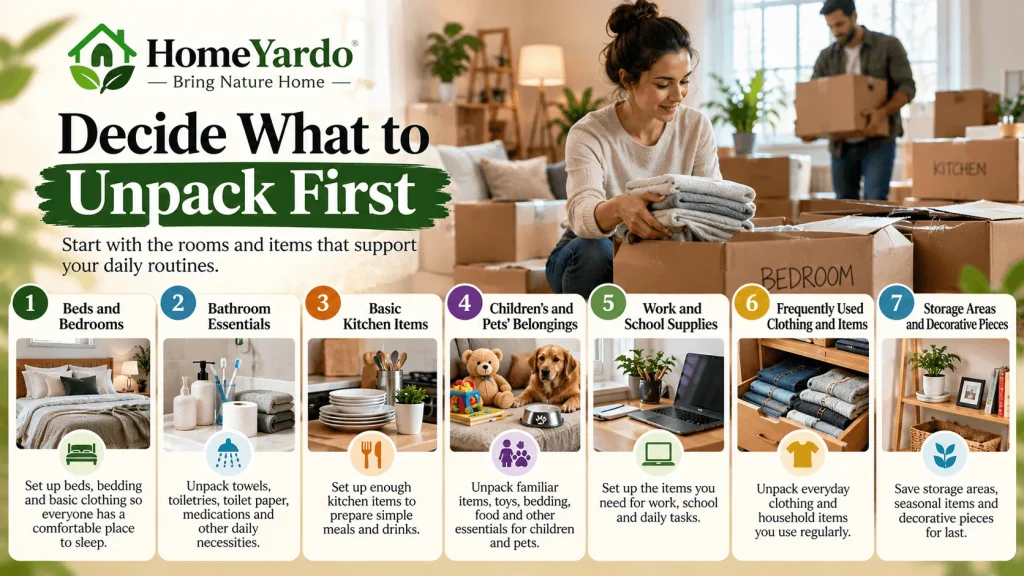
Trying to unpack the entire house at once usually creates more disorder.
Start with the rooms and items that support normal daily routines.
Bedrooms are often a good first priority because everyone needs somewhere comfortable to sleep. Set up bedding and basic clothing before worrying about decorative items.
Next, make sure the bathrooms have towels, toiletries, toilet paper, medications, and other daily necessities.
Set up enough of the kitchen to prepare basic meals and drinks. You do not need every appliance, serving dish, and storage container unpacked immediately.
Then focus on items needed for work, school, children, and pets.
A practical unpacking order might look like this:
- Beds and bedrooms
- Bathroom essentials
- Basic kitchen items
- Children’s and pets’ familiar belongings
- Work and school supplies
- Frequently used clothing and household items
- Storage areas and decorative pieces
Take your time with belongings that do not affect everyday routines.
Make the New House Feel Like Home

A house rarely feels completely familiar on the first day. That feeling develops as ordinary routines return and the space begins to reflect the people living there.
Start with the rooms you use most. Arrange furniture around how you actually move through the space instead of trying to make every room look finished immediately.
You do not need to decorate everything at once. Our guide to creating a cohesive home interior explains how repeated colors, materials, finishes, and sightlines can gradually connect different rooms.
Personal belongings can make unfamiliar spaces feel comfortable quickly. Photographs, artwork, books, plants, familiar furniture, and keepsakes can help create a sense of continuity between the old home and the new one.
As you unpack meaningful belongings, these ideas for how to make your home personal and cohesive can help you add photographs, artwork, keepsakes, and furniture without making the rooms feel cluttered.
Getting comfortable also means learning what surrounds the house. Find the nearest grocery store, pharmacy, healthcare facility, fuel station, park, and other places your household is likely to use.
Learn local trash and recycling schedules and introduce yourself to neighbors when the opportunity feels natural.
These small routines gradually turn an unfamiliar address into a place that feels like home.
New Home Moving Checklist
A simple checklist can prevent small but important tasks from disappearing during a busy move.
Before Moving
- Set your moving date.
- Decide how the move will be handled.
- Build a realistic budget.
- Declutter unwanted belongings.
- Gather important records.
- Update your address.
- Arrange mail forwarding where available.
- Schedule utilities at the new home.
- Confirm school, childcare, or work arrangements.
- Prepare children and pets.
- Pack a first-night essentials bag.
- Confirm mover, truck, storage, or travel arrangements.
Before Entering the New Home
- Clean empty rooms where possible.
- Confirm essential utilities are working.
- Change or rekey locks when appropriate.
- Test smoke and carbon monoxide alarms.
- Locate the main water shutoff.
- Locate the electrical panel.
- Check doors and windows.
- Note urgent repairs.
- Confirm heating and cooling systems are operating.
During the First Few Days
- Set up beds.
- Organize bathroom essentials.
- Unpack basic kitchen supplies.
- Check delivered belongings for missing or damaged items.
- Update any remaining services or accounts.
- Establish routines for children and pets.
- Learn the neighborhood.
- Work through remaining boxes gradually.
Final Takeaway
Filling boxes is just one aspect of getting ready to move into a new house. When practical details are taken care of early on, moves typically go more smoothly: the budget is reasonable, superfluous items are taken out, crucial documents are kept accessible, utilities are set up, and the new property is prepared before the family moves in.
Children, pets, first-night necessities, and basic home safety should all receive extra attention. After taking care of those priorities, unpack the areas that facilitate daily living and let the remainder of the house gradually come together.
A new beginning doesn’t have to be hurried. Being well-prepared allows you more time to acclimate, become familiar with your surroundings, and make a new address feel like home.
FAQ’s
Create a moving budget and timeline, declutter your belongings, organize important documents, update your address, arrange utilities, prepare children and pets, check the new property, and keep first-night essentials separate from the main moving shipment.
The right amount of time depends on the distance, household size, work and school commitments, and how much needs to be packed. Starting several weeks before moving day usually provides more room for decluttering, paperwork, utility arrangements, packing, and unexpected changes.
Try to have essential services such as electricity and water active before arrival. Depending on the property, you may also need gas, internet, waste collection, heating, cooling, or other household services.
Check exterior locks, smoke alarms, carbon monoxide alarms where applicable, visible plumbing, doors, windows, heating and cooling systems, and any known repairs. You should also locate the main water shutoff and electrical panel.