Studio Apartments in Tokyo: How to Choose the Right Location, Space and Budget
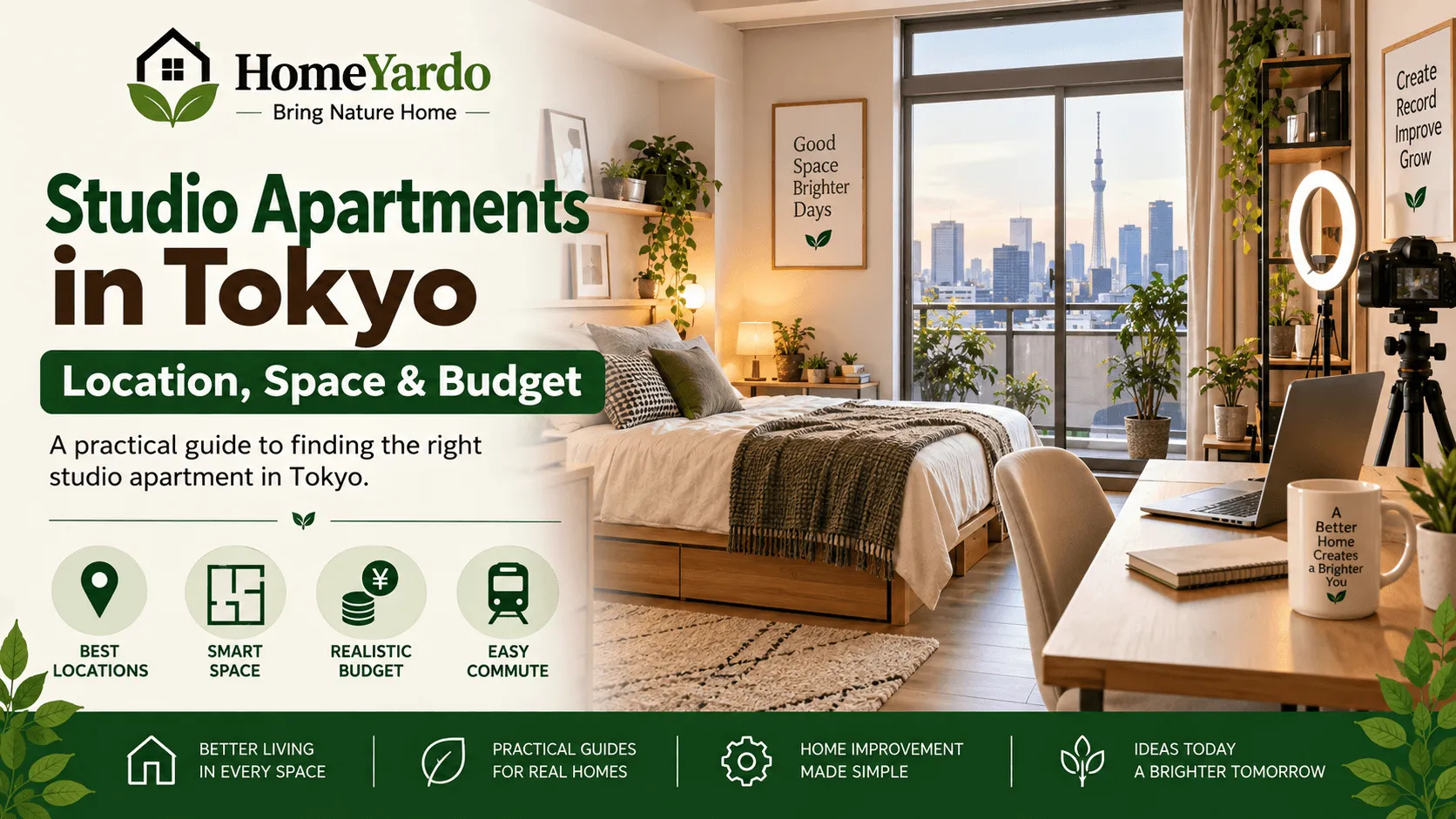
Finding the right apartment in Tokyo involves more than comparing rental prices and available floor space. Your neighborhood, daily commute, apartment layout, building amenities, and overall housing expenses all influence how comfortable your living experience will be.
Tokyo offers numerous residential options, ranging from compact apartments in busy commercial districts to relatively spacious properties in quieter neighborhoods. However, navigating the rental market can be challenging, particularly for newcomers unfamiliar with Japanese property classifications and rental agreements.
When finding studio apartments in Tokyo, start by identifying your priorities. Consider your preferred location, acceptable commuting time, available budget, and essential apartment features. Understanding how these factors work together helps narrow your search and avoid unsuitable properties.
This guide explains how to evaluate neighborhoods, transportation accessibility, apartment layouts, building amenities, and housing costs before signing a rental agreement.
Evaluating Neighborhood Characteristics and Local Atmosphere
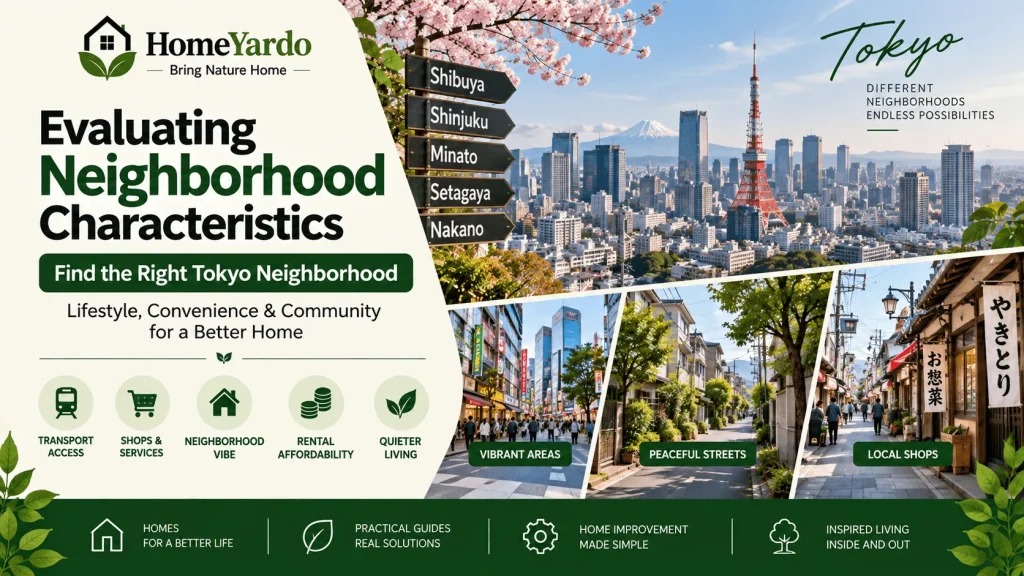
Choosing a suitable neighborhood is one of the most important decisions when renting an apartment in Tokyo.
The city includes 23 special wards alongside numerous western municipalities. Each area offers different housing options, transportation connections, commercial facilities, and residential environments.
Popular central districts, including Shibuya, Shinjuku, and Minato, attract residents who prefer convenient transportation, shopping facilities, restaurants, and proximity to major employment centers.
However, desirable central locations frequently command higher rental prices. Apartments near major transportation hubs may also experience increased noise from traffic, commercial activity, and nightlife.
Residential neighborhoods in Setagaya, Suginami, Nakano, and Bunkyo offer alternatives for people who prefer quieter surroundings without sacrificing access to central Tokyo.
Many neighborhoods feature traditional shopping streets known as shotengai, where local grocery stores, restaurants, bakeries, and other everyday services are within walking distance.
Eastern districts such as Sumida, Koto, and Edogawa also offer residential options worth exploring, although rental costs vary considerably between individual neighborhoods and railway stations.
How to Choose the Right Tokyo Neighborhood
Before selecting a neighborhood, consider several practical factors:
- Daily commute: Determine how long you are comfortable traveling to work or university.
- Nearby facilities: Check access to grocery stores, pharmacies, hospitals, and other necessary services.
- Neighborhood atmosphere: Consider whether you prefer an active commercial area or a quieter residential environment.
- Rental affordability: Compare properties near different railway stations rather than focusing exclusively on popular districts.
- Noise and surroundings: Visit potential neighborhoods during different times of the day whenever possible.
Walking through an unfamiliar neighborhood can reveal details that property listings rarely mention, including traffic noise, pedestrian accessibility, and local shopping convenience.
Assessing Commuting Times and Railway Network Accessibility
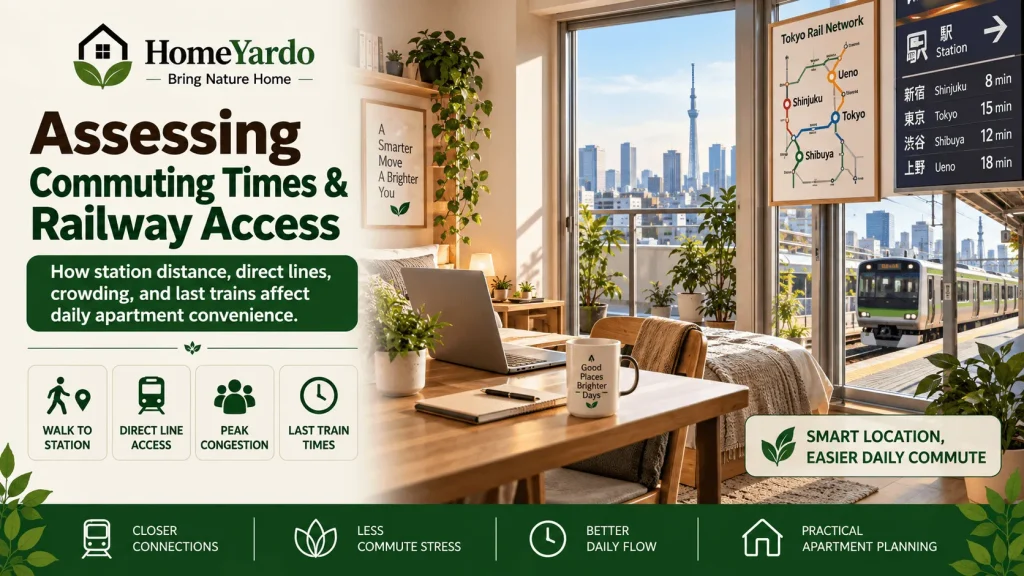
Tokyo has an extensive public transportation system consisting of subway lines, commuter railways, and regional transportation networks.
Because public transportation plays a major role in everyday life, apartment location should be evaluated alongside railway accessibility.
An inexpensive apartment may become less attractive if reaching your workplace requires several transfers or an unusually long commute.
Walking Distance to the Nearest Station
Apartments near railway stations generally offer greater convenience.
A property located within a five-to-seven-minute walk may be attractive to residents who commute daily. Apartments located farther away can sometimes offer lower rental prices or additional floor space.
However, proximity alone does not determine accessibility.
Check the actual walking route, pedestrian crossings, hills, and station entrances rather than relying exclusively on the estimated walking time displayed in property listings.
Direct Train Line Access
Living near a railway line that connects directly to your workplace or university can reduce commuting complexity.
Major transportation networks, including the JR Yamanote Line and Tokyo Metro services, connect numerous commercial and residential districts.
Before renting an apartment, compare the complete journey rather than simply checking the nearest station.
A property located farther from central Tokyo may still offer convenient transportation if it provides a direct railway connection.
Peak Commute Congestion Levels
Morning and evening rush hours can significantly affect commuting comfort.
Research your intended railway route and consider alternative services where available.
If possible, test the journey during your expected commuting hours to understand actual travel conditions.
Last Train Timetables
Residents who work late or regularly attend evening activities should investigate the last train departure times for their preferred routes.
Operating schedules vary between railway lines and individual stations.
Checking official transportation schedules helps prevent unexpected transportation expenses.
Balancing rental affordability with commuting convenience can make everyday life more manageable.
Understanding Available Space and Floor Plan Classifications
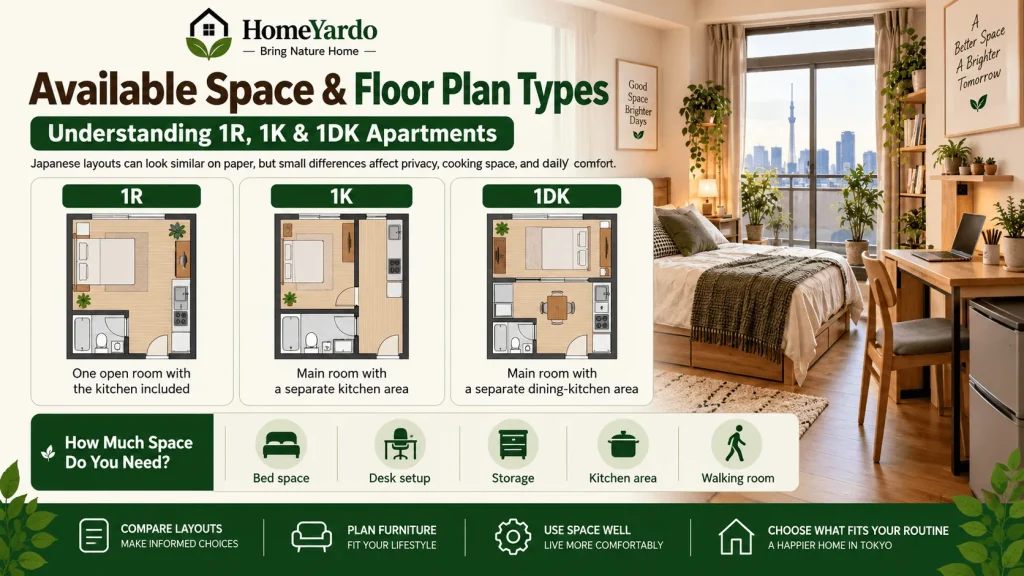
Japanese property listings commonly use floor plan classifications such as 1R, 1K, and 1DK.
Understanding these classifications helps renters determine how different layouts accommodate cooking, sleeping, dining, and everyday activities.
Although many compact apartments offer limited floor space, their layouts can substantially influence comfort and functionality.
What Is the Difference Between 1R, 1K, and 1DK?
| Apartment Type | Layout | Suitable For |
|---|---|---|
| 1R | One open room incorporating the kitchen | Renters comfortable with an open-plan layout |
| 1K | Main room with a separate kitchen area | People who prefer separation between cooking and sleeping |
| 1DK | Main room with a separate dining-kitchen area | Renters who want additional dining space |
A 1R apartment generally features an open-plan arrangement combining the main living area and kitchen.
This configuration can be practical for residents who prioritize affordability and efficient use of limited space.
A 1K apartment separates the kitchen from the main room using a wall or door. This arrangement can help reduce cooking odors in the sleeping area and provide additional privacy.
A 1DK apartment includes a separate dining-kitchen area, making it suitable for residents who prefer additional functional space.
Actual apartment dimensions vary considerably. The floor plan classification alone does not establish how spacious a property will feel.
How Much Space Do You Actually Need?
An apartment with an efficient floor plan may feel more comfortable than a larger property with an awkward layout. When furnishing a compact rental property, choosing furniture for your home that matches the available dimensions helps preserve valuable floor space.
“If you enjoy indoor greenery, consider plants for small apartments that fit compact shelves, desks, or windowsills without occupying valuable floor space.”
Think about:
- Bed dimensions and available sleeping space.
- Desk placement if you study or work remotely.
- Built-in wardrobes and additional storage requirements.
- Kitchen counter space and appliance placement.
- Available walking space after arranging furniture.
An apartment with an efficient floor plan may feel more comfortable than a larger property with an awkward layout.
If you are planning to furnish a compact rental property, choosing appropriately sized furniture can also improve available floor space.
Prioritizing Essential Building Amenities and Modern Features
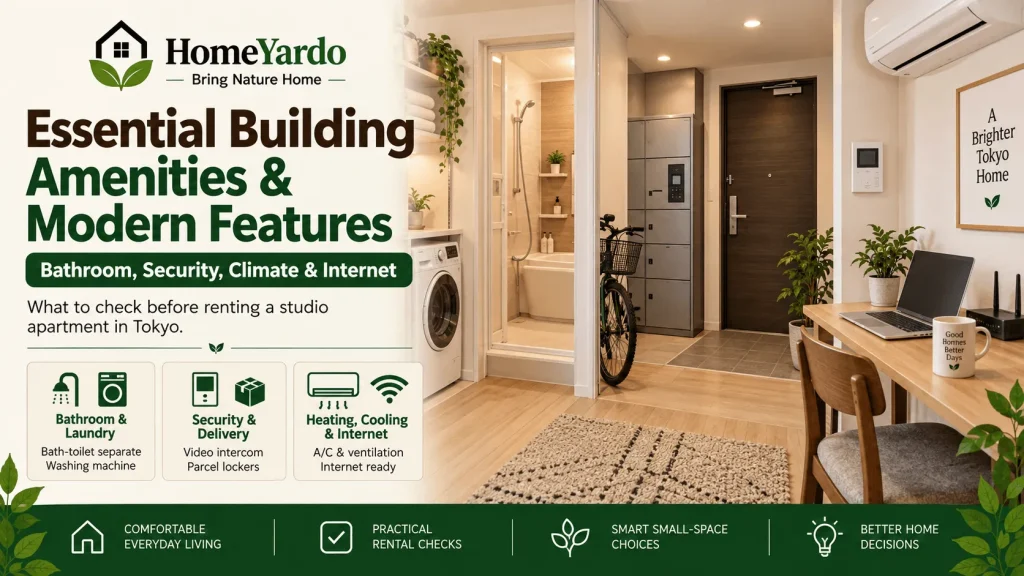
Building amenities directly influence comfort, convenience, and daily living expenses.
While modern apartment buildings may include additional facilities, older properties can sometimes provide lower rental costs or convenient locations.
However, building age alone should not be used to assess structural safety, insulation quality, or maintenance standards.
Evaluate each property’s actual condition, available documentation, and essential facilities.
Bathroom and Laundry Facilities
Bathroom configurations differ between Japanese rental properties.
Some compact apartments feature a unit bathroom that combines multiple bathroom fixtures in a single prefabricated space.
Other apartments include separate toilet and bathing facilities.
The Japanese term bath-toilet separate is commonly used in rental listings to identify properties where these facilities are divided.
Separated facilities can provide additional convenience, particularly for residents who prefer distinct bathing and toilet areas.
Laundry arrangements also deserve attention.
Check whether the property includes an indoor washing machine connection, outdoor installation space, or access to communal laundry facilities.
Apartment Security and Delivery Facilities
Security features can influence convenience and personal comfort, especially for residents living alone.
Useful building amenities include:
- Automatic entrance locking systems.
- Video intercoms.
- Security cameras in shared areas.
- Secure bicycle parking.
- Parcel delivery lockers.
Automated parcel lockers, known as takuhaibako, allow residents to receive eligible deliveries while away from home.
However, building security features should be evaluated alongside entrance visibility, surrounding streets, and general property maintenance.
Heating, Cooling, and Internet Connectivity
Tokyo experiences hot, humid summers and comparatively cool winters.
Check whether the apartment includes air conditioning and whether the installed equipment provides both heating and cooling.
Inspect window insulation, ventilation, and any visible moisture problems.
Natural lighting and privacy also influence everyday comfort. Appropriate window treatments for your home can help manage sunlight, glare, and privacy without requiring permanent changes to the rental property.
Internet availability is another important consideration, particularly for people who work remotely.
Confirm whether a connection is already installed, which providers service the building, and whether internet costs are included in the rental agreement.
Structuring the Monthly Housing Budget and Associated Expenses
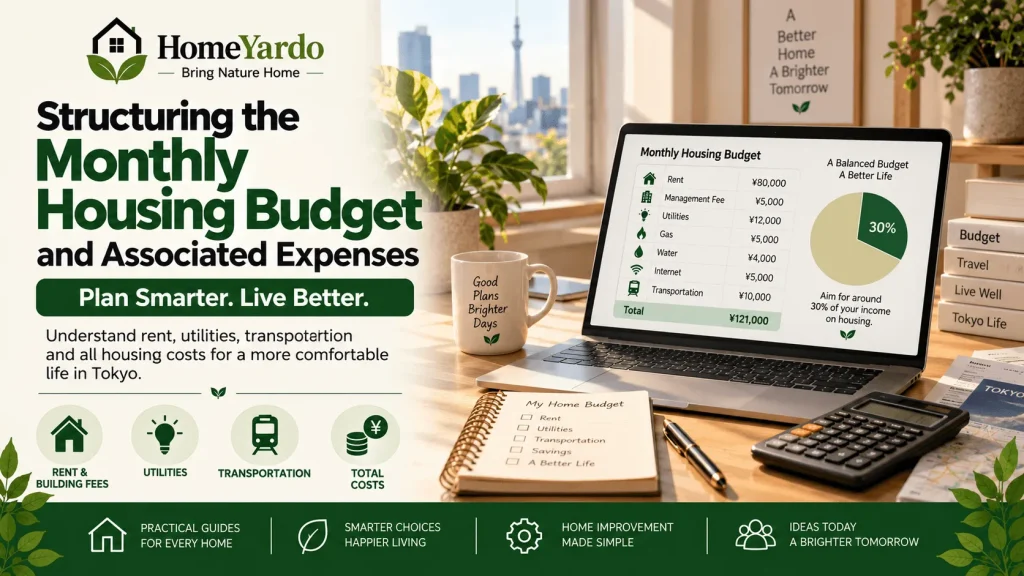
Creating a realistic housing budget involves more than identifying an affordable monthly rental price.
Recurring building fees, utility bills, transportation expenses, and everyday living costs can substantially influence total expenditure.
A commonly used budgeting guideline suggests limiting housing costs to approximately 30% of monthly take-home income. However, this is a planning reference rather than a fixed rule.
Your appropriate housing budget depends on income stability, savings goals, transportation expenses, and other financial commitments.
Understanding Monthly Rental Expenses
Consider the following expenses when comparing properties.
| Expense | What to Consider |
|---|---|
| Monthly rent | Advertised cost of renting the apartment |
| Management fees | Recurring charges for shared building facilities |
| Electricity | Lighting, appliances, heating, and cooling |
| Gas | Cooking and hot water, depending on the property |
| Water | Household water consumption |
| Internet | Monthly broadband subscription |
| Transportation | Commuting expenses not covered by an employer |
Management and maintenance charges, often described as kanrihi or kyoekihi, can increase your monthly housing expenditure.
Check whether advertised rental prices include these fees or display them separately.
Utility costs depend on apartment size, insulation, appliance efficiency, personal usage, and seasonal weather conditions.
How to Compare the Total Monthly Cost
Consider two hypothetical properties:
| Monthly Expense | Apartment A | Apartment B |
|---|---|---|
| Base rent | ¥80,000 | ¥70,000 |
| Management fee | ¥5,000 | ¥5,000 |
| Estimated utilities | ¥12,000 | ¥12,000 |
| Internet | ¥5,000 | ¥5,000 |
| Personal commuting expenses | ¥5,000 | ¥15,000 |
| Total | ¥107,000 | ¥107,000 |
These figures are illustrative budgeting examples, not current market rental quotations.
Although Apartment B has a lower advertised rental price, its additional commuting expenses eliminate the apparent monthly savings.
Consider total living expenses rather than comparing rent alone.
Understanding Initial Rental Costs and Lease Requirements
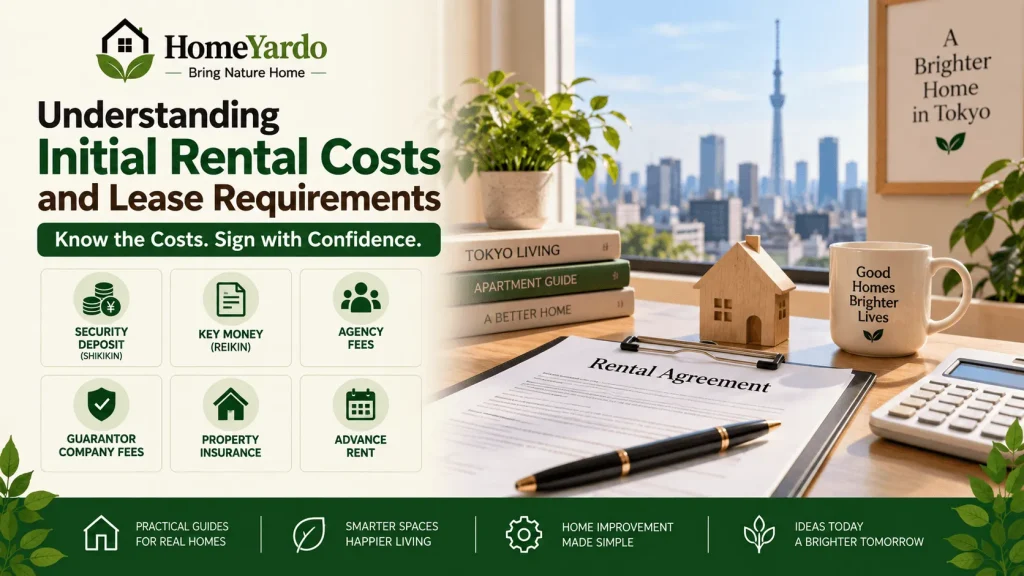
Monthly affordability is only one part of renting an apartment in Tokyo.
Japanese rental agreements may require several upfront payments before residents can move into a property.
Understanding these charges helps prevent unexpected financial difficulties.
Common Upfront Rental Expenses
Depending on the apartment and rental agreement, initial expenses may include:
- Security deposit (shikikin): Money held by the landlord that may be partially refundable, subject to applicable deductions.
- Key money (reikin): A generally non-refundable payment required by some landlords.
- Agency fees: Charges associated with property brokerage services.
- Guarantor company fees: Payments required when a rental guarantee company is involved.
- Property insurance: Insurance coverage required under certain rental agreements.
- Advance rent: Rent collected before the tenancy begins.
Not every property requires all these payments, and individual amounts vary.
Request a complete written breakdown before committing to an apartment.
What Should You Check Before Signing a Lease?
Carefully examine the rental agreement, including its financial obligations and restrictions.
Pay particular attention to:
- Contract duration and renewal conditions.
- Early termination requirements.
- Cleaning fees and security deposit deductions.
- Guarantor requirements.
- Building regulations and restrictions.
- Responsibility for maintenance and repairs.
International renters should also confirm the documents required for their application and whether English-language support is available.
If any contract terms are unclear, request an explanation before signing.
Inspecting an Apartment Before Making Your Final Decision

Property photographs and floor plans provide useful preliminary information, but they cannot reveal every aspect of an apartment.
Whenever possible, arrange an in-person viewing or request a detailed live video inspection.
What to Check During an Apartment Viewing
Inspect the property’s general condition and test available equipment where permitted.
Pay attention to:
- Signs of moisture, mold, or water damage.
- Available natural lighting.
- Ventilation and air-conditioning performance.
- Kitchen and bathroom conditions.
- Storage capacity and furniture placement.
- Noise from neighboring apartments and surrounding streets.
- Mobile reception and internet availability.
- Access to emergency exits.
Ask when major building maintenance or renovation work was last completed and whether any significant repairs are planned.
For older buildings, request available information concerning earthquake-resistance standards and relevant structural assessments.
A careful inspection helps identify potential issues that may not appear in the property listing.
Key Takeaways
Choosing a studio apartment in Tokyo requires balancing neighborhood preferences, transportation access, functional floor space, building amenities, and overall rental costs.
Start by identifying locations that suit your daily routine and budget. Compare transportation routes, investigate neighborhood facilities, and evaluate the differences between common Japanese apartment layouts.
Pay attention to building amenities, particularly bathroom configurations, laundry connections, security features, and heating or cooling equipment.
Calculate recurring expenses and initial rental payments before submitting an application.
Most importantly, inspect the property and review the rental agreement carefully. A suitable apartment should support your everyday needs without creating unnecessary financial pressure.
FAQ’s
Rental prices vary according to neighborhood, apartment size, building age, amenities, and distance from railway stations.
Properties in central commercial districts frequently cost more than comparable apartments in less central residential neighborhoods. Compare current listings and include management fees when calculating your budget.
A 1R apartment generally combines the kitchen and main living area into a single open space. A 1K apartment usually features a separate kitchen area divided from the main room.
The most suitable option depends on your preferences, budget, and available floor space.
Shibuya, Shinjuku, and Minato offer access to major commercial areas.
Nakano, Suginami, Setagaya, Sumida, and other residential districts provide alternatives worth investigating.
Compare commuting routes, local facilities, rental prices, and neighborhood characteristics before selecting an area.
Apartments farther from railway stations can sometimes have lower rental prices.
However, actual savings depend on neighborhood demand, building condition, apartment size, and transportation requirements.
Compare total monthly costs before choosing a property based on rental price alone.
Depending on the property, tenants may need to pay a security deposit, key money, brokerage fees, guarantor company charges, insurance premiums, and advance rent.
Request an itemized quotation before signing the rental agreement.
Yes. International residents can rent apartments in Tokyo, although application requirements vary between properties and landlords.
Applicants may need identification, residence documentation, evidence of income, and a guarantor or rental guarantee company.
Working with an agency offering multilingual services may simplify the process.
Check the property’s dimensions, natural lighting, ventilation, available storage, bathroom configuration, laundry facilities, and transportation accessibility.
Review the monthly expenses, initial rental costs, building condition, and lease restrictions before making a commitment.