How To Create A Better Guest Experience At Your Kelowna Vacation Rental

A memorable vacation rental stay is built on more than beautiful interiors or a convenient location. Guests remember how welcome they felt when they arrived, whether the property matched its description, and how easily they could get help when something went wrong. In Kelowna, where visitors come to enjoy Okanagan Lake, explore local wineries, attend seasonal events, and experience nearby mountain destinations, these details can turn an ordinary booking into a stay worth recommending.
For vacation rental owners, creating an exceptional guest experience also makes practical business sense. Positive reviews can strengthen a property’s reputation, encourage repeat bookings, and help it stand out in a competitive market. The key is to make every stage of the guest journey feel thoughtful, comfortable, and reliable, from the first inquiry to the final checkout.
What Makes A Great Vacation Rental Guest Experience?
Most guests judge a vacation rental through a handful of basic questions.
Did the property match the listing? Was it clean when they arrived? Could they get inside without difficulty? Did the amenities work? Could they reach someone when they needed help?
Getting these fundamentals right matters more than filling the property with elaborate welcome gifts.
A good hosting strategy should therefore cover the entire guest journey: booking, pre-arrival communication, check-in, the stay itself, problem resolution, checkout, and post-stay feedback.
1. Make The Booking Process Simple And Welcoming
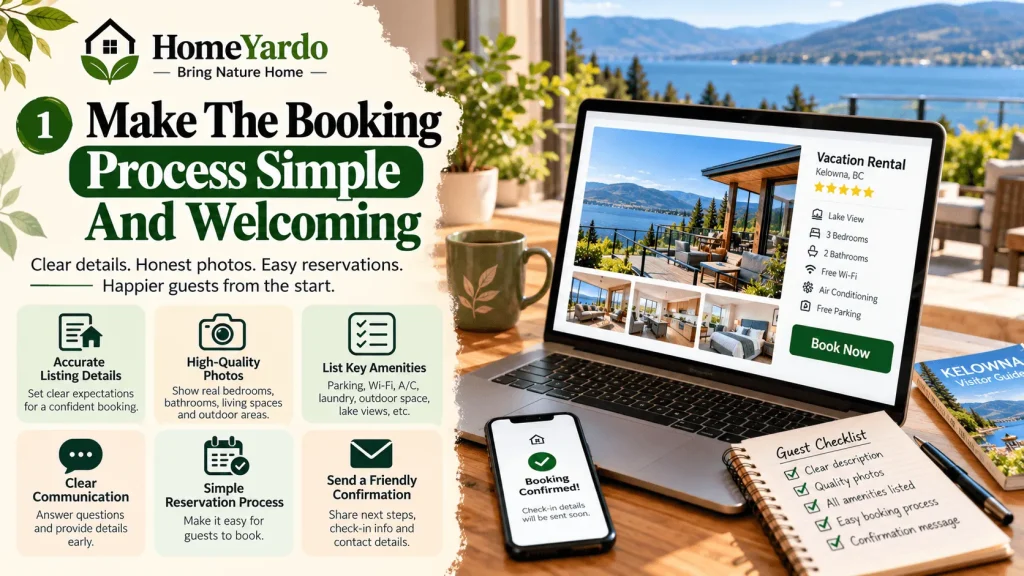
The guest experience begins long before anyone walks through the front door. Clear communication, accurate listing details, and a straightforward reservation process establish trust and help travellers feel confident about their decision.
Start by reviewing your property listing from a guest’s perspective. Are the sleeping arrangements clearly explained? Is parking information easy to find? Have you specified whether the property has air conditioning, laundry facilities, outdoor space, or lake views? Honest descriptions help guests choose accommodation that genuinely suits their needs. Following the same principles used to write a home listing can also help owners present amenities, limitations, and property features clearly.
Professional photographs are equally important. Show the actual bedrooms, bathrooms, kitchen, living areas, and outdoor spaces. If a property has stairs, limited parking, or shared amenities, explain these details before guests book. Transparency prevents avoidable disappointment and reduces the number of questions you need to answer later.
Owners who want a more consistent approach to guest communication and property operations can explore Kelowna vacation rental management through Nomadics. Its property management services cover guest support, professional cleaning coordination, and pricing, helping owners maintain a dependable experience while reducing the burden of day-to-day hosting.
Once a reservation is confirmed, send a friendly message that acknowledges the booking and outlines what happens next. Guests should know when they will receive check-in instructions, whether any verification steps are required, and whom to contact if they have questions. A little clarity at this stage can eliminate much of the uncertainty associated with arriving at an unfamiliar property.
2. Prepare A Spotless, Comfortable Space
Cleanliness is one of the most immediate indicators of quality in a vacation rental. Guests may overlook a minor decorative imperfection, but dirty floors, stained linens, dusty surfaces, or unpleasant bathroom odours can quickly undermine their confidence in the property.
Develop a consistent turnover checklist that covers every room. Kitchen counters, appliances, bathroom fixtures, frequently touched surfaces, floors, and rubbish bins all deserve attention between reservations. Check inside cupboards and drawers, inspect bedding for stains, and confirm that fresh towels are available for the number of registered guests.
Pay attention to details that are easy to miss during a rushed turnover. Hair around bathroom drains, fingerprints on glass doors, crumbs beneath dining chairs, and food residue inside refrigerators can make an otherwise attractive home feel neglected.
Comfort matters just as much as cleanliness. Invest in supportive mattresses, quality pillows, breathable bedding, and sufficient blankets for cooler evenings. Keep the temperature comfortable before arrival, and make sure heating, cooling, lighting, and appliances work properly.
Routine home maintenance also helps owners catch small property problems before they affect a guest’s stay. Check locks, plumbing fixtures, lighting, HVAC equipment, appliances, and other frequently used features as part of the property’s regular upkeep.
3. Add Thoughtful Essentials That Make Guests Feel At Home

Guests appreciate accommodation that allows them to settle in without making an immediate trip to the supermarket. A well-stocked rental anticipates common needs and makes everyday routines easier.
In the kitchen, provide cookware, dishes, cutlery, drinking glasses, cooking utensils, dish soap, and enough basic cleaning supplies. Coffee, tea, cooking oil, salt, and pepper can be welcome additions. In bathrooms, provide adequate toilet paper, hand soap, and clean towels. Reliable Wi-Fi, accessible charging outlets, and a practical place to store luggage also improve convenience.
Think about the specific needs of your typical visitors. Families may appreciate a high chair, child-safe features, or a few simple games. Guests staying for a week or longer benefit from laundry facilities, extra hangers, and sufficient storage. Travellers visiting for outdoor activities may value a secure place to store equipment, provided the property can accommodate it safely.
Small welcome touches can make the arrival feel personal. A handwritten note, a few locally sourced snacks, or a short guide to nearby coffee shops can create a warm first impression without adding substantial expense.
The goal is not to fill every surface with gifts. It is to remove friction from the stay. When guests can find what they need without searching through cupboards or messaging the host, the property feels better organised and more welcoming.
4. Help Guests Experience The Best Of Kelowna
One of the advantages of staying in a vacation rental is the opportunity to experience a destination beyond the usual tourist itinerary. Kelowna offers a varied mix of lakeside recreation, food and wine experiences, outdoor adventures, and neighbourhood attractions. A thoughtful local guide helps guests make the most of their time.
Create a concise digital or printed welcome guide featuring recommendations suited to different interests. Include nearby grocery stores, cafés, restaurants, beaches, walking routes, family activities, and transportation information. Where relevant, explain parking arrangements and the easiest way to reach popular destinations.
Seasonality should shape your recommendations. Summer visitors may appreciate information about swimming areas, paddleboarding, boating, and shaded outdoor activities. During winter, guests may be interested in mountain excursions, seasonal dining, and travel considerations for trips toward Big White. Wine enthusiasts may prefer suggestions for tasting rooms and advice on arranging transportation before sampling local wines.
Keep recommendations practical rather than overwhelming. A short list of genuinely useful options is more valuable than a directory of dozens of attractions. Include opening hours only when you can keep them current, and encourage guests to verify seasonal schedules before travelling.
Local insight can also help visitors discover quieter alternatives to busy attractions. Suggesting an early morning lakeside walk or a neighbourhood café gives guests a more personal connection to the destination.
5. Communicate Clearly Before, During, And After The Stay
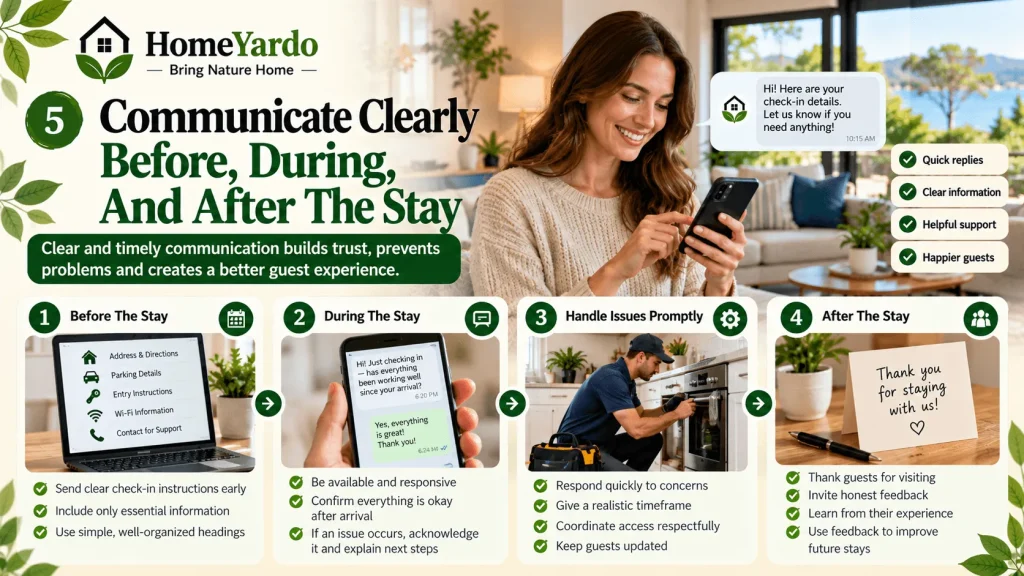
Responsive communication can turn a stressful situation into a manageable inconvenience. Guests may need help with a door code, clarification about parking, or guidance when an appliance stops working. What matters is knowing that someone will listen and respond.
Send check-in instructions early enough for guests to review them before travelling. Include the property’s address, parking details, entry procedure, Wi-Fi information, and a contact method for urgent issues. Avoid sending a long, confusing message filled with unnecessary details. Organise information under clear headings so guests can find answers quickly.
During the stay, be available without becoming intrusive. A brief message after arrival can confirm that everything is working as expected and give guests an opportunity to raise concerns. If a problem occurs, acknowledge it promptly, explain the next steps, and provide a realistic timeframe for resolution.
Never promise an immediate repair unless you can deliver it. If a technician needs to attend the property, communicate the expected arrival window and coordinate access respectfully. Guests should not have to send repeated messages to find out whether anyone is addressing their concern.
After checkout, thank guests for visiting and invite honest feedback. A courteous follow-up reinforces a positive impression and may reveal opportunities to improve future stays.
6. Make Check-In And Checkout Effortless
Travel can be tiring, especially after a long drive or a delayed flight. An easy arrival helps guests relax rather than begin their holiday with a frustrating search for keys or unclear instructions.
Where appropriate, use a reliable keyless entry system and provide access details at the correct time. Test the code before each arrival, keep backup access arrangements available, and explain what to do if the lock or keypad fails.
Parking deserves particular attention. Clearly identify the correct space, explain any vehicle restrictions, and provide instructions for shared parking areas. If the building has security procedures, elevator access requirements, or quiet-hour rules, explain them before arrival.
Checkout should be equally straightforward. Give guests a reasonable departure time and a short list of essential tasks. Asking them to strip every bed, complete extensive cleaning, and manage multiple disposal procedures can create an unnecessarily negative final impression.
Explain where to leave keys, how to secure the property, and what to do with rubbish or recycling. Clear expectations help guests leave confidently and make it easier for cleaners to prepare the rental for the next reservation.
7. Maintain Safety, Privacy, And Reliability
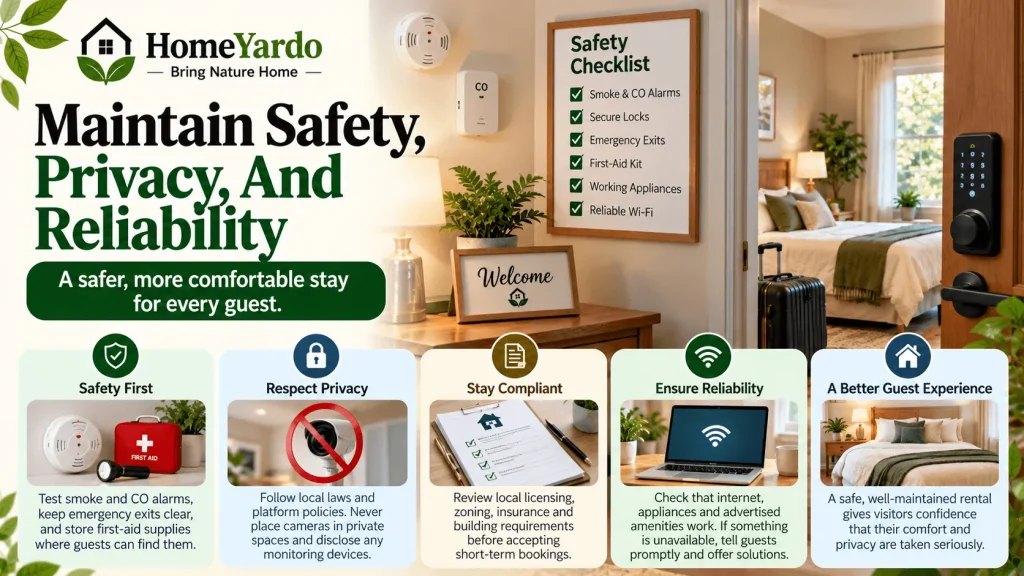
Guests need to feel secure in a temporary home. Test smoke alarms and carbon monoxide alarms where applicable, keep emergency exits accessible, and make sure first-aid supplies and emergency contact information are easy to locate. Repair loose handrails, damaged flooring, faulty locks, and other hazards promptly.
Privacy is equally important. Disclose any monitoring devices in accordance with applicable laws and booking platform policies. Never place cameras in private spaces. Smart locks and noise-monitoring equipment should be used transparently, with appropriate safeguards for guest information.
Owners should also review local licensing, zoning, insurance, and building requirements before accepting short-term bookings. Compliance helps protect the property and supports responsible hosting in the community.
Reliability extends to everyday amenities. Check that internet access works, appliances operate correctly, and advertised facilities are available. If something becomes unavailable, tell guests promptly and explain what alternatives or remedies can be offered.
A safe, well-maintained rental gives visitors confidence that their comfort and privacy are being taken seriously.
8. Use Guest Feedback To Improve Every Stay
Reviews provide useful insight into what guests value most. Instead of focusing exclusively on ratings, look for recurring themes in written comments and private feedback.
If several guests mention difficulty finding the entrance, improve the arrival instructions. If visitors regularly request extra towels, adjust the standard supply. Complaints about uncomfortable pillows, insufficient kitchen equipment, or inconsistent cleaning should prompt practical changes rather than defensive responses.
Track recurring issues in a simple maintenance and improvement log. Record the problem, the action taken, and whether it has been resolved. This creates a more systematic approach to quality control and helps prevent the same inconvenience from affecting future reservations.
Respond to public reviews professionally, including critical ones. Thank guests for useful feedback, acknowledge legitimate concerns, and explain improvements when appropriate. Avoid arguing over individual experiences or sharing private booking details.
The strongest guest experience strategies are rarely complicated. They depend on noticing patterns, making sensible adjustments, and consistently delivering on the promises made in the listing.
Create Stays Guests Want To Remember
A successful Kelowna vacation rental combines comfort, thoughtful preparation, local knowledge, and dependable service. Guests should feel that the property has been prepared with care, that useful information is easy to access, and that assistance is available when needed.
Start with the fundamentals: maintain high cleaning standards, communicate clearly, provide practical essentials, and make arrival and departure straightforward. Then build on these foundations with personalised local recommendations and improvements informed by guest feedback.
Consistency is what makes these efforts effective. Every reservation offers an opportunity to deliver the same welcoming standard, regardless of the season or length of stay. When guests feel comfortable, respected, and well supported, they are more likely to leave positive reviews, recommend the property to others, and return for another visit to Kelowna.
FAQ’s About Kelowna Vacation Rental Guest Experience
Start with the fundamentals: an accurate listing, excellent cleaning, comfortable bedding, reliable amenities, simple check-in, clear communication, and prompt support. Once those standards are consistent, add useful local recommendations and amenities suited to your typical guests.
Useful basics include reliable Wi-Fi, clean bedding and towels, cooking equipment, dishes, bathroom supplies, climate control where advertised, accessible charging options, and clear property instructions. The best additional amenities depend on whether you commonly host families, couples, longer-stay guests, or outdoor travellers.
Include check-in and checkout information, Wi-Fi details, parking instructions, property rules, emergency contacts, nearby grocery options, restaurants, transportation information, and a short selection of local activities. Seasonal recommendations should be reviewed regularly.
Focus on delivering what the listing promises. Cleanliness, comfortable sleeping arrangements, accurate information, easy access, working amenities, and responsive problem resolution tend to matter more than elaborate extras. Guest feedback can then be used to identify recurring improvements.