Chinch Bug Signs and Lawn Care Habits That Help Prevent Damage
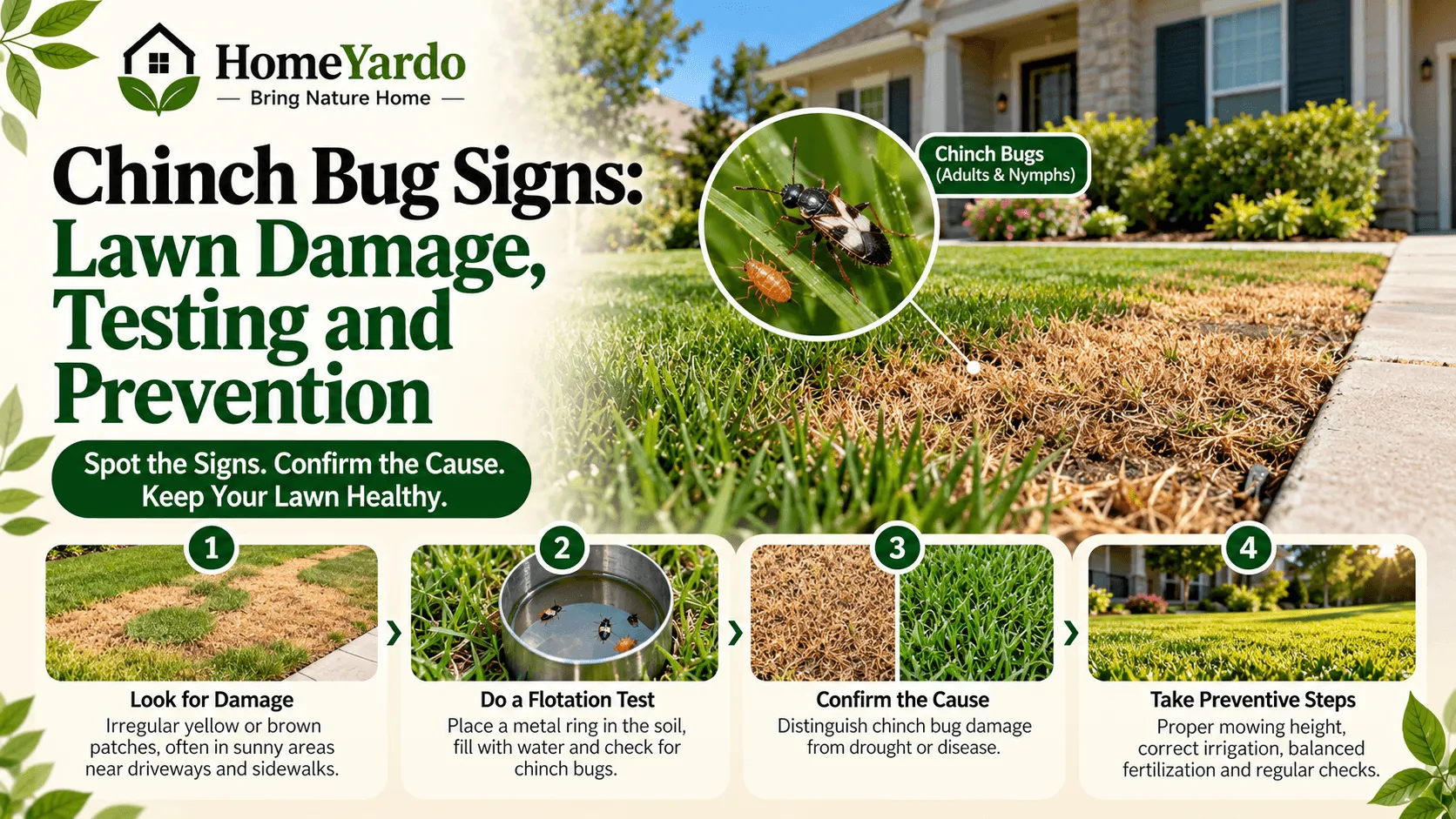
It often starts along the driveway or sidewalk. A strip of St. Augustinegrass exposed to strong sun turns pale yellow, then straw brown, while cooler or shaded parts of the lawn remain green.
The natural reaction is to water more. But when the damaged area keeps expanding despite irrigation, it is worth checking for chinch bugs before assuming drought is the problem.
Chinch bugs are tiny sap-feeding insects that can seriously damage St. Augustinegrass. Their feeding disrupts healthy grass tissue, leaving irregular yellow and brown patches that can spread outward as insect activity continues.
Hot, sunny sections beside pavement are common trouble spots. Gardeners in warm climates can see a similar damage pattern in this guide to chinch bug lawn damage South Florida lawns experience during warm weather.
The good news is that early identification can limit damage. The goal is to confirm what is actually causing the brown grass before changing irrigation, applying an insecticide, or replacing turf.
What Are the Main Chinch Bug Signs?
The most useful clue is not simply brown grass. It is the pattern and progression of the damage.
Watch for irregular yellow or brown patches that:
- begin in sunny, hot areas of the lawn;
- appear beside driveways, sidewalks, curbs, or other heat-reflecting surfaces;
- gradually expand into surrounding healthy turf;
- do not noticeably improve after appropriate watering;
- contain small black-and-white adult insects or reddish-orange nymphs near the green edge of the damaged area.
The border between healthy and damaged grass is usually the most useful place to investigate because active insects may be feeding there while the center of the patch is already badly damaged.
What Do Chinch Bugs Look Like?
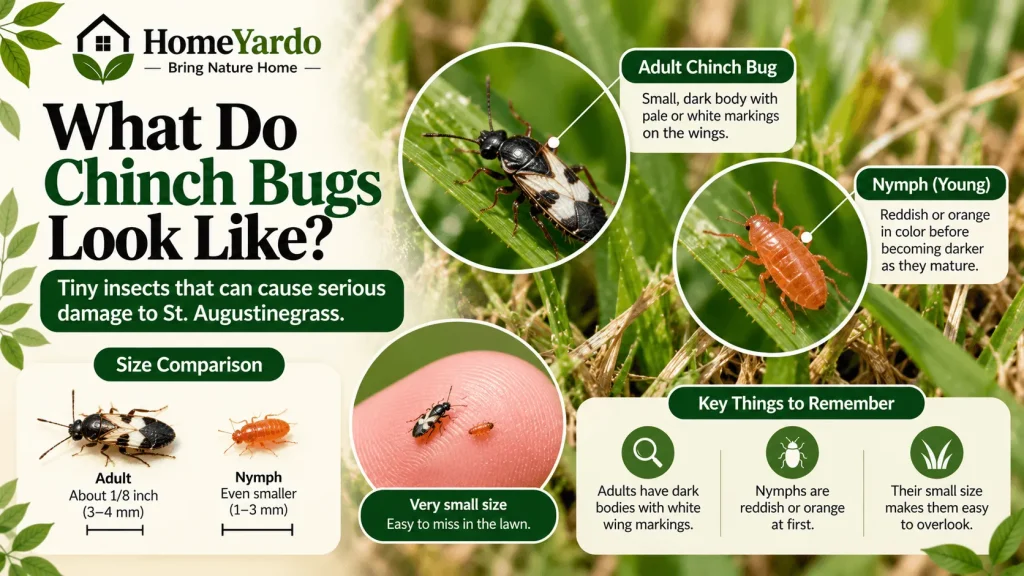
Adult southern chinch bugs are very small insects with dark bodies and pale or white markings on their wings. Young chinch bugs, called nymphs, can appear reddish or orange before becoming darker as they mature.
Their small size makes them easy to miss while walking across a lawn. That is why identifying the pattern of damage and conducting a simple flotation test is usually more useful than trying to spot individual insects from standing height.
How To Tell Chinch Bug Damage From Drought or Lawn Disease
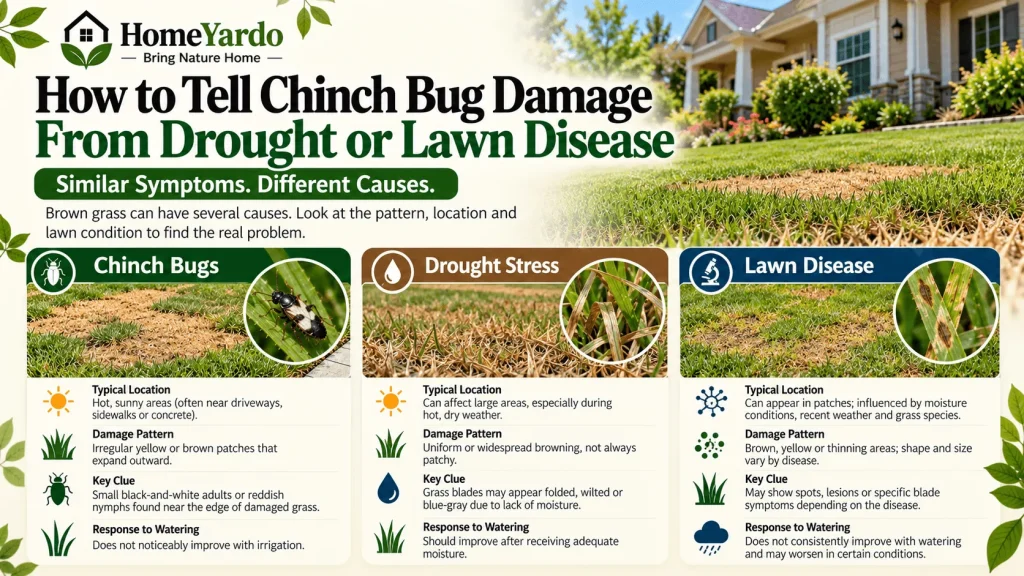
Several turf problems can produce brown grass, so appearance alone should not be treated as a diagnosis.
According to Edis, southern chinch bugs are a major pest of St. Augustinegrass in Florida. UF/IFAS also notes that yellow or brown turf can have other causes, including moisture stress, diseases and other pests.
Chinch Bugs
Damage often begins in hot, sunny turf and expands outward in irregular patches. Active insects may be found around the border between green and damaged grass.
Drought Stress
Water stress can also cause folded, wilted or discolored grass. The difference is that properly irrigated drought-stressed turf should respond once the root zone receives adequate moisture.
If the lawn remains damaged while surrounding conditions suggest enough water is reaching the soil, another cause deserves investigation.
Lawn Disease
Turf diseases can create brown, yellow or thinning areas as well. Moisture conditions, recent weather, grass species and the exact appearance of the affected blades can help distinguish disease from insect feeding.
Rather than treating by appearance alone, confirm insect activity first.
How to Test for Chinch Bugs With a Flotation Test
A flotation test is one of the simplest ways for a homeowner to check a suspicious patch.
Remove both ends from a large metal can. Push the cylinder several inches into the soil at the edge where damaged grass meets healthy grass.
Fill the can with water and keep water inside it for several minutes.
Watch the surface carefully. Chinch bugs trapped within the turf may float upward, where they are much easier to see.
Repeat the test at several points around the damaged area rather than relying on one location.
Finding active insects together with a characteristic spreading damage pattern gives you much stronger evidence than brown grass alone.
Why Chinch Bug Problems Develop
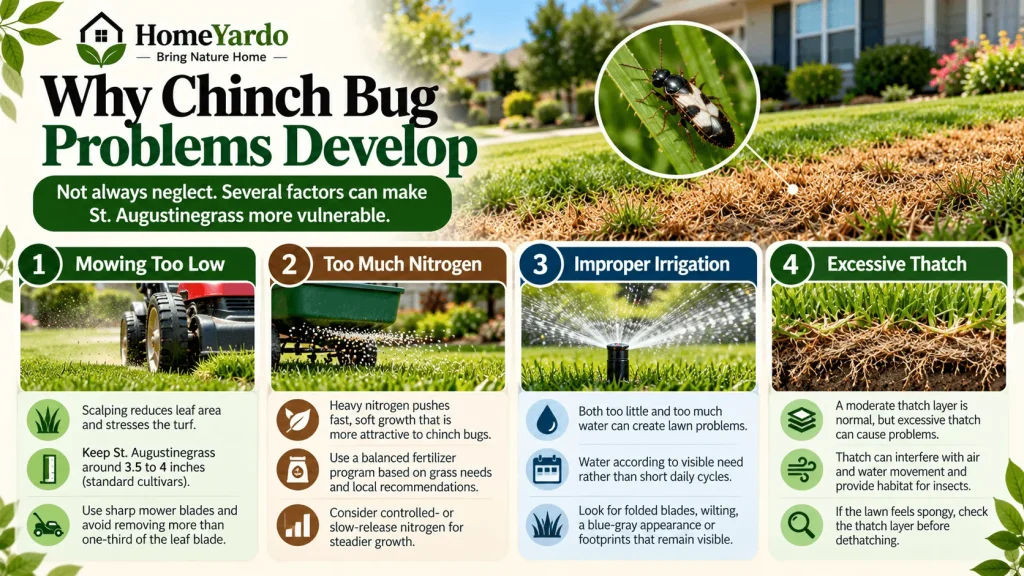
An outbreak does not necessarily mean a lawn has been neglected. Weather, grass variety, turf stress and pest populations can all contribute.
Certain lawn-care practices, however, can make St. Augustinegrass more vulnerable.
Mowing Too Low
Scalping St. Augustinegrass reduces leaf area and stresses the turf.
For most standard St. Augustinegrass cultivars, a mowing height around 3.5 to 4 inches is commonly recommended. Some dwarf and semi-dwarf cultivars are maintained lower, so the appropriate height should match the cultivar growing in the lawn.
Keep mower blades sharp and avoid removing more than about one-third of the leaf blade at one mowing.
Too Much Nitrogen
Heavy applications of rapidly available nitrogen can encourage fast, soft growth.
A balanced fertilizer program based on grass needs, local recommendations and soil conditions is preferable to repeatedly pushing rapid growth.
Where appropriate, controlled- or slow-release nitrogen can provide steadier feeding.
Improper Irrigation
Both severe moisture stress and excessive irrigation can create lawn problems.
Established St. Augustinegrass should generally be watered according to visible need rather than on short daily cycles. Folded blades, wilting, a blue-gray appearance or footprints that remain visible can indicate that irrigation is needed.
Local watering restrictions should always take priority.
Excessive Thatch
A moderate organic layer is normal, but excessive thatch can interfere with air, water movement and normal turf management while providing protected habitat for insects.
If the lawn feels unusually spongy, inspect the layer between the green grass and the soil before automatically scheduling dethatching.
Lawn Care Habits That Can Reduce Chinch Bug Problems
Healthy turf is better able to tolerate insect feeding and recover from stress.
Start with mowing. Keep St. Augustinegrass at the recommended height for its cultivar and use a sharp mower blade.
Then review irrigation. Water when the lawn shows signs of moisture stress rather than keeping the soil constantly wet.
Avoid excessive nitrogen applications designed to force quick greening. Grass growing at a steady, healthy rate generally requires less corrective work than turf repeatedly pushed into rapid growth.
Thatch should also be monitored rather than ignored. Excessive buildup may justify mechanical removal, but unnecessary dethatching can create its own stress.
These practices fit into a wider approach to routine yard maintenance, where moisture management, vegetation health and regular inspection help reveal problems before they become harder to correct.
Where Lawn-Care Spending Pays Off
Not every brown patch requires a major treatment or new sod.
| Action | Relative Cost | Best Use |
|---|---|---|
| Flotation test | Very low | Confirming insect activity before treatment |
| Correcting mowing height | Very low | Reducing avoidable turf stress |
| Adjusting irrigation | Low | Improving root-zone moisture management |
| Improving fertilizer practices | Low to moderate | Avoiding excessive soft growth |
| Targeted treatment | Moderate | Confirmed active infestations |
| Replacing dead turf | Highest | Areas that can no longer recover |
The cheapest step is often diagnosis.
Applying insecticide to drought-stressed or diseased grass wastes money and leaves the real problem untreated. Replacing turf without correcting the conditions that weakened the original lawn can lead to the same problem again.
When Should Chinch Bugs Be Treated?
Treatment becomes more reasonable when testing confirms active insects and damage continues to expand.
Avoid treating an entire property automatically because one small section has suspicious discoloration. Determine how widely activity is distributed first.
If an insecticide is needed, use a product specifically labeled for the pest, turf species and application site. Follow the product label, local regulations and any watering or re-entry instructions.
Repeated insecticide use without confirming continued activity is poor pest management. Some chinch bug populations have also demonstrated resistance to insecticides, which makes correct identification and integrated lawn management particularly important.
Can a Lawn Recover After Chinch Bug Damage?
Yes, if enough living turf remains.
Yellow or thinning St. Augustinegrass may recover once insect pressure and lawn stress are corrected. Its stolons can gradually spread back into small damaged areas during active growth.
Grass that is completely brown, brittle and dead cannot recover from the crown or runners that have died.
Before installing replacement sod, give surviving turf a reasonable opportunity to recover and check whether the original cause has actually been corrected.
If replacement becomes necessary, fixing mowing, irrigation, fertilizer and pest-management problems before installing new grass gives the new turf a better chance.
A healthy lawn also works as part of the larger landscape. Homeowners planning trees, beds and turf together can use this guide to creating a healthy yard rather than managing every landscape feature separately.
How to Prevent Another Chinch Bug Outbreak
Prevention is less about trying to eliminate every insect and more about keeping the turf strong while noticing unusual changes early.
Walk the lawn regularly during hot weather.
Pay particular attention to sunny turf beside concrete, pavement and other heat-reflective surfaces. If a yellow patch appears, mark its edge or photograph it so you can tell whether it is spreading.
Check irrigation coverage rather than assuming every sprinkler zone applies water evenly.
Keep mowing height appropriate for the cultivar, avoid excessive fertilizer and monitor thatch.
Broader landscape conditions matter as well. Drainage, irrigation, vegetation density and other elements of yard design can influence pest pressure around a property.
The earlier an unusual lawn pattern is investigated, the easier it is to distinguish a manageable problem from widespread turf loss.
A Simple Chinch Bug Check for This Weekend
Start at the sunniest section of the lawn.
Look beside the driveway, sidewalk or another hot paved surface for a boundary where green grass changes to yellow or brown.
If the area continues expanding despite reasonable irrigation, perform a flotation test at that boundary.
That small check can tell you far more than immediately adding more water, fertilizer or pesticide.
Confirm the cause first. Then choose the response that matches the problem.
FAQ’s
Common signs include irregular yellow or brown patches, damage beginning in sunny areas, patches expanding into green turf and small chinch bugs appearing near the edge of affected grass.
Damage usually appears as yellowing that progresses to brown, dead-looking turf. It often develops in irregular patches near sidewalks, driveways and other hot locations rather than evenly across the lawn.
Use a flotation test. Push an open-ended metal cylinder into the soil at the boundary between healthy and damaged grass, fill it with water and watch for insects floating to the surface. Test several locations.
Yes. Both can cause yellow or brown turf. That is why watering alone should not be used as a diagnostic test. Check soil moisture, irrigation coverage and the damaged area for actual insects.
No. Correct irrigation helps keep the turf healthier, but watering is not a chinch bug treatment. Excessive irrigation can also create other turf problems.
Most standard St. Augustinegrass cultivars are commonly maintained around 3.5 to 4 inches. Some dwarf or semi-dwarf cultivars can be maintained lower, so identify the cultivar before setting mower height.
Grass that is still alive can often spread back into thin areas once insect activity and turf stress are corrected. Completely dead sections may require plugs or replacement sod.
Use insecticide only after confirming active chinch bugs and determining that treatment is warranted. Choose a product labeled for the pest and turf site, and follow all label directions.
Thatch does not create chinch bugs, but excessive buildup can provide protected habitat and may contribute to poor turf conditions. Correct the lawn practices contributing to excessive thatch rather than treating thatch as the only cause.
Maintain the correct mowing height, irrigate according to turf needs, avoid excessive nitrogen, monitor thatch and inspect hot sunny lawn edges regularly during periods when chinch bug activity is more likely.