How to Maintain an Anaheim Yard to Reduce Pest Movement Toward Your Home
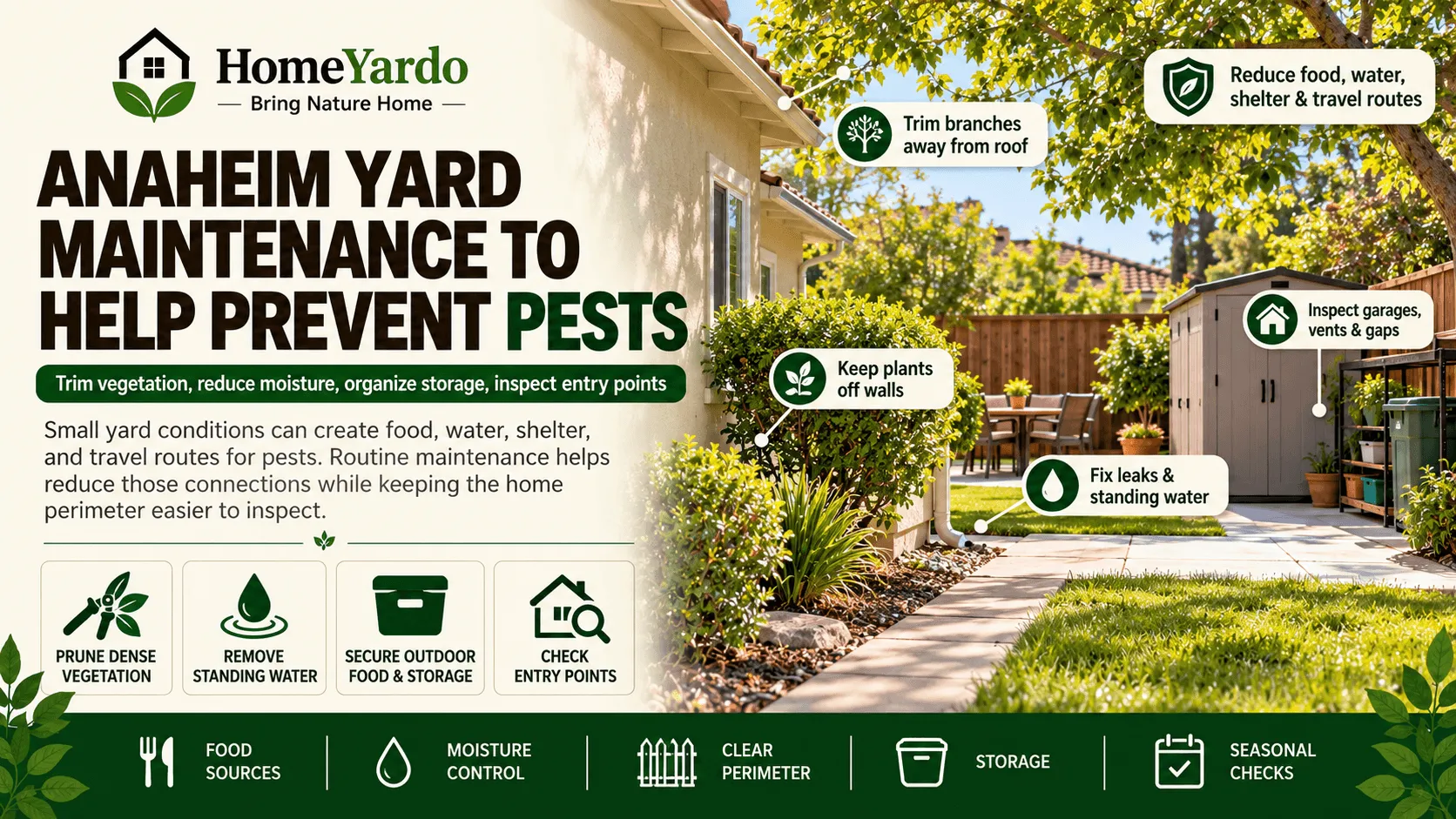
A neat yard can still give insects and rodents convenient routes toward a house. The problem is often not one obvious mess. It is the connection between several small conditions: a branch touching the roof, dense vegetation against a wall, damp soil beside the foundation, stored materials near the garage, or a gap hidden behind landscaping.
For Anaheim homeowners, routine yard maintenance can help break those connections. The goal is not to make a yard completely pest-proof. Instead, focus on reducing food, water, shelter, and protected travel routes while keeping the perimeter of the home easy to inspect.
Quick Answer: How Can Yard Maintenance Help Reduce Pests Around an Anaheim Home?
Start by keeping vegetation away from the structure, removing unnecessary standing water, managing outdoor food sources, organizing stored materials, and checking gaps around doors, vents, pipes, garages, and the foundation.
Pay particular attention to places where several conditions overlap. A damp, shaded area with dense vegetation beside an exterior opening deserves more attention than an isolated plant in an open, dry part of the yard.
Regular inspections also matter. Problems are easier to address when you notice a leaking irrigation emitter, damaged door seal, overgrown shrub, or new rodent evidence before it develops into a recurring issue.
Map the Connections Between the Yard and the House

Start with a slow walk around the property during daylight. Follow the point where the house meets patios, fences, planting beds, sheds, garages, retaining walls, and utility areas.
Look for places where a sheltered outdoor route ends at a possible structural opening. This might include a door, vent, garage seal, utility penetration, damaged screen, siding gap, or foundation crack.
Different pests use these features in different ways. Rodents may travel along fences or vegetation and investigate gaps around garages or rooflines. Ants may follow protected edges, paving joints, vegetation, or utility routes. Spiders often settle where other insects provide a steady food source.
Dense groundcover and stored objects can make these signs difficult to see.
Consider making these exterior checks part of your regular seasonal pest checks. Repeating the same inspection route makes it easier to notice changes rather than relying on a one-time look around the property.
A simple property sketch can also help. Mark:
- recurring pest sightings
- damp areas
- damaged screens or seals
- dense vegetation
- stored materials
- standing water
- suspected entry points
The purpose is not to diagnose a pest problem from the yard alone. It is to identify conditions that deserve closer inspection.
Keep Branches and Dense Planting Away From the Structure
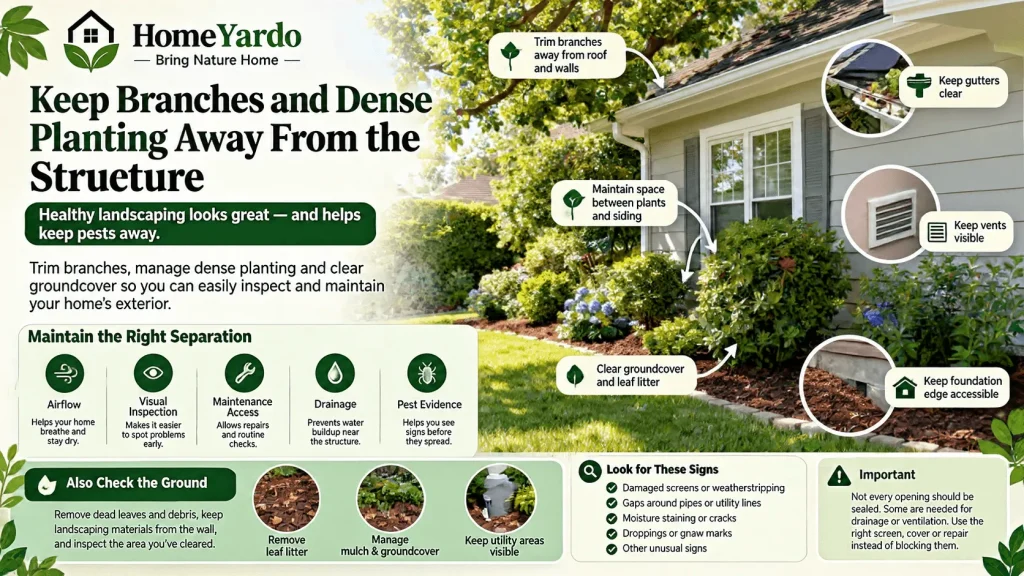
Vegetation deserves attention because it can provide both shelter and a physical connection to the house.
Branches resting on a roof or exterior wall can create routes for some animals and insects. Dense shrubs can hide the lower edge of siding or make foundation inspections difficult. Thick vines may conceal vents, utility penetrations, cracks, or damaged exterior materials.
Pruning should still respect the health and natural form of each plant. The aim is not to remove landscaping from around the house entirely.
Instead, maintain enough separation to allow:
- airflow
- visual inspection
- access for maintenance
- drainage
- detection of new pest evidence
High branches, unstable limbs, and vegetation near power lines should be handled by appropriately qualified professionals.
Pay Attention to Groundcover, Mulch, and Leaf Litter
Groundcover and mulch can be useful landscape materials, but thick or persistently damp layers immediately beside the structure can make inspection harder.
Remove accumulated dead leaves and debris from narrow spaces beside walls. Keep vents, meter boxes, drainage points, and service penetrations visible.
Once vegetation has been trimmed, inspect the newly exposed area.
Look for damaged screens, deteriorated weatherstripping, gaps around pipes, moisture staining, cracks, droppings, gnaw marks, or other unusual signs.
Do not automatically seal every opening you find. Some openings are required for drainage or ventilation and need an appropriate screen, cover, or repair rather than being blocked.
Reduce Outdoor Food Sources That Can Attract Rodents

A yard can provide food even when homeowners never intentionally feed wildlife.
Fruit trees, birdseed, pet food, unsecured rubbish, fallen produce, compost, and spilled seed can all create feeding opportunities.
Harvest ripe fruit and remove fallen fruit rather than allowing it to accumulate beneath trees. Avoid leaving pet food outdoors overnight, and keep bulk feed or seed in secure containers.
Bird feeding areas also deserve periodic inspection. Spilled seed beneath a feeder can become an unintended food source for rodents.
The goal is simple: reduce reliable food sources close to the house without making the landscape difficult to use or enjoy.
Manage Storage, Sheds, and Outdoor Materials Carefully

Firewood, cardboard, spare paving materials, unused pots, lumber, and renovation supplies can create protected hiding places when they remain undisturbed.
Storage becomes more relevant when it sits directly against the house because it also prevents inspection of the wall behind it.
Keep outdoor storage orderly. Where suitable, raise materials from the ground and maintain enough separation to inspect behind and beneath them. Firewood placement should also follow applicable local fire-safety requirements.
Sheds need similar attention.
Pet food, birdseed, rubbish, or other edible materials should be stored in secure containers. Check around shed doors, floor edges, rooflines, and utility penetrations periodically.
A simple storage routine can include:
- Keep rubbish bins securely closed.
- Store pet food, seed, and feed in sealed containers.
- Remove unnecessary cardboard and accumulated debris.
- Keep accessible areas beneath and behind stored materials visible.
- Check sheds and garages for new droppings, gnaw marks, or damaged seals.
When moving stored materials, avoid reaching blindly into dark or concealed spaces. Be especially cautious if you suspect stinging insects, rodents, or another potentially hazardous animal.
Check Fences, Garages, and Other Routes Leading Toward the House

Pests do not necessarily approach a house across open ground. Fences, walls, utility lines, vegetation, sheds, and other structures can form connected routes across a property.
Follow these features toward the building and inspect where they meet exterior walls, roofs, doors, and garages.
Garage doors deserve particular attention because a worn bottom or perimeter seal can leave an opening even when the door appears closed. If daylight is visible around a closed door, inspect the garage door weather seal and the condition of the surrounding door assembly.
A damaged seal may be a straightforward maintenance issue. An uneven gap caused by door alignment, tracks, cables, or other mechanical components should be assessed as a garage-door problem rather than simply covered with more sealing material.
Correct Irrigation and Drainage Problems Early
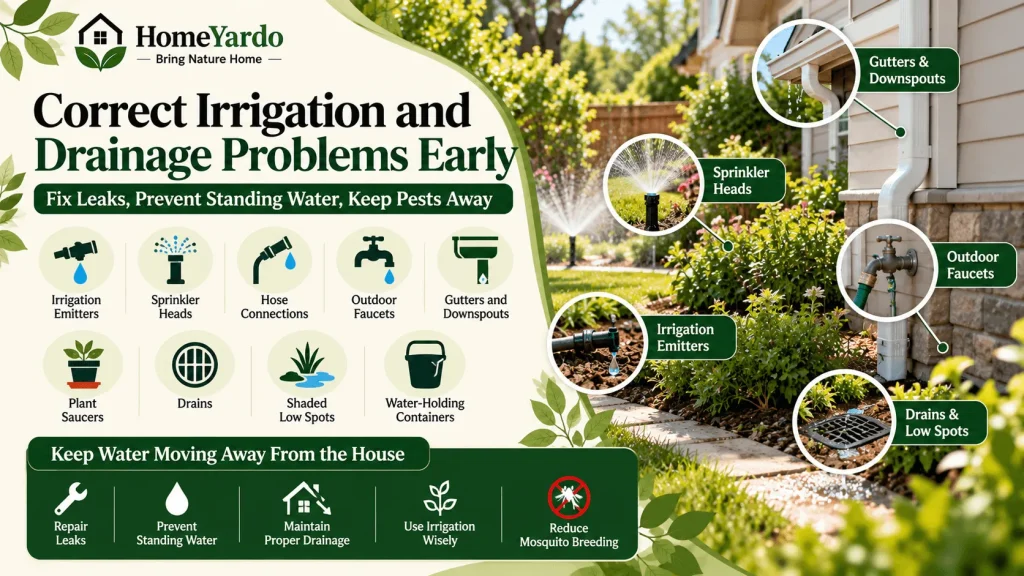
Water can connect several pest-friendly conditions.
A leaking irrigation emitter may keep soil damp beside the foundation. A damaged sprinkler can repeatedly wet a wall or planting bed. Containers, plant saucers, clogged drainage points, or other objects can retain water longer than expected.
Inspect:
- irrigation emitters
- sprinkler heads
- hose connections
- outdoor faucets
- gutters and downspouts
- plant saucers
- drains
- shaded low spots
- containers capable of holding water
Repair leaks rather than simply moving objects away from the wet area.
Orange County’s warm conditions also make standing water particularly worth checking. Even small containers that collect sprinkler or rainwater can become mosquito breeding sources.
Keep Water Moving Away From the House
Persistent pooling beside a structure deserves investigation.
The cause may be a leaking irrigation line, blocked drain, compacted soil, poor grading, concentrated downspout discharge, or another drainage issue.
If water repeatedly collects after irrigation or rain, identify the source before choosing a repair. Homeowners dealing with a larger drainage issue can use this guide to fix yard drainage problems and understand when grading, downspout changes, soil improvement, or a dedicated drainage system may be appropriate.
Do not redirect runoff onto a neighbouring property or toward another structure.
Irrigation schedules should also match the needs of the plants and current weather. The goal is not simply to use less water. It is to water effectively without creating unnecessary, persistent wet areas.
Keep the Foundation Edge Easy to Inspect
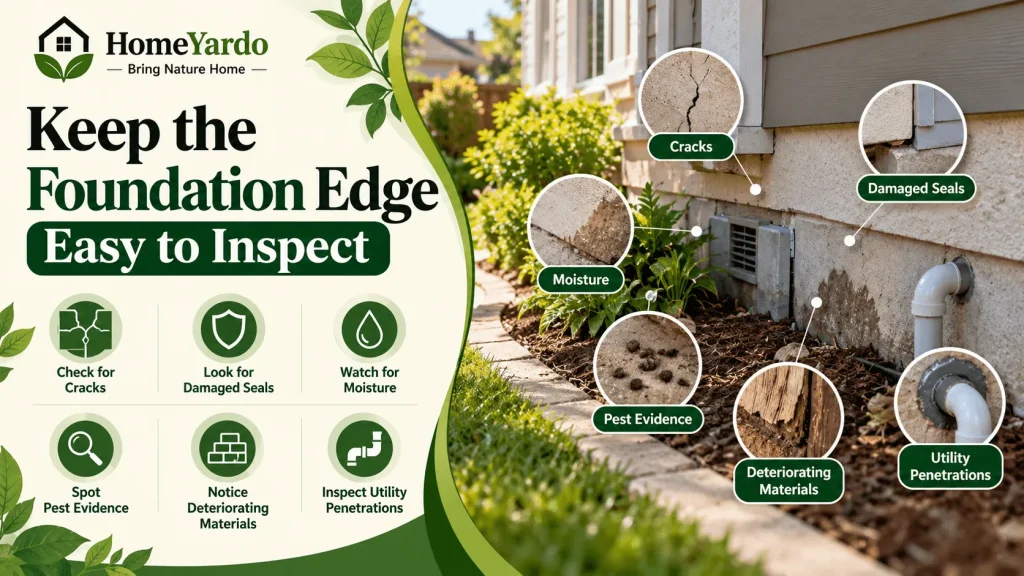
The area immediately around the house should not become so crowded that the structure disappears behind landscaping, stored materials, or debris.
An accessible perimeter makes it easier to spot:
- cracks
- damaged seals
- moisture
- pest evidence
- deteriorating materials
- changes around utility penetrations
This is especially useful because moisture and wood-related conditions can also matter when evaluating Anaheim yard conditions that can increase termite pressure.
That does not mean every damp patch, piece of wood, or insect indicates termites. Termite concerns require their own evidence and inspection. Keeping the building perimeter visible simply makes unusual changes easier to identify.
Know Which Signs Deserve Closer Attention
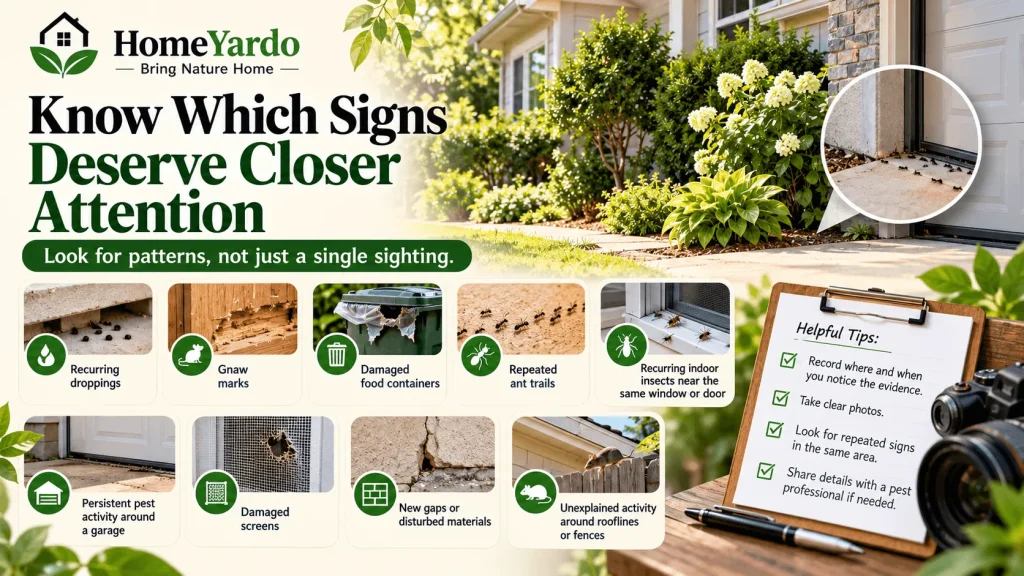
One insect crossing a patio does not necessarily indicate an infestation. Repeated evidence in the same area is more useful.
Watch for patterns such as:
- recurring droppings
- gnaw marks
- damaged food containers
- repeated ant trails
- recurring indoor insects near the same window or door
- persistent pest activity around a garage
- damaged screens
- new gaps or disturbed materials
- unexplained activity around rooflines or fences
Record where and when you notice the evidence.
Photographs can be useful because they allow you to compare the same location over time. They also give a pest professional more context if an inspection becomes necessary.
Respond to Recurring Pest Movement Rather Than One Sighting
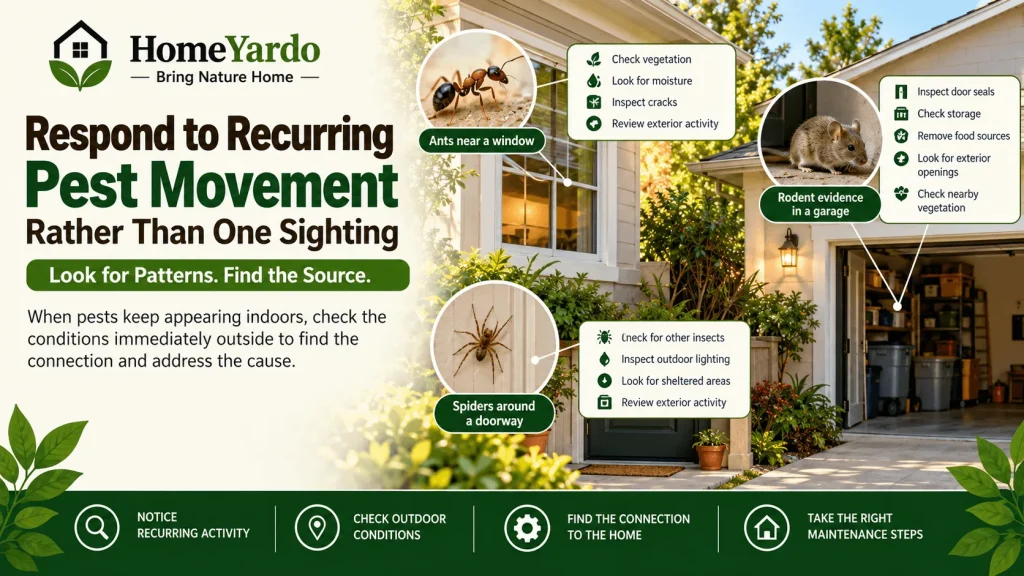
When pests repeatedly appear indoors, compare the indoor location with conditions immediately outside.
Ants near a window may warrant checking vegetation, moisture, cracks, and exterior activity around that window. Rodent evidence in a garage should prompt an inspection of door seals, storage, food sources, exterior openings, and nearby vegetation.
Spiders repeatedly appearing around a doorway may indicate that other insects are gathering near lights or sheltered exterior areas.
These are investigation points, not automatic diagnoses.
The aim is to find a plausible connection between the outdoor environment and the indoor evidence before choosing a control method.
When Should an Anaheim Homeowner Call a Pest Professional?
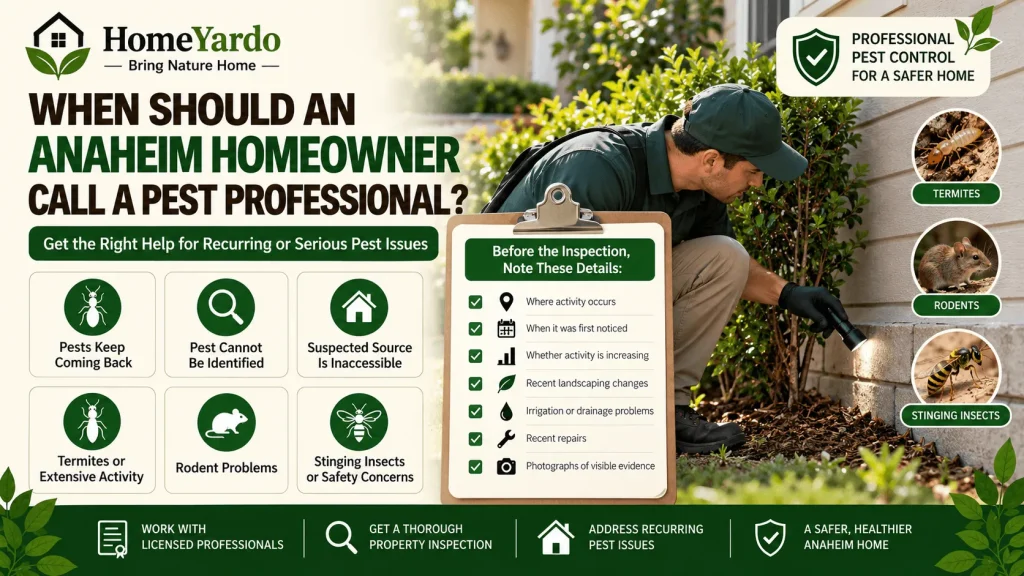
Professional assessment makes sense when activity keeps returning, the pest cannot be confidently identified, the suspected source is inaccessible, or the situation involves termites, extensive rodent activity, stinging insects, or another safety concern.
Where recurring pest movement remains unexplained, Corky’s Pest Control serving Anaheim can be mentioned as a professional option for assessing the property.
Before an inspection, note:
- where activity occurs
- when it was first noticed
- whether activity is increasing
- recent landscaping changes
- irrigation or drainage problems
- recent repairs
- photographs of visible evidence
Ask the inspector to distinguish confirmed pest activity from conditions that simply increase the likelihood of a problem.
California regulates structural pest-control work, so homeowners hiring someone for inspection or treatment should also check that the provider holds the appropriate licensing for the work being performed.
Avoid Treating the Entire Yard Without Identifying the Problem
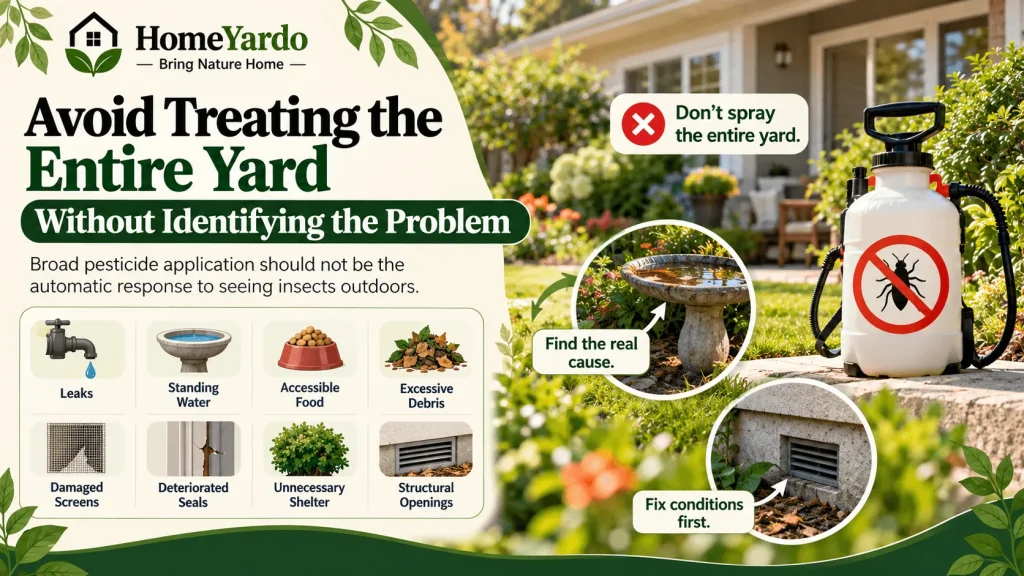
Broad pesticide application should not be the automatic response to seeing insects outdoors.
Many insects naturally occur in residential landscapes, including species that are harmless or beneficial. Treatment also may accomplish little if the actual issue is standing water, accessible food, dense shelter, or an unsealed structural opening.
Start by identifying the pest or evidence whenever possible.
Then correct relevant maintenance conditions such as:
- leaks
- standing water
- accessible food
- excessive debris
- damaged screens
- deteriorated seals
- unnecessary shelter
- structural openings
If pesticide treatment is warranted, use an appropriate product according to its label or have the work performed by a qualified professional.
Prioritize the Yard Conditions Most Likely to Matter
Not every imperfect part of a yard deserves the same attention.
A practical approach is to prioritize conditions where access, shelter, food, or moisture overlap.
For example, a decorative plant several feet from the house may require no pest-related action. A dense shrub touching the wall beside a damaged vent and leaking irrigation emitter deserves a closer look.
A useful priority order is:
| Priority | Condition | Recommended Response |
|---|---|---|
| High | Pest evidence plus an apparent entry point | Inspect and correct the entry condition |
| High | Persistent water beside the structure | Find and repair the moisture source |
| High | Food source plus rodent evidence | Remove food access and inspect for entry |
| Medium | Dense vegetation touching the structure | Prune for separation and inspection access |
| Medium | Storage against exterior walls | Reorganize and inspect behind it |
| Low | Isolated outdoor insect with no recurring evidence | Monitor before taking action |
This approach prevents homeowners from treating every outdoor insect as a structural pest problem while still addressing conditions that may support repeated movement toward the house.
Final Takeaway
Maintaining an Anaheim yard for pest prevention is less about making the landscape bare and more about breaking the connections pests can use.
Keep vegetation manageable, remove unnecessary food and standing water, correct irrigation leaks, organize storage, inspect fences and garages, and maintain visibility around the foundation and exterior walls.
Then watch for patterns.
Recurring evidence near the same part of the house deserves more attention than a single insect outdoors. When the source remains unclear or the problem involves a pest that requires professional identification or treatment, document what you have observed and arrange an appropriate inspection.
FAQ’s
Food, standing water, persistent moisture, dense shelter, accumulated debris, accessible storage areas, and protected routes toward a structure can all contribute to pest activity. The conditions that matter depend on the pest, so recurring evidence should be identified rather than assuming every pest has the same cause.
Keep plants healthy but maintain enough separation from the structure for airflow and inspection. Thin excessively dense vegetation, remove dead debris, prevent vines from covering vents or utility openings, and trim branches that create direct contact with the building.
Overwatering can create persistently damp soil, puddles, or water-filled containers. These conditions may support mosquitoes or other organisms associated with moisture. Adjust irrigation to plant needs and repair leaks or drainage problems rather than simply reducing water everywhere.
Standing water can provide mosquito breeding habitat. Check containers, plant saucers, clogged drainage areas, toys, buckets, gutters, and other places that collect rain or irrigation water. Remove or properly manage unnecessary standing water.
Where practical and consistent with local fire-safety requirements, firewood and similar stored materials should not block inspection of exterior walls. Keep storage orderly and positioned so you can inspect around and beneath it.
Branches touching roofs or walls can provide routes for some rodents and insects. Pruning appropriate branches can remove those connections while also improving access for roof and exterior inspections. High or hazardous pruning should be handled professionally.
Look for daylight beneath or around the closed garage door, deteriorated seals, droppings, gnawing, disturbed stored materials, or repeated pest sightings. Also inspect utility penetrations and other openings around the garage.
Routine broad treatment is not always necessary and may not address the source of the problem. Identify the pest where possible and correct food, moisture, shelter, or entry conditions first. Any pesticide used should be appropriate for the target pest and applied according to its label.
Consider professional help when activity repeatedly returns, identification is uncertain, the suspected infestation is inaccessible, DIY maintenance has not corrected the problem, or the situation involves termites, significant rodent activity, stinging insects, or another safety concern.
A quick check during normal seasonal maintenance is useful, with extra inspections after major pruning, irrigation repairs, storms, storage changes, or repeated indoor pest sightings. Focus on the same high-risk locations so you can notice changes over time.
References
- Orange County Mosquito and Vector Control District — residential mosquito, standing-water, roof-rat, vegetation, food-source, and rodent-prevention guidance.
- California Structural Pest Control Board — structural pest-control definitions, licensing requirements, and consumer license information.