
How Anaheim Yard Conditions Increase Termite Pressure Near Your Home

Homeowners usually look for termites on the inside of a house: a blistered baseboard, a hollow door frame, a scattering of pellets on a windowsill. The yard rarely comes to mind, and it should. Many termite problems begin or are sustained outside, where soil, moisture, and buried or decaying wood create conditions that favor colonies. A property can show no visible indoor damage and still have a yard that quietly supports termite activity a few feet from the foundation. The sections below explain how the yard fits into the termite picture, which features raise pressure, how to correct them, and what outdoor signs justify a professional inspection.
The Yard Is Part of the Termite Equation
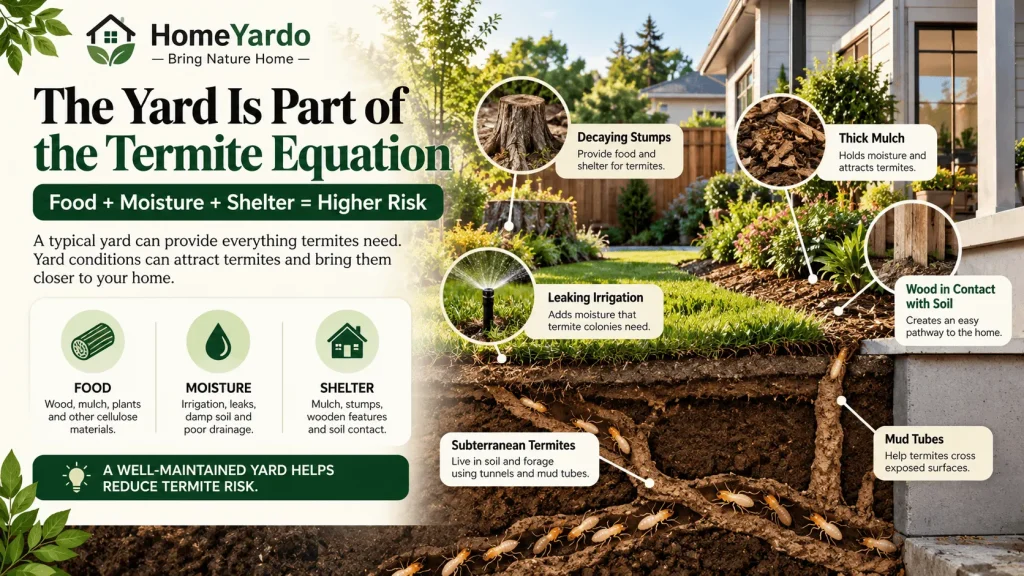
Termites need food, moisture, and shelter, and a typical residential yard can supply all three. Subterranean termites, which are active in Southern California, live in colonies in the soil. They forage outward in search of cellulose, using tunnels in the ground and mud tubes to cross exposed surfaces. A colony does not respect property lines or foundation walls. If wood or damp soil lies close to the house, the colony may be near the structure already.
The yard also influences other termite types. Drywood termites do not depend on the soil, but they can nest in fences, wooden posts, firewood, and landscape timbers, and swarmers from those sources can reach the house. Dampwood termites, less common in drier inland areas, prefer very wet wood and can appear where leaks or poor drainage keep timber saturated.
Seeing the yard this way shifts the focus of prevention. Instead of asking only whether termites are inside the house, ask what conditions outside make the property attractive. Decaying stumps, buried scrap lumber, leaking irrigation, thick mulch, and wooden features that touch the soil all contribute. None of these guarantees a problem, but together they raise the odds.
Anaheim’s warm climate allows termite activity through much of the year, and irrigated landscaping adds moisture that the natural environment might not supply. That combination makes yard management a meaningful part of protecting the home.
Buried Wood, Stumps, and Fence Posts
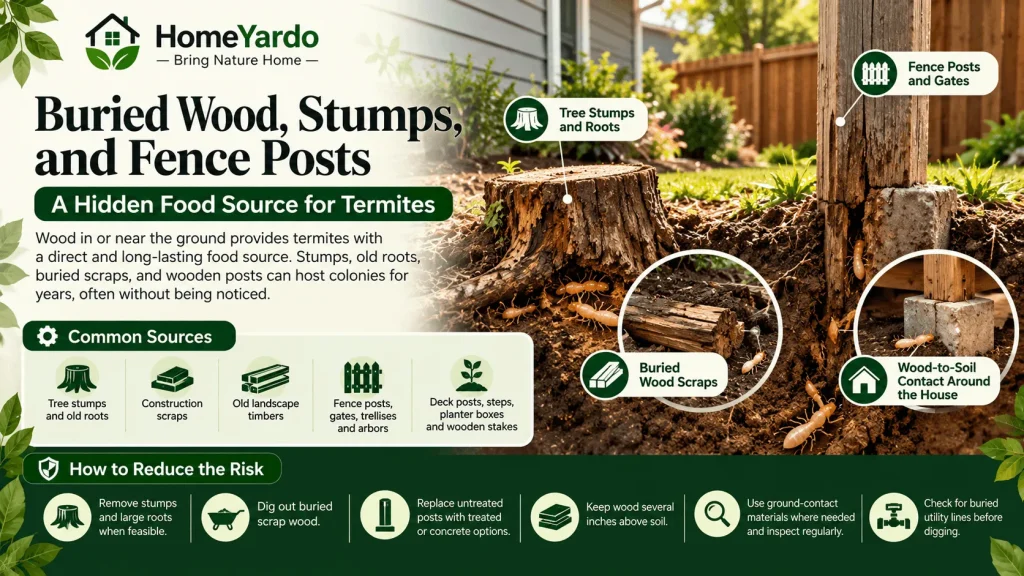
Wood that lies in or near the ground is the most direct food source. Tree stumps and old roots decay slowly, and they can host colonies for years. Construction scraps buried during building, forgotten stakes, old landscape timbers, and decaying firewood all provide similar nourishment. Because the wood sits below grade or hidden under vegetation, homeowners often forget it exists.
Fence posts deserve special mention. Wooden posts set directly in soil, or in concrete that has cracked, offer termites an entry point and a route along the fence line. If the fence connects to the house, the path from the yard to the wall is short. Gate posts, trellises, and arbors may present the same problem.
Wood-to-soil contact around the house itself matters as well. Siding that reaches the ground, deck posts without proper bases, wooden steps resting on soil, and planter boxes built against walls give termites a direct bridge. Even small details, such as a wooden stake supporting a young tree beside the foundation, can serve as a stepping stone.
Reducing this risk is straightforward. Remove stumps and large roots when feasible, dig out buried scrap wood, replace untreated posts with treated or concrete alternatives, and keep wood several inches above soil. Before digging out an old stump, buried timber, or fence post, check for buried utility lines and other underground systems so termite prevention does not create a separate property hazard.
Where wood must touch the ground, use materials designed for ground contact and inspect them regularly.
Mulch, Irrigation, And Damp Soil
Moisture draws subterranean termites, and landscaping can create it. Thick layers of mulch, especially when piled against the foundation, hold water against the wall and hide the base of the structure from view. Mulch also provides cellulose that termites can eat, and its cover can shelter mud tubes that would otherwise be visible. A thin layer kept a few inches from the foundation serves plants without creating a bridge.
Homeowners using organic materials elsewhere in the landscape can also review this guide to choosing mulch for garden beds so mulch depth, moisture management, drainage, and plant needs are considered together.
Irrigation is a frequent culprit. Sprinkler heads that spray the siding, broken lines that saturate a bed, and drip systems that leak near the foundation keep soil constantly wet. In a region with dry summers, that steady moisture stands out and can attract termites to the very spot where the house meets the ground. Check irrigation zones regularly, and adjust timing so that soil near the foundation has a chance to dry between cycles.
Poor drainage compounds the issue. Water that pools along the foundation after rain, downspouts that discharge at the wall, and low spots in the yard keep soil damp for days. Extend downspouts away from the house, regrade areas where water collects, and clear gutters so they do not overflow.
If water regularly collects beside the house after irrigation or rain, addressing yard drainage problems can help keep excess moisture away from both the landscape and the foundation.
If suspicious signs appear near damp areas, such as mud tubes, damaged wood, or swarmers, consider asking a provider such as Termite Control Anaheim to inspect the property, since conditions in the yard can reveal how termites might be reaching the home even when the interior looks clean.
Yard Steps That Lower Termite Pressure

A regular outdoor routine addresses most of these conditions. Use this list as a starting point, and repeat it each season:
- Remove decaying wood, including stumps, buried scrap lumber, old stakes, and rotting landscape timbers, and haul it away from the property.
- Correct irrigation problems by repairing leaks, aiming sprinklers away from the walls, and shortening watering times near the foundation.
- Maintain visible foundation clearance, keeping soil, mulch, and plants several inches below the siding and exposing a strip of concrete or stucco weep screed.
- Check wooden landscape features, such as fences, gates, posts, planter boxes, trellises, and retaining walls, probing for softness and looking for mud tubes or pellets.
- Store firewood, lumber, and cardboard away from the house, off the ground, and preferably on a rack.
- Direct water away from the structure with extended downspouts, clean gutters, and proper grading.
- Trim shrubs and vines so they do not touch the walls, which allows air to circulate and makes inspection easier.
Consider the materials in your landscaping too. Replace wood chips near the foundation with gravel or stone where appropriate, and use rot-resistant or treated lumber for any wood that must contact soil. Metal post bases and concrete footings keep wooden supports from sitting directly in the ground.
When outdoor signs or suspicious wood suggest a possible infestation, a professional evaluation from Termite Control Anaheim can establish whether termites are present, which species is involved, and whether the home needs treatment, since a tidy yard reduces risk but does not replace inspection when evidence appears.
Reading Outdoor Signs
Knowing what to look for makes the routine more useful. Mud tubes, which are narrow tunnels of soil about the width of a pencil, run along foundation walls, piers, and posts, and they indicate subterranean termites. Break a small section carefully to see whether insects are inside, and note that empty tubes may be old.
Swarmers, the winged reproductive termites, emerge in warm periods and may appear near windows, doors, and lights. Discarded wings on sills or near fences suggest that a swarm occurred. Winged ants look similar, so check carefully: termites have straight antennae, a thick waist, and wings of equal length, while ants have bent antennae, a narrow waist, and wings of unequal length.
Wood damage outdoors may show as hollow-sounding posts, sagging fence boards, crumbling trim, or fascia that feels soft when probed. Pellets beneath small holes suggest drywood termites in exposed wood. Piles of sawdust-like material under a pergola or fence rail deserve a closer look.
Record what you find with dated photographs, and keep notes on location. Avoid disturbing tubes or wood more than needed, and do not apply household insecticides that could scatter insects before an inspector sees the problem. If you notice repeated signs in the same area, track whether moisture is a factor, and correct it.
End Note
Yard conditions do not cause every termite problem, but they can influence how favorable the area around a home is for termite activity. Buried wood, old stumps, wood-to-soil contact, leaking irrigation, poor drainage, and persistent moisture deserve particular attention around Anaheim properties.
Homeowners can reduce these conditions by removing unnecessary wood, correcting leaks and drainage problems, keeping the foundation accessible for inspection, and checking fences and other outdoor wood regularly.
Those steps reduce conducive conditions but do not replace a termite inspection. Shelter tubes, swarmers, discarded wings, characteristic pellets, or suspicious wood damage are reasons to have the property evaluated by a licensed structural pest control professional.
FAQ’s
Persistently moist soil can create more favorable conditions for subterranean termites, which depend on moisture and commonly live and forage through soil. Damp soil does not prove termites are present, but leaks, drainage problems, and continual irrigation near the structure are worth correcting.
Mulch does not automatically cause a termite infestation. Organic mulch contains cellulose and can retain moisture, so problems become more relevant when thick or persistently wet material sits close to structural wood or obscures areas that should remain visible for inspection.
Yes. Subterranean termites can occur in fallen trees, stumps, roots, and other dead wood in contact with soil. Removing unnecessary decaying wood close to the home can reduce a potential food source near the structure.
A fence does not automatically lead termites into a home. However, untreated wooden posts in soil can provide termite food, and fences, gates, pergolas, and other wooden landscape features should be inspected periodically—especially where they connect with or sit close to the house.